Downloaded 57 times







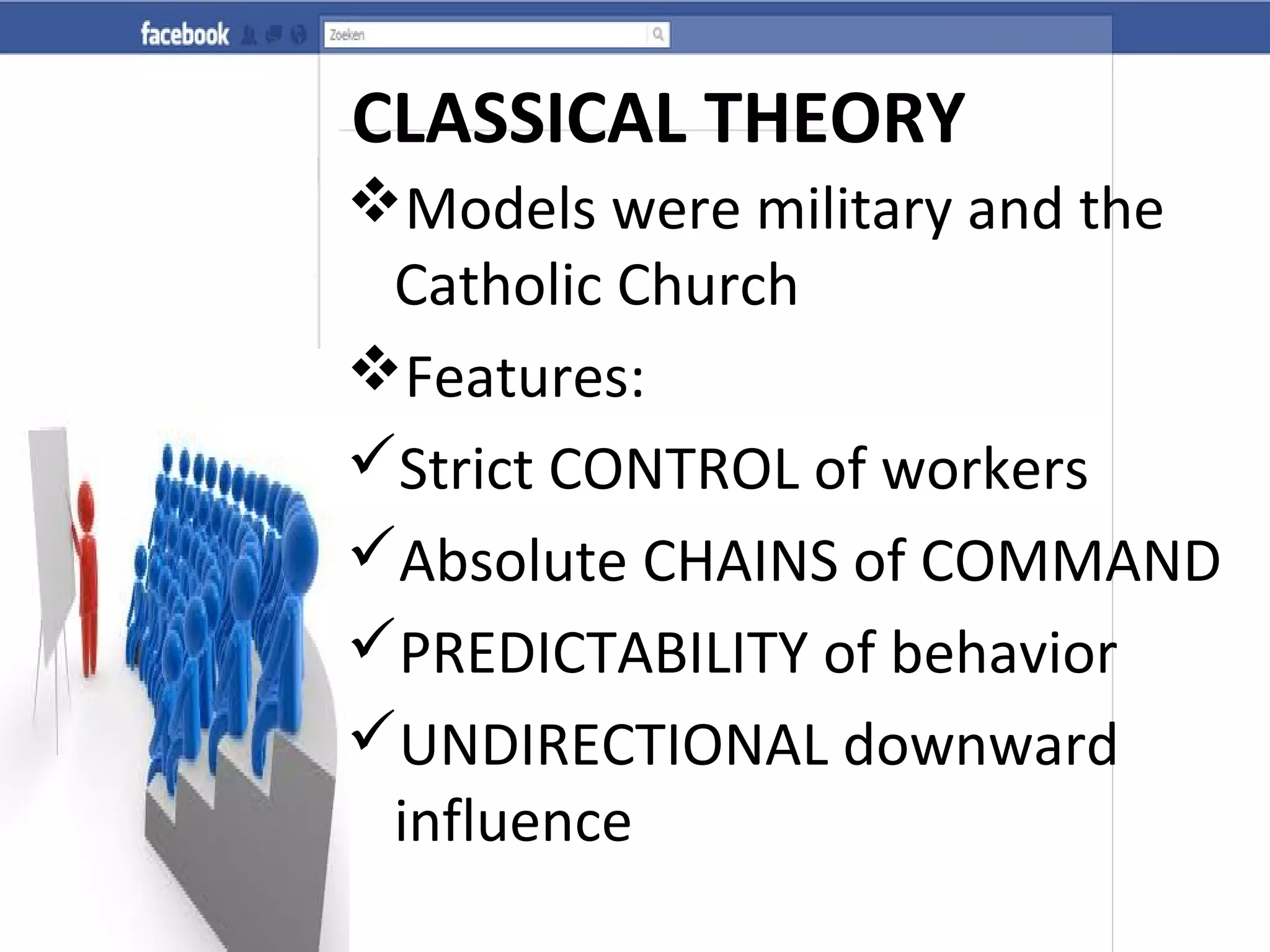
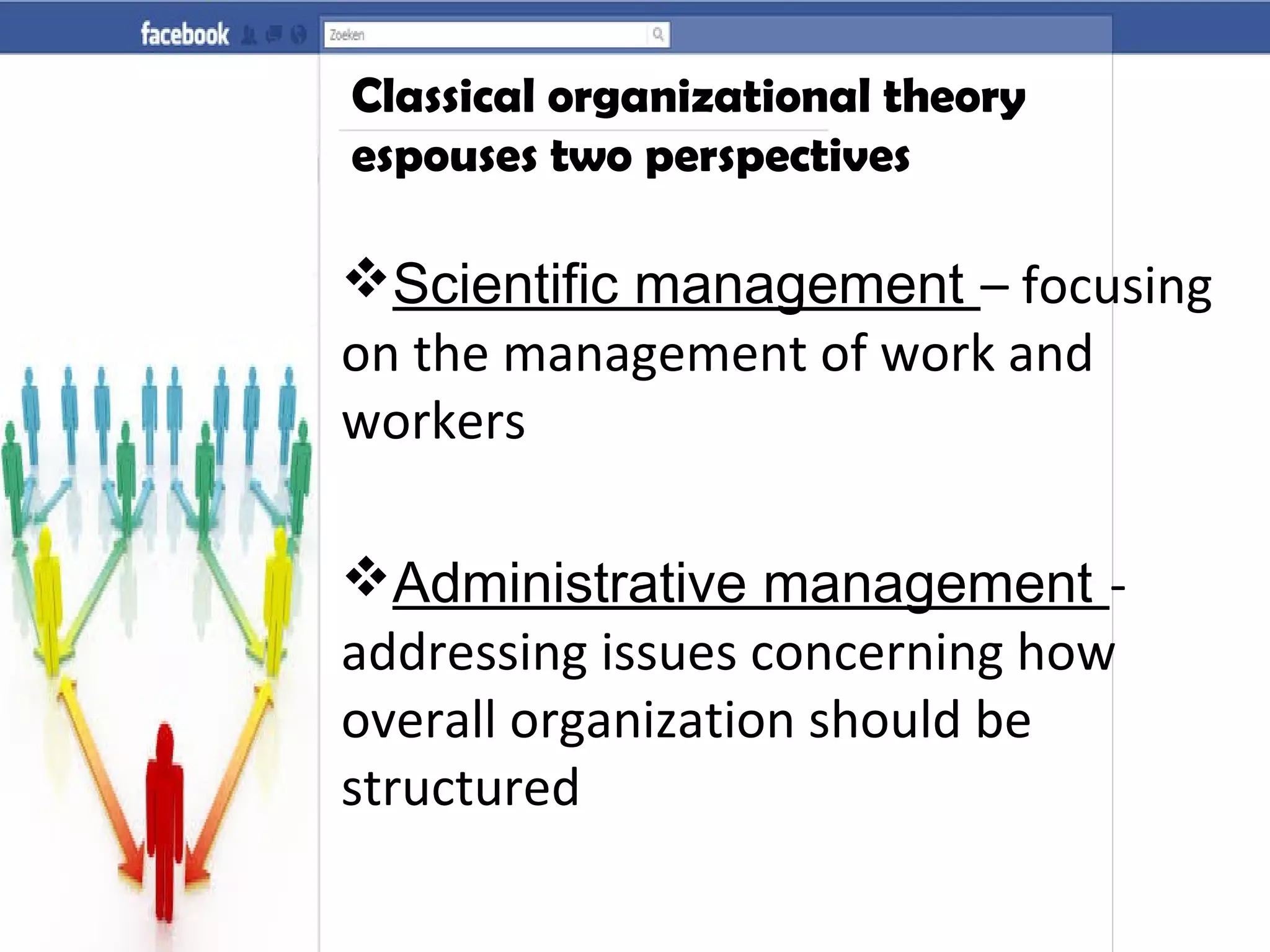
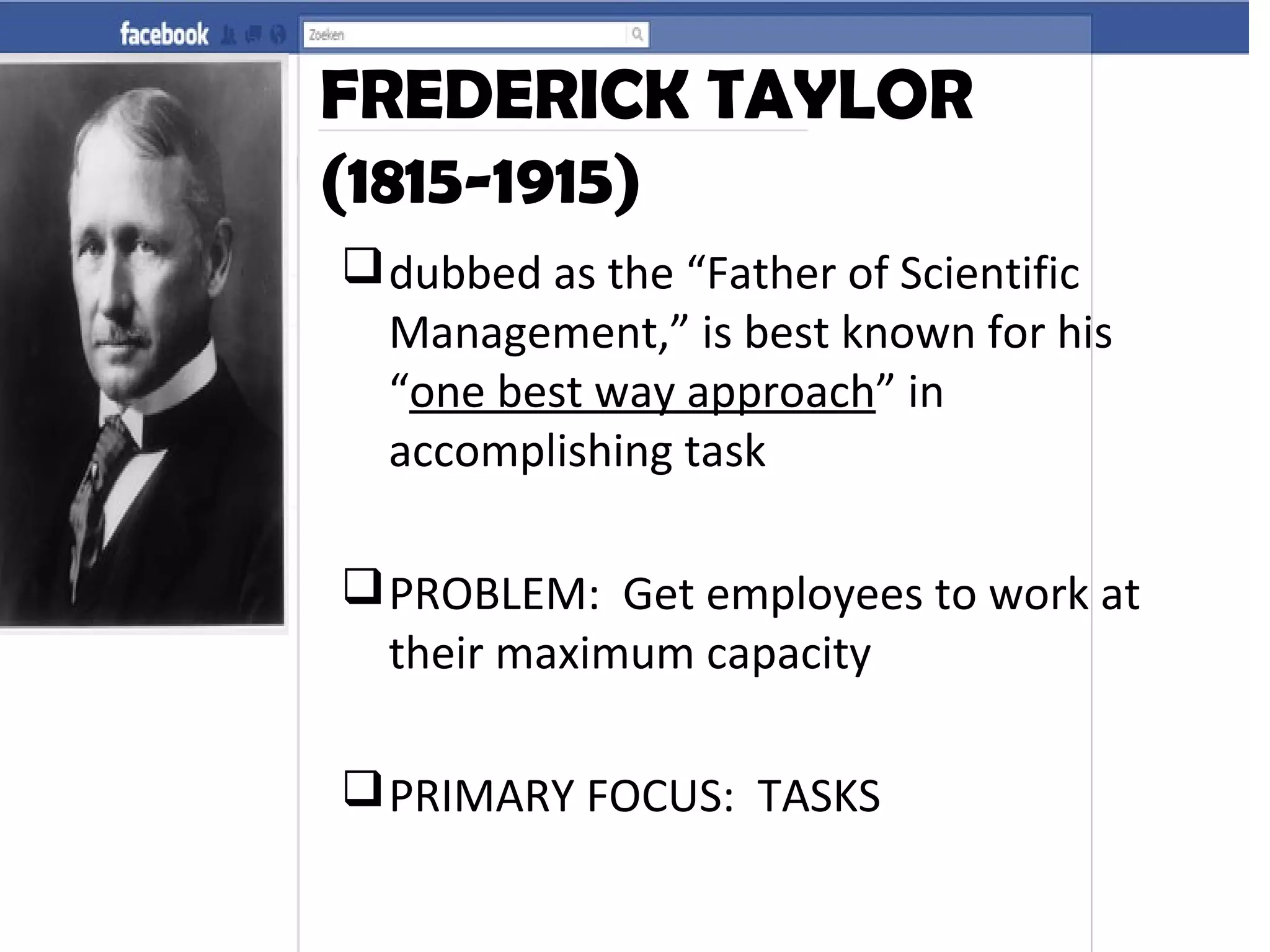
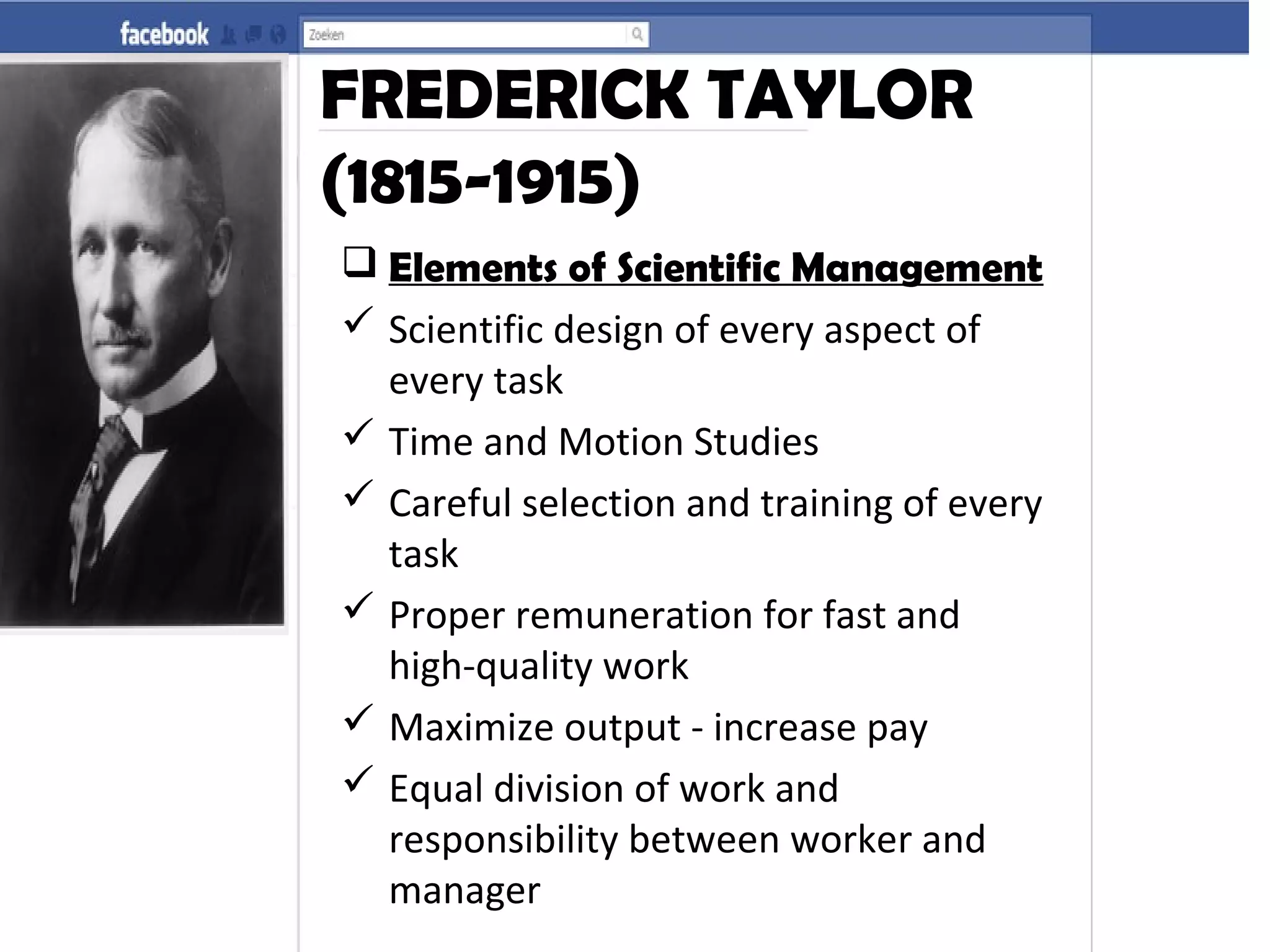
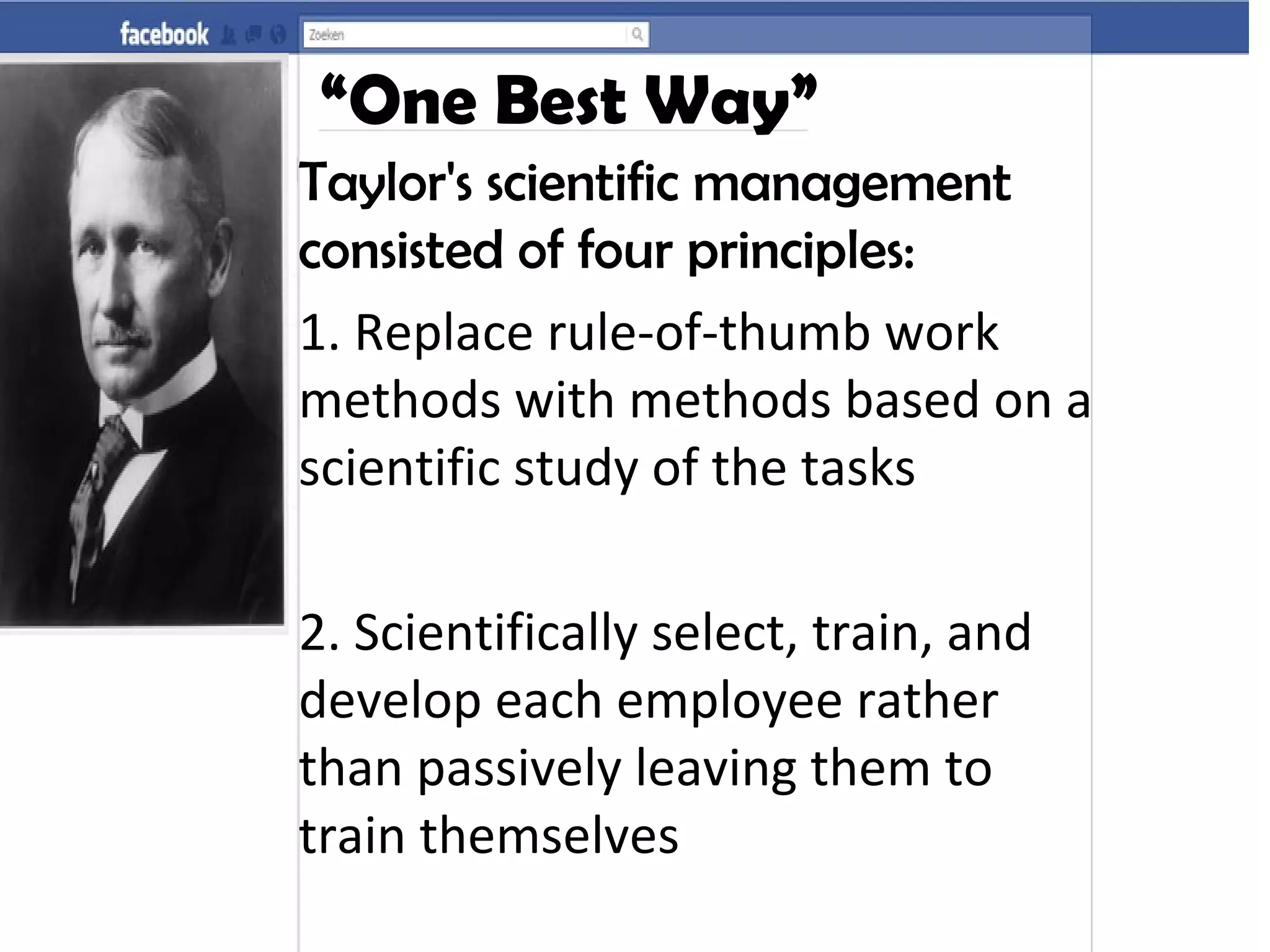
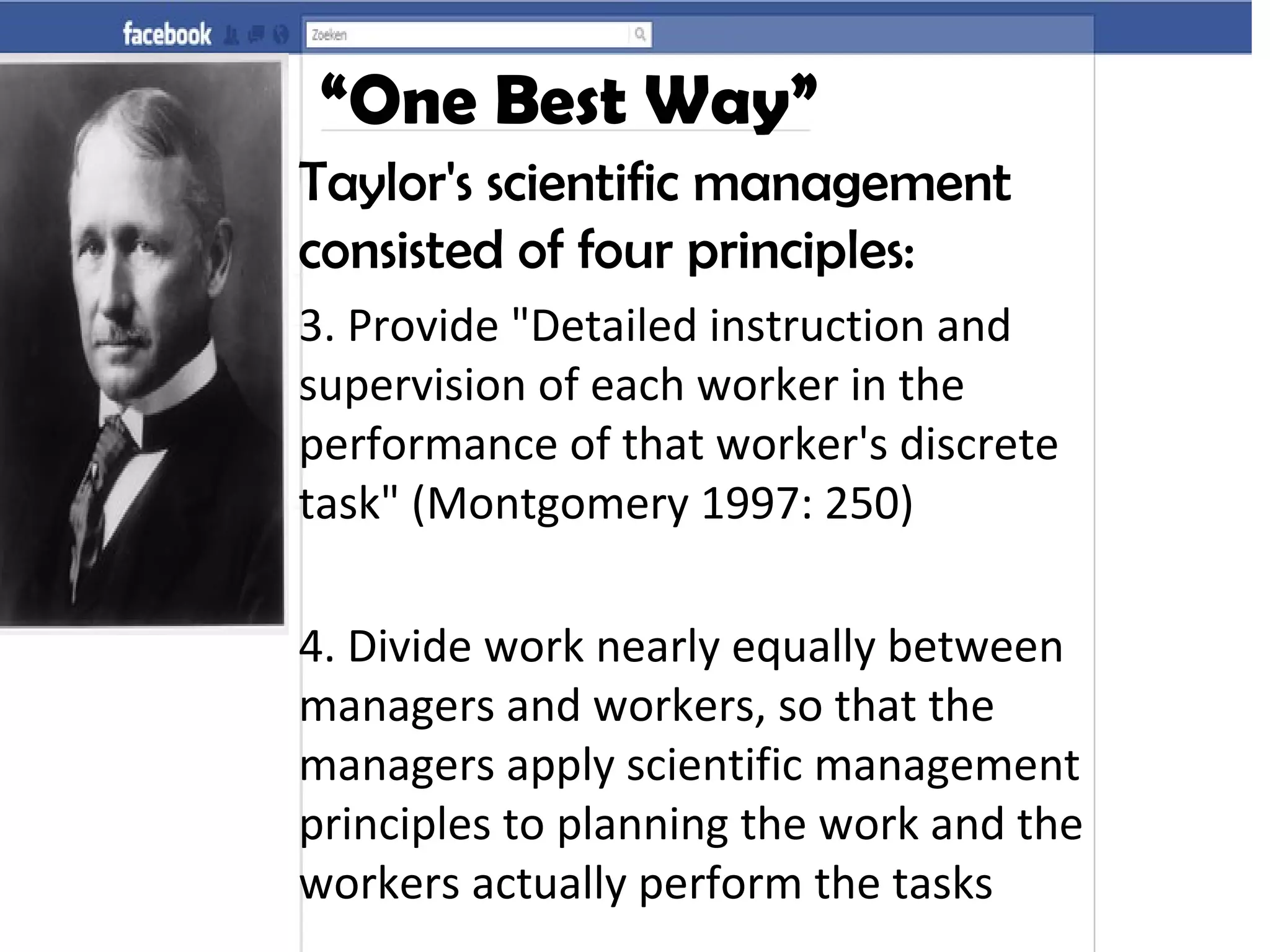
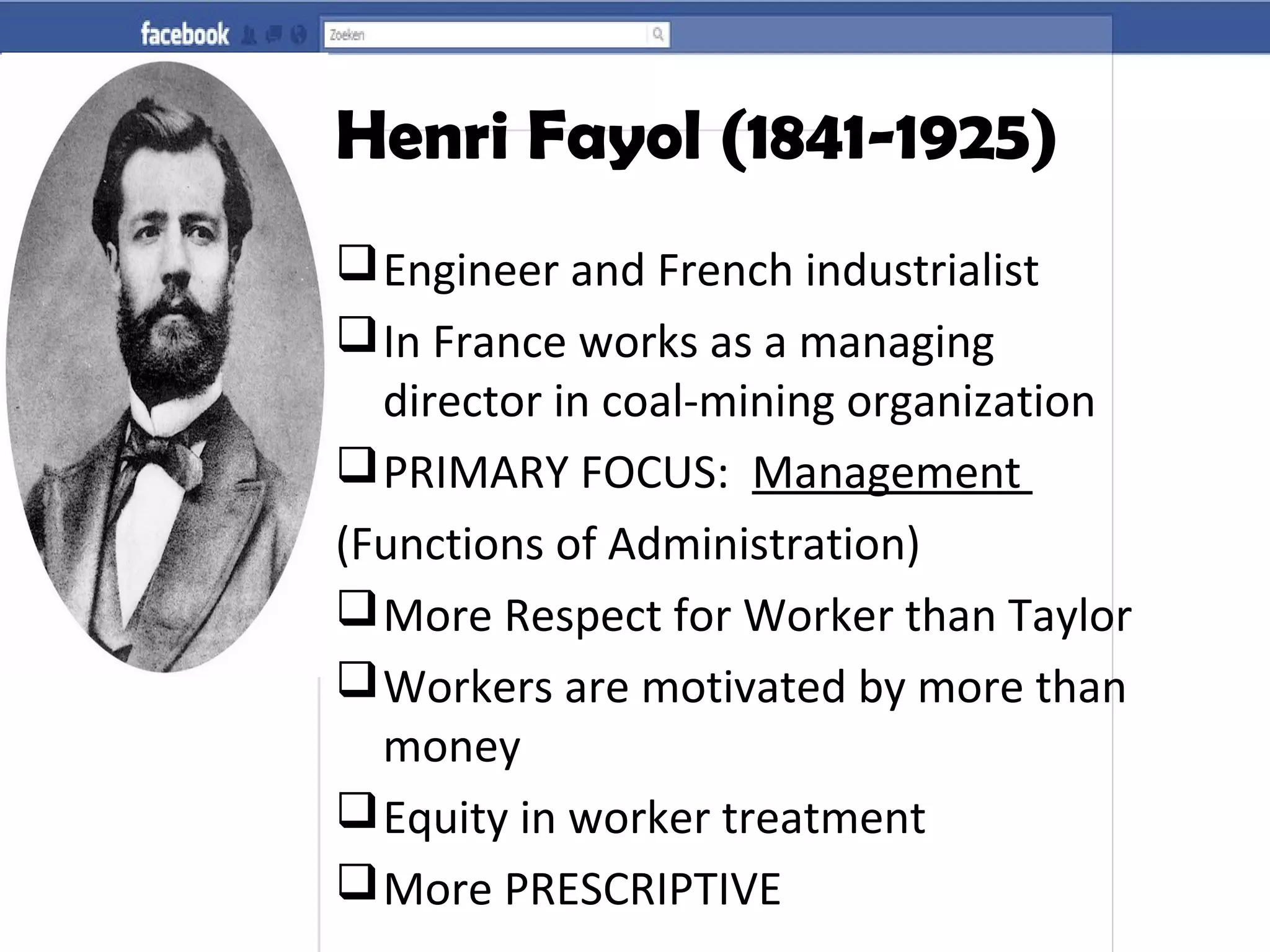
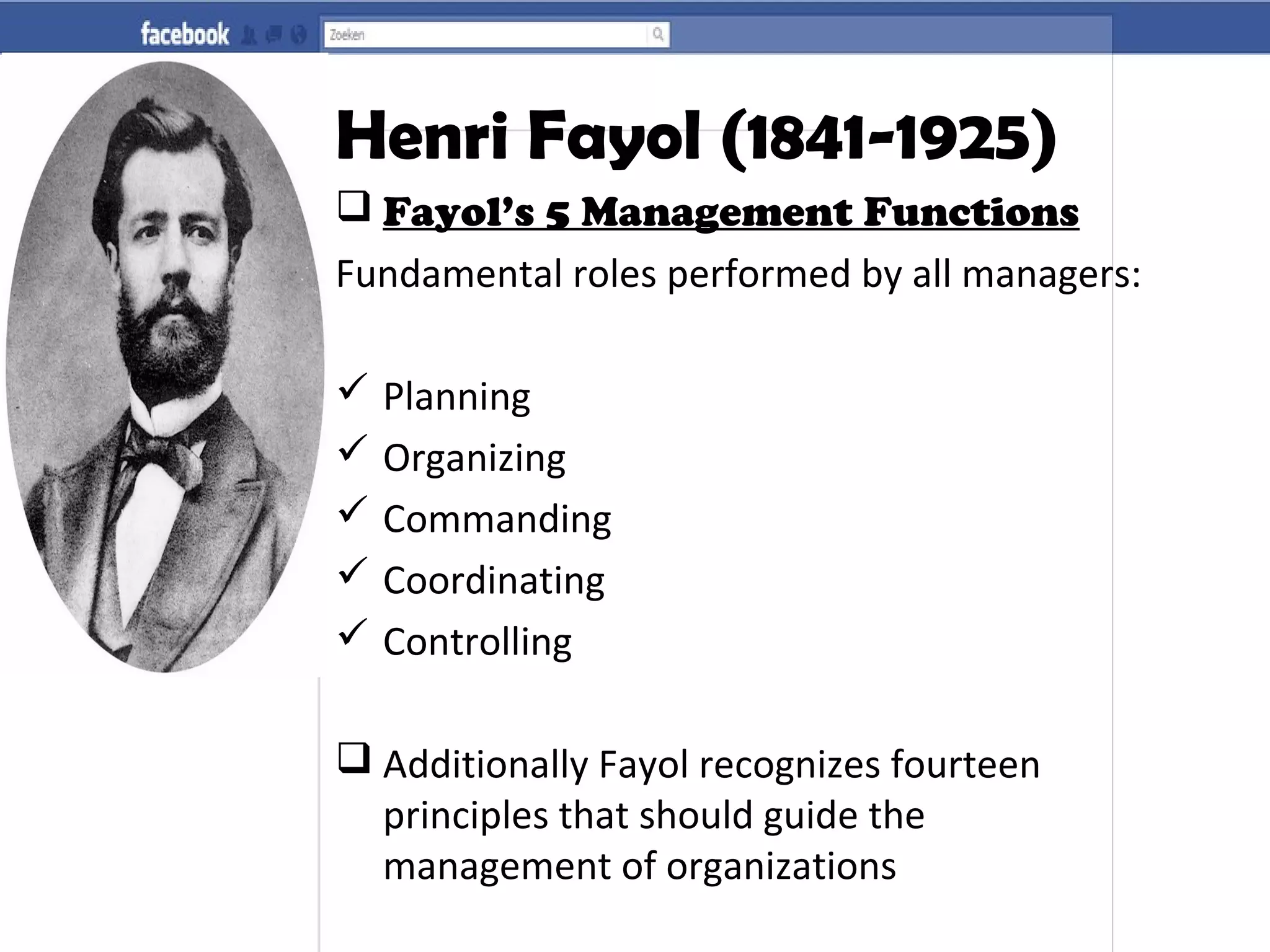
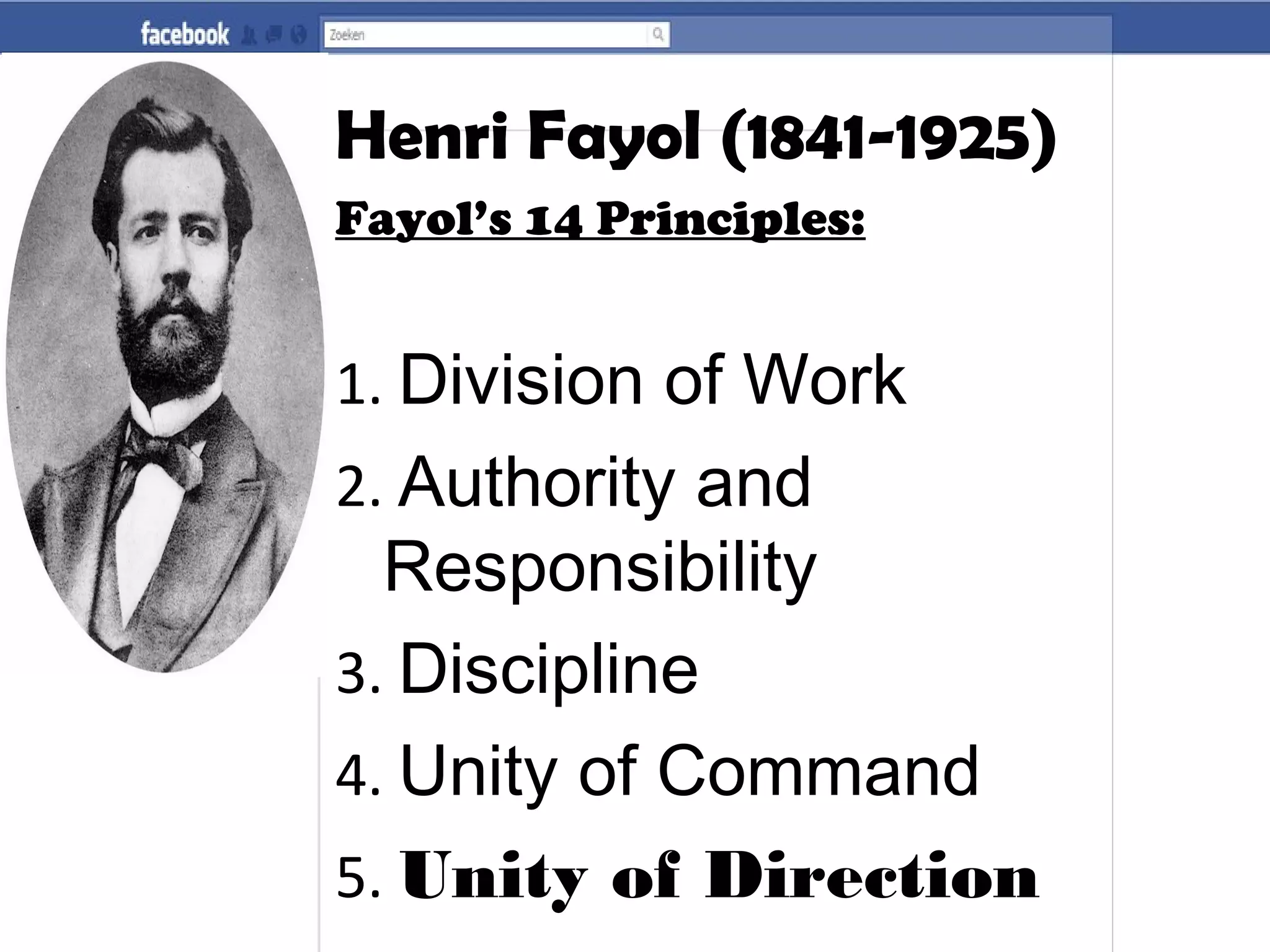
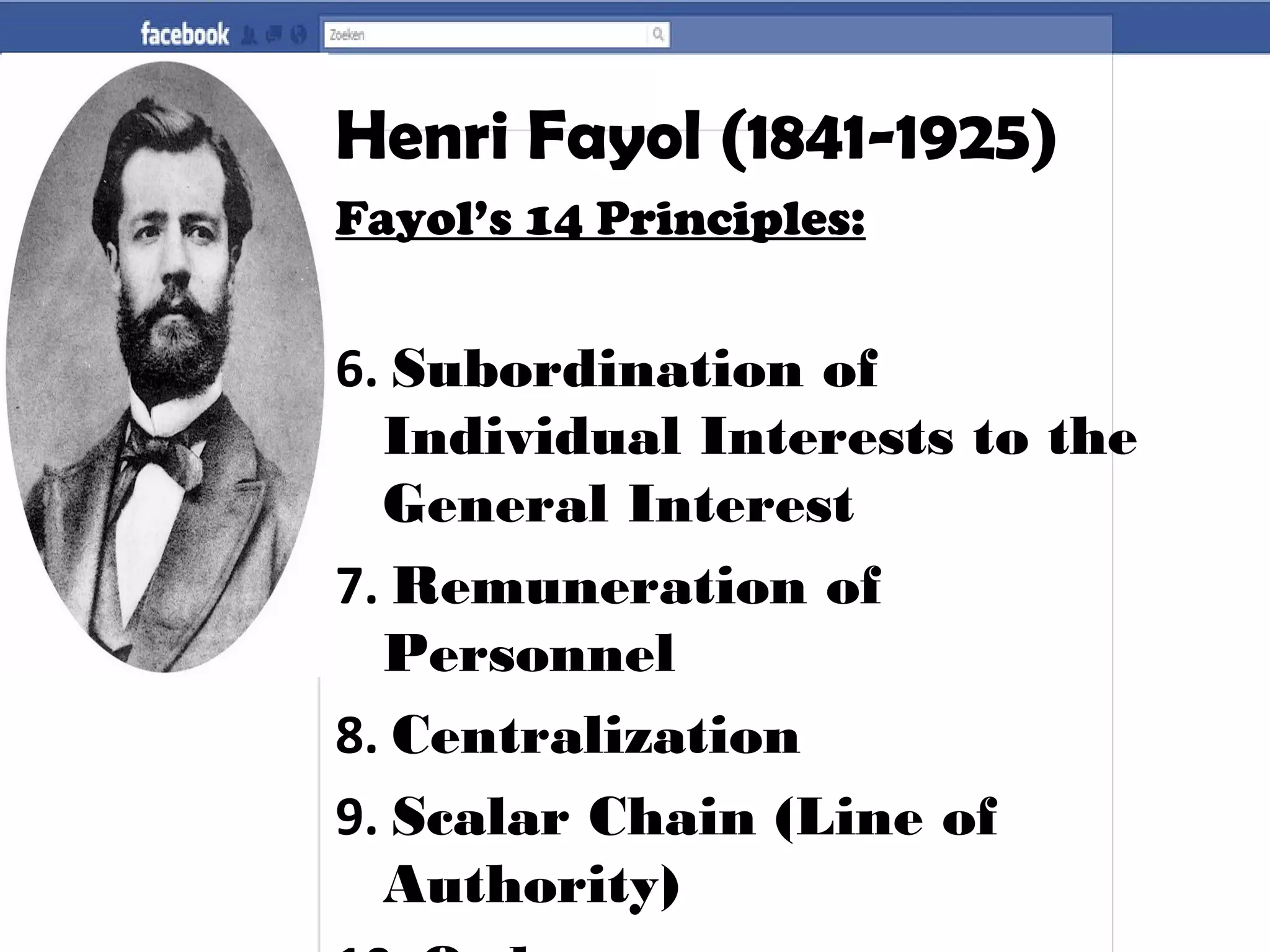
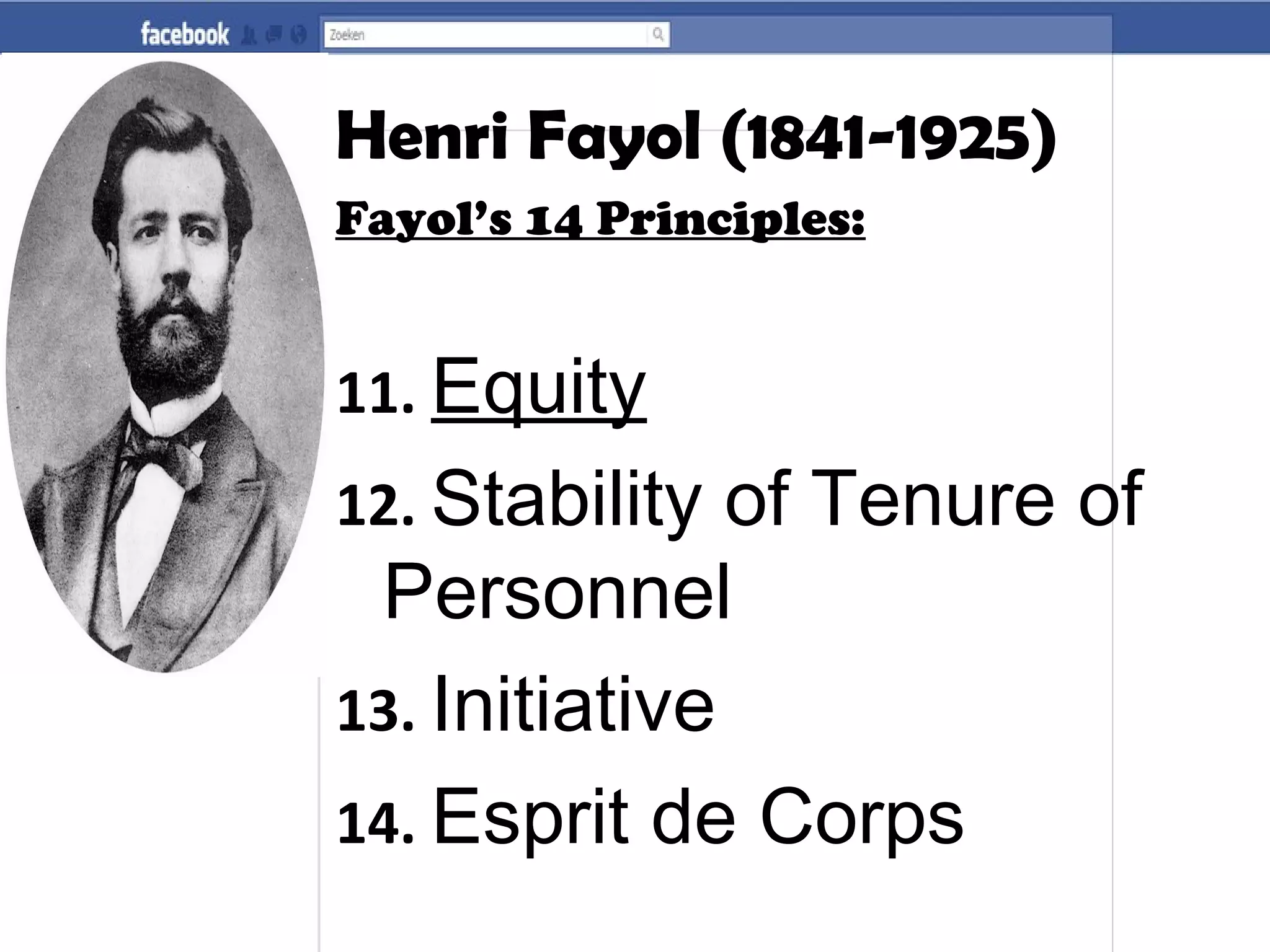
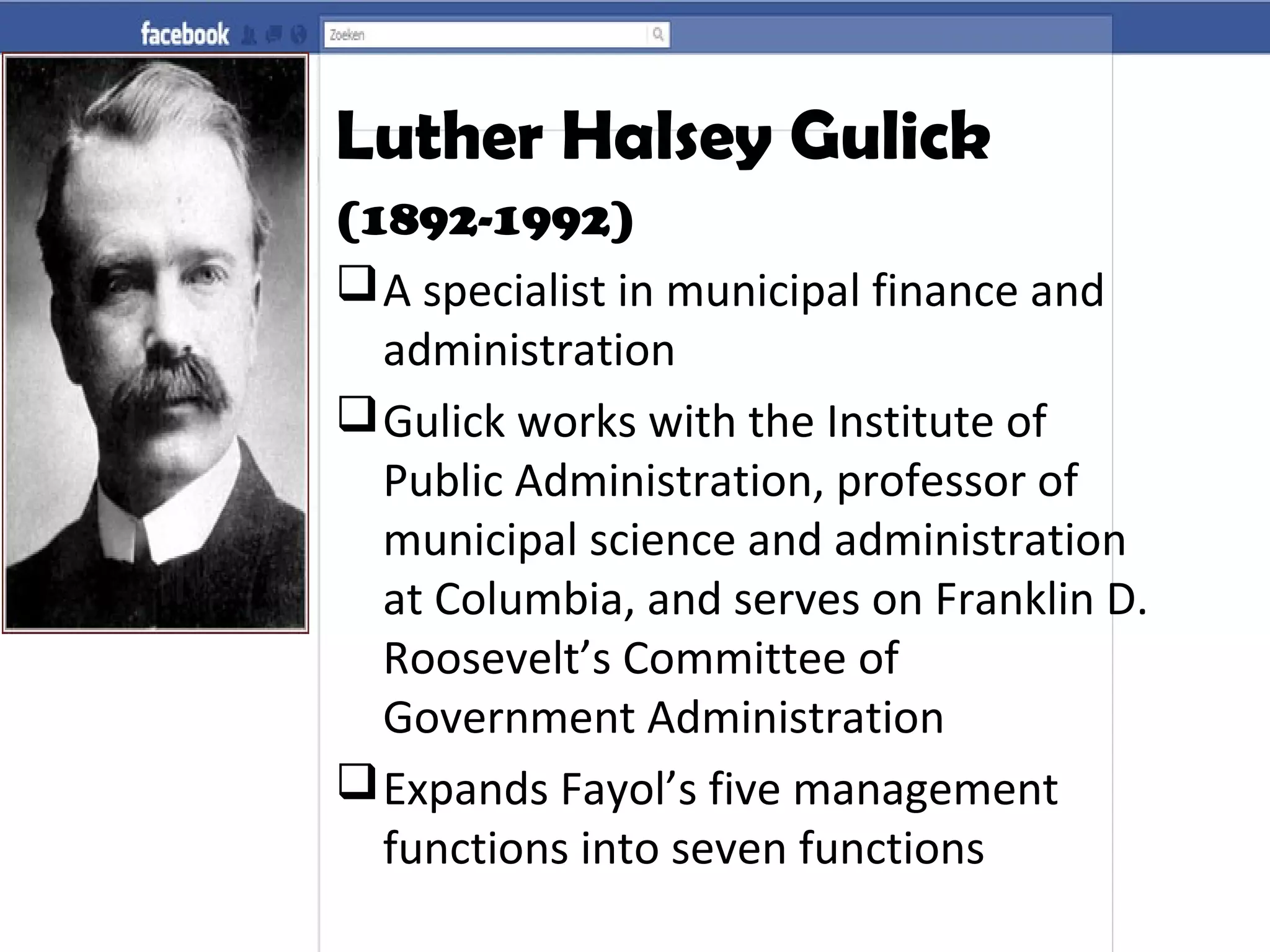
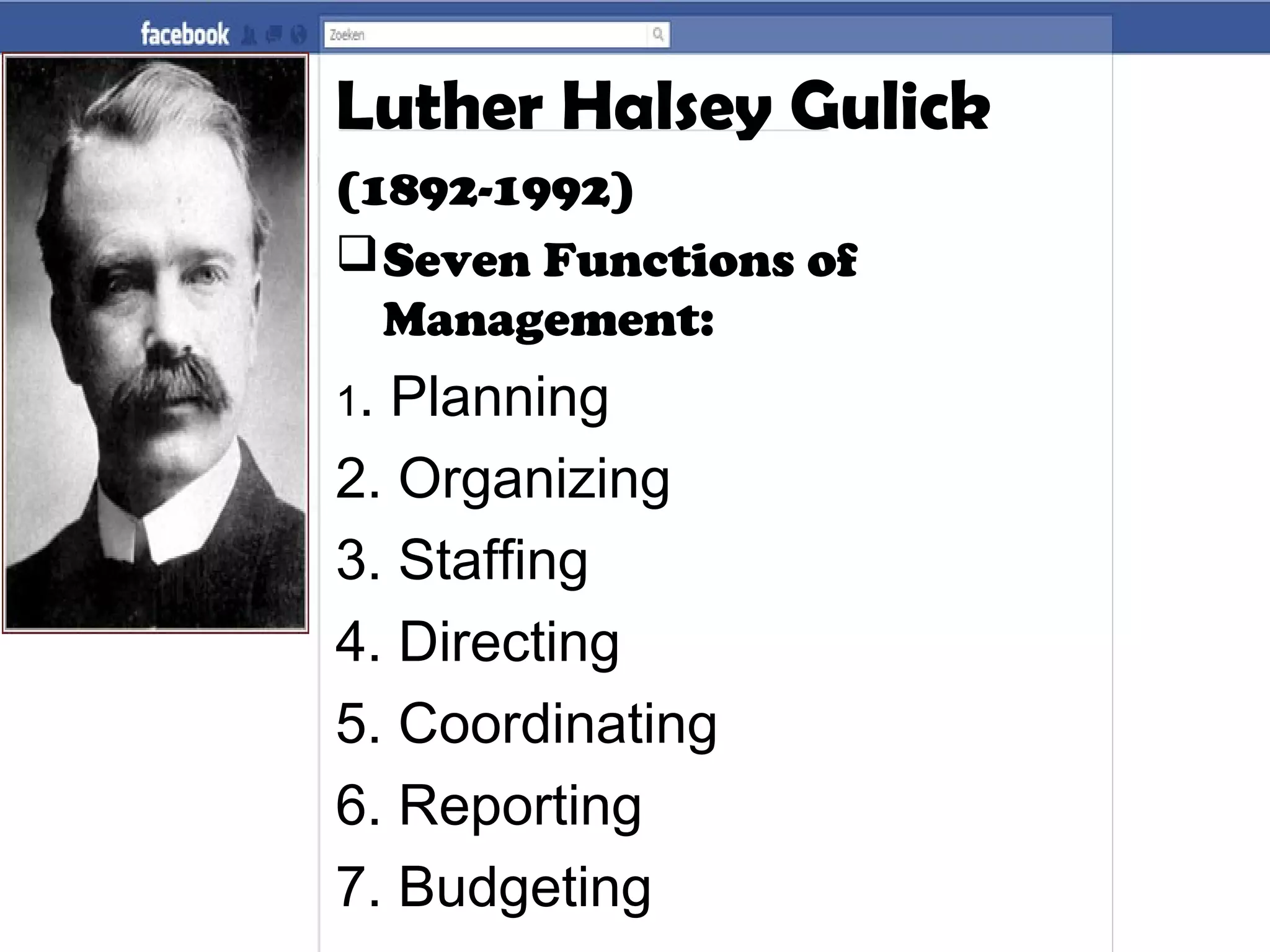
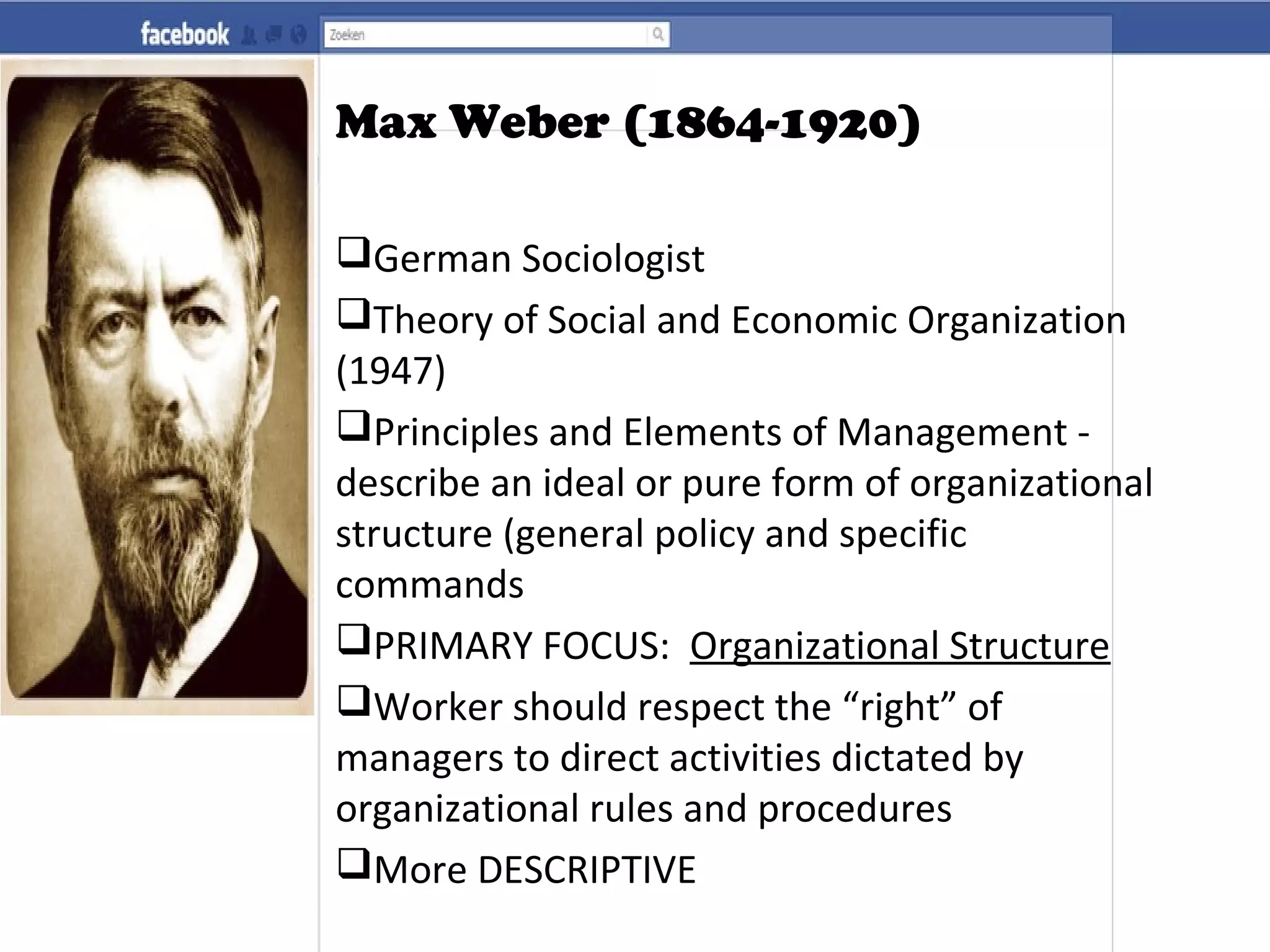



The document summarizes classical organizational theory, its major contributors, and criticisms. Classical theory emerged in the late 19th century and focused on efficiency, specialization, and strict control of workers. Major contributors included Frederick Taylor with scientific management, Henri Fayol with administrative functions, Luther Gulick, and Max Weber's ideal bureaucracy. While classical theory emphasized structure, division of labor, and monetary incentives, criticisms argued it treated employees as passive and dependent, focusing only on short-term goals.


