CLASSICAL GREECE
ELISA CUESTA
JULIÁN LÓPEZ
ÁNGELA GARCÍA
JUAN PEDRO MORAL
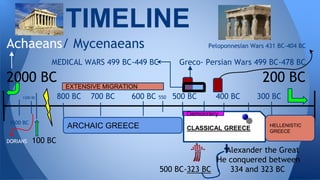
Achaeans/ Mycenaeans Peloponnesian Wars 431 BC-404 BC
MEDICAL WARS 499 BC-449 BC Greco- Persian Wars 499 BC-478 BC
2000 BC 200 BC
1200 BC 800 BC 700 BC 600 BC 550 500 BC 400 BC 300 BC
1500 BC
DORIANS 100 BC
Alexander the Great
He conquered between
500 BC-323 BC 334 and 323 BC
TIMELINE
EXTENSIVE MIGRATION
ARCHAIC GREECE CLASSICAL GREECE
HELLENISTIC
GREECE
Democracy
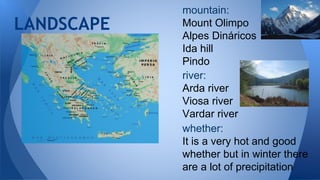
mountain:
Mount Olimpo
Alpes Dináricos
Ida hill
Pindo
LANDSCAPE
river:
Arda river
Viosa river
Vardar river
whether:
It is a very hot and good
whether but in winter there
are a lot of precipitation
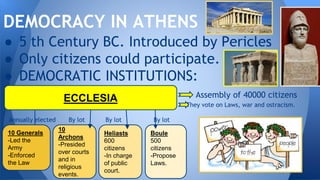
● 5 th Century BC. Introduced by Pericles
● Only citizens could participate.
● DEMOCRATIC INSTITUTIONS:
Assembly of 40000 citizens
They vote on Laws, war and ostracism.
.
Annually elected By lot By lot By lot
DEMOCRACY IN ATHENS
ECCLESIA
10
Archons
-Presided
over courts
and in
religious
events.
Heliasts
600
citizens
-In charge
of public
court.
Boule
500
citizens
-Propose
Laws.
10 Generals
-Led the
Army
-Enforced
the Law
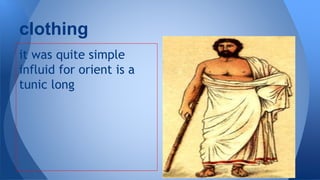
it was quite simple
influid for orient is a
tunic long
clothing
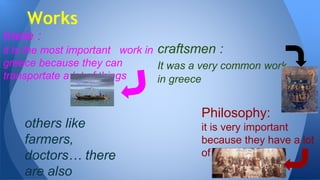
trade :
it is the most important work in
greece because they can
transportate a lot of things
Works
craftsmen :
It was a very common work
in greece
others like
farmers,
doctors… there
are also
Philosophy:
it is very important
because they have a lot
of inventions
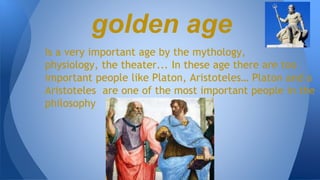
Is a very important age by the mythology,
physiology, the theater... In these age there are too
important people like Platon, Aristoteles… Platon and a
Aristoteles are one of the most important people in the
philosophy
golden age
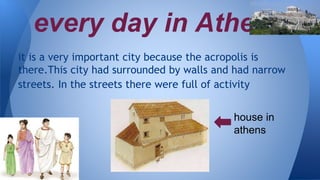
every day in Athens
it is a very important city because the acropolis is
there.This city had surrounded by walls and had narrow
streets. In the streets there were full of activity
house in
athens
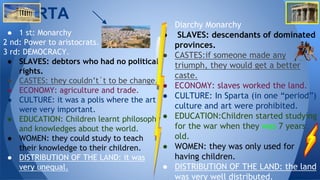
SPARTA
● Diarchy Monarchy
● SLAVES: descendants of dominated
provinces.
● CASTES:if someone made any
triumph, they would get a better
caste.
● ECONOMY: slaves worked the land.
● CULTURE: In Sparta (in one “period”)
culture and art were prohibited.
● EDUCATION:Children started studying
for the war when they was 7 years
old.
● WOMEN: they was only used for
having children.
● DISTRIBUTION OF THE LAND: the land
was very well distributed.
● 1 st: Monarchy
2 nd: Power to aristocrats.
3 rd: DEMOCRACY.
● SLAVES: debtors who had no political
rights.
● CASTES: they couldn’t´t to be change.
● ECONOMY: agriculture and trade.
● CULTURE: it was a polis where the art
were very important.
● EDUCATION: Children learnt philosophy
and knowledges about the world.
● WOMEN: they could study to teach
their knowledge to their children.
● DISTRIBUTION OF THE LAND: it was
very unequal.
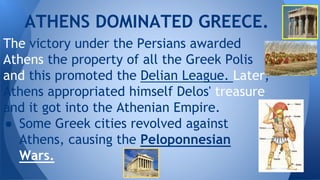
The victory under the Persians awarded
Athens the property of all the Greek Polis
and this promoted the Delian League. Later,
Athens appropriated himself Delos' treasure
and it got into the Athenian Empire.
● Some Greek cities revolved against
Athens, causing the Peloponnesian
Wars.
ATHENS DOMINATED GREECE.
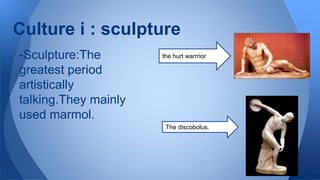
-Sculpture:The
greatest period
artistically
talking.They mainly
used marmol.
Culture i : sculpture
the hurt warrrior
The discobolus.
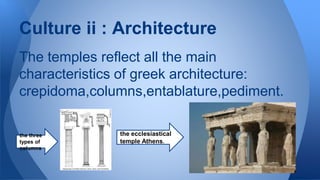
The temples reflect all the main
characteristics of greek architecture:
crepidoma,columns,entablature,pediment.
Culture ii : Architecture
the three
types of
columns
the ecclesiastical
temple Athens.
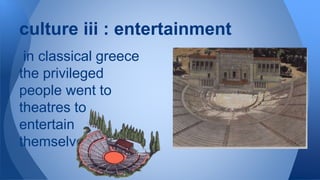
in classical greece
the privileged
people went to
theatres to
entertain
themselves.
culture iii : entertainment
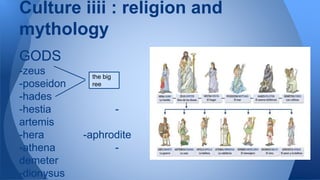
GODS
-zeus
-poseidon
-hades
-hestia -
artemis
-hera -aphrodite
-athena -
demeter
-dionysus
Culture iiii : religion and
mythology
the big
ree
THE END

Classical greece 1b

  • 1.
    CLASSICAL GREECE ELISA CUESTA JULIÁNLÓPEZ ÁNGELA GARCÍA JUAN PEDRO MORAL
  • 2.
    Achaeans/ Mycenaeans PeloponnesianWars 431 BC-404 BC MEDICAL WARS 499 BC-449 BC Greco- Persian Wars 499 BC-478 BC 2000 BC 200 BC 1200 BC 800 BC 700 BC 600 BC 550 500 BC 400 BC 300 BC 1500 BC DORIANS 100 BC Alexander the Great He conquered between 500 BC-323 BC 334 and 323 BC TIMELINE EXTENSIVE MIGRATION ARCHAIC GREECE CLASSICAL GREECE HELLENISTIC GREECE Democracy
  • 3.
    mountain: Mount Olimpo Alpes Dináricos Idahill Pindo LANDSCAPE river: Arda river Viosa river Vardar river whether: It is a very hot and good whether but in winter there are a lot of precipitation
  • 4.
    ● 5 thCentury BC. Introduced by Pericles ● Only citizens could participate. ● DEMOCRATIC INSTITUTIONS: Assembly of 40000 citizens They vote on Laws, war and ostracism. . Annually elected By lot By lot By lot DEMOCRACY IN ATHENS ECCLESIA 10 Archons -Presided over courts and in religious events. Heliasts 600 citizens -In charge of public court. Boule 500 citizens -Propose Laws. 10 Generals -Led the Army -Enforced the Law
  • 5.
    it was quitesimple influid for orient is a tunic long clothing
  • 6.
    trade : it isthe most important work in greece because they can transportate a lot of things Works craftsmen : It was a very common work in greece others like farmers, doctors… there are also Philosophy: it is very important because they have a lot of inventions
  • 7.
    Is a veryimportant age by the mythology, physiology, the theater... In these age there are too important people like Platon, Aristoteles… Platon and a Aristoteles are one of the most important people in the philosophy golden age
  • 8.
    every day inAthens it is a very important city because the acropolis is there.This city had surrounded by walls and had narrow streets. In the streets there were full of activity house in athens
  • 9.
    SPARTA ● Diarchy Monarchy ●SLAVES: descendants of dominated provinces. ● CASTES:if someone made any triumph, they would get a better caste. ● ECONOMY: slaves worked the land. ● CULTURE: In Sparta (in one “period”) culture and art were prohibited. ● EDUCATION:Children started studying for the war when they was 7 years old. ● WOMEN: they was only used for having children. ● DISTRIBUTION OF THE LAND: the land was very well distributed. ● 1 st: Monarchy 2 nd: Power to aristocrats. 3 rd: DEMOCRACY. ● SLAVES: debtors who had no political rights. ● CASTES: they couldn’t´t to be change. ● ECONOMY: agriculture and trade. ● CULTURE: it was a polis where the art were very important. ● EDUCATION: Children learnt philosophy and knowledges about the world. ● WOMEN: they could study to teach their knowledge to their children. ● DISTRIBUTION OF THE LAND: it was very unequal.
  • 10.
    The victory underthe Persians awarded Athens the property of all the Greek Polis and this promoted the Delian League. Later, Athens appropriated himself Delos' treasure and it got into the Athenian Empire. ● Some Greek cities revolved against Athens, causing the Peloponnesian Wars. ATHENS DOMINATED GREECE.
  • 11.
    -Sculpture:The greatest period artistically talking.They mainly usedmarmol. Culture i : sculpture the hurt warrrior The discobolus.
  • 12.
    The temples reflectall the main characteristics of greek architecture: crepidoma,columns,entablature,pediment. Culture ii : Architecture the three types of columns the ecclesiastical temple Athens.
  • 13.
    in classical greece theprivileged people went to theatres to entertain themselves. culture iii : entertainment
  • 14.
    GODS -zeus -poseidon -hades -hestia - artemis -hera -aphrodite -athena- demeter -dionysus Culture iiii : religion and mythology the big ree
  • 15.