
CLASSROOM MANAGEMENT 
DR.LOKANATH MISHRA 
M.Sc(Math),M.A(Eco),M.Ed,NET,Ph.D,D.Litt 
,PGDDE,PGDHE,PGDEA,Dip-in-Bengalee
WHAT IS CLASSROOM MANAGEMENT? 
– prepared for class 
– It’s motivating your students 
– It’s providing a safe, comfortable learning 
environment 
– It’s building your effective discipline 
– It’s being students’ self esteem 
– It’s being creative and imaginative in daily 
lessons 
– And . . .
Why is Classroom Management 
Important? 
• Satisfaction and enjoyment in teaching are 
dependent upon leading students to 
cooperate 
• Classroom management issues are of 
highest concern for beginning teachers
PRINCIPLES FOR SUCCESSFUL 
CLASSROOM MANAGEMENT 
• Deal with disruptive behaviors but also manage 
to minimize off-task, non-disruptive behaviors 
• Teach students to manage their own behavior 
• Students learn to be on-task and engaged in 
the learning activities you have planned for 
them 
– It is more natural to be off-task than on
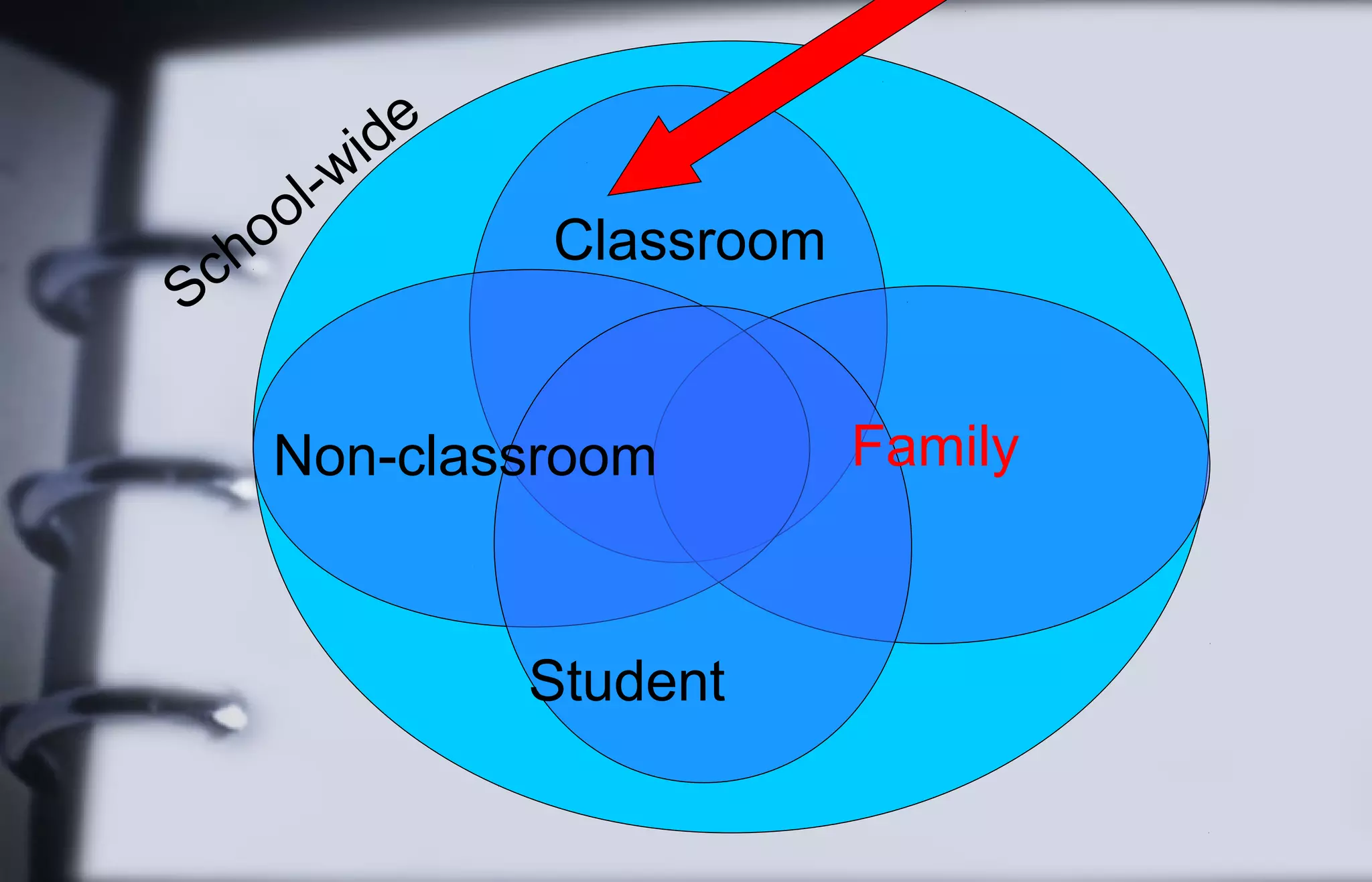
Classroom 
Non-classroom Family 
Student 
School-wide
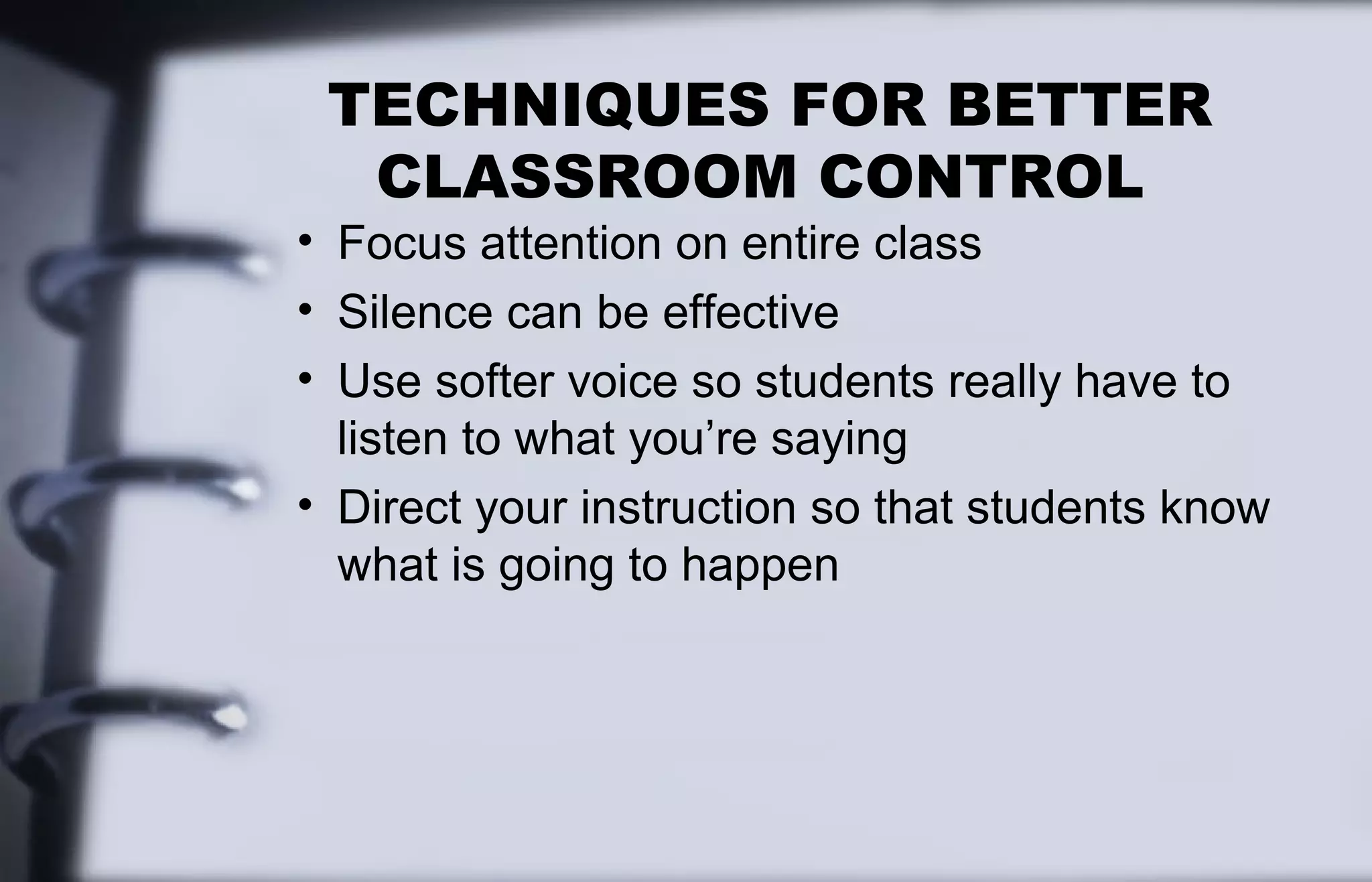
TECHNIQUES FOR BETTER 
CLASSROOM CONTROL 
• Focus attention on entire class 
• Silence can be effective 
• Use softer voice so students really have to 
listen to what you’re saying 
• Direct your instruction so that students know 
what is going to happen
• Monitor groups of students to check 
progress 
• Move around the room so students have 
to pay attention more readily 
• Give students non-verbal cues 
• Engage in low profile intervention of 
disruptions 
• Make sure classroom is comfortable and 
safe
• Over plan your lessons to ensure you fill 
the period with learning activities 
• Come to class prepared 
• Show confidence in your teaching 
• Learn student names as quickly as 
possible
Transition vs. Allocated Time 
• Allocated time: the time periods you intend for your 
students to be engaged in learning activities 
• Transition time: time periods that exist between 
times allocated for learning activities
Transition vs. Allocated Time 
• The Goal: 
– Increase the variety of learning activities but 
decrease transition time. 
• Student engagement and on-task 
behaviors are dependent on how 
smoothly and efficiently teachers move 
from one learning activity to another
Withitness 
• Withitness refers to a teacher’s 
awareness of what is going on in 
the classroom
A teacher has “withitness” if: 
• When discipline problems occur, the 
teacher consistently takes action to 
suppress the misbehavior of exactly those 
students who instigated the problem 
• When two discipline problems arise 
concurrently, the teacher deals with the 
most serious first 
• The teacher decisively handles instances 
of off-task behavior before the behaviors 
either get out of hand or are modeled by 
others
With itness (continued) 
• When handling misbehavior – make sure all 
students learn what is unacceptable about 
that behavior 
• Getting angry or stressed does not reduce 
future misbehavior 
• Deal with misbehavior without disrupting the 
learning activity
PROXIMITY AND BODY LANGUAGE 
• Eye contact, 
• facial expressions, 
• gestures, 
• physical proximity to students 
• , and the way you carry yourself will 
communicate that you are in calm control of the 
class and 
• mean to be taken seriously. 
• Be free to roam 
• Avoid turning back to class
CLASSROOM RULES FOR 
CONDUCT 
• Formalized statements that provide students with 
general guidelines for the types of behaviors that 
are required and the types that are prohibited 
• A few rules are easier to remember than many 
rules 
• Each rule in a small set of rules is more important 
than each rule in a large set of rules
A Businesslike Atmosphere 
• Take advantage of the first days of 
class 
• Establish an environment in which 
achieving specified learning goals 
takes priority over other concerns 
• It is much easier to establish this 
environment from the beginning rather 
than later
5 steps 
1. Take advantage of the new school 
year or term to set the stage for 
cooperation 
2. Be particularly prepared and 
organized 
3. Minimize transition time 
4. Utilize a communication style that 
establishing non-threatening, 
comfortable environment 
5. Clearly establish expectations for 
conduct
Beginning a new year 
• Take advantage of initial uncertainty 
• Ride your “fences” 
• PLAN for a favorable beginning 
– Classroom/lab organization 
– Ongoing routines 
• Use learning activities with easy-to-follow, 
uncomplicated directions 
• Use a disclosure statement
Attention Seeking Behavior 
• Attention-seeking students prefer being 
punished, admonished, or criticized to being 
ignored 
• Give attention to this student when he or she 
is on-task and cooperating 
• “Catch them being good!” – and let them 
know you caught them
Power Seeking Behavior 
• Power-seeking students attempt to provoke 
teachers into a struggle of wills 
• In most cases, the teacher should direct 
attention to other members of the class
Be familiar with school policies 
from the start! 
Policies relating directly to students: 
• Attendance/Tardy Policy 
• Academic/Grading Policies 
• Telephone use (school phones, cell, pagers) 
• Student Dress and Grooming Policies 
• Safe School Policies 
– Weapons, fighting, intimidation, verbal abuse, etc. 
• Alcohol, Tobacco, and Drug Policies 
• Sexual Harassment Policy
Class room management

Class room management

  • 1.
    CLASSROOM MANAGEMENT DR.LOKANATHMISHRA M.Sc(Math),M.A(Eco),M.Ed,NET,Ph.D,D.Litt ,PGDDE,PGDHE,PGDEA,Dip-in-Bengalee
  • 3.
    WHAT IS CLASSROOMMANAGEMENT? – prepared for class – It’s motivating your students – It’s providing a safe, comfortable learning environment – It’s building your effective discipline – It’s being students’ self esteem – It’s being creative and imaginative in daily lessons – And . . .
  • 4.
    Why is ClassroomManagement Important? • Satisfaction and enjoyment in teaching are dependent upon leading students to cooperate • Classroom management issues are of highest concern for beginning teachers
  • 5.
    PRINCIPLES FOR SUCCESSFUL CLASSROOM MANAGEMENT • Deal with disruptive behaviors but also manage to minimize off-task, non-disruptive behaviors • Teach students to manage their own behavior • Students learn to be on-task and engaged in the learning activities you have planned for them – It is more natural to be off-task than on
  • 6.
    Classroom Non-classroom Family Student School-wide
  • 12.
    TECHNIQUES FOR BETTER CLASSROOM CONTROL • Focus attention on entire class • Silence can be effective • Use softer voice so students really have to listen to what you’re saying • Direct your instruction so that students know what is going to happen
  • 13.
    • Monitor groupsof students to check progress • Move around the room so students have to pay attention more readily • Give students non-verbal cues • Engage in low profile intervention of disruptions • Make sure classroom is comfortable and safe
  • 14.
    • Over planyour lessons to ensure you fill the period with learning activities • Come to class prepared • Show confidence in your teaching • Learn student names as quickly as possible
  • 15.
    Transition vs. AllocatedTime • Allocated time: the time periods you intend for your students to be engaged in learning activities • Transition time: time periods that exist between times allocated for learning activities
  • 16.
    Transition vs. AllocatedTime • The Goal: – Increase the variety of learning activities but decrease transition time. • Student engagement and on-task behaviors are dependent on how smoothly and efficiently teachers move from one learning activity to another
  • 17.
    Withitness • Withitnessrefers to a teacher’s awareness of what is going on in the classroom
  • 18.
    A teacher has“withitness” if: • When discipline problems occur, the teacher consistently takes action to suppress the misbehavior of exactly those students who instigated the problem • When two discipline problems arise concurrently, the teacher deals with the most serious first • The teacher decisively handles instances of off-task behavior before the behaviors either get out of hand or are modeled by others
  • 19.
    With itness (continued) • When handling misbehavior – make sure all students learn what is unacceptable about that behavior • Getting angry or stressed does not reduce future misbehavior • Deal with misbehavior without disrupting the learning activity
  • 20.
    PROXIMITY AND BODYLANGUAGE • Eye contact, • facial expressions, • gestures, • physical proximity to students • , and the way you carry yourself will communicate that you are in calm control of the class and • mean to be taken seriously. • Be free to roam • Avoid turning back to class
  • 21.
    CLASSROOM RULES FOR CONDUCT • Formalized statements that provide students with general guidelines for the types of behaviors that are required and the types that are prohibited • A few rules are easier to remember than many rules • Each rule in a small set of rules is more important than each rule in a large set of rules
  • 22.
    A Businesslike Atmosphere • Take advantage of the first days of class • Establish an environment in which achieving specified learning goals takes priority over other concerns • It is much easier to establish this environment from the beginning rather than later
  • 23.
    5 steps 1.Take advantage of the new school year or term to set the stage for cooperation 2. Be particularly prepared and organized 3. Minimize transition time 4. Utilize a communication style that establishing non-threatening, comfortable environment 5. Clearly establish expectations for conduct
  • 24.
    Beginning a newyear • Take advantage of initial uncertainty • Ride your “fences” • PLAN for a favorable beginning – Classroom/lab organization – Ongoing routines • Use learning activities with easy-to-follow, uncomplicated directions • Use a disclosure statement
  • 25.
    Attention Seeking Behavior • Attention-seeking students prefer being punished, admonished, or criticized to being ignored • Give attention to this student when he or she is on-task and cooperating • “Catch them being good!” – and let them know you caught them
  • 26.
    Power Seeking Behavior • Power-seeking students attempt to provoke teachers into a struggle of wills • In most cases, the teacher should direct attention to other members of the class
  • 27.
    Be familiar withschool policies from the start! Policies relating directly to students: • Attendance/Tardy Policy • Academic/Grading Policies • Telephone use (school phones, cell, pagers) • Student Dress and Grooming Policies • Safe School Policies – Weapons, fighting, intimidation, verbal abuse, etc. • Alcohol, Tobacco, and Drug Policies • Sexual Harassment Policy