CISSP Training
Pages 566-631
Tim Jensen
StaridLabs
Security Awareness Training
●Designed to tell why a policy exists
●Show practical examples and ways to identify
threats
●Turn employees into human security sensors
Topics
● Corporate security policies
● Organization's security program
● Regulatory compliance requirements for the
organization
● Social Engineering
● Business continuity
● Disaster Recovery
Topics Cont'd
● Emergency Management (hazmat, biohaz, etc)
● Security incident response
● Data classification
● Information labeling and handling
● Personnel security, safety, and soundness
● Physical Security
Topics Still Cont'd
● Appropriate computing resource use
● Proper care and handling of security
credentials (usernames, passwords)
● Risk assessment
● Accidents, errors, or omissions
Teaching why policy is necessary
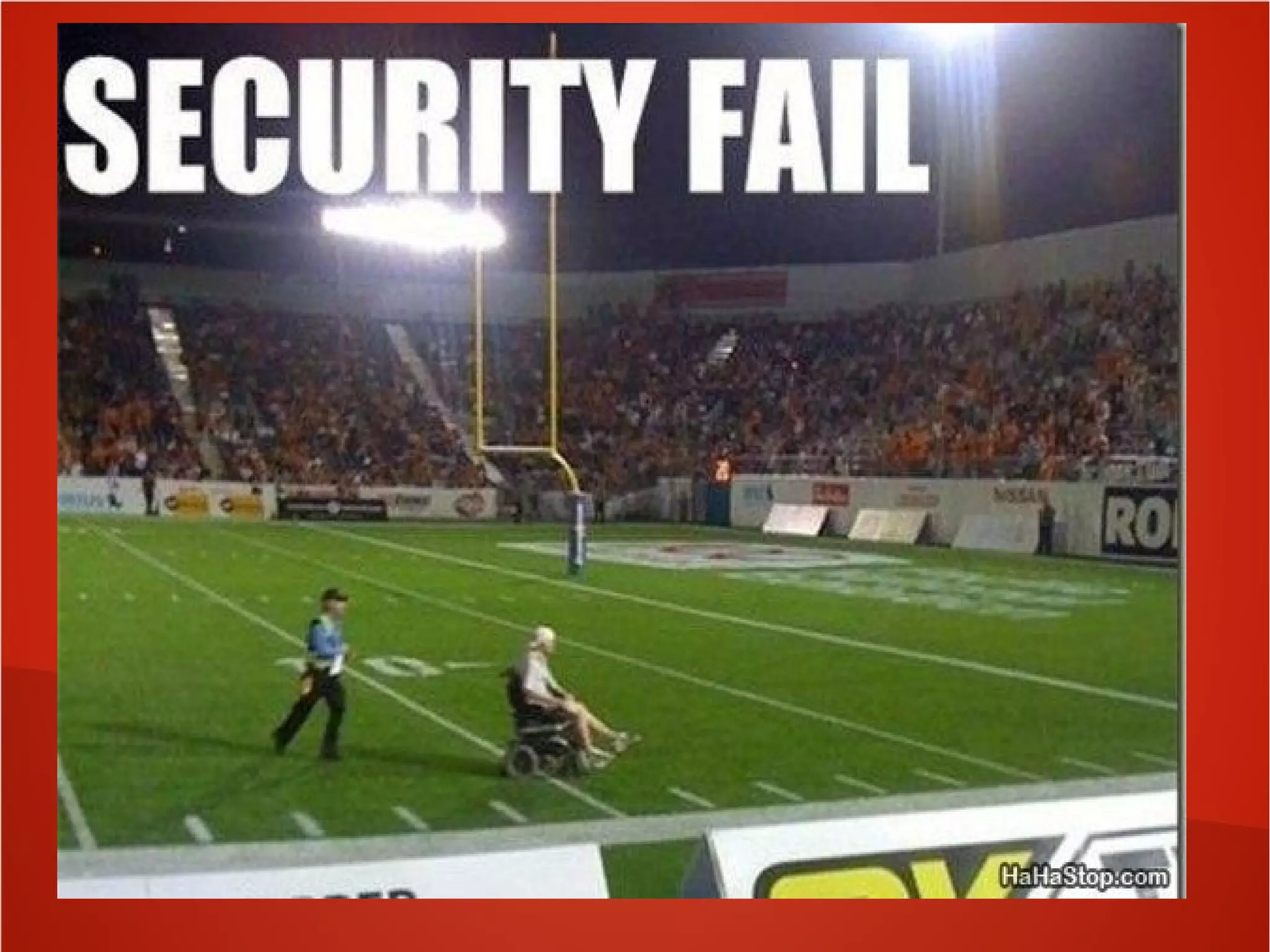
● Show real world examples of security failures
that could have been fixed with policy
● Security teams identify risks to the company
and create policies to mitigate just the risks
present. Without policy every risk would have
mitigation even if the risk didn't apply to the
company/department
Why are security policies important
● The end goal of security policies is to
protect:
● The organization
● The employees
● The Assets of the company
● (It's customers when possible)
Questions to answer in training
● How does all this security stuff affect my
job at the company?
● Do I have to do it?
● If I don't do it, what are you going to do?
● All this security crap is just going to
waste time and make my job harder!
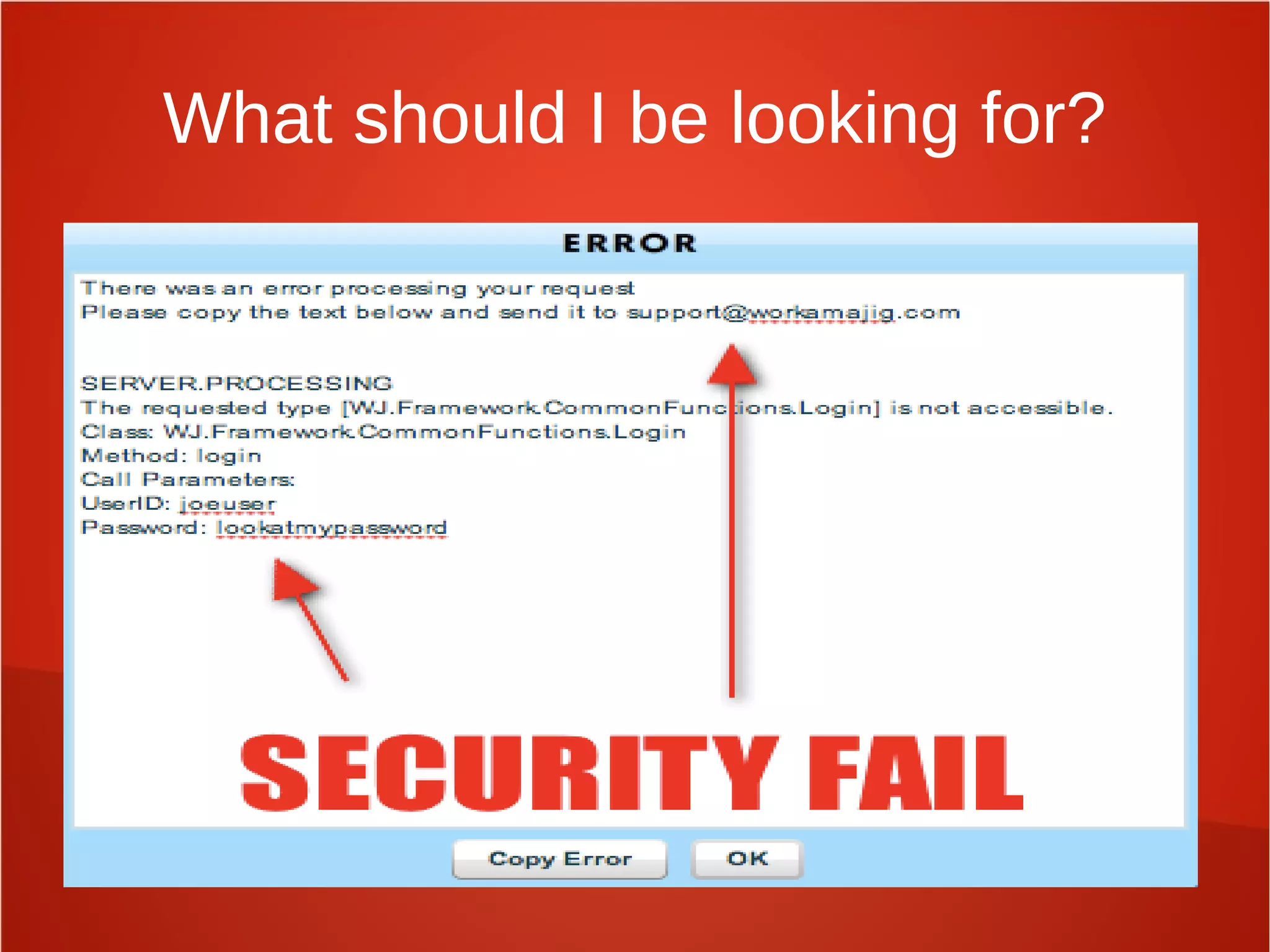
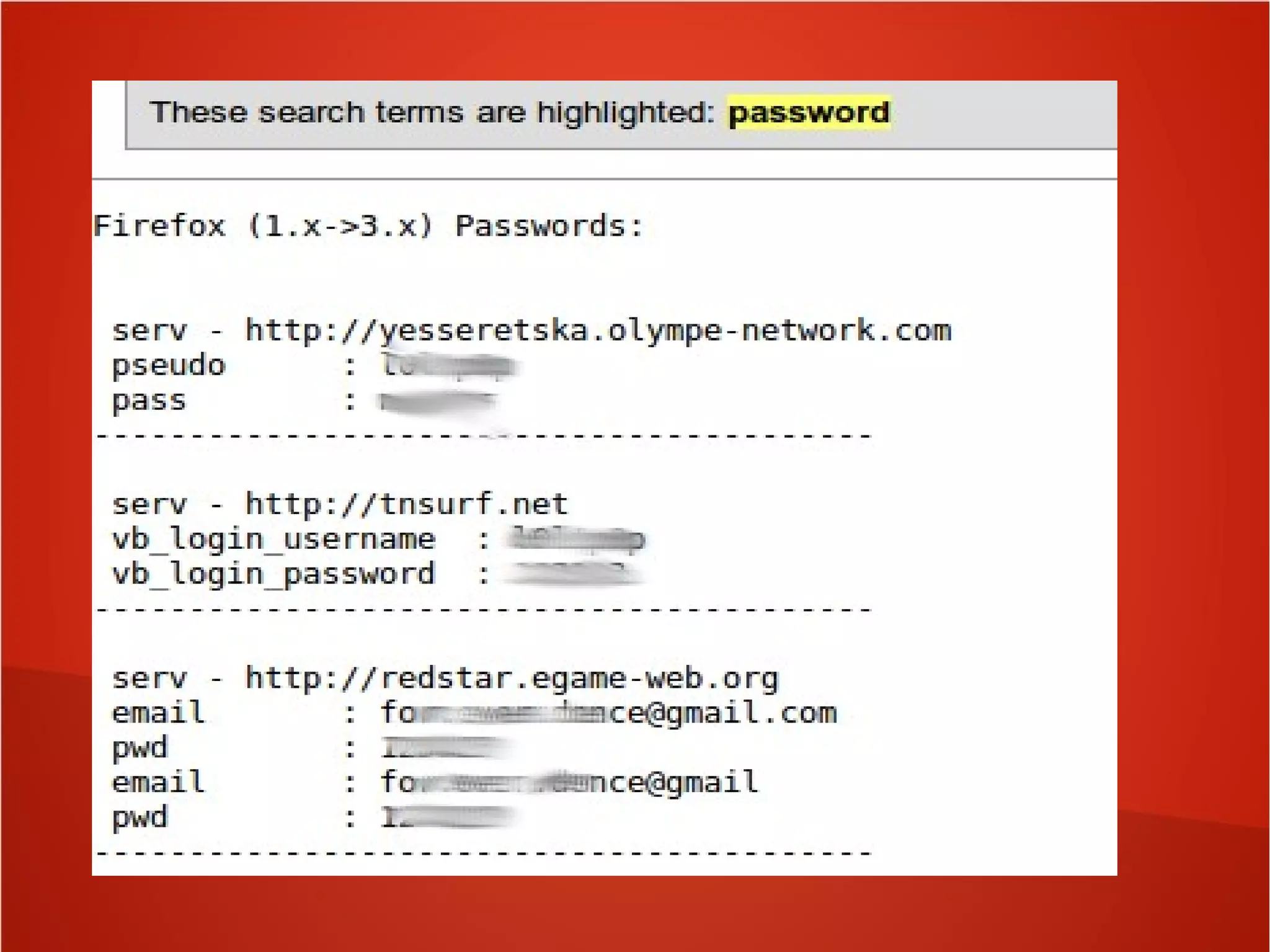
What should I be looking for?
Awareness Activities
● Formal training courses
● Posters
● Business unit walk throughs
● Security articles/reminders on intranet
● Appointment of a 'security awareness mentor'
● Security Awareness Day – activies, prizes, recognition for winners
● Sponsor event with security organization (ISSA, ISACA, SANS, ISC2, Infragard, etc)
● Provide trinkets for the users within the organization that support security
management principles
● Promote Security Awareness Week/month
● Provide security reference materials to employees (books, videos, websites)
Job Training
● Employees should be professionally trained
on the systems/processes they manage.
● Lack of training leads to misconfigurations or
process gaps which can lead to compromise
● It's the sign of a good employee to self learn.
It's the sign of bad management to blindly
trust that the employee is doing so.
● Vendor neutral vs vendor certifications
Performance Metrics
● Consistent metrics allow for the
identification of security gaps, identify is
process improvements helped or hurt,
and identify non-compliance
● Can be walkthroughs, quizes, or etc
Managing the Security Function
IS Security Officers
● The Information Security Officer is accountable for ensuring the
protection of all of the business information assets from intentional
and unintentional loss, disclosure, alteration, destruction, and
unavailability.
● The security officer typically doesn't have the resources available to
perform all of these functions and must depend on involvement from
other departments/individuals
● Must keep up with emerging technologies and risks
● Security officers often operate CIRT teams
● Provides the leadership for the information security awareness
program by ensuring that the program is delivered in a meaningful,
understandable way to the intended audience.
Bridging IT with Executives
● IS Security Officers translate threats based
on configuration/technoligies into:
● What is the real perceived threat?
● What is the risk (impact/probability)
● What is the cost of the safeguard?
● What will be the residual risk?
● How long will the project take (time, money,
people, systems)
Reporting
● Security officer should report as high in
the organization as possible to:
● Maintain visibility of the importance of
security
● Limit the distortion or inaccurate translation
of the message
Budget
● Security maintains it's own budget as
well as ensures each applicable
department's budget contains funds for
security training/remediation
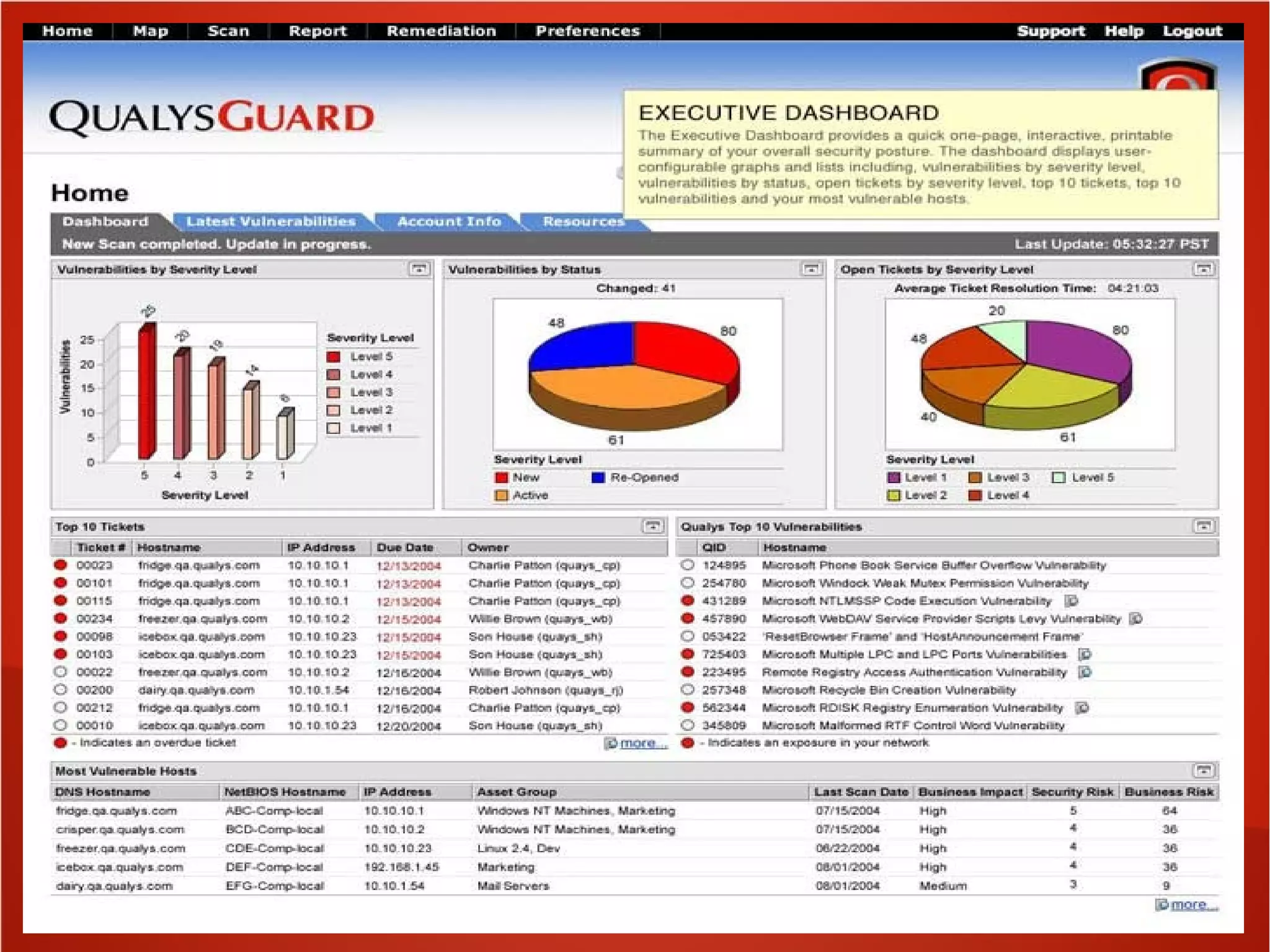
Work Metrics
● Automated metric systems should be implimented to rate the
day to day security and long term trends.
● Helpdesk tickets/hour/day
● Inbound email/hour/day
● Outbound email/hour/day
● Inbound connections at border firewall
– Packets dropped at border firewall
– Packets dropped at internal firewall
● Employee hours spent on compliance reporting
● Report metrics – how effective is each report? Has it ever caught
anything?
Interdepartmental resources
● Buy doughnuts for:
● System Admins
● Database Admins
● Network Admins
● Privacy Officers
● Compliance Officers
● Legal
● Law Enforcement
● QA testers
● Helpdesk
● Budget Officers
● Procurement Specialists
● Business Analysts
● Administrative Professionals
● Enterprise Architects
● Software Developers
Strategic Planning
● Make 3-5 year plans
● Review annually or before
Tactical Plans
● 6-18 month plans for specific purposes:
reducing vulnerabilities, etc
Review Security Program
● Anaully review security program for
completeness and to identify gaps
Domain 4
Software Development Security
Jem Jensen
StaridLabs
Overview
● Planning, programming, and management of
software systems
● Includes both operating systems and
applications
● Software is layered, kind of like networking
● Hardware, drivers, OS, utilities and applications
Software Development Life Cycle
● SDLC is is project management process
used to plan, execute, and control a
software development project
● Can differ from project to project
● Specific model should best fit the project
Basic SDLC Phases
● Project initiation and planning
● Functional requirements definition
● System design specifications
● Development and implementation
● Documentation and common program controls
● Acceptance
● Testing and evaluation control
● Transition to production
Project initiation and planning
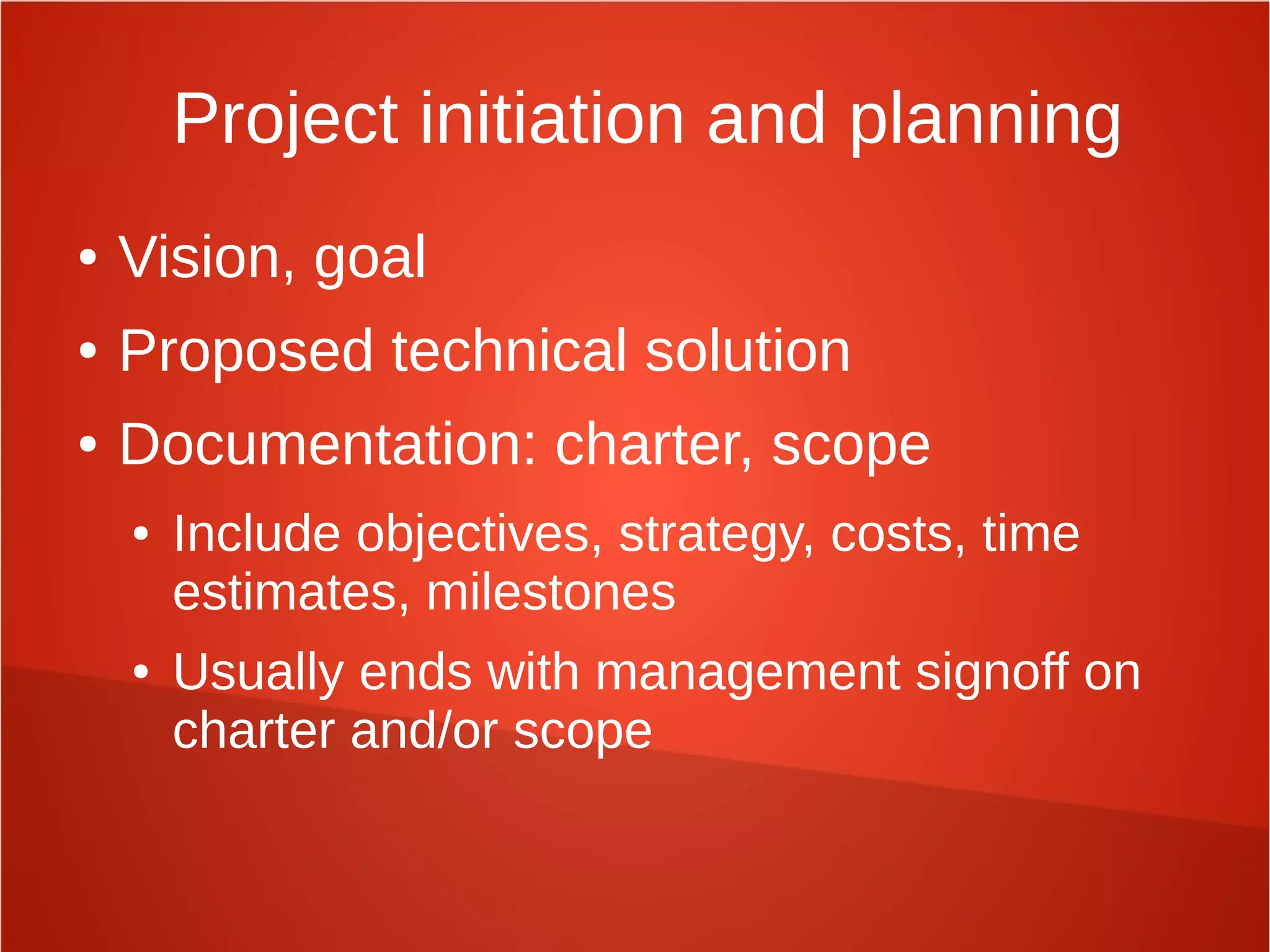
● Vision, goal
● Proposed technical solution
● Documentation: charter, scope
● Include objectives, strategy, costs, time
estimates, milestones
● Usually ends with management signoff on
charter and/or scope
Project initiation and planning
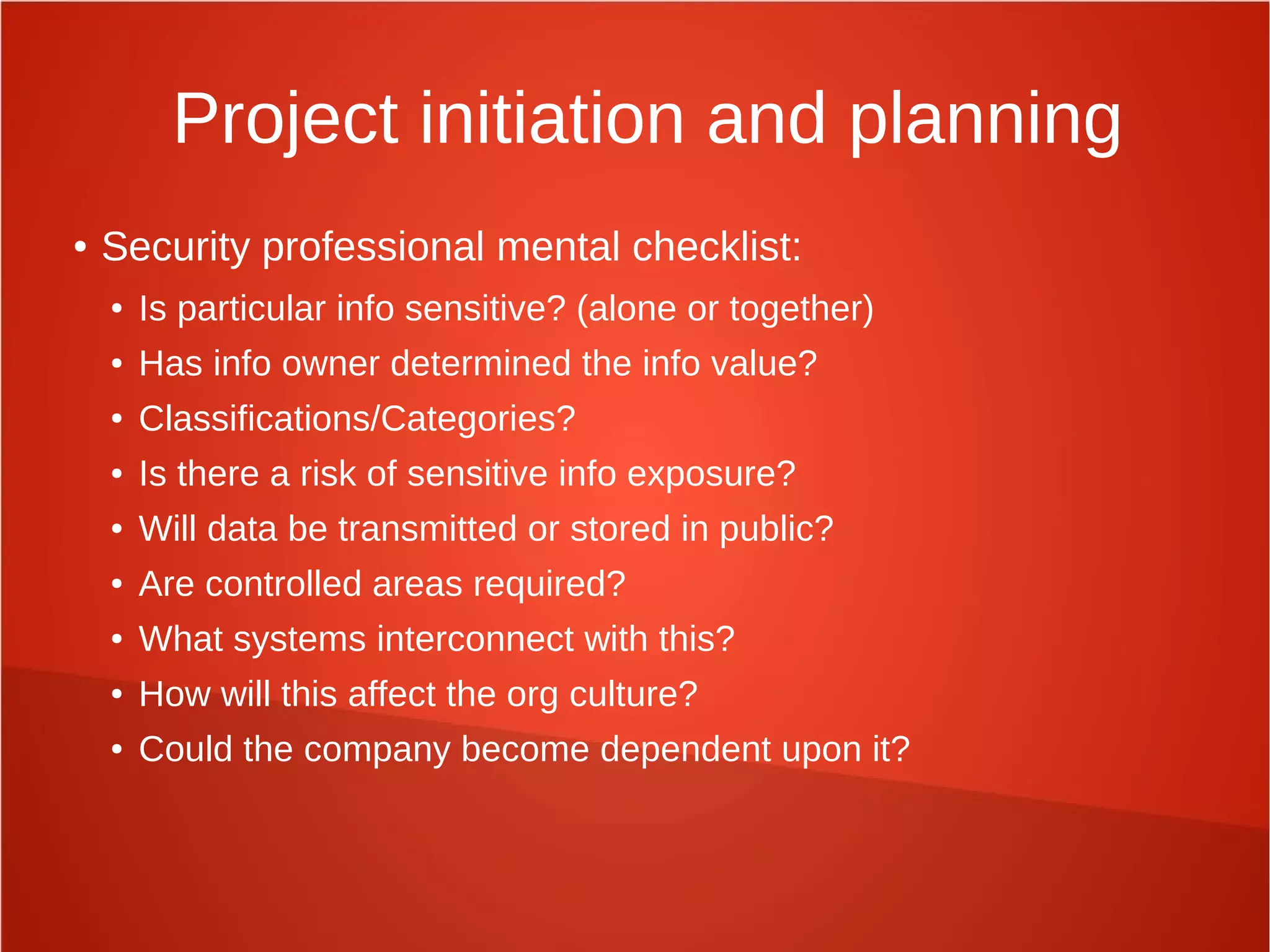
● Security professional mental checklist:
● Is particular info sensitive? (alone or together)
● Has info owner determined the info value?
● Classifications/Categories?
● Is there a risk of sensitive info exposure?
● Will data be transmitted or stored in public?
● Are controlled areas required?
● What systems interconnect with this?
● How will this affect the org culture?
● Could the company become dependent upon it?
Functional requirements definition
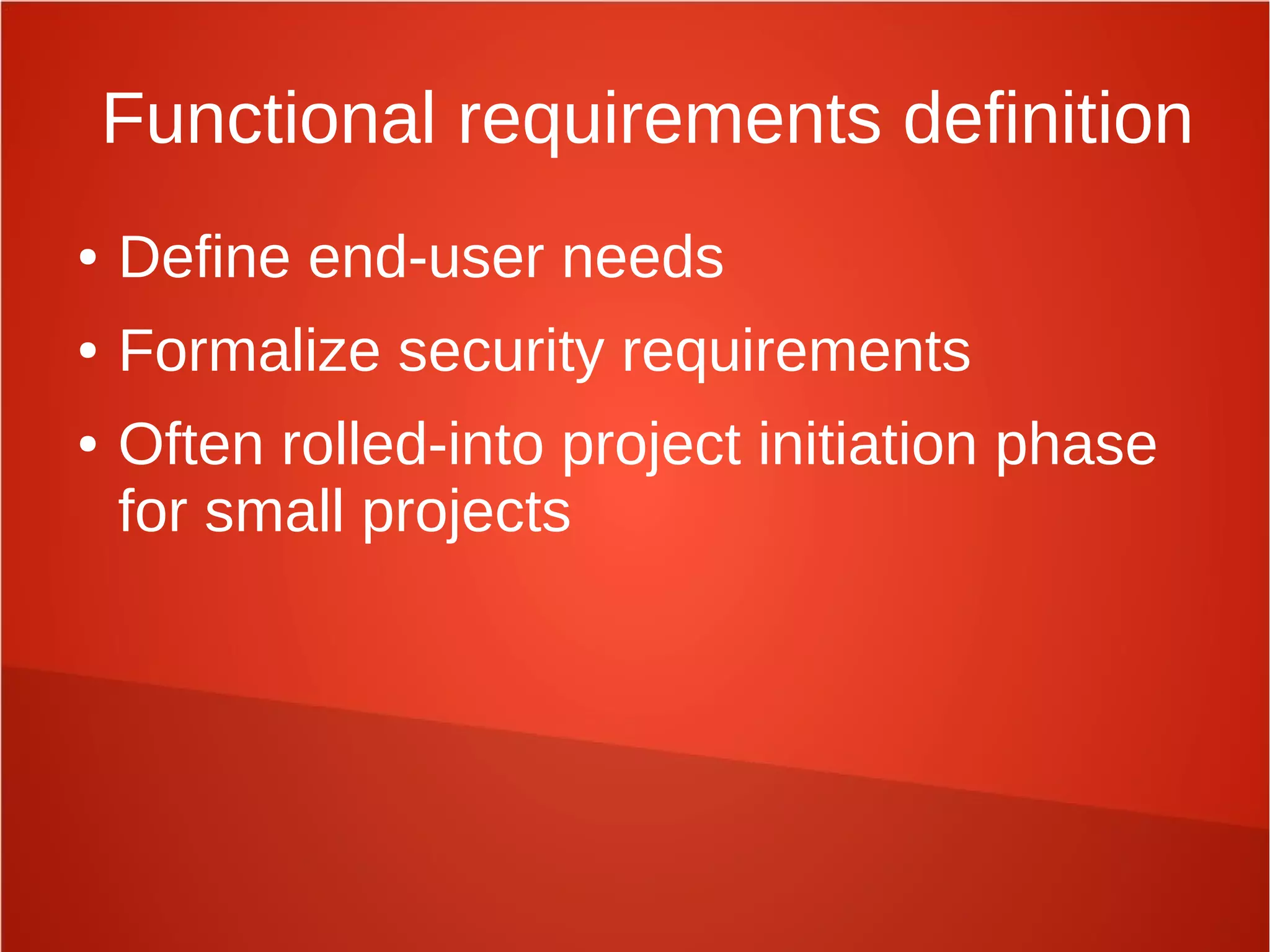
● Define end-user needs
● Formalize security requirements
● Often rolled-into project initiation phase
for small projects
System design specifications
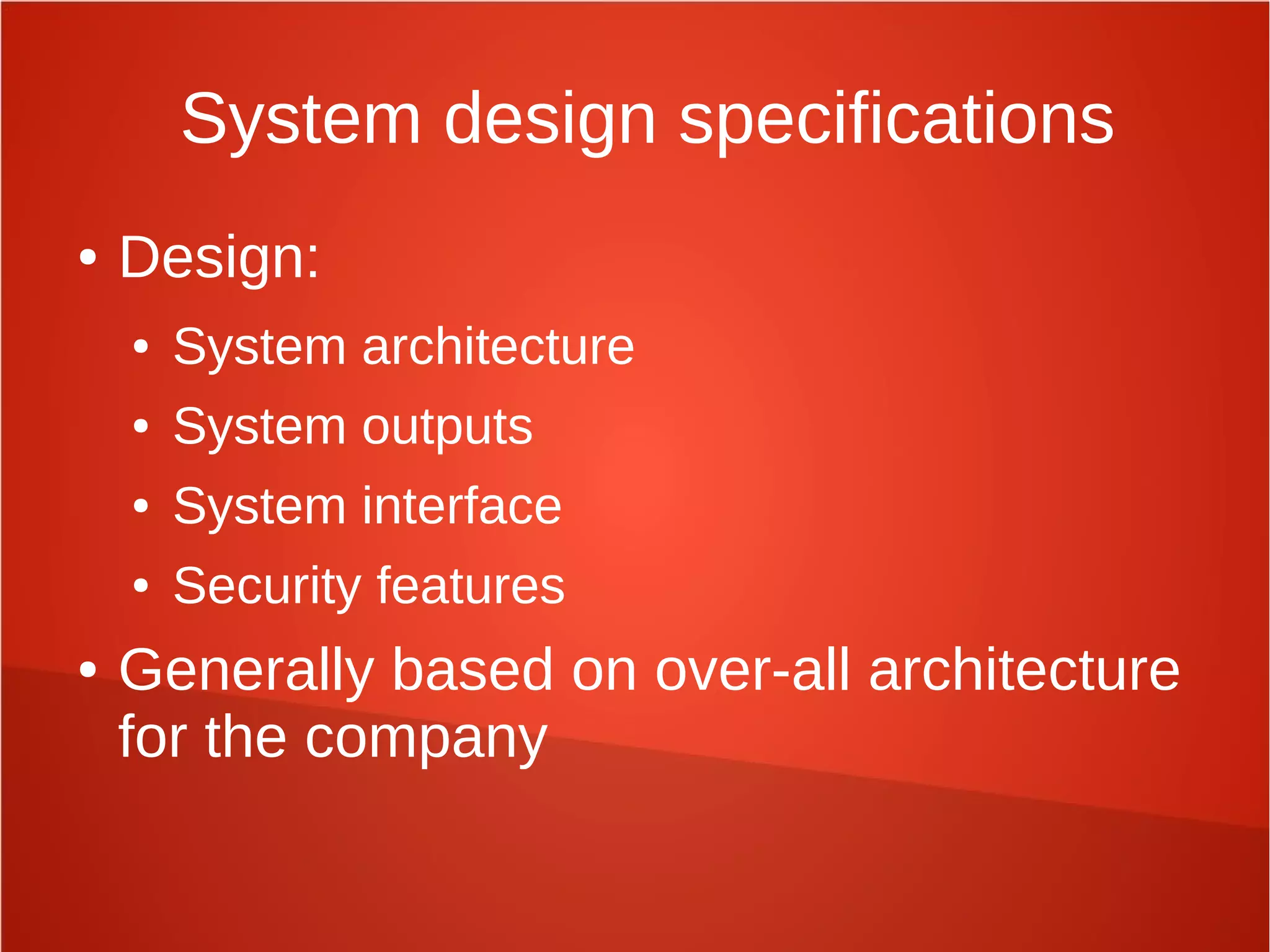
● Design:
● System architecture
● System outputs
● System interface
● Security features
● Generally based on over-all architecture
for the company
Development and implementation
● Generate:
● Source code
● Test cases
● Perform unit tests and functional tests
● Perform vulnerability analysis on code
Documentation and common
program controls
● Controls for editing data within the
program
● What types of logging the program does
● How program versions should be stored
● Tests and integrity checks
Acceptance
● Ideally, an independent group develops
test data and tests the code
● Should simulate live environment for
good tests
● Ensure the application meets security
requirements and specifications
Testing and Evaluation Controls
● Test data should include:
● Data at the ends of acceptable ranges
● Data beyond acceptable bounds
● Various data points between acceptable range
● Random data
● Data validations – review data before and after each
test to ensure data has not been changed
inadvertently
● Bounds checking
Testing and Evaluation Controls
● Never use production data
● Sanitize test data
● Test all changes
● Management should be informed and
sign off on testing results
Transition to Production
● Train new users
● Implement the system
● Installation
● Data conversions (if needed)
● Parallel operations (to reduce disruption)
Revisions
● Regular evaluation and audits
● Should incorporate security planning to
avoid future problems
● Document failures
● Helps to justify future enhancements
Maturity Models
● CMM
● Capability Maturity Model
● Framework to product higher quality
software products
● Continual optimization of processes
● ISO 9000?
Operation and Maintenance
● Monitor performance of the system
● Detect defects and weaknesses
● Verify changes don't impact existing
functionality or circumvent security
measures
Change Management
● Track changes in software and systems to
prevent unintended or unauthorized changes
● Should be a formal cycle with planning,
approval, testing, and documentation
● Patch management
● Should include testing and rollback features

CISSP Week 12

  • 1.
  • 2.
    Security Awareness Training ●Designedto tell why a policy exists ●Show practical examples and ways to identify threats ●Turn employees into human security sensors
  • 3.
    Topics ● Corporate securitypolicies ● Organization's security program ● Regulatory compliance requirements for the organization ● Social Engineering ● Business continuity ● Disaster Recovery
  • 4.
    Topics Cont'd ● EmergencyManagement (hazmat, biohaz, etc) ● Security incident response ● Data classification ● Information labeling and handling ● Personnel security, safety, and soundness ● Physical Security
  • 5.
    Topics Still Cont'd ●Appropriate computing resource use ● Proper care and handling of security credentials (usernames, passwords) ● Risk assessment ● Accidents, errors, or omissions
  • 6.
    Teaching why policyis necessary ● Show real world examples of security failures that could have been fixed with policy ● Security teams identify risks to the company and create policies to mitigate just the risks present. Without policy every risk would have mitigation even if the risk didn't apply to the company/department
  • 7.
    Why are securitypolicies important ● The end goal of security policies is to protect: ● The organization ● The employees ● The Assets of the company ● (It's customers when possible)
  • 8.
    Questions to answerin training ● How does all this security stuff affect my job at the company? ● Do I have to do it? ● If I don't do it, what are you going to do? ● All this security crap is just going to waste time and make my job harder!
  • 9.
    What should Ibe looking for?
  • 12.
    Awareness Activities ● Formaltraining courses ● Posters ● Business unit walk throughs ● Security articles/reminders on intranet ● Appointment of a 'security awareness mentor' ● Security Awareness Day – activies, prizes, recognition for winners ● Sponsor event with security organization (ISSA, ISACA, SANS, ISC2, Infragard, etc) ● Provide trinkets for the users within the organization that support security management principles ● Promote Security Awareness Week/month ● Provide security reference materials to employees (books, videos, websites)
  • 13.
    Job Training ● Employeesshould be professionally trained on the systems/processes they manage. ● Lack of training leads to misconfigurations or process gaps which can lead to compromise ● It's the sign of a good employee to self learn. It's the sign of bad management to blindly trust that the employee is doing so. ● Vendor neutral vs vendor certifications
  • 15.
    Performance Metrics ● Consistentmetrics allow for the identification of security gaps, identify is process improvements helped or hurt, and identify non-compliance ● Can be walkthroughs, quizes, or etc
  • 16.
    Managing the SecurityFunction IS Security Officers ● The Information Security Officer is accountable for ensuring the protection of all of the business information assets from intentional and unintentional loss, disclosure, alteration, destruction, and unavailability. ● The security officer typically doesn't have the resources available to perform all of these functions and must depend on involvement from other departments/individuals ● Must keep up with emerging technologies and risks ● Security officers often operate CIRT teams ● Provides the leadership for the information security awareness program by ensuring that the program is delivered in a meaningful, understandable way to the intended audience.
  • 17.
    Bridging IT withExecutives ● IS Security Officers translate threats based on configuration/technoligies into: ● What is the real perceived threat? ● What is the risk (impact/probability) ● What is the cost of the safeguard? ● What will be the residual risk? ● How long will the project take (time, money, people, systems)
  • 18.
    Reporting ● Security officershould report as high in the organization as possible to: ● Maintain visibility of the importance of security ● Limit the distortion or inaccurate translation of the message
  • 19.
    Budget ● Security maintainsit's own budget as well as ensures each applicable department's budget contains funds for security training/remediation
  • 20.
    Work Metrics ● Automatedmetric systems should be implimented to rate the day to day security and long term trends. ● Helpdesk tickets/hour/day ● Inbound email/hour/day ● Outbound email/hour/day ● Inbound connections at border firewall – Packets dropped at border firewall – Packets dropped at internal firewall ● Employee hours spent on compliance reporting ● Report metrics – how effective is each report? Has it ever caught anything?
  • 22.
    Interdepartmental resources ● Buydoughnuts for: ● System Admins ● Database Admins ● Network Admins ● Privacy Officers ● Compliance Officers ● Legal ● Law Enforcement ● QA testers ● Helpdesk ● Budget Officers ● Procurement Specialists ● Business Analysts ● Administrative Professionals ● Enterprise Architects ● Software Developers
  • 23.
    Strategic Planning ● Make3-5 year plans ● Review annually or before
  • 24.
    Tactical Plans ● 6-18month plans for specific purposes: reducing vulnerabilities, etc
  • 25.
    Review Security Program ●Anaully review security program for completeness and to identify gaps
  • 26.
    Domain 4 Software DevelopmentSecurity Jem Jensen StaridLabs
  • 27.
    Overview ● Planning, programming,and management of software systems ● Includes both operating systems and applications ● Software is layered, kind of like networking ● Hardware, drivers, OS, utilities and applications
  • 28.
    Software Development LifeCycle ● SDLC is is project management process used to plan, execute, and control a software development project ● Can differ from project to project ● Specific model should best fit the project
  • 29.
    Basic SDLC Phases ●Project initiation and planning ● Functional requirements definition ● System design specifications ● Development and implementation ● Documentation and common program controls ● Acceptance ● Testing and evaluation control ● Transition to production
  • 30.
    Project initiation andplanning ● Vision, goal ● Proposed technical solution ● Documentation: charter, scope ● Include objectives, strategy, costs, time estimates, milestones ● Usually ends with management signoff on charter and/or scope
  • 31.
    Project initiation andplanning ● Security professional mental checklist: ● Is particular info sensitive? (alone or together) ● Has info owner determined the info value? ● Classifications/Categories? ● Is there a risk of sensitive info exposure? ● Will data be transmitted or stored in public? ● Are controlled areas required? ● What systems interconnect with this? ● How will this affect the org culture? ● Could the company become dependent upon it?
  • 32.
    Functional requirements definition ●Define end-user needs ● Formalize security requirements ● Often rolled-into project initiation phase for small projects
  • 33.
    System design specifications ●Design: ● System architecture ● System outputs ● System interface ● Security features ● Generally based on over-all architecture for the company
  • 34.
    Development and implementation ●Generate: ● Source code ● Test cases ● Perform unit tests and functional tests ● Perform vulnerability analysis on code
  • 35.
    Documentation and common programcontrols ● Controls for editing data within the program ● What types of logging the program does ● How program versions should be stored ● Tests and integrity checks
  • 36.
    Acceptance ● Ideally, anindependent group develops test data and tests the code ● Should simulate live environment for good tests ● Ensure the application meets security requirements and specifications
  • 37.
    Testing and EvaluationControls ● Test data should include: ● Data at the ends of acceptable ranges ● Data beyond acceptable bounds ● Various data points between acceptable range ● Random data ● Data validations – review data before and after each test to ensure data has not been changed inadvertently ● Bounds checking
  • 38.
    Testing and EvaluationControls ● Never use production data ● Sanitize test data ● Test all changes ● Management should be informed and sign off on testing results
  • 39.
    Transition to Production ●Train new users ● Implement the system ● Installation ● Data conversions (if needed) ● Parallel operations (to reduce disruption)
  • 40.
    Revisions ● Regular evaluationand audits ● Should incorporate security planning to avoid future problems ● Document failures ● Helps to justify future enhancements
  • 41.
    Maturity Models ● CMM ●Capability Maturity Model ● Framework to product higher quality software products ● Continual optimization of processes ● ISO 9000?
  • 42.
    Operation and Maintenance ●Monitor performance of the system ● Detect defects and weaknesses ● Verify changes don't impact existing functionality or circumvent security measures
  • 43.
    Change Management ● Trackchanges in software and systems to prevent unintended or unauthorized changes ● Should be a formal cycle with planning, approval, testing, and documentation ● Patch management ● Should include testing and rollback features