Certified Information Systems Security Professional
(CISSP) Certification Training Course
CISSP® is a registered trademark of (ISC)²®
Domain 03: Security Architecture and Engineering
Learning Objectives
By the end of this lesson, you will be able to:
Implement secure design principles such as fail safe or fail secure,
trust but verify, and zero trust
Compare different security models
Discuss privacy, cybersecurity, and risk frameworks
Examine the concepts of security architecture
Explain cloud computing, Internet of Things, microservices,
and edge and fog computing
Learning Objectives
By the end of this lesson, you will be able to:
Summarize the concepts of Data Encryption Standard (DES)
and Advanced Encryption Standard (AES)
List the various advantages and disadvantages of symmetric and
asymmetric cryptography
Implement key management principles
Explain different environmental control methods
Introduction to Security Engineering
Security Architecture and Design: Case Study
Kevin Butler, Security Administrator in the Network Firewalls division
at Nutri Worldwide Inc. read the internal case study on security
architecture and design.
In the previous financial year, Nutri Worldwide Inc. expected a large
increase in IT infrastructure requirements. The management felt the
need to implement best practices for IT service management. Hilda
Jacob, the General Manager of IT security, was assigned the task of
selecting the best framework to help the organization identify, plan,
deliver, and support IT services. Hilda decided to select the ITIL
framework.
Security Engineering
Security engineering helps in:
• Building information systems and the related
architectures
• Delivering the required functionality to address
Bu
th
ile
ditn
h
g
re
in
afto
sro
m
f a
in
tifo
on
rm
sy
as
ttio
em
n sya
sn
te
dms
• Inct
o
h
re
po
re
ra
la
tt
in
eg
d s
ae
rc
cu
hr
itie
ty
ctc
u
orn
ets
rols, capabilities,
and behaviors into enterprise architecture and
information systems to address the security
principles of confidentiality, integrity, and
availability
Research, Implement, and Manage Engineering Processes Using
Secure Design Principles
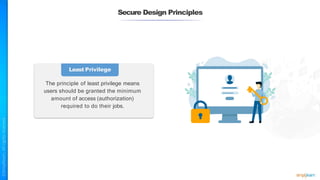
Least Privilege
The principle of least privilege means
users should be granted the minimum
amount of access (authorization)
required to do their jobs.
Secure Design Principles
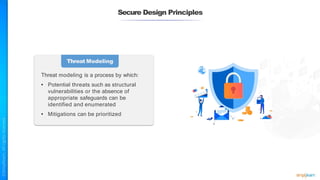
Threat Modeling
Threat modeling is a process by which:
• Potential threats such as structural
vulnerabilities or the absence of
appropriate safeguards can be
identified and enumerated
• Mitigations can be prioritized
Secure Design Principles
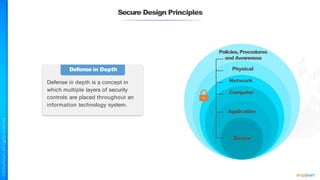
Defense in Depth
Defense in depth is a concept in
which multiple layers of security
controls are placed throughout an
information technology system.
Policies, Procedures
and Awareness
Physical
Network
Computer
Application
Device
Secure Design Principles
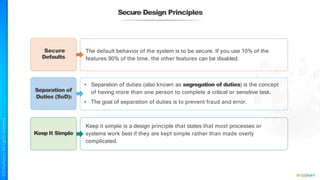
The default behavior of the system is to be secure. If you use 10% of the
features 90% of the time, the other features can be disabled.
• Separation of duties (also known as segregation of duties) is the concept
of having more than one person to complete a critical or sensitive task.
• The goal of separation of duties is to prevent fraud and error.
Keep it simple is a design principle that states that most processes or
systems work best if they are kept simple rather than made overly
complicated.
Secure
Defaults
Separation of
Duties (SoD):
Keep It Simple
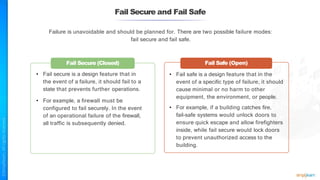
Fail Secure and Fail Safe
Failure is unavoidable and should be planned for. There are two possible failure modes:
fail secure and fail safe.
• Fail secure is a design feature that in
the event of a failure, it should fail to a
state that prevents further operations.
• For example, a firewall must be
configured to fail securely. In the event
of an operational failure of the firewall,
all traffic is subsequently denied.
• Fail safe is a design feature that in the
event of a specific type of failure, it should
cause minimal or no harm to other
equipment, the environment, or people.
• For example, if a building catches fire,
fail-safe systems would unlock doors to
ensure quick escape and allow firefighters
inside, while fail secure would lock doors
to prevent unauthorized access to the
building.
Fail Secure (Closed) Fail Safe (Open)
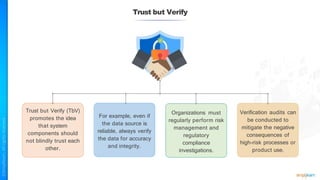
Trust but Verify
Trust but Verify (TbV)
promotes the idea
that system
components should
not blindly trust each
other.
For example, even if
the data source is
reliable, always verify
the data for accuracy
and integrity.
Organizations must
regularly perform risk
management and
regulatory
compliance
investigations.
Verification audits can
be conducted to
mitigate the negative
consequences of
high-risk processes or
product use.
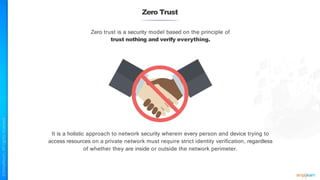
Zero Trust
Zero trust is a security model based on the principle of
trust nothing and verify everything.
It is a holistic approach to network security wherein every person and device trying to
access resources on a private network must require strict identity verification, regardless
of whether they are inside or outside the network perimeter.
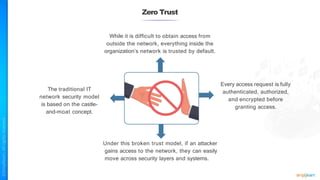
Zero Trust
Every access request is fully
authenticated, authorized,
and encrypted before
granting access.
The traditional IT
network security model
is based on the castle-
and-moat concept.
While it is difficult to obtain access from
outside the network, everything inside the
organization’s network is trusted by default.
Under this broken trust model, if an attacker
gains access to the network, they can easily
move across security layers and systems.
Privacy by Design
Privacy by Design is a design-thinking approach to proactively embed into the design and
operation of IT systems, networked infrastructure, and business practices, by default.
Seven principles of Privacy By Design:
1. Proactive not reactive or preventative not remedial: Anticipate, identify, and
prevent privacy-invasive events before they happen.
2. Privacy as default: Personal data is automatically protected in any given IT system
or business practice.
3. Privacy embedded into design: Privacy is a fully integrated component of the system
and not bolted on as an add-on.
4. Full functionality: Positive-sum, not zero-sum: employ a win-win approach to all
legitimate interests and objectives, without making any unnecessary trade-offs.
Source: https://privacy.ucsc.edu/resources/privacy-by-design---foundational-principles.pdf
Privacy by Design
Privacy by Design is a design-thinking approach to proactively embed into the design and
operation of IT systems, networked infrastructure, and business practices, by default.
Seven principles of Privacy By Design:
5. End-to-end security: Lifecycle protection: extend securely across the entire lifecycle
of the data from collection to retention to destruction at the end of the process.
6. Visibility and transparency: Assure stakeholders that business practices and
technologies are operating according to stated promises and objectives and subject to
independent verification.
7. Respect for user privacy: Keep things user-centric. Prioritize an individual's privacy
interests by offering such measures as strong privacy defaults, appropriate notice, and
user-friendly options.
Source: https://privacy.ucsc.edu/resources/privacy-by-design---foundational-principles.pdf
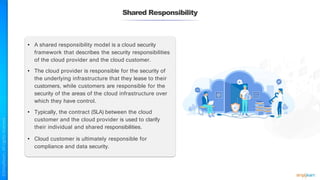
• A shared responsibility model is a cloud security
framework that describes the security responsibilities
of the cloud provider and the cloud customer.
• The cloud provider is responsible for the security of
the underlying infrastructure that they lease to their
customers, while customers are responsible for the
security of the areas of the cloud infrastructure over
which they have control.
• Typically, the contract (SLA) between the cloud
customer and the cloud provider is used to clarify
their individual and shared responsibilities.
• Cloud customer is ultimately responsible for
compliance and data security.
Shared Responsibility
Understand the Fundamental Concepts of Security Models
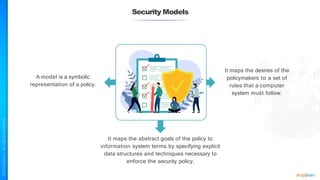
Security Models
It maps the abstract goals of the policy to
information system terms by specifying explicit
data structures and techniques necessary to
enforce the security policy.
A model is a symbolic
representation of a policy.
It maps the desires of the
policymakers to a set of
rules that a computer
system must follow.
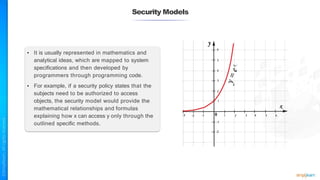
Security Models
• It is usually represented in mathematics and
analytical ideas, which are mapped to system
specifications and then developed by
programmers through programming code.
• For example, if a security policy states that the
subjects need to be authorized to access
objects, the security model would provide the
mathematical relationships and formulas
explaining how x can access y only through the
outlined specific methods.
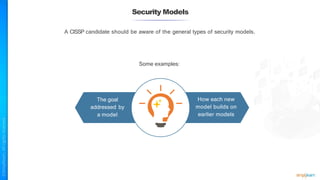
Security Models
Some examples:
A CISSP candidate should be aware of the general types of security models.
How each new
model builds on
earlier models
The goal
addressed by
a model
State Machine Model
This is used to describe the behavior of a system to different inputs.
• It is based on the state of a system.
o State is the snapshot of the system at one moment in time.
o Current permissions and current instances of subjects accessing objects must be
captured.
• This model must identify all the initial states of the system and outline how these values will be
changed by various inputs so that it is always safe in the final state.
State Machine Model
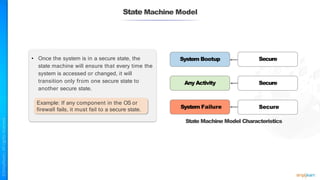
• Once the system is in a secure state, the
state machine will ensure that every time the
system is accessed or changed, it will
transition only from one secure state to
another secure state.
Example: If any component in the OS or
firewall fails, it must fail to a secure state.
System Bootup
Any Activity
Secure
Secure
System Failure Secure
State Machine Model Characteristics
Multilevel Lattice Models
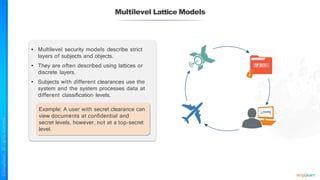
• Multilevel security models describe strict
layers of subjects and objects.
• They are often described using lattices or
discrete layers.
• Subjects with different clearances use the
system and the system processes data at
different classification levels.
Example: A user with secret clearance can
view documents at confidential and
secret levels, however, not at a top-secret
level.
AccessControl Matrix
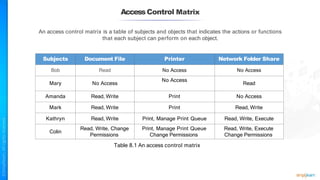
An access control matrix is a table of subjects and objects that indicates the actions or functions
that each subject can perform on each object.
Subjects Document File Printer Network Folder Share
Bob Read No Access No Access
Mary No Access
No Access
Read
Amanda Read, Write Print No Access
Mark Read, Write Print Read, Write
Kathryn Read, Write Print, Manage Print Queue Read, Write, Execute
Colin
Read, Write, Change
Permissions
Print, Manage Print Queue
Change Permissions
Read, Write, Execute
Change Permissions
Table 8.1 An access control matrix
Noninterference Model
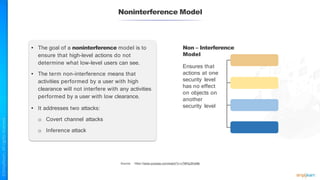
• The goal of a noninterference model is to
ensure that high-level actions do not
determine what low-level users can see.
• The term non-interference means that
activities performed by a user with high
clearance will not interfere with any activities
performed by a user with low clearance.
• It addresses two attacks:
o Covert channel attacks
o Inference attack
Non – Interference
Model
Ensures that
actions at one
security level
has no effect
on objects on
another
security level
Source: https://www.youtube.com/watch?v=v7MHq3Kwt8k
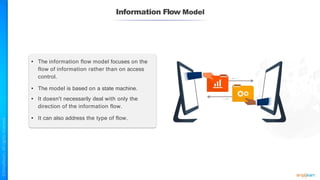
Information Flow Model
• The information flow model focuses on the
flow of information rather than on access
control.
• The model is based on a state machine.
• It doesn't necessarily deal with only the
direction of the information flow.
• It can also address the type of flow.
Information Flow Model
• The models are designed to prevent
unauthorized, insecure, or restricted
information flow, often between different
levels of security.
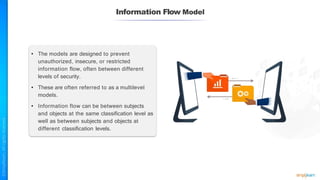
• These are often referred to as a multilevel
models.
• Information flow can be between subjects
and objects at the same classification level as
well as between subjects and objects at
different classification levels.
Information Flow Model
Manufacturer
Point of Sale
Distributer
Purchase Order, P.O. Change, Receiving
Acknowledgement
Purchase Order, P.O. Acknowledge, Manifest, Invoice
Examples of Security Models: Bell–LaPadula Confidentiality Model
Bell–LaPadula
• It focuses on maintaining the confidentiality of
objects.
• It is the first mathematical model of a multilevel
security policy that defines a secure state of the
system.
• It’s a framework for computer systems that store
and process sensitive information.
• Matrix and security levels are used to determine
if a subject can access an object.
• It uses subjects, objects, access operations, and
security labels.
Top Secret
Secret
No
read
up
Confidential
Unclassified
No
write
down
Examples of Security Models: Bell–LaPadula Confidentiality Model
Rules and
properties:
• The simple security rule: A subject cannot read data at a higher
security level (no read up).
• The *-property rule: A subject cannot write data to an object at a
lower security level (no write down).
• The strong star property rule: A subject can perform read and write
functions only to objects at its same security level.
Drawbacks:
• It addresses only the confidentiality of data.
• It does not address integrity or availability because it was designed in
the 1970s.
• It does not support many operations that are common today, such as
file sharing and networking.
• It also assumes secure transitions between security layers and does
not address covert channels.
Examples of Security Models: BIBA Integrity Model
The BIBA Integrity Model protects the integrity of the information and the activities that
take place within a system. The following are the axioms of the BIBA Integrity Model:
The Simple Integrity Axiom The Star Integrity Axiom
• It states that a subject
cannot read data at a lower
integrity level
• It means that a subject
cannot read documents
below its level. This is called
a no read down, or NRD.
• It states that a subject cannot
modify an object in a higher
integrity level.
• This is called no write-up, or
NWU.
Examples of Security Models: BIBA Integrity Model
Drawbacks:
• It addresses only integrity, not confidentiality
or availability.
• It focuses on protecting objects from
external threats; it assumes that internal
threats are handled programmatically.
• It does not prevent covert channels.
Top Secret
Read
Write
Secret
Confidential
Examples of Security Models: Clark–Wilson Integrity Model
Goals of
Integrity
• It is an integrity model developed after the BIBA model.
• It is used commercially.
• It addresses all the goals of the integrity model:
o Prevents unauthorized users from making modifications (BIBA model)
o Prevents authorized users from making improper modifications
o Maintains internal and external consistency
Access triple,
separation of duties is
enforced.
Subjects can access
objects only through
authorized programs.
Auditing is required.
It focuses on well-formed transactions and separation of duties.
Well-formed Transaction
A series of operations that
transform a data item from
one consistent state to another
is a well-formed transaction.
AccessTriple
The model uses a three-part
relationship of a subject,
program, or object (where a
program is interchangeable
with a transaction), known
as a triple or an access
control triple.
Examples of Security Models: Clark–Wilson Integrity Model
Clark–Wilson Integrity Model
Clark-Wilson model defines the following items and procedures:
Constrained data item (CDI) Unconstrained data item (UDI)
It is a data item whose integrity
is protected by the security
model.
It is a data item that is not
controlled by the security model.
Any input or output that hasn’t
been validated would be
considered an unconstrained
data item.
Clark–Wilson Integrity Model
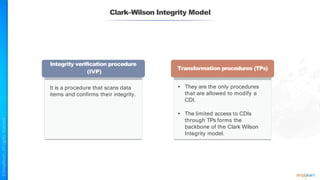
Integrity verification procedure
(IVP)
Transformation procedures (TPs)
It is a procedure that scans data
items and confirms their integrity.
• They are the only procedures
that are allowed to modify a
CDI.
• The limited access to CDIs
through TPs forms the
backbone of the Clark Wilson
Integrity model.
Clark–Wilson Integrity Model
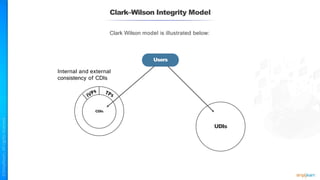
Clark Wilson model is illustrated below:
Users
CDIs
UDIs
Internal and external
consistency of CDIs
Brewer and Nash Model
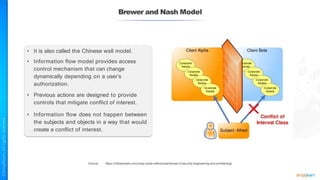
• It is also called the Chinese wall model.
• Information flow model provides access
control mechanism that can change
dynamically depending on a user’s
authorization.
• Previous actions are designed to provide
controls that mitigate conflict of interest.
• Information flow does not happen between
the subjects and objects in a way that would
create a conflict of interest.
Source: https://infosectests.com/cissp-study-references/domain-3-security-engineering-and-architecting/
Graham Denning Model
• It defines a set of basic rights in terms of
commands that a subject can execute over
an object.
• Each object has an owner that has special
rights on it.
• Each subject has another subject (controller)
that has special rights on it.
• The model is based on the Access Control
Matrix model.
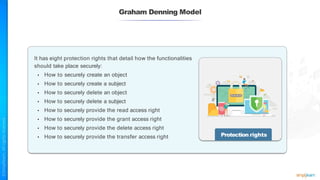
Graham Denning Model
Protection rights
It has eight protection rights that detail how the functionalities
should take place securely:
• How to securely create an object
• How to securely create a subject
• How to securely delete an object
• How to securely delete a subject
• How to securely provide the read access right
• How to securely provide the grant access right
• How to securely provide the delete access right
• How to securely provide the transfer access right
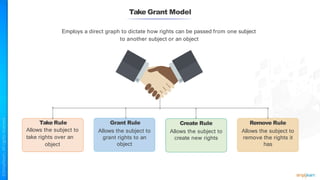
Take Grant Model
Take Rule
Allows the subject to
take rights over an
object
Grant Rule
Allows the subject to
grant rights to an
object
Create Rule
Allows the subject to
create new rights
Remove Rule
Allows the subject to
remove the rights it
has
Employs a direct graph to dictate how rights can be passed from one subject
to another subject or an object
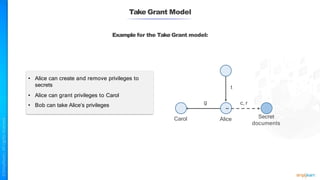
• Alice can create and remove privileges to
secrets
• Alice can grant privileges to Carol
• Bob can take Alice’s privileges
Take Grant Model
Example for the Take Grant model:
Carol Alice Secret
documents
t
g c, r
Composition Theories
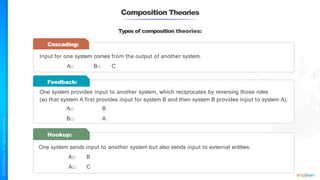
• Systems are usually built by combining smaller systems.
• Security of components must be considered when these components are combined into larger
systems.
• This is based on the notion of how inputs and outputs between multiple systems relate to one
another
o It follows how information flows between systems rather than within an individual system.
Composition Theories
A□
B□
B
A
Hookup:
One system sends input to another system but also sends input to external entities.
A□ B
A□ C
Types of composition theories:
Cascading:
Input for one system comes from the output of another system.
A□ B□ C
Feedback:
One system provides input to another system, which reciprocates by reversing those roles
(so that system A first provides input for system B and then system B provides input to system A).
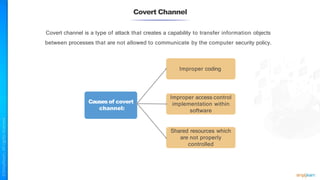
Covert Channel
Covert channel is a type of attack that creates a capability to transfer information objects
between processes that are not allowed to communicate by the computer security policy.
Shared resources which
are not properly
controlled
Improper access control
implementation within
software
Improper coding
Causes of covert
channel:
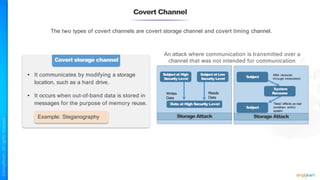
Covert Channel
The two types of covert channels are covert storage channel and covert timing channel.
Covert storage channel
• It communicates by modifying a storage
location, such as a hard drive.
• It occurs when out-of-band data is stored in
messages for the purpose of memory reuse.
Example: Steganography
Data at High Security Level
Storage Attack
Writes
Data
Reads
Data
Subject at High
Security Level
Subject at Low
Security Level
Storage Attack
“Sees” effects as real
condition within
system
After recourse
through modulation
Subject
System
Recourse
Subject
An attack where communication is transmitted over a
channel that was not intended for communication
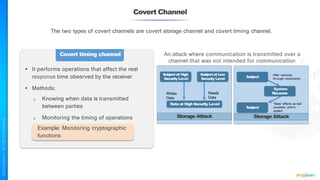
Covert Channel
The two types of covert channels are covert storage channel and covert timing channel.
Covert timing channel
• It performs operations that affect the real
response time observed by the receiver
• Methods:
o Knowing when data is transmitted
between parties
o Monitoring the timing of operations
Example: Monitoring cryptographic
functions
Data at High Security Level
Storage Attack
Writes
Data
Reads
Data
Subject at High
Security Level
Subject at Low
Security Level
Storage Attack
“Sees” effects as real
condition within
system
After recourse
through modulation
Subject
System
Recourse
Subject
An attack where communication is transmitted over a
channel that was not intended for communication
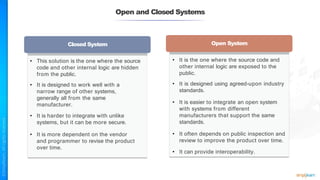
Open and Closed Systems
Closed System Open System
• This solution is the one where the source
code and other internal logic are hidden
from the public.
• It is designed to work well with a
narrow range of other systems,
generally all from the same
manufacturer.
• It is harder to integrate with unlike
systems, but it can be more secure.
• It is more dependent on the vendor
and programmer to revise the product
over time.
• It is the one where the source code and
other internal logic are exposed to the
public.
• It is designed using agreed-upon industry
standards.
• It is easier to integrate an open system
with systems from different
manufacturers that support the same
standards.
• It often depends on public inspection and
review to improve the product over time.
• It can provide interoperability.
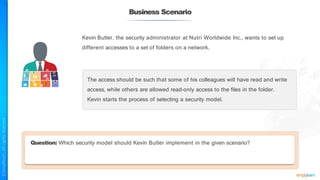
Business Scenario
Kevin Butler, the security administrator at Nutri Worldwide Inc., wants to set up
different accesses to a set of folders on a network.
The access should be such that some of his colleagues will have read and write
access, while others are allowed read-only access to the files in the folder.
Kevin starts the process of selecting a security model.
Question: Which security model should Kevin Butler implement in the given scenario?
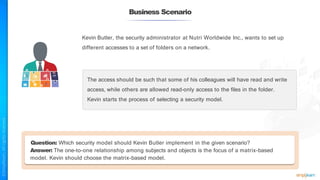
Business Scenario
Kevin Butler, the security administrator at Nutri Worldwide Inc., wants to set up
different accesses to a set of folders on a network.
The access should be such that some of his colleagues will have read and write
access, while others are allowed read-only access to the files in the folder.
Kevin starts the process of selecting a security model.
Question: Which security model should Kevin Butler implement in the given scenario?
Answer: The one-to-one relationship among subjects and objects is the focus of a matrix-based
model. Kevin should choose the matrix-based model.
Select Controls Based on System Security Requirements
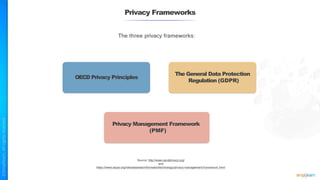
Privacy Frameworks
Privacy Management Framework
(PMF)
OECD Privacy Principles
The General Data Protection
Regulation (GDPR)
The three privacy frameworks:
Source: http://www.oecdprivacy.org/
and
https://www.aicpa.org/interestareas/informationtechnology/privacy-management-framework.html
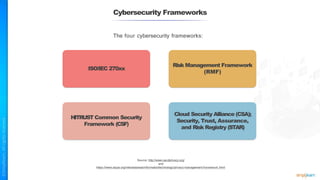
Cybersecurity Frameworks
ISO/IEC 270xx
Risk Management Framework
(RMF)
HITRUST Common Security
Framework (CSF)
Cloud Security Alliance (CSA);
Security, Trust, Assurance,
and Risk Registry (STAR)
The four cybersecurity frameworks:
Source: http://www.oecdprivacy.org/
and
https://www.aicpa.org/interestareas/informationtechnology/privacy-management-framework.html
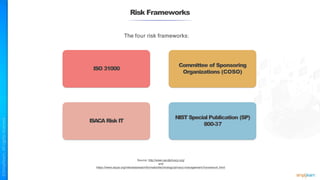
Risk Frameworks
ISO 31000
Committee of Sponsoring
Organizations (COSO)
ISACA Risk IT
NIST Special Publication (SP)
800-37
The four risk frameworks:
Source: http://www.oecdprivacy.org/
and
https://www.aicpa.org/interestareas/informationtechnology/privacy-management-framework.html
Understand Security Capabilities of Information Systems
Architecture
It provides a
representation of the
concerns of each
stakeholder.
It is a tool used to understand
the structure and behavior of
a complex system through
different views.
Architecture
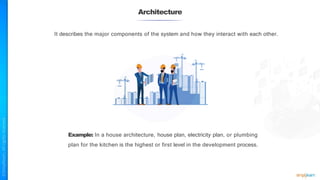
It describes the major components of the system and how they interact with each other.
Example: In a house architecture, house plan, electricity plan, or plumbing
plan for the kitchen is the highest or first level in the development process.
Architecture
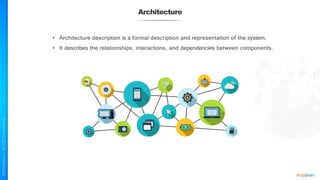
• Architecture description is a formal description and representation of the system.
• It describes the relationships, interactions, and dependencies between components.
System Architecture
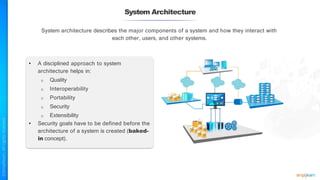
System architecture describes the major components of a system and how they interact with
each other, users, and other systems.
• A disciplined approach to system
architecture helps in:
o Quality
o Interoperability
o Portability
o Security
o Extensibility
• Security goals have to be defined before the
architecture of a system is created (baked-
in concept).
System Architecture
• Security being addressed late in the
development phase is called baked-on
concept.
• ISO/IEC 42010 is the systems and software
engineering architecture description.
• It is important to understand the scope of the
target system before you can develop,
architect, or evaluate it.
Security Architecture Requirement
• The government and the industry needed
to ensure that all the systems that they
were purchasing and implementing were
protecting its secrets.
• They needed to come up with a way to instruct
vendors on how to build computer systems to
meet their security needs.
• In order to find a way to test the products, the
architecture is developed based on the same
security needs.
Security Architecture Requirement
• In 1972, the U.S. government released a
report (Computer Security Technology
Planning Study) that outlined basic and
foundational security requirements of
computer systems that it would deem
acceptable for purchase and deployment.
• These requirements shaped the security
architecture of almost all of the systems in use
today.
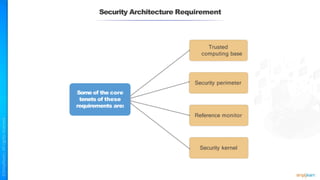
Security Architecture Requirement
Security kernel
Reference monitor
Security perimeter
Trusted
computing base
Some of the core
tenets of these
requirements are:
Trusted Computing Base
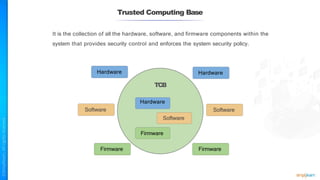
It is the collection of all the hardware, software, and firmware components within the
system that provides security control and enforces the system security policy.
Software Software
Hardware Hardware
Firmware Firmware
TCB
Hardware
Software
Firmware
Trusted Computing Base
The TCB does not only address operating system components, but it
also addresses hardware, software, and firmware components as
they can also affect the system negatively or positively.
Trusted Computing Base
The components that make up the TCB provide extra layers of
protection around these mechanisms to help ensure they are not
compromised, so the system will always run safely and predictably.
Trusted Computing Base
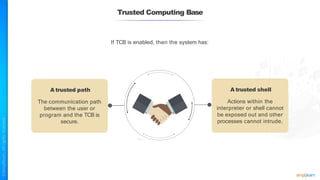
If TCB is enabled, then the system has:
A trusted shell
Actions within the
interpreter or shell cannot
be exposed out and other
processes cannot intrude.
A trusted path
The communication path
between the user or
program and the TCB is
secure.
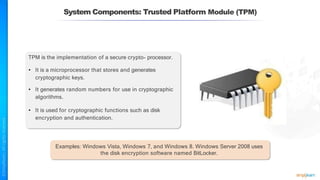
System Components: Trusted Platform Module (TPM)
TPM is the implementation of a secure crypto- processor.
• It is a microprocessor that stores and generates
cryptographic keys.
• It generates random numbers for use in cryptographic
algorithms.
• It is used for cryptographic functions such as disk
encryption and authentication.
Examples: Windows Vista, Windows 7, and Windows 8. Windows Server 2008 uses
the disk encryption software named BitLocker.
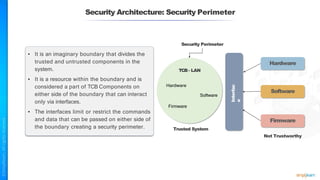
Security Architecture: Security Perimeter
• It is an imaginary boundary that divides the
trusted and untrusted components in the
system.
• It is a resource within the boundary and is
considered a part of TCB Components on
either side of the boundary that can interact
only via interfaces.
• The interfaces limit or restrict the commands
and data that can be passed on either side of
the boundary creating a security perimeter.
TCB- LAN
Hardware
Software
Firmware
Trusted System
Interfac
e
Hardware
Software
Firmware
Not Trustworthy
Security Perimeter
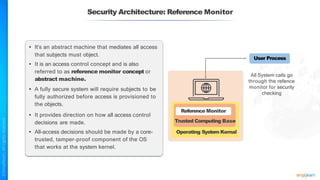
Security Architecture: Reference Monitor
• It’s an abstract machine that mediates all access
that subjects must object.
• It is an access control concept and is also
referred to as reference monitor concept or
abstract machine.
• A fully secure system will require subjects to be
fully authorized before access is provisioned to
the objects.
• It provides direction on how all access control
decisions are made.
• All-access decisions should be made by a core-
trusted, tamper-proof component of the OS
that works at the system kernel.
All System calls go
through the refence
monitor for security
checking
Trusted Computing Base
Operating System Kernal
User Process
Reference Monitor
John Full control
Bob No Access
David Read
Marge Full control
George Write
Sean No Access
John Full control
Bob No Access
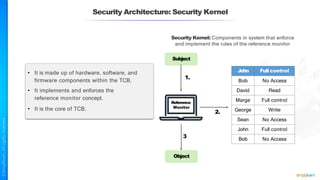
Security Architecture: Security Kernel
Reference
Monitor
Subject
Object
Security Kernel: Components in system that enforce
and implement the rules of the reference monitor
• It is made up of hardware, software, and
firmware components within the TCB.
• It implements and enforces the
reference monitor concept.
• It is the core of TCB.
1.
2.
3
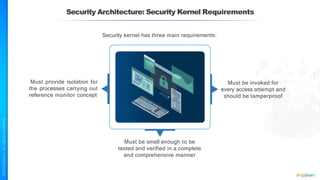
Security Architecture: Security Kernel Requirements
Must provide isolation for
the processes carrying out
reference monitor concept
Must be small enough to be
tested and verified in a complete
and comprehensive manner
Must be invoked for
every access attempt and
should be tamperproof
Security kernel has three main requirements:
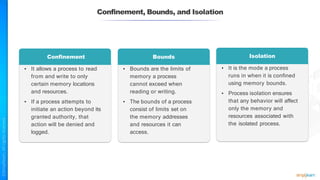
Confinement, Bounds, and Isolation
Confinement
• It allows a process to read
from and write to only
certain memory locations
and resources.
• If a process attempts to
initiate an action beyond its
granted authority, that
action will be denied and
logged.
Bounds
• Bounds are the limits of
memory a process
cannot exceed when
reading or writing.
• The bounds of a process
consist of limits set on
the memory addresses
and resources it can
access.
Isolation
• It is the mode a process
runs in when it is confined
using memory bounds.
• Process isolation ensures
that any behavior will affect
only the memory and
resources associated with
the isolated process.
Assess and Mitigate the Vulnerabilities of Security Architectures,
Designs, and Solution Elements
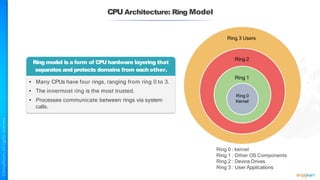
CPU Architecture: Ring Model
Ring 0
Kernel
Ring 3 Users
Ring 2
Ring 1
Ring 0 : kernel
Ring 1 : Other OS Components
Ring 2 : Device Drives
Ring 3 : User Applications
Ring model is a form of CPU hardware layering that
separates and protects domains from each other.
• Many CPUs have four rings, ranging from ring 0 to 3.
• The innermost ring is the most trusted.
• Processes communicate between rings via system
calls.
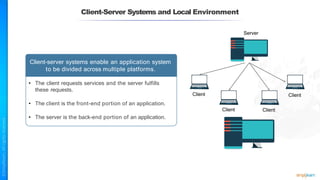
Client-Server Systems and Local Environment
Server
Client
Client Client
Client
Client-server systems enable an application system
to be divided across multiple platforms.
• The client requests services and the server fulfills
these requests.
• The client is the front-end portion of an application.
• The server is the back-end portion of an application.
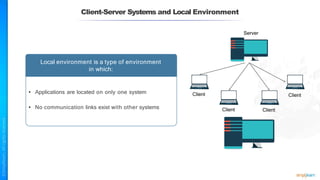
Client-Server Systems and Local Environment
Server
Client
Client Client
Client
Local environment is a type of environment
in which:
• Applications are located on only one system
• No communication links exist with other systems
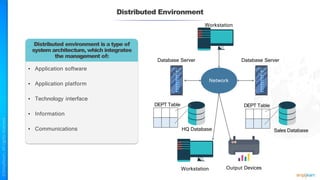
Distributed Environment
Workstation
Database Server Database Server
Network
DEPT Table DEPT Table
HQ Database Sales Database
Output Devices
Workstation
• Application platform
• Technology interface
• Information
• Communications
Distributed environment is a type of
system architecture, which integrates
the management of:
• Application software
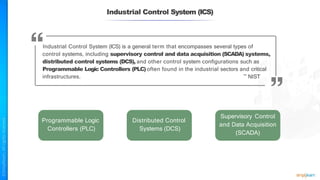
Industrial Control System (ICS)
Industrial Control System (ICS) is a general term that encompasses several types of
control systems, including supervisory control and data acquisition (SCADA) systems,
distributed control systems (DCS), and other control system configurations such as
Programmable Logic Controllers (PLC) often found in the industrial sectors and critical
infrastructures. ~ NIST
Programmable Logic
Controllers (PLC)
Distributed Control
Systems (DCS)
Supervisory Control
and Data Acquisition
(SCADA)
Programmable Logic Controller (PLC)
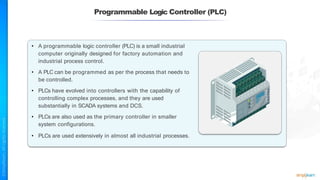
• A programmable logic controller (PLC) is a small industrial
computer originally designed for factory automation and
industrial process control.
• A PLC can be programmed as per the process that needs to
be controlled.
• PLCs have evolved into controllers with the capability of
controlling complex processes, and they are used
substantially in SCADA systems and DCS.
• PLCs are also used as the primary controller in smaller
system configurations.
• PLCs are used extensively in almost all industrial processes.
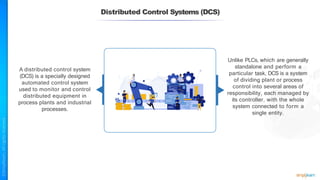
A distributed control system
(DCS) is a specially designed
automated control system
used to monitor and control
distributed equipment in
process plants and industrial
processes.
Distributed Control Systems (DCS)
Unlike PLCs, which are generally
standalone and perform a
particular task, DCS is a system
of dividing plant or process
control into several areas of
responsibility, each managed by
its controller, with the whole
system connected to form a
single entity.
Supervisory Control and Data Acquisition (SCADA)
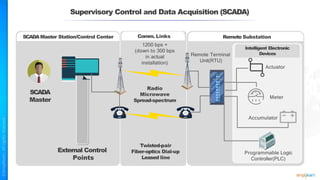
SCADA (Supervisory Control and Data Acquisition) systems are used to monitor and control a plant or
equipment in industries such as telecommunications, water, waste control, energy, oil and gas
refining, and other public transportation systems (airport, traffic control, and rails).
Supervisory Control and Data Acquisition (SCADA)
SCADA consists of many remote terminal
units spread geographically across for the
collection of data and is connected to the
master station for centralized data
acquisition via any communication system.
SCADA provides management with real-
time data on production, improves plant
and personnel safety, and reduces costs
of operation.
SCADA systems have increasingly adopted Internet
of things technology to significantly improve
interoperability, reduce infrastructure costs, and
increase ease of maintenance and integration.
Supervisory Control and Data Acquisition (SCADA)
SCADA
Master
External Control
Points
Radio
Microwave
Spread-spectrum
Twisted-pair
Fiber-optics Dial-up
Leased line
SCADAMaster Station/Control Center Comm. Links
1200 bps +
(down to 300 bps
in actual
installation)
Remote Substation
Intelligent Electronic
Devices
Actuator
Meter
Accumulator
Programmable Logic
Controller(PLC)
Remote Terminal
Unit(RTU)
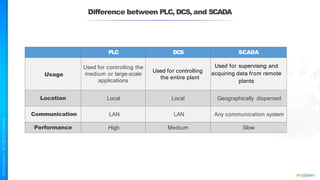
Difference between PLC, DCS, and SCADA
PLC DCS SCADA
Usage
Used for controlling the
medium or large-scale
applications
Used for controlling
the entire plant
Used for supervising and
acquiring data from remote
plants
Location Local Local Geographically dispersed
Communication LAN LAN Any communication system
Performance High Medium Slow
Security Concerns with ICS
Industrial Control System (ICS) poses the following security concerns:
• Control systems protocols with little or no security
• Migration to TCP/IP networks with its inherent
vulnerabilities
• Interconnection with enterprise networks
• Old operating systems and applications with poor
patching practices
• Little monitoring of control systems to detect and
prevent attacks
• Poor security practices followed by vendors resulting
in insecure products
• Increased risk of insider attacks by outsourced IT
services
• Increased attacks on ICS by terrorists and foreign
governments
Business Scenario
First uncovered by Kaspersky Lab in 2010, the Stuxnet Worm targeted
SCADA systems and was responsible for causing substantial damage to
Iran’s nuclear program.
A key differential with Stuxnet was that, unlike most viruses, the worm
targeted systems that are air-gapped and not connected to the internet
for security reasons, via USB keys.
Business Scenario
• It exploited four zero-day security vulnerabilities found in Windows OS and
then propagated across the network, exploiting security holes on computers
running Siemens Step7 software that controls the PLCs.
• The operations were designed to provide the hackers with sensitive
information on Iranian industrial infrastructure and even cause the fast-
spinning centrifuges to tear themselves apart while masking the changes in
rotational speed from monitoring systems.
• Its complexity indicated that only nation-state actors could have been involved
in its development and deployment.
Question: What is a zero-day vulnerability?
Business Scenario
• It exploited four zero-day security vulnerabilities found in Windows OS and
then propagated across the network, exploiting security holes on computers
running Siemens Step7 software that controls the PLCs.
• The operations were designed to provide the hackers with sensitive
information on Iranian industrial infrastructure and even cause the fast-
spinning centrifuges to tear themselves apart while masking the changes in
rotational speed from monitoring systems.
• Its complexity indicated that only nation-state actors could have been involved
in its development and deployment.
Question: What is a zero-day vulnerability?
Answer: A zero-day exploit is an attack that exploits a previously unknown security vulnerability.
Case Study
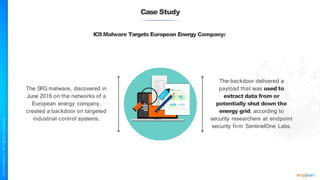
ICS Malware Targets European Energy Company:
The SFG malware, discovered in
June 2016 on the networks of a
European energy company,
created a backdoor on targeted
industrial control systems.
The backdoor delivered a
payload that was used to
extract data from or
potentially shut down the
energy grid, according to
security researchers at endpoint
security firm SentinelOne Labs.
Case Study
• The Windows-based SFG malware is designed to bypass next-generation antivirus
software and firewalls.
• It also encrypts key features of its code so that it can not be discovered and analyzed.
• The malware even skips features such as facial recognition, fingerprint scanners, and
other advanced biometric access control systems running inside target organizations.
• Furthermore, the malware shuts down when put into a sandboxed environment or a
virtual machine to escape the notice of security teams.
Case Study
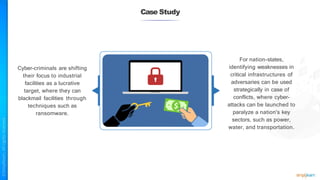
Cyber-criminals are shifting
their focus to industrial
facilities as a lucrative
target, where they can
blackmail facilities through
techniques such as
ransomware.
For nation-states,
identifying weaknesses in
critical infrastructures of
adversaries can be used
strategically in case of
conflicts, where cyber-
attacks can be launched to
paralyze a nation's key
sectors, such as power,
water, and transportation.
Cloud Computing
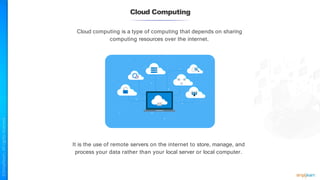
Cloud computing is a type of computing that depends on sharing
computing resources over the internet.
It is the use of remote servers on the internet to store, manage, and
process your data rather than your local server or local computer.
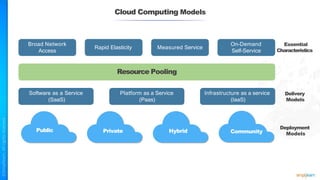
Cloud Computing Models
Broad Network
Access
Rapid Elasticity Measured Service
On-Demand
Self-Service
Resource Pooling
Software as a Service
(SaaS)
Platform as a Service
(Paas)
Infrastructure as a service
(IaaS)
Public Private Hybrid Community
Essential
Characteristics
Delivery
Models
Deployment
Models
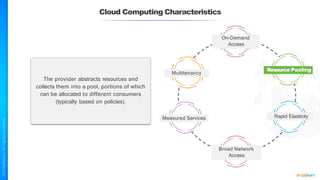
The provider abstracts resources and
collects them into a pool, portions of which
can be allocated to different consumers
(typically based on policies).
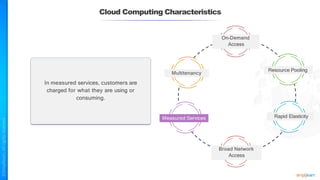
Cloud Computing Characteristics
On-Demand
Access
Resource Pooling
Rapid Elasticity
Measured Services
Multitenancy
Broad Network
Access
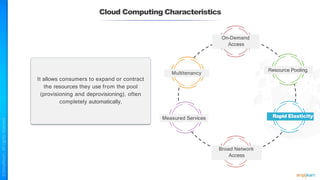
It allows consumers to expand or contract
the resources they use from the pool
(provisioning and deprovisioning), often
completely automatically.
Cloud Computing Characteristics
On-Demand
Access
Resource Pooling
Measured Services
Multitenancy
Broad Network
Access
Rapid Elasticity
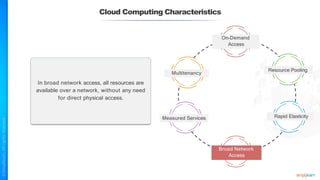
In broad network access, all resources are
available over a network, without any need
for direct physical access.
Cloud Computing Characteristics
On-Demand
Access
Resource Pooling
Measured Services
Multitenancy
Rapid Elasticity
Broad Network
Access
In measured services, customers are
charged for what they are using or
consuming.
Cloud Computing Characteristics
On-Demand
Access
Resource Pooling
Multitenancy
Rapid Elasticity
Broad Network
Access
Measured Services
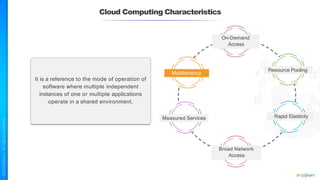
It is a reference to the mode of operation of
software where multiple independent
instances of one or multiple applications
operate in a shared environment.
Cloud Computing Characteristics
On-Demand
Access
Resource Pooling
Measured Services Rapid Elasticity
Broad Network
Access
Multitenancy
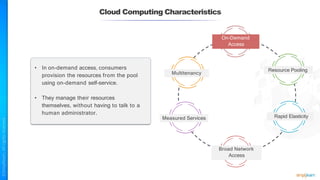
• In on-demand access, consumers
provision the resources from the pool
using on-demand self-service.
• They manage their resources
themselves, without having to talk to a
human administrator.
Cloud Computing Characteristics
Resource Pooling
Measured Services
Multitenancy
Rapid Elasticity
Broad Network
Access
On-Demand
Access
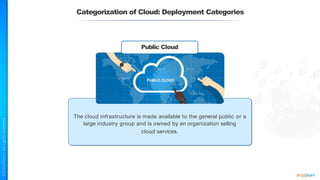
Categorization of Cloud: Deployment Categories
The cloud infrastructure is made available to the general public or a
large industry group and is owned by an organization selling
cloud services.
Public Cloud
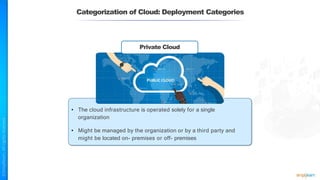
Categorization of Cloud: Deployment Categories
• The cloud infrastructure is operated solely for a single
organization
• Might be managed by the organization or by a third party and
might be located on- premises or off- premises
Private Cloud
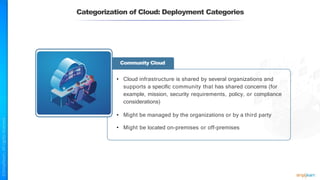
Categorization of Cloud: Deployment Categories
Community Cloud
• Cloud infrastructure is shared by several organizations and
supports a specific community that has shared concerns (for
example, mission, security requirements, policy, or compliance
considerations)
• Might be managed by the organizations or by a third party
• Might be located on-premises or off-premises
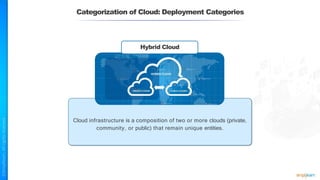
Cloud infrastructure is a composition of two or more clouds (private,
community, or public) that remain unique entities.
Categorization of Cloud: Deployment Categories
Hybrid Cloud
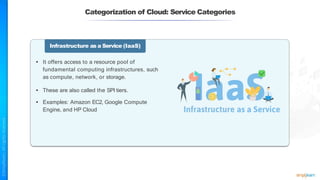
Categorization of Cloud: Service Categories
Infrastructure as a Service (IaaS)
• It offers access to a resource pool of
fundamental computing infrastructures, such
as compute, network, or storage.
• These are also called the SPI tiers.
• Examples: Amazon EC2, Google Compute
Engine, and HP Cloud
Categorization of Cloud: Service Categories
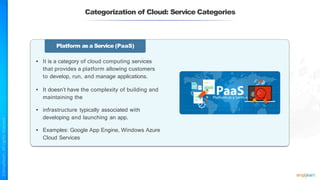
Platform as a Service (PaaS)
• It is a category of cloud computing services
that provides a platform allowing customers
to develop, run, and manage applications.
• It doesn’t have the complexity of building and
maintaining the
• infrastructure typically associated with
developing and launching an app.
• Examples: Google App Engine, Windows Azure
Cloud Services
Categorization of Cloud: Service Categories
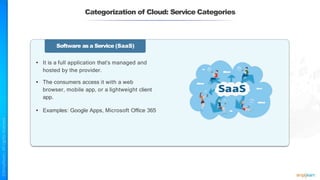
Software as a Service (SaaS)
• It is a full application that’s managed and
hosted by the provider.
• The consumers access it with a web
browser, mobile app, or a lightweight client
app.
• Examples: Google Apps, Microsoft Office 365
Categorization of Cloud: Service Categories
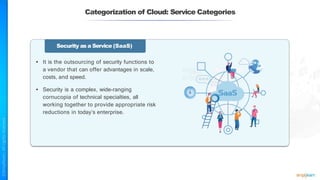
Security as a Service (SaaS)
• It is the outsourcing of security functions to
a vendor that can offer advantages in scale,
costs, and speed.
• Security is a complex, wide-ranging
cornucopia of technical specialties, all
working together to provide appropriate risk
reductions in today’s enterprise.
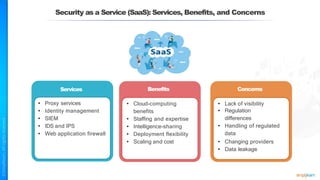
Security as a Service (SaaS): Services, Benefits, and Concerns
Services
• Proxy services
• Identity management
• SIEM
• IDS and IPS
• Web application firewall
Benefits
• Cloud-computing
benefits
• Staffing and expertise
• Intelligence-sharing
• Deployment flexibility
• Scaling and cost
Concerns
• Lack of visibility
• Regulation
differences
• Handling of regulated
data
• Changing providers
• Data leakage
Internet of Things (IoT)
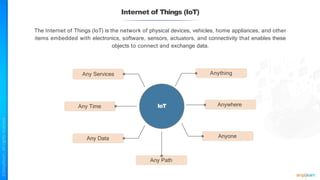
The Internet of Things (IoT) is the network of physical devices, vehicles, home appliances, and other
items embedded with electronics, software, sensors, actuators, and connectivity that enables these
objects to connect and exchange data.
Any Path
Any Services
Any Time
Any Data
Anything
Anywhere
Anyone
IoT
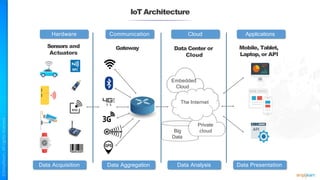
IoT Architecture
Cloud
Gateway Data Center or
Cloud
Mobile, Tablet,
Laptop, or API
Embedded
Cloud
The Internet
Big
Data
Private
cloud
Hardware
Sensors and
Actuators
Communication Applications
Data Analysis
Data Acquisition Data Aggregation Data Presentation
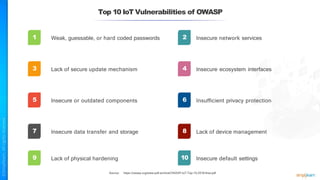
Top 10 IoT Vulnerabilities of OWASP
Weak, guessable, or hard coded passwords Insecure network services
1 2
Lack of secure update mechanism Insecure ecosystem interfaces
3 4
Insecure or outdated components Insufficient privacy protection
5 6
Insecure data transfer and storage Lack of device management
7 8
Lack of physical hardening Insecure default settings
9 10
Source: https://owasp.org/www-pdf-archive/OWASP-IoT-Top-10-2018-final.pdf
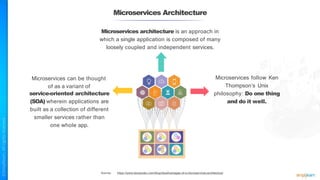
Microservices Architecture
Microservices architecture is an approach in
which a single application is composed of many
loosely coupled and independent services.
Microservices can be thought
of as a variant of
service-oriented architecture
(SOA) wherein applications are
built as a collection of different
smaller services rather than
one whole app.
Microservices follow Ken
Thompson’s Unix
philosophy: Do one thing
and do it well.
Source: https://www.tiempodev.com/blog/disadvantages-of-a-microservices-architecture/
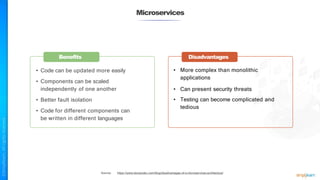
Microservices
• Code can be updated more easily
• Components can be scaled
independently of one another
• Better fault isolation
• Code for different components can
be written in different languages
Benefits
• More complex than monolithic
applications
• Can present security threats
• Testing can become complicated and
tedious
Disadvantages
Source: https://www.tiempodev.com/blog/disadvantages-of-a-microservices-architecture/
Uber: Case Study
Source: https://hackernoon.com/microservices-are-hard-an-invaluable-guide-to-microservices-2d06bd7bcf5d
And
https://dzone.com/articles/microservice-architecture-learn-build-and-deploy-a
• Like most startups, Uber built their application with a
monolithic architecture.
• However, as Uber started expanding worldwide they started
facing several issues related to scalability, performance, and
stability of its application.
• Monolithic architecture is a very popular single-tiered software
application in which all components are combined into a single
program.
• Those components include the client-side user interface,
server-side business logic, the data access layer, and
integrations.
Uber: Case Study
Source: https://hackernoon.com/microservices-are-hard-an-invaluable-guide-to-microservices-2d06bd7bcf5d
And
https://dzone.com/articles/microservice-architecture-learn-build-and-deploy-a
• These components are interconnected and interdependent,
meaning when one component needs to be updated, you have
to make changes to the entire application.
• Failure of one component can bring down the entire system.
• When the number of services increases, integration and
managing whole products can become complicated.
• To avoid such problems Uber decided to break its monolithic
architecture into multiple applications to form a microservice
architecture.
Uber: Case Study
Source: https://hackernoon.com/microservices-are-hard-an-invaluable-guide-to-microservices-2d06bd7bcf5d
And
https://dzone.com/articles/microservice-architecture-learn-build-and-deploy-a
• Microservices divide and distribute the application workload,
providing stable, seamless, and scalable services by interacting
with each other.
• Compared to traditional data storage models used by
monolithic applications, microservices decentralize the data
storage by managing their own data stores.
• Uber was now able to manage each microservice individually
as the dependency between each and every feature was
removed.
• In this way, Uber benefited by shifting its architecture from
monolithic to microservices.
Microservices
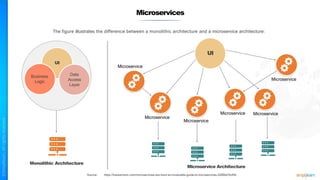
The figure illustrates the difference between a monolithic architecture and a microservice architecture:
UI
Data
Access
Layer
Monolithic Architecture
Microservice
Microservice
Microservice
Microservice Microservice
Microservice
Business
Logic
UI
Microservice Architecture
Source: https://hackernoon.com/microservices-are-hard-an-invaluable-guide-to-microservices-2d06bd7bcf5d
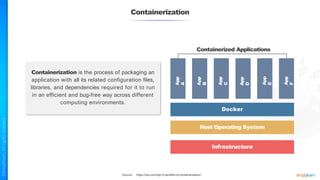
Containerization is the process of packaging an
application with all its related configuration files,
libraries, and dependencies required for it to run
in an efficient and bug-free way across different
computing environments.
Containerization
Docker
Host Operating System
Infrastructure
Containerized Applications
App
A
App
B
App
D
App
C
App
E
App
F
Source: https://tsa.com/top-5-benefits-of-containerization/
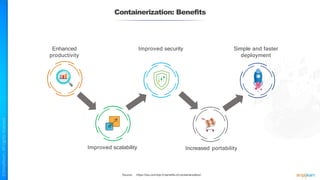
Containerization: Benefits
Enhanced
productivity
Improved scalability
Improved security Simple and faster
deployment
Increased portability
Source: https://tsa.com/top-5-benefits-of-containerization/
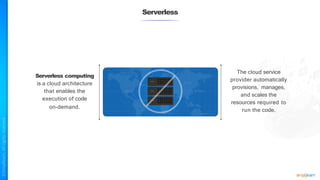
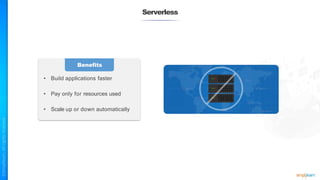
Serverless
The cloud service
provider automatically
provisions, manages,
and scales the
resources required to
run the code.
Serverless computing
is a cloud architecture
that enables the
execution of code
on-demand.
Serverless
Benefits
• Build applications faster
• Pay only for resources used
• Scale up or down automatically
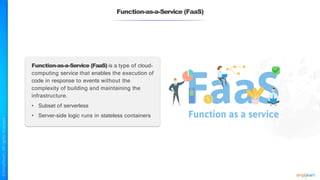
Function-as-a-Service (FaaS)
Function-as-a-Service (FaaS) is a type of cloud-
computing service that enables the execution of
code in response to events without the
complexity of building and maintaining the
infrastructure.
• Subset of serverless
• Server-side logic runs in stateless containers
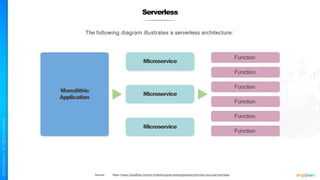
Serverless
The following diagram illustrates a serverless architecture:
Monolithic
Application
Microservice
Microservice
Microservice
Function
Function
Function
Function
Function
Function
Source: https://www.cloudflare.com/en-in/learning/serverless/glossary/function-as-a-service-faas/
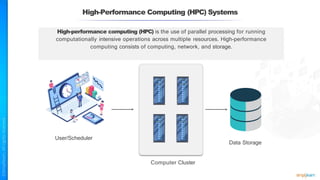
High-performance computing (HPC) is the use of parallel processing for running
computationally intensive operations across multiple resources. High-performance
computing consists of computing, network, and storage.
High-Performance Computing (HPC) Systems
User/Scheduler
Computer Cluster
Data Storage
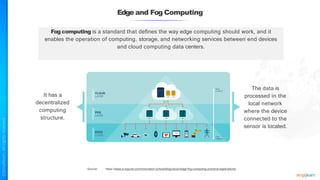
Edge and Fog Computing
The data is
processed in the
local network
where the device
connected to the
sensor is located.
Fog computing is a standard that defines the way edge computing should work, and it
enables the operation of computing, storage, and networking services between end devices
and cloud computing data centers.
It has a
decentralized
computing
structure.
Source: https://www.e-zigurat.com/innovation-school/blog/cloud-edge-fog-computing-practical-applications/
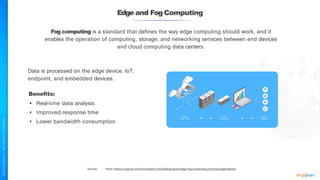
Edge and Fog Computing
Fog computing is a standard that defines the way edge computing should work, and it
enables the operation of computing, storage, and networking services between end devices
and cloud computing data centers.
Data is processed on the edge device, IoT,
endpoint, and embedded devices.
Benefits:
• Real-time data analysis
• Improved response time
• Lower bandwidth consumption
Source: https://www.e-zigurat.com/innovation-school/blog/cloud-edge-fog-computing-practical-applications/
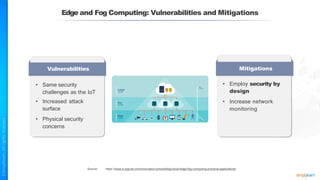
Edge and Fog Computing: Vulnerabilities and Mitigations
• Same security
challenges as the IoT
• Increased attack
surface
• Physical security
concerns
Vulnerabilities
• Employ security by
design
• Increase network
monitoring
Mitigations
Source: https://www.e-zigurat.com/innovation-school/blog/cloud-edge-fog-computing-practical-applications/
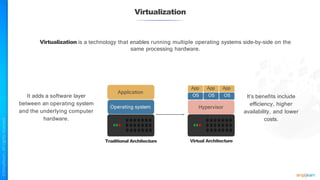
Virtualization
Virtualization is a technology that enables running multiple operating systems side-by-side on the
same processing hardware.
It’s benefits include
efficiency, higher
availability, and lower
costs.
It adds a software layer
between an operating system
and the underlying computer
hardware.
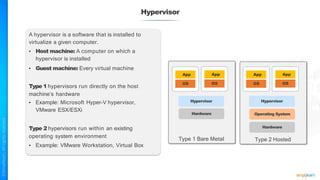
Application
Operating system
Traditional Architecture
App App App
OS OS OS
Hypervisor
Virtual Architecture
Hypervisor
Type 2 Hosted
Type 1 Bare Metal
App
OS
App
OS
Hypervisor
Hardware
App
OS
App
OS
Operating System
Hypervisor
Hardware
A hypervisor is a software that is installed to
virtualize a given computer.
• Host machine: A computer on which a
hypervisor is installed
• Guest machine: Every virtual machine
Type 1 hypervisors run directly on the host
machine’s hardware
• Example: Microsoft Hyper-V hypervisor,
VMware ESX/ESXi
Type 2 hypervisors run within an existing
operating system environment
• Example: VMware Workstation, Virtual Box
Business Scenario
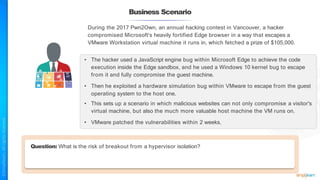
During the 2017 Pwn2Own, an annual hacking contest in Vancouver, a hacker
compromised Microsoft's heavily fortified Edge browser in a way that escapes a
VMware Workstation virtual machine it runs in, which fetched a prize of $105,000.
• The hacker used a JavaScript engine bug within Microsoft Edge to achieve the code
execution inside the Edge sandbox, and he used a Windows 10 kernel bug to escape
from it and fully compromise the guest machine.
• Then he exploited a hardware simulation bug within VMware to escape from the guest
operating system to the host one.
• This sets up a scenario in which malicious websites can not only compromise a visitor's
virtual machine, but also the much more valuable host machine the VM runs on.
• VMware patched the vulnerabilities within 2 weeks.
Question: What is the risk of breakout from a hypervisor isolation?
Business Scenario
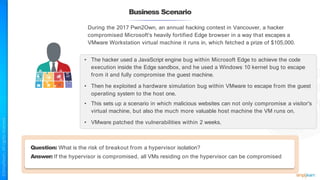
During the 2017 Pwn2Own, an annual hacking contest in Vancouver, a hacker
compromised Microsoft's heavily fortified Edge browser in a way that escapes a
VMware Workstation virtual machine it runs in, which fetched a prize of $105,000.
• The hacker used a JavaScript engine bug within Microsoft Edge to achieve the code
execution inside the Edge sandbox, and he used a Windows 10 kernel bug to escape
from it and fully compromise the guest machine.
• Then he exploited a hardware simulation bug within VMware to escape from the guest
operating system to the host one.
• This sets up a scenario in which malicious websites can not only compromise a visitor's
virtual machine, but also the much more valuable host machine the VM runs on.
• VMware patched the vulnerabilities within 2 weeks.
Question: What is the risk of breakout from a hypervisor isolation?
Answer: If the hypervisor is compromised, all VMs residing on the hypervisor can be compromised
Select and Determine Cryptographic Solutions
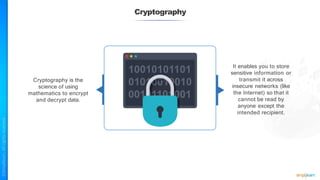
Cryptography
Cryptography is the
science of using
mathematics to encrypt
and decrypt data.
It enables you to store
sensitive information or
transmit it across
insecure networks (like
the Internet) so that it
cannot be read by
anyone except the
intended recipient.
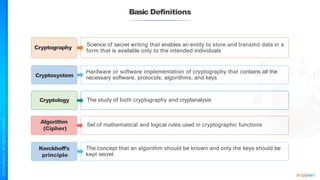
Basic Definitions
Science of secret writing that enables an entity to store and transmit data in a
form that is available only to the intended individuals
Cryptography
Hardware or software implementation of cryptography that contains all the
necessary software, protocols, algorithms, and keys
The study of both cryptography and cryptanalysis
Cryptology
Set of mathematical and logical rules used in cryptographic functions
Algorithm
(Cipher)
Cryptosystem
The concept that an algorithm should be known and only the keys should be
kept secret
Kerckhoff’s
principle
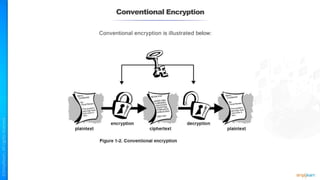
Conventional Encryption
Conventional encryption is illustrated below:
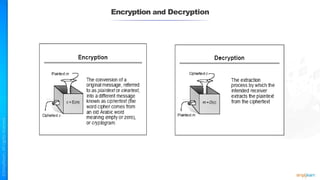
Encryption and Decryption
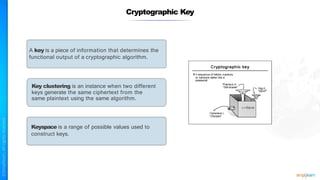
Cryptographic Key
Key clustering is an instance when two different
keys generate the same ciphertext from the
same plaintext using the same algorithm.
A key is a piece of information that determines the
functional output of a cryptographic algorithm.
Keyspace is a range of possible values used to
construct keys.
Strength of Cryptosystem
Work factor is an
estimate of the effort and
resources it would take
an attacker to penetrate
a cryptosystem.
• A good cryptosystem
should be cost-
efficient and less
time-consuming.
• A brute force attack
is used to break a
cryptosystem.
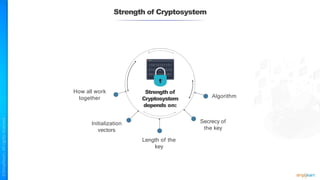
Strength of Cryptosystem
Strength of
Cryptosystem
depends on:
How all work
together
Initialization
vectors
Length of the
key
Secrecy of
the key
Algorithm
Cryptosystem Elements
• Use an algorithm without flaws
• Use a large key size
• Use all possible values within the key
space as randomly as possible
• Protect the actual key
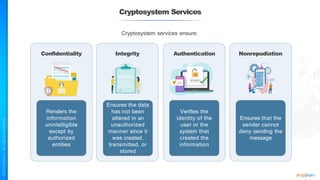
Cryptosystem Services
Cryptosystem services ensure:
Confidentiality
Renders the
information
unintelligible
except by
authorized
entities
Integrity
Ensures the data
has not been
altered in an
unauthorized
manner since it
was created,
transmitted, or
stored
Authentication
Verifies the
identity of the
user or the
system that
created the
information
Nonrepudiation
Ensures that the
sender cannot
deny sending the
message
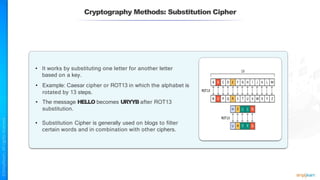
Cryptography Methods: Substitution Cipher
• It works by substituting one letter for another letter
based on a key.
• Example: Caesar cipher or ROT13 in which the alphabet is
rotated by 13 steps.
• The message HELLO becomes URYYB after ROT13
substitution.
• Substitution Cipher is generally used on blogs to filter
certain words and in combination with other ciphers.
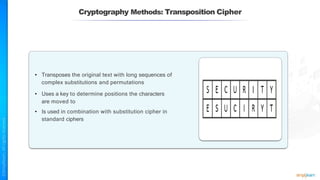
Cryptography Methods: Transposition Cipher
• Transposes the original text with long sequences of
complex substitutions and permutations
• Uses a key to determine positions the characters
are moved to
• Is used in combination with substitution cipher in
standard ciphers
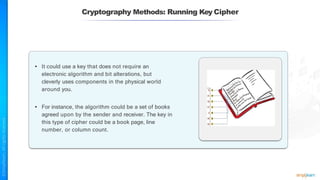
Cryptography Methods: Running Key Cipher
• It could use a key that does not require an
electronic algorithm and bit alterations, but
cleverly uses components in the physical world
around you.
• For instance, the algorithm could be a set of books
agreed upon by the sender and receiver. The key in
this type of cipher could be a book page, line
number, or column count.
Cryptography Methods: Running Key Cipher
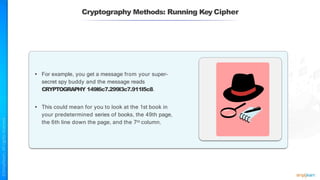
• For example, you get a message from your super-
secret spy buddy and the message reads
CRYPTOGRAPHY 149l6c7.299l3c7.911l5c8.
• This could mean for you to look at the 1st book in
your predetermined series of books, the 49th page,
the 6th line down the page, and the 7th column.
Cryptography Methods: Concealment or Null Cipher
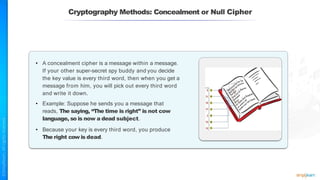
• A concealment cipher is a message within a message.
If your other super-secret spy buddy and you decide
the key value is every third word, then when you get a
message from him, you will pick out every third word
and write it down.
• Example: Suppose he sends you a message that
reads, The saying, “The time is right” is not cow
language, so is now a dead subject.
• Because your key is every third word, you produce
The right cow is dead.
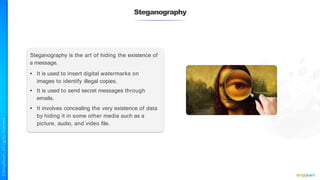
Steganography is the art of hiding the existence of
a message.
• It is used to insert digital watermarks on
images to identify illegal copies.
• It is used to send secret messages through
emails.
• It involves concealing the very existence of data
by hiding it in some other media such as a
picture, audio, and video file.
Steganography
XOR Function
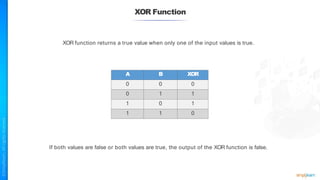
XOR function returns a true value when only one of the input values is true.
If both values are false or both values are true, the output of the XOR function is false.
A B XOR
0 0 0
0 1 1
1 0 1
1 1 0
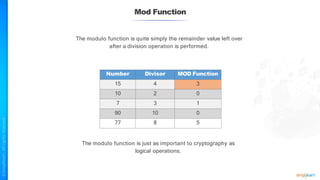
Mod Function
The modulo function is just as important to cryptography as
logical operations.
The modulo function is quite simply the remainder value left over
after a division operation is performed.
Number Divisor MOD Function
15 4 3
10 2 0
7 3 1
90 10 0
77 8 5
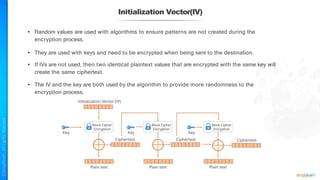
Initialization Vector(IV)
• Random values are used with algorithms to ensure patterns are not created during the
encryption process.
• They are used with keys and need to be encrypted when being sent to the destination.
• If IVs are not used, then two identical plaintext values that are encrypted with the same key will
create the same ciphertext.
• The IV and the key are both used by the algorithm to provide more randomness to the
encryption process.
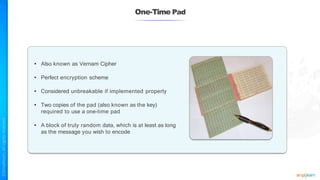
One-Time Pad
• Also known as Vernam Cipher
• Perfect encryption scheme
• Considered unbreakable if implemented properly
• Two copies of the pad (also known as the key)
required to use a one-time pad
• A block of truly random data, which is at least as long
as the message you wish to encode
This encryption process uses a binary mathematical function
called Exclusive OR or XOR Secure Implementation:
• Made up of truly random values
• Used only one time
• Securely distributed to its destination
• Secured at sender’s and receiver’s sites
• At the least, is as long as the message
One-Time Pad
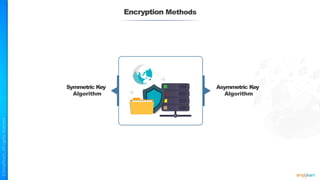
Encryption Methods
Symmetric Key
Algorithm
Asymmetric Key
Algorithm
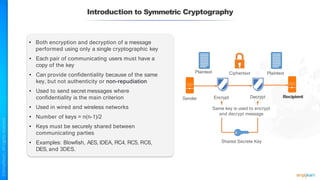
Introduction to Symmetric Cryptography
• Both encryption and decryption of a message
performed using only a single cryptographic key
• Each pair of communicating users must have a
copy of the key
• Can provide confidentiality because of the same
key, but not authenticity or non-repudiation
• Used to send secret messages where
confidentiality is the main criterion
• Used in wired and wireless networks
• Number of keys = n(n-1)/2
• Keys must be securely shared between
communicating parties
• Examples: Blowfish, AES, IDEA, RC4, RC5, RC6,
DES, and 3DES.
Ciphertext
Plaintext Plaintext
Sender Encrypt Decrypt Recipient
Shared Secrete Key
Same key is used to encrypt
and decrypt message
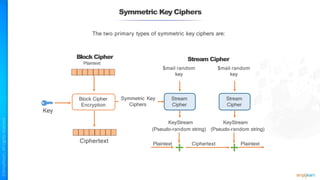
Symmetric Key Ciphers
The two primary types of symmetric key ciphers are:
Block Cipher
Encryption
Key
Ciphertext
Block Cipher
Plaintext
Symmetric Key
Ciphers
Stream
Cipher
$mail random
key
Stream Cipher
Stream
Cipher
$mail random
key
KeyStream KeyStream
(Pseudo-random string) (Pseudo-random string)
Plaintext Ciphertext Plaintext
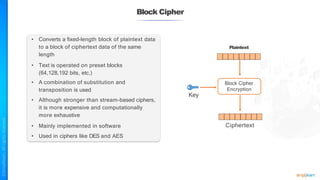
• Converts a fixed-length block of plaintext data
to a block of ciphertext data of the same
length
• Text is operated on preset blocks
(64,128,192 bits, etc.)
• A combination of substitution and
transposition is used
• Although stronger than stream-based ciphers,
it is more expensive and computationally
more exhaustive
• Mainly implemented in software
• Used in ciphers like DES and AES
Block Cipher
Block Cipher
Encryption
Key
Ciphertext
Plaintext
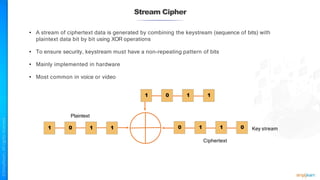
• A stream of ciphertext data is generated by combining the keystream (sequence of bits) with
plaintext data bit by bit using XOR operations
• To ensure security, keystream must have a non-repeating pattern of bits
• Mainly implemented in hardware
• Most common in voice or video
Stream Cipher
Plaintext
1 0
1
Ciphertext
Key stream
1 1
1 0 1 1
0 1 1 0
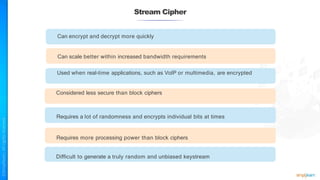
Stream Cipher
Can encrypt and decrypt more quickly
Can scale better within increased bandwidth requirements
Used when real-time applications, such as VoIP or multimedia, are encrypted
Considered less secure than block ciphers
Requires a lot of randomness and encrypts individual bits at times
Requires more processing power than block ciphers
Difficult to generate a truly random and unbiased keystream
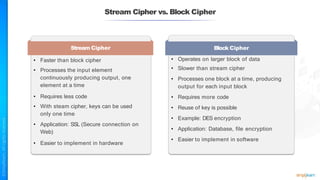
Stream Cipher vs. Block Cipher
• Operates on larger block of data
• Slower than stream cipher
• Processes one block at a time, producing
output for each input block
• Requires more code
• Reuse of key is possible
• Example: DES encryption
• Application: Database, file encryption
• Easier to implement in software
• Faster than block cipher
• Processes the input element
continuously producing output, one
element at a time
• Requires less code
• With steam cipher, keys can be used
only one time
• Application: SSL (Secure connection on
Web)
• Easier to implement in hardware
Stream Cipher Block Cipher
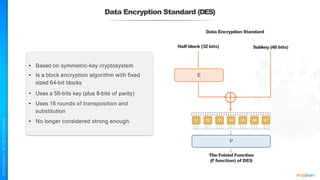
• Based on symmetric-key cryptosystem
• Is a block encryption algorithm with fixed
sized 64-bit blocks
• Uses a 56-bits key (plus 8-bits of parity)
• Uses 16 rounds of transposition and
substitution
• No longer considered strong enough
Data Encryption Standard (DES)
Data Encryption Standard
E
Half block (32 bits) Subkey (48 bits)
S1 S2 S3 S4 S5 S6 S7
P
The Feistel Function
(F function) of DES
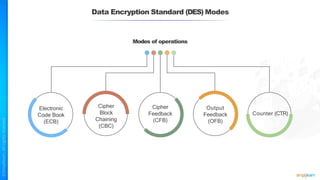
Data Encryption Standard (DES) Modes
Modes of operations
Electronic
Code Book
(ECB)
Cipher
Block
Chaining
(CBC)
Cipher
Feedback
(CFB)
Output
Feedback
(OFB)
Counter (CTR)
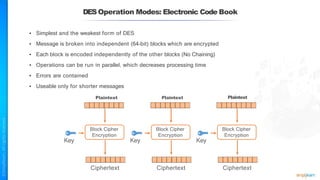
DESOperation Modes: Electronic Code Book
Block Cipher
Encryption
Key
Ciphertext
Block Cipher
Encryption
Key
Ciphertext
• Simplest and the weakest form of DES
• Message is broken into independent (64-bit) blocks which are encrypted
• Each block is encoded independently of the other blocks (No Chaining)
• Operations can be run in parallel, which decreases processing time
• Errors are contained
• Useable only for shorter messages
Plaintext Plaintext
Block Cipher
Encryption
Key
Ciphertext
Plaintext
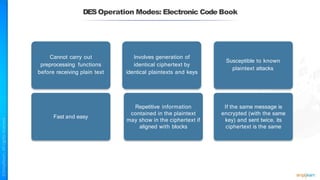
DESOperation Modes: Electronic Code Book
Cannot carry out
preprocessing functions
before receiving plain text
Involves generation of
identical ciphertext by
identical plaintexts and keys
Susceptible to known
plaintext attacks
Fast and easy
Repetitive information
contained in the plaintext
may show in the ciphertext if
aligned with blocks
If the same message is
encrypted (with the same
key) and sent twice, its
ciphertext is the same
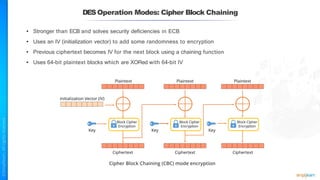
DESOperation Modes: Cipher Block Chaining
• Stronger than ECB and solves security deficiencies in ECB
• Uses an IV (initialization vector) to add some randomness to encryption
• Previous ciphertext becomes IV for the next block using a chaining function
• Uses 64-bit plaintext blocks which are XORed with 64-bit IV
DESOperation Modes: Cipher Block Chaining
• Repeats same plaintext block result in different
ciphertext block
• Each previous cipher block should be chained
to be in input with the current plaintext block
• Repeated plaintext blocks are encrypted
differently since the encryption of a block
depends on the current and all blocks before it
• Uses bulk encryption
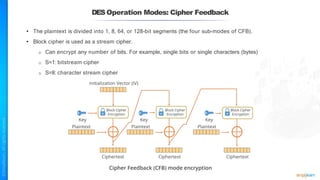
DESOperation Modes: Cipher Feedback
• The plaintext is divided into 1, 8, 64, or 128-bit segments (the four sub-modes of CFB).
• Block cipher is used as a stream cipher.
o Can encrypt any number of bits. For example, single bits or single characters (bytes)
o S=1: bitstream cipher
o S=8: character stream cipher
DESOperation Modes: Cipher Feedback
• A ciphertext segment depends on the
current and all preceding plaintext
segments.
• A corrupted ciphertext segment during
transmission will affect the current and next
several plaintext segments.
• The size of the ciphertext must be the same as
the block of plaintext.
• It uses stream data encryption and
authentication.
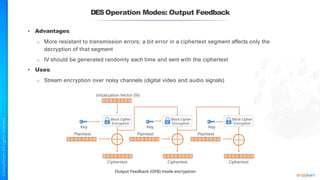
DESOperation Modes: Output Feedback
• Encrypted keystream of the previous block
is fed to the next block to create the next
portion of the keystream.
• It is very similar to CFB.
• The block cipher is used as a stream cipher.
• OFB is appropriate when data arrives
in bits or bytes and when error
propagation is not accepted.
• The keystream needs to be of the same size
as the block of plaintext.
DESOperation Modes: Output Feedback
• Advantages:
o More resistant to transmission errors; a bit error in a ciphertext segment affects only the
decryption of that segment
o IV should be generated randomly each time and sent with the ciphertext
• Uses:
o Stream encryption over noisy channels (digital video and audio signals)
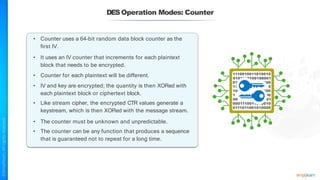
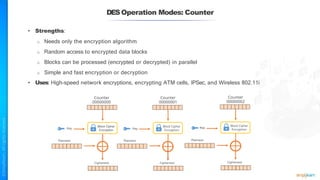
• Counter uses a 64-bit random data block counter as the
first IV.
• It uses an IV counter that increments for each plaintext
block that needs to be encrypted.
• Counter for each plaintext will be different.
• IV and key are encrypted; the quantity is then XORed with
each plaintext block or ciphertext block.
• Like stream cipher, the encrypted CTR values generate a
keystream, which is then XORed with the message stream.
• The counter must be unknown and unpredictable.
• The counter can be any function that produces a sequence
that is guaranteed not to repeat for a long time.
DESOperation Modes: Counter
• Strengths:
o Needs only the encryption algorithm
o Random access to encrypted data blocks
o Blocks can be processed (encrypted or decrypted) in parallel
o Simple and fast encryption or decryption
• Uses: High-speed network encryptions, encrypting ATM cells, IPSec, and Wireless 802.11i
Triple DES
• Uses three 56-bit keys instead of one and uses
48 rounds of transposition and substitution
(instead of 16)
• Approximately 256 times stronger than DES
• Used in secure electronic transmission of data
• Can be configured for use in VPN
connectivity (example: IPsec)
Advanced Encryption Standard (AES)
• Advanced Encryption Standard (AES) is a
symmetric block cipher.
• AES is the current U.S. standard.
• For encryption it uses:
o 128-bit keys (10 rounds of encryption)
o 192-bit keys (12 rounds of encryption) or
o 256-bit keys (14 rounds of encryption)
• AES uses the Rijndael algorithm with variable
block sizes (128, 192, and 256-bit) and key
lengths (128, 192, and 256-bit).
a0,0 a0,1 a0,2 a0,3
a1,0 a1,1 a1,2 a1,3
a2,0 a2,1
a2,2 a2,3
a3,0 a3,1 a3,2 a3,3
b0,0 b0,1 b0,2 b0,3
b1,0 b1,1 b1,2 b1,3
b2,0 b2,1
b2,2 b2,3
b3,0 b3,1 b3,2 b3,3
SubBytes
S
Other Symmetric Systems
IDEA
Twofish
• Stands for International Data Encryption Algorithm
• Uses 64-bit blocks, 128-bit key, and 8 rounds of
computation
• Used in e-mail encryption software, pretty good privacy
(PGP)
Blowfish
• Uses 64-bit block size
o 32 – 448 bits (in steps of 8 bits) key size and 16
rounds of computation
• Optimized for 32-bit micro-processors
• Is a modification of Blowfish using 128-bit blocks
• Uses variable key length up to 256 bits
Other Symmetric Systems
RC5
RC6
• Uses block sizes of 32, 64, or 128-bits, with key length
up to 2040-bits
• Created as a candidate algorithm for AES
• Uses key size of 128, 192, and 256-bits and has a block
size of-128 bits
• Based on RC5 and was also a candidate for AES
Symmetric Keys: Round Up
Algorithm Block Size Key Length Comments
DES 64 bit 56 bit + 8-bit parity 16 rounds of processing
2DES 64 bit 112 bit
Compromised by meet-in-
the-middle attack
3DES 64 bit 168 bit
Rijndael 128,192,256 bits 128,192,256 bits Performs variable rounds of operation
IDEA 64 bit 128 bit
• 8 rounds transposition and substitution
• Used in PGP
CAST 64 bit 40 to 128 bits
SAFER 64 to 128 bit 64 to 128 bit A version used in Bluetooth
Blowfish 64 bit Variable key size
Twofish 128 bit 128, 192, 256 bits
RC5 16,32,64 bits 0 to 2040 bits
AES 128 bit 128, 192, 256 bits
Business Scenario
Question: Which encryption standard should Kevin select, the DES, the 3DES, or the AES?
Hilda Jacobs who is the general manager, IT Security, assigned Kevin Butler the task
of selecting a good encryption system to secure the confidentiality of the
company’s data. She had asked for a symmetric block cipher system that can
encrypt using a 128-bit encryption key.
Kevin started gathering information about the existing encryption standards.
Based on the current and the future requirements, he had to choose
between DES, 3DES, and AES.
Business Scenario
Hilda Jacobs who is the general manager, IT Security, assigned Kevin Butler the task
of selecting a good encryption system to secure the confidentiality of the
company’s data. She had asked for a symmetric block cipher system that can
encrypt using a 128-bit encryption key.
Kevin started gathering information about the existing encryption standards.
Based on the current and the future requirements, he had to choose
between DES, 3DES, and AES.
Question: Which encryption standard should Kevin select, the DES, the 3DES, or the AES?
Answer: With the given requirement, AES is the best choice as it supports a 128-bit key.
In asymmetric cryptography, two keys are used that are linked mathematically but are
mutually exclusive. One key is for encryption, and the other is for decryption.
Introduction to Asymmetric Cryptography
• Asymmetric cryptography is also called public-key encryption as one key is made public.
• A pair of keys is required for encryption or decryption.
• The keys are mathematically related.
• Each key is used to encrypt or decrypt.
• You cannot encrypt or decrypt with only one key.
• The public key is usually shared, while the private key is secured by the owner.
• Secure Message format: The message is encrypted with the receiver's public key (confidentiality).
• Open Message format: The message is encrypted with the sender’s private key (authenticity).
o This provides authenticity, integrity, and non-repudiation.
o Examples: RSA, Diffie-Hellman, Elliptic curve cryptosystem (ECC), El Gamal, and Digital signature
algorithm (DSA).
Introduction to Asymmetric Cryptography
Working of asymmetric cryptography is illustrated below:
Introduction to RSAAlgorithm
RSA stands for Ron Rivest, Adi Shamir, and Leonard Adleman, the inventors of this algorithm.
RSA:
Is a worldwide de
facto standard
Is based on the fact that
factoring the two large prime
numbers’ (up to 200 digits
long) product forms is
difficult; hence, difficult to
crack the cryptosystem
Provides digital signatures, encryption,
and secret key distribution
Used in web browsers with
SSL, systems that use
public-key cryptosystems
Other Types of Asymmetric Cryptography: Elliptic Curve Cryptosystems
• Instead of generating keys as the product of very
large prime numbers, ECC generates keys through
the properties of the elliptic curve equation.
• An ECC key of 160 bits provides the same
protection as a 1024-bit RSA key.
• ECC is more efficient than RSA.
• It provides encryption, digital signature, and
key exchange.
• It is used in devices with limited processing,
storage, and bandwidth capacity.
• Examples: Wireless and cell phone
Zero-Knowledge Proof
• Zero-knowledge proof is applicable in public-key
cryptography.
• It means someone can tell you something that
you can trust without telling you more
information that you need.
• For example, you trust a message based on half
the key pair (public key), without needing to know
the other half of the pair (private key).
Zero-Knowledge Proof
Ownership:
Proves that you own a private
key
Membership:
Proves you are part of a group,
without revealing your identity
Sealed Bid Auction:
Proves who won, without
revealing bid
Application of
Zero-Knowledge
Proof
M of N Control
• M of N control requires that a minimum number of agents (M)
out of the total number of agents (N) work together to
perform high-security tasks.
• This is a backup process of public and private key material over
multiple systems or devices.
Source: https://slideplayer.com/slide/12293221/
M of N Control
• It’s a tool that prevents the recreation of private and public key material from the backup.
• The key materials are backed up and then mathematically distributed across several systems
or devices.
• Implementing three of eight controls would require three people out of the eight with the
assigned work task of key escrow recovery agent to work together to pull a single key out of
the key escrow database (thereby also illustrating that M is always less than or equal to N).
Other Types of Asymmetric Cryptography: Diffie-Hellman Key Exchange
• A key distribution asymmetric algorithm
o A protocol whereby two or more parties can agree on a key in such a way that both influence
the outcome
• Allows two users to exchange a secret key
• Requires no prior secrets
• Does not provide for encryption or digital signature functions
Other Types of Asymmetric Cryptography: Diffie-Hellman Key Exchange
• Vulnerable to man-in-the-middle attack
• Based on the difficulty of calculating discrete
logarithms in a finite field
• Currently used in many protocols, namely:
o Secure Sockets Layer (SSL) or Transport
Layer Security (TLS)
o Secure Shell (SSH)
o Internet Protocol Security (IPSec)
o Public Key Infrastructure (PKI)
Hybrid Key Cryptography or Digital Envelope
• It is a hybrid system that combines the symmetric and asymmetric methods.
• The more efficient symmetric algorithm encrypts a message using a secret key.
• The symmetric secret key is encrypted using a recipient’s public key with an asymmetric algorithm.
• The message is encrypted with that secret key and the encrypted symmetric secret key is sent to
the recipient.
Hybrid Key Cryptography or Digital Envelope
• The recipient uses his private key to decrypt the secret key.
• The secret key is then used to decrypt the message.
• A symmetric algorithm is used for bulk encryption.
• To distribute the symmetric key, the asymmetric algorithm
is used.
Session Key
• A single-use symmetric key is used to encrypt or decrypt
communication between two users for a single session.
• It’s more secure than static symmetric keys.
• Here, peers decide on the session key and continue to use it
till the session is over.
• Here, eavesdropping is difficult and breaking the keys will
prove to be futile.
Symmetric vs. Asymmetric Cryptography
Symmetric Cryptography Asymmetric Cryptography
Same key for
encryption and
decryption
A pair of keys, one for encryption and the
other for decryption
Consumes less computing power Consumes more computing power
Is much faster Used to distribute the symmetric key as they are slower
Symmetric key is synonymous with
secret key or session key
• Encryption key is called public key
• Decryption key is called private or secret key
• The asymmetric key refers to the public key or private
key of an asymmetric key pair
Advantages and Disadvantages
Types of
cryptography
Advantages Disadvantages
Symmetric
cryptography
• Very fast to encrypt or decrypt,
secure, and affordable
• Best for encrypting large files
• Presents the challenge of key
management
• Does not provide authenticity,
nonrepudiation
Asymmetric
cryptography
Provides:
• Better key distribution than
symmetric systems
• Better scalability due to ease of key
distribution
• Authenticity and
nonrepudiation, in addition to
confidentiality and integrity
• Much slower operation
than symmetric systems
• Vulnerable to man-in-the-middle
attacks
Introduction to Public Key Infrastructure
“A public key infrastructure (PKI) is a set of
hardware, software, people, policies, and
procedures needed to create, manage, distribute,
use, store, and revoke digital certificates.”
Certificate
Authority(s)
Registration
Authority(s)
Users
Certificates
Keys
Components
of PKI
Introduction to Public Key Infrastructure
• The public key infrastructure provides CIA and nonrepudiation.
• PKI includes Certificate Authority (CA), digital certificates,
Registration Authorities (RA), policies and procedures,
certificate revocation, time-stamping, nonrepudiation support,
and security-enabled applications.
• A digital certificate is required by each participant in a PKI,
which contains a particular participant’s public key and other
identifying information.
• This is signed by a trusted certificate authority and the
authenticity of the public key is the liability of the CA.
• PKI is used in online banking and e-commerce.
Certificate Authority and Registration Authority
• CA is a trusted third party responsible for the issuance
and maintenance of digital certificates.
• It can also be internal to an organization.
• CA also handles the revocation of certificates.
• The revoked certificates are stored in the Certificate
Revocation List (CRL) which is updated and maintained
by the CA.
Certificate Authority
Certificate Authority and Registration Authority
• The RA performs the registration duties.
• It establishes and confirms the identity of the individual,
initiates the registration process with CA, and performs
certificate lifecycle management.
• The RA verifies all the necessary information before
allowing a request to go to CA.
• The RA cannot issue certificates.
Registration Authority
PKI Certificate
Digital certificates are for
sharing public keys to be
used for encryption and
authentication.
A digital certificate, also
known as a public key
infrastructure certificate, is
used to cryptographically link
ownership of a public key
with the entity that owns it.
Source: https://searchsecurity.techtarget.com/definition/encryption
and
https://searchsecurity.techtarget.com/definition/digital-signature
PKI Certificate
• Digital certificates include the public key being
certified, identifying information about the entity that
owns the public key, metadata relating to the digital
certificate, and a digital signature of the public key
created by the issuer of the certificate.
• X.509 is the standard that dictates the fields that are used
in the certificate and the valid values that can be populated
in the fields.
Source: https://searchsecurity.techtarget.com/definition/encryption
and
https://searchsecurity.techtarget.com/definition/digital-signature
Enrollment Process
When a user wants to obtain a digital certificate, the user must first prove his identity to the CA in
some manner. This process is called enrollment.
Enrollment Process
Step 1
The user needs to
prove his identity to
obtain a digital
certificate.
Step 2
The user seeking
the certificate
needs to provide its
public key after the
verification process
done by the CA is
complete.
Step 3
The CA creates an
X.509 digital
certificate
containing the
user’s identification
information and
public key.
Step 4
The CA digitally
signs the certificate
and provides the
user with a copy of
the signed digital
certificate.
Steps of Enrollment Process:
Verification Process
When a user receives a digital certificate from a person with whom he wishes to communicate,
he must verify if:
The digital signature of
the CA is authentic
The CA is trusted
by the user
The certificate is not
listed on a CRL
The certificate contains
the data you trust
Revocation Process
Occasionally, a certificate authority needs to revoke a certificate. This might occur because:
The certificate was
compromised
The certificate was
erroneously issued
The details of the
certificate changed
The security association
changed
Certificate Revocation Lists (CRLs)
Certificate Revocation Lists
• Certificate revocation lists (CRLs) are
maintained by various certificate authorities.
• They contain the serial numbers of
certificates that have been issued by a CA and
have been revoked along with the date and
time the revocation went into effect.
Online Certificate Status
Protocol (OCSP)
• It carries out real-time validation of
certificates and reports it back to the user.
• It checks the CRL that is maintained by the CA.
PKIProcess
Step 1
User A and User B want
to participate in the PKI
process.
Step 2
User A will generate public
key and private key at his or
system.
Step 3
User A will send Public Key
and identification information
to the Registration Authority
or Certificate Authority.
Step 4
The RA or CA will verify
the information
provided by User A.
Step 5
The CA will generate a digital
certificate which is of X.509
standard which will have the
public key of the user
embedded in it.
Step 6
The CA will digitally sign
the certificate and send it
to User A.
Step 7
User A will present the
certificate to User B in
order to communicate
with User B.
Step 8
User B will take the certificate
and verify the digital signature
of the CA.
Step 9
After verification, User B
can trust the public key of
Use A and can securely
communicate with User A.
One-Way Hash
A hash function uses an algorithm without any key for encryption. This encryption cannot be
reversed and hence is called one-way.
• A fixed-length hash value (message digest or
hash) is created or hashed from variable length
plaintext.
• When the plaintext changes, its hash value also
changes. Thus, for providing integrity, hash
functions are used.
• Hash is used to guarantee the integrity of data.
• It can be applied to data block of any size.
• It produces fixed-length output.
Fixed length
“digest” data
‘Hashing’
of data
Variable
length
original data
One-Way Hash
Characteristics:
• Hash should be computed over the entire message.
• Hash should be a one-way function.
• Given a message and hash value, computing
another message with the same hash value should
be impossible.
• It is resistant to birthday attacks.
Hashing Algorithms
A hash function is any algorithm or subroutine that maps large data sets of variable length to smaller
data sets of a fixed length.
MD5:
• Most widely used of the MD (Message-Digest Algorithm) family
of hash algorithms
• Harder to break; for input of any length, it creates a 128-bit
hash value
SHA-1:
• Belongs to the Secure hash algorithm (SHA) family
• Generates a 160-bit hash value
• SHA-2 includes SHA-224, SHA-256, SHA-384, and SHA-512,
termed after the length of the hash value each creates
Message Authentication Code
• A Message Authentication Code (MAC), also known as a tag, is a short piece of information
used to authenticate a message to confirm that the message came from the stated sender
(its authenticity) and has not been changed.
• The MAC value protects both a message's data integrity as well as its authenticity by
allowing verifiers (who also possess the secret key) to detect any changes to the
message content.
message
message
key hash algorithm
MAC
MAC
Sender sends mac with
the message
Client computers the mac and
Compares with the mac send
message
key hash algorithm
MAC MAC
=
Message Authentication Code
• It is an authentication scheme derived by applying a secret key, in some form, to a message.
• The receiver performs the same computation on the message and checks if it matches the MAC.
message
message
key hash algorithm
MAC
MAC
Sender sends mac with
the message
Client computers the mac and
Compares with the mac send
message
key hash algorithm
MAC MAC
=
Birthday Attack
Birthday
Attack
• If the algorithm does produce the same value for two distinctly different
messages, it is called a hash collision.
• The birthday attack attempts to exploit the probability of two messages
producing the same message digest by using the same hash function.
• It is based on the statistical probability that with 23 people in a room, there
is more than 50% probability that two people have the same birthday.
• SHA-1 (160 bits) may require approximately 280 computations to find a hash
collision.
• A hashing algorithm that has a larger bit output, such as a birthday attack, is
less vulnerable to brute force attacks.
Salting
• It makes it difficult for the attacker to break
into a system by using the strategy of
password hash-matching.
• For each password, a new salt is randomly
generated.
• Instead of the original password, the
output of the cryptographic hash function
processed is stored in the database.
• It is used in Unix systems and for internet
security.
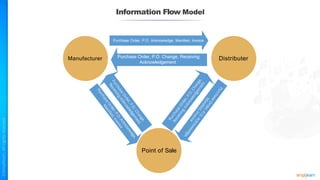
Salt is a random value that is added to password hash to prevent dictionary attacks
and hash collisions.
Salting
Password Creation
Plaintext
password
Random Salt
Hashing
Salt Hash
Digital Signatures
Digital
signatures:
• Are used for signing the document cryptographically
• To digitally sign the data:
o Create the hash of a data
o Encrypt that hash with the sender's private key
• To verify the digital signature:
o Hash the data
o Find the sender’s public key
o Decrypt the signature with the sender's public key
o Check whether the hash you have created matches the hash which you
received
• Hashing provides message integrity; signing of hash provides authentication,
and non-repudiation
• Involve encrypting the hash value of a message with a private key
Digital Signatures
The working of digital signatures is illustrated below:
Key Management
Key Management
Key management is the most challenging part of cryptography and can be
handled manually or automatically.
• Key management includes:
o Generating, destroying, and recovering keys
o Protection of keys against capturing, modification, corruption, or
disclosure to unauthorized individuals
o Regular update of keys and distribution to the right entities
• Key distribution protocols (asymmetric) include:
o RSA
o Diffie-Hellman
• The Kerberos Key Distribution Center (KDC) is an example of automated key
management.
Keys Management Rules
• Keys should be:
o Stored and transmitted by secure means
o Random
o Properly destroyed at the end of their
lifetime
o Long enough to provide the necessary
level of protection
• The key’s lifetime should correspond with the
sensitivity of the data it is protecting.
Key management includes taking backup copies and adopting multi-party key recovery.
Key Management Principles
Creation
Backup
Deployment
Monitoring
Rotation
Expiration
Archival
Destruction
The Key Management
Lifecycle
Business Scenario
Important points on key management:
• The value of information encrypted with a key should correspond to the
level of effort taken to protect an encryption key.
• The ciphertext can be compromised if the encryption key is compromised.
• The level of protection required for a key should be the same as that
required for the original unencrypted data.
• The automatic key management is more accurate and secure.
• Keys must be updated continuously and distributed to the right entities.
• Keys need to be generated, recovered, and destroyed properly.
Question: What should be the relationship between key’s lifetime and sensitivity of data?
Business Scenario
Important points on key management:
• The value of information encrypted with a key should correspond to the
level of effort taken to protect an encryption key.
• The ciphertext can be compromised if the encryption key is compromised.
• The level of protection required for a key should be the same as that
required for the original unencrypted data.
• The automatic key management is more accurate and secure.
• Keys must be updated continuously and distributed to the right entities.
• Keys need to be generated, recovered, and destroyed properly.
Question: What should be the relationship between key’s lifetime and sensitivity of data?
Answer: Shorter key lifetime is for more sensitive data and longer key lifetime is for less sensitive
data.
Understand Methods of Cryptanalytic Attacks
Cryptanalysis
Cryptanalysis
• Cryptanalysis is the study of ciphertext,
ciphers, and cryptosystems to understand
how they work and find improving techniques
for defeating or weakening them.
• Cryptanalysis is used to breach cryptographic
security systems and decipher the contents of
encrypted messages, even without knowing
the cryptographic key.
Brute Force
• The attacker attempts to break the key by systematically checking all possible
combinations of characters until the correct one is found.
• It is always successful if the time for the attack is not limited.
Bits Cipher Number of Keys
Attack Time@ 1013
decryptions/sec
56 DES 7.2 x 10¹⁶ 1 hr
128 AES 3.4 x 1038 5.3 x 10¹⁷ yrs
168 3DES 3.7 x 1050 5.8 x 1029 yrs
192 AES 6.3 x 1057 9.8 x 1036 yrs
256 AES 1.2 x 1077 1.8 x 1056 yrs
Ciphertext Only
• The attacker has the ciphertext of several messages.
• Each of the messages has been encrypted using the same encryption algorithm.
• The goal is to discover the key used in the encryption process.
• It is the hardest attack to be successful at because the attacker has very little information about
the encryption process.
Known-Plaintext
The attacker has the
plaintext and the
corresponding
ciphertext of one or
more messages.
The attacker can
analyze the
relationship between
the plaintext and the
ciphertext.
The goal is to
discover the key
used to encrypt the
messages.
Frequency Analysis
• Frequency analysis is the study of the frequency of
letters or groups of letters in a ciphertext.
• Frequency analysis is based on the fact that, in any
given written language, certain letters and
combinations of letters occur with varying
frequencies.
• It is used as an aid to breaking classical ciphers such
as the Ceaser cipher.
Chosen-Plaintext
The attacker knows the
algorithm used for
encryption.
The attacker runs samples
of plaintext to obtain the
corresponding ciphertexts.
The attacker can compare
ciphertexts to possibly
discover the encryption
key.
An Adaptive Chosen-
Plaintext attack is where
the attacker can modify the
chosen plaintext based on
the resulting ciphertext.
Chosen-Ciphertext
The attacker has
access to the system
used for decryption.
The attacker can choose the
ciphertext to be decrypted
and have access to the
resulting decrypted plaintext.
The attacker gains access to an
unattended decryption system
through lunchtime, midnight
attacks. The goal is to figure
out the encryption key.
Implementation Attacks
The attacker exploits implementation weaknesses in the software, protocol, or
encryption algorithm.
Implementation Attacks
Timing
Power and EM
Analysis
Circuit Level
Embedded Code
Eavesdropping
MITM
SW / HW Bugs
Reverse–
Engineering
Fault Injection Logical
Side–Channel
Analysis
Side-channel Attacks
The attacker analyzes the information retrieved from the encryption device.
Power
consumption
statistics
Radiation
emissions
Error information
Time taken for
encryption and
decryption
Sound
Fault Injection
It is a physical attack on the device to inject a fault in the system deliberately to
change its intended behavior.
Radiation-based fault
injections
Power supply
disturbances
Electromagnetic
interferences
The goal is to retrieve the secret key with a very small number of experiments.
Man-in-the-Middle (MITM)
• It's a type of side-channel attack.
• The attacker tries to break the ciphertext by
analyzing the time taken to execute the
encryption and decryption algorithms for
various inputs.
• The goal is to discover the key used to encrypt
the messages.
Man-in-the-Middle (MITM)
• It is a communication eavesdropping attack.
• The attacker intercepts and relays messages
between two targets.
• The client and the server believe they are
directly communicating with each other.
Pass-the-Hash
• The attacker captures a password hash and
uses it to gain access as an authorized user.
• The attacker doesn’t need to decrypt the hash
to obtain a plain text password.
• This technique can be performed against any
system which accepts NTLM authentication.
Ransomware
The attacker then demands a
ransom from the victim for
the decryption key to restore
access to the data.
It is a form of malware that encrypts a victim's data and important files.
If the victim doesn’t pay
on time, the data is
gone forever.
Apply Security Principles to Site and Facility Design
Site and Facility Design Criteria
Physical security is an
essential part of a
security plan and
forms the basis of all
other security
measures, including
personnel and
information.
The most important
goal in planning a site
is the protection of life,
property, and
operations.
It is a standard
operational procedure
for a security
professional to review
all aspects of
construction.
Layered approach is a
strategy that includes
examining physical
security measures
starting at the site
perimeter and working
down to the desktop
computer.
Information Protection Environment
The areas of consideration are Crime Prevention Through Environmental Design
(CPTED), site location, construction, and support facilities.
Factors considered by a security professional:
Protection of life,
property, and
operations
Minimize risk of theft,
destruction, and
unauthorized access
Crime Prevention Through Environmental Design (CPTED)
CPTED is a crime reduction technique.
Examples: Streets, parks, museums, government buildings, houses, and commercial complexes.
Surveillance: It creates the perception that
people can be seen.
Access Control: It limits the opportunities
for crime.
The three environmental strategies of
CPTED are:
Territoriality: These make users feel safe
and make the potential offender aware of a
substantial risk of apprehension.
INFORMAL
SURVEILLANCE
DEFINED
SPACE
DEFINED
‘PERMEABILITY’
LIGHTING
LEGIBILITY
Discussion
Discussion
Review the blueprint of Conwy Castle (in the next slide) and determine if it
demonstrates the use of CPTED principles.
Source: https://www.pinterest.com/pin/342203271683079513/
Discussion
Business Scenario
Hilda Jacobs, General Manager, IT Security at Nutri Worldwide Inc. was planning
the physical security controls of the new site along with Kevin. Hilda asked Kevin
to assist her in this project since she is handling the planning all by herself.
• Hilda Jacobs decided to use the existing landscape to deter threats.
• Use of fences, vehicle barriers, warning signs, access point restriction,
proper lighting, and a CCTV system were planned.
Question: Which concept of physical security are Hilda and Kevin trying to implement here?
Business Scenario
Hilda Jacobs, General Manager, IT Security at Nutri Worldwide Inc. was planning
the physical security controls of the new site along with Kevin. Hilda asked Kevin
to assist her in this project since she is handling the planning all by herself.
• Hilda Jacobs decided to use the existing landscape to deter threats.
• Use of fences, vehicle barriers, warning signs, access point restriction,
proper lighting, and a CCTV system were planned.
Question: Which concept of physical security are Hilda and Kevin trying to implement here?
Answer: Crime Prevention through Environmental Design (CPTED)
The site location of the facility is also a concern during the initial planning.
Site Location
Natural
Hazards
Emergency
Access
Wind and
Surface Traffic
Visibility
Joint Tenants
Local Crime
Stable Power
Supply
Location and
Access
Existing
Boundary
Protection
Construction
The areas that require attention during the construction planning stage are:
Floor slab
Raised flooring
Walls
Ceilings
Windows
Doors
Business Scenario
Nutri Worldwide Inc. is a rapidly growing company with offices in different parts
of the world. Recently, the company thought of opening an office in India. Hilda
Jacobs, General Manager, IT Security at Nutri Worldwide Inc. was reviewing the
physical and environmental security of the proposed office.
• She assigned the task of listing out various threats from natural and
environmental factors, man-made factors, and political factors based on
the location of the proposed office to Kevin.
Question: What is the first thing Kevin should consider when designing good physical and
environmental security?
Business Scenario
Nutri Worldwide Inc. is a rapidly growing company with offices in different parts
of the world. Recently, the company thought of opening an office in India. Hilda
Jacobs, General Manager, IT Security at Nutri Worldwide Inc. was reviewing the
physical and environmental security of the proposed office.
• She assigned the task of listing out various threats from natural and
environmental factors, man-made factors, and political factors based on
the location of the proposed office to Kevin.
Question: What is the first thing Kevin should consider when designing good physical and
environmental security?
Answer: Life safety is the most important and first factor Kevin needs to consider for designing
good physical and environmental security.
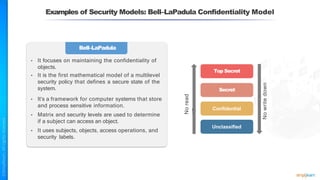
Design Site and Facility Security Controls
Support Facilities
The factors involved are:
(Heating, Ventilation, Air Conditioning) IT managers should know who is
responsible for HVAC.
HVAC
Turn off all electrical power to the equipment, allow water to drain out,
place all affected equipment or media in an air-conditioned area, and wipe
with water displacement spray.
Water
Recommended practices are installing user surge protectors,
uninterruptible power supply (UPS), installing backup source for critical
systems, and anti-static carpet.
Electricity
Keep computers away from glass windows and high surfaces, place
Earthquakes components on shock absorbers and anchors, and ensure other objects do
not fall on computers.
Best practice is to switch off the systems, unplug them, and store the
backup tapes away from the building’s steel support.
Lightning
Data Center Security: Guidelines
Data Centers, server rooms, and wiring closets should be at the core of the facility.
Wiring closets in a multistory building should be placed directly above or below each
other. This helps with the easier connectivity of wires across the building.
Access to DC should be via only one door. If there are additional doors, they should
function as one-way exit doors.
DC should not be in the basement or upper floors of a building.
The data processing center should be constructed as one room rather than different
individual rooms.
DC should have a positive air pressure. No contaminants can be sucked into the room.
Water detectors should be placed under raised floors and on dropped ceilings.
The HVAC system should be implemented for temperature and humidity control.
Personnel AccessControl
Piggybacking
Piggybacking is when another
person follows through a
door with the permission of
the person who has received
access.
Tailgating
Tailgating is when another
person, whether an employee
or not, passes through a
secure door without the
knowledge of the person who
has gained legitimate access
through the secure door.
Mantraps and Turnstiles
• A turnstile is a form of a gate that prevents more
than one person at a time from gaining entry and
often restricts movement in one direction.
• It is the equivalent of a secured revolving
door.
It is a double set of doors that is often protected by
a guard or some other physical layout that prevents
piggybacking and can trap individuals at the
discretion of security personnel.
Turnstiles
Mantraps
AccessControl
• A passive device or
transponder that can be
used to control physical
access
• A passive device, typically
worn by an individual,
that alters the magnetic
field generated by the
reader when detected
and processed.
• Machine readable ID cards
with memory sticks
• Can hold a small amount of
data in memory but cannot
process it
• Are easy to copy or duplicate
Memory card Proximity reader
• Security ID with an embedded
magnetic strip, bar code, or
integrated circuit chip
• Can process information or
store a reasonable amount
of data in memory
• Can be used in multifactor
authentication to improve
security
• Vulnerable to physical security
attacks
Smart card
Media Storage Security: Safe
• Safes are commonly used to store media.
• Passive locking safes can detect if someone
attempts to tamper with them, in which case
extra internal bolts will fall into place to
ensure it cannot be compromised.
• Thermal locking safes can identify
temperature changes and implement
additional locks.
Media Storage Security: Safe Types
Safe Type Characteristic
Wall Safe
Embedded into the wall and
easily hidden
Floor Safe
Embedded into the floor and
easily hidden
Chests Stand-alone safe
Depositories
Safes with slots; allow
valuables to be slipped in
Vaults
Safes that are large enough to
allow walk-in
Fire Prevention, Detection, and Suppression
Fire Prevention
• Training employees for fire safety
• Supplying the right equipment and ensuring their working conditions
• Storing combustible materials in a proper manner
Fire Detection
Placing fire detectors at strategic points to detect smoke or fire
Fire Suppression Systems
Using a suppression agent to put out a fire
Stages of Fire
Initial stage, only air
ionization, no smoke
Stage 1: Incipient
stage
Smoke is visible
from the point of
ignition
Stage 2: Smoke
stage
Flame can be seen
with naked eye
Stage 3: Flame
stage
Fire is considerably
higher
Stage 4: Heat
stage
The earlier the fire is detected, the easier it is to be extinguished.
Fire Detection Devices
Smoke Activated
• Good early warning devices
• Photoelectric device
○ Detects a variation in light intensity and produces a beam
of light and if the light is obstructed, an alarm is
produced.
Fire Detection Devices
Heat Activated
• Fixed temperate: Alarm is generated when a particular
temperature is reached
• Rate-of-raise: Alarm is generated when the temperature
raises over time
○ Rate-of-raising temperature sensors usually provide a
quicker warning than fixed-temperature sensors, but they
are prone to false positives
Environmental Controls: Fire
The following are the classes of fires:
Class A Fires Class B Fires Class C Fires Class D Fires Class K Fires
Environmental Controls: Fire
The table given below indicates the types of fires and the corresponding extinguishing
methods.
Class Description (Fuel) Extinguishing Method
A
Common combustibles such as paper,
wood, and clothing
Water, Foam
B Burnable fuels such as gasoline or oil Inert Gas, CO2
C
Electrical fires such as computers and
electronics
Inert Gas, CO2
(Note: Most important step: Turn off
electricity first!)
D
Special fires, such as chemical, or
metal
Dry Powder
(May require total immersion or other
special techniques)
K Commercial Kitchens Wet Chemical
Water-Based Suppression System
Wet Pipe
• Always full of water, usually discharged by temperature control sensors.
• Also called closed head systems
Dry Pipe
• Water is not stored in the pipe, instead contains compressed air.
• Opening the water valve causes water to fill the pipes and discharge.
Preaction
Deluge
• Another form of dry pipe system that uses larger pipes and can deliver a
significantly larger volume of water.
• Combination of wet and dry pipe
• Water is not held in the pipes until the fire is detected.
• Released only after the sprinkler head activation triggers are melted by sufficient heat.
GasSuppression
Gas Suppression
• It is more effective than water suppression systems.
• Gas discharge systems remove oxygen from the air and
should not be used in environments where people are
located.
• Halon is an effective gas suppression system, but as it
degrades the environment, it is banned.
• Effective replacements for Halon are:
○ FM200
○ NAF-S-III
○ Argon
○ Inergen
Infrared
Monitors for significant changes
in the infrared lighting pattern
of a monitored area.
Heat-based
Monitors for significant changes
in the heat levels of a monitored
area.
Wave Pattern
Transmits low ultrasonic
frequency signals and monitors
for significant changes in the
reflected patterns.
Capacitance
Monitors the changes in the
electrical or magnetic field
surrounding a monitored object.
Photoelectric
Monitors visible light levels in a
monitored area.
Passive Audio
Listens for abnormal sounds in
a monitored area.
Motion Detectors
Alarm Types
Deterrent
• Alarms that trigger deterrent actions
• The goal is to make intrusion attempts more difficult.
Repellent
• Alarms that trigger sound or light
• The goal is to discourage intruders.
Notification
• Alarms that trigger notifications to security analyst
• Silent from an attacker's perspective, but it gives
warning signals to the security team.
Alarm Categories
Local Alarm System
• Must broadcast an audible alarm signal that can be heard within 400 feet.
• Security guards should be stationed nearby.
• The alarm is silent locally, but offsite monitoring agents are notified.
Central Station
Auxiliary system
• Can be added to either a local or a centralized system.
• Notifications are sent to emergency services such as the fire, police,
and medical teams.
Emanation Security: Electronic Emanation
TEMPEST is used to protect
against emanation leaks.
Hardware or electronic devices emit
electronic signals which if captured
can reveal useful information
Emanation Security: Electronic Emanation
Controls against Electronic Emanation:
• Implementation of zones so
that the emanations are
controlled within the
environment.
• Can use faraday cage or
white noise in those zones
Broadcasts false traffic to
mask and hide the presence of
real emanations.
Faraday Cage White Noise
A closed enclosure with
external metal mesh that fully
surrounds the enclosure,
absorbing EM signals.
Control Zone
Business Scenario
Question: What suggestion did Kevin include in his report to ensure strong access control for the
data center?
Kevin Butler is studying the importance of security for data centers. He reads
about the recent unauthorized intrusion in data centers caused by a faulty design.
He studied some of the countermeasures for the same. He understands that for
dropped ceilings, the walls should extend above the ceiling to the true ceiling.
● Similarly, for the raised floors, the walls should extend below the false floor.
● Even the air ducts should be small enough to prevent an intruder from crawling
through them.
● Kevin identified, apart from the above-mentioned considerations, the need to
have strong access control for the data center and made his suggestions to Hilda.
Business Scenario
Question: What suggestion did Kevin include in his report to ensure strong access control for the
data center?
Answer: The use of three-factor authentication for access control.
Kevin Butler is studying the importance of security for data centers. He reads
about the recent unauthorized intrusion in data centers caused by a faulty design.
He studied some of the countermeasures for the same. He understands that for
dropped ceilings, the walls should extend above the ceiling to the true ceiling.
● Similarly, for the raised floors, the walls should extend below the false floor.
● Even the air ducts should be small enough to prevent an intruder from crawling
through them.
● Kevin identified, apart from the above-mentioned considerations, the need to
have strong access control for the data center and made his suggestions to Hilda.
HVAC
Heating, Ventilation, and Air-Conditioning (HVAC)
• Temperature and humidity are maintained within reasonable limits.
• Positive pressure and drainage are employed.
• Recommended humidity levels are 40 to 55%.
• Low humidity causes static electricity.
• High humidity may cause corrosion.
• Recommended set point temperature range for a data center is 68 to 77°F (20–25°C).
Power Supply
A reliable power supply is critical for any data center. The following are common
threats to the power system:
Power Excess
• Surge: Prolonged high voltage
• Spike: Momentary high voltage
Power Loss
• Blackout: Prolonged, complete loss of electric power
• Fault: Momentary power outage
Power Degradation
• Brownout: Prolonged reduction in voltage
• Sagor dip: Momentary reduction in voltage
Training and Awareness
Physical security awareness and training are
very critical. It should include:
• Training on operating emergency power
systems
• Training on operating fire extinguishers
• Evacuation routes should be prominently
displayed
• Fire drills
Key Takeaways
An architecture framework provides a structure used for
developing a broad range of security designs.
The various types of evaluation criteria are trusted computer
system evaluation criteria, information technology security
evaluation criteria, common criteria, and payment card
industry data security standard.
System security architecture is focused on designing security
services within individual computing systems.
The various types of distributed systems are virtualization,
hypervisor, cloud computing, grid computing, and peer-to-
peer.
This concludes Security Architecture and Engineering.
The next domain is Communications and Network Security.
CISSP® is a registered trademark of (ISC)²®

CISSP Domain 03 Security Architecture and Engineering.pptx

  • 1.
    Certified Information SystemsSecurity Professional (CISSP) Certification Training Course CISSP® is a registered trademark of (ISC)²®
  • 2.
    Domain 03: SecurityArchitecture and Engineering
  • 3.
    Learning Objectives By theend of this lesson, you will be able to: Implement secure design principles such as fail safe or fail secure, trust but verify, and zero trust Compare different security models Discuss privacy, cybersecurity, and risk frameworks Examine the concepts of security architecture Explain cloud computing, Internet of Things, microservices, and edge and fog computing
  • 4.
    Learning Objectives By theend of this lesson, you will be able to: Summarize the concepts of Data Encryption Standard (DES) and Advanced Encryption Standard (AES) List the various advantages and disadvantages of symmetric and asymmetric cryptography Implement key management principles Explain different environmental control methods
  • 5.
  • 6.
    Security Architecture andDesign: Case Study Kevin Butler, Security Administrator in the Network Firewalls division at Nutri Worldwide Inc. read the internal case study on security architecture and design. In the previous financial year, Nutri Worldwide Inc. expected a large increase in IT infrastructure requirements. The management felt the need to implement best practices for IT service management. Hilda Jacob, the General Manager of IT security, was assigned the task of selecting the best framework to help the organization identify, plan, deliver, and support IT services. Hilda decided to select the ITIL framework.
  • 7.
    Security Engineering Security engineeringhelps in: • Building information systems and the related architectures • Delivering the required functionality to address Bu th ile ditn h g re in afto sro m f a in tifo on rm sy as ttio em n sya sn te dms • Inct o h re po re ra la tt in eg d s ae rc cu hr itie ty ctc u orn ets rols, capabilities, and behaviors into enterprise architecture and information systems to address the security principles of confidentiality, integrity, and availability
  • 8.
    Research, Implement, andManage Engineering Processes Using Secure Design Principles
  • 9.
    Secure Design Principles LeastPrivilege The principle of least privilege means users should be granted the minimum amount of access (authorization) required to do their jobs.
  • 10.
    Secure Design Principles ThreatModeling Threat modeling is a process by which: • Potential threats such as structural vulnerabilities or the absence of appropriate safeguards can be identified and enumerated • Mitigations can be prioritized
  • 11.
    Secure Design Principles Defensein Depth Defense in depth is a concept in which multiple layers of security controls are placed throughout an information technology system. Policies, Procedures and Awareness Physical Network Computer Application Device
  • 12.
    Secure Design Principles Thedefault behavior of the system is to be secure. If you use 10% of the features 90% of the time, the other features can be disabled. • Separation of duties (also known as segregation of duties) is the concept of having more than one person to complete a critical or sensitive task. • The goal of separation of duties is to prevent fraud and error. Keep it simple is a design principle that states that most processes or systems work best if they are kept simple rather than made overly complicated. Secure Defaults Separation of Duties (SoD): Keep It Simple
  • 13.
    Fail Secure andFail Safe Failure is unavoidable and should be planned for. There are two possible failure modes: fail secure and fail safe. • Fail secure is a design feature that in the event of a failure, it should fail to a state that prevents further operations. • For example, a firewall must be configured to fail securely. In the event of an operational failure of the firewall, all traffic is subsequently denied. • Fail safe is a design feature that in the event of a specific type of failure, it should cause minimal or no harm to other equipment, the environment, or people. • For example, if a building catches fire, fail-safe systems would unlock doors to ensure quick escape and allow firefighters inside, while fail secure would lock doors to prevent unauthorized access to the building. Fail Secure (Closed) Fail Safe (Open)
  • 14.
    Trust but Verify Trustbut Verify (TbV) promotes the idea that system components should not blindly trust each other. For example, even if the data source is reliable, always verify the data for accuracy and integrity. Organizations must regularly perform risk management and regulatory compliance investigations. Verification audits can be conducted to mitigate the negative consequences of high-risk processes or product use.
  • 15.
    Zero Trust Zero trustis a security model based on the principle of trust nothing and verify everything. It is a holistic approach to network security wherein every person and device trying to access resources on a private network must require strict identity verification, regardless of whether they are inside or outside the network perimeter.
  • 16.
    Zero Trust Every accessrequest is fully authenticated, authorized, and encrypted before granting access. The traditional IT network security model is based on the castle- and-moat concept. While it is difficult to obtain access from outside the network, everything inside the organization’s network is trusted by default. Under this broken trust model, if an attacker gains access to the network, they can easily move across security layers and systems.
  • 17.
    Privacy by Design Privacyby Design is a design-thinking approach to proactively embed into the design and operation of IT systems, networked infrastructure, and business practices, by default. Seven principles of Privacy By Design: 1. Proactive not reactive or preventative not remedial: Anticipate, identify, and prevent privacy-invasive events before they happen. 2. Privacy as default: Personal data is automatically protected in any given IT system or business practice. 3. Privacy embedded into design: Privacy is a fully integrated component of the system and not bolted on as an add-on. 4. Full functionality: Positive-sum, not zero-sum: employ a win-win approach to all legitimate interests and objectives, without making any unnecessary trade-offs. Source: https://privacy.ucsc.edu/resources/privacy-by-design---foundational-principles.pdf
  • 18.
    Privacy by Design Privacyby Design is a design-thinking approach to proactively embed into the design and operation of IT systems, networked infrastructure, and business practices, by default. Seven principles of Privacy By Design: 5. End-to-end security: Lifecycle protection: extend securely across the entire lifecycle of the data from collection to retention to destruction at the end of the process. 6. Visibility and transparency: Assure stakeholders that business practices and technologies are operating according to stated promises and objectives and subject to independent verification. 7. Respect for user privacy: Keep things user-centric. Prioritize an individual's privacy interests by offering such measures as strong privacy defaults, appropriate notice, and user-friendly options. Source: https://privacy.ucsc.edu/resources/privacy-by-design---foundational-principles.pdf
  • 19.
    • A sharedresponsibility model is a cloud security framework that describes the security responsibilities of the cloud provider and the cloud customer. • The cloud provider is responsible for the security of the underlying infrastructure that they lease to their customers, while customers are responsible for the security of the areas of the cloud infrastructure over which they have control. • Typically, the contract (SLA) between the cloud customer and the cloud provider is used to clarify their individual and shared responsibilities. • Cloud customer is ultimately responsible for compliance and data security. Shared Responsibility
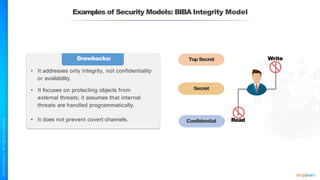
  • 20.
    Understand the FundamentalConcepts of Security Models
  • 21.
    Security Models It mapsthe abstract goals of the policy to information system terms by specifying explicit data structures and techniques necessary to enforce the security policy. A model is a symbolic representation of a policy. It maps the desires of the policymakers to a set of rules that a computer system must follow.
  • 22.
    Security Models • Itis usually represented in mathematics and analytical ideas, which are mapped to system specifications and then developed by programmers through programming code. • For example, if a security policy states that the subjects need to be authorized to access objects, the security model would provide the mathematical relationships and formulas explaining how x can access y only through the outlined specific methods.
  • 23.
    Security Models Some examples: ACISSP candidate should be aware of the general types of security models. How each new model builds on earlier models The goal addressed by a model
  • 24.
    State Machine Model Thisis used to describe the behavior of a system to different inputs. • It is based on the state of a system. o State is the snapshot of the system at one moment in time. o Current permissions and current instances of subjects accessing objects must be captured. • This model must identify all the initial states of the system and outline how these values will be changed by various inputs so that it is always safe in the final state.
  • 25.
    State Machine Model •Once the system is in a secure state, the state machine will ensure that every time the system is accessed or changed, it will transition only from one secure state to another secure state. Example: If any component in the OS or firewall fails, it must fail to a secure state. System Bootup Any Activity Secure Secure System Failure Secure State Machine Model Characteristics
  • 26.
    Multilevel Lattice Models •Multilevel security models describe strict layers of subjects and objects. • They are often described using lattices or discrete layers. • Subjects with different clearances use the system and the system processes data at different classification levels. Example: A user with secret clearance can view documents at confidential and secret levels, however, not at a top-secret level.
  • 27.
    AccessControl Matrix An accesscontrol matrix is a table of subjects and objects that indicates the actions or functions that each subject can perform on each object. Subjects Document File Printer Network Folder Share Bob Read No Access No Access Mary No Access No Access Read Amanda Read, Write Print No Access Mark Read, Write Print Read, Write Kathryn Read, Write Print, Manage Print Queue Read, Write, Execute Colin Read, Write, Change Permissions Print, Manage Print Queue Change Permissions Read, Write, Execute Change Permissions Table 8.1 An access control matrix
  • 28.
    Noninterference Model • Thegoal of a noninterference model is to ensure that high-level actions do not determine what low-level users can see. • The term non-interference means that activities performed by a user with high clearance will not interfere with any activities performed by a user with low clearance. • It addresses two attacks: o Covert channel attacks o Inference attack Non – Interference Model Ensures that actions at one security level has no effect on objects on another security level Source: https://www.youtube.com/watch?v=v7MHq3Kwt8k
  • 29.
    Information Flow Model •The information flow model focuses on the flow of information rather than on access control. • The model is based on a state machine. • It doesn't necessarily deal with only the direction of the information flow. • It can also address the type of flow.
  • 30.
    Information Flow Model •The models are designed to prevent unauthorized, insecure, or restricted information flow, often between different levels of security. • These are often referred to as a multilevel models. • Information flow can be between subjects and objects at the same classification level as well as between subjects and objects at different classification levels.
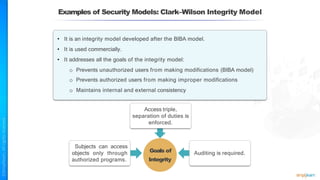
  • 31.
    Information Flow Model Manufacturer Pointof Sale Distributer Purchase Order, P.O. Change, Receiving Acknowledgement Purchase Order, P.O. Acknowledge, Manifest, Invoice
  • 32.
    Examples of SecurityModels: Bell–LaPadula Confidentiality Model Bell–LaPadula • It focuses on maintaining the confidentiality of objects. • It is the first mathematical model of a multilevel security policy that defines a secure state of the system. • It’s a framework for computer systems that store and process sensitive information. • Matrix and security levels are used to determine if a subject can access an object. • It uses subjects, objects, access operations, and security labels. Top Secret Secret No read up Confidential Unclassified No write down
  • 33.
    Examples of SecurityModels: Bell–LaPadula Confidentiality Model Rules and properties: • The simple security rule: A subject cannot read data at a higher security level (no read up). • The *-property rule: A subject cannot write data to an object at a lower security level (no write down). • The strong star property rule: A subject can perform read and write functions only to objects at its same security level. Drawbacks: • It addresses only the confidentiality of data. • It does not address integrity or availability because it was designed in the 1970s. • It does not support many operations that are common today, such as file sharing and networking. • It also assumes secure transitions between security layers and does not address covert channels.
  • 34.
    Examples of SecurityModels: BIBA Integrity Model The BIBA Integrity Model protects the integrity of the information and the activities that take place within a system. The following are the axioms of the BIBA Integrity Model: The Simple Integrity Axiom The Star Integrity Axiom • It states that a subject cannot read data at a lower integrity level • It means that a subject cannot read documents below its level. This is called a no read down, or NRD. • It states that a subject cannot modify an object in a higher integrity level. • This is called no write-up, or NWU.
  • 35.
    Examples of SecurityModels: BIBA Integrity Model Drawbacks: • It addresses only integrity, not confidentiality or availability. • It focuses on protecting objects from external threats; it assumes that internal threats are handled programmatically. • It does not prevent covert channels. Top Secret Read Write Secret Confidential
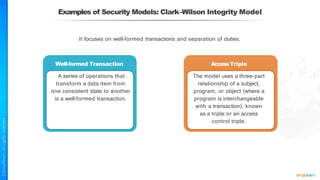
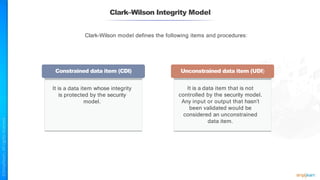
  • 36.
    Examples of SecurityModels: Clark–Wilson Integrity Model Goals of Integrity • It is an integrity model developed after the BIBA model. • It is used commercially. • It addresses all the goals of the integrity model: o Prevents unauthorized users from making modifications (BIBA model) o Prevents authorized users from making improper modifications o Maintains internal and external consistency Access triple, separation of duties is enforced. Subjects can access objects only through authorized programs. Auditing is required.
  • 37.
    It focuses onwell-formed transactions and separation of duties. Well-formed Transaction A series of operations that transform a data item from one consistent state to another is a well-formed transaction. AccessTriple The model uses a three-part relationship of a subject, program, or object (where a program is interchangeable with a transaction), known as a triple or an access control triple. Examples of Security Models: Clark–Wilson Integrity Model
  • 38.
    Clark–Wilson Integrity Model Clark-Wilsonmodel defines the following items and procedures: Constrained data item (CDI) Unconstrained data item (UDI) It is a data item whose integrity is protected by the security model. It is a data item that is not controlled by the security model. Any input or output that hasn’t been validated would be considered an unconstrained data item.
  • 39.
    Clark–Wilson Integrity Model Integrityverification procedure (IVP) Transformation procedures (TPs) It is a procedure that scans data items and confirms their integrity. • They are the only procedures that are allowed to modify a CDI. • The limited access to CDIs through TPs forms the backbone of the Clark Wilson Integrity model.
  • 40.
    Clark–Wilson Integrity Model ClarkWilson model is illustrated below: Users CDIs UDIs Internal and external consistency of CDIs
  • 41.
    Brewer and NashModel • It is also called the Chinese wall model. • Information flow model provides access control mechanism that can change dynamically depending on a user’s authorization. • Previous actions are designed to provide controls that mitigate conflict of interest. • Information flow does not happen between the subjects and objects in a way that would create a conflict of interest. Source: https://infosectests.com/cissp-study-references/domain-3-security-engineering-and-architecting/
  • 42.
    Graham Denning Model •It defines a set of basic rights in terms of commands that a subject can execute over an object. • Each object has an owner that has special rights on it. • Each subject has another subject (controller) that has special rights on it. • The model is based on the Access Control Matrix model.
  • 43.
    Graham Denning Model Protectionrights It has eight protection rights that detail how the functionalities should take place securely: • How to securely create an object • How to securely create a subject • How to securely delete an object • How to securely delete a subject • How to securely provide the read access right • How to securely provide the grant access right • How to securely provide the delete access right • How to securely provide the transfer access right
  • 44.
    Take Grant Model TakeRule Allows the subject to take rights over an object Grant Rule Allows the subject to grant rights to an object Create Rule Allows the subject to create new rights Remove Rule Allows the subject to remove the rights it has Employs a direct graph to dictate how rights can be passed from one subject to another subject or an object
  • 45.
    • Alice cancreate and remove privileges to secrets • Alice can grant privileges to Carol • Bob can take Alice’s privileges Take Grant Model Example for the Take Grant model: Carol Alice Secret documents t g c, r
  • 46.
    Composition Theories • Systemsare usually built by combining smaller systems. • Security of components must be considered when these components are combined into larger systems. • This is based on the notion of how inputs and outputs between multiple systems relate to one another o It follows how information flows between systems rather than within an individual system.
  • 47.
    Composition Theories A□ B□ B A Hookup: One systemsends input to another system but also sends input to external entities. A□ B A□ C Types of composition theories: Cascading: Input for one system comes from the output of another system. A□ B□ C Feedback: One system provides input to another system, which reciprocates by reversing those roles (so that system A first provides input for system B and then system B provides input to system A).
  • 48.
    Covert Channel Covert channelis a type of attack that creates a capability to transfer information objects between processes that are not allowed to communicate by the computer security policy. Shared resources which are not properly controlled Improper access control implementation within software Improper coding Causes of covert channel:
  • 49.
    Covert Channel The twotypes of covert channels are covert storage channel and covert timing channel. Covert storage channel • It communicates by modifying a storage location, such as a hard drive. • It occurs when out-of-band data is stored in messages for the purpose of memory reuse. Example: Steganography Data at High Security Level Storage Attack Writes Data Reads Data Subject at High Security Level Subject at Low Security Level Storage Attack “Sees” effects as real condition within system After recourse through modulation Subject System Recourse Subject An attack where communication is transmitted over a channel that was not intended for communication
  • 50.
    Covert Channel The twotypes of covert channels are covert storage channel and covert timing channel. Covert timing channel • It performs operations that affect the real response time observed by the receiver • Methods: o Knowing when data is transmitted between parties o Monitoring the timing of operations Example: Monitoring cryptographic functions Data at High Security Level Storage Attack Writes Data Reads Data Subject at High Security Level Subject at Low Security Level Storage Attack “Sees” effects as real condition within system After recourse through modulation Subject System Recourse Subject An attack where communication is transmitted over a channel that was not intended for communication
  • 51.
    Open and ClosedSystems Closed System Open System • This solution is the one where the source code and other internal logic are hidden from the public. • It is designed to work well with a narrow range of other systems, generally all from the same manufacturer. • It is harder to integrate with unlike systems, but it can be more secure. • It is more dependent on the vendor and programmer to revise the product over time. • It is the one where the source code and other internal logic are exposed to the public. • It is designed using agreed-upon industry standards. • It is easier to integrate an open system with systems from different manufacturers that support the same standards. • It often depends on public inspection and review to improve the product over time. • It can provide interoperability.
  • 52.
    Business Scenario Kevin Butler,the security administrator at Nutri Worldwide Inc., wants to set up different accesses to a set of folders on a network. The access should be such that some of his colleagues will have read and write access, while others are allowed read-only access to the files in the folder. Kevin starts the process of selecting a security model. Question: Which security model should Kevin Butler implement in the given scenario?
  • 53.
    Business Scenario Kevin Butler,the security administrator at Nutri Worldwide Inc., wants to set up different accesses to a set of folders on a network. The access should be such that some of his colleagues will have read and write access, while others are allowed read-only access to the files in the folder. Kevin starts the process of selecting a security model. Question: Which security model should Kevin Butler implement in the given scenario? Answer: The one-to-one relationship among subjects and objects is the focus of a matrix-based model. Kevin should choose the matrix-based model.
  • 54.
    Select Controls Basedon System Security Requirements
  • 55.
    Privacy Frameworks Privacy ManagementFramework (PMF) OECD Privacy Principles The General Data Protection Regulation (GDPR) The three privacy frameworks: Source: http://www.oecdprivacy.org/ and https://www.aicpa.org/interestareas/informationtechnology/privacy-management-framework.html
  • 56.
    Cybersecurity Frameworks ISO/IEC 270xx RiskManagement Framework (RMF) HITRUST Common Security Framework (CSF) Cloud Security Alliance (CSA); Security, Trust, Assurance, and Risk Registry (STAR) The four cybersecurity frameworks: Source: http://www.oecdprivacy.org/ and https://www.aicpa.org/interestareas/informationtechnology/privacy-management-framework.html
  • 57.
    Risk Frameworks ISO 31000 Committeeof Sponsoring Organizations (COSO) ISACA Risk IT NIST Special Publication (SP) 800-37 The four risk frameworks: Source: http://www.oecdprivacy.org/ and https://www.aicpa.org/interestareas/informationtechnology/privacy-management-framework.html
  • 58.
    Understand Security Capabilitiesof Information Systems
  • 59.
    Architecture It provides a representationof the concerns of each stakeholder. It is a tool used to understand the structure and behavior of a complex system through different views.
  • 60.
    Architecture It describes themajor components of the system and how they interact with each other. Example: In a house architecture, house plan, electricity plan, or plumbing plan for the kitchen is the highest or first level in the development process.
  • 61.
    Architecture • Architecture descriptionis a formal description and representation of the system. • It describes the relationships, interactions, and dependencies between components.
  • 62.
    System Architecture System architecturedescribes the major components of a system and how they interact with each other, users, and other systems. • A disciplined approach to system architecture helps in: o Quality o Interoperability o Portability o Security o Extensibility • Security goals have to be defined before the architecture of a system is created (baked- in concept).
  • 63.
    System Architecture • Securitybeing addressed late in the development phase is called baked-on concept. • ISO/IEC 42010 is the systems and software engineering architecture description. • It is important to understand the scope of the target system before you can develop, architect, or evaluate it.
  • 64.
    Security Architecture Requirement •The government and the industry needed to ensure that all the systems that they were purchasing and implementing were protecting its secrets. • They needed to come up with a way to instruct vendors on how to build computer systems to meet their security needs. • In order to find a way to test the products, the architecture is developed based on the same security needs.
  • 65.
    Security Architecture Requirement •In 1972, the U.S. government released a report (Computer Security Technology Planning Study) that outlined basic and foundational security requirements of computer systems that it would deem acceptable for purchase and deployment. • These requirements shaped the security architecture of almost all of the systems in use today.
  • 66.
    Security Architecture Requirement Securitykernel Reference monitor Security perimeter Trusted computing base Some of the core tenets of these requirements are:
  • 67.
    Trusted Computing Base Itis the collection of all the hardware, software, and firmware components within the system that provides security control and enforces the system security policy. Software Software Hardware Hardware Firmware Firmware TCB Hardware Software Firmware
  • 68.
    Trusted Computing Base TheTCB does not only address operating system components, but it also addresses hardware, software, and firmware components as they can also affect the system negatively or positively.
  • 69.
    Trusted Computing Base Thecomponents that make up the TCB provide extra layers of protection around these mechanisms to help ensure they are not compromised, so the system will always run safely and predictably.
  • 70.
    Trusted Computing Base IfTCB is enabled, then the system has: A trusted shell Actions within the interpreter or shell cannot be exposed out and other processes cannot intrude. A trusted path The communication path between the user or program and the TCB is secure.
  • 71.
    System Components: TrustedPlatform Module (TPM) TPM is the implementation of a secure crypto- processor. • It is a microprocessor that stores and generates cryptographic keys. • It generates random numbers for use in cryptographic algorithms. • It is used for cryptographic functions such as disk encryption and authentication. Examples: Windows Vista, Windows 7, and Windows 8. Windows Server 2008 uses the disk encryption software named BitLocker.
  • 72.
    Security Architecture: SecurityPerimeter • It is an imaginary boundary that divides the trusted and untrusted components in the system. • It is a resource within the boundary and is considered a part of TCB Components on either side of the boundary that can interact only via interfaces. • The interfaces limit or restrict the commands and data that can be passed on either side of the boundary creating a security perimeter. TCB- LAN Hardware Software Firmware Trusted System Interfac e Hardware Software Firmware Not Trustworthy Security Perimeter
  • 73.
    Security Architecture: ReferenceMonitor • It’s an abstract machine that mediates all access that subjects must object. • It is an access control concept and is also referred to as reference monitor concept or abstract machine. • A fully secure system will require subjects to be fully authorized before access is provisioned to the objects. • It provides direction on how all access control decisions are made. • All-access decisions should be made by a core- trusted, tamper-proof component of the OS that works at the system kernel. All System calls go through the refence monitor for security checking Trusted Computing Base Operating System Kernal User Process Reference Monitor
  • 74.
    John Full control BobNo Access David Read Marge Full control George Write Sean No Access John Full control Bob No Access Security Architecture: Security Kernel Reference Monitor Subject Object Security Kernel: Components in system that enforce and implement the rules of the reference monitor • It is made up of hardware, software, and firmware components within the TCB. • It implements and enforces the reference monitor concept. • It is the core of TCB. 1. 2. 3
  • 75.
    Security Architecture: SecurityKernel Requirements Must provide isolation for the processes carrying out reference monitor concept Must be small enough to be tested and verified in a complete and comprehensive manner Must be invoked for every access attempt and should be tamperproof Security kernel has three main requirements:
  • 76.
    Confinement, Bounds, andIsolation Confinement • It allows a process to read from and write to only certain memory locations and resources. • If a process attempts to initiate an action beyond its granted authority, that action will be denied and logged. Bounds • Bounds are the limits of memory a process cannot exceed when reading or writing. • The bounds of a process consist of limits set on the memory addresses and resources it can access. Isolation • It is the mode a process runs in when it is confined using memory bounds. • Process isolation ensures that any behavior will affect only the memory and resources associated with the isolated process.
  • 77.
    Assess and Mitigatethe Vulnerabilities of Security Architectures, Designs, and Solution Elements
  • 78.
    CPU Architecture: RingModel Ring 0 Kernel Ring 3 Users Ring 2 Ring 1 Ring 0 : kernel Ring 1 : Other OS Components Ring 2 : Device Drives Ring 3 : User Applications Ring model is a form of CPU hardware layering that separates and protects domains from each other. • Many CPUs have four rings, ranging from ring 0 to 3. • The innermost ring is the most trusted. • Processes communicate between rings via system calls.
  • 79.
    Client-Server Systems andLocal Environment Server Client Client Client Client Client-server systems enable an application system to be divided across multiple platforms. • The client requests services and the server fulfills these requests. • The client is the front-end portion of an application. • The server is the back-end portion of an application.
  • 80.
    Client-Server Systems andLocal Environment Server Client Client Client Client Local environment is a type of environment in which: • Applications are located on only one system • No communication links exist with other systems
  • 81.
    Distributed Environment Workstation Database ServerDatabase Server Network DEPT Table DEPT Table HQ Database Sales Database Output Devices Workstation • Application platform • Technology interface • Information • Communications Distributed environment is a type of system architecture, which integrates the management of: • Application software
  • 82.
    Industrial Control System(ICS) Industrial Control System (ICS) is a general term that encompasses several types of control systems, including supervisory control and data acquisition (SCADA) systems, distributed control systems (DCS), and other control system configurations such as Programmable Logic Controllers (PLC) often found in the industrial sectors and critical infrastructures. ~ NIST Programmable Logic Controllers (PLC) Distributed Control Systems (DCS) Supervisory Control and Data Acquisition (SCADA)
  • 83.
    Programmable Logic Controller(PLC) • A programmable logic controller (PLC) is a small industrial computer originally designed for factory automation and industrial process control. • A PLC can be programmed as per the process that needs to be controlled. • PLCs have evolved into controllers with the capability of controlling complex processes, and they are used substantially in SCADA systems and DCS. • PLCs are also used as the primary controller in smaller system configurations. • PLCs are used extensively in almost all industrial processes.
  • 84.
    A distributed controlsystem (DCS) is a specially designed automated control system used to monitor and control distributed equipment in process plants and industrial processes. Distributed Control Systems (DCS) Unlike PLCs, which are generally standalone and perform a particular task, DCS is a system of dividing plant or process control into several areas of responsibility, each managed by its controller, with the whole system connected to form a single entity.
  • 85.
    Supervisory Control andData Acquisition (SCADA) SCADA (Supervisory Control and Data Acquisition) systems are used to monitor and control a plant or equipment in industries such as telecommunications, water, waste control, energy, oil and gas refining, and other public transportation systems (airport, traffic control, and rails).
  • 86.
    Supervisory Control andData Acquisition (SCADA) SCADA consists of many remote terminal units spread geographically across for the collection of data and is connected to the master station for centralized data acquisition via any communication system. SCADA provides management with real- time data on production, improves plant and personnel safety, and reduces costs of operation. SCADA systems have increasingly adopted Internet of things technology to significantly improve interoperability, reduce infrastructure costs, and increase ease of maintenance and integration.
  • 87.
    Supervisory Control andData Acquisition (SCADA) SCADA Master External Control Points Radio Microwave Spread-spectrum Twisted-pair Fiber-optics Dial-up Leased line SCADAMaster Station/Control Center Comm. Links 1200 bps + (down to 300 bps in actual installation) Remote Substation Intelligent Electronic Devices Actuator Meter Accumulator Programmable Logic Controller(PLC) Remote Terminal Unit(RTU)
  • 88.
    Difference between PLC,DCS, and SCADA PLC DCS SCADA Usage Used for controlling the medium or large-scale applications Used for controlling the entire plant Used for supervising and acquiring data from remote plants Location Local Local Geographically dispersed Communication LAN LAN Any communication system Performance High Medium Slow
  • 89.
    Security Concerns withICS Industrial Control System (ICS) poses the following security concerns: • Control systems protocols with little or no security • Migration to TCP/IP networks with its inherent vulnerabilities • Interconnection with enterprise networks • Old operating systems and applications with poor patching practices • Little monitoring of control systems to detect and prevent attacks • Poor security practices followed by vendors resulting in insecure products • Increased risk of insider attacks by outsourced IT services • Increased attacks on ICS by terrorists and foreign governments
  • 90.
    Business Scenario First uncoveredby Kaspersky Lab in 2010, the Stuxnet Worm targeted SCADA systems and was responsible for causing substantial damage to Iran’s nuclear program. A key differential with Stuxnet was that, unlike most viruses, the worm targeted systems that are air-gapped and not connected to the internet for security reasons, via USB keys.
  • 91.
    Business Scenario • Itexploited four zero-day security vulnerabilities found in Windows OS and then propagated across the network, exploiting security holes on computers running Siemens Step7 software that controls the PLCs. • The operations were designed to provide the hackers with sensitive information on Iranian industrial infrastructure and even cause the fast- spinning centrifuges to tear themselves apart while masking the changes in rotational speed from monitoring systems. • Its complexity indicated that only nation-state actors could have been involved in its development and deployment. Question: What is a zero-day vulnerability?
  • 92.
    Business Scenario • Itexploited four zero-day security vulnerabilities found in Windows OS and then propagated across the network, exploiting security holes on computers running Siemens Step7 software that controls the PLCs. • The operations were designed to provide the hackers with sensitive information on Iranian industrial infrastructure and even cause the fast- spinning centrifuges to tear themselves apart while masking the changes in rotational speed from monitoring systems. • Its complexity indicated that only nation-state actors could have been involved in its development and deployment. Question: What is a zero-day vulnerability? Answer: A zero-day exploit is an attack that exploits a previously unknown security vulnerability.
  • 93.
    Case Study ICS MalwareTargets European Energy Company: The SFG malware, discovered in June 2016 on the networks of a European energy company, created a backdoor on targeted industrial control systems. The backdoor delivered a payload that was used to extract data from or potentially shut down the energy grid, according to security researchers at endpoint security firm SentinelOne Labs.
  • 94.
    Case Study • TheWindows-based SFG malware is designed to bypass next-generation antivirus software and firewalls. • It also encrypts key features of its code so that it can not be discovered and analyzed. • The malware even skips features such as facial recognition, fingerprint scanners, and other advanced biometric access control systems running inside target organizations. • Furthermore, the malware shuts down when put into a sandboxed environment or a virtual machine to escape the notice of security teams.
  • 95.
    Case Study Cyber-criminals areshifting their focus to industrial facilities as a lucrative target, where they can blackmail facilities through techniques such as ransomware. For nation-states, identifying weaknesses in critical infrastructures of adversaries can be used strategically in case of conflicts, where cyber- attacks can be launched to paralyze a nation's key sectors, such as power, water, and transportation.
  • 96.
    Cloud Computing Cloud computingis a type of computing that depends on sharing computing resources over the internet. It is the use of remote servers on the internet to store, manage, and process your data rather than your local server or local computer.
  • 97.
    Cloud Computing Models BroadNetwork Access Rapid Elasticity Measured Service On-Demand Self-Service Resource Pooling Software as a Service (SaaS) Platform as a Service (Paas) Infrastructure as a service (IaaS) Public Private Hybrid Community Essential Characteristics Delivery Models Deployment Models
  • 98.
    The provider abstractsresources and collects them into a pool, portions of which can be allocated to different consumers (typically based on policies). Cloud Computing Characteristics On-Demand Access Resource Pooling Rapid Elasticity Measured Services Multitenancy Broad Network Access
  • 99.
    It allows consumersto expand or contract the resources they use from the pool (provisioning and deprovisioning), often completely automatically. Cloud Computing Characteristics On-Demand Access Resource Pooling Measured Services Multitenancy Broad Network Access Rapid Elasticity
  • 100.
    In broad networkaccess, all resources are available over a network, without any need for direct physical access. Cloud Computing Characteristics On-Demand Access Resource Pooling Measured Services Multitenancy Rapid Elasticity Broad Network Access
  • 101.
    In measured services,customers are charged for what they are using or consuming. Cloud Computing Characteristics On-Demand Access Resource Pooling Multitenancy Rapid Elasticity Broad Network Access Measured Services
  • 102.
    It is areference to the mode of operation of software where multiple independent instances of one or multiple applications operate in a shared environment. Cloud Computing Characteristics On-Demand Access Resource Pooling Measured Services Rapid Elasticity Broad Network Access Multitenancy
  • 103.
    • In on-demandaccess, consumers provision the resources from the pool using on-demand self-service. • They manage their resources themselves, without having to talk to a human administrator. Cloud Computing Characteristics Resource Pooling Measured Services Multitenancy Rapid Elasticity Broad Network Access On-Demand Access
  • 104.
    Categorization of Cloud:Deployment Categories The cloud infrastructure is made available to the general public or a large industry group and is owned by an organization selling cloud services. Public Cloud
  • 105.
    Categorization of Cloud:Deployment Categories • The cloud infrastructure is operated solely for a single organization • Might be managed by the organization or by a third party and might be located on- premises or off- premises Private Cloud
  • 106.
    Categorization of Cloud:Deployment Categories Community Cloud • Cloud infrastructure is shared by several organizations and supports a specific community that has shared concerns (for example, mission, security requirements, policy, or compliance considerations) • Might be managed by the organizations or by a third party • Might be located on-premises or off-premises
  • 107.
    Cloud infrastructure isa composition of two or more clouds (private, community, or public) that remain unique entities. Categorization of Cloud: Deployment Categories Hybrid Cloud
  • 108.
    Categorization of Cloud:Service Categories Infrastructure as a Service (IaaS) • It offers access to a resource pool of fundamental computing infrastructures, such as compute, network, or storage. • These are also called the SPI tiers. • Examples: Amazon EC2, Google Compute Engine, and HP Cloud
  • 109.
    Categorization of Cloud:Service Categories Platform as a Service (PaaS) • It is a category of cloud computing services that provides a platform allowing customers to develop, run, and manage applications. • It doesn’t have the complexity of building and maintaining the • infrastructure typically associated with developing and launching an app. • Examples: Google App Engine, Windows Azure Cloud Services
  • 110.
    Categorization of Cloud:Service Categories Software as a Service (SaaS) • It is a full application that’s managed and hosted by the provider. • The consumers access it with a web browser, mobile app, or a lightweight client app. • Examples: Google Apps, Microsoft Office 365
  • 111.
    Categorization of Cloud:Service Categories Security as a Service (SaaS) • It is the outsourcing of security functions to a vendor that can offer advantages in scale, costs, and speed. • Security is a complex, wide-ranging cornucopia of technical specialties, all working together to provide appropriate risk reductions in today’s enterprise.
  • 112.
    Security as aService (SaaS): Services, Benefits, and Concerns Services • Proxy services • Identity management • SIEM • IDS and IPS • Web application firewall Benefits • Cloud-computing benefits • Staffing and expertise • Intelligence-sharing • Deployment flexibility • Scaling and cost Concerns • Lack of visibility • Regulation differences • Handling of regulated data • Changing providers • Data leakage
  • 113.
    Internet of Things(IoT) The Internet of Things (IoT) is the network of physical devices, vehicles, home appliances, and other items embedded with electronics, software, sensors, actuators, and connectivity that enables these objects to connect and exchange data. Any Path Any Services Any Time Any Data Anything Anywhere Anyone IoT
  • 114.
    IoT Architecture Cloud Gateway DataCenter or Cloud Mobile, Tablet, Laptop, or API Embedded Cloud The Internet Big Data Private cloud Hardware Sensors and Actuators Communication Applications Data Analysis Data Acquisition Data Aggregation Data Presentation
  • 115.
    Top 10 IoTVulnerabilities of OWASP Weak, guessable, or hard coded passwords Insecure network services 1 2 Lack of secure update mechanism Insecure ecosystem interfaces 3 4 Insecure or outdated components Insufficient privacy protection 5 6 Insecure data transfer and storage Lack of device management 7 8 Lack of physical hardening Insecure default settings 9 10 Source: https://owasp.org/www-pdf-archive/OWASP-IoT-Top-10-2018-final.pdf
  • 116.
    Microservices Architecture Microservices architectureis an approach in which a single application is composed of many loosely coupled and independent services. Microservices can be thought of as a variant of service-oriented architecture (SOA) wherein applications are built as a collection of different smaller services rather than one whole app. Microservices follow Ken Thompson’s Unix philosophy: Do one thing and do it well. Source: https://www.tiempodev.com/blog/disadvantages-of-a-microservices-architecture/
  • 117.
    Microservices • Code canbe updated more easily • Components can be scaled independently of one another • Better fault isolation • Code for different components can be written in different languages Benefits • More complex than monolithic applications • Can present security threats • Testing can become complicated and tedious Disadvantages Source: https://www.tiempodev.com/blog/disadvantages-of-a-microservices-architecture/
  • 118.
    Uber: Case Study Source:https://hackernoon.com/microservices-are-hard-an-invaluable-guide-to-microservices-2d06bd7bcf5d And https://dzone.com/articles/microservice-architecture-learn-build-and-deploy-a • Like most startups, Uber built their application with a monolithic architecture. • However, as Uber started expanding worldwide they started facing several issues related to scalability, performance, and stability of its application. • Monolithic architecture is a very popular single-tiered software application in which all components are combined into a single program. • Those components include the client-side user interface, server-side business logic, the data access layer, and integrations.
  • 119.
    Uber: Case Study Source:https://hackernoon.com/microservices-are-hard-an-invaluable-guide-to-microservices-2d06bd7bcf5d And https://dzone.com/articles/microservice-architecture-learn-build-and-deploy-a • These components are interconnected and interdependent, meaning when one component needs to be updated, you have to make changes to the entire application. • Failure of one component can bring down the entire system. • When the number of services increases, integration and managing whole products can become complicated. • To avoid such problems Uber decided to break its monolithic architecture into multiple applications to form a microservice architecture.
  • 120.
    Uber: Case Study Source:https://hackernoon.com/microservices-are-hard-an-invaluable-guide-to-microservices-2d06bd7bcf5d And https://dzone.com/articles/microservice-architecture-learn-build-and-deploy-a • Microservices divide and distribute the application workload, providing stable, seamless, and scalable services by interacting with each other. • Compared to traditional data storage models used by monolithic applications, microservices decentralize the data storage by managing their own data stores. • Uber was now able to manage each microservice individually as the dependency between each and every feature was removed. • In this way, Uber benefited by shifting its architecture from monolithic to microservices.
  • 121.
    Microservices The figure illustratesthe difference between a monolithic architecture and a microservice architecture: UI Data Access Layer Monolithic Architecture Microservice Microservice Microservice Microservice Microservice Microservice Business Logic UI Microservice Architecture Source: https://hackernoon.com/microservices-are-hard-an-invaluable-guide-to-microservices-2d06bd7bcf5d
  • 122.
    Containerization is theprocess of packaging an application with all its related configuration files, libraries, and dependencies required for it to run in an efficient and bug-free way across different computing environments. Containerization Docker Host Operating System Infrastructure Containerized Applications App A App B App D App C App E App F Source: https://tsa.com/top-5-benefits-of-containerization/
  • 123.
    Containerization: Benefits Enhanced productivity Improved scalability Improvedsecurity Simple and faster deployment Increased portability Source: https://tsa.com/top-5-benefits-of-containerization/
  • 124.
    Serverless The cloud service providerautomatically provisions, manages, and scales the resources required to run the code. Serverless computing is a cloud architecture that enables the execution of code on-demand.
  • 125.
    Serverless Benefits • Build applicationsfaster • Pay only for resources used • Scale up or down automatically
  • 126.
    Function-as-a-Service (FaaS) Function-as-a-Service (FaaS)is a type of cloud- computing service that enables the execution of code in response to events without the complexity of building and maintaining the infrastructure. • Subset of serverless • Server-side logic runs in stateless containers
  • 127.
    Serverless The following diagramillustrates a serverless architecture: Monolithic Application Microservice Microservice Microservice Function Function Function Function Function Function Source: https://www.cloudflare.com/en-in/learning/serverless/glossary/function-as-a-service-faas/
  • 128.
    High-performance computing (HPC)is the use of parallel processing for running computationally intensive operations across multiple resources. High-performance computing consists of computing, network, and storage. High-Performance Computing (HPC) Systems User/Scheduler Computer Cluster Data Storage
  • 129.
    Edge and FogComputing The data is processed in the local network where the device connected to the sensor is located. Fog computing is a standard that defines the way edge computing should work, and it enables the operation of computing, storage, and networking services between end devices and cloud computing data centers. It has a decentralized computing structure. Source: https://www.e-zigurat.com/innovation-school/blog/cloud-edge-fog-computing-practical-applications/
  • 130.
    Edge and FogComputing Fog computing is a standard that defines the way edge computing should work, and it enables the operation of computing, storage, and networking services between end devices and cloud computing data centers. Data is processed on the edge device, IoT, endpoint, and embedded devices. Benefits: • Real-time data analysis • Improved response time • Lower bandwidth consumption Source: https://www.e-zigurat.com/innovation-school/blog/cloud-edge-fog-computing-practical-applications/
  • 131.
    Edge and FogComputing: Vulnerabilities and Mitigations • Same security challenges as the IoT • Increased attack surface • Physical security concerns Vulnerabilities • Employ security by design • Increase network monitoring Mitigations Source: https://www.e-zigurat.com/innovation-school/blog/cloud-edge-fog-computing-practical-applications/
  • 132.
    Virtualization Virtualization is atechnology that enables running multiple operating systems side-by-side on the same processing hardware. It’s benefits include efficiency, higher availability, and lower costs. It adds a software layer between an operating system and the underlying computer hardware. Application Operating system Traditional Architecture App App App OS OS OS Hypervisor Virtual Architecture
  • 133.
    Hypervisor Type 2 Hosted Type1 Bare Metal App OS App OS Hypervisor Hardware App OS App OS Operating System Hypervisor Hardware A hypervisor is a software that is installed to virtualize a given computer. • Host machine: A computer on which a hypervisor is installed • Guest machine: Every virtual machine Type 1 hypervisors run directly on the host machine’s hardware • Example: Microsoft Hyper-V hypervisor, VMware ESX/ESXi Type 2 hypervisors run within an existing operating system environment • Example: VMware Workstation, Virtual Box
  • 134.
    Business Scenario During the2017 Pwn2Own, an annual hacking contest in Vancouver, a hacker compromised Microsoft's heavily fortified Edge browser in a way that escapes a VMware Workstation virtual machine it runs in, which fetched a prize of $105,000. • The hacker used a JavaScript engine bug within Microsoft Edge to achieve the code execution inside the Edge sandbox, and he used a Windows 10 kernel bug to escape from it and fully compromise the guest machine. • Then he exploited a hardware simulation bug within VMware to escape from the guest operating system to the host one. • This sets up a scenario in which malicious websites can not only compromise a visitor's virtual machine, but also the much more valuable host machine the VM runs on. • VMware patched the vulnerabilities within 2 weeks. Question: What is the risk of breakout from a hypervisor isolation?
  • 135.
    Business Scenario During the2017 Pwn2Own, an annual hacking contest in Vancouver, a hacker compromised Microsoft's heavily fortified Edge browser in a way that escapes a VMware Workstation virtual machine it runs in, which fetched a prize of $105,000. • The hacker used a JavaScript engine bug within Microsoft Edge to achieve the code execution inside the Edge sandbox, and he used a Windows 10 kernel bug to escape from it and fully compromise the guest machine. • Then he exploited a hardware simulation bug within VMware to escape from the guest operating system to the host one. • This sets up a scenario in which malicious websites can not only compromise a visitor's virtual machine, but also the much more valuable host machine the VM runs on. • VMware patched the vulnerabilities within 2 weeks. Question: What is the risk of breakout from a hypervisor isolation? Answer: If the hypervisor is compromised, all VMs residing on the hypervisor can be compromised
  • 136.
    Select and DetermineCryptographic Solutions
  • 137.
    Cryptography Cryptography is the scienceof using mathematics to encrypt and decrypt data. It enables you to store sensitive information or transmit it across insecure networks (like the Internet) so that it cannot be read by anyone except the intended recipient.
  • 138.
    Basic Definitions Science ofsecret writing that enables an entity to store and transmit data in a form that is available only to the intended individuals Cryptography Hardware or software implementation of cryptography that contains all the necessary software, protocols, algorithms, and keys The study of both cryptography and cryptanalysis Cryptology Set of mathematical and logical rules used in cryptographic functions Algorithm (Cipher) Cryptosystem The concept that an algorithm should be known and only the keys should be kept secret Kerckhoff’s principle
  • 139.
  • 140.
  • 141.
    Cryptographic Key Key clusteringis an instance when two different keys generate the same ciphertext from the same plaintext using the same algorithm. A key is a piece of information that determines the functional output of a cryptographic algorithm. Keyspace is a range of possible values used to construct keys.
  • 142.
    Strength of Cryptosystem Workfactor is an estimate of the effort and resources it would take an attacker to penetrate a cryptosystem. • A good cryptosystem should be cost- efficient and less time-consuming. • A brute force attack is used to break a cryptosystem.
  • 143.
    Strength of Cryptosystem Strengthof Cryptosystem depends on: How all work together Initialization vectors Length of the key Secrecy of the key Algorithm
  • 144.
    Cryptosystem Elements • Usean algorithm without flaws • Use a large key size • Use all possible values within the key space as randomly as possible • Protect the actual key
  • 145.
    Cryptosystem Services Cryptosystem servicesensure: Confidentiality Renders the information unintelligible except by authorized entities Integrity Ensures the data has not been altered in an unauthorized manner since it was created, transmitted, or stored Authentication Verifies the identity of the user or the system that created the information Nonrepudiation Ensures that the sender cannot deny sending the message
  • 146.
    Cryptography Methods: SubstitutionCipher • It works by substituting one letter for another letter based on a key. • Example: Caesar cipher or ROT13 in which the alphabet is rotated by 13 steps. • The message HELLO becomes URYYB after ROT13 substitution. • Substitution Cipher is generally used on blogs to filter certain words and in combination with other ciphers.
  • 147.
    Cryptography Methods: TranspositionCipher • Transposes the original text with long sequences of complex substitutions and permutations • Uses a key to determine positions the characters are moved to • Is used in combination with substitution cipher in standard ciphers
  • 148.
    Cryptography Methods: RunningKey Cipher • It could use a key that does not require an electronic algorithm and bit alterations, but cleverly uses components in the physical world around you. • For instance, the algorithm could be a set of books agreed upon by the sender and receiver. The key in this type of cipher could be a book page, line number, or column count.
  • 149.
    Cryptography Methods: RunningKey Cipher • For example, you get a message from your super- secret spy buddy and the message reads CRYPTOGRAPHY 149l6c7.299l3c7.911l5c8. • This could mean for you to look at the 1st book in your predetermined series of books, the 49th page, the 6th line down the page, and the 7th column.
  • 150.
    Cryptography Methods: Concealmentor Null Cipher • A concealment cipher is a message within a message. If your other super-secret spy buddy and you decide the key value is every third word, then when you get a message from him, you will pick out every third word and write it down. • Example: Suppose he sends you a message that reads, The saying, “The time is right” is not cow language, so is now a dead subject. • Because your key is every third word, you produce The right cow is dead.
  • 151.
    Steganography is theart of hiding the existence of a message. • It is used to insert digital watermarks on images to identify illegal copies. • It is used to send secret messages through emails. • It involves concealing the very existence of data by hiding it in some other media such as a picture, audio, and video file. Steganography
  • 152.
    XOR Function XOR functionreturns a true value when only one of the input values is true. If both values are false or both values are true, the output of the XOR function is false. A B XOR 0 0 0 0 1 1 1 0 1 1 1 0
  • 153.
    Mod Function The modulofunction is just as important to cryptography as logical operations. The modulo function is quite simply the remainder value left over after a division operation is performed. Number Divisor MOD Function 15 4 3 10 2 0 7 3 1 90 10 0 77 8 5
  • 154.
    Initialization Vector(IV) • Randomvalues are used with algorithms to ensure patterns are not created during the encryption process. • They are used with keys and need to be encrypted when being sent to the destination. • If IVs are not used, then two identical plaintext values that are encrypted with the same key will create the same ciphertext. • The IV and the key are both used by the algorithm to provide more randomness to the encryption process.
  • 155.
    One-Time Pad • Alsoknown as Vernam Cipher • Perfect encryption scheme • Considered unbreakable if implemented properly • Two copies of the pad (also known as the key) required to use a one-time pad • A block of truly random data, which is at least as long as the message you wish to encode
  • 156.
    This encryption processuses a binary mathematical function called Exclusive OR or XOR Secure Implementation: • Made up of truly random values • Used only one time • Securely distributed to its destination • Secured at sender’s and receiver’s sites • At the least, is as long as the message One-Time Pad
  • 157.
  • 158.
    Introduction to SymmetricCryptography • Both encryption and decryption of a message performed using only a single cryptographic key • Each pair of communicating users must have a copy of the key • Can provide confidentiality because of the same key, but not authenticity or non-repudiation • Used to send secret messages where confidentiality is the main criterion • Used in wired and wireless networks • Number of keys = n(n-1)/2 • Keys must be securely shared between communicating parties • Examples: Blowfish, AES, IDEA, RC4, RC5, RC6, DES, and 3DES. Ciphertext Plaintext Plaintext Sender Encrypt Decrypt Recipient Shared Secrete Key Same key is used to encrypt and decrypt message
  • 159.
    Symmetric Key Ciphers Thetwo primary types of symmetric key ciphers are: Block Cipher Encryption Key Ciphertext Block Cipher Plaintext Symmetric Key Ciphers Stream Cipher $mail random key Stream Cipher Stream Cipher $mail random key KeyStream KeyStream (Pseudo-random string) (Pseudo-random string) Plaintext Ciphertext Plaintext
  • 160.
    • Converts afixed-length block of plaintext data to a block of ciphertext data of the same length • Text is operated on preset blocks (64,128,192 bits, etc.) • A combination of substitution and transposition is used • Although stronger than stream-based ciphers, it is more expensive and computationally more exhaustive • Mainly implemented in software • Used in ciphers like DES and AES Block Cipher Block Cipher Encryption Key Ciphertext Plaintext
  • 161.
    • A streamof ciphertext data is generated by combining the keystream (sequence of bits) with plaintext data bit by bit using XOR operations • To ensure security, keystream must have a non-repeating pattern of bits • Mainly implemented in hardware • Most common in voice or video Stream Cipher Plaintext 1 0 1 Ciphertext Key stream 1 1 1 0 1 1 0 1 1 0
  • 162.
    Stream Cipher Can encryptand decrypt more quickly Can scale better within increased bandwidth requirements Used when real-time applications, such as VoIP or multimedia, are encrypted Considered less secure than block ciphers Requires a lot of randomness and encrypts individual bits at times Requires more processing power than block ciphers Difficult to generate a truly random and unbiased keystream
  • 163.
    Stream Cipher vs.Block Cipher • Operates on larger block of data • Slower than stream cipher • Processes one block at a time, producing output for each input block • Requires more code • Reuse of key is possible • Example: DES encryption • Application: Database, file encryption • Easier to implement in software • Faster than block cipher • Processes the input element continuously producing output, one element at a time • Requires less code • With steam cipher, keys can be used only one time • Application: SSL (Secure connection on Web) • Easier to implement in hardware Stream Cipher Block Cipher
  • 164.
    • Based onsymmetric-key cryptosystem • Is a block encryption algorithm with fixed sized 64-bit blocks • Uses a 56-bits key (plus 8-bits of parity) • Uses 16 rounds of transposition and substitution • No longer considered strong enough Data Encryption Standard (DES) Data Encryption Standard E Half block (32 bits) Subkey (48 bits) S1 S2 S3 S4 S5 S6 S7 P The Feistel Function (F function) of DES
  • 165.
    Data Encryption Standard(DES) Modes Modes of operations Electronic Code Book (ECB) Cipher Block Chaining (CBC) Cipher Feedback (CFB) Output Feedback (OFB) Counter (CTR)
  • 166.
    DESOperation Modes: ElectronicCode Book Block Cipher Encryption Key Ciphertext Block Cipher Encryption Key Ciphertext • Simplest and the weakest form of DES • Message is broken into independent (64-bit) blocks which are encrypted • Each block is encoded independently of the other blocks (No Chaining) • Operations can be run in parallel, which decreases processing time • Errors are contained • Useable only for shorter messages Plaintext Plaintext Block Cipher Encryption Key Ciphertext Plaintext
  • 167.
    DESOperation Modes: ElectronicCode Book Cannot carry out preprocessing functions before receiving plain text Involves generation of identical ciphertext by identical plaintexts and keys Susceptible to known plaintext attacks Fast and easy Repetitive information contained in the plaintext may show in the ciphertext if aligned with blocks If the same message is encrypted (with the same key) and sent twice, its ciphertext is the same
  • 168.
    DESOperation Modes: CipherBlock Chaining • Stronger than ECB and solves security deficiencies in ECB • Uses an IV (initialization vector) to add some randomness to encryption • Previous ciphertext becomes IV for the next block using a chaining function • Uses 64-bit plaintext blocks which are XORed with 64-bit IV
  • 169.
    DESOperation Modes: CipherBlock Chaining • Repeats same plaintext block result in different ciphertext block • Each previous cipher block should be chained to be in input with the current plaintext block • Repeated plaintext blocks are encrypted differently since the encryption of a block depends on the current and all blocks before it • Uses bulk encryption
  • 170.
    DESOperation Modes: CipherFeedback • The plaintext is divided into 1, 8, 64, or 128-bit segments (the four sub-modes of CFB). • Block cipher is used as a stream cipher. o Can encrypt any number of bits. For example, single bits or single characters (bytes) o S=1: bitstream cipher o S=8: character stream cipher
  • 171.
    DESOperation Modes: CipherFeedback • A ciphertext segment depends on the current and all preceding plaintext segments. • A corrupted ciphertext segment during transmission will affect the current and next several plaintext segments. • The size of the ciphertext must be the same as the block of plaintext. • It uses stream data encryption and authentication.
  • 172.
    DESOperation Modes: OutputFeedback • Encrypted keystream of the previous block is fed to the next block to create the next portion of the keystream. • It is very similar to CFB. • The block cipher is used as a stream cipher. • OFB is appropriate when data arrives in bits or bytes and when error propagation is not accepted. • The keystream needs to be of the same size as the block of plaintext.
  • 173.
    DESOperation Modes: OutputFeedback • Advantages: o More resistant to transmission errors; a bit error in a ciphertext segment affects only the decryption of that segment o IV should be generated randomly each time and sent with the ciphertext • Uses: o Stream encryption over noisy channels (digital video and audio signals)
  • 174.
    • Counter usesa 64-bit random data block counter as the first IV. • It uses an IV counter that increments for each plaintext block that needs to be encrypted. • Counter for each plaintext will be different. • IV and key are encrypted; the quantity is then XORed with each plaintext block or ciphertext block. • Like stream cipher, the encrypted CTR values generate a keystream, which is then XORed with the message stream. • The counter must be unknown and unpredictable. • The counter can be any function that produces a sequence that is guaranteed not to repeat for a long time. DESOperation Modes: Counter
  • 175.
    DESOperation Modes: Counter •Strengths: o Needs only the encryption algorithm o Random access to encrypted data blocks o Blocks can be processed (encrypted or decrypted) in parallel o Simple and fast encryption or decryption • Uses: High-speed network encryptions, encrypting ATM cells, IPSec, and Wireless 802.11i
  • 176.
    Triple DES • Usesthree 56-bit keys instead of one and uses 48 rounds of transposition and substitution (instead of 16) • Approximately 256 times stronger than DES • Used in secure electronic transmission of data • Can be configured for use in VPN connectivity (example: IPsec)
  • 177.
    Advanced Encryption Standard(AES) • Advanced Encryption Standard (AES) is a symmetric block cipher. • AES is the current U.S. standard. • For encryption it uses: o 128-bit keys (10 rounds of encryption) o 192-bit keys (12 rounds of encryption) or o 256-bit keys (14 rounds of encryption) • AES uses the Rijndael algorithm with variable block sizes (128, 192, and 256-bit) and key lengths (128, 192, and 256-bit). a0,0 a0,1 a0,2 a0,3 a1,0 a1,1 a1,2 a1,3 a2,0 a2,1 a2,2 a2,3 a3,0 a3,1 a3,2 a3,3 b0,0 b0,1 b0,2 b0,3 b1,0 b1,1 b1,2 b1,3 b2,0 b2,1 b2,2 b2,3 b3,0 b3,1 b3,2 b3,3 SubBytes S
  • 178.
    Other Symmetric Systems IDEA Twofish •Stands for International Data Encryption Algorithm • Uses 64-bit blocks, 128-bit key, and 8 rounds of computation • Used in e-mail encryption software, pretty good privacy (PGP) Blowfish • Uses 64-bit block size o 32 – 448 bits (in steps of 8 bits) key size and 16 rounds of computation • Optimized for 32-bit micro-processors • Is a modification of Blowfish using 128-bit blocks • Uses variable key length up to 256 bits
  • 179.
    Other Symmetric Systems RC5 RC6 •Uses block sizes of 32, 64, or 128-bits, with key length up to 2040-bits • Created as a candidate algorithm for AES • Uses key size of 128, 192, and 256-bits and has a block size of-128 bits • Based on RC5 and was also a candidate for AES
  • 180.
    Symmetric Keys: RoundUp Algorithm Block Size Key Length Comments DES 64 bit 56 bit + 8-bit parity 16 rounds of processing 2DES 64 bit 112 bit Compromised by meet-in- the-middle attack 3DES 64 bit 168 bit Rijndael 128,192,256 bits 128,192,256 bits Performs variable rounds of operation IDEA 64 bit 128 bit • 8 rounds transposition and substitution • Used in PGP CAST 64 bit 40 to 128 bits SAFER 64 to 128 bit 64 to 128 bit A version used in Bluetooth Blowfish 64 bit Variable key size Twofish 128 bit 128, 192, 256 bits RC5 16,32,64 bits 0 to 2040 bits AES 128 bit 128, 192, 256 bits
  • 181.
    Business Scenario Question: Whichencryption standard should Kevin select, the DES, the 3DES, or the AES? Hilda Jacobs who is the general manager, IT Security, assigned Kevin Butler the task of selecting a good encryption system to secure the confidentiality of the company’s data. She had asked for a symmetric block cipher system that can encrypt using a 128-bit encryption key. Kevin started gathering information about the existing encryption standards. Based on the current and the future requirements, he had to choose between DES, 3DES, and AES.
  • 182.
    Business Scenario Hilda Jacobswho is the general manager, IT Security, assigned Kevin Butler the task of selecting a good encryption system to secure the confidentiality of the company’s data. She had asked for a symmetric block cipher system that can encrypt using a 128-bit encryption key. Kevin started gathering information about the existing encryption standards. Based on the current and the future requirements, he had to choose between DES, 3DES, and AES. Question: Which encryption standard should Kevin select, the DES, the 3DES, or the AES? Answer: With the given requirement, AES is the best choice as it supports a 128-bit key.
  • 183.
    In asymmetric cryptography,two keys are used that are linked mathematically but are mutually exclusive. One key is for encryption, and the other is for decryption. Introduction to Asymmetric Cryptography
  • 184.
    • Asymmetric cryptographyis also called public-key encryption as one key is made public. • A pair of keys is required for encryption or decryption. • The keys are mathematically related. • Each key is used to encrypt or decrypt. • You cannot encrypt or decrypt with only one key. • The public key is usually shared, while the private key is secured by the owner. • Secure Message format: The message is encrypted with the receiver's public key (confidentiality). • Open Message format: The message is encrypted with the sender’s private key (authenticity). o This provides authenticity, integrity, and non-repudiation. o Examples: RSA, Diffie-Hellman, Elliptic curve cryptosystem (ECC), El Gamal, and Digital signature algorithm (DSA). Introduction to Asymmetric Cryptography
  • 185.
    Introduction to AsymmetricCryptography Working of asymmetric cryptography is illustrated below:
  • 186.
    Introduction to RSAAlgorithm RSAstands for Ron Rivest, Adi Shamir, and Leonard Adleman, the inventors of this algorithm. RSA: Is a worldwide de facto standard Is based on the fact that factoring the two large prime numbers’ (up to 200 digits long) product forms is difficult; hence, difficult to crack the cryptosystem Provides digital signatures, encryption, and secret key distribution Used in web browsers with SSL, systems that use public-key cryptosystems
  • 187.
    Other Types ofAsymmetric Cryptography: Elliptic Curve Cryptosystems • Instead of generating keys as the product of very large prime numbers, ECC generates keys through the properties of the elliptic curve equation. • An ECC key of 160 bits provides the same protection as a 1024-bit RSA key. • ECC is more efficient than RSA. • It provides encryption, digital signature, and key exchange. • It is used in devices with limited processing, storage, and bandwidth capacity. • Examples: Wireless and cell phone
  • 188.
    Zero-Knowledge Proof • Zero-knowledgeproof is applicable in public-key cryptography. • It means someone can tell you something that you can trust without telling you more information that you need. • For example, you trust a message based on half the key pair (public key), without needing to know the other half of the pair (private key).
  • 189.
    Zero-Knowledge Proof Ownership: Proves thatyou own a private key Membership: Proves you are part of a group, without revealing your identity Sealed Bid Auction: Proves who won, without revealing bid Application of Zero-Knowledge Proof
  • 190.
    M of NControl • M of N control requires that a minimum number of agents (M) out of the total number of agents (N) work together to perform high-security tasks. • This is a backup process of public and private key material over multiple systems or devices. Source: https://slideplayer.com/slide/12293221/
  • 191.
    M of NControl • It’s a tool that prevents the recreation of private and public key material from the backup. • The key materials are backed up and then mathematically distributed across several systems or devices. • Implementing three of eight controls would require three people out of the eight with the assigned work task of key escrow recovery agent to work together to pull a single key out of the key escrow database (thereby also illustrating that M is always less than or equal to N).
  • 192.
    Other Types ofAsymmetric Cryptography: Diffie-Hellman Key Exchange • A key distribution asymmetric algorithm o A protocol whereby two or more parties can agree on a key in such a way that both influence the outcome • Allows two users to exchange a secret key • Requires no prior secrets • Does not provide for encryption or digital signature functions
  • 193.
    Other Types ofAsymmetric Cryptography: Diffie-Hellman Key Exchange • Vulnerable to man-in-the-middle attack • Based on the difficulty of calculating discrete logarithms in a finite field • Currently used in many protocols, namely: o Secure Sockets Layer (SSL) or Transport Layer Security (TLS) o Secure Shell (SSH) o Internet Protocol Security (IPSec) o Public Key Infrastructure (PKI)
  • 194.
    Hybrid Key Cryptographyor Digital Envelope • It is a hybrid system that combines the symmetric and asymmetric methods. • The more efficient symmetric algorithm encrypts a message using a secret key. • The symmetric secret key is encrypted using a recipient’s public key with an asymmetric algorithm. • The message is encrypted with that secret key and the encrypted symmetric secret key is sent to the recipient.
  • 195.
    Hybrid Key Cryptographyor Digital Envelope • The recipient uses his private key to decrypt the secret key. • The secret key is then used to decrypt the message. • A symmetric algorithm is used for bulk encryption. • To distribute the symmetric key, the asymmetric algorithm is used.
  • 196.
    Session Key • Asingle-use symmetric key is used to encrypt or decrypt communication between two users for a single session. • It’s more secure than static symmetric keys. • Here, peers decide on the session key and continue to use it till the session is over. • Here, eavesdropping is difficult and breaking the keys will prove to be futile.
  • 197.
    Symmetric vs. AsymmetricCryptography Symmetric Cryptography Asymmetric Cryptography Same key for encryption and decryption A pair of keys, one for encryption and the other for decryption Consumes less computing power Consumes more computing power Is much faster Used to distribute the symmetric key as they are slower Symmetric key is synonymous with secret key or session key • Encryption key is called public key • Decryption key is called private or secret key • The asymmetric key refers to the public key or private key of an asymmetric key pair
  • 198.
    Advantages and Disadvantages Typesof cryptography Advantages Disadvantages Symmetric cryptography • Very fast to encrypt or decrypt, secure, and affordable • Best for encrypting large files • Presents the challenge of key management • Does not provide authenticity, nonrepudiation Asymmetric cryptography Provides: • Better key distribution than symmetric systems • Better scalability due to ease of key distribution • Authenticity and nonrepudiation, in addition to confidentiality and integrity • Much slower operation than symmetric systems • Vulnerable to man-in-the-middle attacks
  • 199.
    Introduction to PublicKey Infrastructure “A public key infrastructure (PKI) is a set of hardware, software, people, policies, and procedures needed to create, manage, distribute, use, store, and revoke digital certificates.” Certificate Authority(s) Registration Authority(s) Users Certificates Keys Components of PKI
  • 200.
    Introduction to PublicKey Infrastructure • The public key infrastructure provides CIA and nonrepudiation. • PKI includes Certificate Authority (CA), digital certificates, Registration Authorities (RA), policies and procedures, certificate revocation, time-stamping, nonrepudiation support, and security-enabled applications. • A digital certificate is required by each participant in a PKI, which contains a particular participant’s public key and other identifying information. • This is signed by a trusted certificate authority and the authenticity of the public key is the liability of the CA. • PKI is used in online banking and e-commerce.
  • 201.
    Certificate Authority andRegistration Authority • CA is a trusted third party responsible for the issuance and maintenance of digital certificates. • It can also be internal to an organization. • CA also handles the revocation of certificates. • The revoked certificates are stored in the Certificate Revocation List (CRL) which is updated and maintained by the CA. Certificate Authority
  • 202.
    Certificate Authority andRegistration Authority • The RA performs the registration duties. • It establishes and confirms the identity of the individual, initiates the registration process with CA, and performs certificate lifecycle management. • The RA verifies all the necessary information before allowing a request to go to CA. • The RA cannot issue certificates. Registration Authority
  • 203.
    PKI Certificate Digital certificatesare for sharing public keys to be used for encryption and authentication. A digital certificate, also known as a public key infrastructure certificate, is used to cryptographically link ownership of a public key with the entity that owns it. Source: https://searchsecurity.techtarget.com/definition/encryption and https://searchsecurity.techtarget.com/definition/digital-signature
  • 204.
    PKI Certificate • Digitalcertificates include the public key being certified, identifying information about the entity that owns the public key, metadata relating to the digital certificate, and a digital signature of the public key created by the issuer of the certificate. • X.509 is the standard that dictates the fields that are used in the certificate and the valid values that can be populated in the fields. Source: https://searchsecurity.techtarget.com/definition/encryption and https://searchsecurity.techtarget.com/definition/digital-signature
  • 205.
    Enrollment Process When auser wants to obtain a digital certificate, the user must first prove his identity to the CA in some manner. This process is called enrollment.
  • 206.
    Enrollment Process Step 1 Theuser needs to prove his identity to obtain a digital certificate. Step 2 The user seeking the certificate needs to provide its public key after the verification process done by the CA is complete. Step 3 The CA creates an X.509 digital certificate containing the user’s identification information and public key. Step 4 The CA digitally signs the certificate and provides the user with a copy of the signed digital certificate. Steps of Enrollment Process:
  • 207.
    Verification Process When auser receives a digital certificate from a person with whom he wishes to communicate, he must verify if: The digital signature of the CA is authentic The CA is trusted by the user The certificate is not listed on a CRL The certificate contains the data you trust
  • 208.
    Revocation Process Occasionally, acertificate authority needs to revoke a certificate. This might occur because: The certificate was compromised The certificate was erroneously issued The details of the certificate changed The security association changed
  • 209.
    Certificate Revocation Lists(CRLs) Certificate Revocation Lists • Certificate revocation lists (CRLs) are maintained by various certificate authorities. • They contain the serial numbers of certificates that have been issued by a CA and have been revoked along with the date and time the revocation went into effect. Online Certificate Status Protocol (OCSP) • It carries out real-time validation of certificates and reports it back to the user. • It checks the CRL that is maintained by the CA.
  • 210.
    PKIProcess Step 1 User Aand User B want to participate in the PKI process. Step 2 User A will generate public key and private key at his or system. Step 3 User A will send Public Key and identification information to the Registration Authority or Certificate Authority. Step 4 The RA or CA will verify the information provided by User A. Step 5 The CA will generate a digital certificate which is of X.509 standard which will have the public key of the user embedded in it. Step 6 The CA will digitally sign the certificate and send it to User A. Step 7 User A will present the certificate to User B in order to communicate with User B. Step 8 User B will take the certificate and verify the digital signature of the CA. Step 9 After verification, User B can trust the public key of Use A and can securely communicate with User A.
  • 211.
    One-Way Hash A hashfunction uses an algorithm without any key for encryption. This encryption cannot be reversed and hence is called one-way. • A fixed-length hash value (message digest or hash) is created or hashed from variable length plaintext. • When the plaintext changes, its hash value also changes. Thus, for providing integrity, hash functions are used. • Hash is used to guarantee the integrity of data. • It can be applied to data block of any size. • It produces fixed-length output. Fixed length “digest” data ‘Hashing’ of data Variable length original data
  • 212.
    One-Way Hash Characteristics: • Hashshould be computed over the entire message. • Hash should be a one-way function. • Given a message and hash value, computing another message with the same hash value should be impossible. • It is resistant to birthday attacks.
  • 213.
    Hashing Algorithms A hashfunction is any algorithm or subroutine that maps large data sets of variable length to smaller data sets of a fixed length. MD5: • Most widely used of the MD (Message-Digest Algorithm) family of hash algorithms • Harder to break; for input of any length, it creates a 128-bit hash value SHA-1: • Belongs to the Secure hash algorithm (SHA) family • Generates a 160-bit hash value • SHA-2 includes SHA-224, SHA-256, SHA-384, and SHA-512, termed after the length of the hash value each creates
  • 214.
    Message Authentication Code •A Message Authentication Code (MAC), also known as a tag, is a short piece of information used to authenticate a message to confirm that the message came from the stated sender (its authenticity) and has not been changed. • The MAC value protects both a message's data integrity as well as its authenticity by allowing verifiers (who also possess the secret key) to detect any changes to the message content. message message key hash algorithm MAC MAC Sender sends mac with the message Client computers the mac and Compares with the mac send message key hash algorithm MAC MAC =
  • 215.
    Message Authentication Code •It is an authentication scheme derived by applying a secret key, in some form, to a message. • The receiver performs the same computation on the message and checks if it matches the MAC. message message key hash algorithm MAC MAC Sender sends mac with the message Client computers the mac and Compares with the mac send message key hash algorithm MAC MAC =
  • 216.
    Birthday Attack Birthday Attack • Ifthe algorithm does produce the same value for two distinctly different messages, it is called a hash collision. • The birthday attack attempts to exploit the probability of two messages producing the same message digest by using the same hash function. • It is based on the statistical probability that with 23 people in a room, there is more than 50% probability that two people have the same birthday. • SHA-1 (160 bits) may require approximately 280 computations to find a hash collision. • A hashing algorithm that has a larger bit output, such as a birthday attack, is less vulnerable to brute force attacks.
  • 217.
    Salting • It makesit difficult for the attacker to break into a system by using the strategy of password hash-matching. • For each password, a new salt is randomly generated. • Instead of the original password, the output of the cryptographic hash function processed is stored in the database. • It is used in Unix systems and for internet security. Salt is a random value that is added to password hash to prevent dictionary attacks and hash collisions. Salting Password Creation Plaintext password Random Salt Hashing Salt Hash
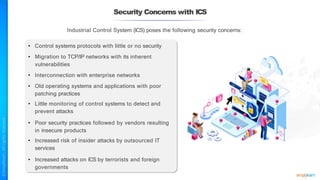
  • 218.
    Digital Signatures Digital signatures: • Areused for signing the document cryptographically • To digitally sign the data: o Create the hash of a data o Encrypt that hash with the sender's private key • To verify the digital signature: o Hash the data o Find the sender’s public key o Decrypt the signature with the sender's public key o Check whether the hash you have created matches the hash which you received • Hashing provides message integrity; signing of hash provides authentication, and non-repudiation • Involve encrypting the hash value of a message with a private key
  • 219.
    Digital Signatures The workingof digital signatures is illustrated below:
  • 220.
    Key Management Key Management Keymanagement is the most challenging part of cryptography and can be handled manually or automatically. • Key management includes: o Generating, destroying, and recovering keys o Protection of keys against capturing, modification, corruption, or disclosure to unauthorized individuals o Regular update of keys and distribution to the right entities • Key distribution protocols (asymmetric) include: o RSA o Diffie-Hellman • The Kerberos Key Distribution Center (KDC) is an example of automated key management.
  • 221.
    Keys Management Rules •Keys should be: o Stored and transmitted by secure means o Random o Properly destroyed at the end of their lifetime o Long enough to provide the necessary level of protection • The key’s lifetime should correspond with the sensitivity of the data it is protecting. Key management includes taking backup copies and adopting multi-party key recovery. Key Management Principles Creation Backup Deployment Monitoring Rotation Expiration Archival Destruction The Key Management Lifecycle
  • 222.
    Business Scenario Important pointson key management: • The value of information encrypted with a key should correspond to the level of effort taken to protect an encryption key. • The ciphertext can be compromised if the encryption key is compromised. • The level of protection required for a key should be the same as that required for the original unencrypted data. • The automatic key management is more accurate and secure. • Keys must be updated continuously and distributed to the right entities. • Keys need to be generated, recovered, and destroyed properly. Question: What should be the relationship between key’s lifetime and sensitivity of data?
  • 223.
    Business Scenario Important pointson key management: • The value of information encrypted with a key should correspond to the level of effort taken to protect an encryption key. • The ciphertext can be compromised if the encryption key is compromised. • The level of protection required for a key should be the same as that required for the original unencrypted data. • The automatic key management is more accurate and secure. • Keys must be updated continuously and distributed to the right entities. • Keys need to be generated, recovered, and destroyed properly. Question: What should be the relationship between key’s lifetime and sensitivity of data? Answer: Shorter key lifetime is for more sensitive data and longer key lifetime is for less sensitive data.
  • 224.
    Understand Methods ofCryptanalytic Attacks
  • 225.
    Cryptanalysis Cryptanalysis • Cryptanalysis isthe study of ciphertext, ciphers, and cryptosystems to understand how they work and find improving techniques for defeating or weakening them. • Cryptanalysis is used to breach cryptographic security systems and decipher the contents of encrypted messages, even without knowing the cryptographic key.
  • 226.
    Brute Force • Theattacker attempts to break the key by systematically checking all possible combinations of characters until the correct one is found. • It is always successful if the time for the attack is not limited. Bits Cipher Number of Keys Attack Time@ 1013 decryptions/sec 56 DES 7.2 x 10¹⁶ 1 hr 128 AES 3.4 x 1038 5.3 x 10¹⁷ yrs 168 3DES 3.7 x 1050 5.8 x 1029 yrs 192 AES 6.3 x 1057 9.8 x 1036 yrs 256 AES 1.2 x 1077 1.8 x 1056 yrs
  • 227.
    Ciphertext Only • Theattacker has the ciphertext of several messages. • Each of the messages has been encrypted using the same encryption algorithm. • The goal is to discover the key used in the encryption process. • It is the hardest attack to be successful at because the attacker has very little information about the encryption process.
  • 228.
    Known-Plaintext The attacker hasthe plaintext and the corresponding ciphertext of one or more messages. The attacker can analyze the relationship between the plaintext and the ciphertext. The goal is to discover the key used to encrypt the messages.
  • 229.
    Frequency Analysis • Frequencyanalysis is the study of the frequency of letters or groups of letters in a ciphertext. • Frequency analysis is based on the fact that, in any given written language, certain letters and combinations of letters occur with varying frequencies. • It is used as an aid to breaking classical ciphers such as the Ceaser cipher.
  • 230.
    Chosen-Plaintext The attacker knowsthe algorithm used for encryption. The attacker runs samples of plaintext to obtain the corresponding ciphertexts. The attacker can compare ciphertexts to possibly discover the encryption key. An Adaptive Chosen- Plaintext attack is where the attacker can modify the chosen plaintext based on the resulting ciphertext.
  • 231.
    Chosen-Ciphertext The attacker has accessto the system used for decryption. The attacker can choose the ciphertext to be decrypted and have access to the resulting decrypted plaintext. The attacker gains access to an unattended decryption system through lunchtime, midnight attacks. The goal is to figure out the encryption key.
  • 232.
    Implementation Attacks The attackerexploits implementation weaknesses in the software, protocol, or encryption algorithm. Implementation Attacks Timing Power and EM Analysis Circuit Level Embedded Code Eavesdropping MITM SW / HW Bugs Reverse– Engineering Fault Injection Logical Side–Channel Analysis
  • 233.
    Side-channel Attacks The attackeranalyzes the information retrieved from the encryption device. Power consumption statistics Radiation emissions Error information Time taken for encryption and decryption Sound
  • 234.
    Fault Injection It isa physical attack on the device to inject a fault in the system deliberately to change its intended behavior. Radiation-based fault injections Power supply disturbances Electromagnetic interferences The goal is to retrieve the secret key with a very small number of experiments.
  • 235.
    Man-in-the-Middle (MITM) • It'sa type of side-channel attack. • The attacker tries to break the ciphertext by analyzing the time taken to execute the encryption and decryption algorithms for various inputs. • The goal is to discover the key used to encrypt the messages.
  • 236.
    Man-in-the-Middle (MITM) • Itis a communication eavesdropping attack. • The attacker intercepts and relays messages between two targets. • The client and the server believe they are directly communicating with each other.
  • 237.
    Pass-the-Hash • The attackercaptures a password hash and uses it to gain access as an authorized user. • The attacker doesn’t need to decrypt the hash to obtain a plain text password. • This technique can be performed against any system which accepts NTLM authentication.
  • 238.
    Ransomware The attacker thendemands a ransom from the victim for the decryption key to restore access to the data. It is a form of malware that encrypts a victim's data and important files. If the victim doesn’t pay on time, the data is gone forever.
  • 239.
    Apply Security Principlesto Site and Facility Design
  • 240.
    Site and FacilityDesign Criteria Physical security is an essential part of a security plan and forms the basis of all other security measures, including personnel and information. The most important goal in planning a site is the protection of life, property, and operations. It is a standard operational procedure for a security professional to review all aspects of construction. Layered approach is a strategy that includes examining physical security measures starting at the site perimeter and working down to the desktop computer.
  • 241.
    Information Protection Environment Theareas of consideration are Crime Prevention Through Environmental Design (CPTED), site location, construction, and support facilities. Factors considered by a security professional: Protection of life, property, and operations Minimize risk of theft, destruction, and unauthorized access
  • 242.
    Crime Prevention ThroughEnvironmental Design (CPTED) CPTED is a crime reduction technique. Examples: Streets, parks, museums, government buildings, houses, and commercial complexes. Surveillance: It creates the perception that people can be seen. Access Control: It limits the opportunities for crime. The three environmental strategies of CPTED are: Territoriality: These make users feel safe and make the potential offender aware of a substantial risk of apprehension. INFORMAL SURVEILLANCE DEFINED SPACE DEFINED ‘PERMEABILITY’ LIGHTING LEGIBILITY
  • 243.
  • 244.
    Discussion Review the blueprintof Conwy Castle (in the next slide) and determine if it demonstrates the use of CPTED principles.
  • 245.
  • 246.
    Business Scenario Hilda Jacobs,General Manager, IT Security at Nutri Worldwide Inc. was planning the physical security controls of the new site along with Kevin. Hilda asked Kevin to assist her in this project since she is handling the planning all by herself. • Hilda Jacobs decided to use the existing landscape to deter threats. • Use of fences, vehicle barriers, warning signs, access point restriction, proper lighting, and a CCTV system were planned. Question: Which concept of physical security are Hilda and Kevin trying to implement here?
  • 247.
    Business Scenario Hilda Jacobs,General Manager, IT Security at Nutri Worldwide Inc. was planning the physical security controls of the new site along with Kevin. Hilda asked Kevin to assist her in this project since she is handling the planning all by herself. • Hilda Jacobs decided to use the existing landscape to deter threats. • Use of fences, vehicle barriers, warning signs, access point restriction, proper lighting, and a CCTV system were planned. Question: Which concept of physical security are Hilda and Kevin trying to implement here? Answer: Crime Prevention through Environmental Design (CPTED)
  • 248.
    The site locationof the facility is also a concern during the initial planning. Site Location Natural Hazards Emergency Access Wind and Surface Traffic Visibility Joint Tenants Local Crime Stable Power Supply Location and Access Existing Boundary Protection
  • 249.
    Construction The areas thatrequire attention during the construction planning stage are: Floor slab Raised flooring Walls Ceilings Windows Doors
  • 250.
    Business Scenario Nutri WorldwideInc. is a rapidly growing company with offices in different parts of the world. Recently, the company thought of opening an office in India. Hilda Jacobs, General Manager, IT Security at Nutri Worldwide Inc. was reviewing the physical and environmental security of the proposed office. • She assigned the task of listing out various threats from natural and environmental factors, man-made factors, and political factors based on the location of the proposed office to Kevin. Question: What is the first thing Kevin should consider when designing good physical and environmental security?
  • 251.
    Business Scenario Nutri WorldwideInc. is a rapidly growing company with offices in different parts of the world. Recently, the company thought of opening an office in India. Hilda Jacobs, General Manager, IT Security at Nutri Worldwide Inc. was reviewing the physical and environmental security of the proposed office. • She assigned the task of listing out various threats from natural and environmental factors, man-made factors, and political factors based on the location of the proposed office to Kevin. Question: What is the first thing Kevin should consider when designing good physical and environmental security? Answer: Life safety is the most important and first factor Kevin needs to consider for designing good physical and environmental security.
  • 252.
    Design Site andFacility Security Controls
  • 253.
    Support Facilities The factorsinvolved are: (Heating, Ventilation, Air Conditioning) IT managers should know who is responsible for HVAC. HVAC Turn off all electrical power to the equipment, allow water to drain out, place all affected equipment or media in an air-conditioned area, and wipe with water displacement spray. Water Recommended practices are installing user surge protectors, uninterruptible power supply (UPS), installing backup source for critical systems, and anti-static carpet. Electricity Keep computers away from glass windows and high surfaces, place Earthquakes components on shock absorbers and anchors, and ensure other objects do not fall on computers. Best practice is to switch off the systems, unplug them, and store the backup tapes away from the building’s steel support. Lightning
  • 254.
    Data Center Security:Guidelines Data Centers, server rooms, and wiring closets should be at the core of the facility. Wiring closets in a multistory building should be placed directly above or below each other. This helps with the easier connectivity of wires across the building. Access to DC should be via only one door. If there are additional doors, they should function as one-way exit doors. DC should not be in the basement or upper floors of a building. The data processing center should be constructed as one room rather than different individual rooms. DC should have a positive air pressure. No contaminants can be sucked into the room. Water detectors should be placed under raised floors and on dropped ceilings. The HVAC system should be implemented for temperature and humidity control.
  • 255.
    Personnel AccessControl Piggybacking Piggybacking iswhen another person follows through a door with the permission of the person who has received access. Tailgating Tailgating is when another person, whether an employee or not, passes through a secure door without the knowledge of the person who has gained legitimate access through the secure door.
  • 256.
    Mantraps and Turnstiles •A turnstile is a form of a gate that prevents more than one person at a time from gaining entry and often restricts movement in one direction. • It is the equivalent of a secured revolving door. It is a double set of doors that is often protected by a guard or some other physical layout that prevents piggybacking and can trap individuals at the discretion of security personnel. Turnstiles Mantraps
  • 257.
    AccessControl • A passivedevice or transponder that can be used to control physical access • A passive device, typically worn by an individual, that alters the magnetic field generated by the reader when detected and processed. • Machine readable ID cards with memory sticks • Can hold a small amount of data in memory but cannot process it • Are easy to copy or duplicate Memory card Proximity reader • Security ID with an embedded magnetic strip, bar code, or integrated circuit chip • Can process information or store a reasonable amount of data in memory • Can be used in multifactor authentication to improve security • Vulnerable to physical security attacks Smart card
  • 258.
    Media Storage Security:Safe • Safes are commonly used to store media. • Passive locking safes can detect if someone attempts to tamper with them, in which case extra internal bolts will fall into place to ensure it cannot be compromised. • Thermal locking safes can identify temperature changes and implement additional locks.
  • 259.
    Media Storage Security:Safe Types Safe Type Characteristic Wall Safe Embedded into the wall and easily hidden Floor Safe Embedded into the floor and easily hidden Chests Stand-alone safe Depositories Safes with slots; allow valuables to be slipped in Vaults Safes that are large enough to allow walk-in
  • 260.
    Fire Prevention, Detection,and Suppression Fire Prevention • Training employees for fire safety • Supplying the right equipment and ensuring their working conditions • Storing combustible materials in a proper manner Fire Detection Placing fire detectors at strategic points to detect smoke or fire Fire Suppression Systems Using a suppression agent to put out a fire
  • 261.
    Stages of Fire Initialstage, only air ionization, no smoke Stage 1: Incipient stage Smoke is visible from the point of ignition Stage 2: Smoke stage Flame can be seen with naked eye Stage 3: Flame stage Fire is considerably higher Stage 4: Heat stage The earlier the fire is detected, the easier it is to be extinguished.
  • 262.
    Fire Detection Devices SmokeActivated • Good early warning devices • Photoelectric device ○ Detects a variation in light intensity and produces a beam of light and if the light is obstructed, an alarm is produced.
  • 263.
    Fire Detection Devices HeatActivated • Fixed temperate: Alarm is generated when a particular temperature is reached • Rate-of-raise: Alarm is generated when the temperature raises over time ○ Rate-of-raising temperature sensors usually provide a quicker warning than fixed-temperature sensors, but they are prone to false positives
  • 264.
    Environmental Controls: Fire Thefollowing are the classes of fires: Class A Fires Class B Fires Class C Fires Class D Fires Class K Fires
  • 265.
    Environmental Controls: Fire Thetable given below indicates the types of fires and the corresponding extinguishing methods. Class Description (Fuel) Extinguishing Method A Common combustibles such as paper, wood, and clothing Water, Foam B Burnable fuels such as gasoline or oil Inert Gas, CO2 C Electrical fires such as computers and electronics Inert Gas, CO2 (Note: Most important step: Turn off electricity first!) D Special fires, such as chemical, or metal Dry Powder (May require total immersion or other special techniques) K Commercial Kitchens Wet Chemical
  • 266.
    Water-Based Suppression System WetPipe • Always full of water, usually discharged by temperature control sensors. • Also called closed head systems Dry Pipe • Water is not stored in the pipe, instead contains compressed air. • Opening the water valve causes water to fill the pipes and discharge. Preaction Deluge • Another form of dry pipe system that uses larger pipes and can deliver a significantly larger volume of water. • Combination of wet and dry pipe • Water is not held in the pipes until the fire is detected. • Released only after the sprinkler head activation triggers are melted by sufficient heat.
  • 267.
    GasSuppression Gas Suppression • Itis more effective than water suppression systems. • Gas discharge systems remove oxygen from the air and should not be used in environments where people are located. • Halon is an effective gas suppression system, but as it degrades the environment, it is banned. • Effective replacements for Halon are: ○ FM200 ○ NAF-S-III ○ Argon ○ Inergen
  • 268.
    Infrared Monitors for significantchanges in the infrared lighting pattern of a monitored area. Heat-based Monitors for significant changes in the heat levels of a monitored area. Wave Pattern Transmits low ultrasonic frequency signals and monitors for significant changes in the reflected patterns. Capacitance Monitors the changes in the electrical or magnetic field surrounding a monitored object. Photoelectric Monitors visible light levels in a monitored area. Passive Audio Listens for abnormal sounds in a monitored area. Motion Detectors
  • 269.
    Alarm Types Deterrent • Alarmsthat trigger deterrent actions • The goal is to make intrusion attempts more difficult. Repellent • Alarms that trigger sound or light • The goal is to discourage intruders. Notification • Alarms that trigger notifications to security analyst • Silent from an attacker's perspective, but it gives warning signals to the security team.
  • 270.
    Alarm Categories Local AlarmSystem • Must broadcast an audible alarm signal that can be heard within 400 feet. • Security guards should be stationed nearby. • The alarm is silent locally, but offsite monitoring agents are notified. Central Station Auxiliary system • Can be added to either a local or a centralized system. • Notifications are sent to emergency services such as the fire, police, and medical teams.
  • 271.
    Emanation Security: ElectronicEmanation TEMPEST is used to protect against emanation leaks. Hardware or electronic devices emit electronic signals which if captured can reveal useful information
  • 272.
    Emanation Security: ElectronicEmanation Controls against Electronic Emanation: • Implementation of zones so that the emanations are controlled within the environment. • Can use faraday cage or white noise in those zones Broadcasts false traffic to mask and hide the presence of real emanations. Faraday Cage White Noise A closed enclosure with external metal mesh that fully surrounds the enclosure, absorbing EM signals. Control Zone
  • 273.
    Business Scenario Question: Whatsuggestion did Kevin include in his report to ensure strong access control for the data center? Kevin Butler is studying the importance of security for data centers. He reads about the recent unauthorized intrusion in data centers caused by a faulty design. He studied some of the countermeasures for the same. He understands that for dropped ceilings, the walls should extend above the ceiling to the true ceiling. ● Similarly, for the raised floors, the walls should extend below the false floor. ● Even the air ducts should be small enough to prevent an intruder from crawling through them. ● Kevin identified, apart from the above-mentioned considerations, the need to have strong access control for the data center and made his suggestions to Hilda.
  • 274.
    Business Scenario Question: Whatsuggestion did Kevin include in his report to ensure strong access control for the data center? Answer: The use of three-factor authentication for access control. Kevin Butler is studying the importance of security for data centers. He reads about the recent unauthorized intrusion in data centers caused by a faulty design. He studied some of the countermeasures for the same. He understands that for dropped ceilings, the walls should extend above the ceiling to the true ceiling. ● Similarly, for the raised floors, the walls should extend below the false floor. ● Even the air ducts should be small enough to prevent an intruder from crawling through them. ● Kevin identified, apart from the above-mentioned considerations, the need to have strong access control for the data center and made his suggestions to Hilda.
  • 275.
    HVAC Heating, Ventilation, andAir-Conditioning (HVAC) • Temperature and humidity are maintained within reasonable limits. • Positive pressure and drainage are employed. • Recommended humidity levels are 40 to 55%. • Low humidity causes static electricity. • High humidity may cause corrosion. • Recommended set point temperature range for a data center is 68 to 77°F (20–25°C).
  • 276.
    Power Supply A reliablepower supply is critical for any data center. The following are common threats to the power system: Power Excess • Surge: Prolonged high voltage • Spike: Momentary high voltage Power Loss • Blackout: Prolonged, complete loss of electric power • Fault: Momentary power outage Power Degradation • Brownout: Prolonged reduction in voltage • Sagor dip: Momentary reduction in voltage
  • 277.
    Training and Awareness Physicalsecurity awareness and training are very critical. It should include: • Training on operating emergency power systems • Training on operating fire extinguishers • Evacuation routes should be prominently displayed • Fire drills
  • 278.
    Key Takeaways An architectureframework provides a structure used for developing a broad range of security designs. The various types of evaluation criteria are trusted computer system evaluation criteria, information technology security evaluation criteria, common criteria, and payment card industry data security standard. System security architecture is focused on designing security services within individual computing systems. The various types of distributed systems are virtualization, hypervisor, cloud computing, grid computing, and peer-to- peer.
  • 279.
    This concludes SecurityArchitecture and Engineering. The next domain is Communications and Network Security. CISSP® is a registered trademark of (ISC)²®