Circulation
VCE BIOLOGY – UNIT 1
The Heart
The biological pump
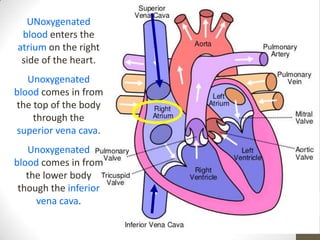
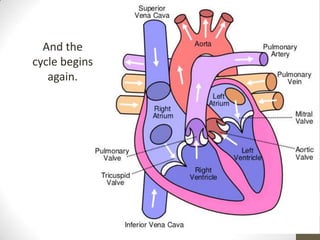
UNoxygenated
 blood enters the
atrium on the right
 side of the heart.
   Unoxygenated
blood comes in from
the top of the body
    through the
superior vena cava.
   Unoxygenated
blood comes in from
   the lower body
 though the inferior
     vena cava.
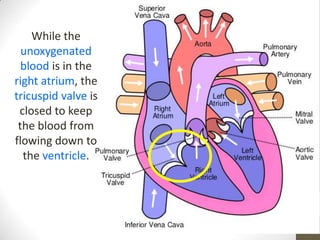
While the
  unoxygenated
  blood is in the
right atrium, the
tricuspid valve is
 closed to keep
 the blood from
flowing down to
  the ventricle.
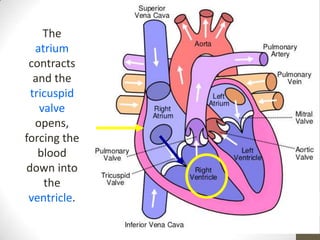
The
  atrium
 contracts
  and the
 tricuspid
   valve
  opens,
forcing the
   blood
down into
    the
 ventricle.
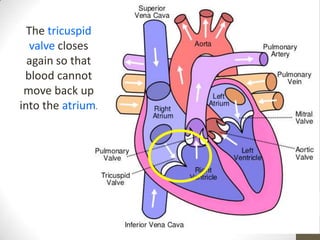
The tricuspid
   valve closes
  again so that
 blood cannot
 move back up
into the atrium.
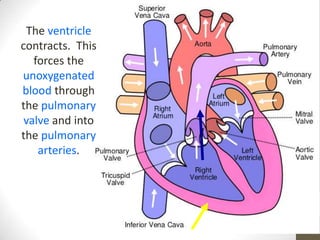
The ventricle
contracts. This
   forces the
unoxygenated
blood through
the pulmonary
 valve and into
the pulmonary
    arteries.
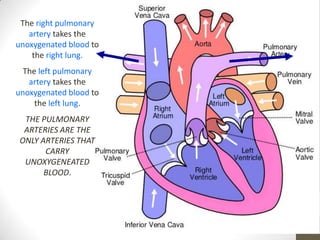
The right pulmonary
   artery takes the
unoxygenated blood to
    the right lung.
  The left pulmonary
   artery takes the
unoxygenated blood to
     the left lung.
  THE PULMONARY
  ARTERIES ARE THE
 ONLY ARTERIES THAT
       CARRY
  UNOXYGENEATED
       BLOOD.
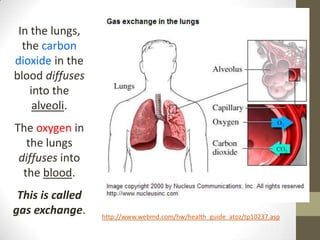
In the lungs,
  the carbon
dioxide in the
blood diffuses
    into the
     alveoli.
The oxygen in
   the lungs
 diffuses into
  the blood.
 This is called
gas exchange.     http://www.webmd.com/hw/health_guide_atoz/tp10237.asp
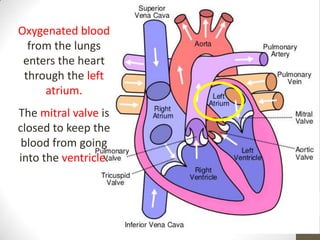
Oxygenated blood
  from the lungs
 enters the heart
 through the left
     atrium.
The mitral valve is
closed to keep the
 blood from going
into the ventricle.
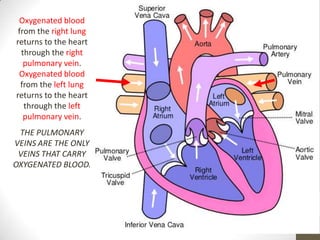
Oxygenated blood
 from the right lung
returns to the heart
  through the right
   pulmonary vein.
 Oxygenated blood
  from the left lung
returns to the heart
   through the left
   pulmonary vein.
 THE PULMONARY
VEINS ARE THE ONLY
 VEINS THAT CARRY
OXYGENATED BLOOD.
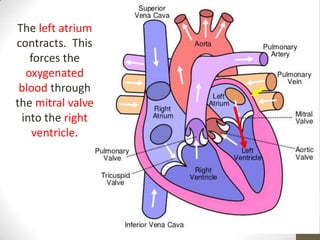
The left atrium
contracts. This
   forces the
  oxygenated
 blood through
the mitral valve
 into the right
   ventricle.
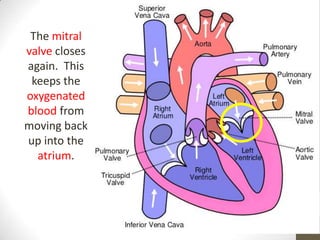
The mitral
valve closes
again. This
 keeps the
oxygenated
blood from
moving back
up into the
  atrium.
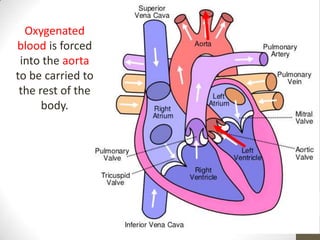
Oxygenated
blood is forced
 into the aorta
to be carried to
 the rest of the
      body.
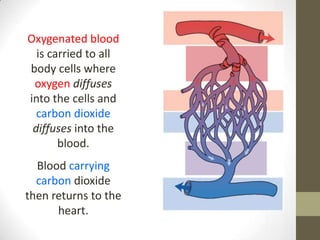
Oxygenated blood
  is carried to all
body cells where
 oxygen diffuses
into the cells and
  carbon dioxide
 diffuses into the
       blood.
  Blood carrying
  carbon dioxide
then returns to the
      heart.
And the
cycle begins
   again.
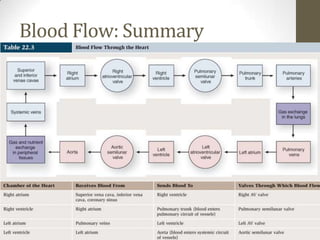
Blood Flow: Summary
Blood Vessels
Blood Vessels: Arteries, Veins, and Capillaries
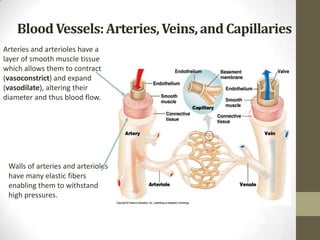
Arteries and arterioles have a
layer of smooth muscle tissue
which allows them to contract
(vasoconstrict) and expand
(vasodilate), altering their
diameter and thus blood flow.


 Walls of arteries and arterioles
 have many elastic fibers
 enabling them to withstand
 high pressures.
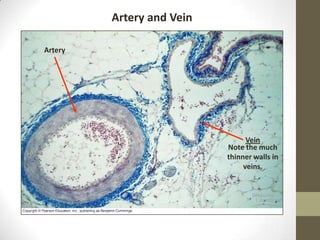
Artery and Vein

Artery


                                 Vein
                           Note the much
                           thinner walls in
                                veins.
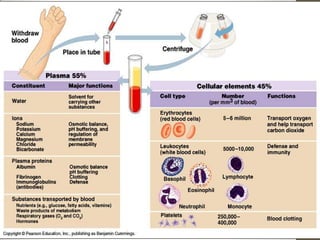
Components of
Blood
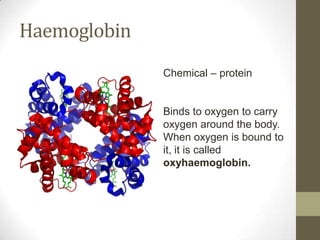
Haemoglobin
              Chemical – protein


              Binds to oxygen to carry
              oxygen around the body.
              When oxygen is bound to
              it, it is called
              oxyhaemoglobin.
Types of Circulatory
System
Circulatory Systems
For larger or more active animals, some form of
more efficient circulatory system is necessary for
internal transport.

• Two types of circulatory system are found:
  Open Circulatory Systems
  Closed Circulatory Systems
Open Circulatory System

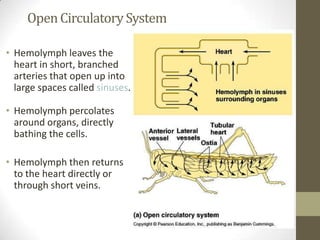
• Hemolymph leaves the
  heart in short, branched
  arteries that open up into
  large spaces called sinuses.

• Hemolymph percolates
  around organs, directly
  bathing the cells.

• Hemolymph then returns
  to the heart directly or
  through short veins.
Open Circulatory System
 • Advantage - Exchange of materials is direct
   between the hemolymph and tissues. There
   is no diffusion barrier.

 • Disadvantage - Little fine control over
   distribution of the hemolymph to body
   regions. No mechanism for reducing flow to a
   specific part of an organ.
Open Circulatory System

• Open circulatory systems tend to be found in
  more inactive animals.

• Most molluscs have an open system, but the
  highly active cephalopods (squid and octopus)
  have evolved a closed system.

• Insects have circumvented limitation of their
  open system by their tracheal system for oxygen
  supply.
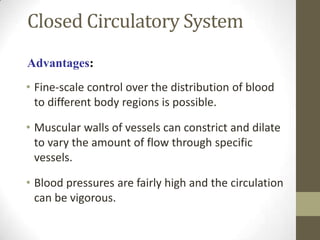
Closed Circulatory System
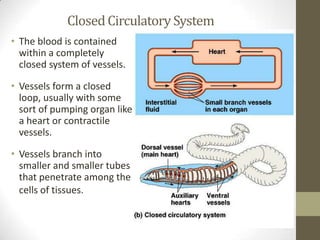
• The blood is contained
  within a completely
  closed system of vessels.

• Vessels form a closed
  loop, usually with some
  sort of pumping organ like
  a heart or contractile
  vessels.

• Vessels branch into
  smaller and smaller tubes
  that penetrate among the
  cells of tissues.
Closed Circulatory System
Advantages:
• Fine-scale control over the distribution of blood
  to different body regions is possible.

• Muscular walls of vessels can constrict and dilate
  to vary the amount of flow through specific
  vessels.

• Blood pressures are fairly high and the circulation
  can be vigorous.
Human Circulatory
System
A Closed Circulatory System
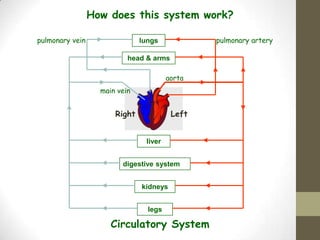
How does this system work?

pulmonary vein                 lungs            pulmonary artery

                           head & arms

                                        aorta
                   main vein


                       Right             Left


                                liver


                         digestive system


                               kidneys


                                 legs

                      Circulatory System
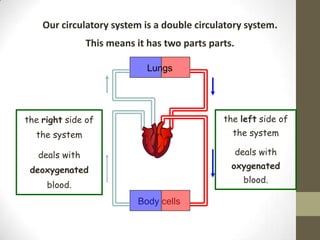
Our circulatory system is a double circulatory system.
                This means it has two parts parts.

                              Lungs


the right side of                              the left side of
  the system                                     the system

   deals with                                        deals with

 deoxygenated                                    oxygenated
                                                       blood.
     blood.
                           Body cells

Circulation (bd)

  • 1.
  • 2.
  • 3.
    UNoxygenated blood entersthe atrium on the right side of the heart. Unoxygenated blood comes in from the top of the body through the superior vena cava. Unoxygenated blood comes in from the lower body though the inferior vena cava.
  • 4.
    While the unoxygenated blood is in the right atrium, the tricuspid valve is closed to keep the blood from flowing down to the ventricle.
  • 5.
    The atrium contracts and the tricuspid valve opens, forcing the blood down into the ventricle.
  • 6.
    The tricuspid valve closes again so that blood cannot move back up into the atrium.
  • 7.
    The ventricle contracts. This forces the unoxygenated blood through the pulmonary valve and into the pulmonary arteries.
  • 8.
    The right pulmonary artery takes the unoxygenated blood to the right lung. The left pulmonary artery takes the unoxygenated blood to the left lung. THE PULMONARY ARTERIES ARE THE ONLY ARTERIES THAT CARRY UNOXYGENEATED BLOOD.
  • 9.
    In the lungs, the carbon dioxide in the blood diffuses into the alveoli. The oxygen in the lungs diffuses into the blood. This is called gas exchange. http://www.webmd.com/hw/health_guide_atoz/tp10237.asp
  • 10.
    Oxygenated blood from the lungs enters the heart through the left atrium. The mitral valve is closed to keep the blood from going into the ventricle.
  • 11.
    Oxygenated blood fromthe right lung returns to the heart through the right pulmonary vein. Oxygenated blood from the left lung returns to the heart through the left pulmonary vein. THE PULMONARY VEINS ARE THE ONLY VEINS THAT CARRY OXYGENATED BLOOD.
  • 12.
    The left atrium contracts.This forces the oxygenated blood through the mitral valve into the right ventricle.
  • 13.
    The mitral valve closes again.This keeps the oxygenated blood from moving back up into the atrium.
  • 14.
    Oxygenated blood is forced into the aorta to be carried to the rest of the body.
  • 15.
    Oxygenated blood is carried to all body cells where oxygen diffuses into the cells and carbon dioxide diffuses into the blood. Blood carrying carbon dioxide then returns to the heart.
  • 16.
  • 17.
  • 18.
  • 19.
    Blood Vessels: Arteries,Veins, and Capillaries Arteries and arterioles have a layer of smooth muscle tissue which allows them to contract (vasoconstrict) and expand (vasodilate), altering their diameter and thus blood flow. Walls of arteries and arterioles have many elastic fibers enabling them to withstand high pressures.
  • 20.
    Artery and Vein Artery Vein Note the much thinner walls in veins.
  • 21.
  • 23.
    Haemoglobin Chemical – protein Binds to oxygen to carry oxygen around the body. When oxygen is bound to it, it is called oxyhaemoglobin.
  • 24.
  • 25.
    Circulatory Systems For largeror more active animals, some form of more efficient circulatory system is necessary for internal transport. • Two types of circulatory system are found: Open Circulatory Systems Closed Circulatory Systems
  • 26.
    Open Circulatory System •Hemolymph leaves the heart in short, branched arteries that open up into large spaces called sinuses. • Hemolymph percolates around organs, directly bathing the cells. • Hemolymph then returns to the heart directly or through short veins.
  • 27.
    Open Circulatory System • Advantage - Exchange of materials is direct between the hemolymph and tissues. There is no diffusion barrier. • Disadvantage - Little fine control over distribution of the hemolymph to body regions. No mechanism for reducing flow to a specific part of an organ.
  • 28.
    Open Circulatory System •Open circulatory systems tend to be found in more inactive animals. • Most molluscs have an open system, but the highly active cephalopods (squid and octopus) have evolved a closed system. • Insects have circumvented limitation of their open system by their tracheal system for oxygen supply.
  • 29.
    Closed Circulatory System •The blood is contained within a completely closed system of vessels. • Vessels form a closed loop, usually with some sort of pumping organ like a heart or contractile vessels. • Vessels branch into smaller and smaller tubes that penetrate among the cells of tissues.
  • 30.
    Closed Circulatory System Advantages: •Fine-scale control over the distribution of blood to different body regions is possible. • Muscular walls of vessels can constrict and dilate to vary the amount of flow through specific vessels. • Blood pressures are fairly high and the circulation can be vigorous.
  • 31.
  • 32.
    How does thissystem work? pulmonary vein lungs pulmonary artery head & arms aorta main vein Right Left liver digestive system kidneys legs Circulatory System
  • 33.
    Our circulatory systemis a double circulatory system. This means it has two parts parts. Lungs the right side of the left side of the system the system deals with deals with deoxygenated oxygenated blood. blood. Body cells