
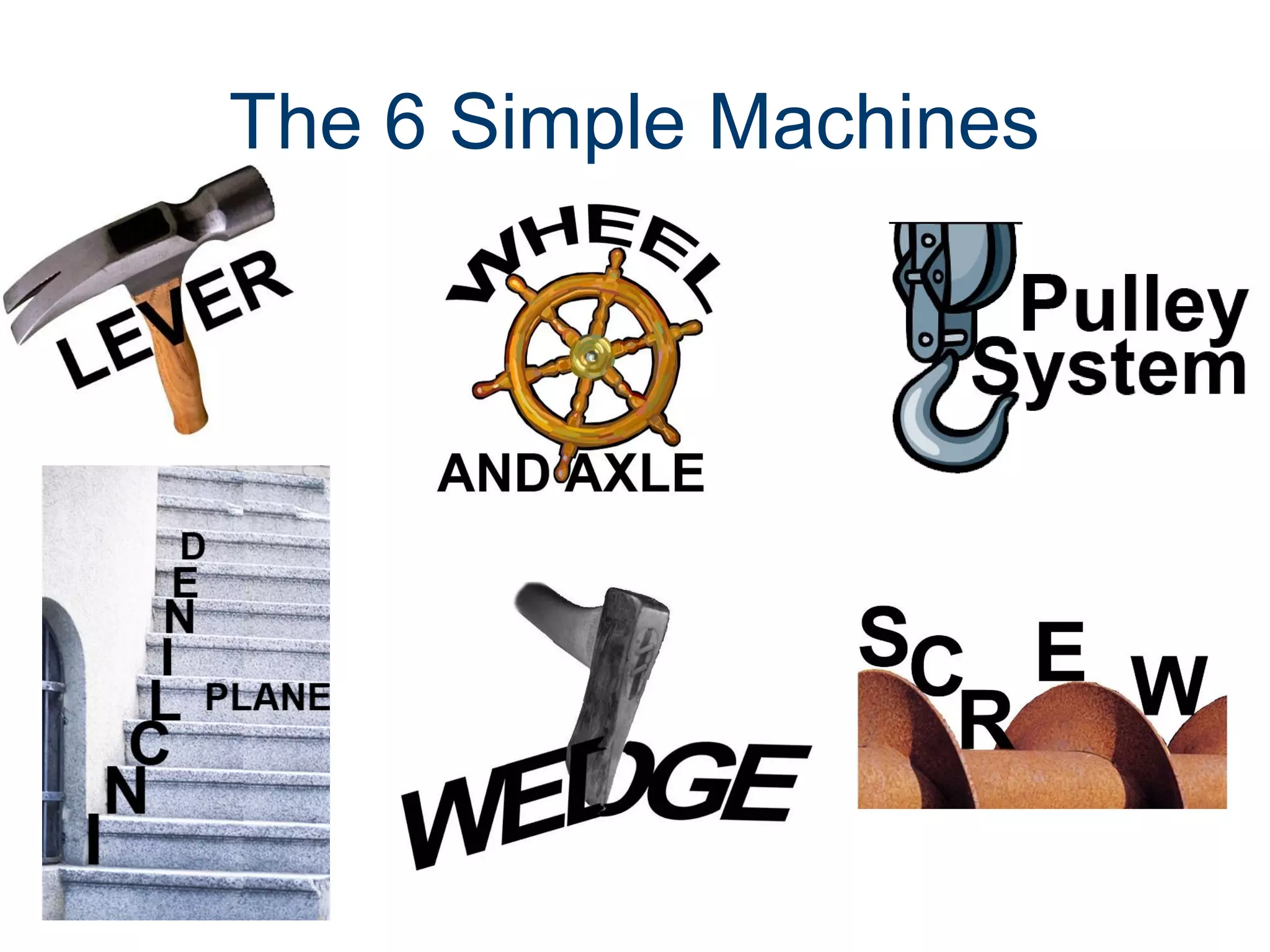
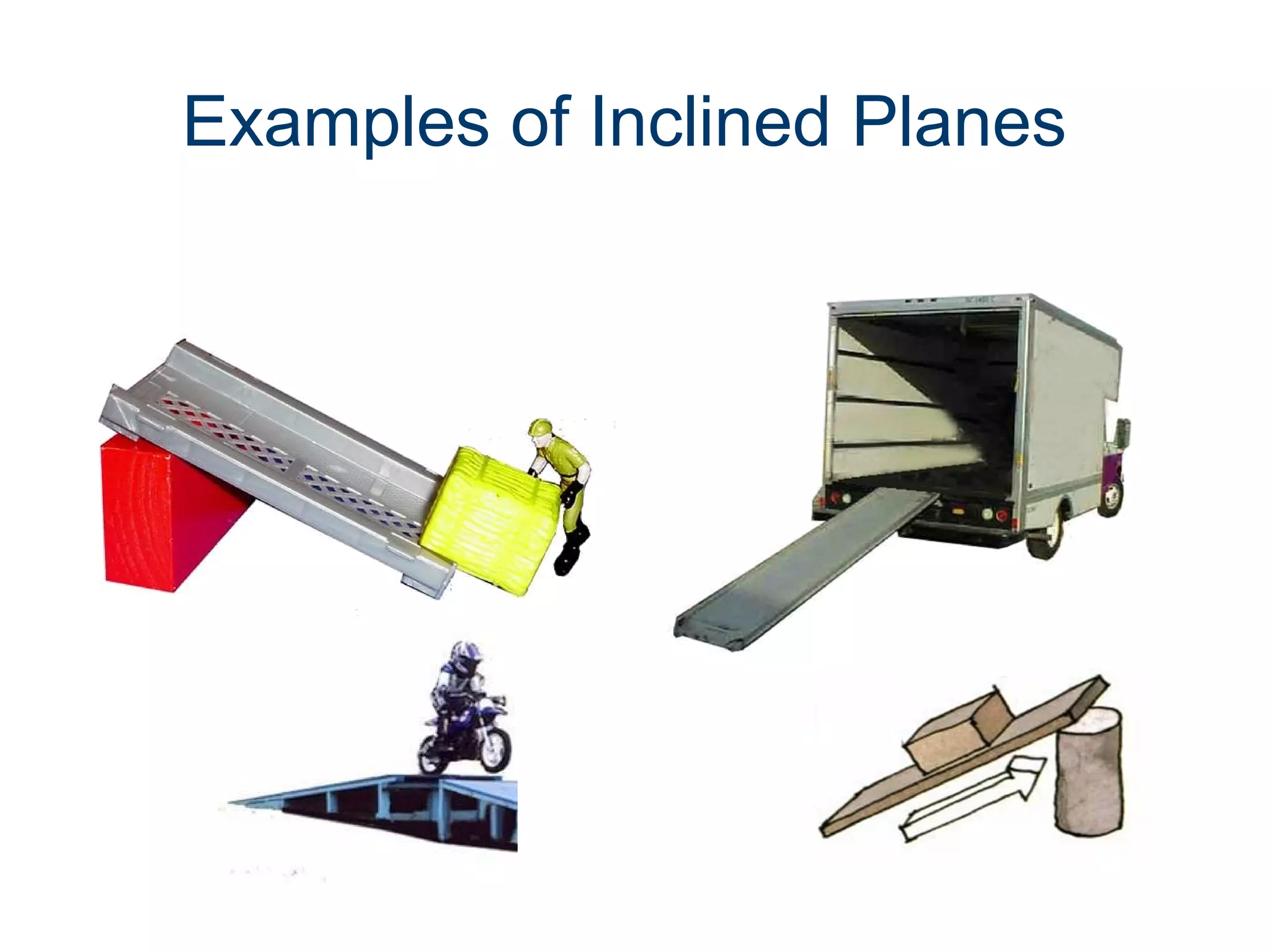
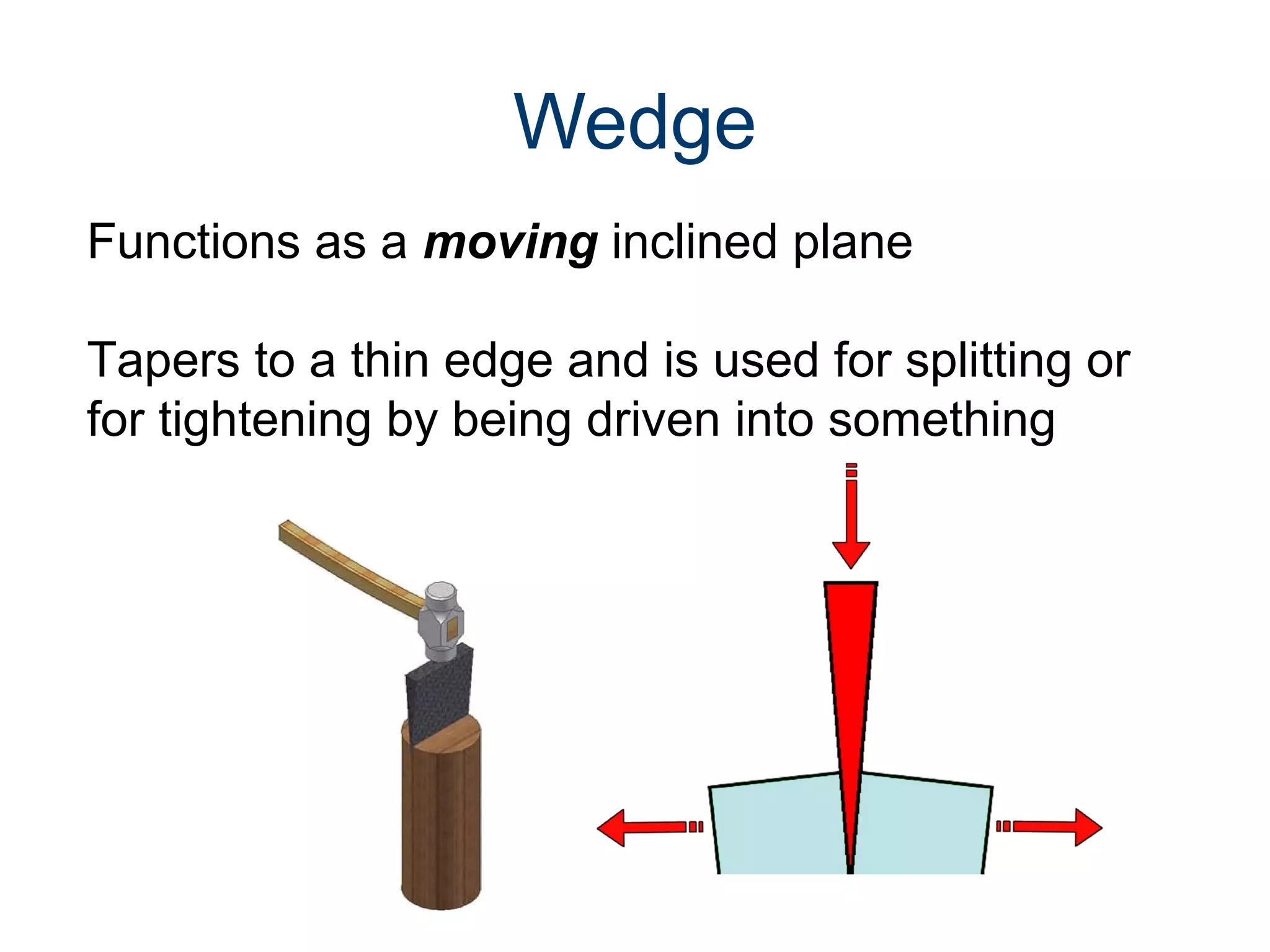
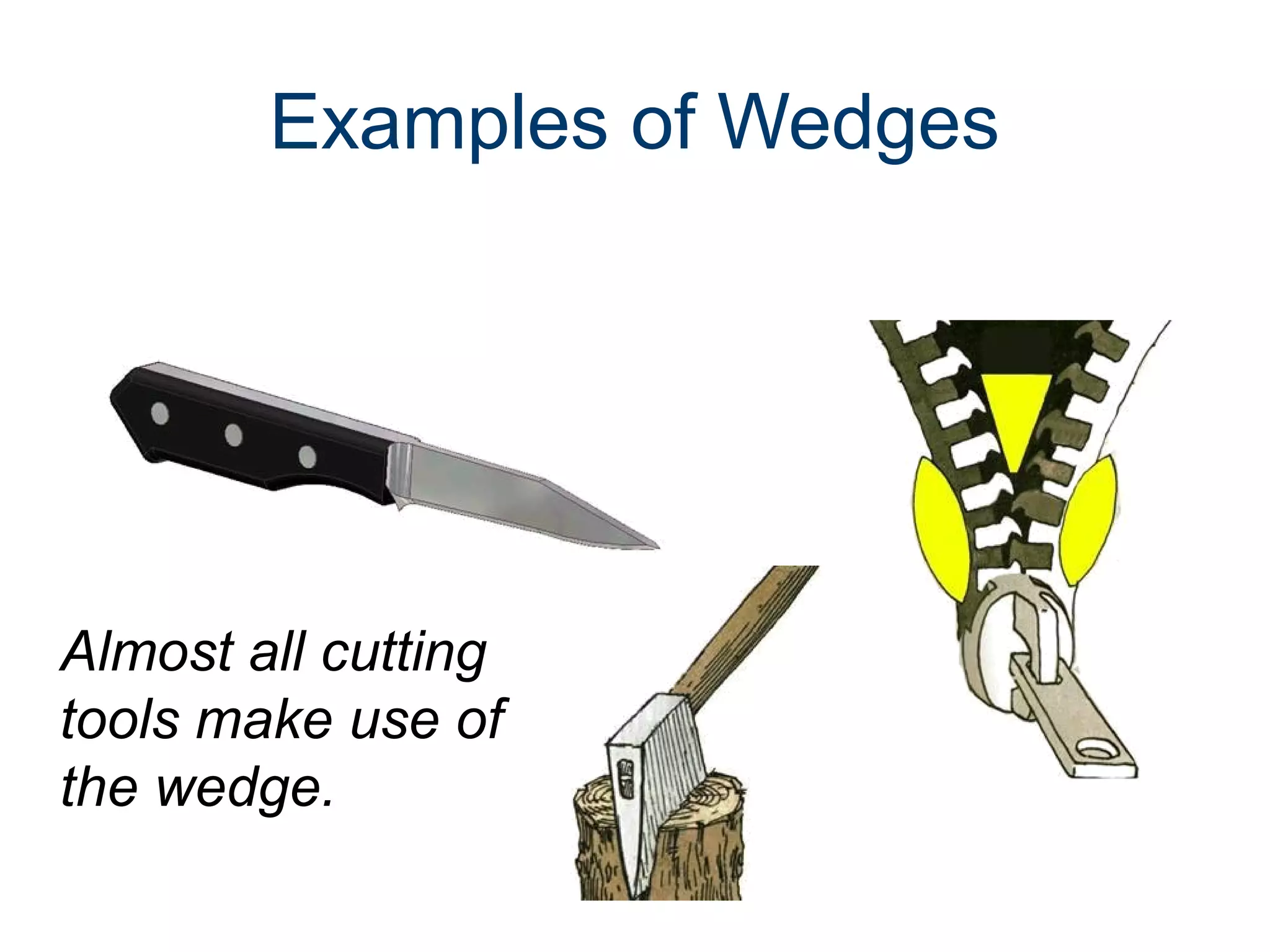
Simple machines make work easier by changing the amount of force needed or the distance through which force is applied. The six simple machines are the lever, wheel and axle, pulley, inclined plane, wedge, and screw. Compound machines combine two or more simple machines to make work even easier by providing a greater mechanical advantage.
What are SimpleMachines?
• A device that allows work to be performed
with less effort
• A device with few or no moving parts
• A device that makes work easier by
changing force, distance, or by changing the
direction of the force
What are Compound Machines?
Two or more simple machines working
together to make the work easier
Lever
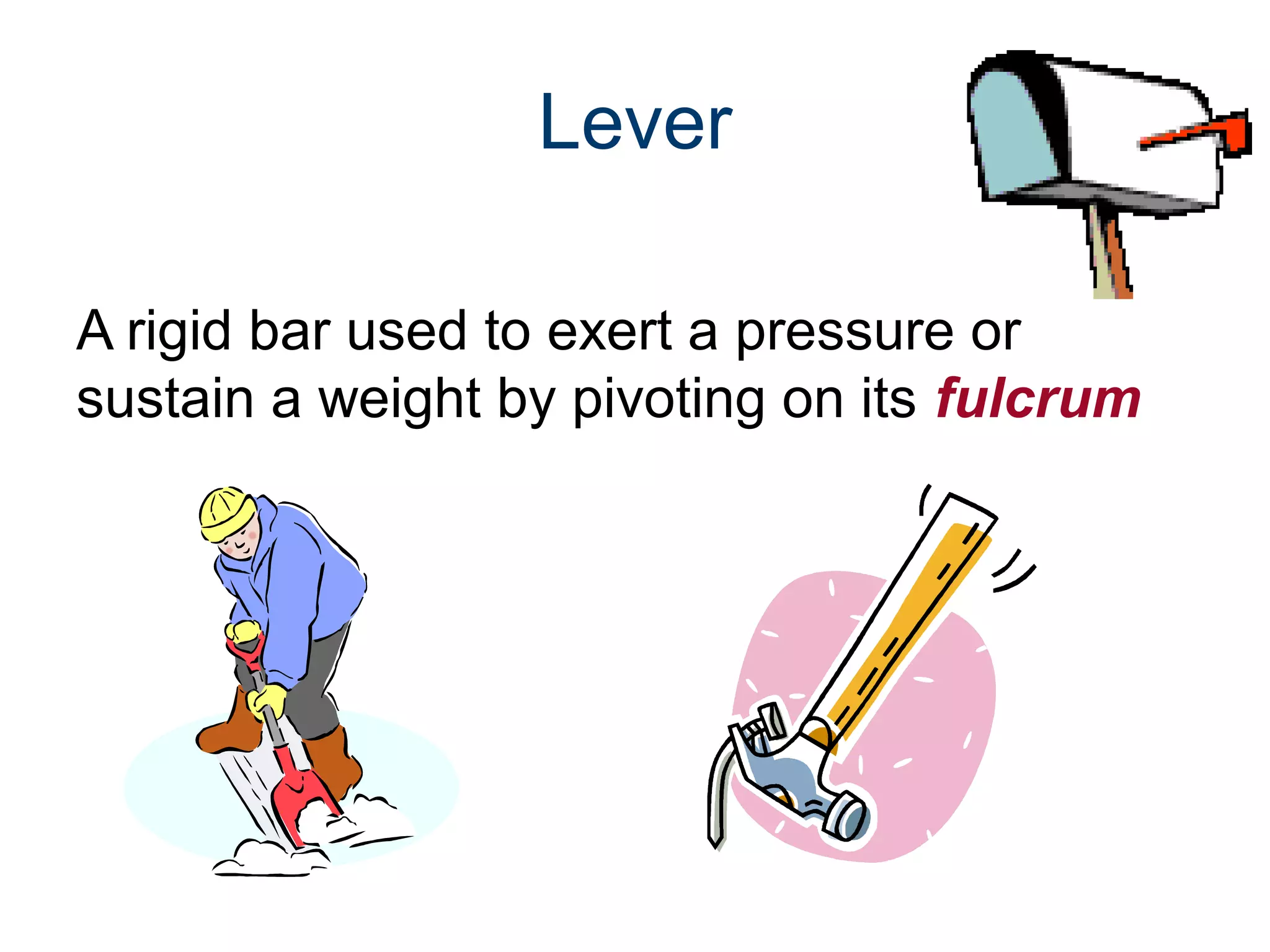
A rigid barused to exert a pressure or
sustain a weight by pivoting on its fulcrum
5.
Parts of aLever
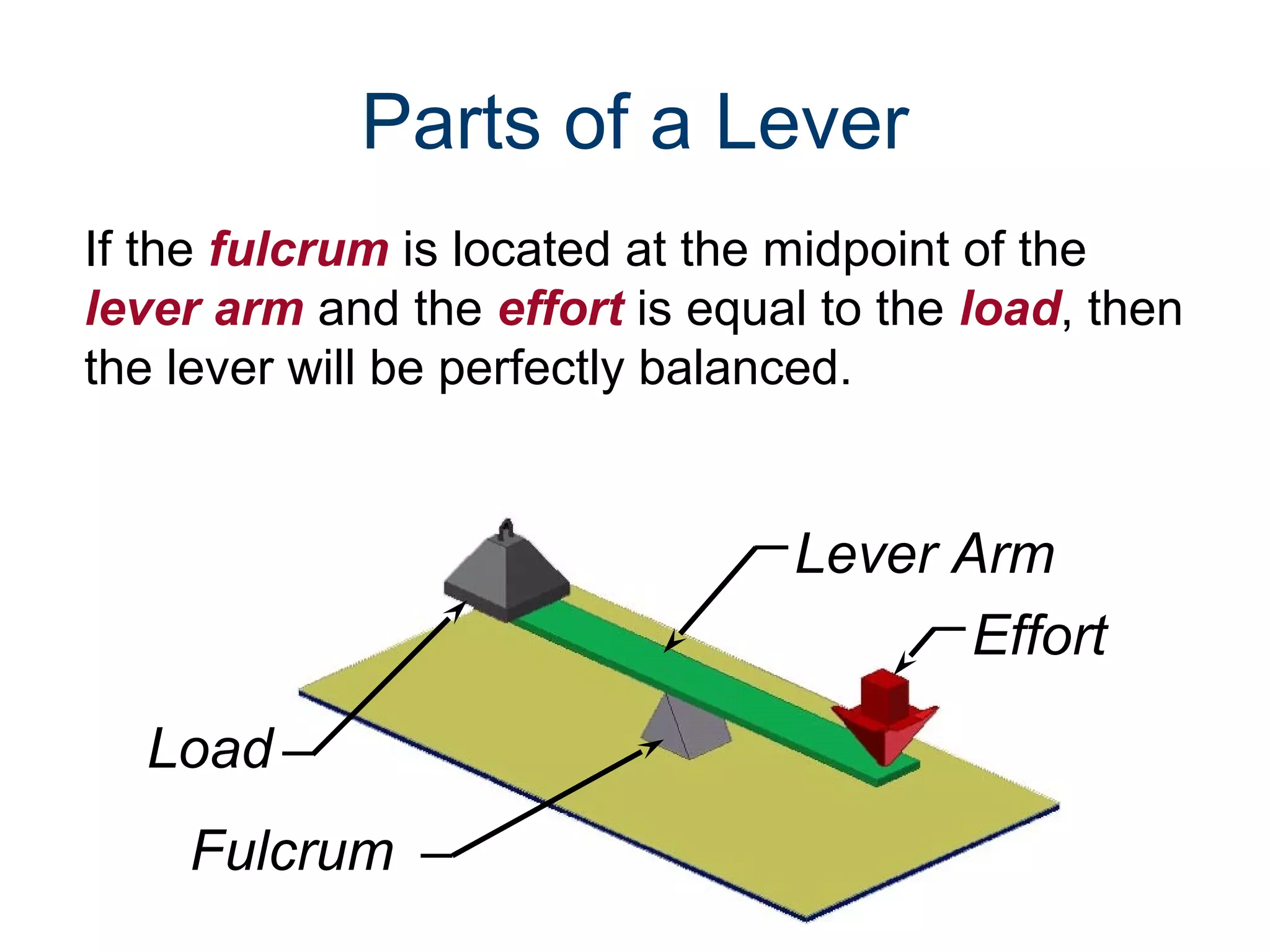
If the fulcrum is located at the midpoint of the
lever arm and the effort is equal to the load, then
the lever will be perfectly balanced.
Lever Arm
Effort
Load
Fulcrum
6.
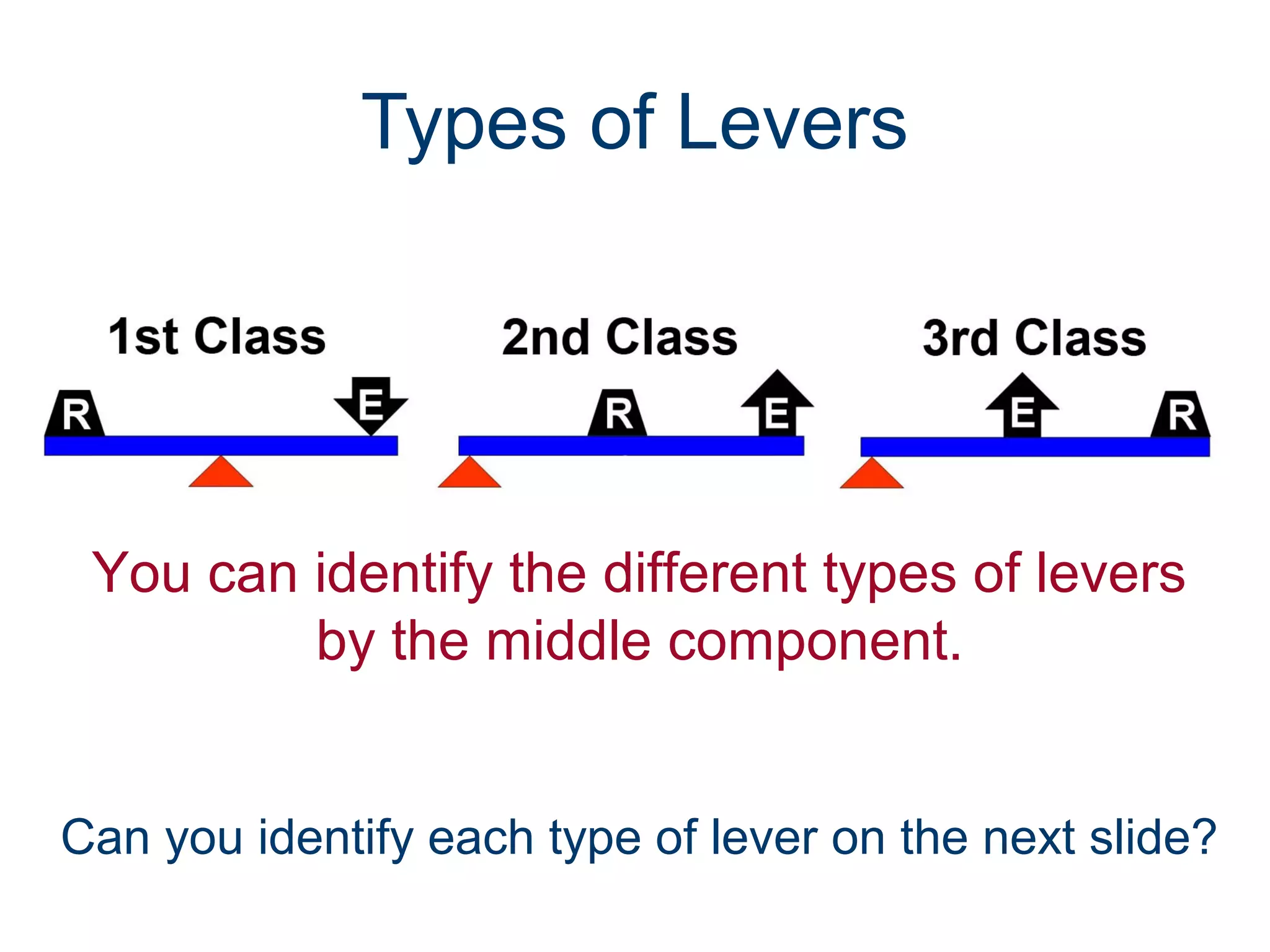
Types of Levers
Youcan identify the different types of levers
by the middle component.
Can you identify each type of lever on the next slide?
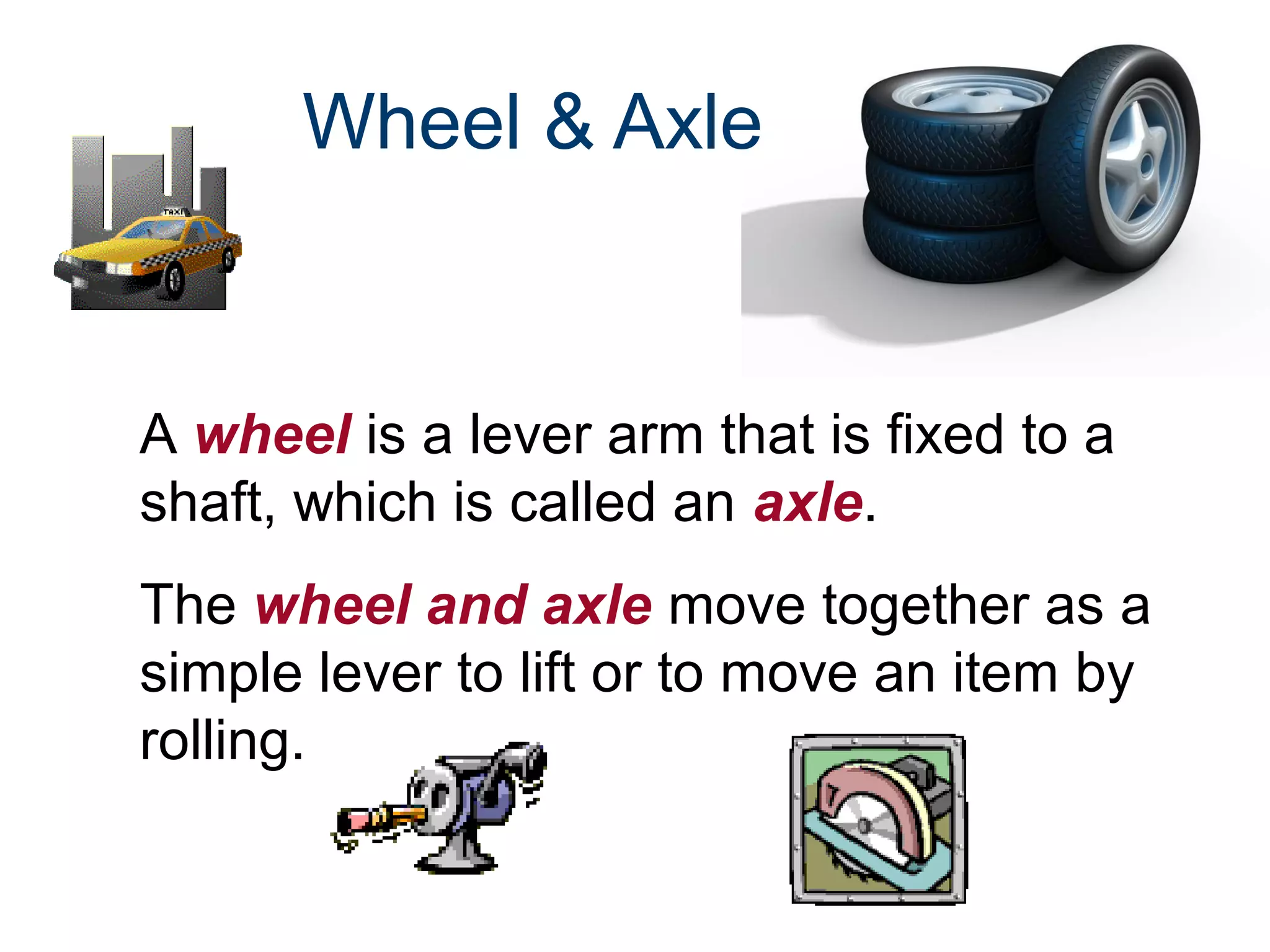
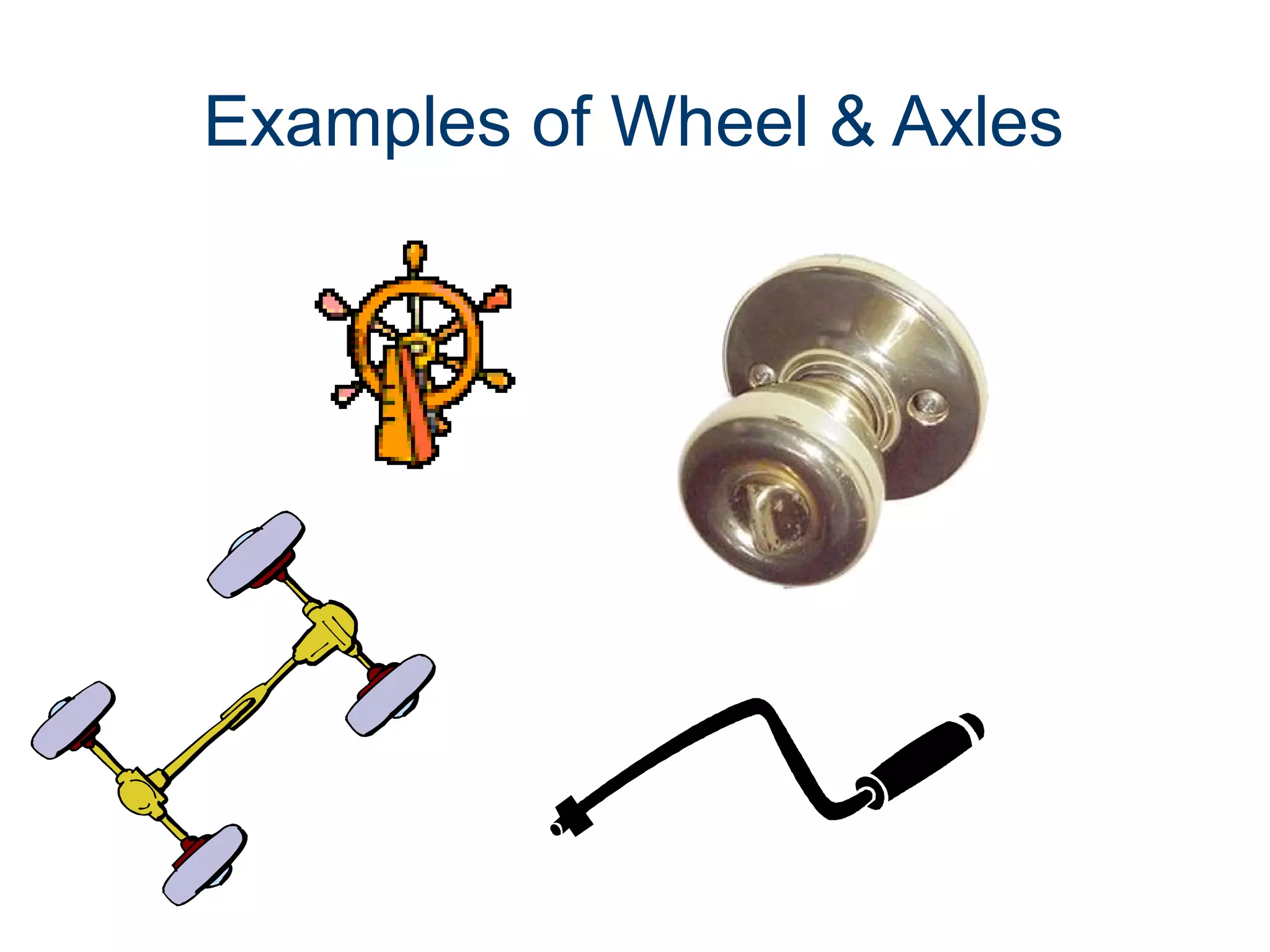
Wheel & Axle
Awheel is a lever arm that is fixed to a
shaft, which is called an axle.
The wheel and axle move together as a
simple lever to lift or to move an item by
rolling.
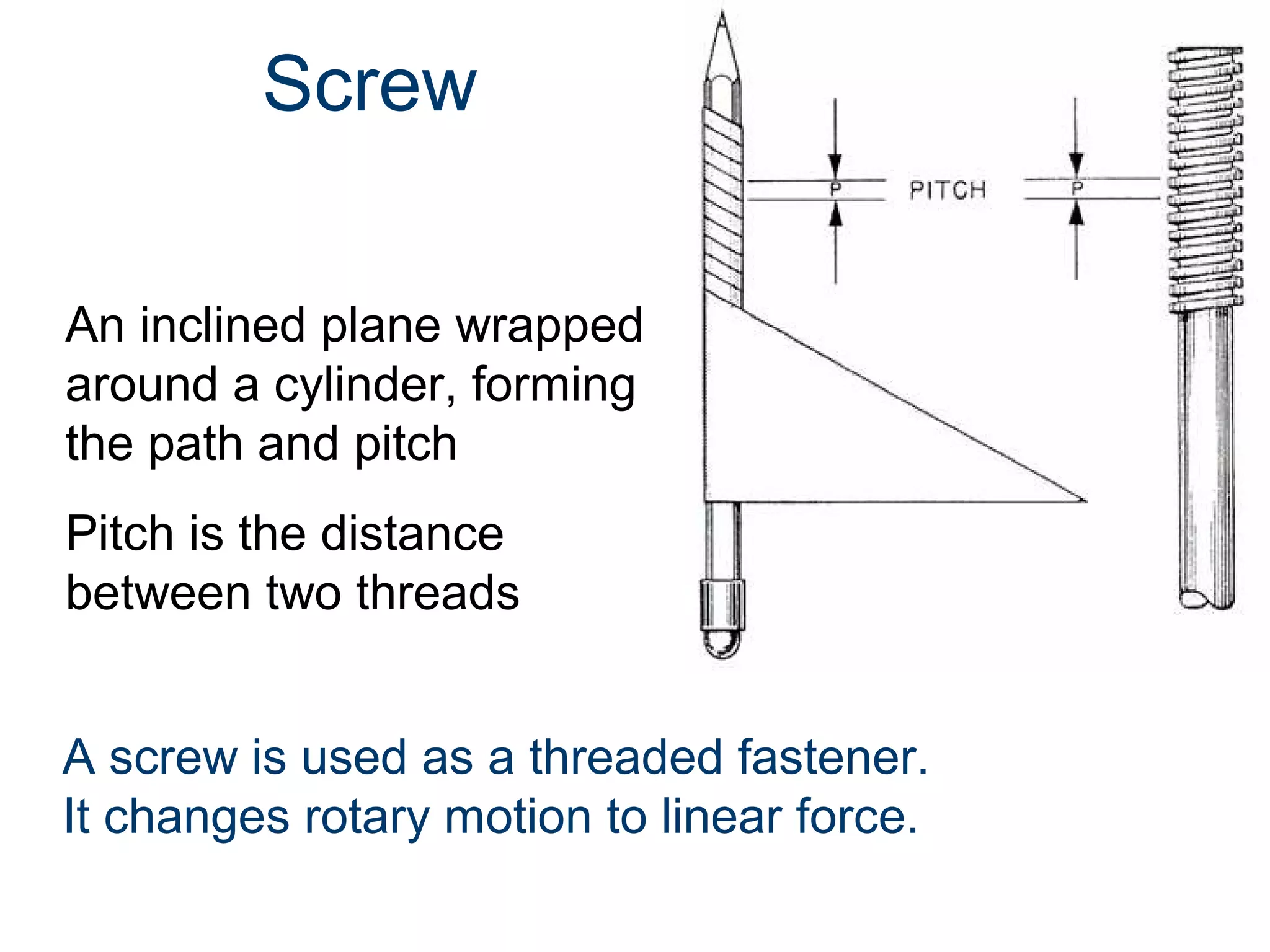
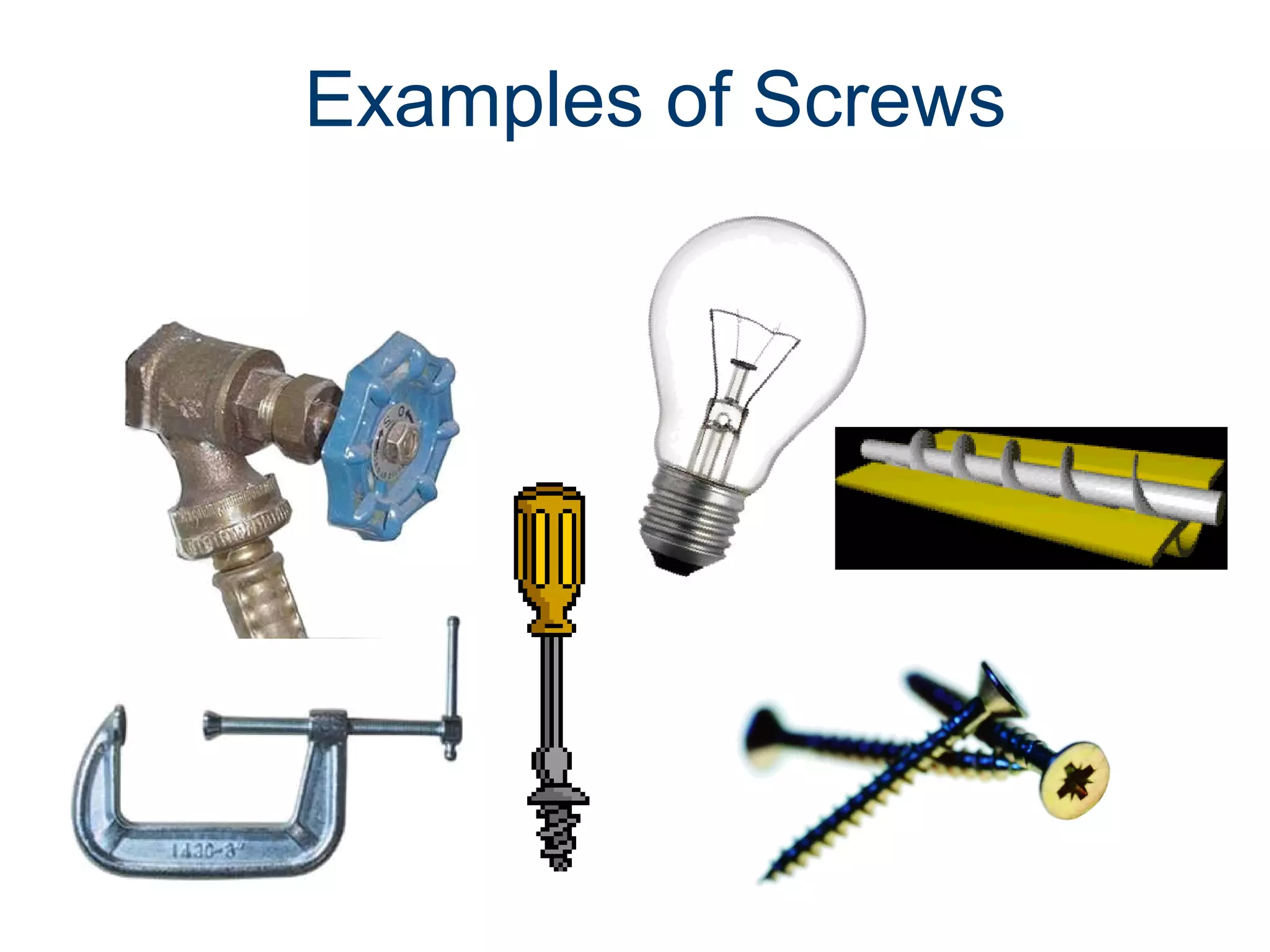
Screw
An inclined planewrapped
around a cylinder, forming
the path and pitch
Pitch is the distance
between two threads
A screw is used as a threaded fastener.
It changes rotary motion to linear force.
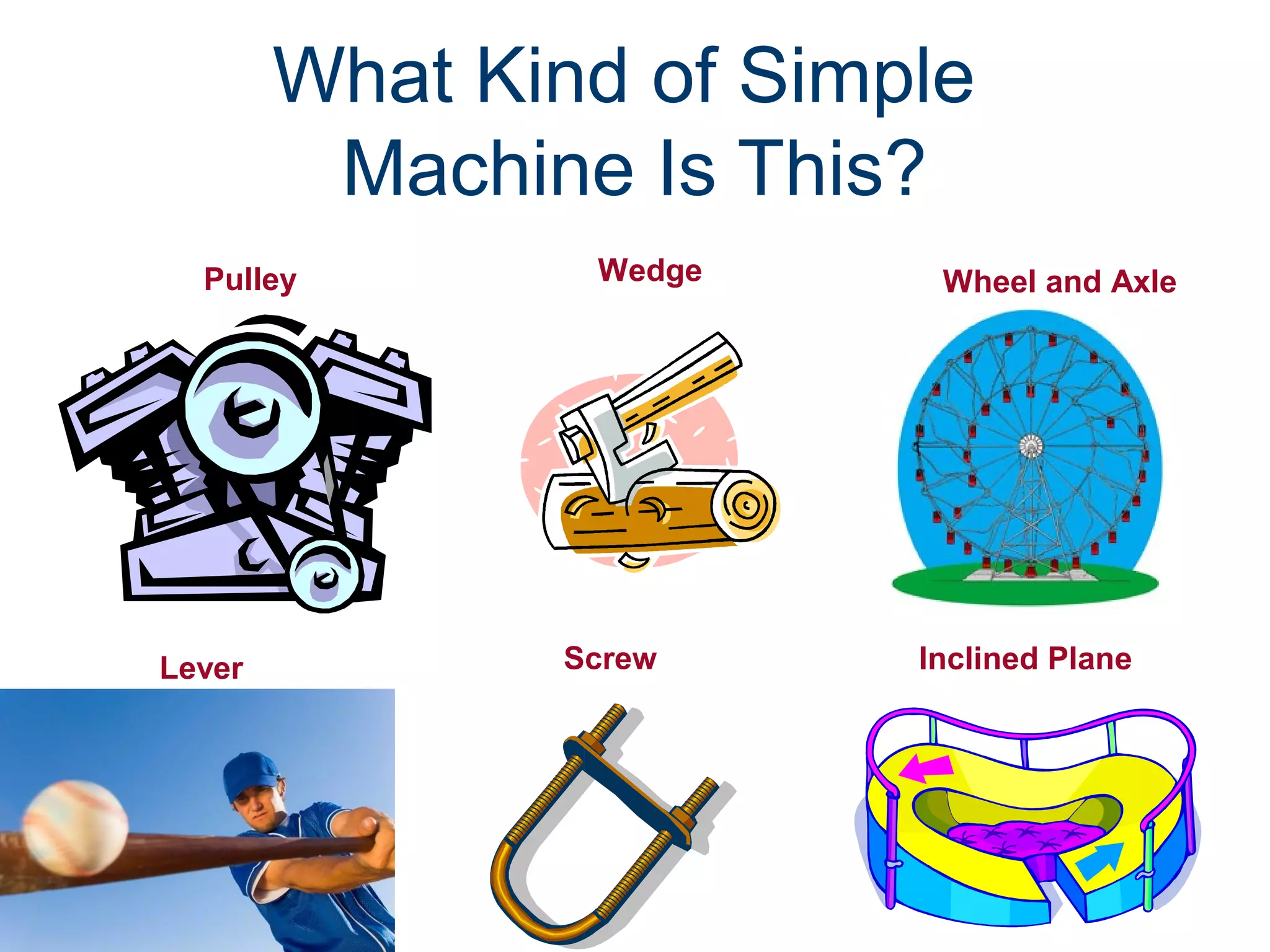
What Kind ofSimple
Machine Is This?
Pulley
Lever
Wedge
Screw
Wheel and Axle
Inclined Plane
20.
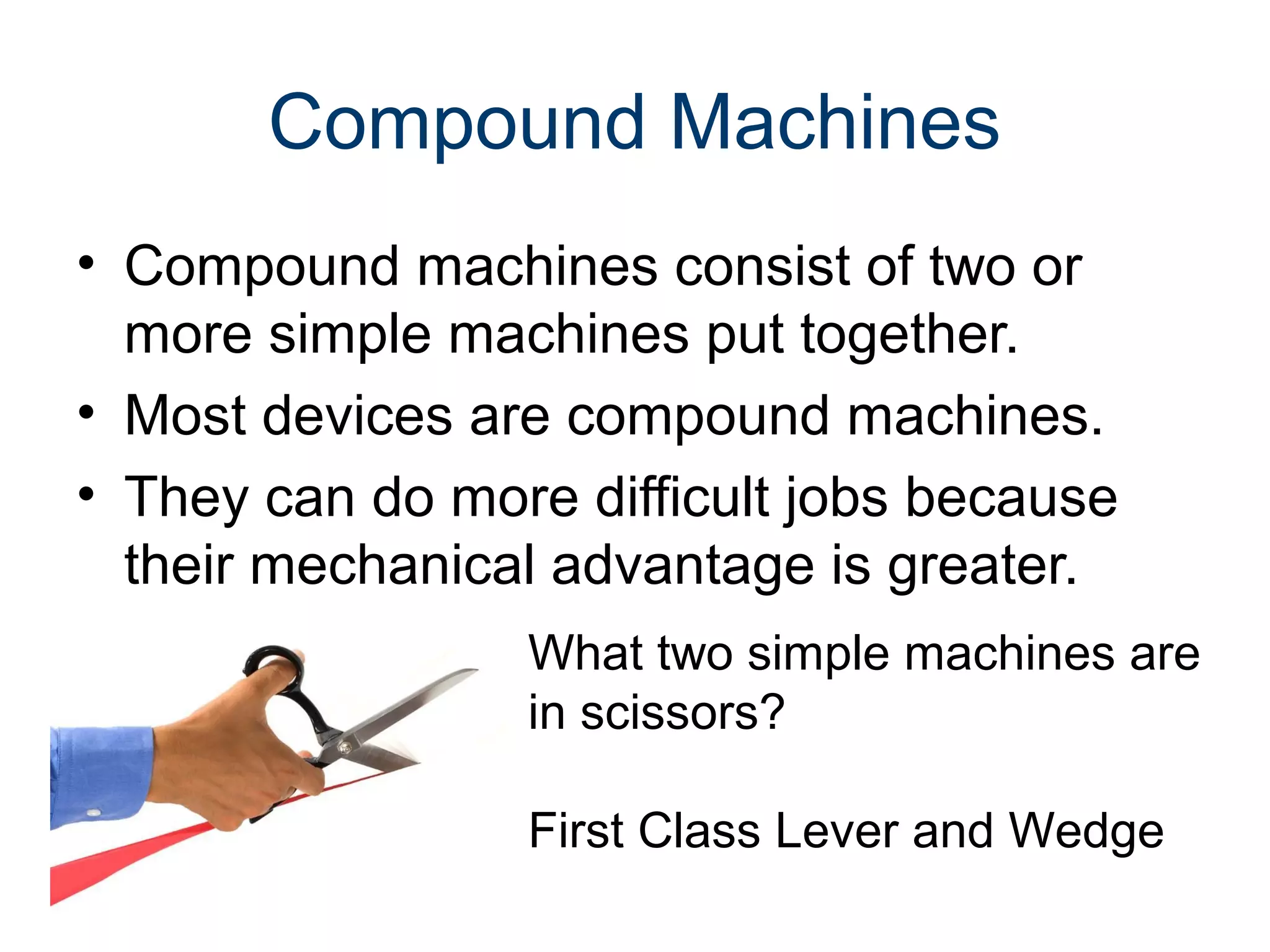
Compound Machines
• Compoundmachines consist of two or
more simple machines put together.
• Most devices are compound machines.
• They can do more difficult jobs because
their mechanical advantage is greater.
What two simple machines are
in scissors?
First Class Lever and Wedge
Image Resources
Microsoft, Inc.(2009). Clip Art. Retrieved January 22, 2009, from
http://office.microsoft.com/en-us/clipart/default.aspx
Editor's Notes
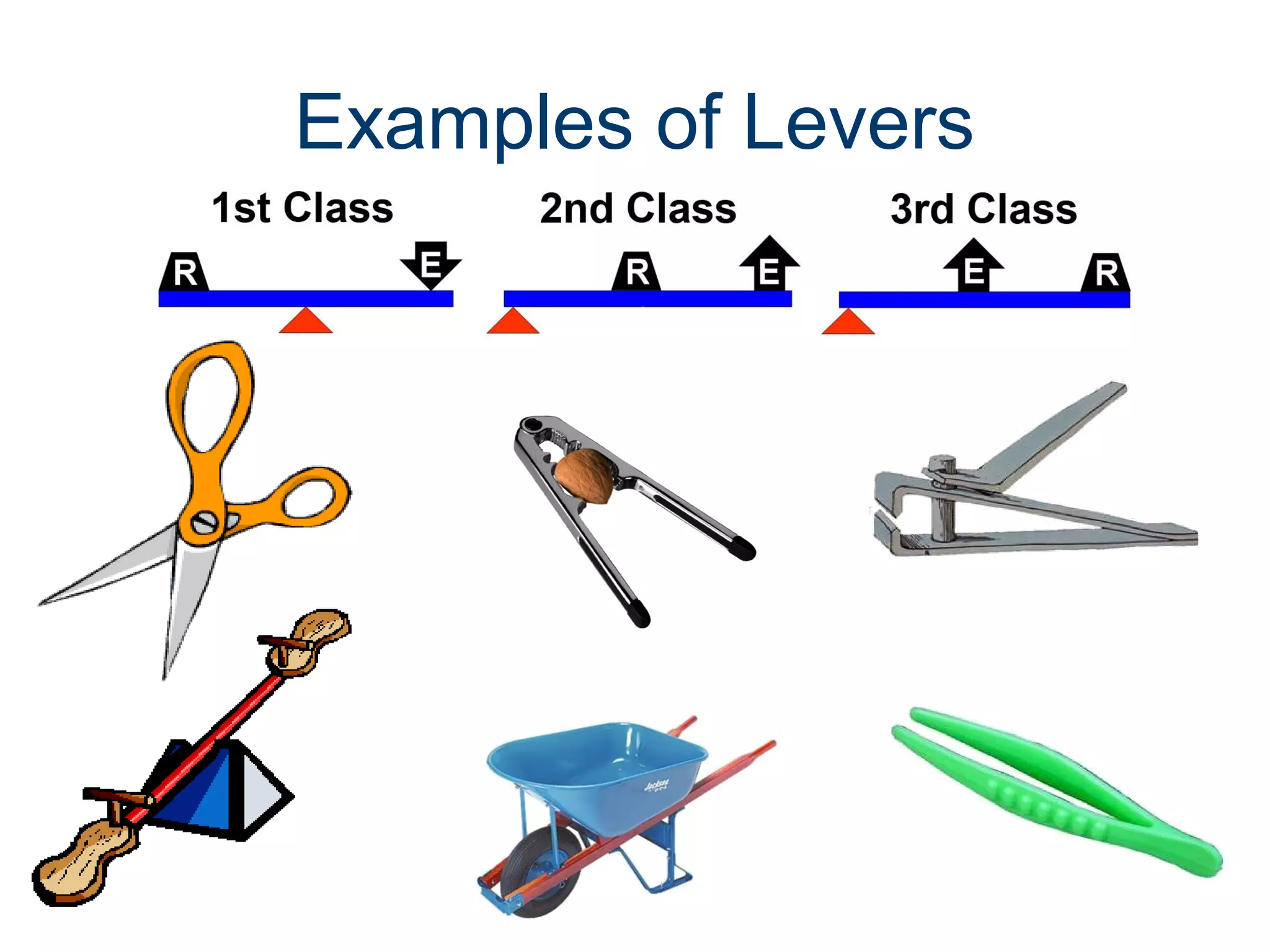
#8 First Class = See-saw, scissors, fingernail clipper arm
Second Class = wheelbarrow, nut cracker
Third Class = fingernail clipper clipping mechanism, tweezers
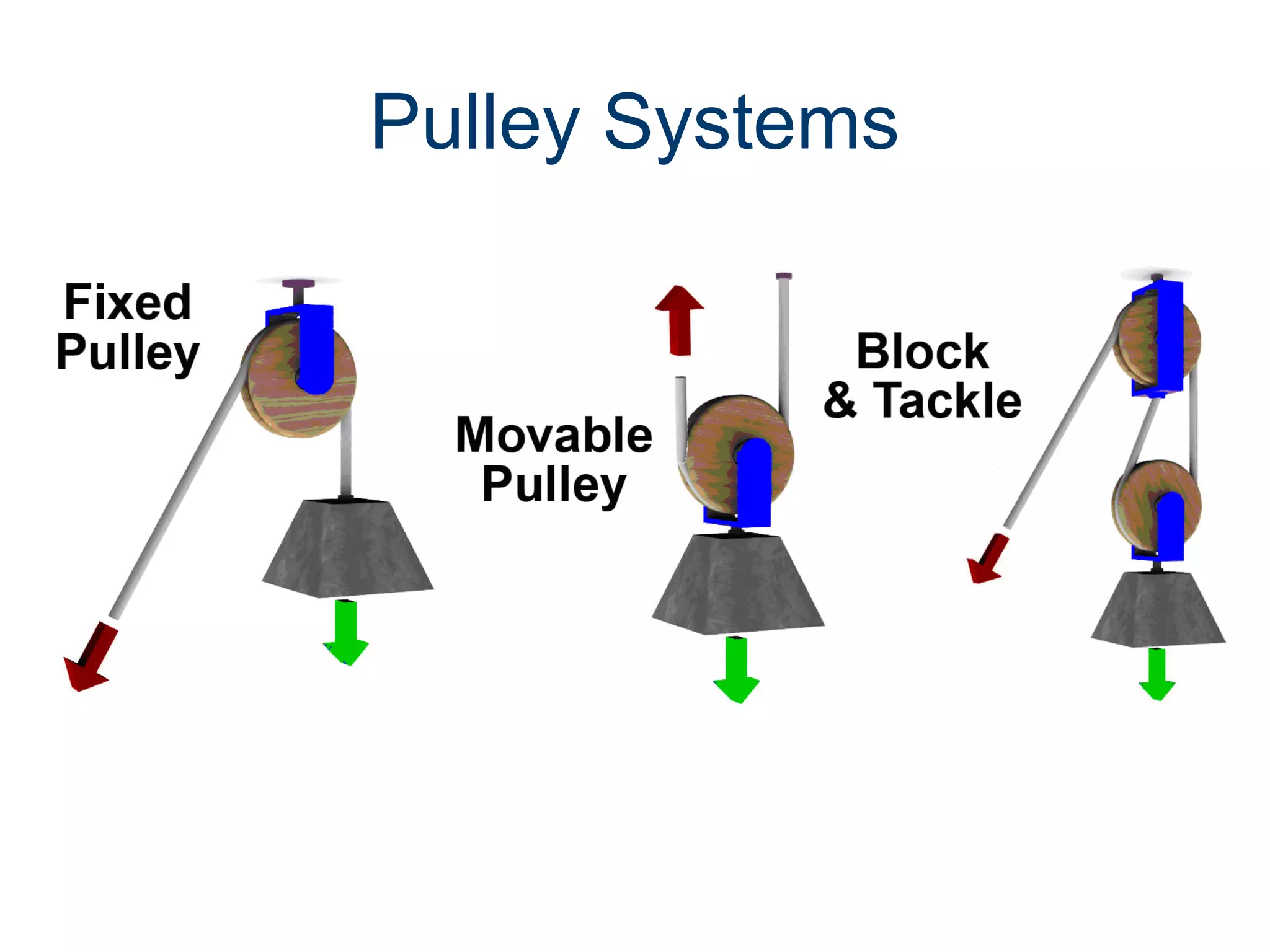
#13 Fixed Pulley – Does not rise or fall with the load that is being moved
Movable Pulley – Rises and falls with the load that is being moved
Block and Tackle – Two or more pulleys used in combination
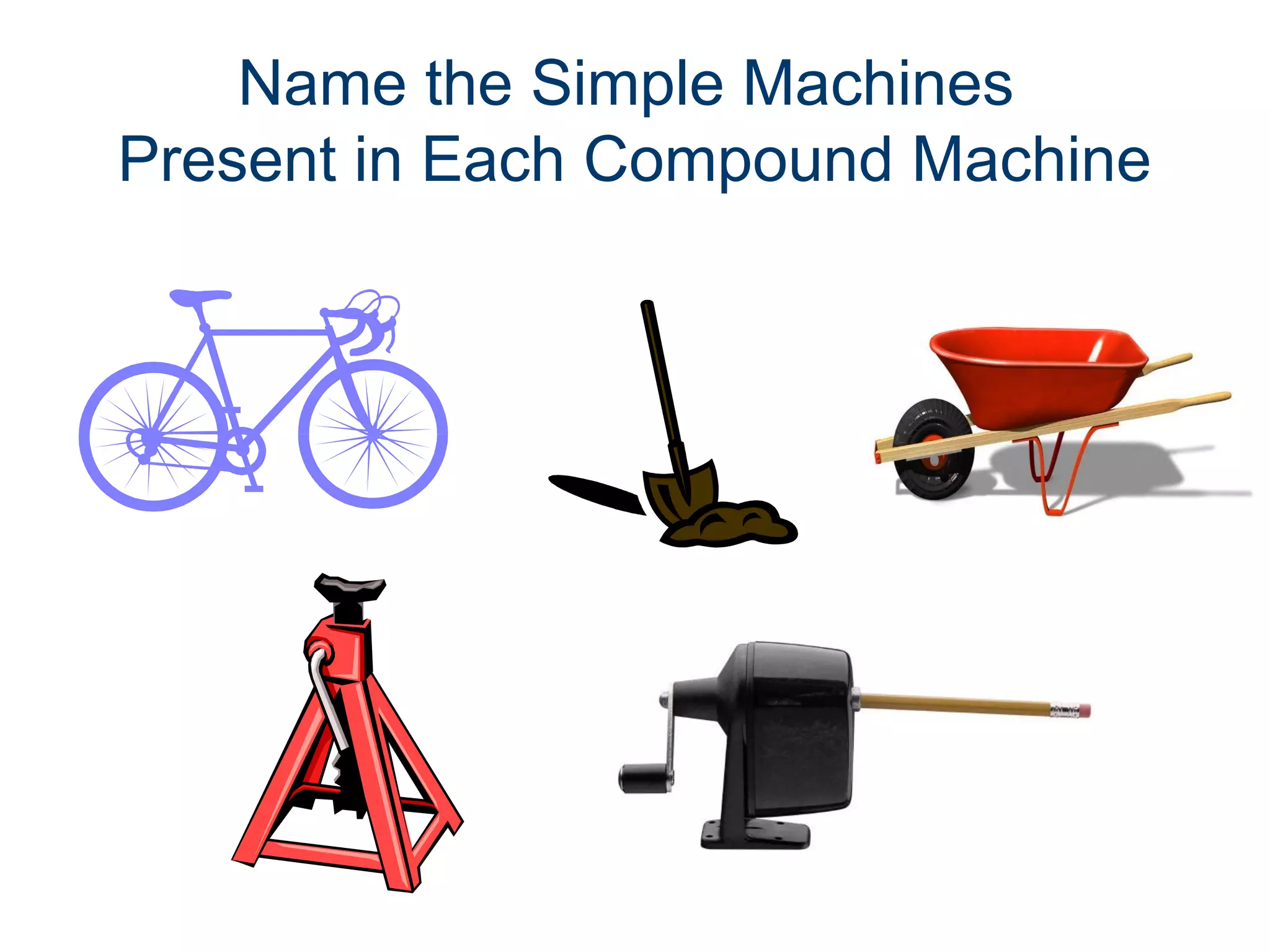
#22 Bicycle – lever (brake handles), wheel and axle (wheels and pedals), screw (seat adjustment)
Shovel – lever, wedge
Wheel barrow – 2nd class lever, wheel and axle
Jack stand – wheel and axle, screw
Pencil sharpener – wheel & axle, wedge