Download to read offline


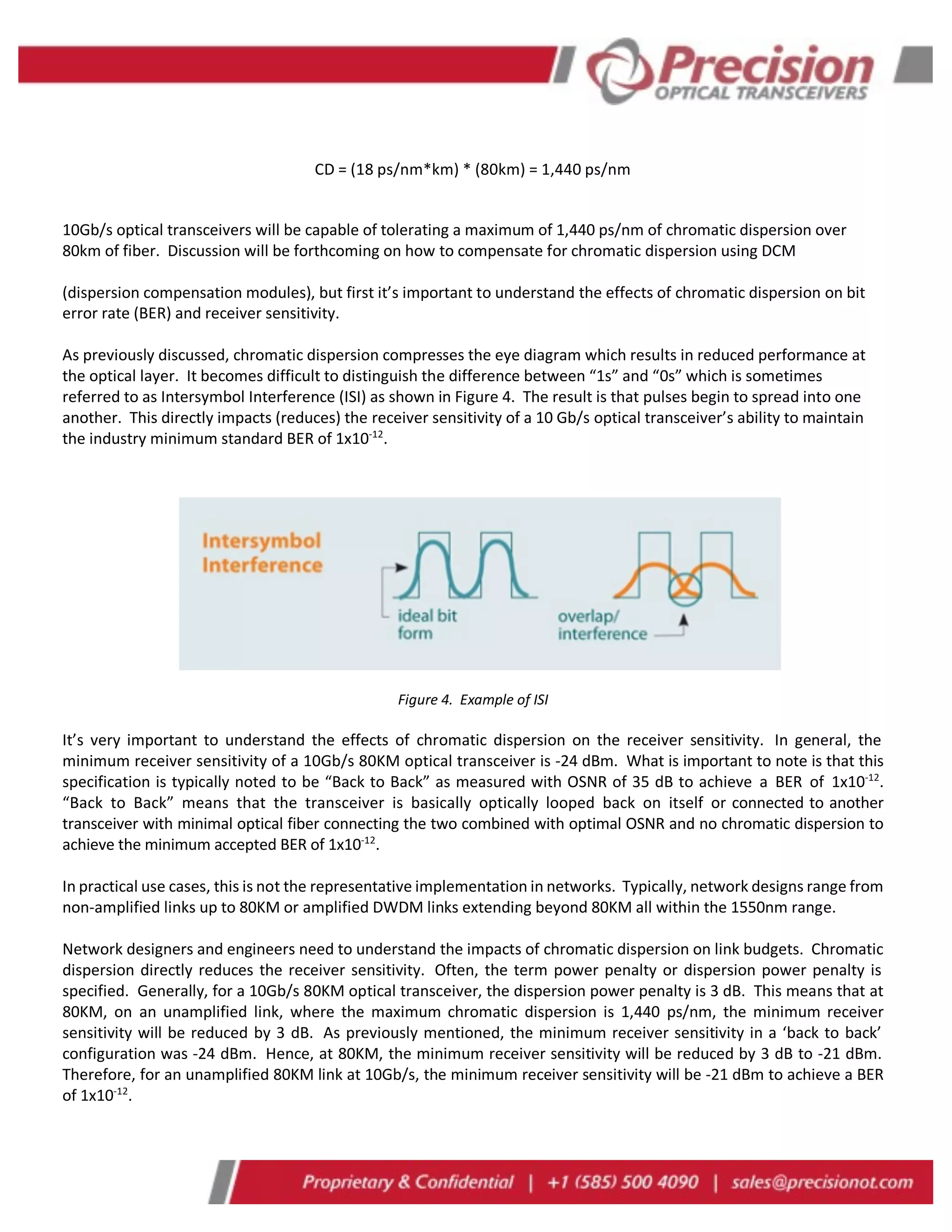
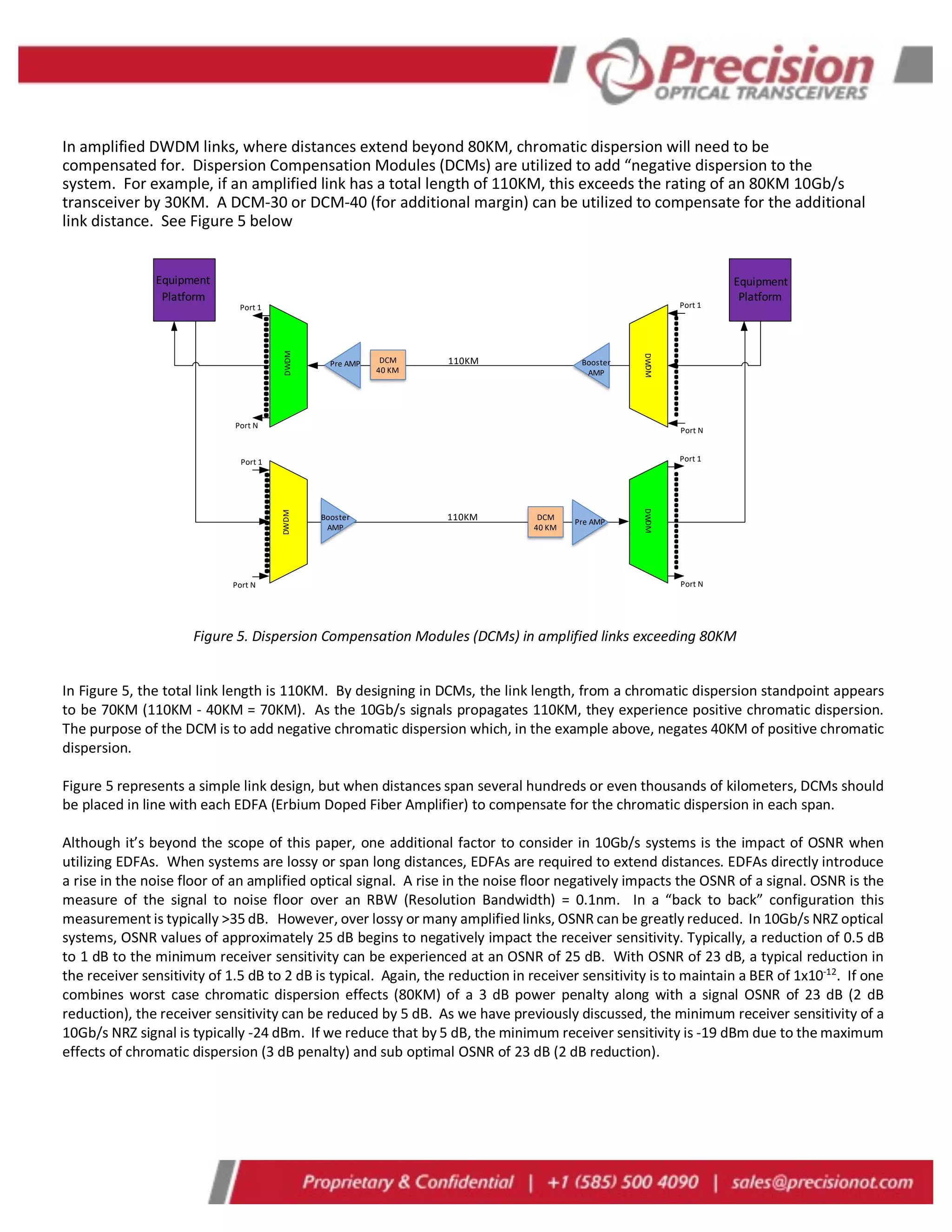


Chromatic dispersion causes different wavelengths of light to travel at different speeds in optical fiber, resulting in signal spreading over long distances. This causes digital signals to overlap, increasing bit error rates. Chromatic dispersion compresses the eye diagram, making it difficult to distinguish 1s and 0s. It reduces receiver sensitivity, with a typical 3dB penalty at 80km for 10Gb/s systems. Dispersion compensation modules add negative dispersion to compensate over longer distances. Reduced optical signal to noise ratio from amplification also decreases sensitivity. Understanding these effects is important for designing optical networks to maintain low bit error rates over long links.


![Vibe Coding vs. Spec-Driven Development [Free Meetup]](https://cdn.slidesharecdn.com/ss_thumbnails/vibecodingvsspecdrivendevelopment-251209105622-43f455e7-thumbnail.jpg?width=640&height=640&fit=bounds)


