Dr Hemanth S Naik
Medical Research Scientist
INTRODUCTION

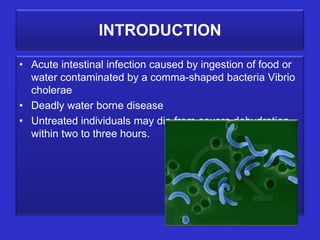
• Acute intestinal infection caused by ingestion of food or
  water contaminated by a comma-shaped bacteria Vibrio
  cholerae
• Deadly water borne disease
• Untreated individuals may die from severe dehydration
  within two to three hours.
CAUSES

• Vibrio Cholerae
• Exposure from poor hygiene
• Eating raw or undercooked food
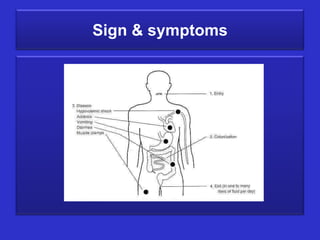
Signs & Symptoms

• Begin 1 to 3 days after infection
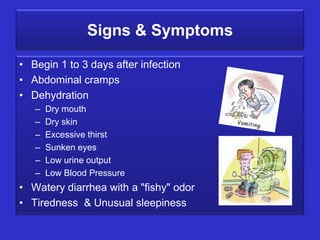
• Abdominal cramps
• Dehydration
   –   Dry mouth
   –   Dry skin
   –   Excessive thirst
   –   Sunken eyes
   –   Low urine output
   –   Low Blood Pressure
• Watery diarrhea with a "fishy" odor
• Tiredness & Unusual sleepiness
Sign & symptoms
DIAGNOSIS

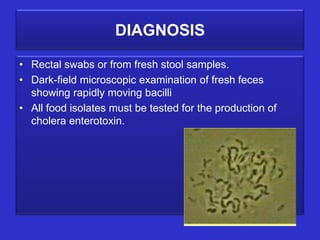
• Rectal swabs or from fresh stool samples.
• Dark-field microscopic examination of fresh feces
  showing rapidly moving bacilli
• All food isolates must be tested for the production of
  cholera enterotoxin.
TREATMENT

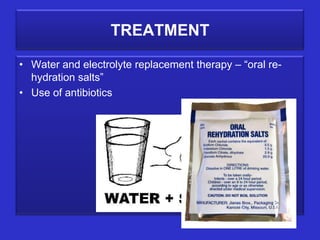
• Water and electrolyte replacement therapy – “oral re-
  hydration salts”
• Use of antibiotics
PREVENTION

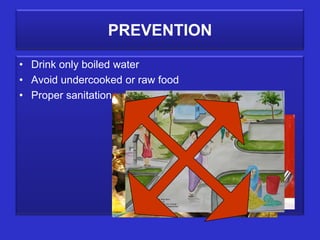
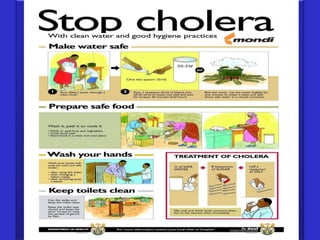
• Drink only boiled water
• Avoid undercooked or raw food
• Proper sanitation
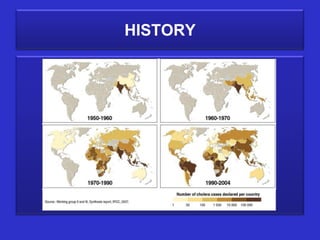
HISTORY
Choler
Choler

Choler

  • 1.
    Dr Hemanth SNaik Medical Research Scientist
  • 2.
    INTRODUCTION • Acute intestinalinfection caused by ingestion of food or water contaminated by a comma-shaped bacteria Vibrio cholerae • Deadly water borne disease • Untreated individuals may die from severe dehydration within two to three hours.
  • 3.
    CAUSES • Vibrio Cholerae •Exposure from poor hygiene • Eating raw or undercooked food
  • 4.
    Signs & Symptoms •Begin 1 to 3 days after infection • Abdominal cramps • Dehydration – Dry mouth – Dry skin – Excessive thirst – Sunken eyes – Low urine output – Low Blood Pressure • Watery diarrhea with a "fishy" odor • Tiredness & Unusual sleepiness
  • 5.
  • 6.
    DIAGNOSIS • Rectal swabsor from fresh stool samples. • Dark-field microscopic examination of fresh feces showing rapidly moving bacilli • All food isolates must be tested for the production of cholera enterotoxin.
  • 7.
    TREATMENT • Water andelectrolyte replacement therapy – “oral re- hydration salts” • Use of antibiotics
  • 8.
    PREVENTION • Drink onlyboiled water • Avoid undercooked or raw food • Proper sanitation
  • 9.