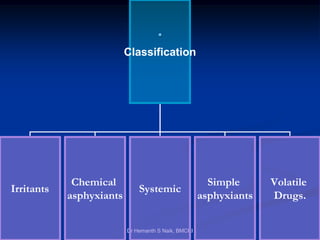
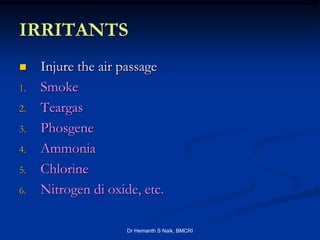
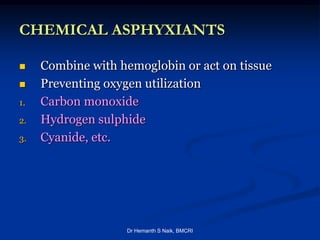
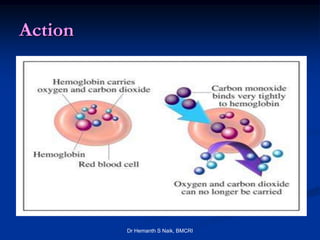
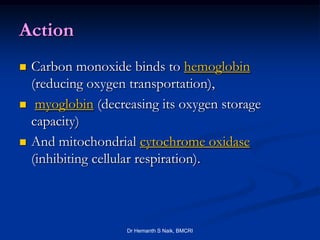
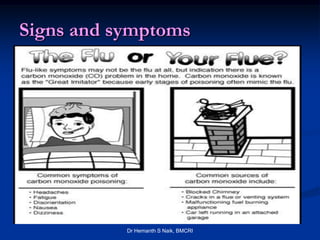
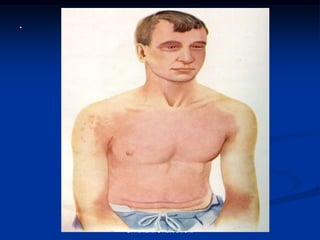
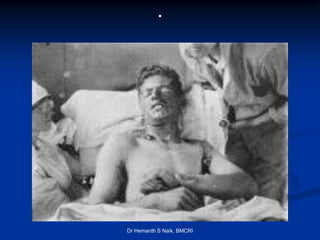
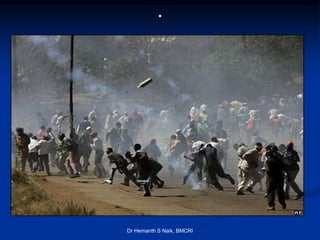
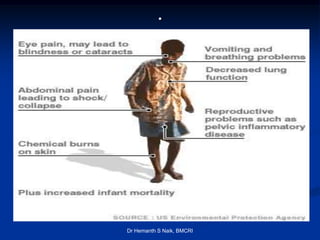
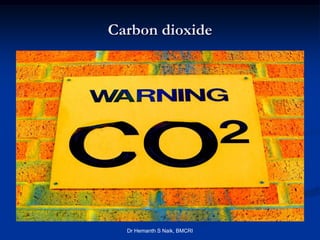
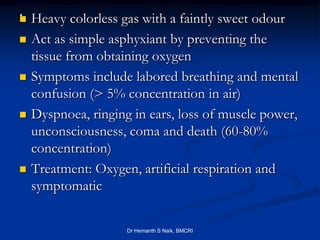
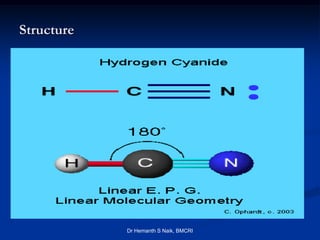
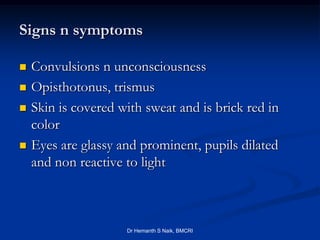
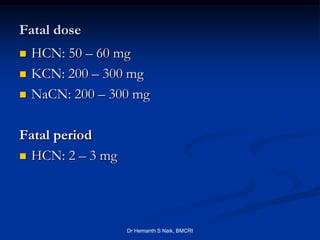
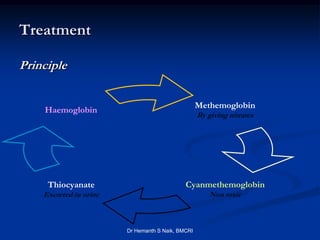
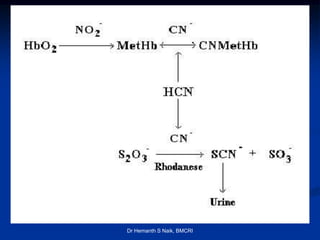
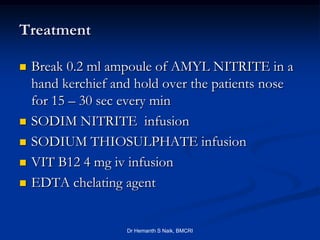
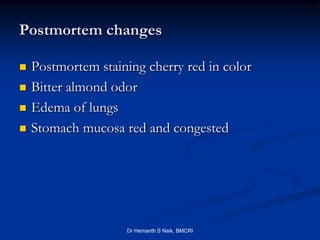
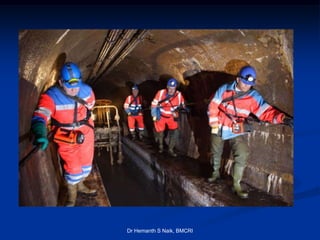
The document discusses different types of asphyxiants including irritants, chemical asphyxiants, simple asphyxiants, and volatile drugs. Irritants such as smoke and tear gas injure the air passages while chemical asphyxiants like carbon monoxide and hydrogen sulfide prevent oxygen utilization. Simple asphyxiants like carbon dioxide act by excluding oxygen. Volatile drugs can act as anesthetics or toxins to organs. Specific asphyxiants are then discussed in more detail including their properties, mechanisms of action, signs and symptoms, and treatment approaches.