DIFFERENCE
BETWEEN
CHILD & ADULT
Prepared by:
Chandani Modi
Child Health Nursing
INTRODUCTION:
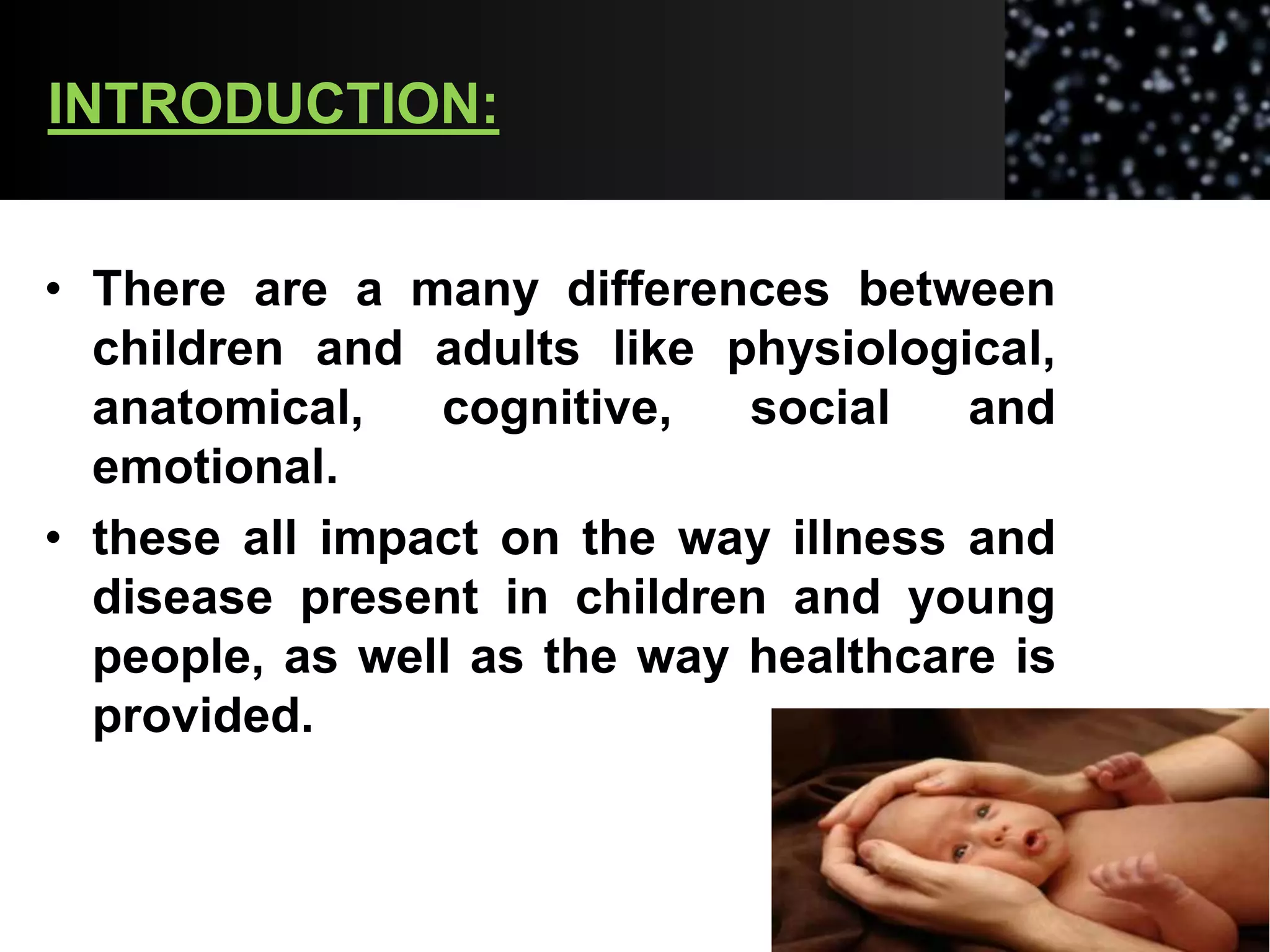
• There are a many differences between
children and adults like physiological,
anatomical, cognitive, social and
emotional.
• these all impact on the way illness and
disease present in children and young
people, as well as the way healthcare is
provided.
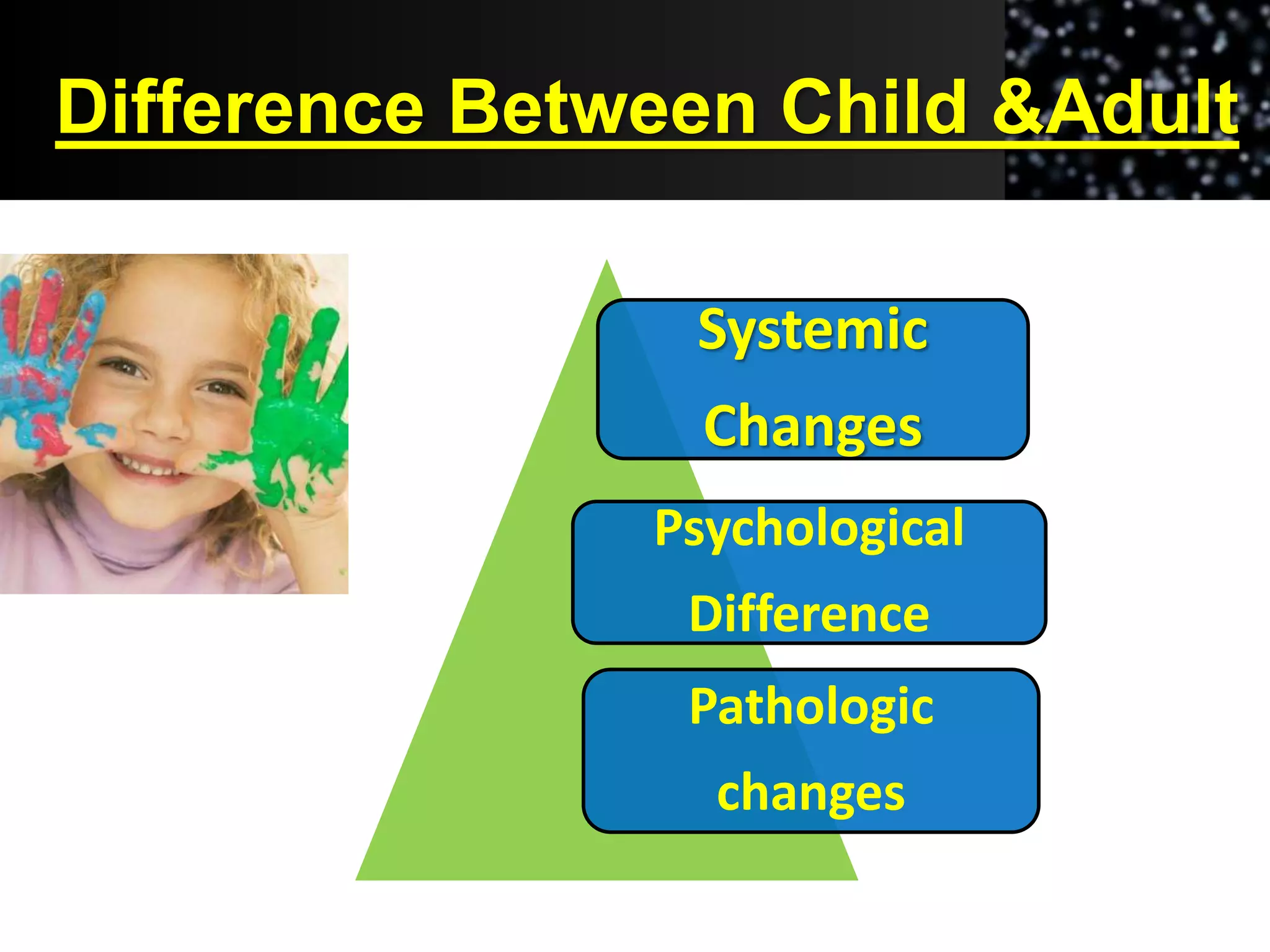
Difference Between Child &Adult
Systemic
Changes
Psychological
Difference
Pathologic
changes
Anatomic & Physiologic Difference
CHILDREN ADULTS
New-born's head is larger &
heavier as compared to his
body
Adults head is not heavier
than body
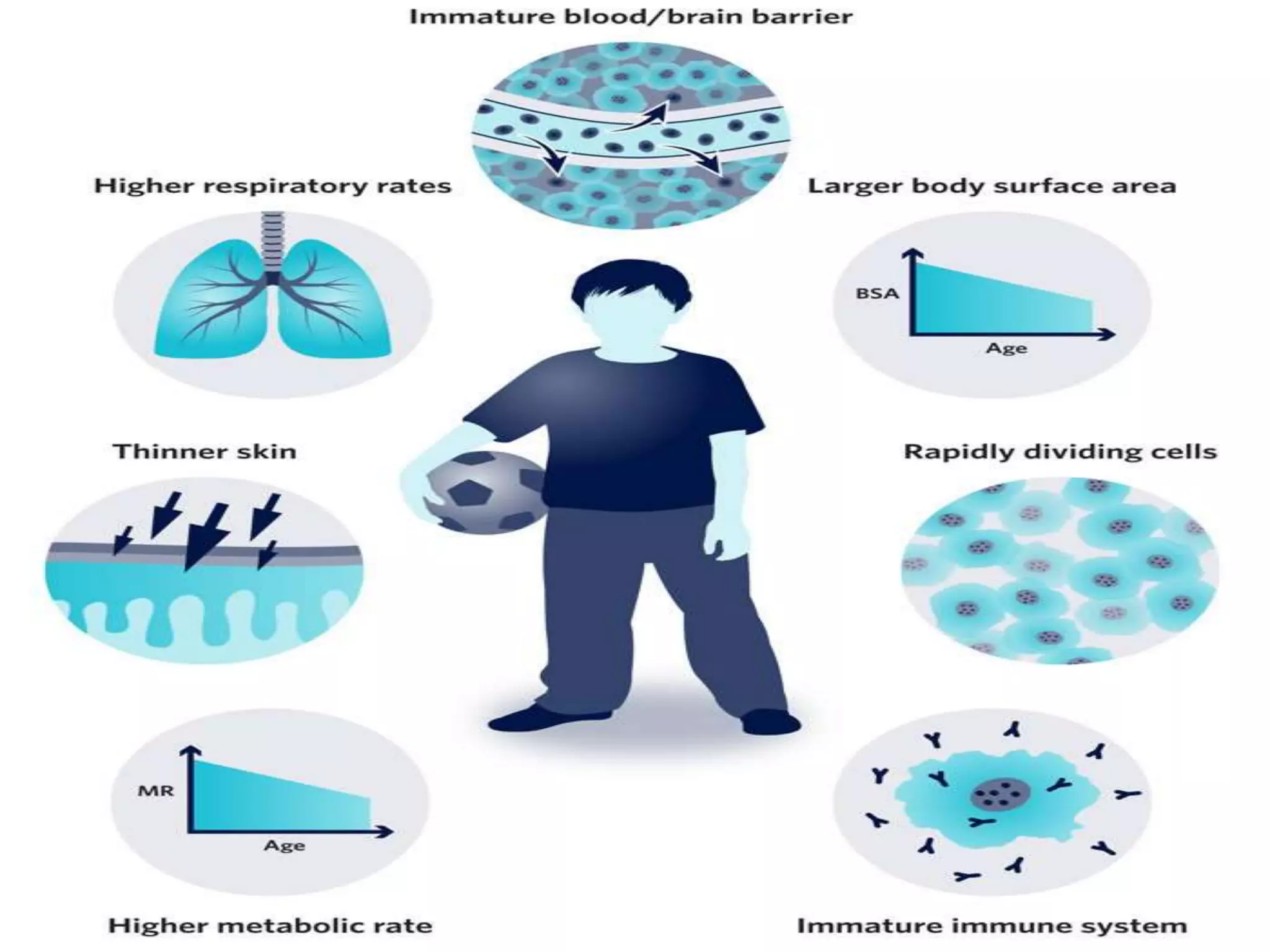
Thinner skin- Children have
thinner skin than adults.
Adult skin not as much
thinner than children.
Rapidly dividing cells-
Children's cells divide more
rapidly than adults
Normal cell division
No tears in early infancy There is tears formation in
eyes.
No voluntary control over the
environment or activity.
Voluntary control On body
Systemic
Difference
Integumentary
System
Respiratory
System
Heart &
Circulatory
System
Hematologic
System
Urinary
System
Gastrointestina
l
Endocrine
System
Reproductive
System
Musculoskeletal
System
Neurologic
System
Lymhoid &
Immune
System
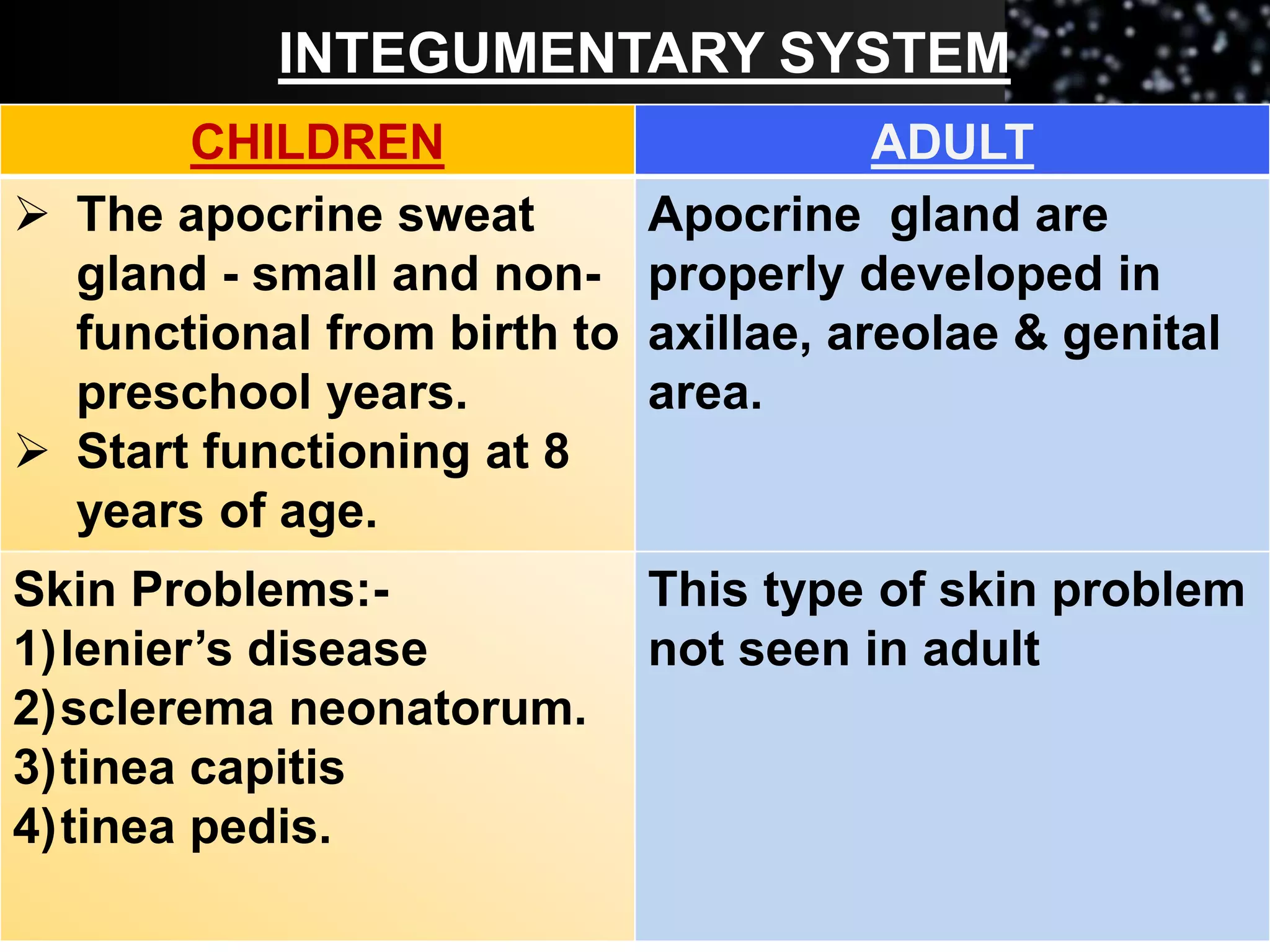
INTEGUMENTARY SYSTEM
CHILDREN ADULT
 The apocrine sweat
gland - small and non-
functional from birth to
preschool years.
 Start functioning at 8
years of age.
Apocrine gland are
properly developed in
axillae, areolae & genital
area.
Skin Problems:-
1)lenier’s disease
2)sclerema neonatorum.
3)tinea capitis
4)tinea pedis.
This type of skin problem
not seen in adult
Respiratory System
CHILDREN ADULT
Respiration Rate :-30–
60 breath/min
Heart Rate:-100-160
beats/min
Respiration Rate :-16-
20 breath/min
Heart Rate/Pulse
Rate:-60-80 beats/min
Tissues of respiratory
tract are delicate &
do not produce
sufficient mucus.
Sufficient Amount of
mucus
no protection from
invasion of infectious
microorganism
protection
from invasion of
infectious micro-
Difference between Adult and Fetal
Circulation
Characteristics Adult Circulation Fetal Circulation
Artery
Carries oxygenated
blood away from
the heart
Carries Non-
oxygenated blood
away from the fetal
heart
Veins
Carries non-
oxygenated blood
towards the heart
Carries oxygenated
blood back to the
heart
Exchange of Gases
Takes places in the
lungs
Takes place in the
placenta
Pressure
Increase pressure
on the left side of
the heart
Increase pressure
on the right side of
the heart
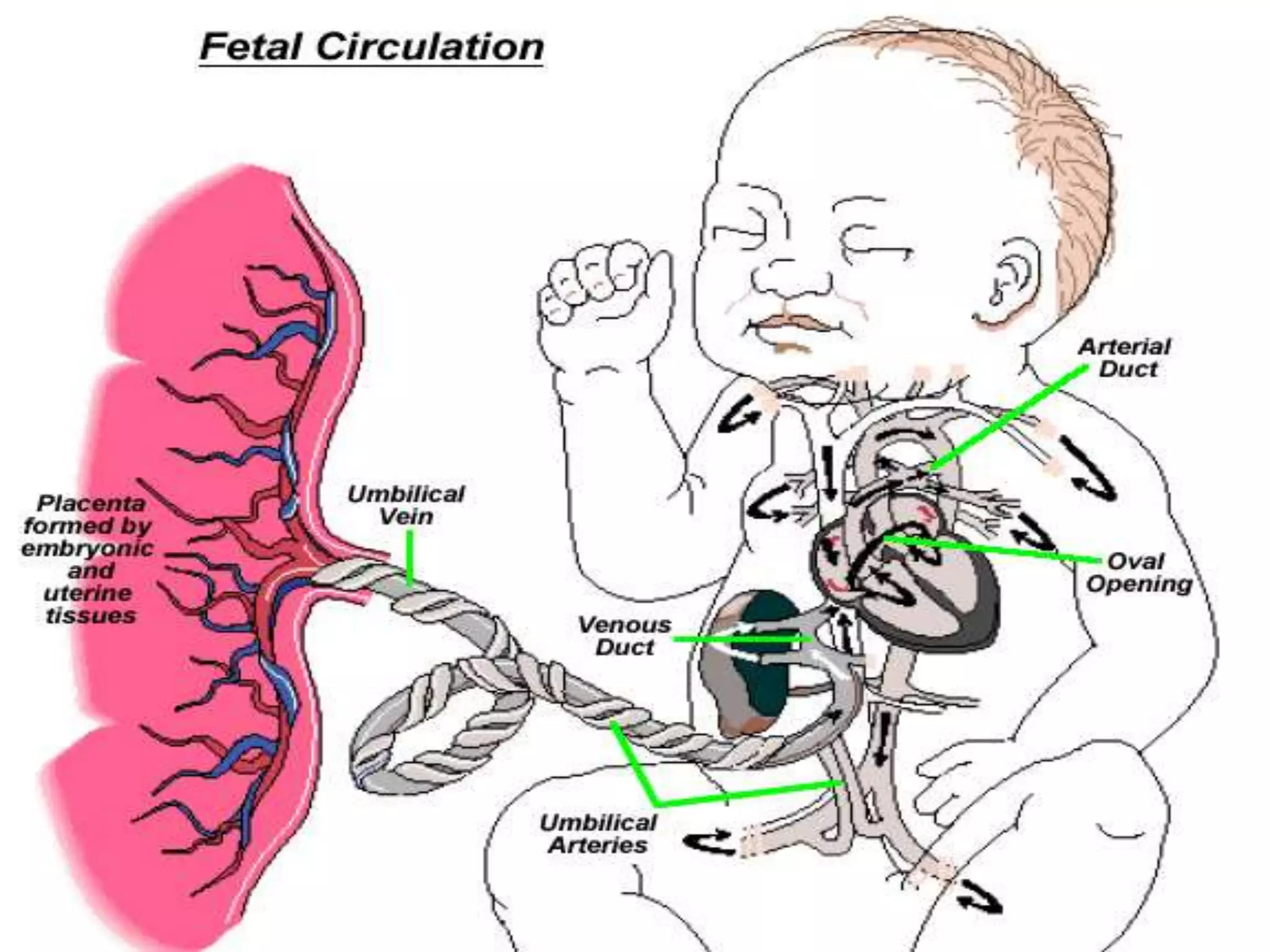
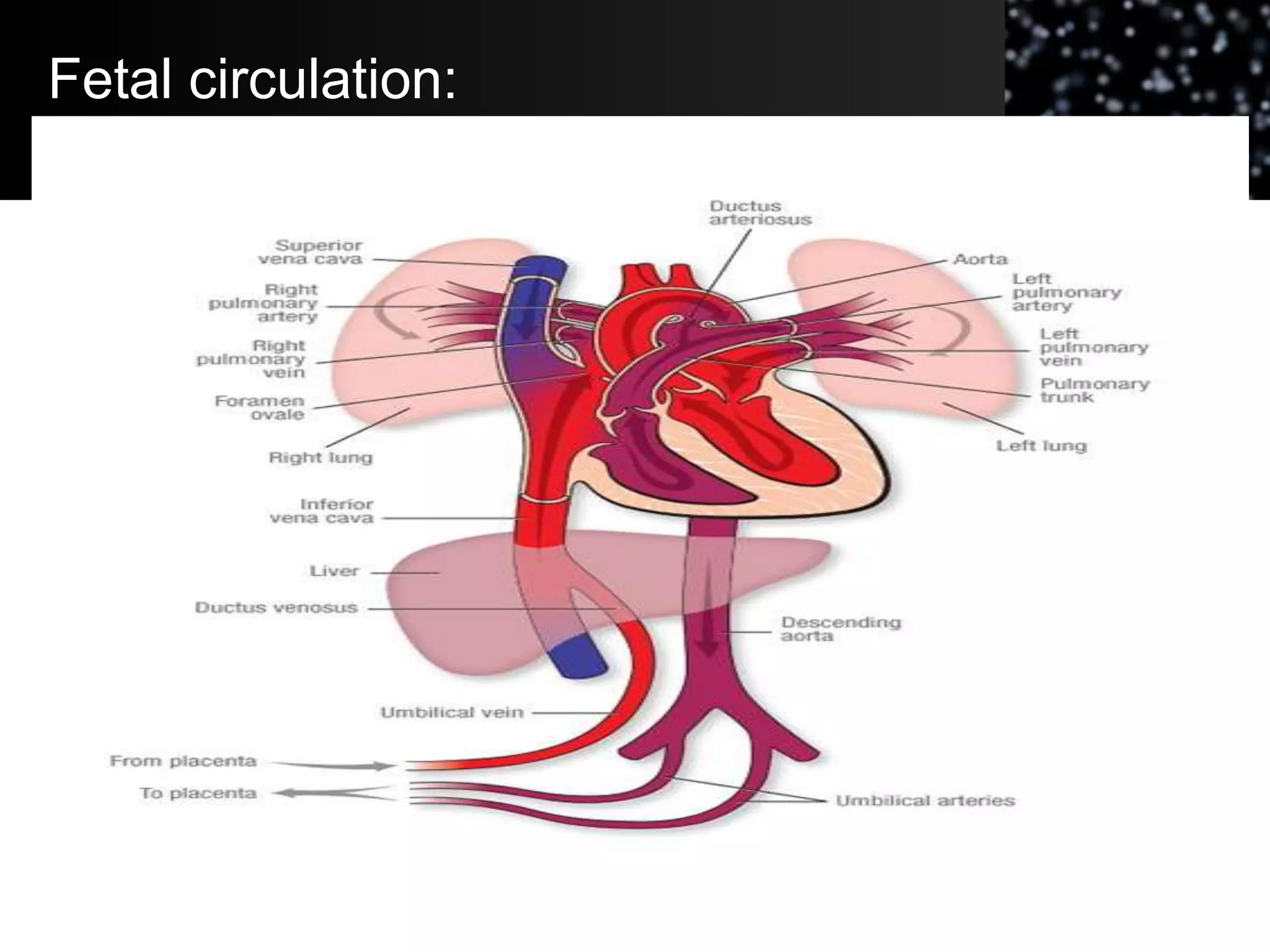
Fetal circulation:
Fetal circulation:
1. Oxygenated blood from the placenta enters the
fetus through the umbilical vein.
2. Most of the newly oxygenated blood bypasses
the liver via the Ductus Venosus & combines
with deoxygenated blood in Inferior Vena Cava.
3. Blood then joins deoxygenated blood from the
superior vena cava & empties into the right
atrium.
4. Since pressure in the right atrium is larger than
pressure of left atrium, most blood will be
shunted through the Foramen Ovale.
Contd.
5. Some blood does travel from the right atrium to
right ventricle through the pulmonary trunk but
most blood bypasses the pulmonary arteries &
moves directly to the aorta via the Ductus
arteriosus.
6. Deoxygenated blood returns to the placenta via
the umbilical arteries originating from internal iliac
artery near the bladder.
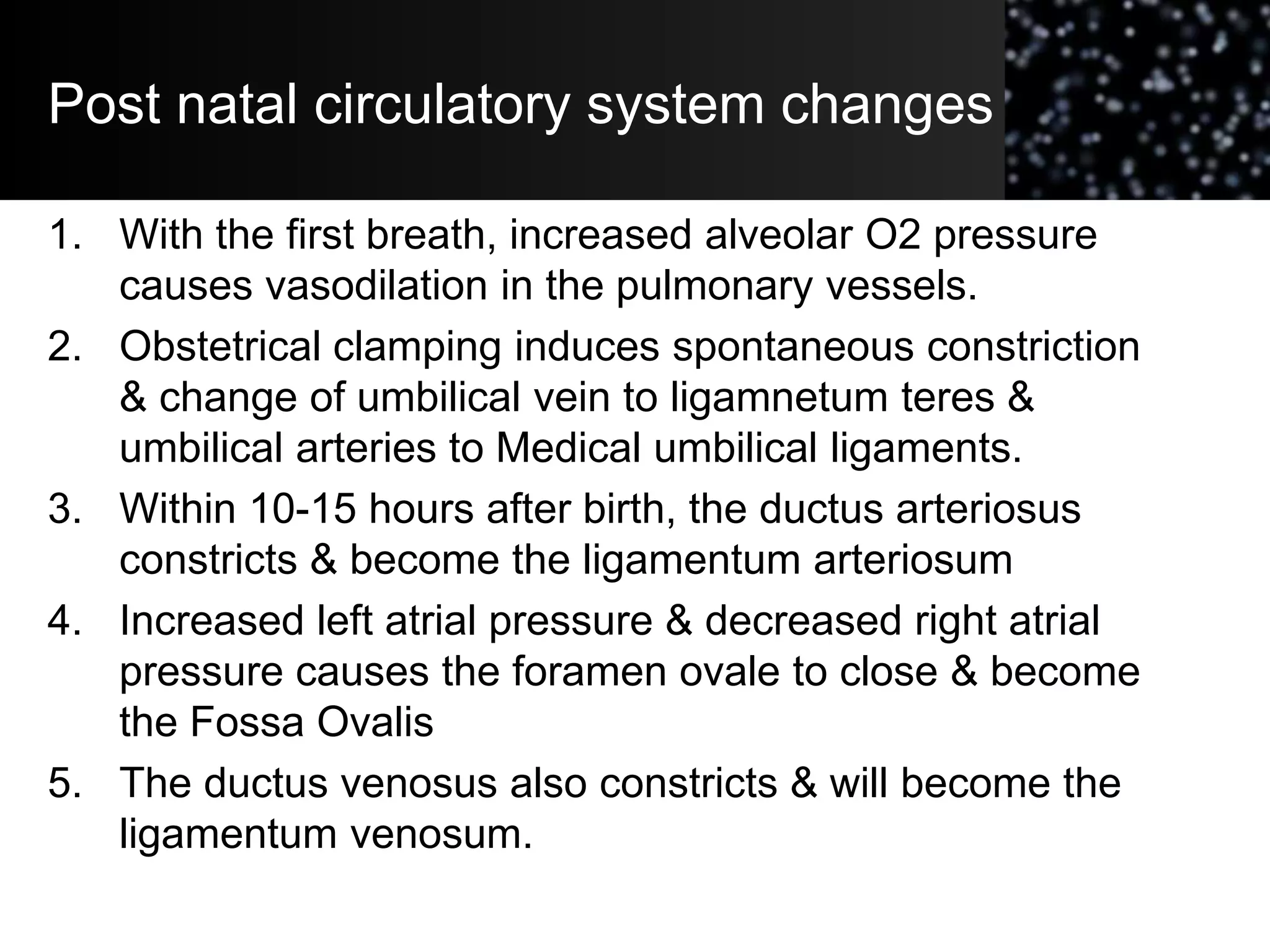
Post natal circulatory system changes
1. With the first breath, increased alveolar O2 pressure
causes vasodilation in the pulmonary vessels.
2. Obstetrical clamping induces spontaneous constriction
& change of umbilical vein to ligamnetum teres &
umbilical arteries to Medical umbilical ligaments.
3. Within 10-15 hours after birth, the ductus arteriosus
constricts & become the ligamentum arteriosum
4. Increased left atrial pressure & decreased right atrial
pressure causes the foramen ovale to close & become
the Fossa Ovalis
5. The ductus venosus also constricts & will become the
ligamentum venosum.
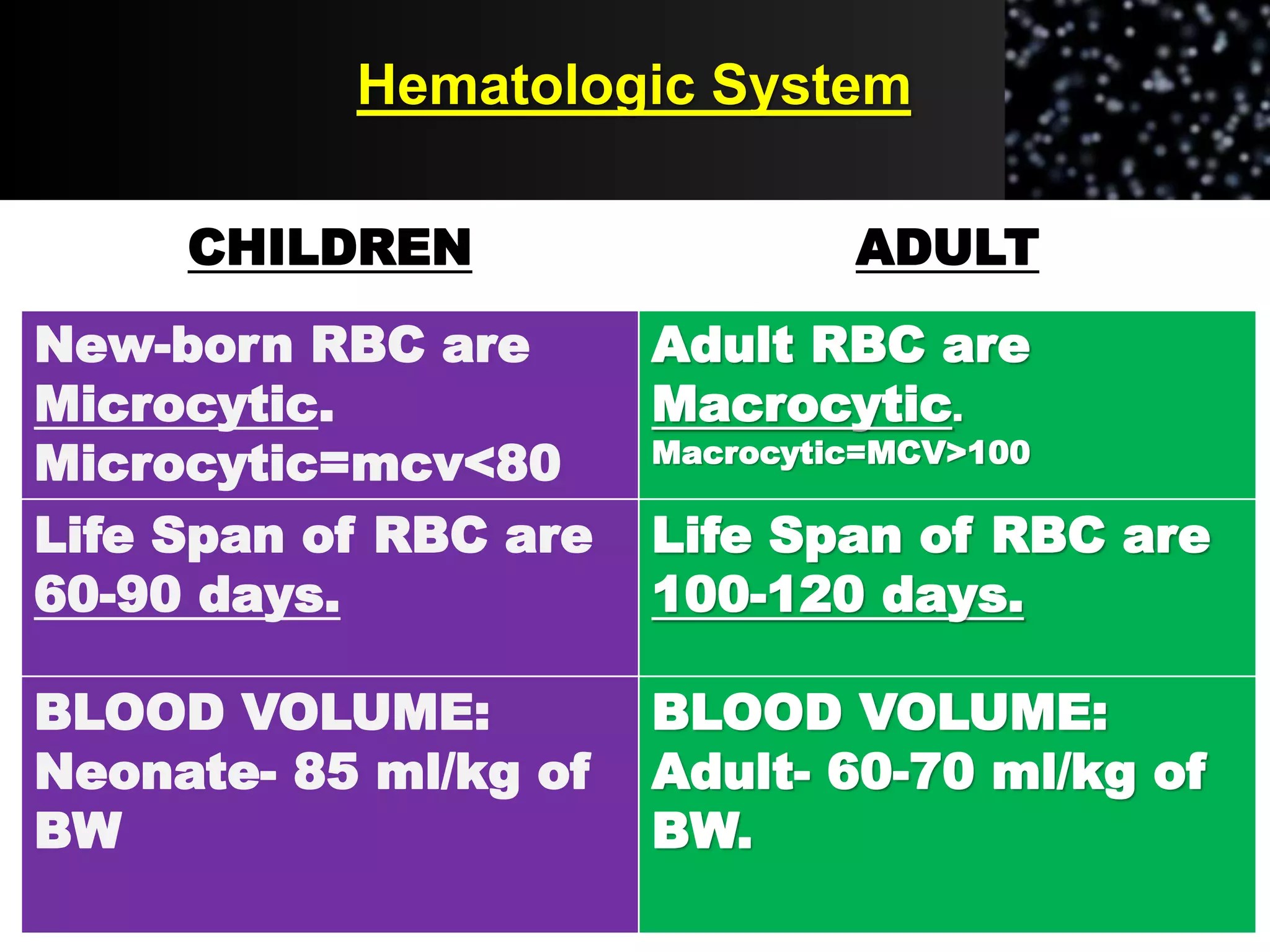
Hematologic System
CHILDREN ADULT
New-born RBC are
Microcytic.
Microcytic=mcv<80
Adult RBC are
Macrocytic.
Macrocytic=MCV>100
Life Span of RBC are
60-90 days.
Life Span of RBC are
100-120 days.
BLOOD VOLUME:
Neonate- 85 ml/kg of
BW
BLOOD VOLUME:
Adult- 60-70 ml/kg of
BW.
URINARY SYSTEM
CHILDREN ADULT
Infant’s kidneys are
immature with reduced
ability to filtrate &
concentrate urine.
Kidneys are mature
enough for proper
functioning.
Nephron are not grow &
functioning.
Nephrons are properly
functioning.
Not under voluntary
control.
under voluntary control
Gastrointestinal System
CHILDREN ADULT
it is quite relaxed in infants
resulting in frequent
regurgitation & vomiting
during infancy
The cardiac sphincter of
stomach is fairly tight in
adults
GI functioning is immature
& involuntary
Proper GI functioning &
voluntary control
Temporary teeth Permanent teeth
Stool of neonate is loose
Liver size:- 4% of body
weight.
Stool of adult is hard.
Liver is 12-13 times its birth
weight.
CHILDREN
The endocrine glands
which secrete hormones
are least developed at birth
homeostatic control is lacking till
the age of 12-18 months
ADULT
Properly
developed
Properly
mature
Endocrine System
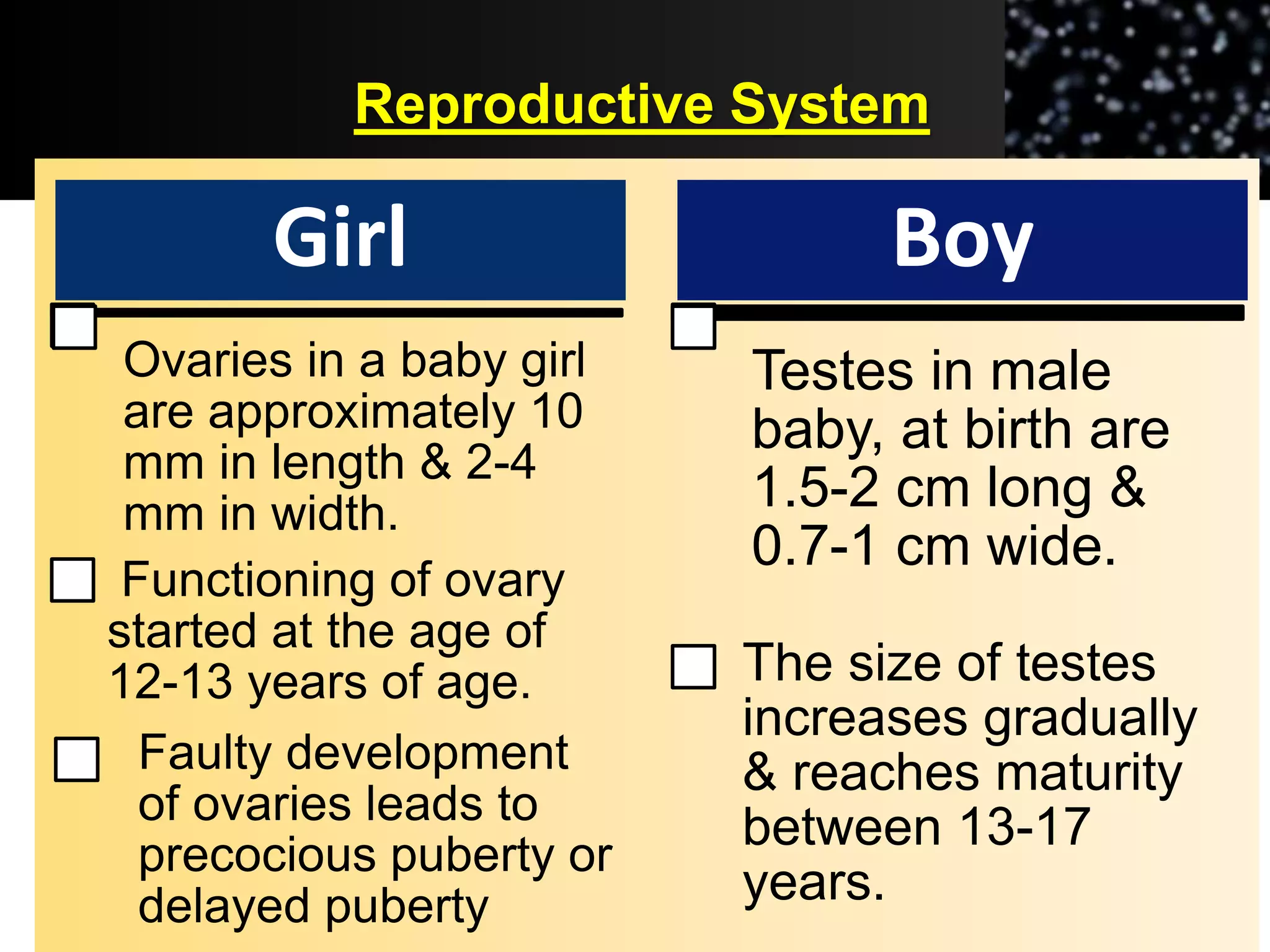
Reproductive System
Girl
Ovaries in a baby girl
are approximately 10
mm in length & 2-4
mm in width.
Functioning of ovary
started at the age of
12-13 years of age.
Faulty development
of ovaries leads to
precocious puberty or
delayed puberty
Boy
Testes in male
baby, at birth are
1.5-2 cm long &
0.7-1 cm wide.
The size of testes
increases gradually
& reaches maturity
between 13-17
years.
Musculoskeletal System
The sutures in skull of new-born are not united.
The infants bones are neither as firm nor as brittle as
of adults so fractures rarely occur in infants & if it all
they occur, healing is very quick
In children height increases as bones grow at epiphyses
whereas in adults height doesn’t increase after certain
age.
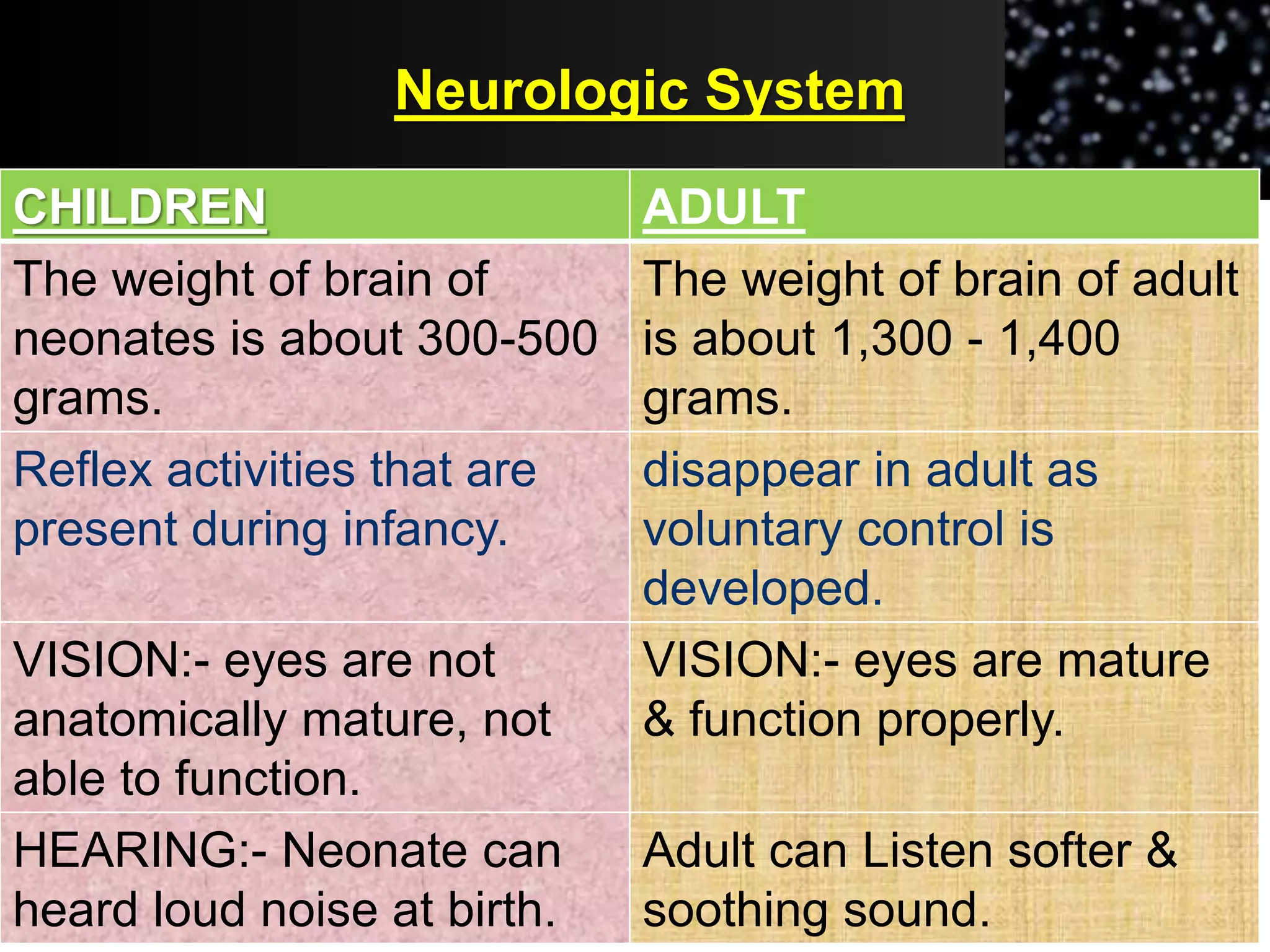
Neurologic System
CHILDREN ADULT
The weight of brain of
neonates is about 300-500
grams.
The weight of brain of adult
is about 1,300 - 1,400
grams.
Reflex activities that are
present during infancy.
disappear in adult as
voluntary control is
developed.
VISION:- eyes are not
anatomically mature, not
able to function.
VISION:- eyes are mature
& function properly.
HEARING:- Neonate can
heard loud noise at birth.
Adult can Listen softer &
soothing sound.
Lymphoid &Immune
System
• The maturation of lymphoid system varies
with the child’s age.
• The lymphoid tissue is small but well
developed at birth.
• It increase rapidly in size up to the age of
10-11 years.
PSYCHOLOGICAL DIFFERENCES
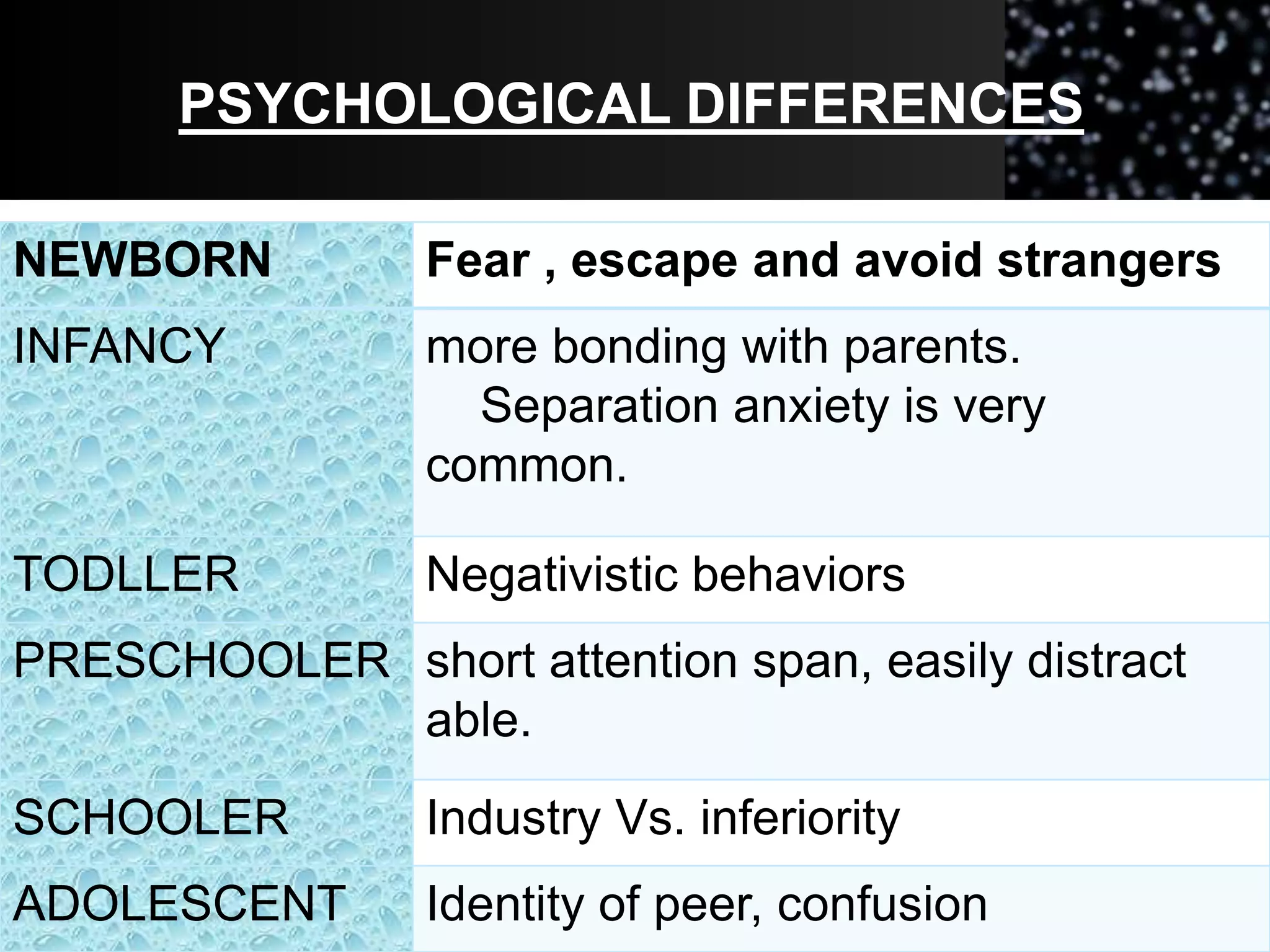
NEWBORN Fear , escape and avoid strangers
INFANCY more bonding with parents.
Separation anxiety is very
common.
TODLLER Negativistic behaviors
PRESCHOOLER short attention span, easily distract
able.
SCHOOLER Industry Vs. inferiority
ADOLESCENT Identity of peer, confusion
SOCIAL & EMOTIONAL DEVELOPMENT
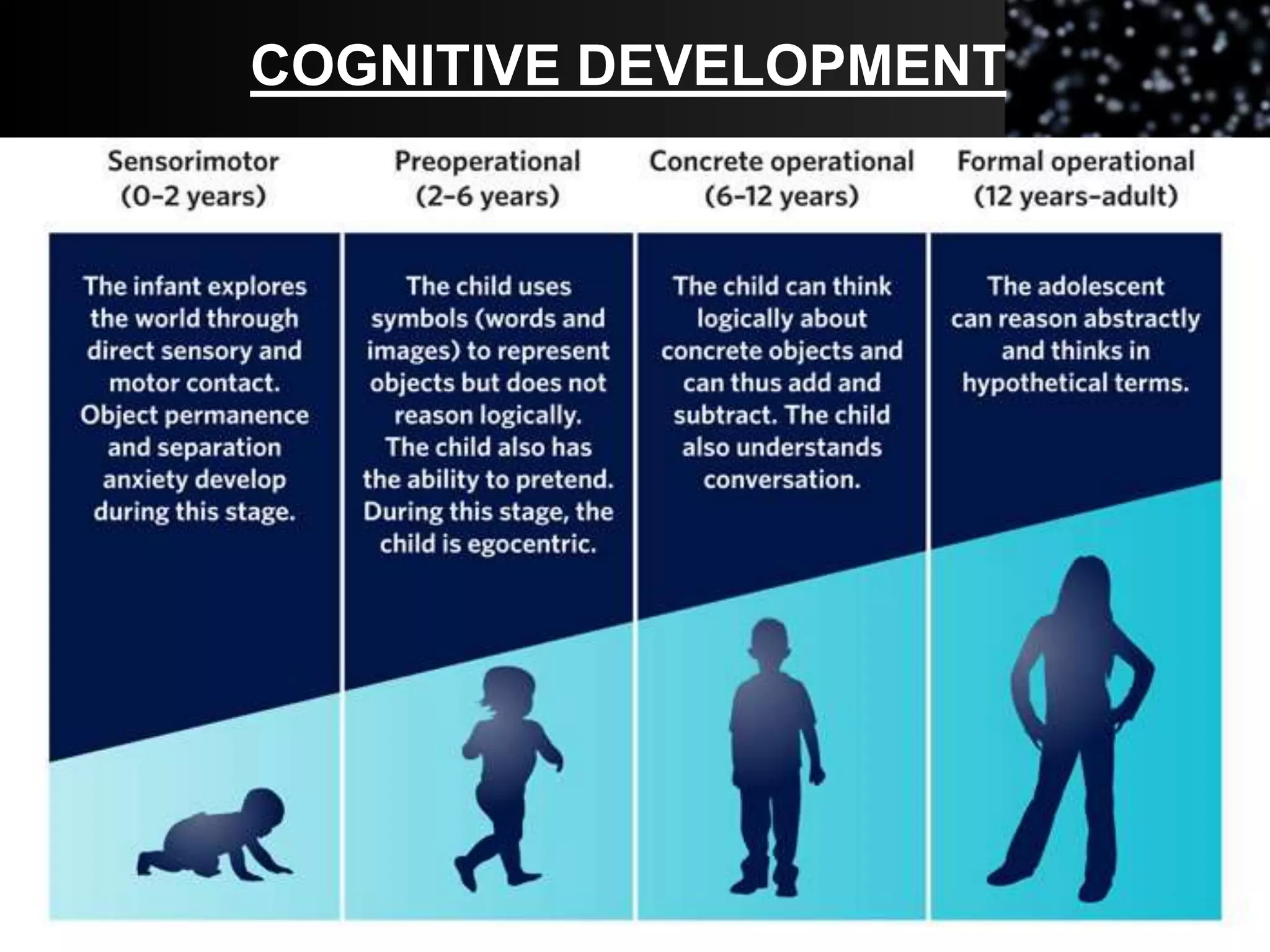
COGNITIVE DEVELOPMENT
Pathologic changes
1)IMBALANCE OF FLUID & ELECTROLYE
• Child lose fluid easily as compared to adults.in
conditions like diarrhoea,vomitting,burns etc
• Child get dehydrate easily.
2) RESISTANCE TO DISEASES
• The baby gets immunity from mother which helps the
baby fight against infections for first 3 months of life.
3) Sign & symptoms of disease in children are
different from adults.
Summary
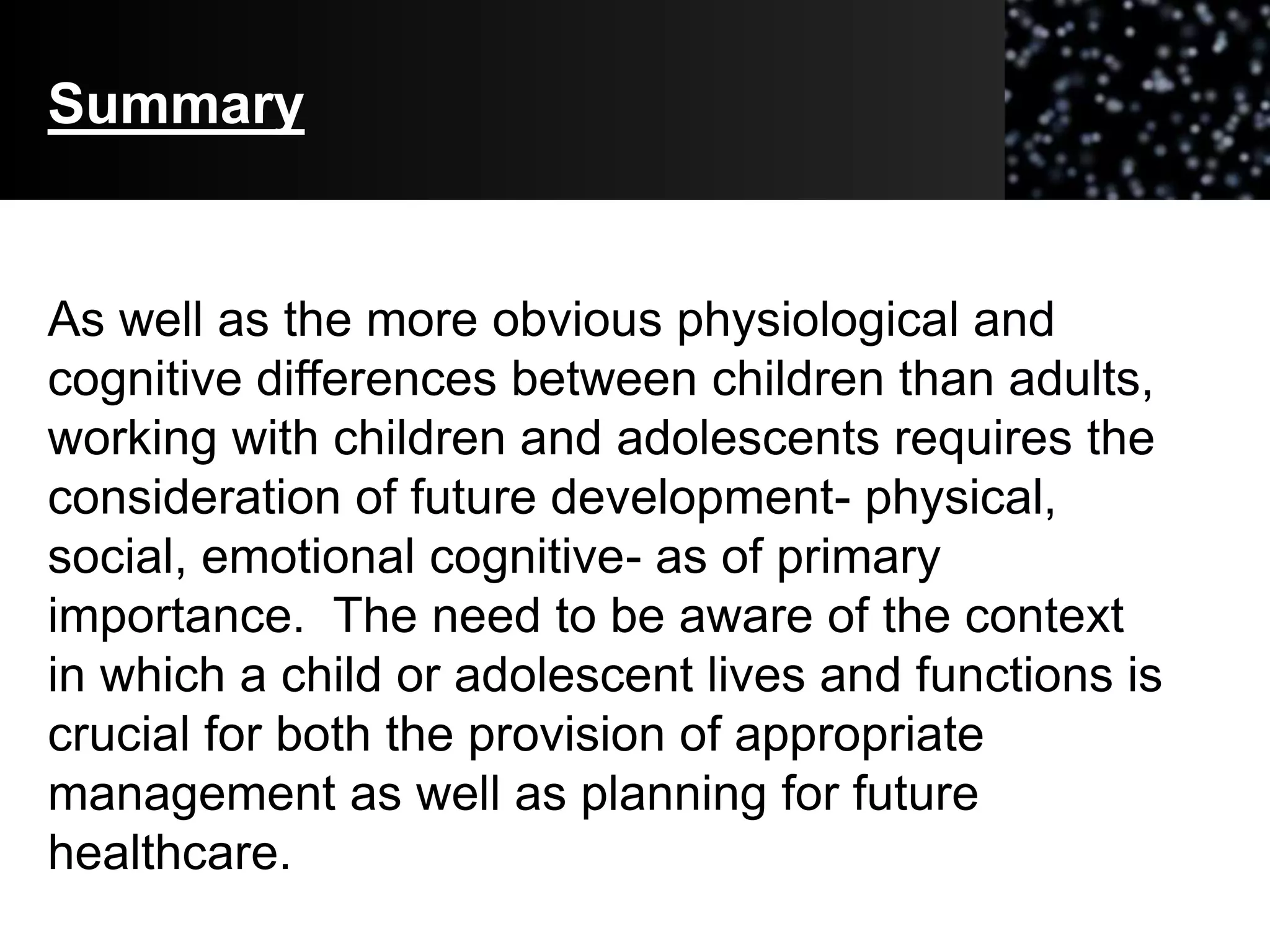
As well as the more obvious physiological and
cognitive differences between children than adults,
working with children and adolescents requires the
consideration of future development- physical,
social, emotional cognitive- as of primary
importance. The need to be aware of the context
in which a child or adolescent lives and functions is
crucial for both the provision of appropriate
management as well as planning for future
healthcare.
difference between child & adult.pptx

difference between child & adult.pptx

  • 1.
    DIFFERENCE BETWEEN CHILD & ADULT Preparedby: Chandani Modi Child Health Nursing
  • 3.
    INTRODUCTION: • There area many differences between children and adults like physiological, anatomical, cognitive, social and emotional. • these all impact on the way illness and disease present in children and young people, as well as the way healthcare is provided.
  • 4.
    Difference Between Child&Adult Systemic Changes Psychological Difference Pathologic changes
  • 5.
    Anatomic & PhysiologicDifference CHILDREN ADULTS New-born's head is larger & heavier as compared to his body Adults head is not heavier than body Thinner skin- Children have thinner skin than adults. Adult skin not as much thinner than children. Rapidly dividing cells- Children's cells divide more rapidly than adults Normal cell division No tears in early infancy There is tears formation in eyes. No voluntary control over the environment or activity. Voluntary control On body
  • 6.
  • 8.
    INTEGUMENTARY SYSTEM CHILDREN ADULT The apocrine sweat gland - small and non- functional from birth to preschool years.  Start functioning at 8 years of age. Apocrine gland are properly developed in axillae, areolae & genital area. Skin Problems:- 1)lenier’s disease 2)sclerema neonatorum. 3)tinea capitis 4)tinea pedis. This type of skin problem not seen in adult
  • 10.
    Respiratory System CHILDREN ADULT RespirationRate :-30– 60 breath/min Heart Rate:-100-160 beats/min Respiration Rate :-16- 20 breath/min Heart Rate/Pulse Rate:-60-80 beats/min Tissues of respiratory tract are delicate & do not produce sufficient mucus. Sufficient Amount of mucus no protection from invasion of infectious microorganism protection from invasion of infectious micro-
  • 11.
    Difference between Adultand Fetal Circulation Characteristics Adult Circulation Fetal Circulation Artery Carries oxygenated blood away from the heart Carries Non- oxygenated blood away from the fetal heart Veins Carries non- oxygenated blood towards the heart Carries oxygenated blood back to the heart Exchange of Gases Takes places in the lungs Takes place in the placenta Pressure Increase pressure on the left side of the heart Increase pressure on the right side of the heart
  • 13.
  • 14.
    Fetal circulation: 1. Oxygenatedblood from the placenta enters the fetus through the umbilical vein. 2. Most of the newly oxygenated blood bypasses the liver via the Ductus Venosus & combines with deoxygenated blood in Inferior Vena Cava. 3. Blood then joins deoxygenated blood from the superior vena cava & empties into the right atrium. 4. Since pressure in the right atrium is larger than pressure of left atrium, most blood will be shunted through the Foramen Ovale.
  • 15.
    Contd. 5. Some blooddoes travel from the right atrium to right ventricle through the pulmonary trunk but most blood bypasses the pulmonary arteries & moves directly to the aorta via the Ductus arteriosus. 6. Deoxygenated blood returns to the placenta via the umbilical arteries originating from internal iliac artery near the bladder.
  • 16.
    Post natal circulatorysystem changes 1. With the first breath, increased alveolar O2 pressure causes vasodilation in the pulmonary vessels. 2. Obstetrical clamping induces spontaneous constriction & change of umbilical vein to ligamnetum teres & umbilical arteries to Medical umbilical ligaments. 3. Within 10-15 hours after birth, the ductus arteriosus constricts & become the ligamentum arteriosum 4. Increased left atrial pressure & decreased right atrial pressure causes the foramen ovale to close & become the Fossa Ovalis 5. The ductus venosus also constricts & will become the ligamentum venosum.
  • 17.
    Hematologic System CHILDREN ADULT New-bornRBC are Microcytic. Microcytic=mcv<80 Adult RBC are Macrocytic. Macrocytic=MCV>100 Life Span of RBC are 60-90 days. Life Span of RBC are 100-120 days. BLOOD VOLUME: Neonate- 85 ml/kg of BW BLOOD VOLUME: Adult- 60-70 ml/kg of BW.
  • 18.
    URINARY SYSTEM CHILDREN ADULT Infant’skidneys are immature with reduced ability to filtrate & concentrate urine. Kidneys are mature enough for proper functioning. Nephron are not grow & functioning. Nephrons are properly functioning. Not under voluntary control. under voluntary control
  • 19.
    Gastrointestinal System CHILDREN ADULT itis quite relaxed in infants resulting in frequent regurgitation & vomiting during infancy The cardiac sphincter of stomach is fairly tight in adults GI functioning is immature & involuntary Proper GI functioning & voluntary control Temporary teeth Permanent teeth Stool of neonate is loose Liver size:- 4% of body weight. Stool of adult is hard. Liver is 12-13 times its birth weight.
  • 20.
    CHILDREN The endocrine glands whichsecrete hormones are least developed at birth homeostatic control is lacking till the age of 12-18 months ADULT Properly developed Properly mature Endocrine System
  • 21.
    Reproductive System Girl Ovaries ina baby girl are approximately 10 mm in length & 2-4 mm in width. Functioning of ovary started at the age of 12-13 years of age. Faulty development of ovaries leads to precocious puberty or delayed puberty Boy Testes in male baby, at birth are 1.5-2 cm long & 0.7-1 cm wide. The size of testes increases gradually & reaches maturity between 13-17 years.
  • 22.
    Musculoskeletal System The suturesin skull of new-born are not united. The infants bones are neither as firm nor as brittle as of adults so fractures rarely occur in infants & if it all they occur, healing is very quick In children height increases as bones grow at epiphyses whereas in adults height doesn’t increase after certain age.
  • 24.
    Neurologic System CHILDREN ADULT Theweight of brain of neonates is about 300-500 grams. The weight of brain of adult is about 1,300 - 1,400 grams. Reflex activities that are present during infancy. disappear in adult as voluntary control is developed. VISION:- eyes are not anatomically mature, not able to function. VISION:- eyes are mature & function properly. HEARING:- Neonate can heard loud noise at birth. Adult can Listen softer & soothing sound.
  • 26.
    Lymphoid &Immune System • Thematuration of lymphoid system varies with the child’s age. • The lymphoid tissue is small but well developed at birth. • It increase rapidly in size up to the age of 10-11 years.
  • 27.
    PSYCHOLOGICAL DIFFERENCES NEWBORN Fear, escape and avoid strangers INFANCY more bonding with parents. Separation anxiety is very common. TODLLER Negativistic behaviors PRESCHOOLER short attention span, easily distract able. SCHOOLER Industry Vs. inferiority ADOLESCENT Identity of peer, confusion
  • 28.
    SOCIAL & EMOTIONALDEVELOPMENT
  • 29.
  • 30.
    Pathologic changes 1)IMBALANCE OFFLUID & ELECTROLYE • Child lose fluid easily as compared to adults.in conditions like diarrhoea,vomitting,burns etc • Child get dehydrate easily. 2) RESISTANCE TO DISEASES • The baby gets immunity from mother which helps the baby fight against infections for first 3 months of life. 3) Sign & symptoms of disease in children are different from adults.
  • 31.
    Summary As well asthe more obvious physiological and cognitive differences between children than adults, working with children and adolescents requires the consideration of future development- physical, social, emotional cognitive- as of primary importance. The need to be aware of the context in which a child or adolescent lives and functions is crucial for both the provision of appropriate management as well as planning for future healthcare.