PANDIT RAM KUMAR
PANDEY GRAMODYA
MAHAVIDYLYA
PRESENTATION ON PERIODIC PROPERTIES
SUBMITTED BY
ADITYA VERMA
BSC 1st YEAR
SUBMITTED TO
DR. PARUL MISHRA
PERIODIC PROPERTIES
• When elements are arranged in
order of increasing atomic number,
certain sets of properties recur
periodically.
WHAT ARE THESE PROPERTIES?
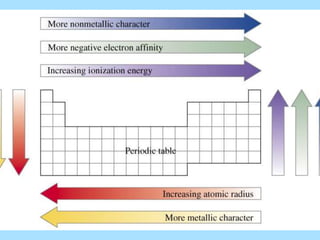
• Metallic, nonmetallic and metalloid properties
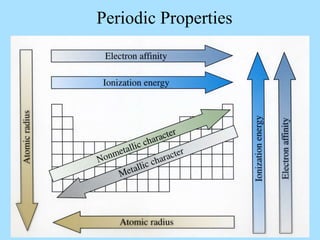
• Atomic radius
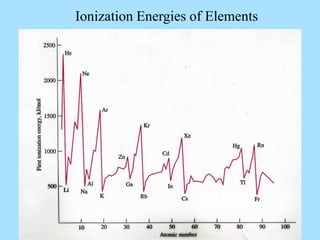
• Ionization energies (energy necessary to remove the
outermost electron from the atom)
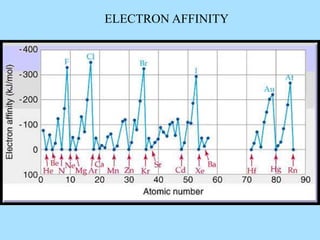
• Electron affinities (energy change when an electron
is added to a neutral atom)
• Reactivity
• Electronegativity
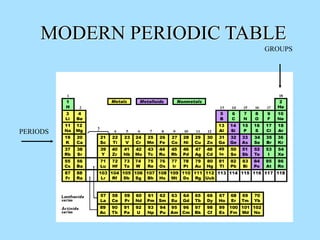
MODERN PERIODIC TABLE
GROUPS
PERIODS
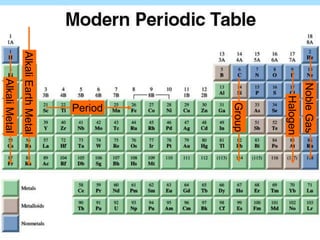
Period
Group
AlkaliMetal
NobleGas
Halogen
AlkaliEarthMetal
• Elements can be divided into groups, or families.
ELEMENT FAMILIES
• Each column of the periodic table contains one
element family.
• Hydrogen is usually considered separately, so the
first element family begins with lithium and
sodium in the first column.
• Just as human family members often have
similar looks and traits, members of element
families have similar chemical properties
because they have the same number of electrons
in their outer energy levels.
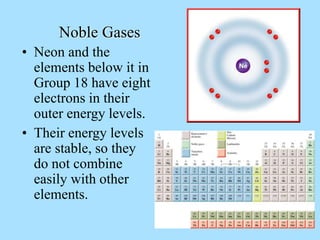
• Neon and the
elements below it in
Group 18 have eight
electrons in their
outer energy levels.
Noble Gases
• Their energy levels
are stable, so they
do not combine
easily with other
elements.
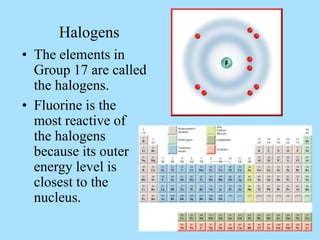
• The elements in
Group 17 are called
the halogens.
Halogens
• Fluorine is the
most reactive of
the halogens
because its outer
energy level is
closest to the
nucleus.
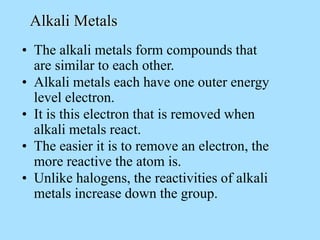
• The alkali metals form compounds that
are similar to each other.
Alkali Metals
• Alkali metals each have one outer energy
level electron.
• It is this electron that is removed when
alkali metals react.
• The easier it is to remove an electron, the
more reactive the atom is.
• Unlike halogens, the reactivities of alkali
metals increase down the group.
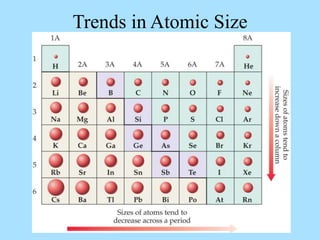
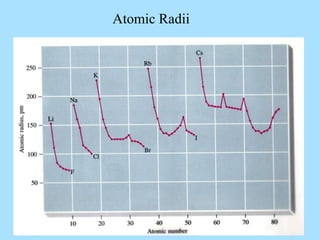
Trends in Atomic Size
Atomic Radii
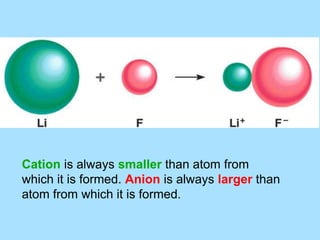
Cation is always smaller than atom from
which it is formed. Anion is always larger than
atom from which it is formed.
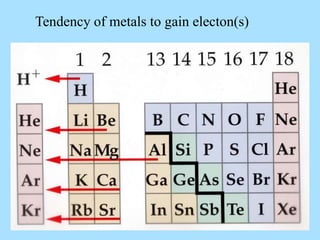
Tendency of metals to gain electon(s)
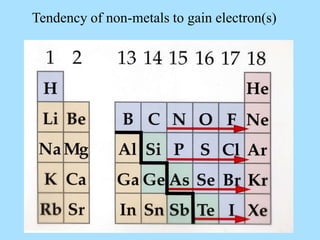
Tendency of non-metals to gain electron(s)
Ionization Energies of Elements
Periodic Properties
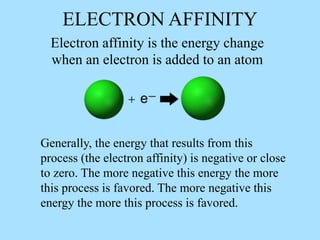
ELECTRON AFFINITY
Electron affinity is the energy change
when an electron is added to an atom
Generally, the energy that results from this
process (the electron affinity) is negative or close
to zero. The more negative this energy the more
this process is favored. The more negative this
energy the more this process is favored.
ELECTRON AFFINITY
THANK YOU
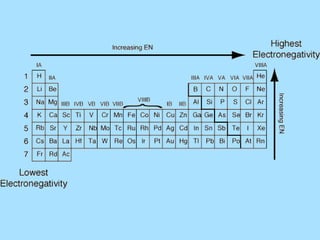
ELECTRONEGATIVITY
• Electronegativity is a measure of the
tendency of an atom to attract a bonding
pair of electrons.
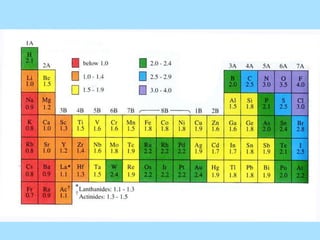
• The Pauling scale is the most commonly
used. Fluorine (the most electronegative
element) is assigned a value of 4.0, and
values range down to caesium and francium
which are the least electronegative at 0.7.
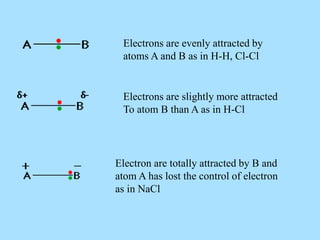
Electrons are evenly attracted by
atoms A and B as in H-H, Cl-Cl
Electrons are slightly more attracted
To atom B than A as in H-Cl
Electron are totally attracted by B and
atom A has lost the control of electron
as in NaCl
Other properties that relate to the
periodicity of elements
• Melting and boiling points within a
group
• Ability to conduct heat and electricity
across a period
• Reducing and oxidizing abilities with
in a group
• Acid-base nature of element oxides

Chemistry presentation

  • 1.
    PANDIT RAM KUMAR PANDEYGRAMODYA MAHAVIDYLYA PRESENTATION ON PERIODIC PROPERTIES SUBMITTED BY ADITYA VERMA BSC 1st YEAR SUBMITTED TO DR. PARUL MISHRA
  • 2.
    PERIODIC PROPERTIES • Whenelements are arranged in order of increasing atomic number, certain sets of properties recur periodically.
  • 3.
    WHAT ARE THESEPROPERTIES? • Metallic, nonmetallic and metalloid properties • Atomic radius • Ionization energies (energy necessary to remove the outermost electron from the atom) • Electron affinities (energy change when an electron is added to a neutral atom) • Reactivity • Electronegativity
  • 5.
  • 6.
  • 7.
    • Elements canbe divided into groups, or families. ELEMENT FAMILIES • Each column of the periodic table contains one element family. • Hydrogen is usually considered separately, so the first element family begins with lithium and sodium in the first column. • Just as human family members often have similar looks and traits, members of element families have similar chemical properties because they have the same number of electrons in their outer energy levels.
  • 8.
    • Neon andthe elements below it in Group 18 have eight electrons in their outer energy levels. Noble Gases • Their energy levels are stable, so they do not combine easily with other elements.
  • 9.
    • The elementsin Group 17 are called the halogens. Halogens • Fluorine is the most reactive of the halogens because its outer energy level is closest to the nucleus.
  • 10.
    • The alkalimetals form compounds that are similar to each other. Alkali Metals • Alkali metals each have one outer energy level electron. • It is this electron that is removed when alkali metals react. • The easier it is to remove an electron, the more reactive the atom is. • Unlike halogens, the reactivities of alkali metals increase down the group.
  • 12.
  • 13.
  • 14.
    Cation is alwayssmaller than atom from which it is formed. Anion is always larger than atom from which it is formed.
  • 15.
    Tendency of metalsto gain electon(s)
  • 16.
    Tendency of non-metalsto gain electron(s)
  • 17.
  • 18.
  • 19.
    ELECTRON AFFINITY Electron affinityis the energy change when an electron is added to an atom Generally, the energy that results from this process (the electron affinity) is negative or close to zero. The more negative this energy the more this process is favored. The more negative this energy the more this process is favored.
  • 20.
  • 21.
  • 22.
    ELECTRONEGATIVITY • Electronegativity isa measure of the tendency of an atom to attract a bonding pair of electrons. • The Pauling scale is the most commonly used. Fluorine (the most electronegative element) is assigned a value of 4.0, and values range down to caesium and francium which are the least electronegative at 0.7.
  • 23.
    Electrons are evenlyattracted by atoms A and B as in H-H, Cl-Cl Electrons are slightly more attracted To atom B than A as in H-Cl Electron are totally attracted by B and atom A has lost the control of electron as in NaCl
  • 26.
    Other properties thatrelate to the periodicity of elements • Melting and boiling points within a group • Ability to conduct heat and electricity across a period • Reducing and oxidizing abilities with in a group • Acid-base nature of element oxides