LOGO 
www.themegallery.com 
High 
Performance 
Workforce 
Management 
Chapter 6
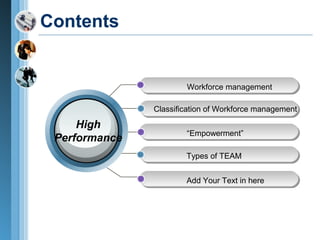
Contents 
Workforce management 
Classification of Workforce management 
“Empowerment” 
Types of TEAM 
Add Your Text in here 
High 
Performance
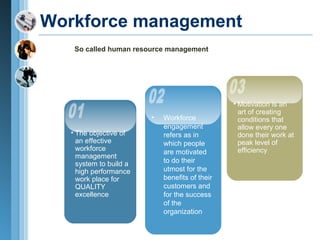
Workforce management 
• The objective of 
an effective 
workforce 
management 
system to build a 
high performance 
work place for 
QUALITY 
excellence 
• Workforce 
engagement 
refers as in 
which people 
are motivated 
to do their 
utmost for the 
benefits of their 
customers and 
for the success 
of the 
organization 
• Motivation is an 
art of creating 
conditions that 
allow every one 
done their work at 
peak level of 
efficiency 
So called human resource management
Classification of Workforce 
management 
Content Theories 
HERARCHY OF NEEDS BY ABRAHAM MASLOW 
THEORY X-Y BY DOUGLAS MCGREGOR 
Process Theories 
PREFERENCE AND EXPECTATION BY VISTOR H. VROOM 
CONTIGENCY BY PORTER AND LAWLER 
PATH GOAL THEPRY OF LEADERSHIP BY ROBERT J. HOUSE 
Environmentally Based Theories 
EQUITY STANCY ADAM 
SOCIAL LEARNING /SELF EFFICANCY BY BANDURA ect. all
Workforce management 
Giving people authority 
to make decisions based 
on what they feel is right, 
as a leader you should 
sincerely belief and trust 
in your own people 
Provide education, 
resource, and 
encouragement remove 
restrictive policies', foster 
the atmosphere of trust, 
share information freely, 
train hand on tasks
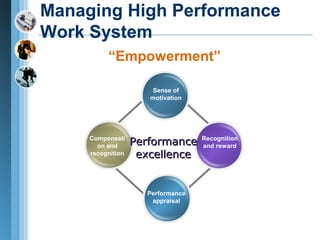
Managing High Performance 
Work System 
“Empowerment” 
Sense of 
motivation 
Compensati 
on and 
recognition 
Recognition 
and reward 
PPeerrffoorrmmaannccee 
eexxcceelllleennccee 
Performance 
appraisal
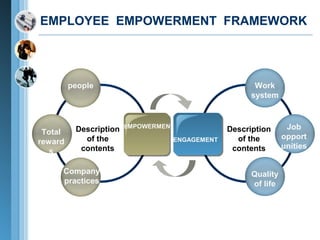
EMPLOYEE EMPOWERMENT FRAMEWORK 
Description EMPOWERMENT 
of the 
contents 
ENGAGEMENT 
people 
Total 
reward 
s 
Company 
practices 
Work 
system 
Job 
opport 
unities 
Description 
of the 
contents 
Quality 
of life
TEAMWORK 
A TEAM 
A team is a small number of people with complementary skills 
who are committed to a common purpose, set of performance 
goals, and they are mutually accountable 
EMPOWERMENT VS SELF DETERMINATION 
Empowerment based on technical skills to do specific jobs self 
determination is personnel power to self determine 
SIX SIGMA PROJECT TEAM 
The inter discipline nature of such project, range from technical 
analysis, creative solution development, and implementation, 
Refer the six sigma and the role of Black Belt.
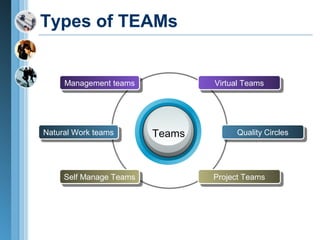
Types of TEAMs 
MMaannaaggeemmeennt tt eteaammss 
NNaatuturaral lW Woorkrk t eteaammss Teams 
SSeelfl fM Maannaaggee T Teeaammss 
VViritrutuaal lT Teeaammss 
QQuuaaliltiyty C Ciricrcleless 
PProrojejecct tT Teeaammss
Developing 
Teams 
Problem Selections, 
Problem Diagnosis, 
Work Allocation 
Communication, 
coordination and 
organization support 
Team Charters 
Team Process
Engaging the Workforce in Process 
1.Conflict Management and 
resolution 
2.Team management 
3. Leaderships skills 
4. Decision making 
5.Communication 
6.Negotiation 
7.Cross cultural training 
50 
25.4 
1st Qtr 
45 
75 
80 
70 
60 
50 
30 
20 
10 
0 
40 
SSkkiillllss ffoorr TTEEAAMM lleeaaddeerrss
Engaging the Workforce in Process 
1. Use agendas 
2.Have facilitators 
3. Take minutes 
4. Draft the next agenda 
5. Evaluate the meeting 
50 
25.4 
1st Qtr 
45 
75 
80 
70 
60 
50 
30 
20 
10 
0 
40 
SSkkiillllss ffoorr TTEEAAMM MMeemmbbeerrss
Workforce Focus in Baldrige, 
ISO 9000 and Six Sigma 
Baldrige 
ISO 9000 
Six Sigma 
• training and education, skills 
and experience determine the 
level of competence 
1. workforce focus how the 
organization engages, 
manages, and develop 
workforce 2. workforce 
environment 
• owes the success is the 
integration of team member, 
selecting the right people, 
training and skill, rewards and 
recognition approach
LOGO 
www.themegallery.com

Chapter 6 tqm high performance workforce management

  • 1.
    LOGO www.themegallery.com High Performance Workforce Management Chapter 6
  • 2.
    Contents Workforce management Classification of Workforce management “Empowerment” Types of TEAM Add Your Text in here High Performance
  • 3.
    Workforce management •The objective of an effective workforce management system to build a high performance work place for QUALITY excellence • Workforce engagement refers as in which people are motivated to do their utmost for the benefits of their customers and for the success of the organization • Motivation is an art of creating conditions that allow every one done their work at peak level of efficiency So called human resource management
  • 4.
    Classification of Workforce management Content Theories HERARCHY OF NEEDS BY ABRAHAM MASLOW THEORY X-Y BY DOUGLAS MCGREGOR Process Theories PREFERENCE AND EXPECTATION BY VISTOR H. VROOM CONTIGENCY BY PORTER AND LAWLER PATH GOAL THEPRY OF LEADERSHIP BY ROBERT J. HOUSE Environmentally Based Theories EQUITY STANCY ADAM SOCIAL LEARNING /SELF EFFICANCY BY BANDURA ect. all
  • 5.
    Workforce management Givingpeople authority to make decisions based on what they feel is right, as a leader you should sincerely belief and trust in your own people Provide education, resource, and encouragement remove restrictive policies', foster the atmosphere of trust, share information freely, train hand on tasks
  • 6.
    Managing High Performance Work System “Empowerment” Sense of motivation Compensati on and recognition Recognition and reward PPeerrffoorrmmaannccee eexxcceelllleennccee Performance appraisal
  • 7.
    EMPLOYEE EMPOWERMENT FRAMEWORK Description EMPOWERMENT of the contents ENGAGEMENT people Total reward s Company practices Work system Job opport unities Description of the contents Quality of life
  • 8.
    TEAMWORK A TEAM A team is a small number of people with complementary skills who are committed to a common purpose, set of performance goals, and they are mutually accountable EMPOWERMENT VS SELF DETERMINATION Empowerment based on technical skills to do specific jobs self determination is personnel power to self determine SIX SIGMA PROJECT TEAM The inter discipline nature of such project, range from technical analysis, creative solution development, and implementation, Refer the six sigma and the role of Black Belt.
  • 9.
    Types of TEAMs MMaannaaggeemmeennt tt eteaammss NNaatuturaral lW Woorkrk t eteaammss Teams SSeelfl fM Maannaaggee T Teeaammss VViritrutuaal lT Teeaammss QQuuaaliltiyty C Ciricrcleless PProrojejecct tT Teeaammss
  • 10.
    Developing Teams ProblemSelections, Problem Diagnosis, Work Allocation Communication, coordination and organization support Team Charters Team Process
  • 11.
    Engaging the Workforcein Process 1.Conflict Management and resolution 2.Team management 3. Leaderships skills 4. Decision making 5.Communication 6.Negotiation 7.Cross cultural training 50 25.4 1st Qtr 45 75 80 70 60 50 30 20 10 0 40 SSkkiillllss ffoorr TTEEAAMM lleeaaddeerrss
  • 12.
    Engaging the Workforcein Process 1. Use agendas 2.Have facilitators 3. Take minutes 4. Draft the next agenda 5. Evaluate the meeting 50 25.4 1st Qtr 45 75 80 70 60 50 30 20 10 0 40 SSkkiillllss ffoorr TTEEAAMM MMeemmbbeerrss
  • 13.
    Workforce Focus inBaldrige, ISO 9000 and Six Sigma Baldrige ISO 9000 Six Sigma • training and education, skills and experience determine the level of competence 1. workforce focus how the organization engages, manages, and develop workforce 2. workforce environment • owes the success is the integration of team member, selecting the right people, training and skill, rewards and recognition approach
  • 14.

Editor's Notes

  • #5 Content Layouts
  • #9 Content Layouts