Chapter 5
Cardiovascular
Procedures
By.. Michael Kissiedu
What is the cardiovascular system and what are some of the
                    Procedures involved in it

• The cardiovascular system is one of the major body systems that makes
  sure that the muscles and bones are supplied with the proper amount of
  oxygen and blood.
• There are several procedures involved in making sure the heart is in a
  good shape but I’m just going to talk about the three methods I’m familiar
  with upon doing my research.
• They are as follows;
• Stress testing
• Nuclear heart scan
• Echocardiography
Stress Testing: How it works and the Uses

• Stress testing provides information about how your heart works during
  physical stress.
• Some heart problems are easier to diagnose when your heart is working hard
  and beating fast.
• During stress testing, a patient is required to walk or run on a treadmill, or
  stationery bike to conduct the test. This is done to make sure your heart is
  beating fast or hard.
• If a patient cant walk on the treadmill or ride the bike due to medical issues
  such as arthritis, a doctor can give the patient medicine to make sure the heart
  beats hard as if the patient is doing an exercise. And this process is called
  pharmacological stress test.
Use of Stress testing
• Doctors use stress testing to
  determine coronary heart disease
  (CDH).
• CDH is a disease in which a
  plaque builds up in the arteries to
  prevent blood and oxygen supply.
• The build-up of this plaques can
  cause blood clot which leads to
  chest pain called angina and
  heart attack.
• Also stress testing can help
  determine any abnormalities in
  the body such as shortness of
  breath, heart rate, blood pressure
  and electrical activities.
Nuclear heart Scan: How it works and the Uses

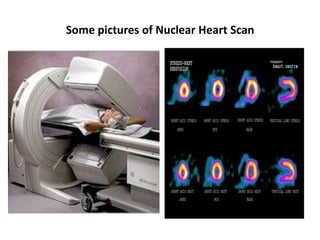
• A nuclear heart scan is a test that provides important information about
  the health of your heart.
• For this test, a safe, radioactive substance called a tracer is injected into
  your bloodstream through a vein. The tracer travels to your heart and
  releases energy.
• Also special cameras outside of your body detect the energy and use it to
  create pictures of your heart. Usually, two sets of pictures are taken during
  a nuclear heart scan.
• The first picture is taking after a stress test, thus when your heart is
  beating hard and first.
• The second picture is taking after your heart is at rest and beating normal.
What are the Purposes

• Nuclear heart scan is used for three main purposes;
• To look for damaged heart muscle. Damage might be the result of a
  previous heart attack, injury, infection, or medicine. And this method is
  called myocardial viability test.
• To see how well your heart pumps blood to your body. When a nuclear
  heart scan is done for this purpose, it's called ventricular function
  scanning.
• To check how blood is flowing to the heart muscle. When a nuclear heart
  scan is done for this purpose, it's called myocardial perfusion scanning.
Some pictures of Nuclear Heart Scan
Echocardiography: How it works and the Uses

• Echocardiography is a painless test that uses sound waves to create moving pictures of your
  heart. The pictures show the size and shape of your heart. They also show how well your heart's
  chambers and valves are working.
• Echo also can pinpoint areas of heart muscle that aren't contracting well because of poor blood
  flow or injury from a previous heart attack.
• It can also be use to determine heart problems in infants and children.
Purposes of echocardiography

    The physician may use echo to determine the following;
 1. Heart valve problems. Echo can show whether any of your heart valves don't open normally or
close tightly.
 2. Blood clots or tumors. If you've had a stroke, you may have echo to check for blood clots or
tumors that could have caused the stroke.
 3. Problems with your heart's structure. Echo can detect congenital heart defects, such as holes in
the heart. Congenital heart defects are structural problems present at birth. Infants and children
may have echo to detect these heart defects.
 4. Heart muscles that are weak and aren't pumping well. This maybe be due to weakening and also
might mean that the area isn't getting enough blood supply, a sign of coronary heart disease.
Pictures of Echocardiography method
Conclusion
• The various methods of cardiovascular seems very helpful to help patients
  prevent any dangerous health issues and I think as time goes on there
  would be more procedures that can save more life’s. On that note
  everyone should make sure they go for check up once or twice every six
  months to make sure they are in great condition.

Chapter 5

  • 1.
  • 2.
    What is thecardiovascular system and what are some of the Procedures involved in it • The cardiovascular system is one of the major body systems that makes sure that the muscles and bones are supplied with the proper amount of oxygen and blood. • There are several procedures involved in making sure the heart is in a good shape but I’m just going to talk about the three methods I’m familiar with upon doing my research. • They are as follows; • Stress testing • Nuclear heart scan • Echocardiography
  • 3.
    Stress Testing: Howit works and the Uses • Stress testing provides information about how your heart works during physical stress. • Some heart problems are easier to diagnose when your heart is working hard and beating fast. • During stress testing, a patient is required to walk or run on a treadmill, or stationery bike to conduct the test. This is done to make sure your heart is beating fast or hard. • If a patient cant walk on the treadmill or ride the bike due to medical issues such as arthritis, a doctor can give the patient medicine to make sure the heart beats hard as if the patient is doing an exercise. And this process is called pharmacological stress test.
  • 4.
    Use of Stresstesting • Doctors use stress testing to determine coronary heart disease (CDH). • CDH is a disease in which a plaque builds up in the arteries to prevent blood and oxygen supply. • The build-up of this plaques can cause blood clot which leads to chest pain called angina and heart attack. • Also stress testing can help determine any abnormalities in the body such as shortness of breath, heart rate, blood pressure and electrical activities.
  • 5.
    Nuclear heart Scan:How it works and the Uses • A nuclear heart scan is a test that provides important information about the health of your heart. • For this test, a safe, radioactive substance called a tracer is injected into your bloodstream through a vein. The tracer travels to your heart and releases energy. • Also special cameras outside of your body detect the energy and use it to create pictures of your heart. Usually, two sets of pictures are taken during a nuclear heart scan. • The first picture is taking after a stress test, thus when your heart is beating hard and first. • The second picture is taking after your heart is at rest and beating normal.
  • 6.
    What are thePurposes • Nuclear heart scan is used for three main purposes; • To look for damaged heart muscle. Damage might be the result of a previous heart attack, injury, infection, or medicine. And this method is called myocardial viability test. • To see how well your heart pumps blood to your body. When a nuclear heart scan is done for this purpose, it's called ventricular function scanning. • To check how blood is flowing to the heart muscle. When a nuclear heart scan is done for this purpose, it's called myocardial perfusion scanning.
  • 7.
    Some pictures ofNuclear Heart Scan
  • 8.
    Echocardiography: How itworks and the Uses • Echocardiography is a painless test that uses sound waves to create moving pictures of your heart. The pictures show the size and shape of your heart. They also show how well your heart's chambers and valves are working. • Echo also can pinpoint areas of heart muscle that aren't contracting well because of poor blood flow or injury from a previous heart attack. • It can also be use to determine heart problems in infants and children.
  • 9.
    Purposes of echocardiography The physician may use echo to determine the following; 1. Heart valve problems. Echo can show whether any of your heart valves don't open normally or close tightly. 2. Blood clots or tumors. If you've had a stroke, you may have echo to check for blood clots or tumors that could have caused the stroke. 3. Problems with your heart's structure. Echo can detect congenital heart defects, such as holes in the heart. Congenital heart defects are structural problems present at birth. Infants and children may have echo to detect these heart defects. 4. Heart muscles that are weak and aren't pumping well. This maybe be due to weakening and also might mean that the area isn't getting enough blood supply, a sign of coronary heart disease.
  • 10.
  • 11.
    Conclusion • The variousmethods of cardiovascular seems very helpful to help patients prevent any dangerous health issues and I think as time goes on there would be more procedures that can save more life’s. On that note everyone should make sure they go for check up once or twice every six months to make sure they are in great condition.