CARDIOVASCULAR
DIAGNOSTIC PROCEDURES
Lauren Fowlkes
PROCEDURE TYPES
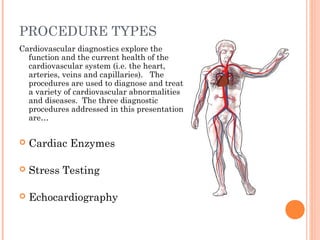
Cardiovascular diagnostics explore the
  function and the current health of the
  cardiovascular system (i.e. the heart,
  arteries, veins and capillaries). The
  procedures are used to diagnose and treat
  a variety of cardiovascular abnormalities
  and diseases. The three diagnostic
  procedures addressed in this presentation
  are…


   Cardiac Enzymes

   Stress Testing

   Echocardiography
CARDIAC ENZYMES
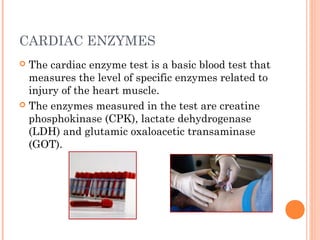
 The cardiac enzyme test is a basic blood test that
  measures the level of specific enzymes related to
  injury of the heart muscle.
 The enzymes measured in the test are creatine
  phosphokinase (CPK), lactate dehydrogenase
  (LDH) and glutamic oxaloacetic transaminase
  (GOT).
INDICATIONS
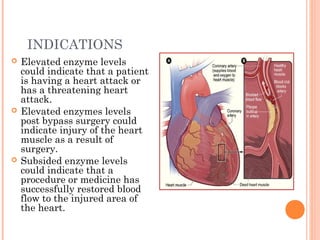
   Elevated enzyme levels
    could indicate that a patient
    is having a heart attack or
    has a threatening heart
    attack.
   Elevated enzymes levels
    post bypass surgery could
    indicate injury of the heart
    muscle as a result of
    surgery.
   Subsided enzyme levels
    could indicate that a
    procedure or medicine has
    successfully restored blood
    flow to the injured area of
    the heart.
STRESS TESTING
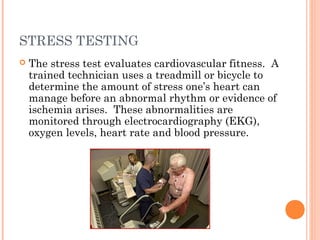
   The stress test evaluates cardiovascular fitness. A
    trained technician uses a treadmill or bicycle to
    determine the amount of stress one’s heart can
    manage before an abnormal rhythm or evidence of
    ischemia arises. These abnormalities are
    monitored through electrocardiography (EKG),
    oxygen levels, heart rate and blood pressure.
INFORMATION PROVIDED

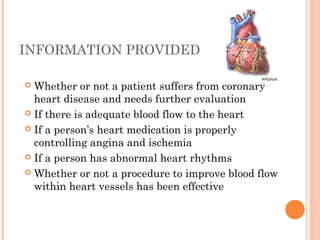
 Whether or not a patient suffers from coronary
  heart disease and needs further evaluation
 If there is adequate blood flow to the heart

 If a person’s heart medication is properly
  controlling angina and ischemia
 If a person has abnormal heart rhythms

 Whether or not a procedure to improve blood flow
  within heart vessels has been effective
ECHOCARDIOGRAPHY
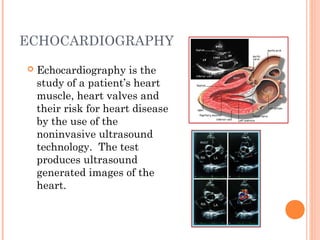
   Echocardiography is the
    study of a patient’s heart
    muscle, heart valves and
    their risk for heart disease
    by the use of the
    noninvasive ultrasound
    technology. The test
    produces ultrasound
    generated images of the
    heart.
TYPES OF ECHOCARDIOGRAMS
   Transthoracic echocardiogram- the
    standard type that uses a hand held
    ultrasound transducer on the patient’s
    chest
   Transesophageal echocardiogram- the
    transducer is placed in the patient’s
    esophagus, which is located close to the
    heart, allowing for the production of
    clear images
   Stress echocardiogram- a standard
    echocardiogram performed just prior to
    and after a stress test
   Dobutamine stress echocardiogram- a
    patient is given a drug that stimulates a
    exercise responses in the heart and the
    standard echocardiogram is performed
   Intravascular Ultrasound- the
    transducer is threaded into heart blood
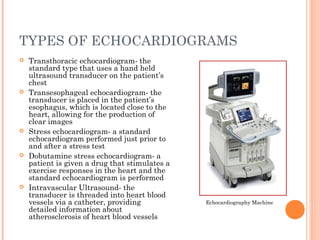
    vessels via a catheter, providing           Echocardiography Machine
    detailed information about
    atherosclerosis of heart blood vessels
INFORMATION PROVIDED
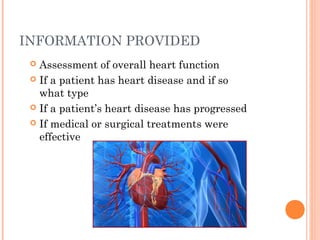
  Assessment of overall heart function
  If a patient has heart disease and if so
   what type
  If a patient’s heart disease has progressed

  If medical or surgical treatments were
   effective
CONCLUSION

   Cardiovascular diagnostic procedures are critical
    to the assessment and treatment of patients
    suffering from cardiovascular abnormalities and
    heart disease. As science and medicine continue
    to evolve, and as new research arises these
    technologies are going to continue to expand the
    information that these tests provide.

Cardiovascular diagnostic procedures

  • 1.
  • 2.
    PROCEDURE TYPES Cardiovascular diagnosticsexplore the function and the current health of the cardiovascular system (i.e. the heart, arteries, veins and capillaries). The procedures are used to diagnose and treat a variety of cardiovascular abnormalities and diseases. The three diagnostic procedures addressed in this presentation are…  Cardiac Enzymes  Stress Testing  Echocardiography
  • 3.
    CARDIAC ENZYMES  Thecardiac enzyme test is a basic blood test that measures the level of specific enzymes related to injury of the heart muscle.  The enzymes measured in the test are creatine phosphokinase (CPK), lactate dehydrogenase (LDH) and glutamic oxaloacetic transaminase (GOT).
  • 4.
    INDICATIONS  Elevated enzyme levels could indicate that a patient is having a heart attack or has a threatening heart attack.  Elevated enzymes levels post bypass surgery could indicate injury of the heart muscle as a result of surgery.  Subsided enzyme levels could indicate that a procedure or medicine has successfully restored blood flow to the injured area of the heart.
  • 5.
    STRESS TESTING  The stress test evaluates cardiovascular fitness. A trained technician uses a treadmill or bicycle to determine the amount of stress one’s heart can manage before an abnormal rhythm or evidence of ischemia arises. These abnormalities are monitored through electrocardiography (EKG), oxygen levels, heart rate and blood pressure.
  • 6.
    INFORMATION PROVIDED  Whetheror not a patient suffers from coronary heart disease and needs further evaluation  If there is adequate blood flow to the heart  If a person’s heart medication is properly controlling angina and ischemia  If a person has abnormal heart rhythms  Whether or not a procedure to improve blood flow within heart vessels has been effective
  • 7.
    ECHOCARDIOGRAPHY  Echocardiography is the study of a patient’s heart muscle, heart valves and their risk for heart disease by the use of the noninvasive ultrasound technology. The test produces ultrasound generated images of the heart.
  • 8.
    TYPES OF ECHOCARDIOGRAMS  Transthoracic echocardiogram- the standard type that uses a hand held ultrasound transducer on the patient’s chest  Transesophageal echocardiogram- the transducer is placed in the patient’s esophagus, which is located close to the heart, allowing for the production of clear images  Stress echocardiogram- a standard echocardiogram performed just prior to and after a stress test  Dobutamine stress echocardiogram- a patient is given a drug that stimulates a exercise responses in the heart and the standard echocardiogram is performed  Intravascular Ultrasound- the transducer is threaded into heart blood vessels via a catheter, providing Echocardiography Machine detailed information about atherosclerosis of heart blood vessels
  • 9.
    INFORMATION PROVIDED Assessment of overall heart function  If a patient has heart disease and if so what type  If a patient’s heart disease has progressed  If medical or surgical treatments were effective
  • 10.
    CONCLUSION  Cardiovascular diagnostic procedures are critical to the assessment and treatment of patients suffering from cardiovascular abnormalities and heart disease. As science and medicine continue to evolve, and as new research arises these technologies are going to continue to expand the information that these tests provide.