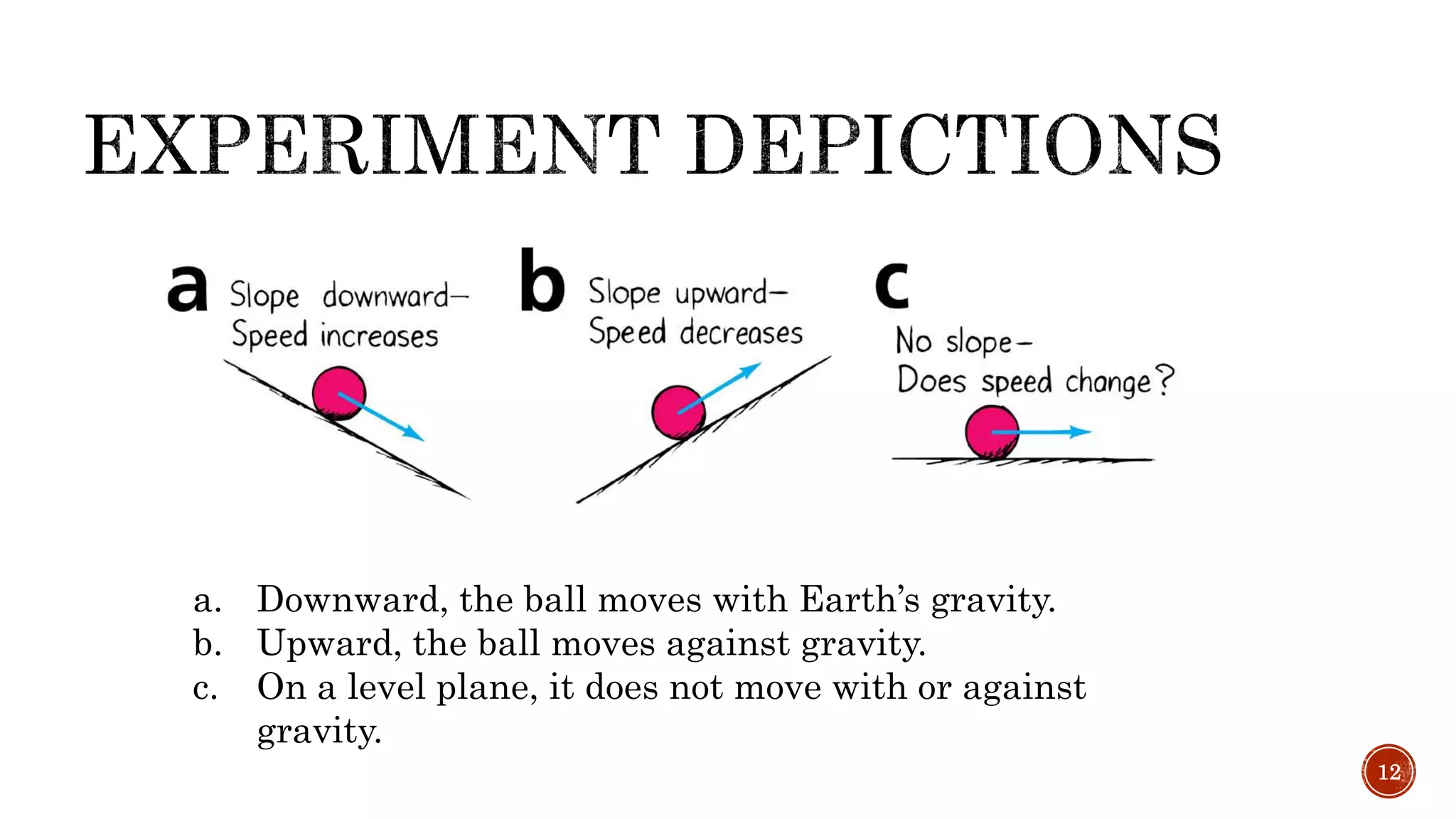
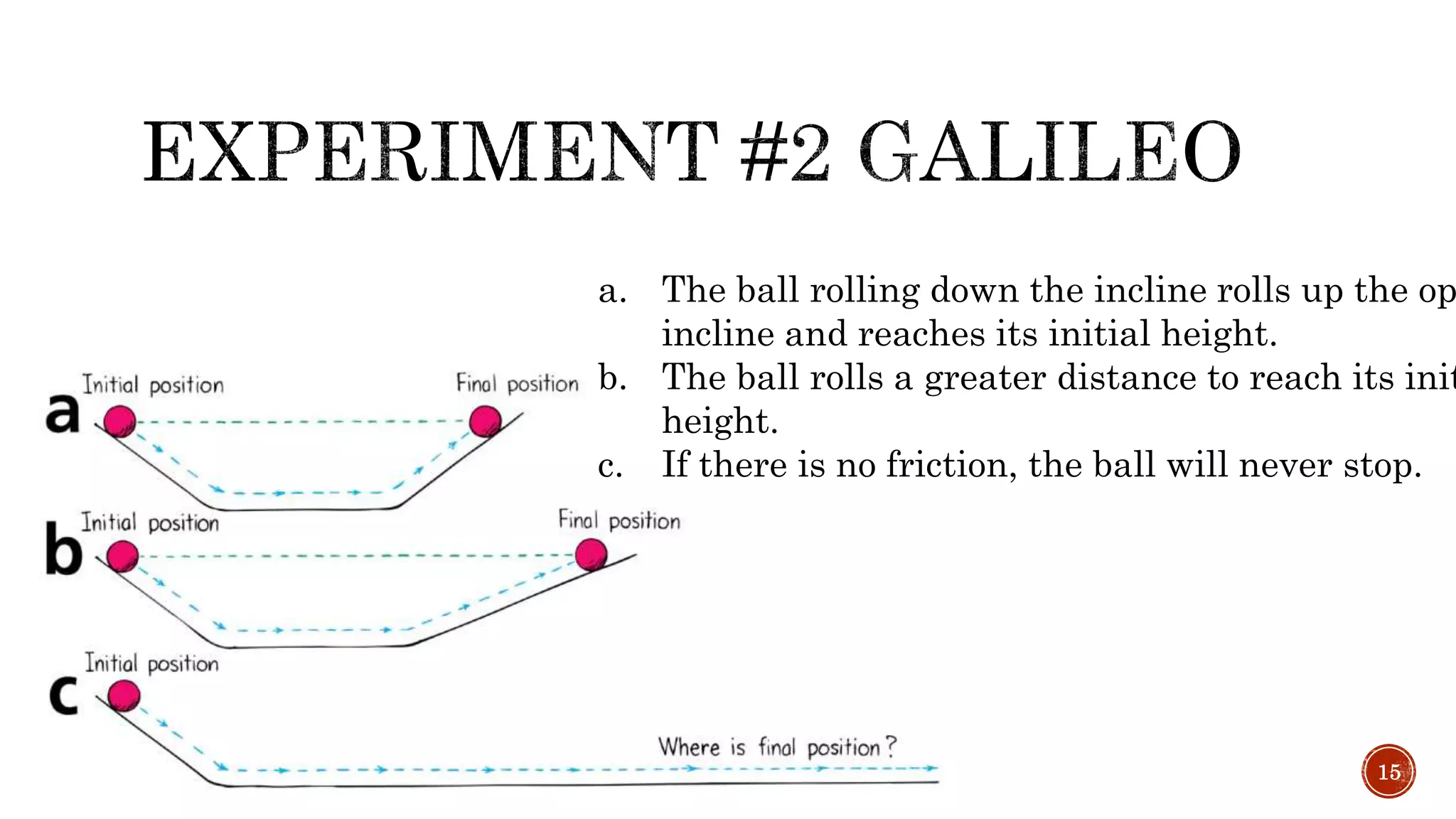
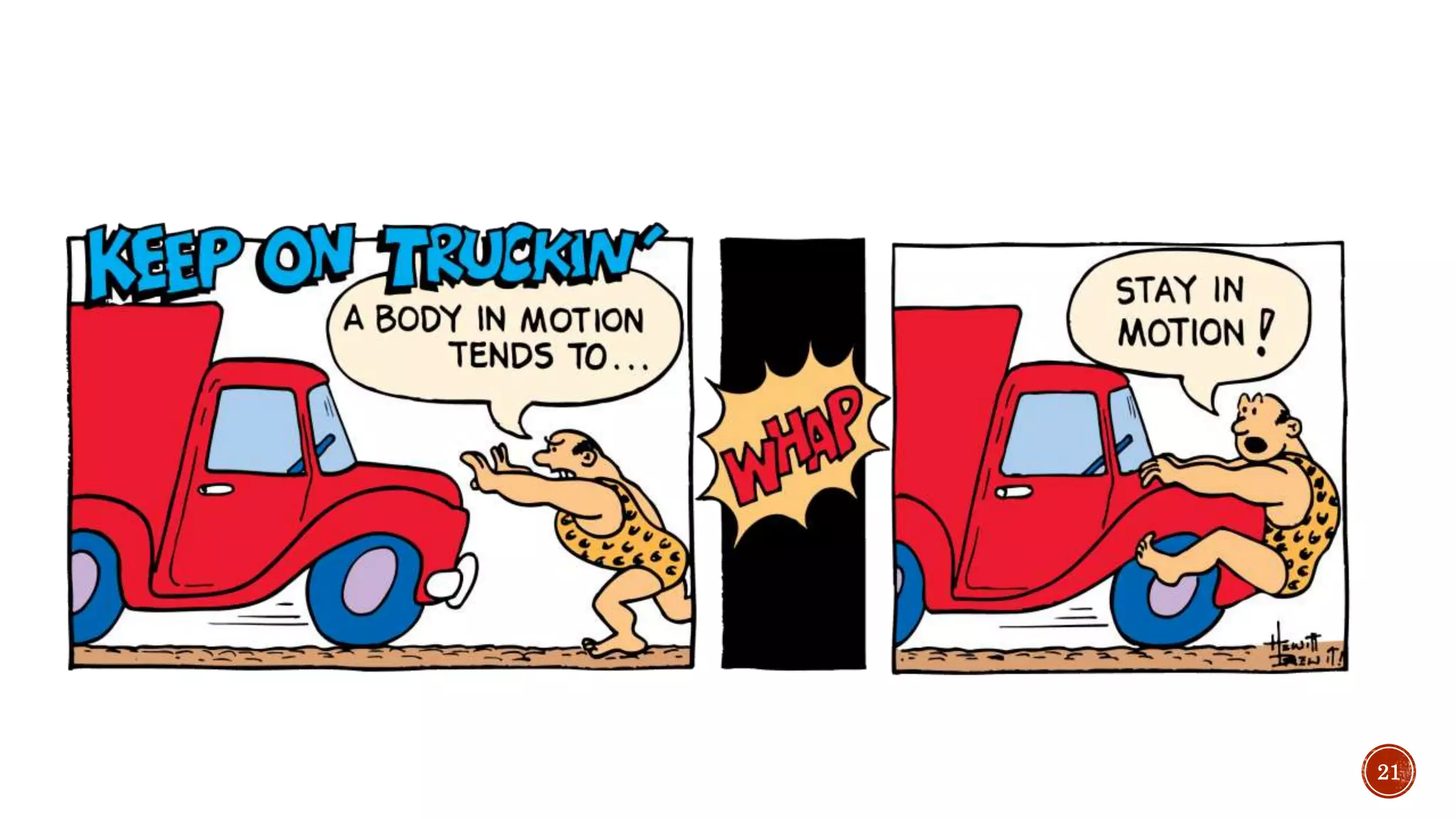
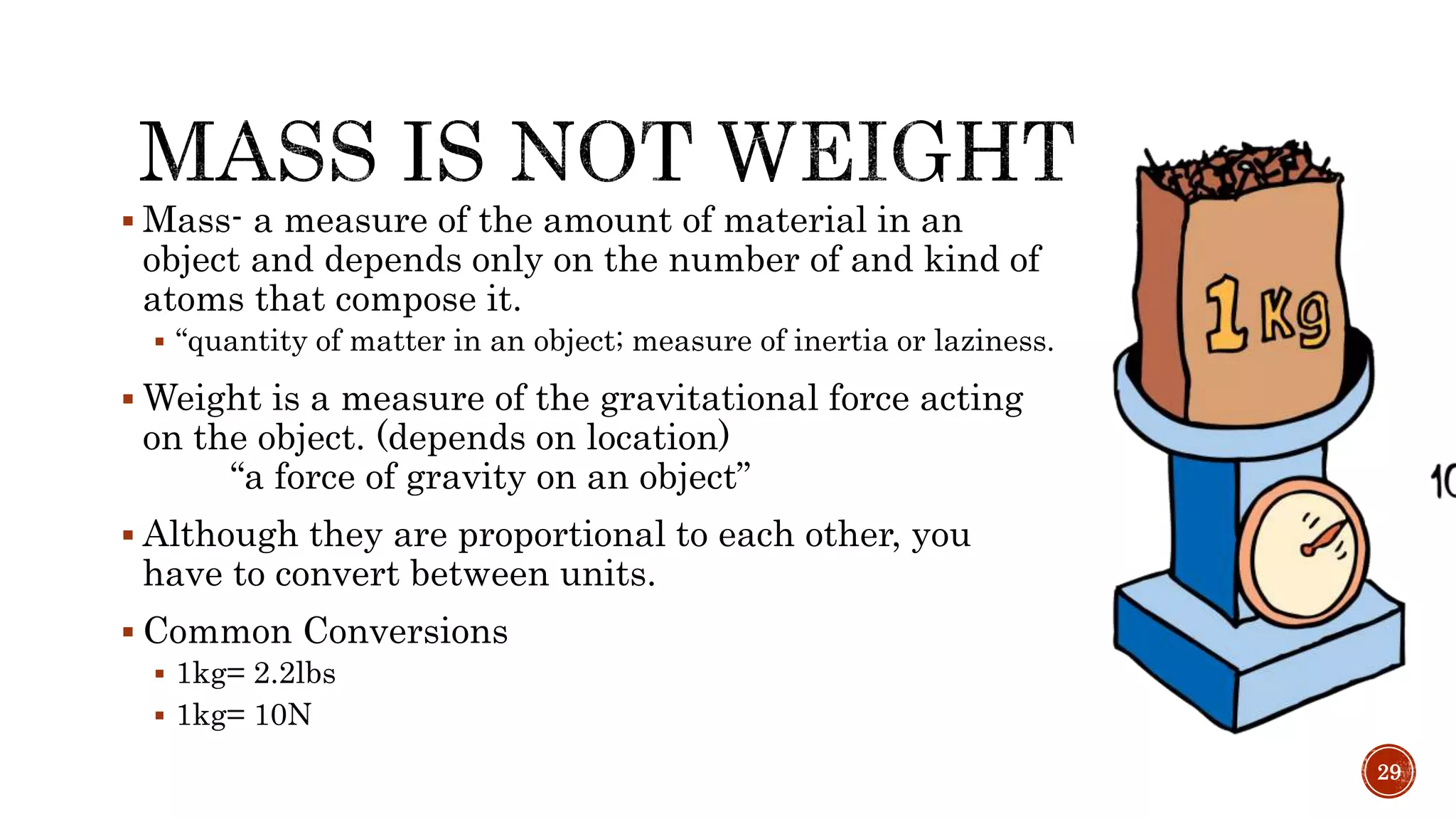
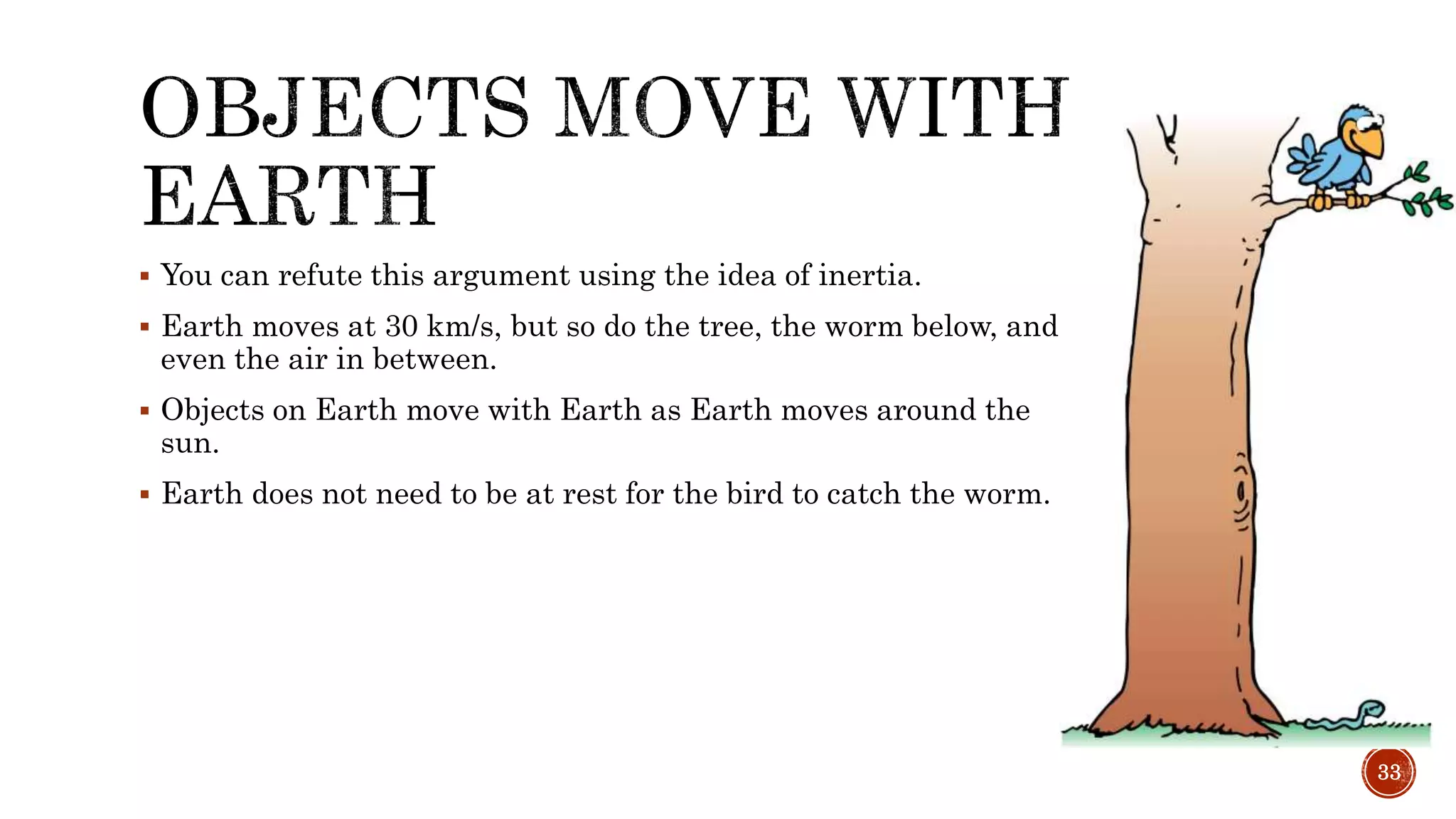
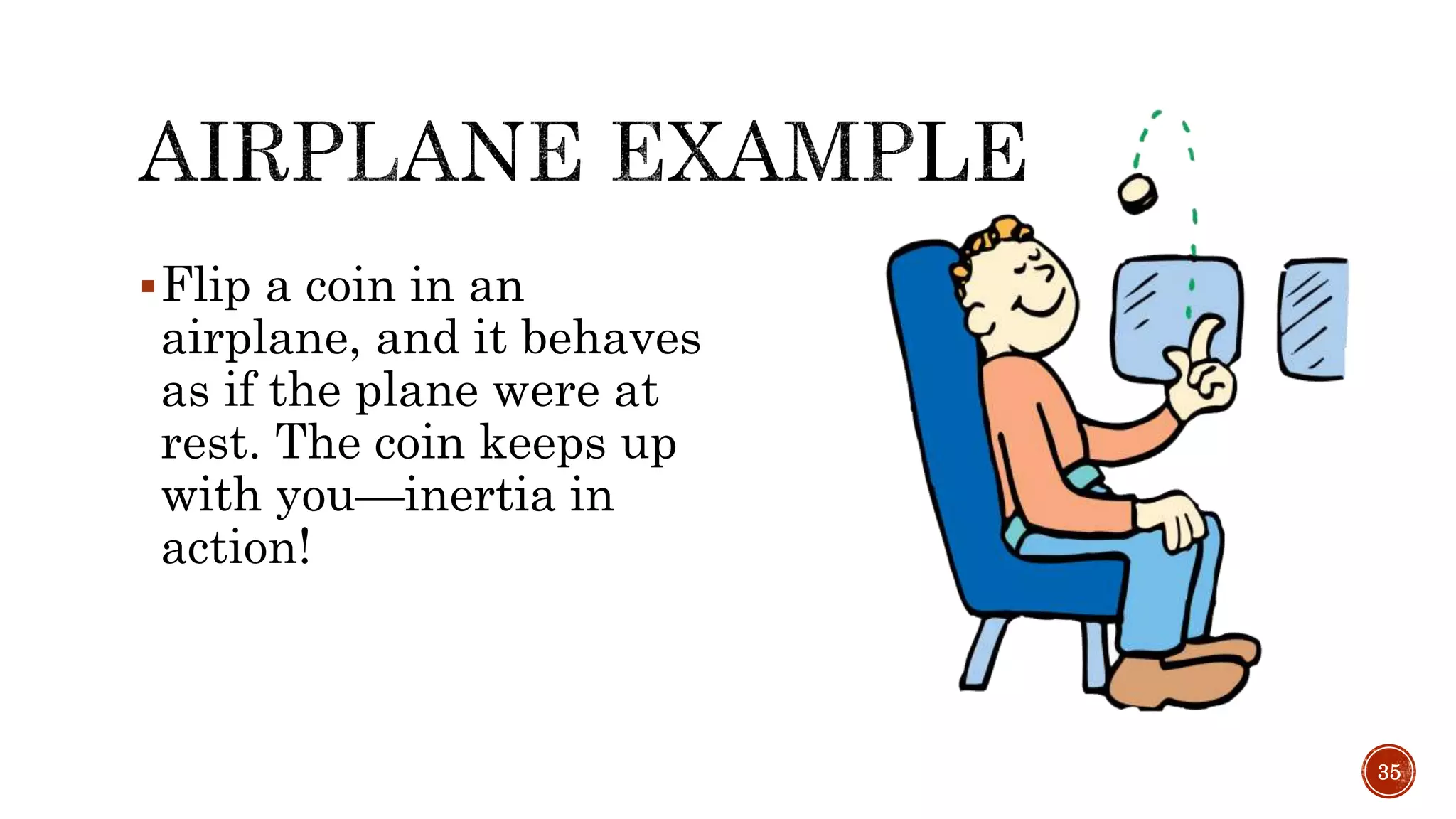
This document summarizes key concepts from a physics textbook chapter about motion and forces. It discusses Aristotle's early definitions of natural and violent motion. It then covers Galileo's ideas that challenged Aristotle, including that friction is needed to stop an object in motion, and that inertia causes objects to remain in motion without a force. Galileo provided evidence for these ideas through experiments with rolling balls on inclined planes. The document also discusses Newton's first law of motion formalizing the concept of inertia. It explains that mass is a measure of an object's inertia, and defines inertia and mass. Finally, it addresses how the idea of inertia refutes early arguments against Copernicus' theory of a moving Earth.