Basic Assessment
Principles
Chapter 2
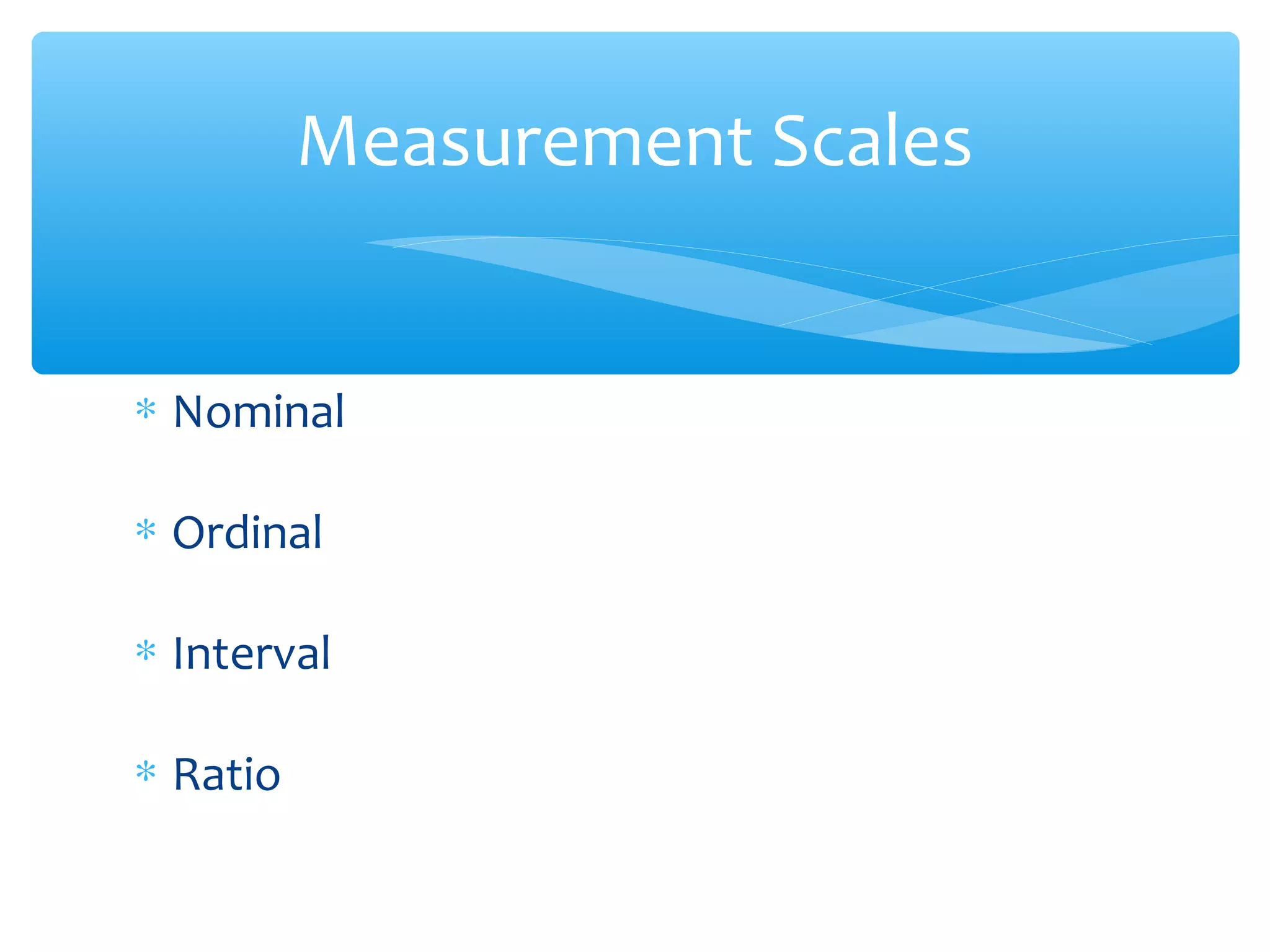
∗ Nominal
∗ Ordinal
∗ Interval
∗ Ratio
Measurement Scales
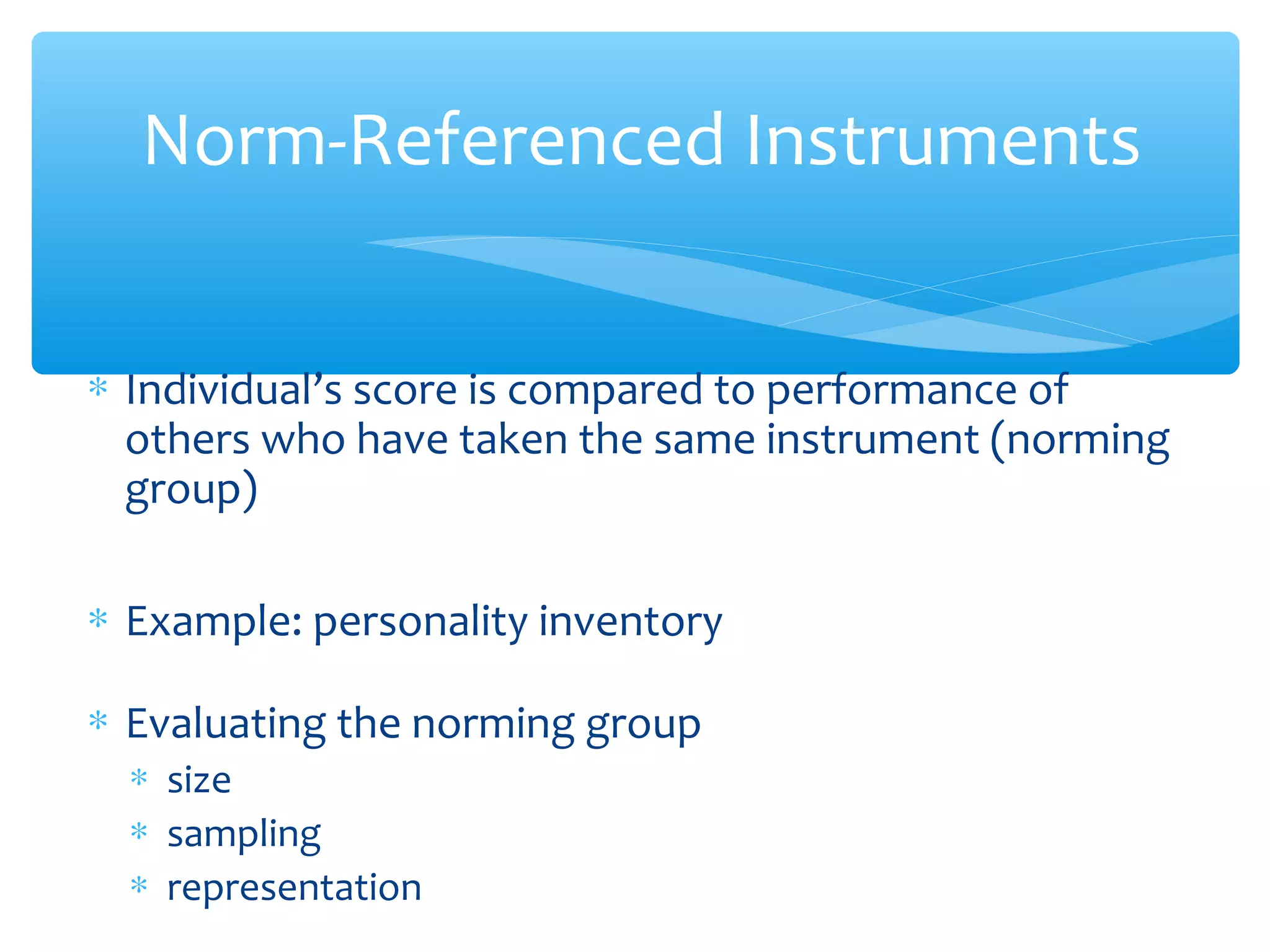
∗ Individual’s score is compared to performance of
others who have taken the same instrument (norming
group)
∗ Example: personality inventory
∗ Evaluating the norming group
∗ size
∗ sampling
∗ representation
Norm-Referenced Instruments
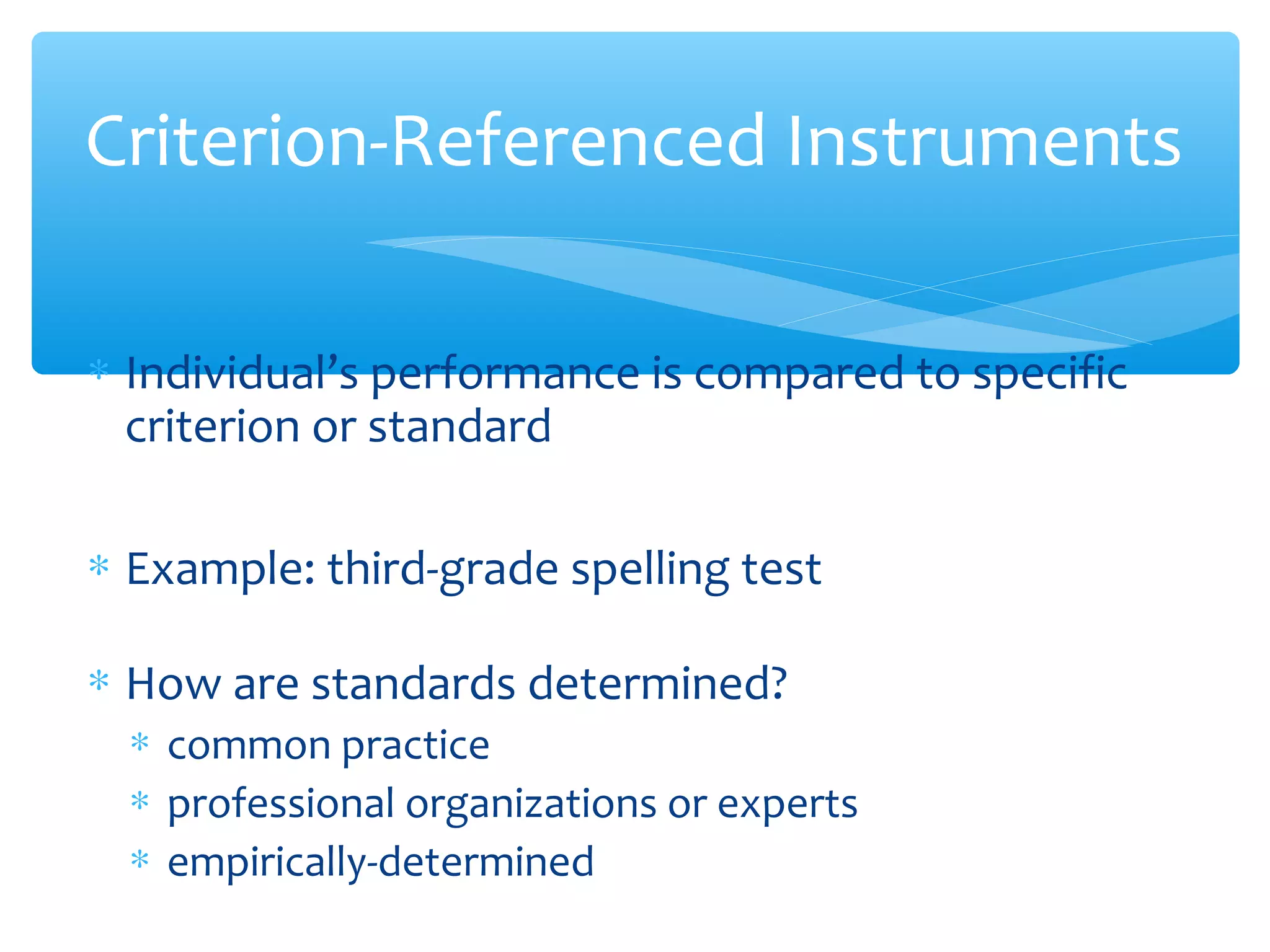
∗ Individual’s performance is compared to specific
criterion or standard
∗ Example: third-grade spelling test
∗ How are standards determined?
∗ common practice
∗ professional organizations or experts
∗ empirically-determined
Criterion-Referenced Instruments
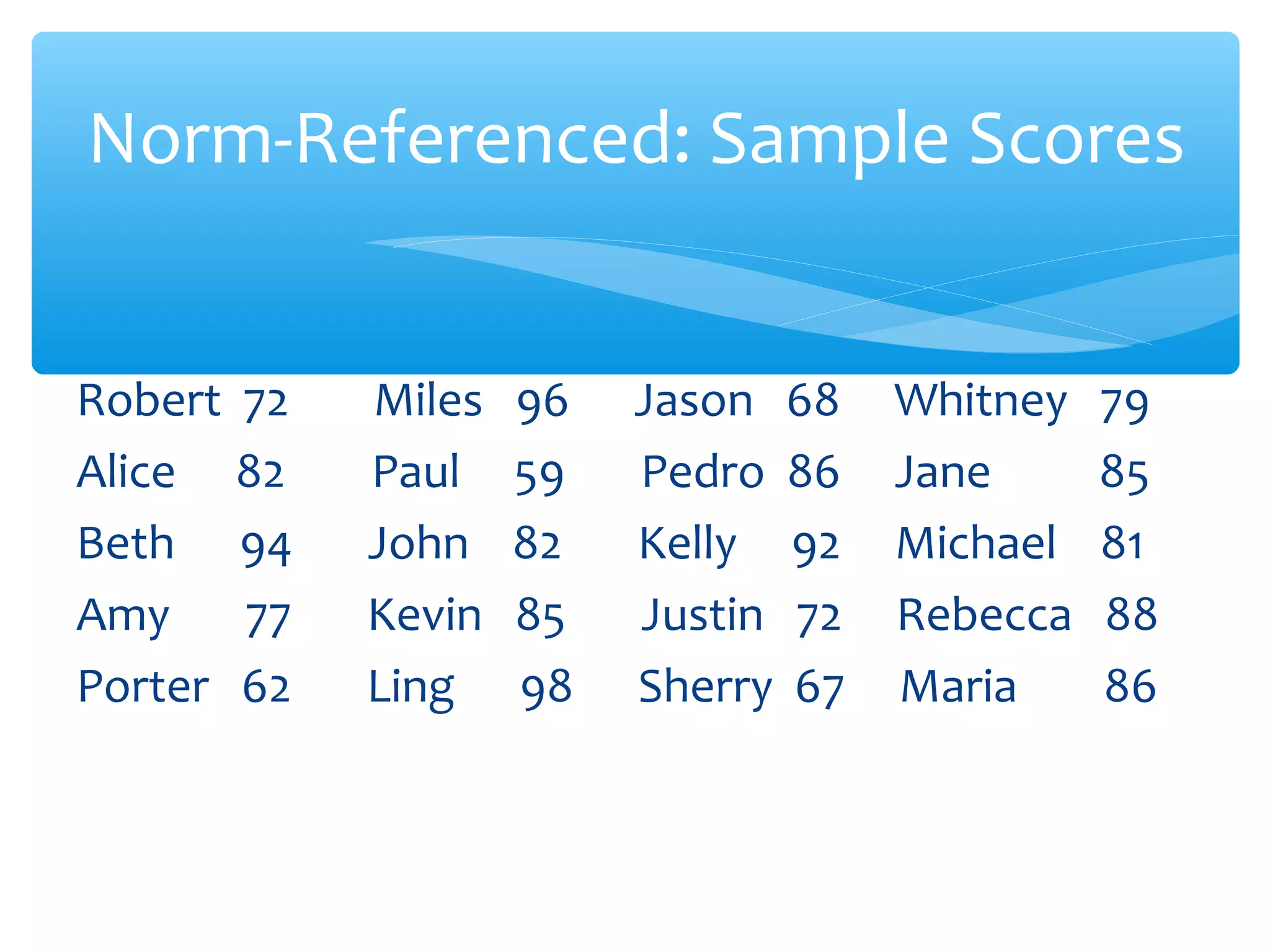
Robert 72 Miles 96 Jason 68 Whitney 79
Alice 82 Paul 59 Pedro 86 Jane 85
Beth 94 John 82 Kelly 92 Michael 81
Amy 77 Kevin 85 Justin 72 Rebecca 88
Porter 62 Ling 98 Sherry 67 Maria 86
Norm-Referenced: Sample Scores
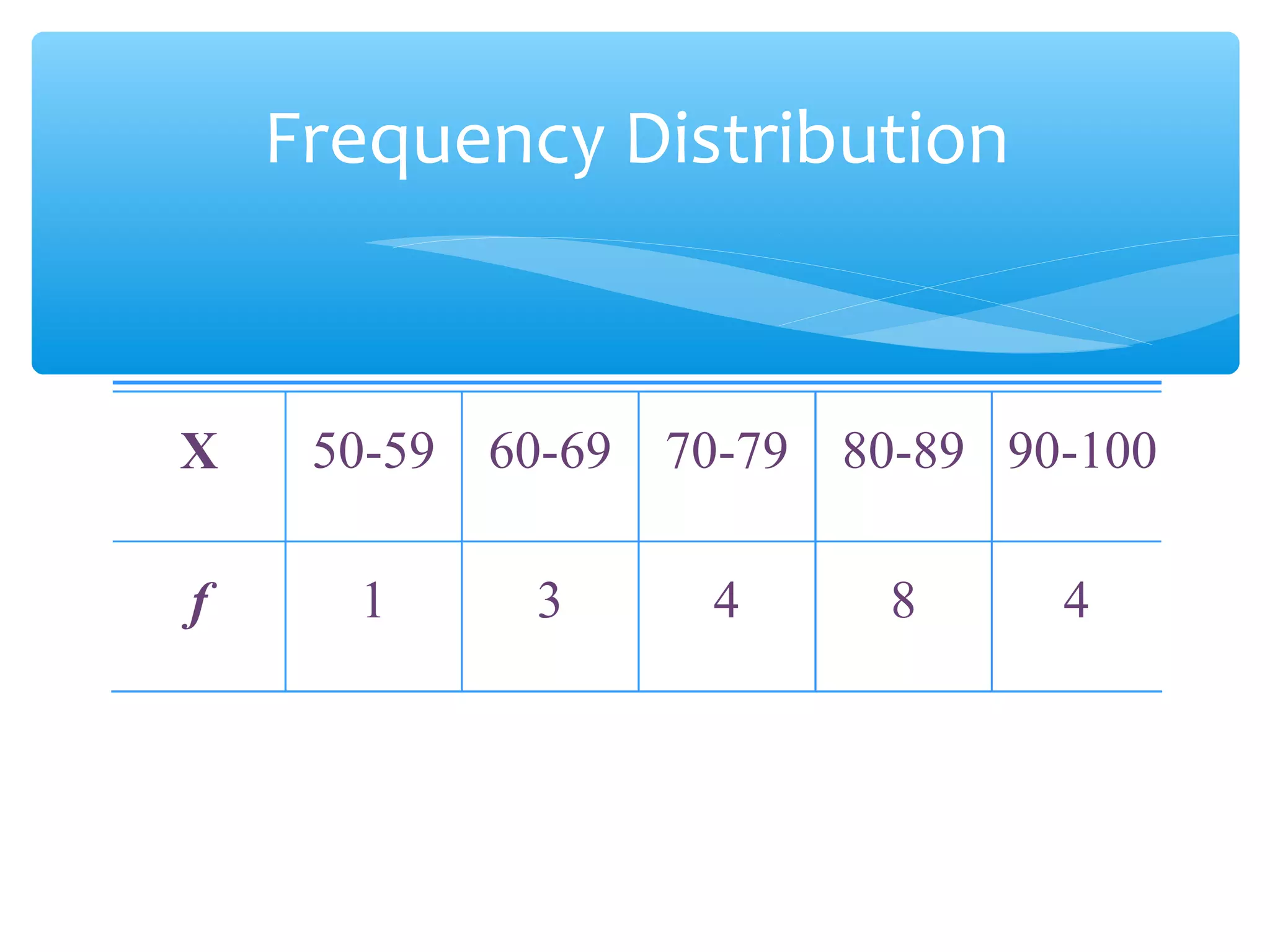
X 50-59 60-69 70-79 80-89 90-100
f 1 3 4 8 4
Frequency Distribution
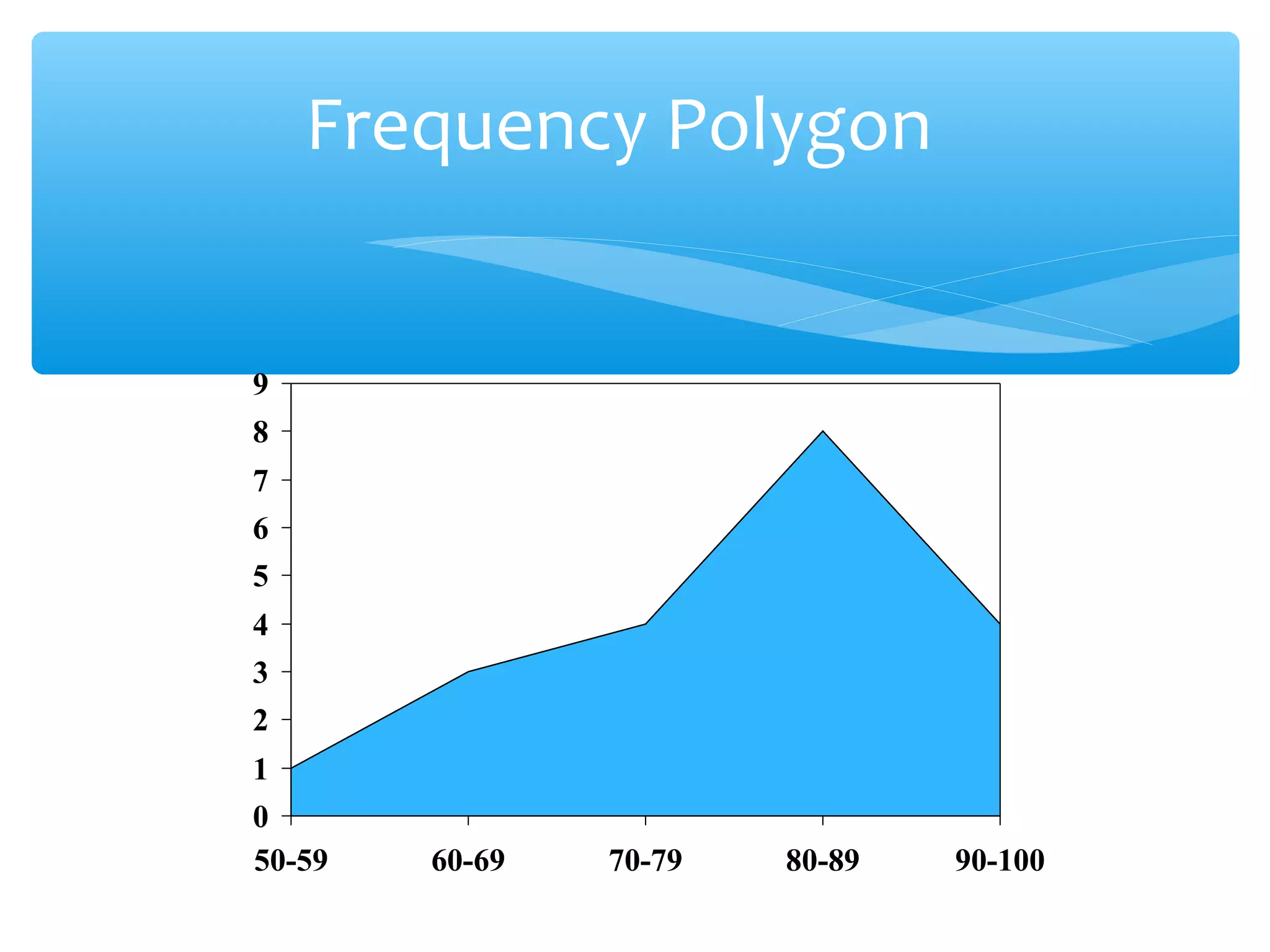
Frequency Polygon
0
1
2
3
4
5
6
7
8
9
50-59 60-69 70-79 80-89 90-100
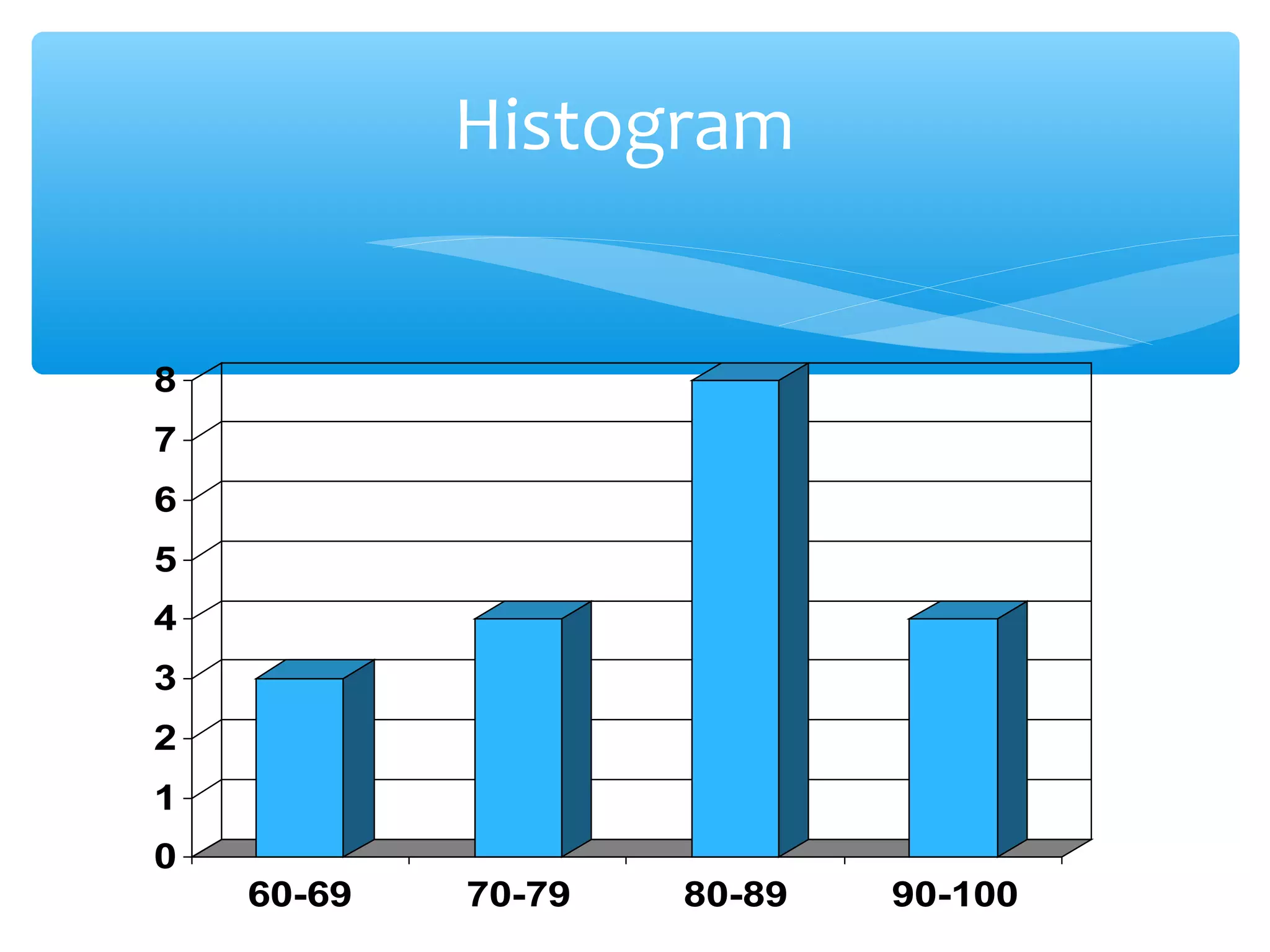
Histogram
0
1
2
3
4
5
6
7
8
60-69 70-79 80-89 90-100
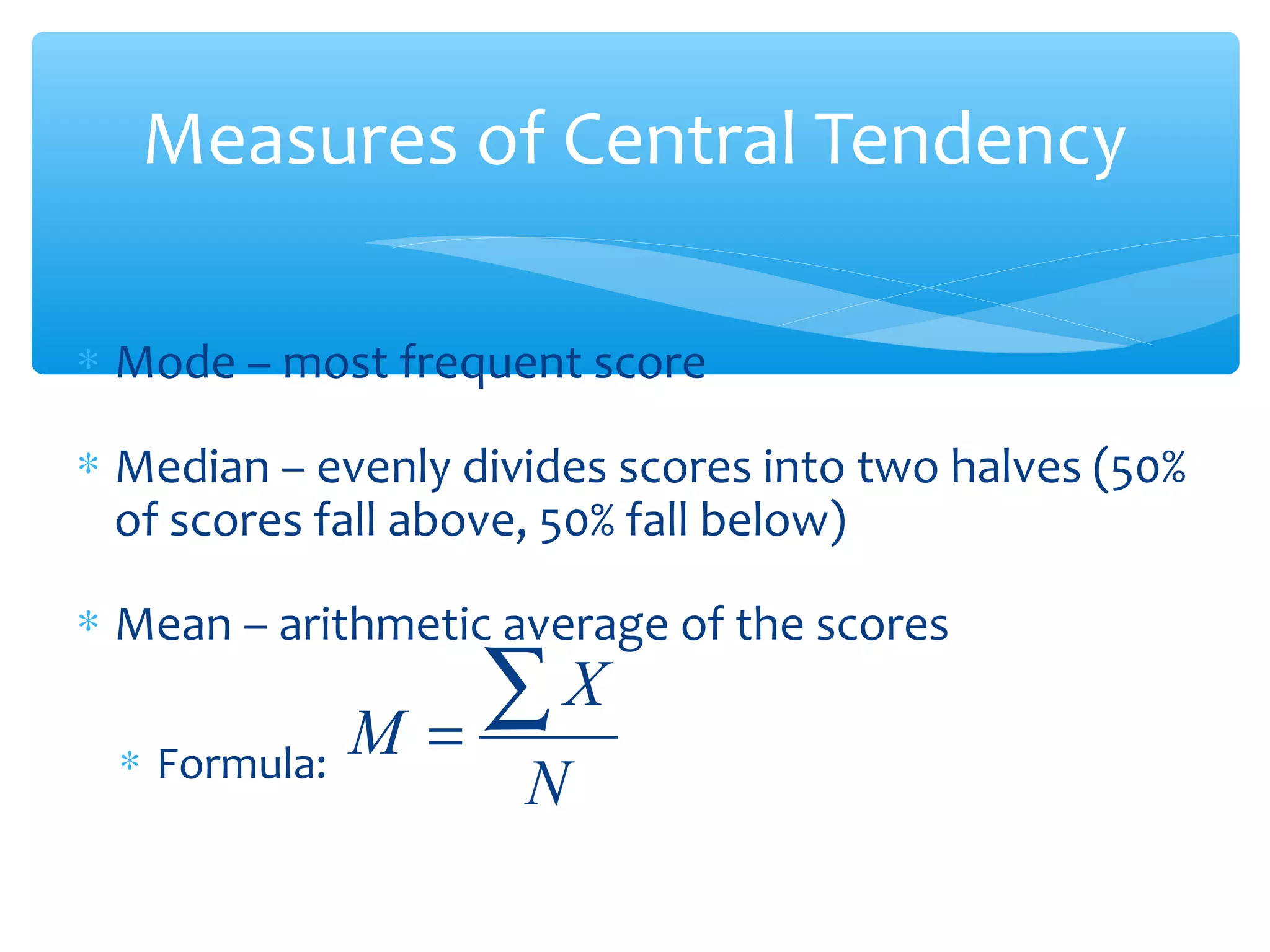
Measures of Central Tendency
∗ Mode – most frequent score
∗ Median – evenly divides scores into two halves (50%
of scores fall above, 50% fall below)
∗ Mean – arithmetic average of the scores
∗ Formula:
N
X
M
∑=
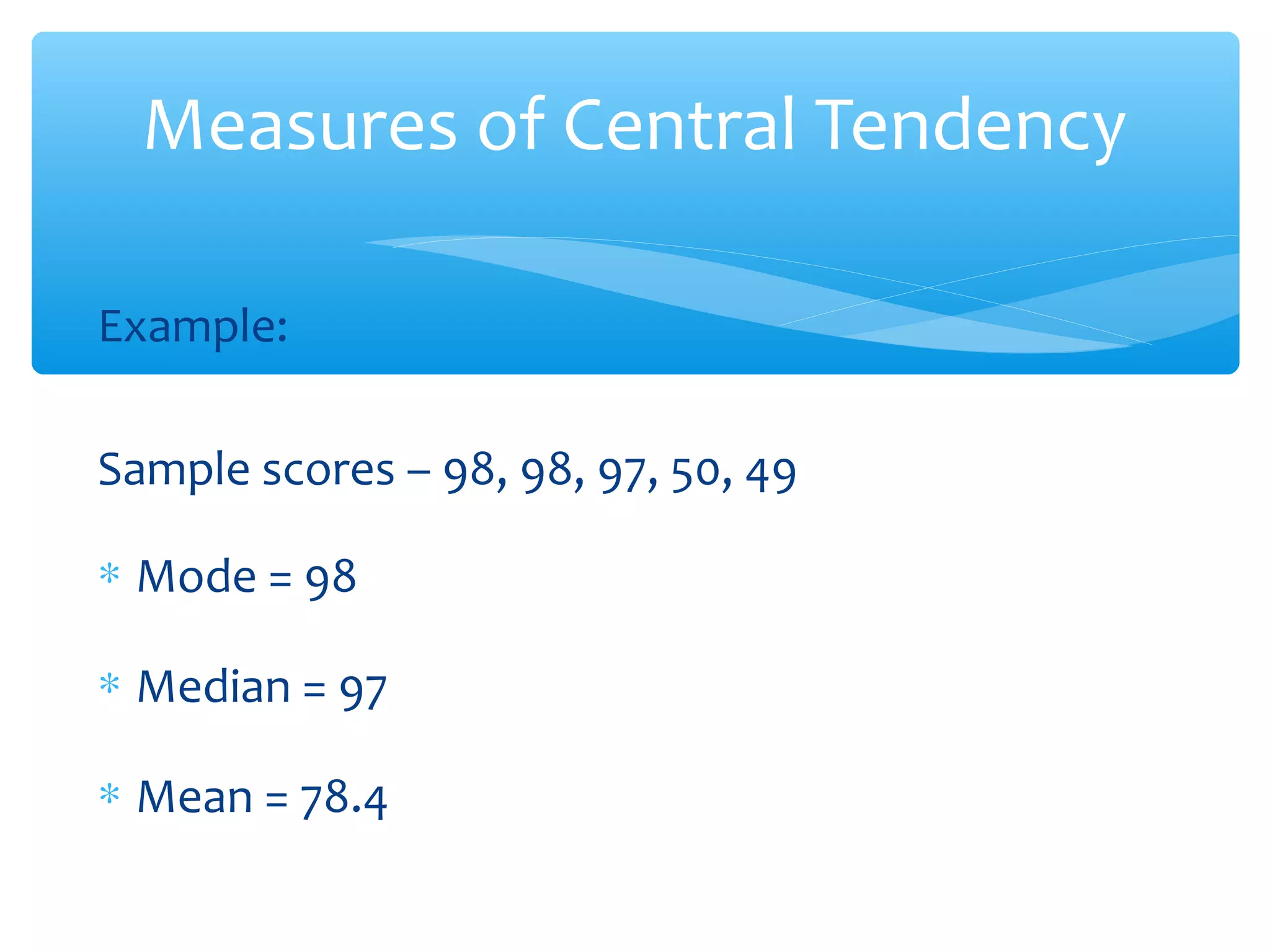
Measures of Central Tendency
Example:
Sample scores – 98, 98, 97, 50, 49
∗ Mode = 98
∗ Median = 97
∗ Mean = 78.4
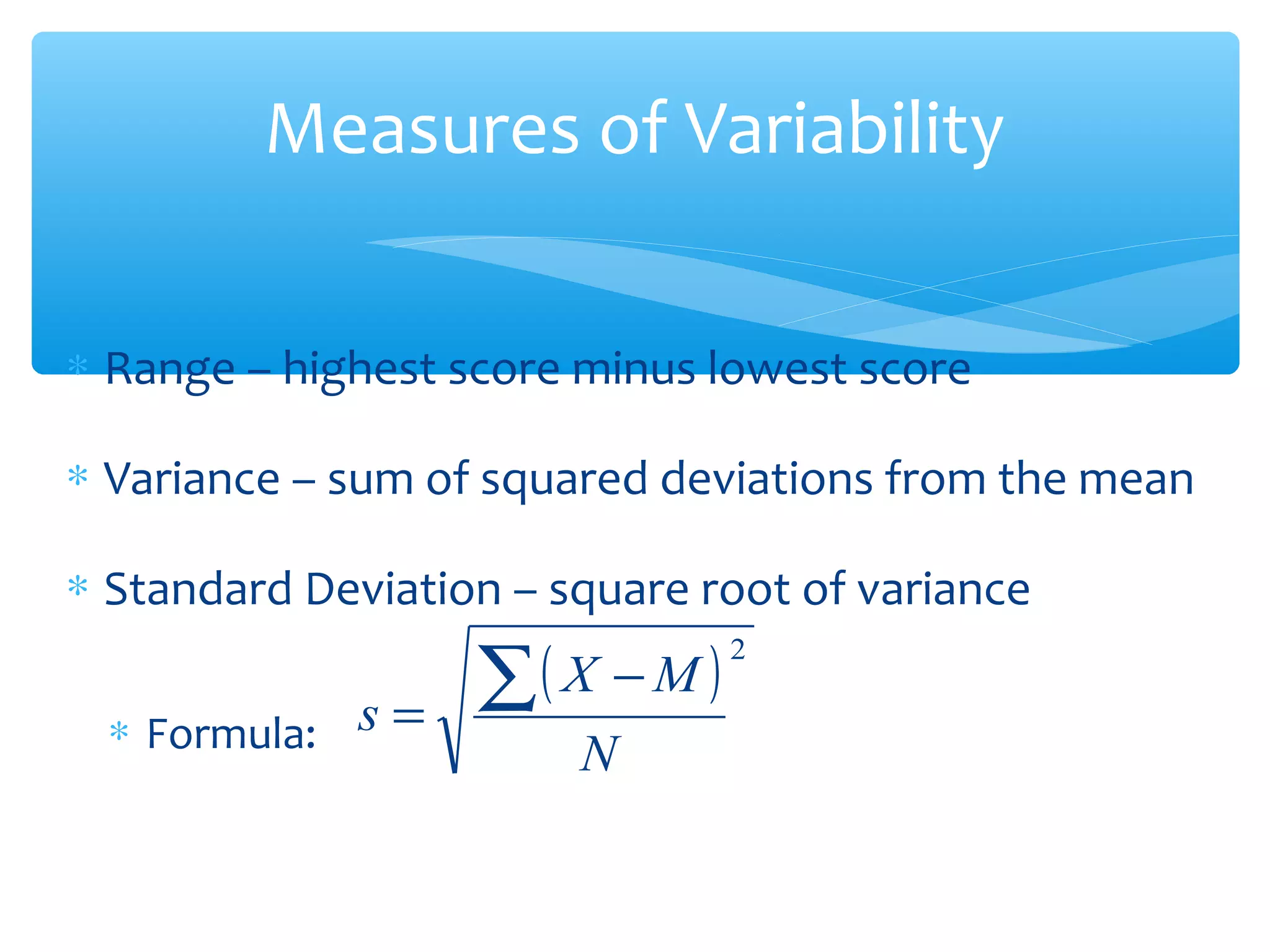
Measures of Variability
∗ Range – highest score minus lowest score
∗ Variance – sum of squared deviations from the mean
∗ Standard Deviation – square root of variance
∗ Formula:
( )2
N
MX
s
∑ −
=
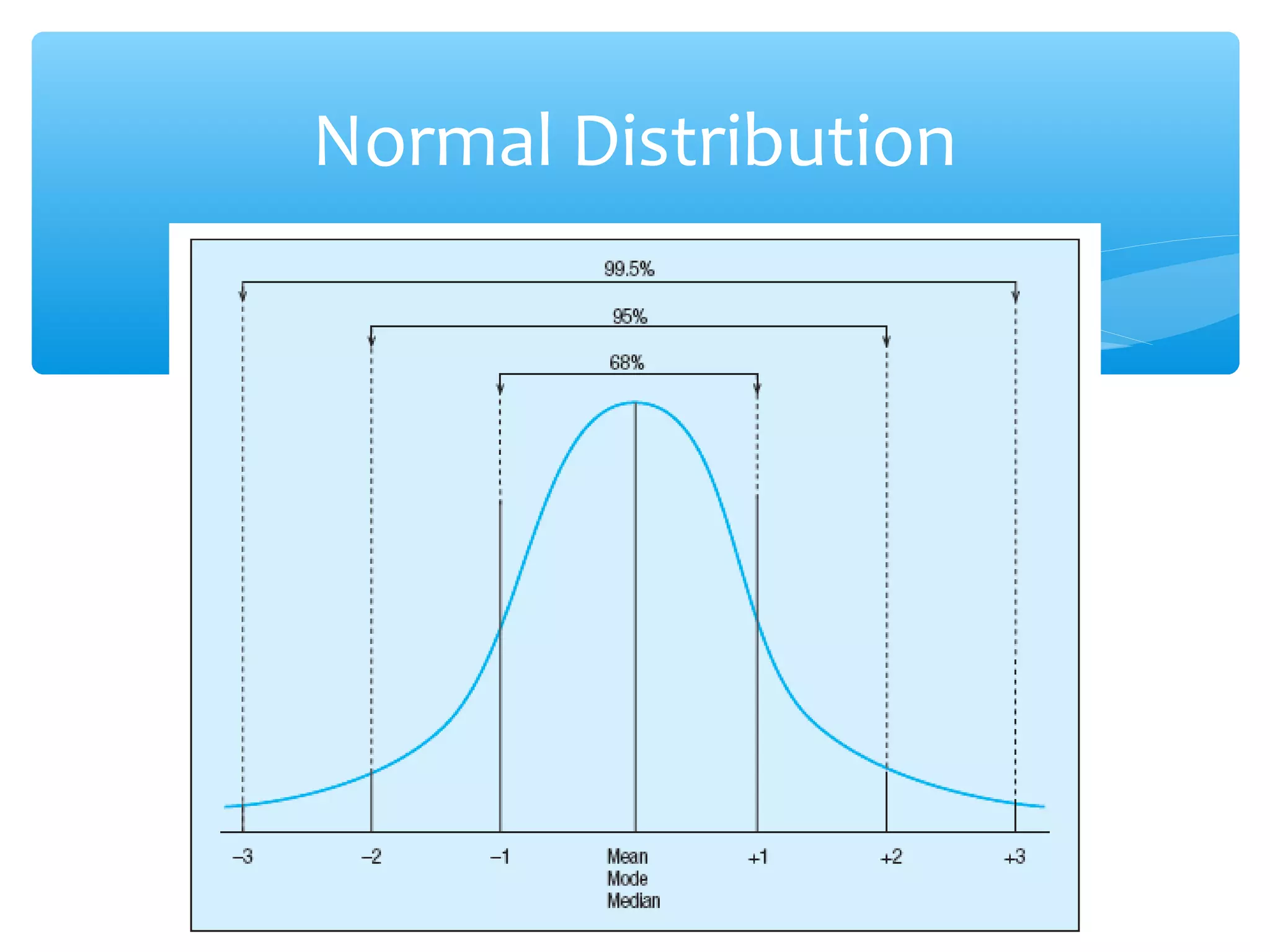
Normal Distribution
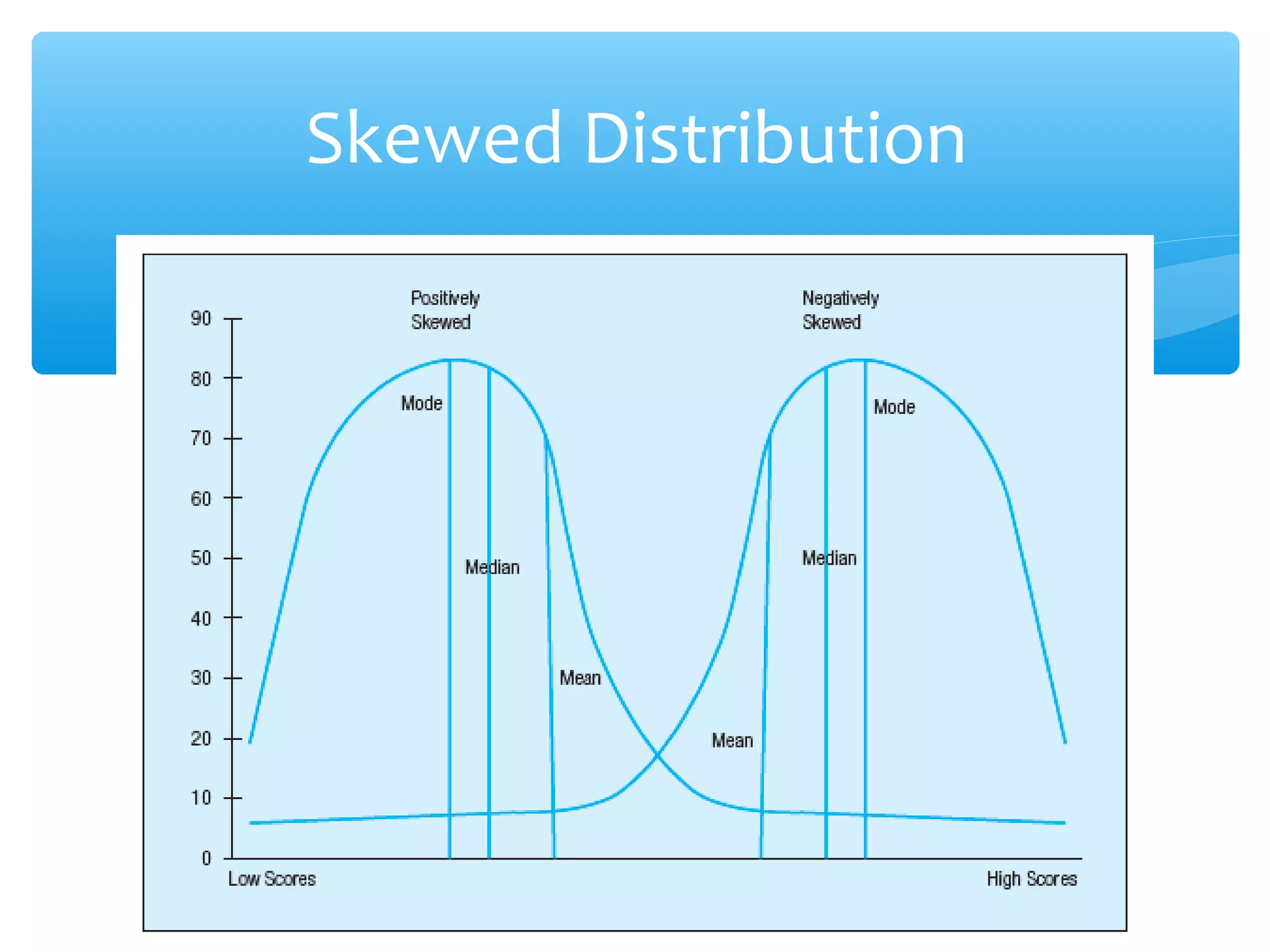
Skewed Distribution
∗ Raw scores
∗ Percentile scores/Percentile ranks
∗ Standard scores
∗ z scores
∗ T scores
∗ Stanines
∗ Age/grade-equivalent scores
Types of Scores
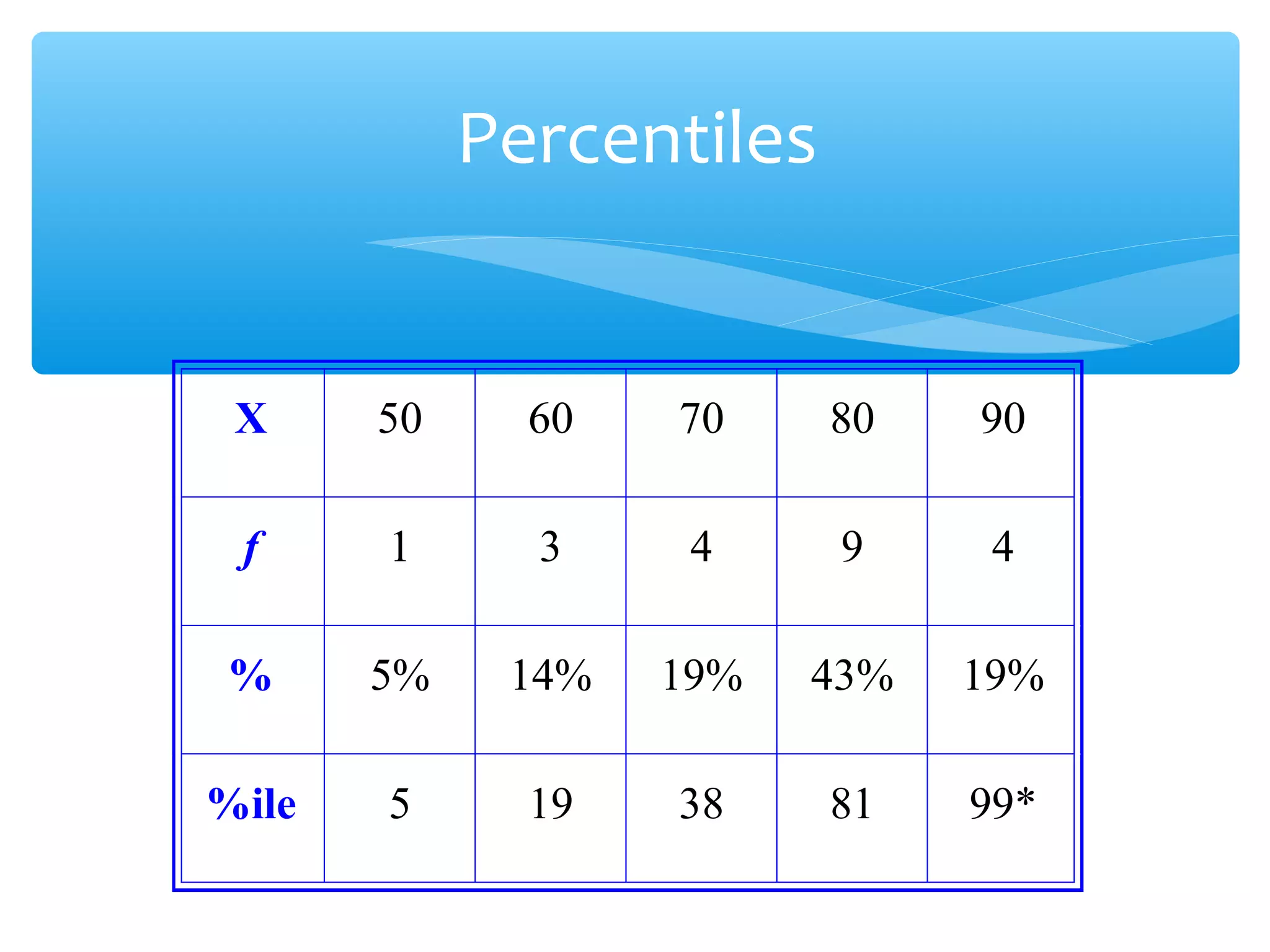
X 50 60 70 80 90
f 1 3 4 9 4
% 5% 14% 19% 43% 19%
%ile 5 19 38 81 99*
Percentiles
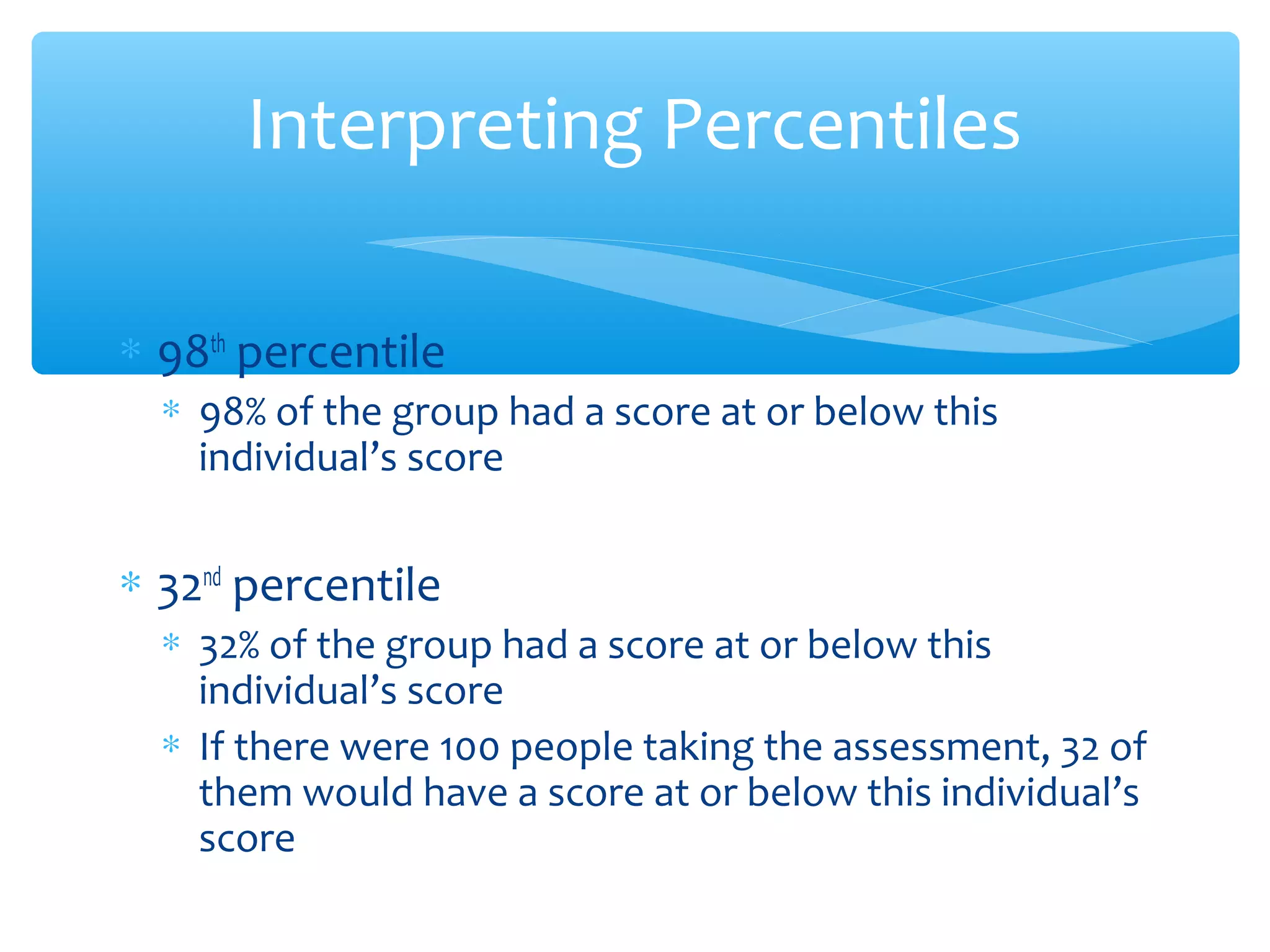
∗ 98th
percentile
∗ 98% of the group had a score at or below this
individual’s score
∗ 32nd
percentile
∗ 32% of the group had a score at or below this
individual’s score
∗ If there were 100 people taking the assessment, 32 of
them would have a score at or below this individual’s
score
Interpreting Percentiles
∗ Units are not equal
∗ Useful for providing information about relative
position in normative sample
∗ Not useful for indicating amount of difference
between scores
Interpreting Percentiles
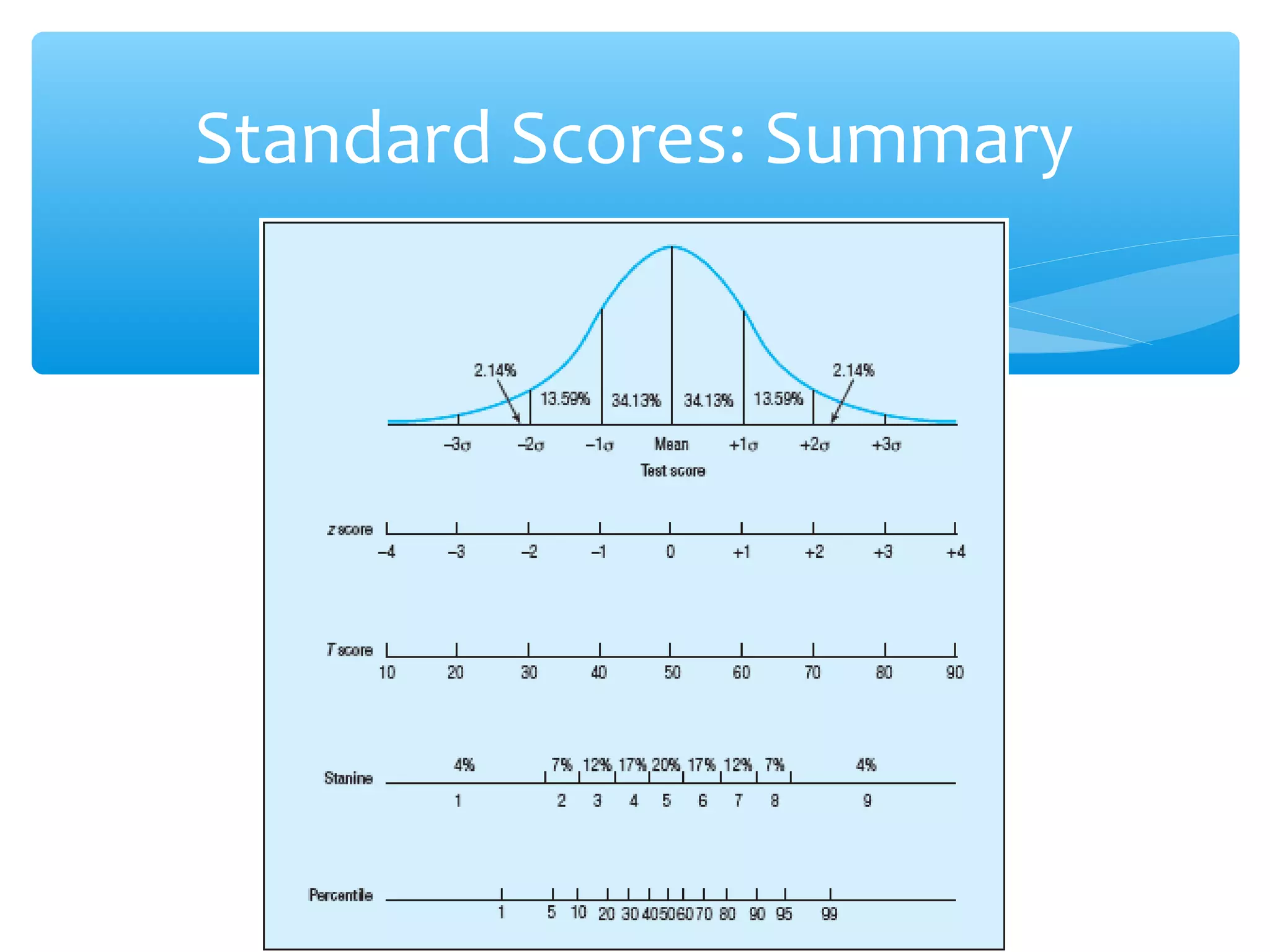
Types of Standard Scores
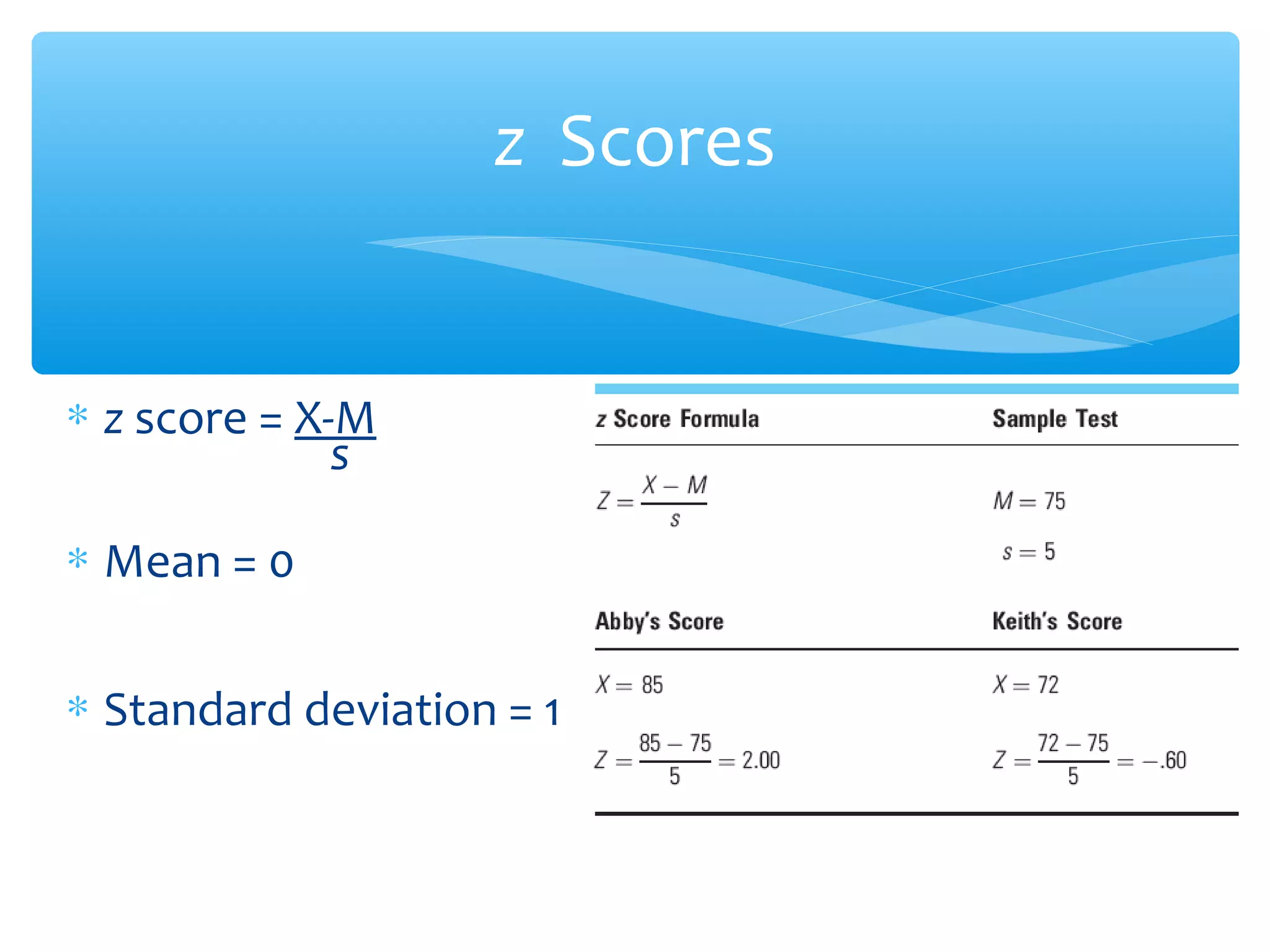
z Scores
∗ z score = X-M
s
∗ Mean = 0
∗ Standard deviation = 1
∗ Mean = 50
∗ Standard deviation = 10
T Scores
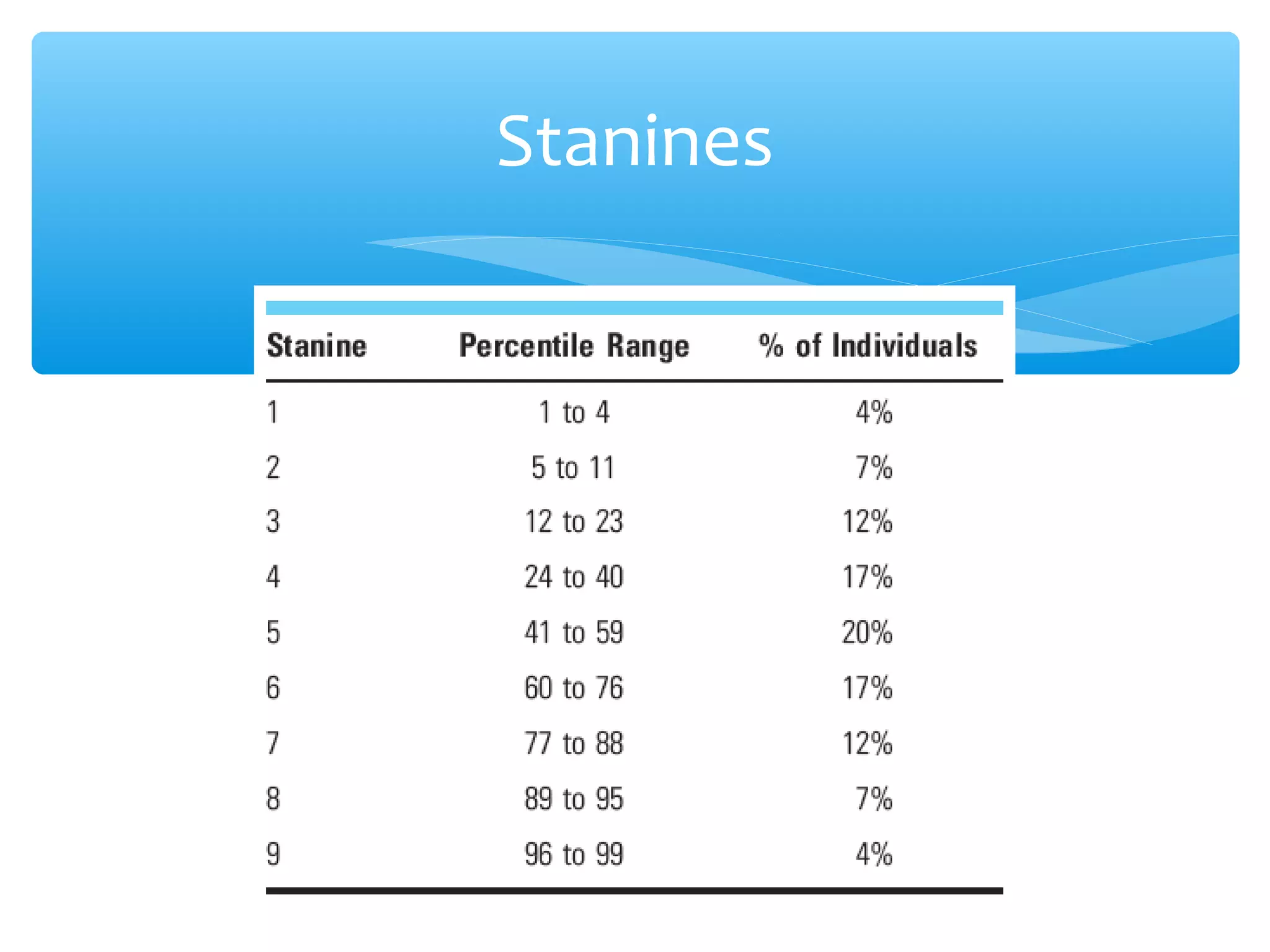
Stanines
Standard Scores: Summary
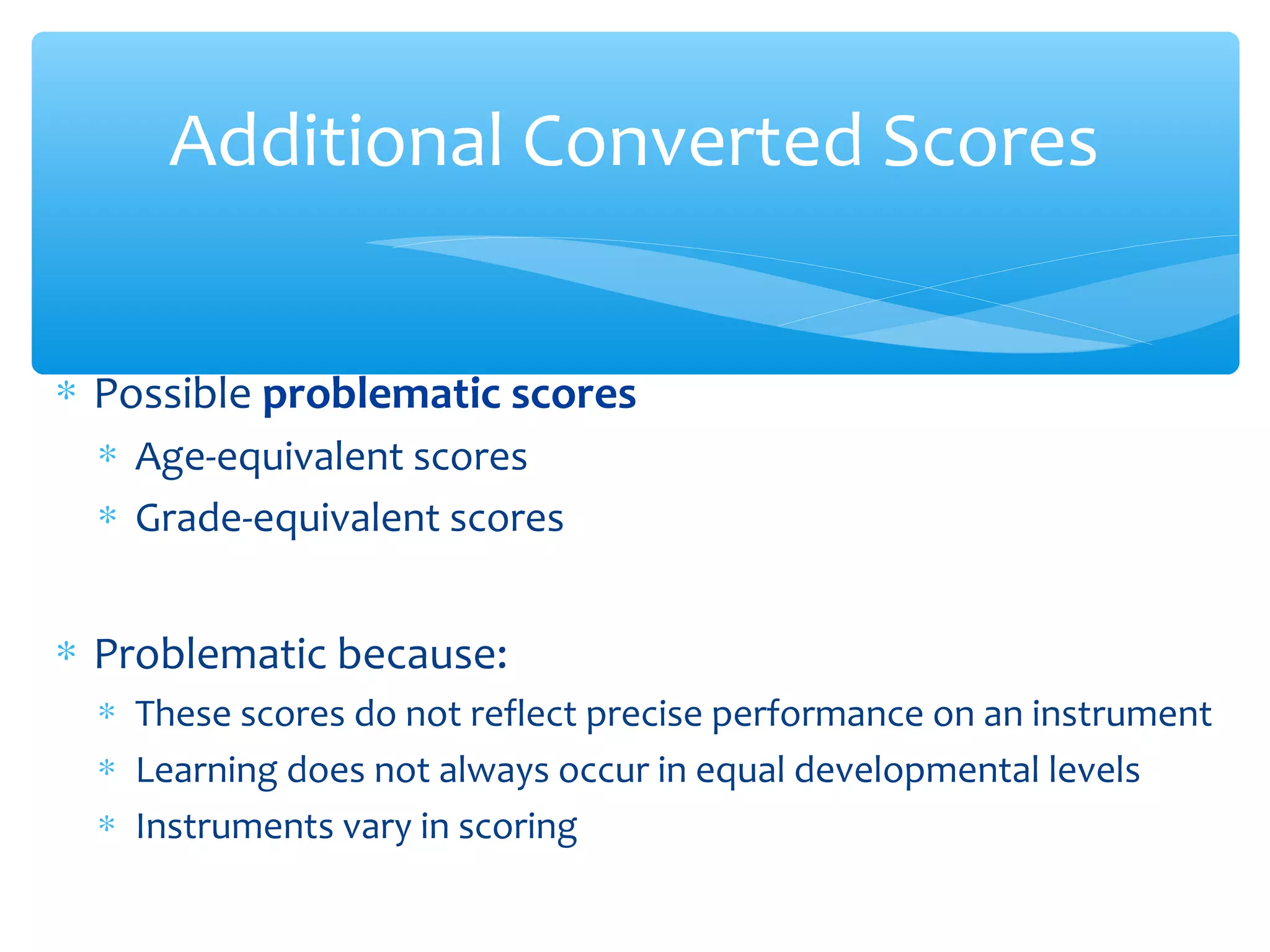
∗ Possible problematic scores
∗ Age-equivalent scores
∗ Grade-equivalent scores
∗ Problematic because:
∗ These scores do not reflect precise performance on an instrument
∗ Learning does not always occur in equal developmental levels
∗ Instruments vary in scoring
Additional Converted Scores
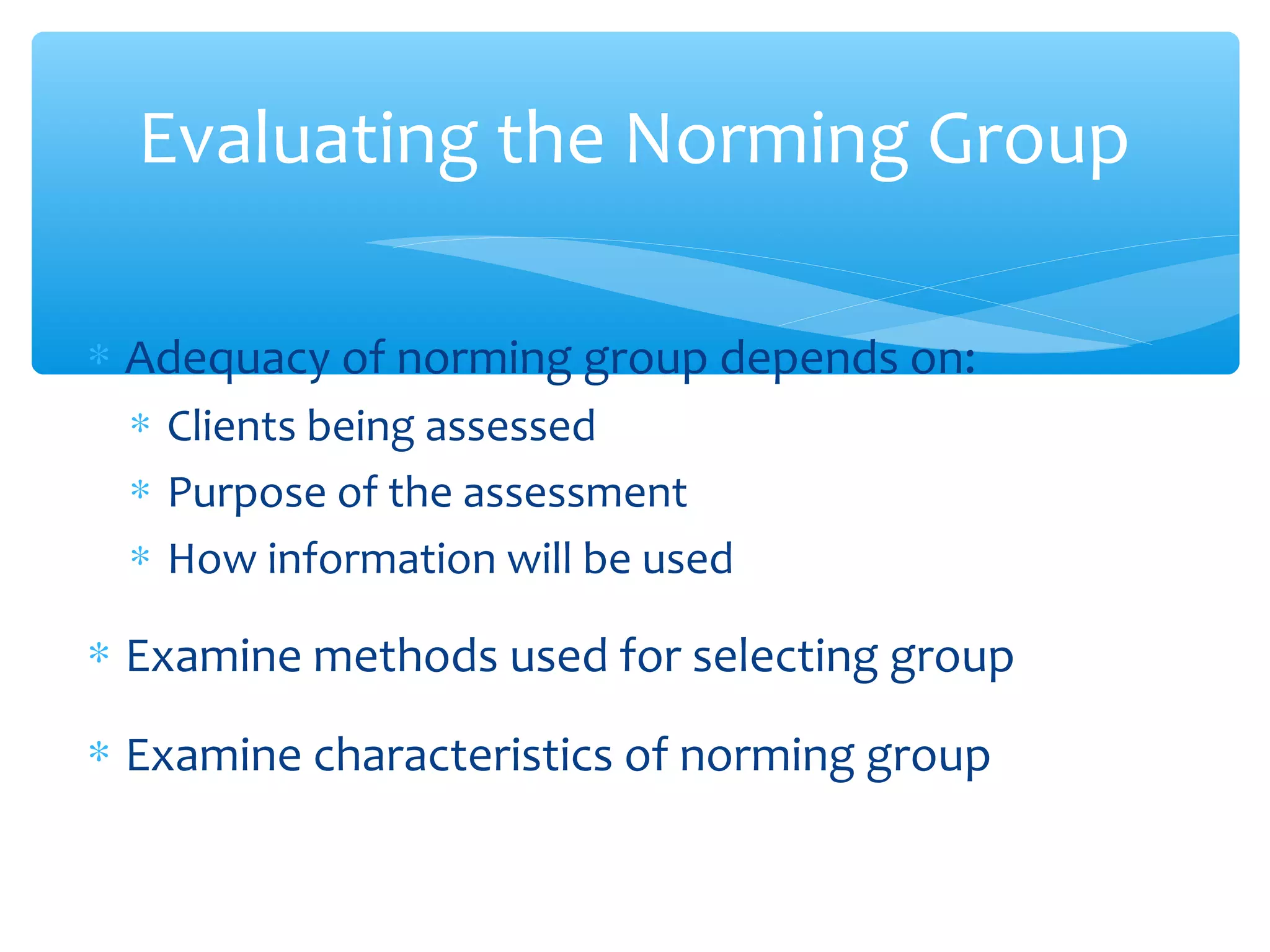
∗ Adequacy of norming group depends on:
∗ Clients being assessed
∗ Purpose of the assessment
∗ How information will be used
∗ Examine methods used for selecting group
∗ Examine characteristics of norming group
Evaluating the Norming Group
∗ Methods for selecting norming group:
∗ Simple random sample
∗ Stratified sample
∗ Cluster sample
Sampling Methods
∗ Size
∗ Gender
∗ Race/ethnicity
∗ Educational background
∗ Socioeconomic status
∗ Is the norming group appropriate for use with this
client?
Norming Group Characteristics

Chapter 2 revised

  • 1.
  • 2.
    ∗ Nominal ∗ Ordinal ∗Interval ∗ Ratio Measurement Scales
  • 3.
    ∗ Individual’s scoreis compared to performance of others who have taken the same instrument (norming group) ∗ Example: personality inventory ∗ Evaluating the norming group ∗ size ∗ sampling ∗ representation Norm-Referenced Instruments
  • 4.
    ∗ Individual’s performanceis compared to specific criterion or standard ∗ Example: third-grade spelling test ∗ How are standards determined? ∗ common practice ∗ professional organizations or experts ∗ empirically-determined Criterion-Referenced Instruments
  • 5.
    Robert 72 Miles96 Jason 68 Whitney 79 Alice 82 Paul 59 Pedro 86 Jane 85 Beth 94 John 82 Kelly 92 Michael 81 Amy 77 Kevin 85 Justin 72 Rebecca 88 Porter 62 Ling 98 Sherry 67 Maria 86 Norm-Referenced: Sample Scores
  • 6.
    X 50-59 60-6970-79 80-89 90-100 f 1 3 4 8 4 Frequency Distribution
  • 7.
  • 8.
  • 9.
    Measures of CentralTendency ∗ Mode – most frequent score ∗ Median – evenly divides scores into two halves (50% of scores fall above, 50% fall below) ∗ Mean – arithmetic average of the scores ∗ Formula: N X M ∑=
  • 10.
    Measures of CentralTendency Example: Sample scores – 98, 98, 97, 50, 49 ∗ Mode = 98 ∗ Median = 97 ∗ Mean = 78.4
  • 11.
    Measures of Variability ∗Range – highest score minus lowest score ∗ Variance – sum of squared deviations from the mean ∗ Standard Deviation – square root of variance ∗ Formula: ( )2 N MX s ∑ − =
  • 12.
  • 13.
  • 14.
    ∗ Raw scores ∗Percentile scores/Percentile ranks ∗ Standard scores ∗ z scores ∗ T scores ∗ Stanines ∗ Age/grade-equivalent scores Types of Scores
  • 15.
    X 50 6070 80 90 f 1 3 4 9 4 % 5% 14% 19% 43% 19% %ile 5 19 38 81 99* Percentiles
  • 16.
    ∗ 98th percentile ∗ 98%of the group had a score at or below this individual’s score ∗ 32nd percentile ∗ 32% of the group had a score at or below this individual’s score ∗ If there were 100 people taking the assessment, 32 of them would have a score at or below this individual’s score Interpreting Percentiles
  • 17.
    ∗ Units arenot equal ∗ Useful for providing information about relative position in normative sample ∗ Not useful for indicating amount of difference between scores Interpreting Percentiles
  • 18.
  • 19.
    z Scores ∗ zscore = X-M s ∗ Mean = 0 ∗ Standard deviation = 1
  • 20.
    ∗ Mean =50 ∗ Standard deviation = 10 T Scores
  • 21.
  • 22.
  • 23.
    ∗ Possible problematicscores ∗ Age-equivalent scores ∗ Grade-equivalent scores ∗ Problematic because: ∗ These scores do not reflect precise performance on an instrument ∗ Learning does not always occur in equal developmental levels ∗ Instruments vary in scoring Additional Converted Scores
  • 24.
    ∗ Adequacy ofnorming group depends on: ∗ Clients being assessed ∗ Purpose of the assessment ∗ How information will be used ∗ Examine methods used for selecting group ∗ Examine characteristics of norming group Evaluating the Norming Group
  • 25.
    ∗ Methods forselecting norming group: ∗ Simple random sample ∗ Stratified sample ∗ Cluster sample Sampling Methods
  • 26.
    ∗ Size ∗ Gender ∗Race/ethnicity ∗ Educational background ∗ Socioeconomic status ∗ Is the norming group appropriate for use with this client? Norming Group Characteristics