Chapter    2
          Business Ethics and
          Social Responsibility
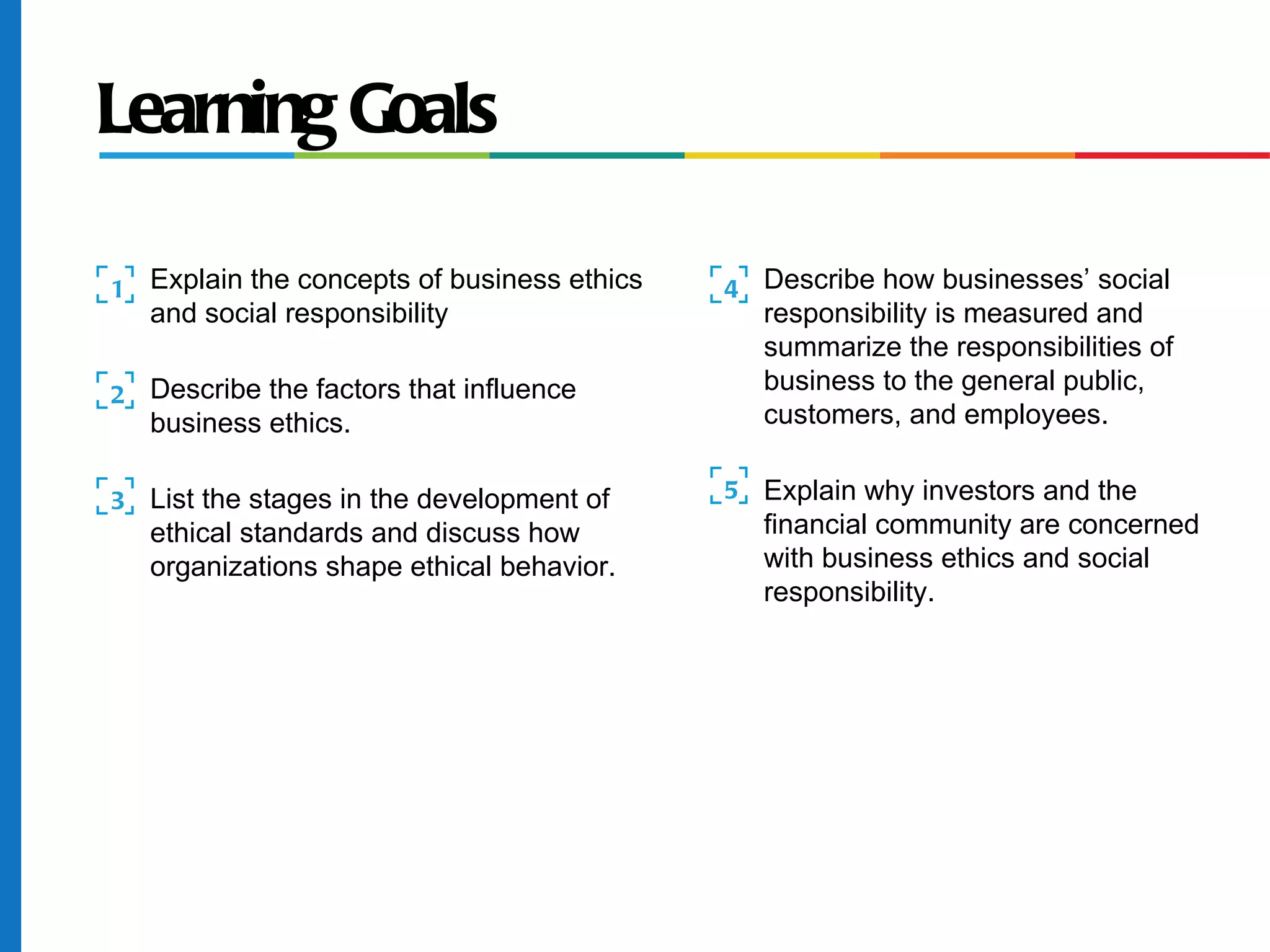
Learning Goals

1   Explain the concepts of business ethics   4   Describe how businesses’ social
    and social responsibility                     responsibility is measured and
                                                  summarize the responsibilities of
2   Describe the factors that influence           business to the general public,
    business ethics.                              customers, and employees.


3   List the stages in the development of     5   Explain why investors and the
    ethical standards and discuss how             financial community are concerned
    organizations shape ethical behavior.         with business ethics and social
                                                  responsibility.
Concern for Ethical and
 Societal Issues
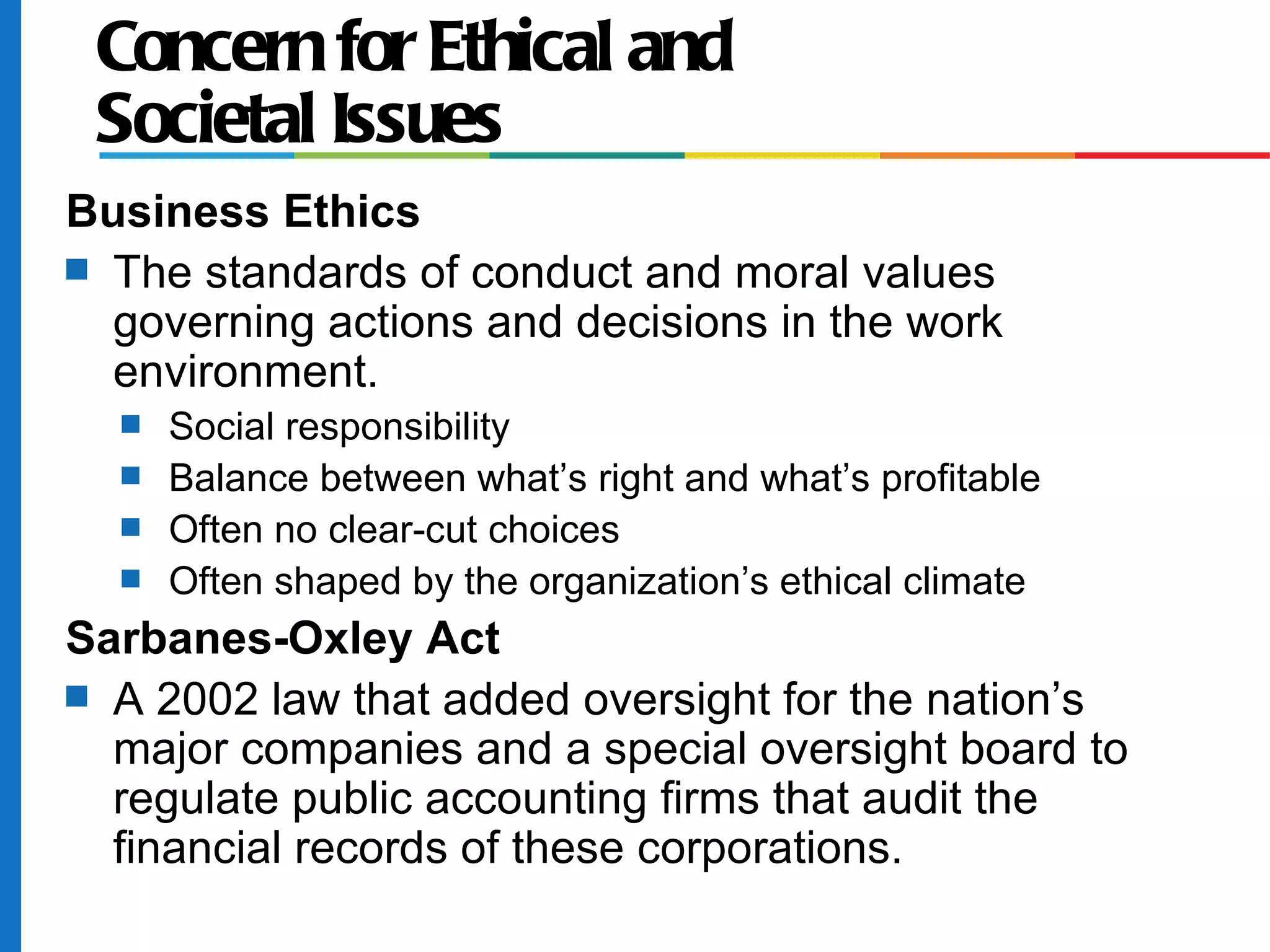
Business Ethics
s The standards of conduct and moral values
  governing actions and decisions in the work
  environment.
  s   Social responsibility
  s   Balance between what’s right and what’s profitable
  s   Often no clear-cut choices
  s   Often shaped by the organization’s ethical climate
Sarbanes-Oxley Act
s A 2002 law that added oversight for the nation’s
  major companies and a special oversight board to
  regulate public accounting firms that audit the
  financial records of these corporations.
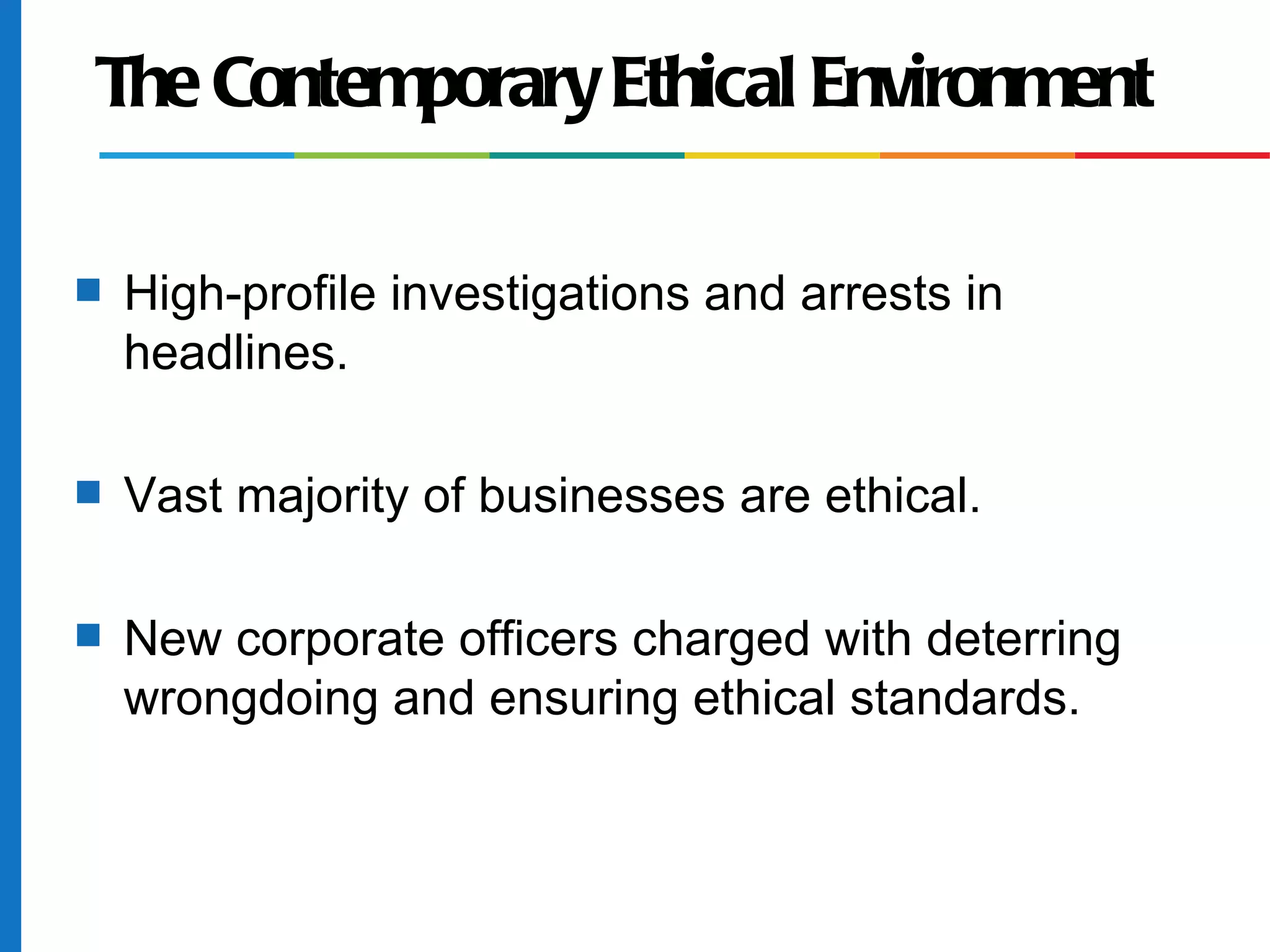
The Contemporary Ethical Environment

s   High-profile investigations and arrests in
    headlines.

s   Vast majority of businesses are ethical.

s   New corporate officers charged with deterring
    wrongdoing and ensuring ethical standards.
Business Approach to Ethics and
    Social Responsibility
s   Engage in traditional corporate philanthropy,
    which involves giving to worthy causes.
s   Anticipate and manage risks.
s   Identify opportunities to create value by doing
    the right thing.

s   See how Walmart highlights corporate
    responsibility on its website.
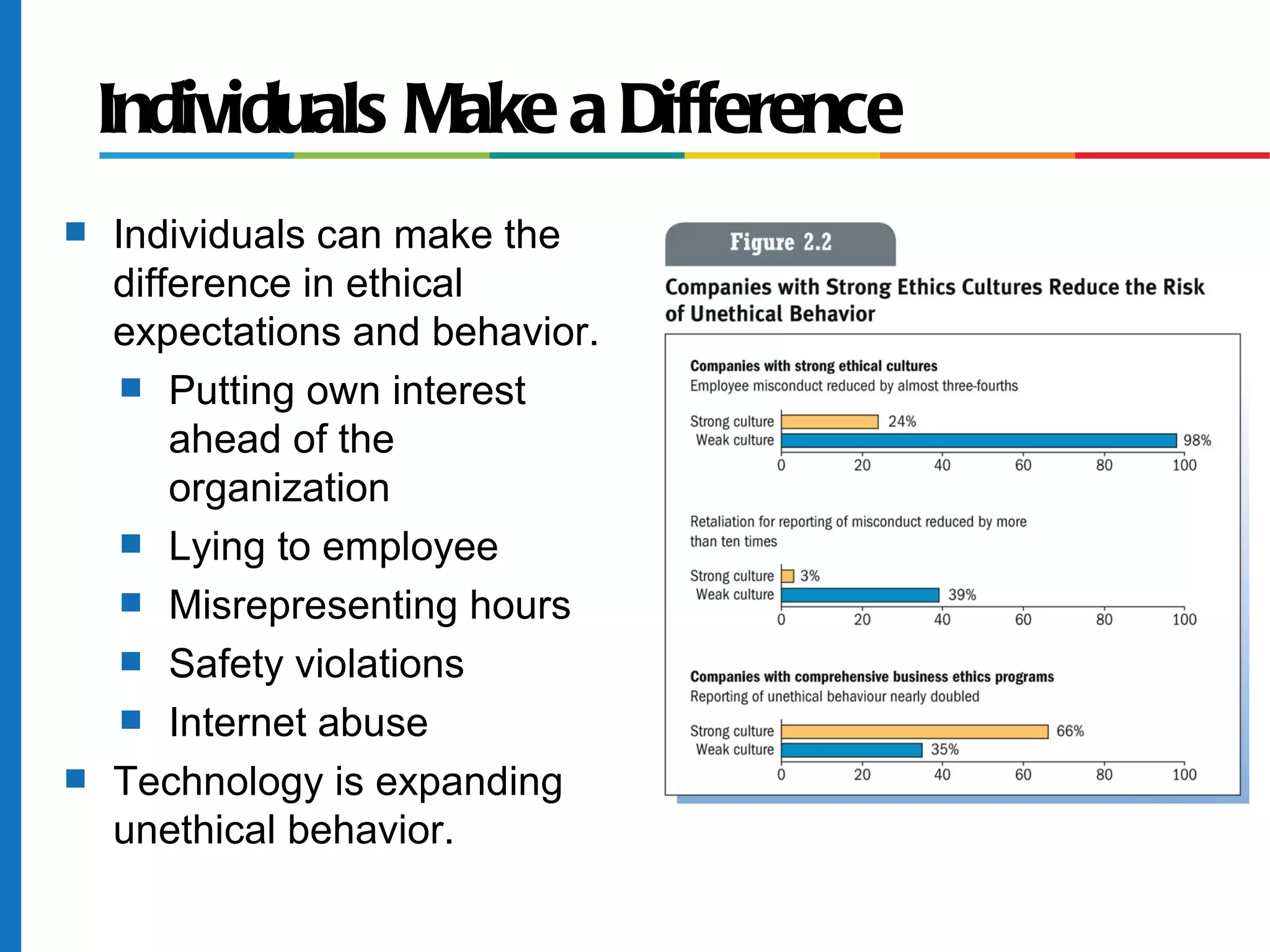
Individuals Make a Difference
s   Individuals can make the
    difference in ethical
    expectations and behavior.
     s Putting own interest

        ahead of the
        organization
     s Lying to employee

     s Misrepresenting hours

     s Safety violations

     s Internet abuse

s   Technology is expanding
    unethical behavior.
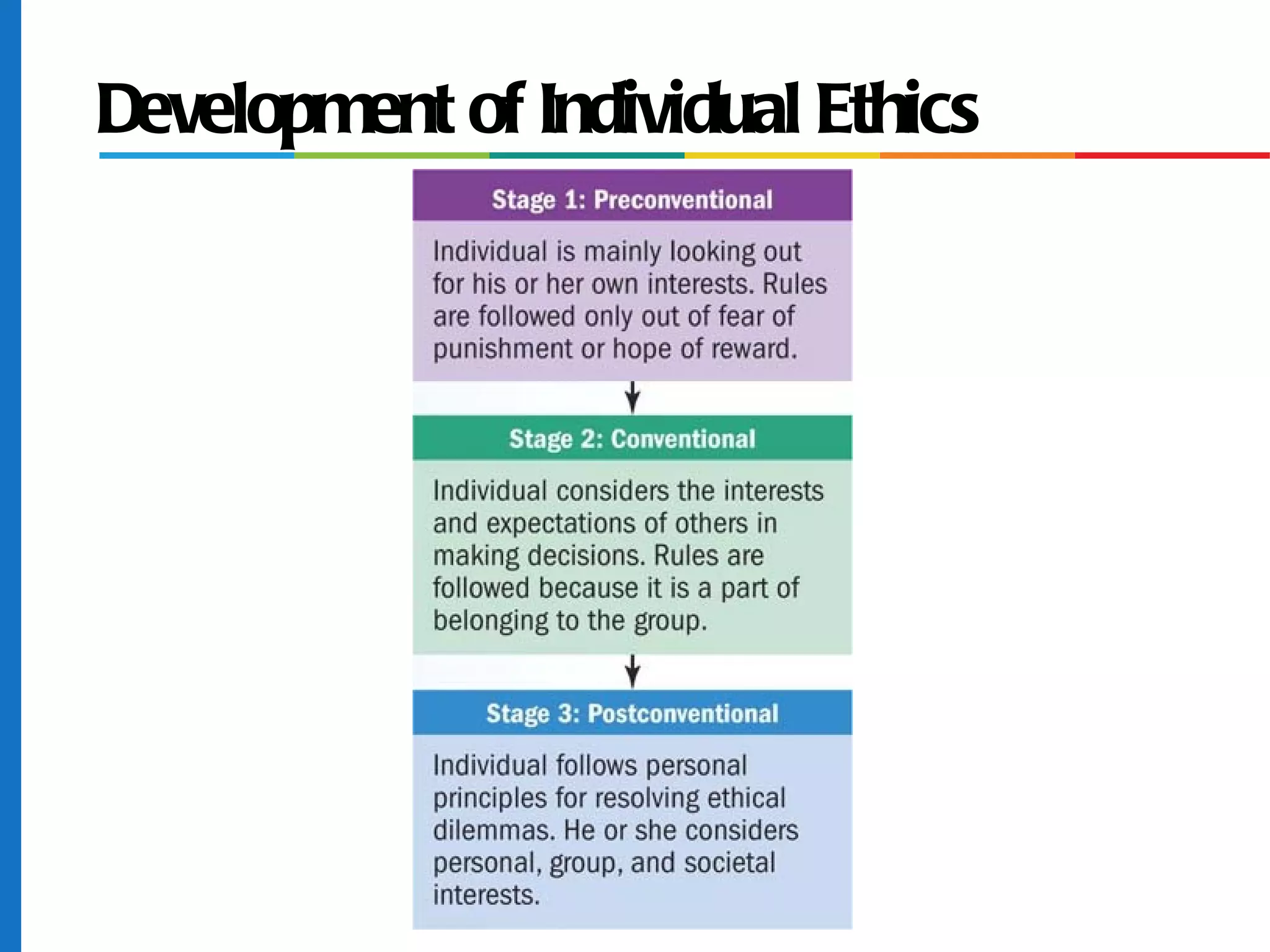
Development of Individual Ethics
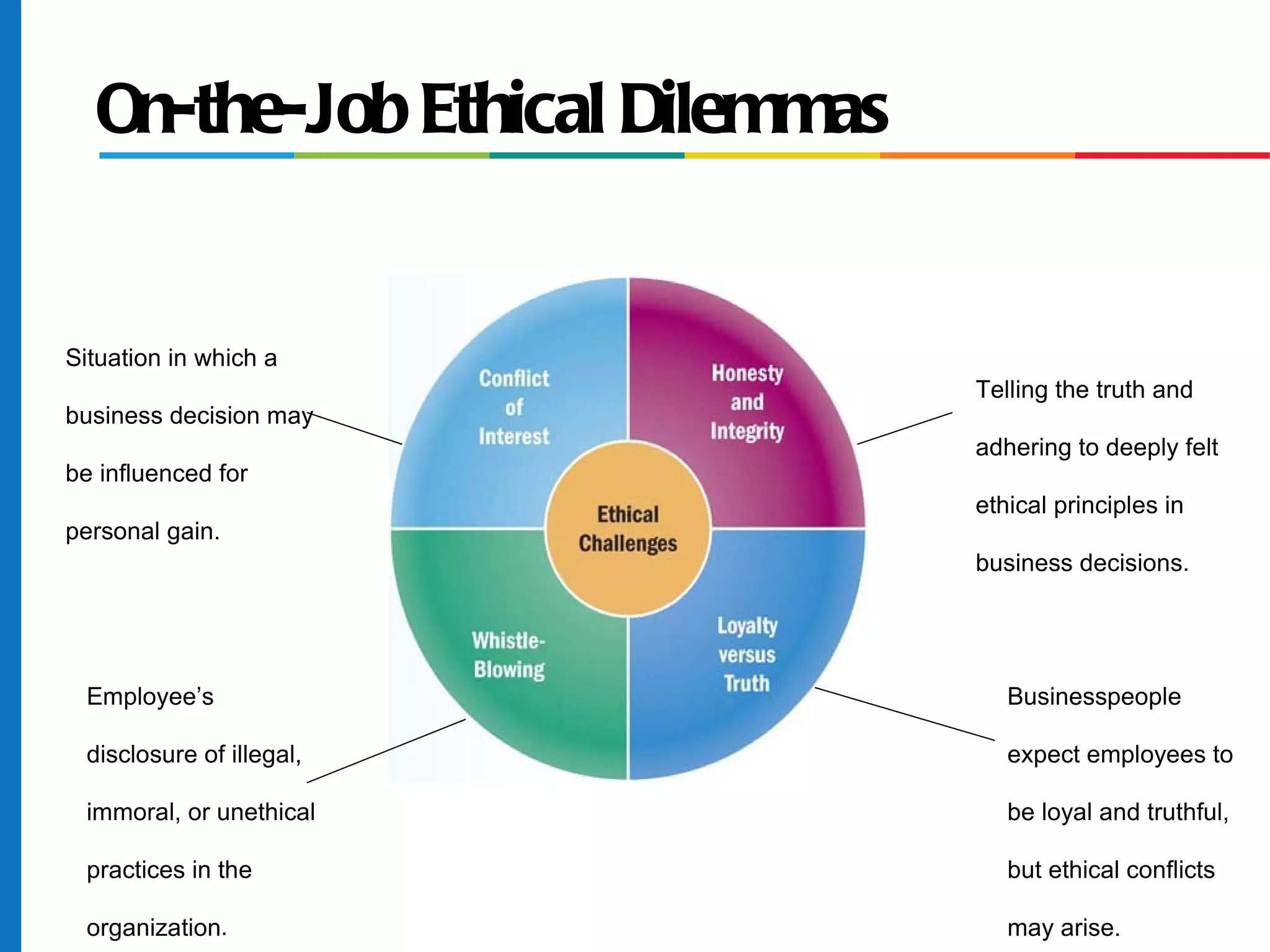
On-the-Job Ethical Dilemmas


Situation in which a
                                Telling the truth and
business decision may
                                adhering to deeply felt
be influenced for
                                ethical principles in
personal gain.
                                business decisions.


 Employee’s                        Businesspeople

 disclosure of illegal,            expect employees to

 immoral, or unethical             be loyal and truthful,

 practices in the                  but ethical conflicts

 organization.                     may arise.
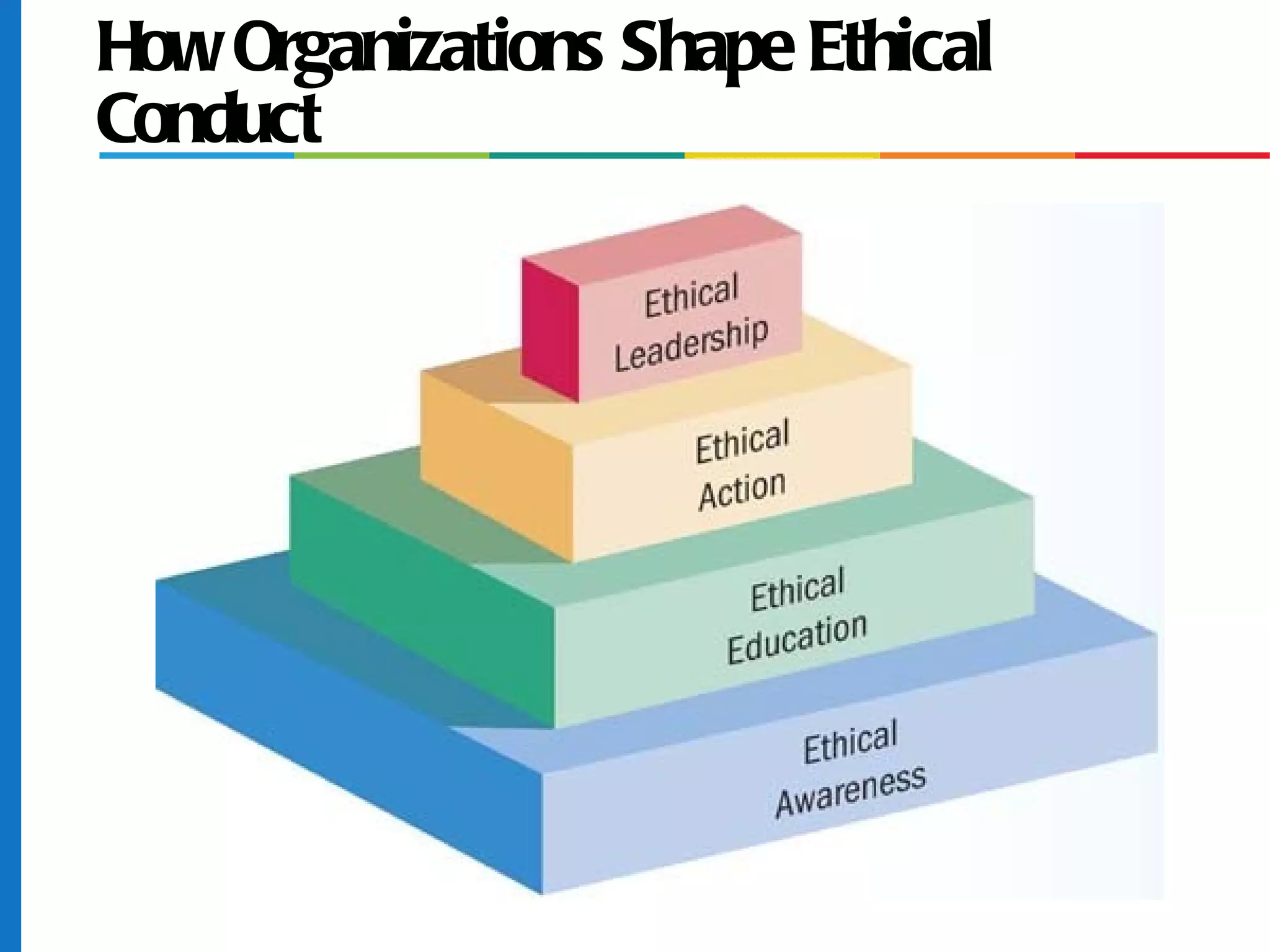
How Organizations Shape Ethical
Conduct
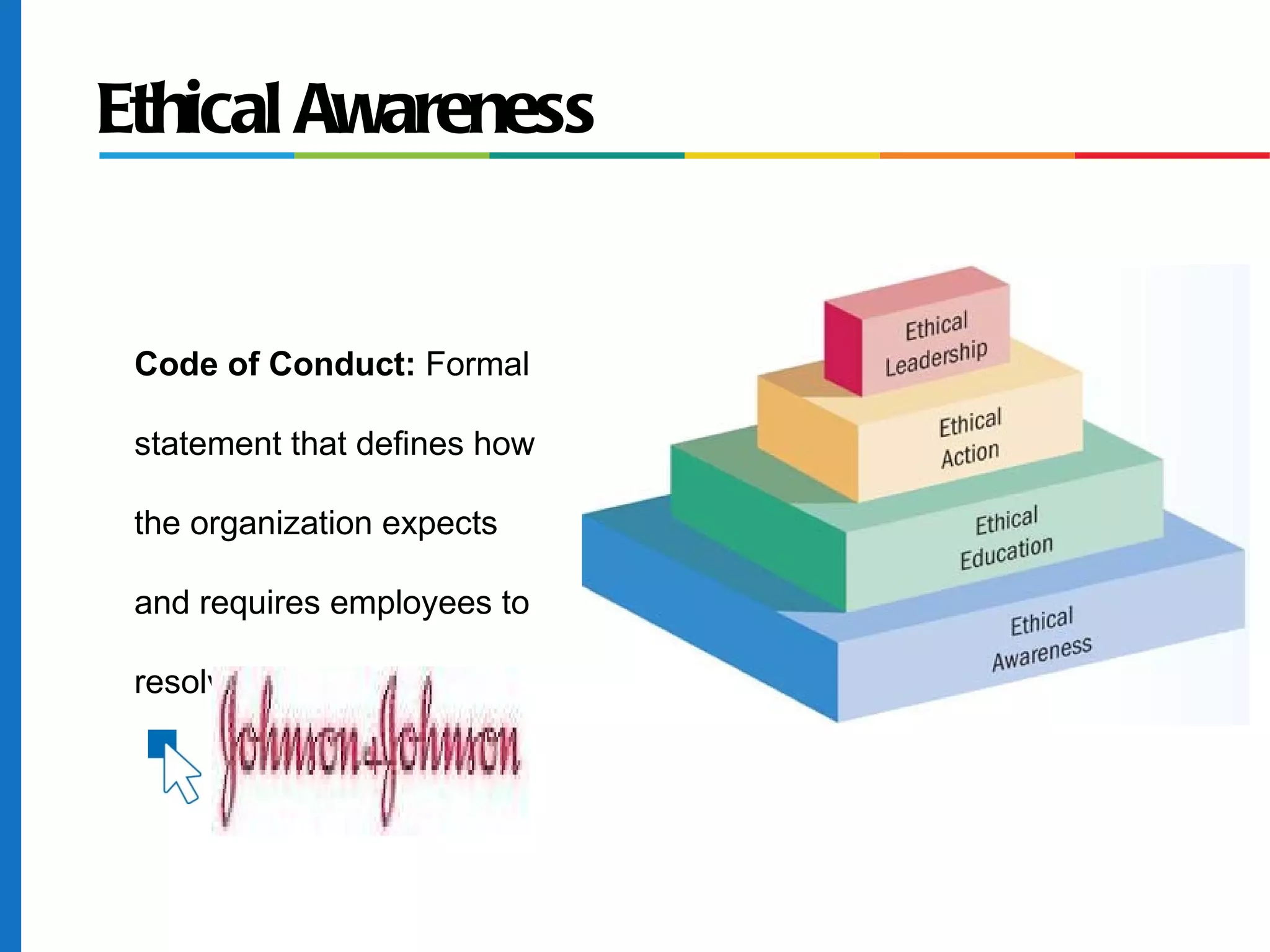
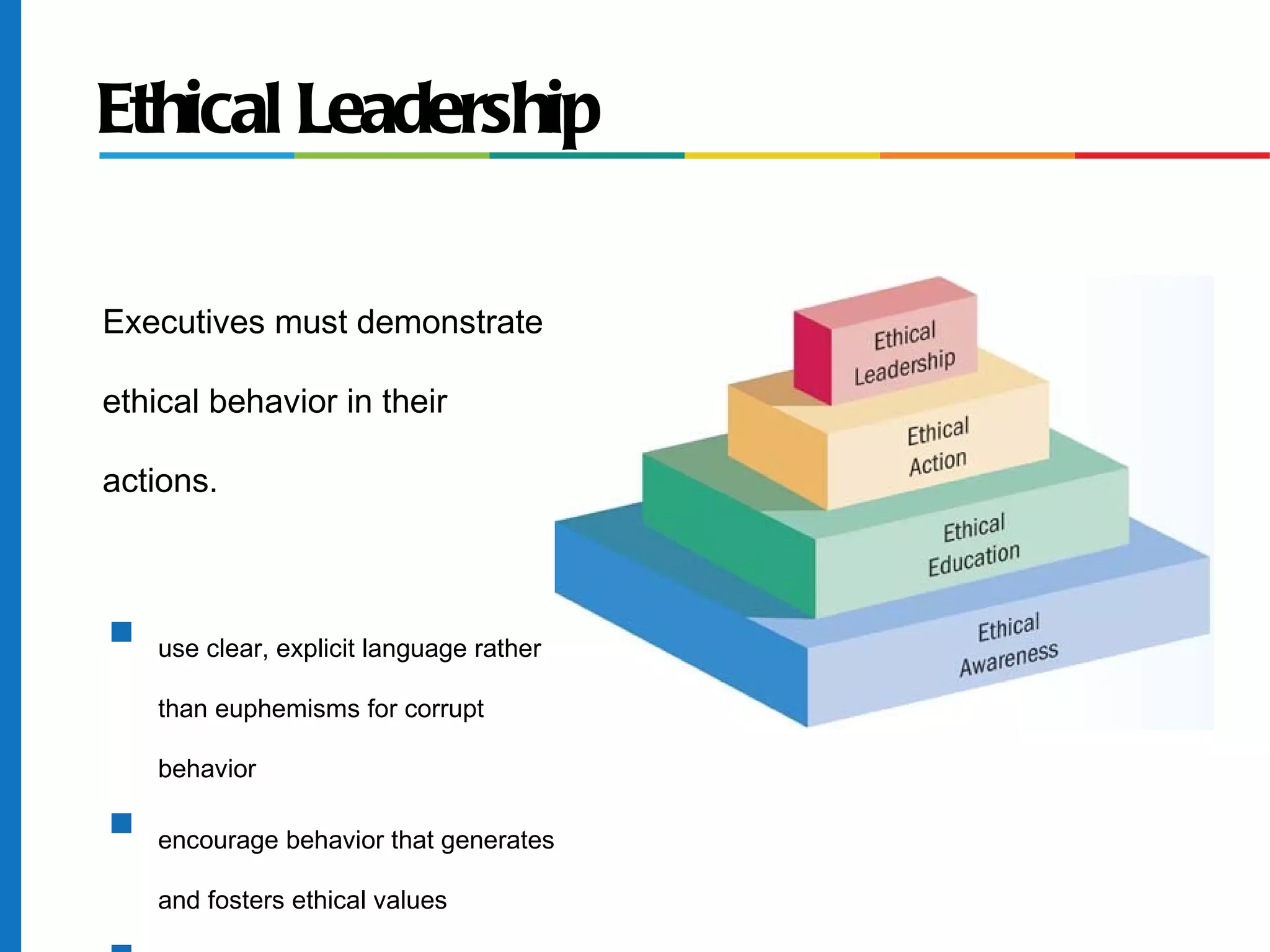
Ethical Awareness


 Code of Conduct: Formal

 statement that defines how

 the organization expects

 and requires employees to

 resolve ethical questions.
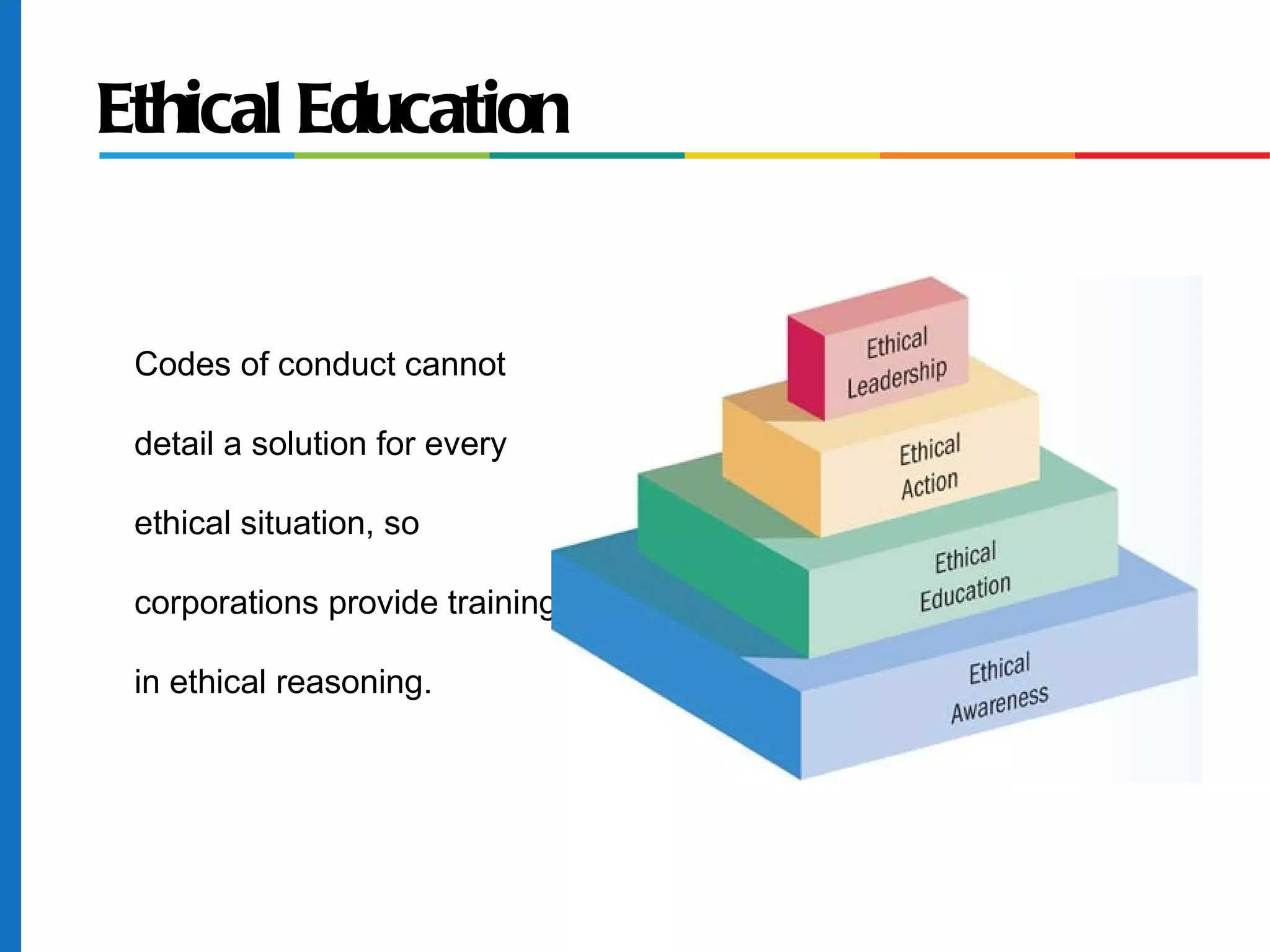
Ethical Education


 Codes of conduct cannot

 detail a solution for every

 ethical situation, so

 corporations provide training

 in ethical reasoning.
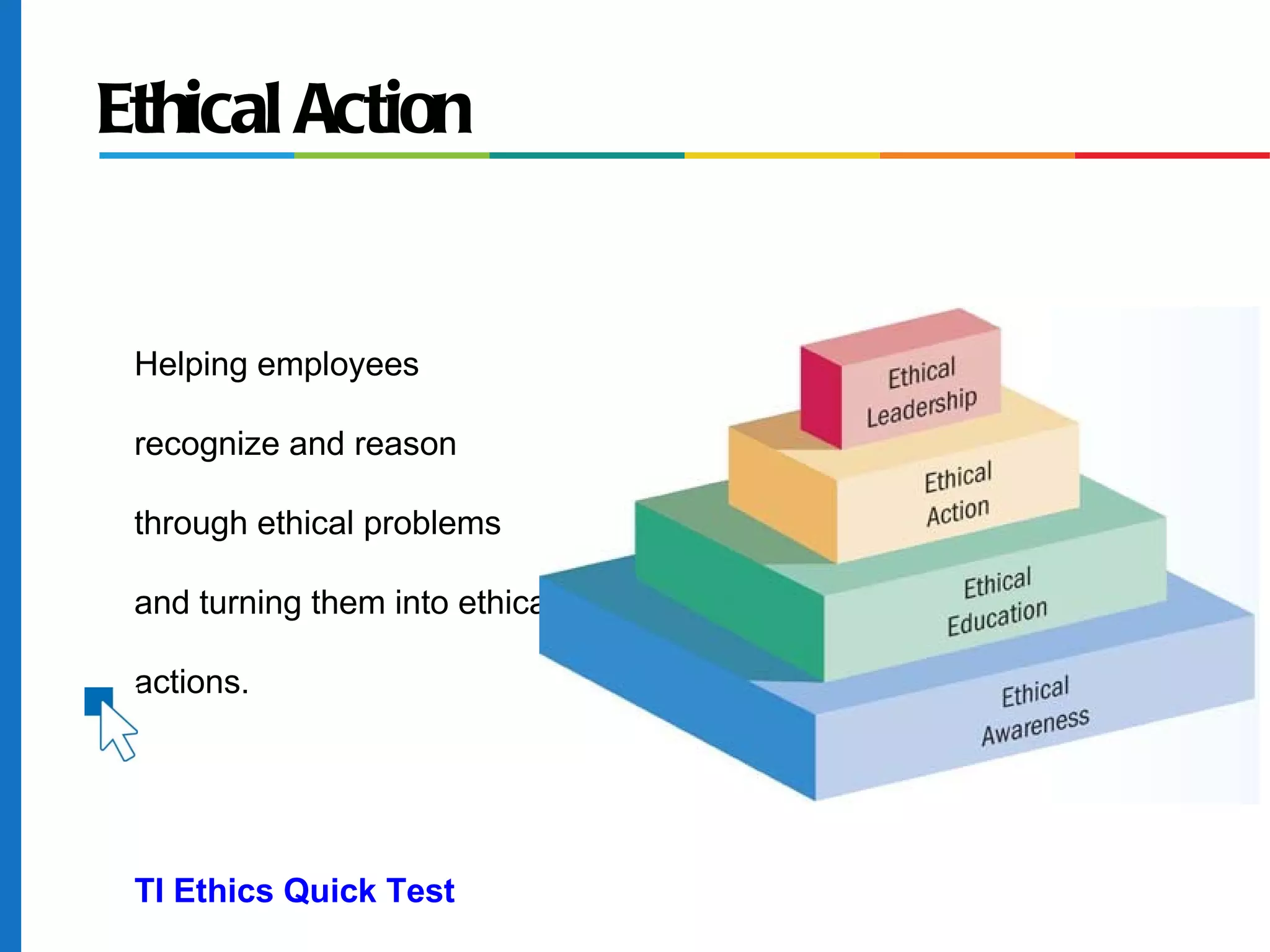
Ethical Action


 Helping employees

 recognize and reason

 through ethical problems

 and turning them into ethical

 actions.


 TI Ethics Quick Test
Ethical Leadership

Executives must demonstrate

ethical behavior in their

actions.


s
    use clear, explicit language rather

    than euphemisms for corrupt

    behavior

s
    encourage behavior that generates

    and fosters ethical values
Acting Responsibly to Satisfy Society


Social Responsibility

s
    Management’s consideration of profit, consumer

    satisfaction, and societal well-being of equal value in

    evaluating the firm’s performance.

s
    Contributions to the overall economy, job

    opportunities, and charitable contributions and

    service.
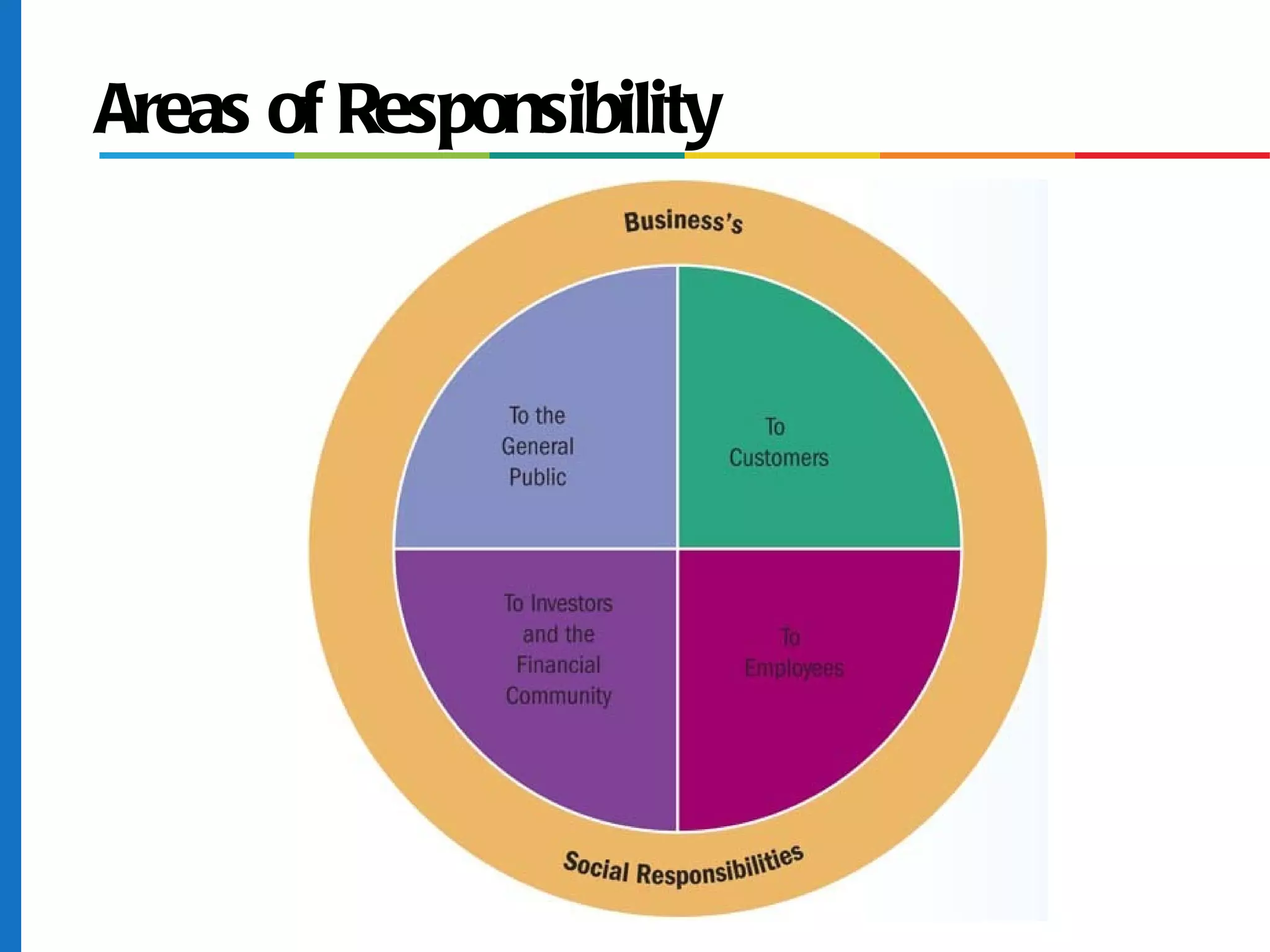
Areas of Responsibility
Responsibilities to the General Public
s   Public Health Issues. What to do about inherently
    dangerous products such as alcohol, tobacco, vaccines,
    and steroids.
s   Protecting the Environment. Using resources
    efficiently, minimizing pollution.
    s   Green marketing
    s   Sustainability
s   Developing the Quality of the Workforce. Enhancing
    quality of the overall workforce through education and
    diversity initiatives.
s   Corporate Philanthropy. Cash contributions, donations
    of equipment and products, and supporting the volunteer
    efforts of company employees.
Responsibilities to Customers
CONSUMERISM
s The Right to Be Safe. Safe operation of products,

  avoiding product liability.

s   The Right to Be Informed. Avoiding false or misleading
    advertising and providing effective customer service.

s   The Right to Choose. Ability of consumers to choose the
    products and services they want.

s   The Right to Be Heard. Ability of consumers to
    express legitimate complaints to the appropriate parties.
Responsibilities to Employees
s   Workplace Safety. Monitored by
    Occupational Safety and Health Administration.
s   Quality-of-Life Issues. Balancing work and family through
    flexible work schedules, subsidized child care, and regulation
    such as the Family and Medical Leave Act of 1993.
s   Ensuring Equal Opportunity on the Job. Providing equal
    opportunities to all employees without discrimination; many
    aspects regulated by the
    Equal Employment Opportunity Commission.
s   Age Discrimination.
    Age Discrimination in Employment Act of 1968 protects
    workers age 40 or older.
s   Sexual Harassment and Sexism. Avoiding unwelcome
    actions of a sexual nature; equal pay for equal work without
    regard to gender.
Responsibilities to Investors

s   Obligation to make profits for
    shareholders.
s   Expectation of ethical and moral
    behavior.
s   Protection of investors by the
    Securities and Exchange Commission
    and state regulations.

Chapter 2: Ethics

  • 1.
    Chapter 2 Business Ethics and Social Responsibility
  • 2.
    Learning Goals 1 Explain the concepts of business ethics 4 Describe how businesses’ social and social responsibility responsibility is measured and summarize the responsibilities of 2 Describe the factors that influence business to the general public, business ethics. customers, and employees. 3 List the stages in the development of 5 Explain why investors and the ethical standards and discuss how financial community are concerned organizations shape ethical behavior. with business ethics and social responsibility.
  • 3.
    Concern for Ethicaland Societal Issues Business Ethics s The standards of conduct and moral values governing actions and decisions in the work environment. s Social responsibility s Balance between what’s right and what’s profitable s Often no clear-cut choices s Often shaped by the organization’s ethical climate Sarbanes-Oxley Act s A 2002 law that added oversight for the nation’s major companies and a special oversight board to regulate public accounting firms that audit the financial records of these corporations.
  • 4.
    The Contemporary EthicalEnvironment s High-profile investigations and arrests in headlines. s Vast majority of businesses are ethical. s New corporate officers charged with deterring wrongdoing and ensuring ethical standards.
  • 5.
    Business Approach toEthics and Social Responsibility s Engage in traditional corporate philanthropy, which involves giving to worthy causes. s Anticipate and manage risks. s Identify opportunities to create value by doing the right thing. s See how Walmart highlights corporate responsibility on its website.
  • 6.
    Individuals Make aDifference s Individuals can make the difference in ethical expectations and behavior. s Putting own interest ahead of the organization s Lying to employee s Misrepresenting hours s Safety violations s Internet abuse s Technology is expanding unethical behavior.
  • 7.
  • 8.
    On-the-Job Ethical Dilemmas Situationin which a Telling the truth and business decision may adhering to deeply felt be influenced for ethical principles in personal gain. business decisions. Employee’s Businesspeople disclosure of illegal, expect employees to immoral, or unethical be loyal and truthful, practices in the but ethical conflicts organization. may arise.
  • 9.
    How Organizations ShapeEthical Conduct
  • 10.
    Ethical Awareness Codeof Conduct: Formal statement that defines how the organization expects and requires employees to resolve ethical questions.
  • 11.
    Ethical Education Codesof conduct cannot detail a solution for every ethical situation, so corporations provide training in ethical reasoning.
  • 12.
    Ethical Action Helpingemployees recognize and reason through ethical problems and turning them into ethical actions. TI Ethics Quick Test
  • 13.
    Ethical Leadership Executives mustdemonstrate ethical behavior in their actions. s use clear, explicit language rather than euphemisms for corrupt behavior s encourage behavior that generates and fosters ethical values
  • 14.
    Acting Responsibly toSatisfy Society Social Responsibility s Management’s consideration of profit, consumer satisfaction, and societal well-being of equal value in evaluating the firm’s performance. s Contributions to the overall economy, job opportunities, and charitable contributions and service.
  • 15.
  • 16.
    Responsibilities to theGeneral Public s Public Health Issues. What to do about inherently dangerous products such as alcohol, tobacco, vaccines, and steroids. s Protecting the Environment. Using resources efficiently, minimizing pollution. s Green marketing s Sustainability s Developing the Quality of the Workforce. Enhancing quality of the overall workforce through education and diversity initiatives. s Corporate Philanthropy. Cash contributions, donations of equipment and products, and supporting the volunteer efforts of company employees.
  • 17.
    Responsibilities to Customers CONSUMERISM sThe Right to Be Safe. Safe operation of products, avoiding product liability. s The Right to Be Informed. Avoiding false or misleading advertising and providing effective customer service. s The Right to Choose. Ability of consumers to choose the products and services they want. s The Right to Be Heard. Ability of consumers to express legitimate complaints to the appropriate parties.
  • 18.
    Responsibilities to Employees s Workplace Safety. Monitored by Occupational Safety and Health Administration. s Quality-of-Life Issues. Balancing work and family through flexible work schedules, subsidized child care, and regulation such as the Family and Medical Leave Act of 1993. s Ensuring Equal Opportunity on the Job. Providing equal opportunities to all employees without discrimination; many aspects regulated by the Equal Employment Opportunity Commission. s Age Discrimination. Age Discrimination in Employment Act of 1968 protects workers age 40 or older. s Sexual Harassment and Sexism. Avoiding unwelcome actions of a sexual nature; equal pay for equal work without regard to gender.
  • 19.
    Responsibilities to Investors s Obligation to make profits for shareholders. s Expectation of ethical and moral behavior. s Protection of investors by the Securities and Exchange Commission and state regulations.