>>>>>>>>
            .
  Business Ethics and
  Social Responsibility
Concern for Ethical
and Societ al Issues
Business Ethics
The standards of conduct and moral values governing actions and
decisions in the work environment.
   – Social responsibility.
   – Balance between what’s right and what’s profitable.
   – Often no clear-cut choices.
   – Often shaped by the organization’s ethical climate.
How Or ganizations
  ape Ethical Conduct
Sh
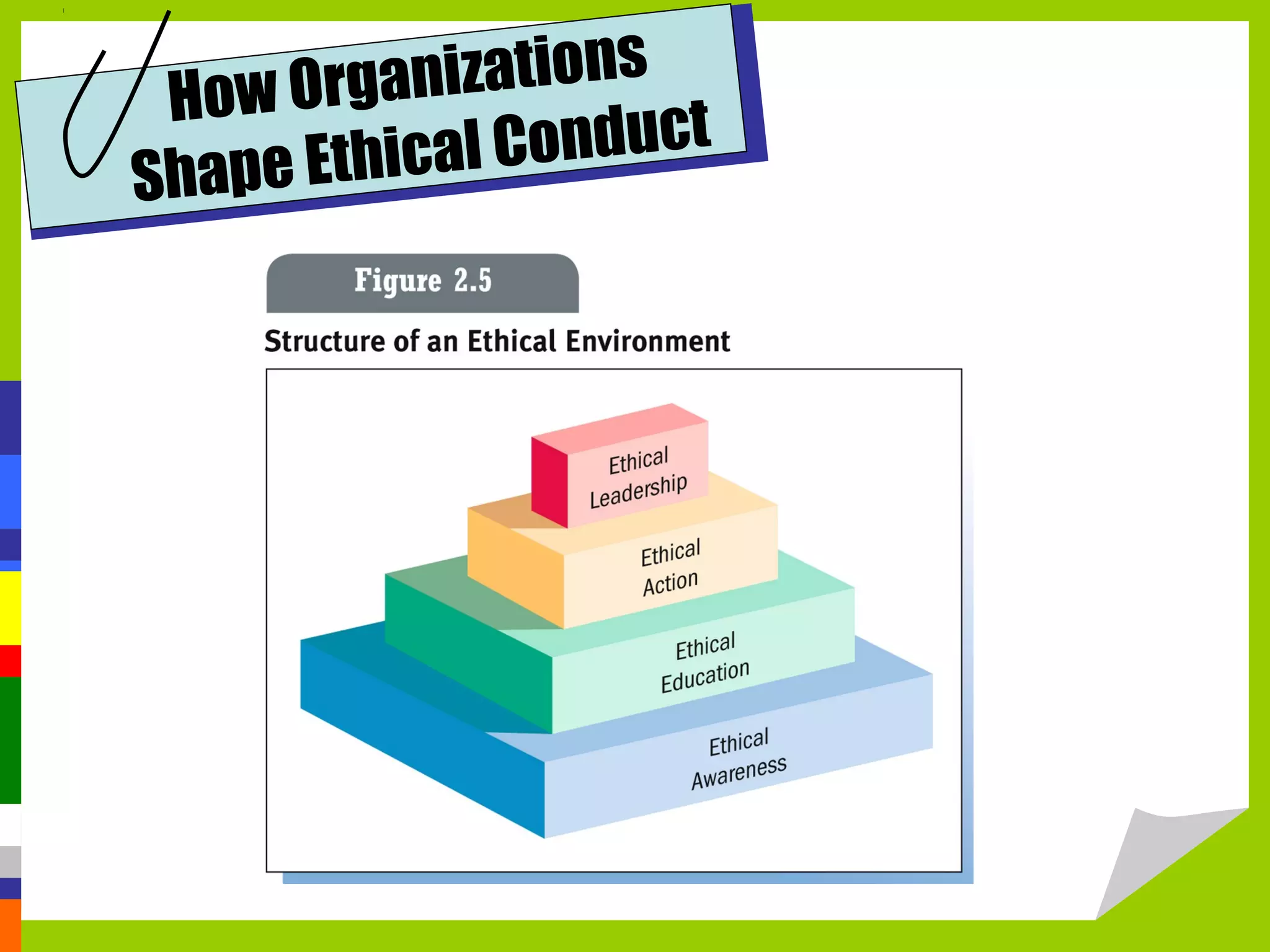
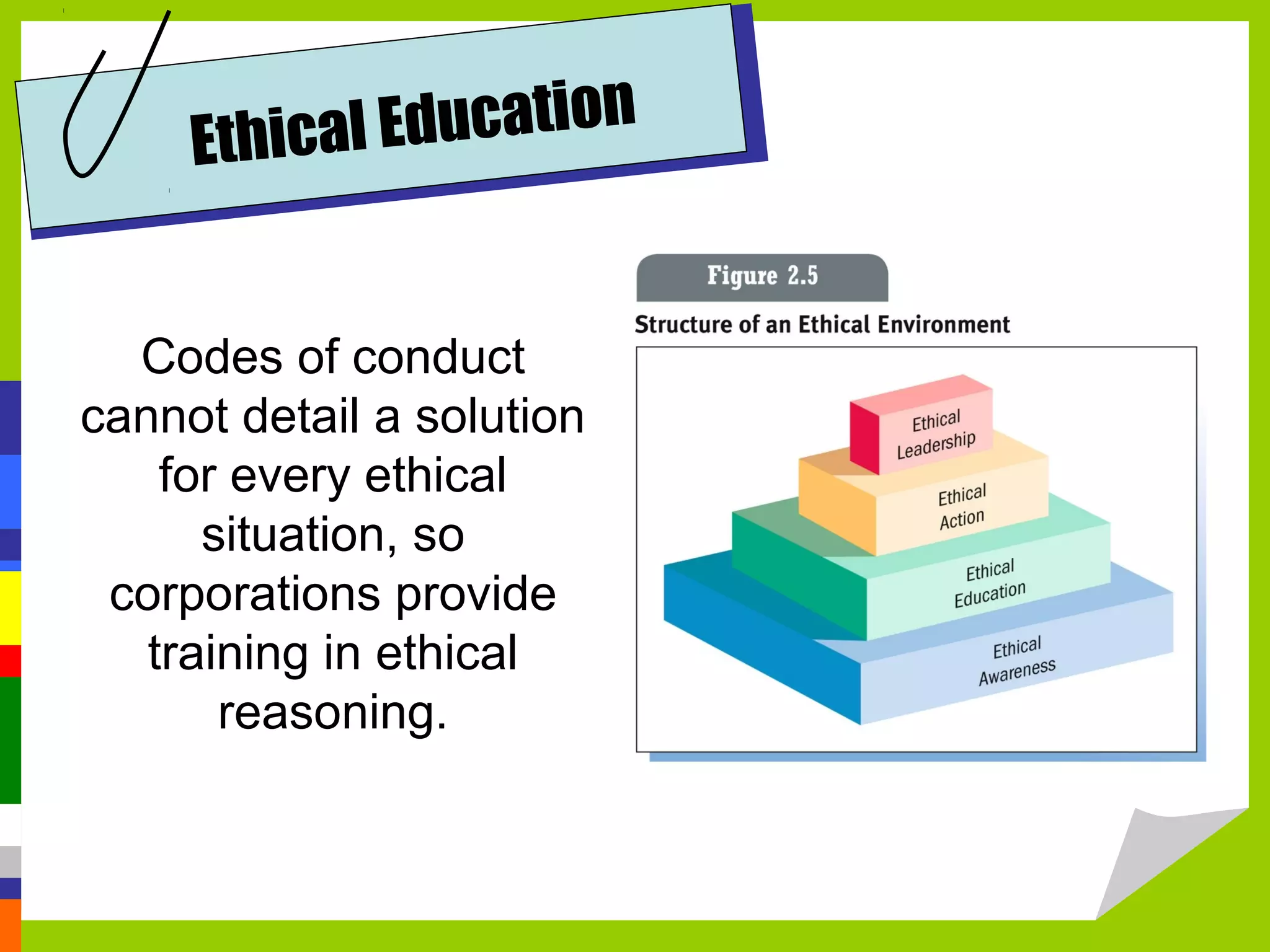
Ethical Education


  Codes of conduct
cannot detail a solution
    for every ethical
      situation, so
 corporations provide
   training in ethical
       reasoning.
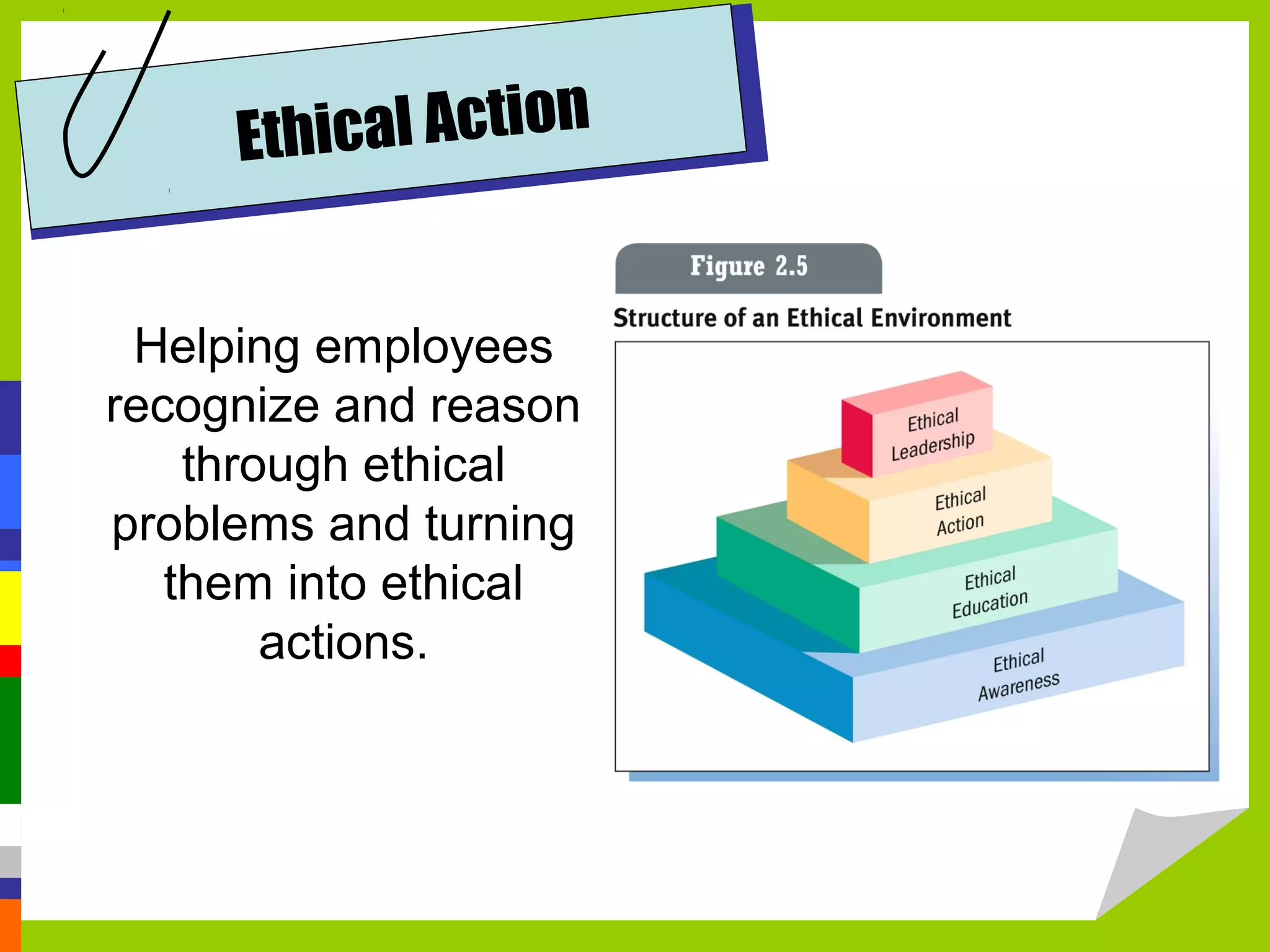
Eth ical Action


 Helping employees
recognize and reason
    through ethical
problems and turning
   them into ethical
        actions.
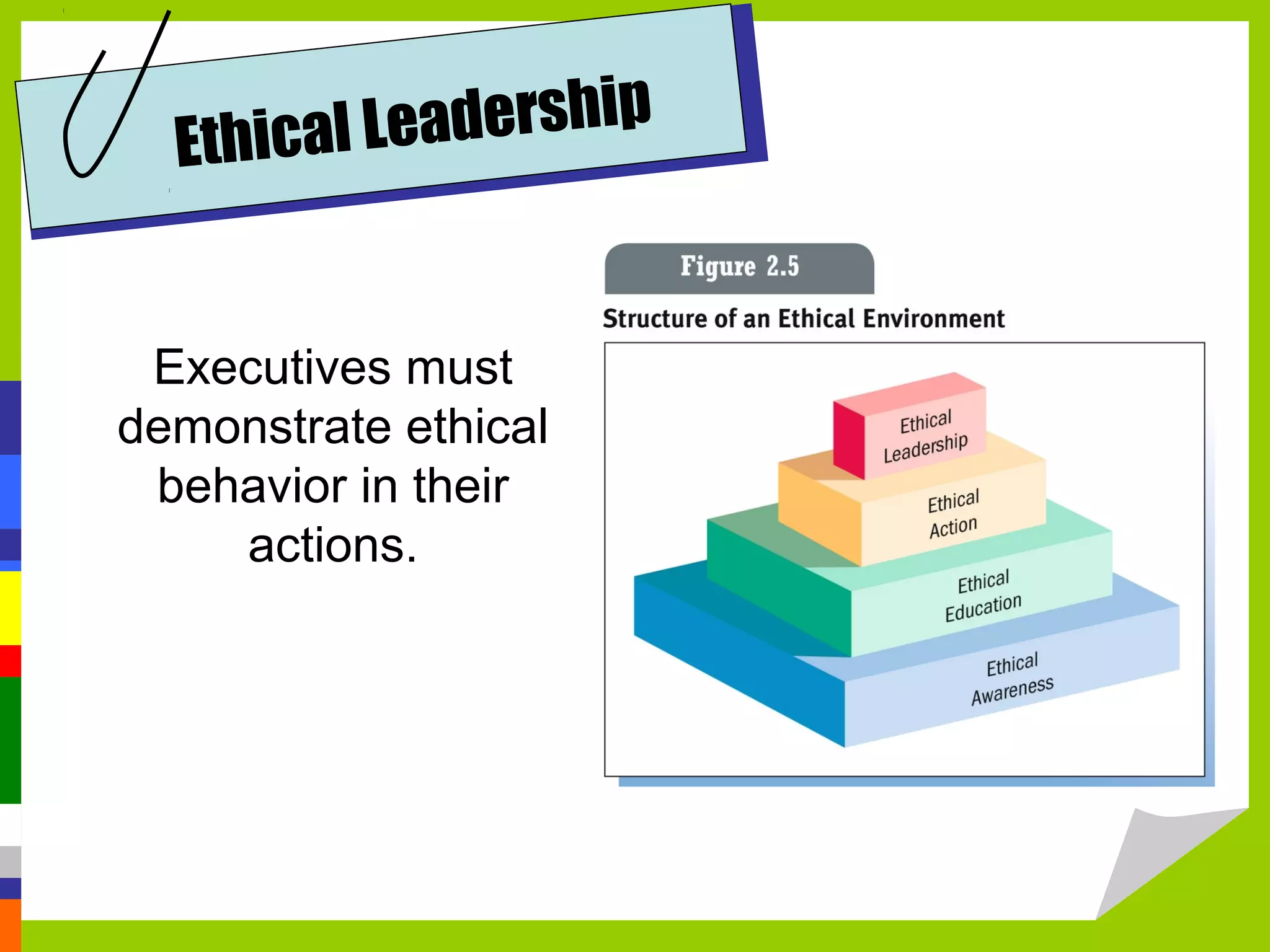
Ethical Leadership


 Executives must
demonstrate ethical
 behavior in their
    actions.
Acting Res ponsibly to
       Satisfy Society

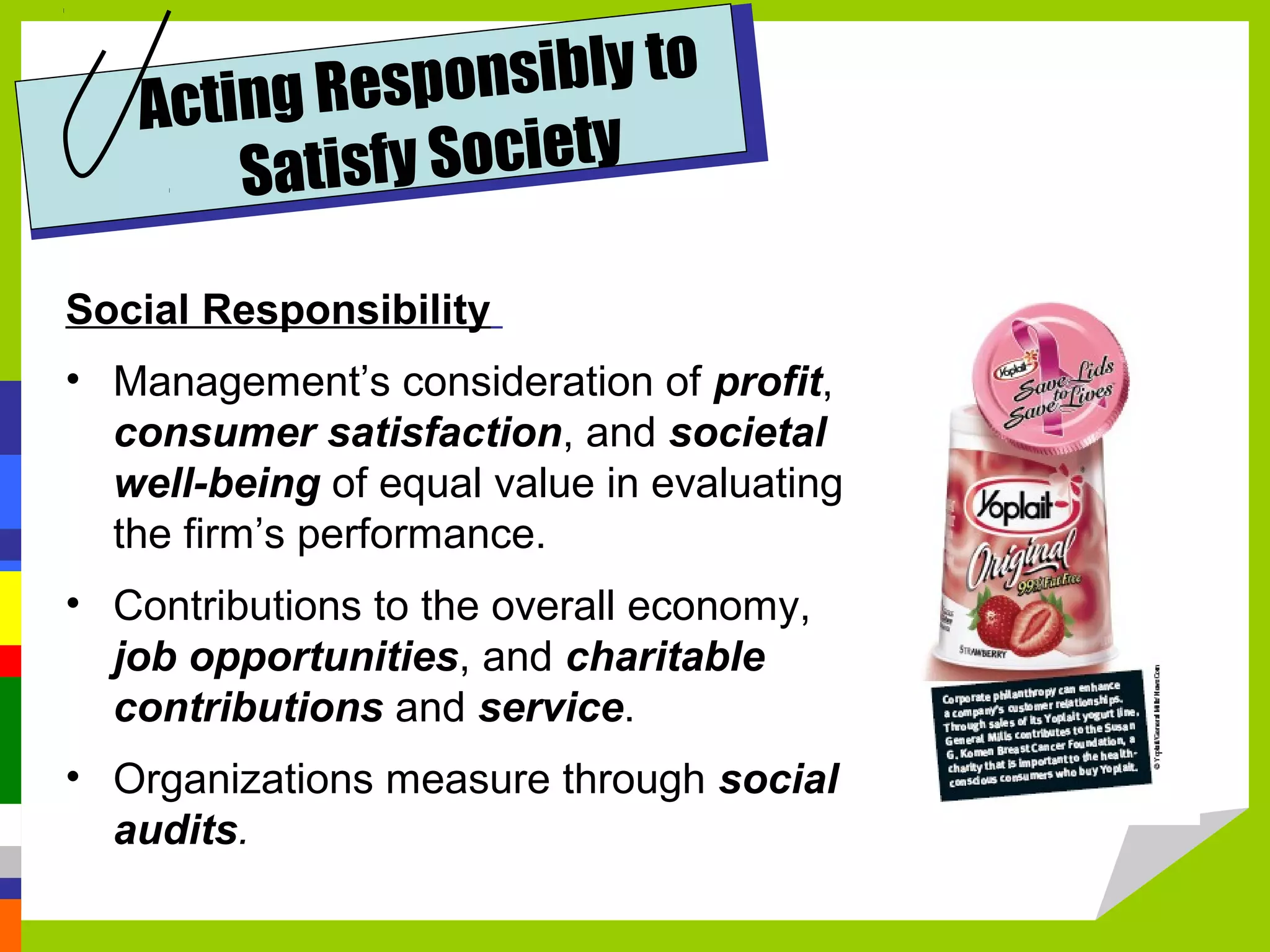
Social Responsibility
• Management’s consideration of profit,
  consumer satisfaction, and societal
  well-being of equal value in evaluating
  the firm’s performance.
• Contributions to the overall economy,
  job opportunities, and charitable
  contributions and service.
• Organizations measure through social
  audits.
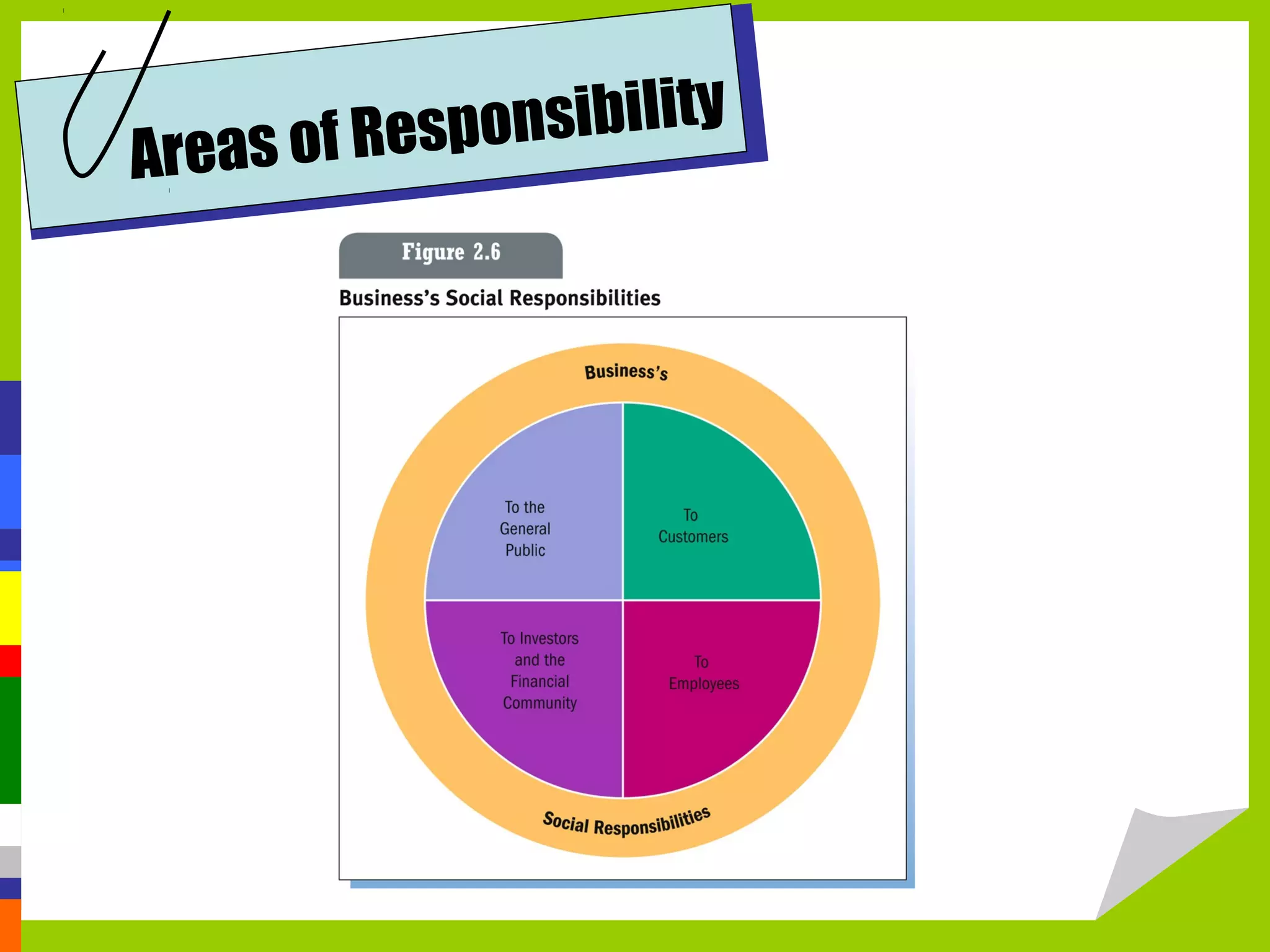
reas of Resp onsibility
A
Respons  ibilities to
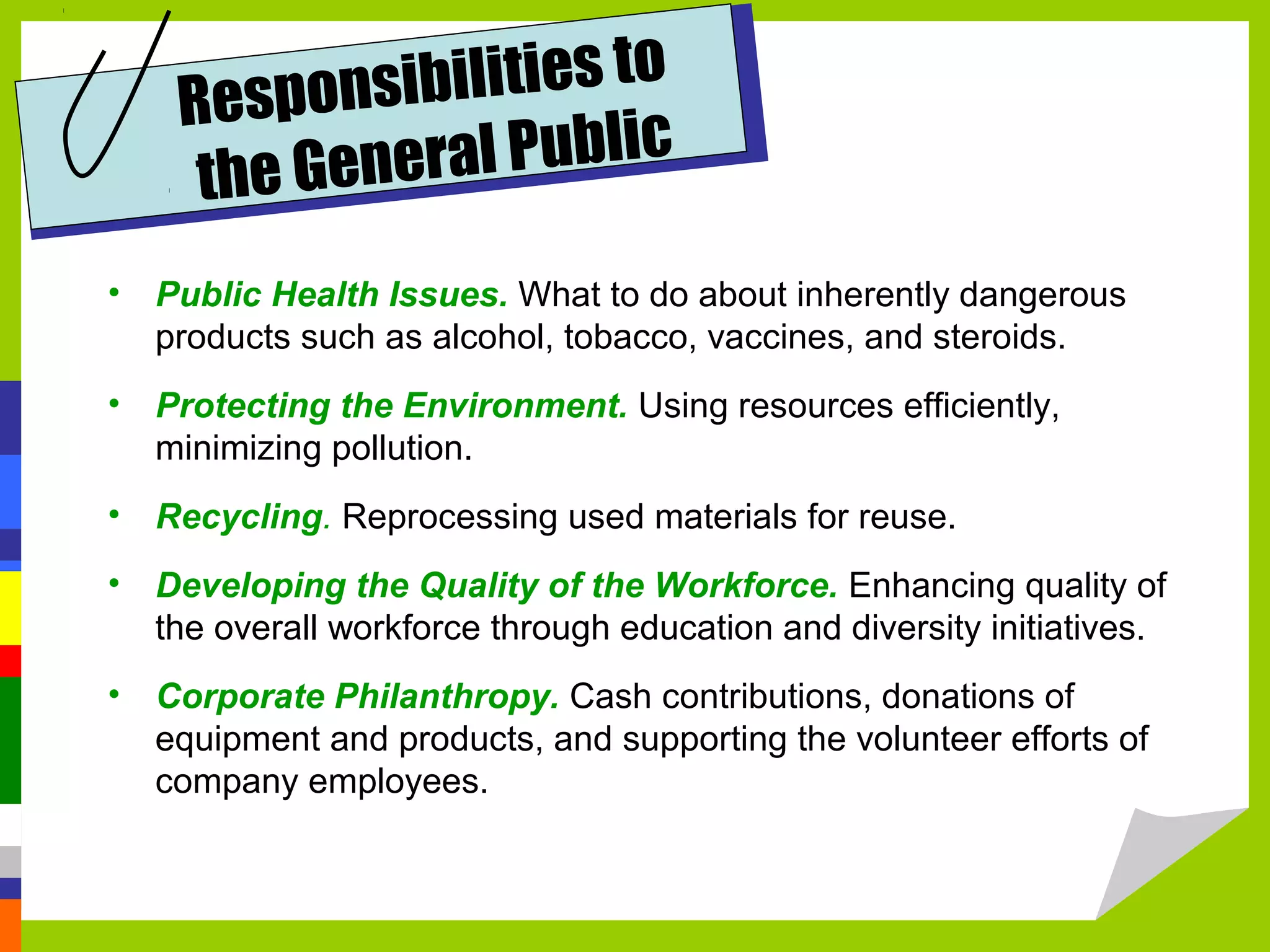
     the Gen eral Public
• Public Health Issues. What to do about inherently dangerous
  products such as alcohol, tobacco, vaccines, and steroids.
• Protecting the Environment. Using resources efficiently,
  minimizing pollution.
• Recycling. Reprocessing used materials for reuse.
• Developing the Quality of the Workforce. Enhancing quality of
  the overall workforce through education and diversity initiatives.
• Corporate Philanthropy. Cash contributions, donations of
  equipment and products, and supporting the volunteer efforts of
  company employees.
Respons ibilities to
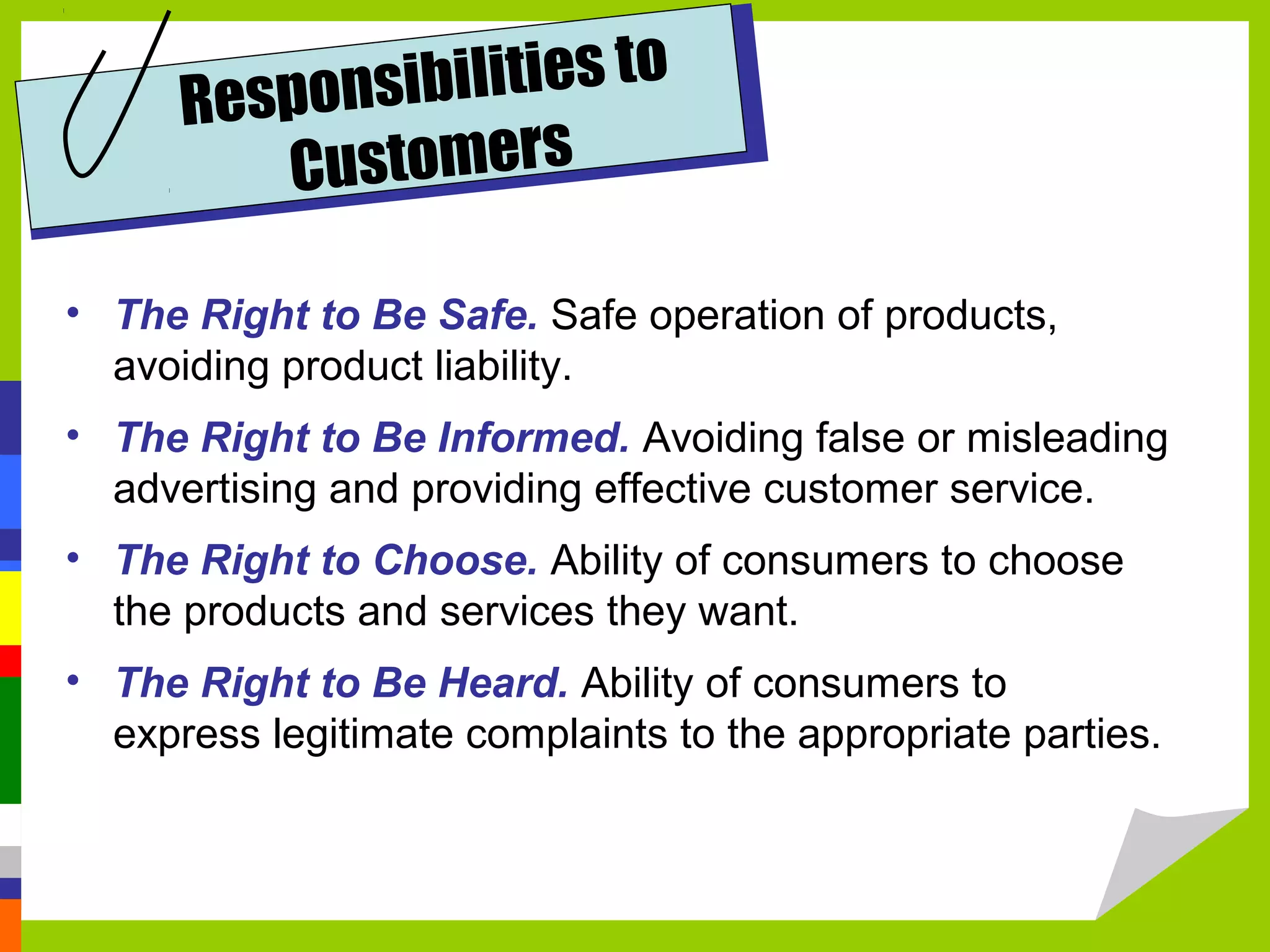
         C ustomers

• The Right to Be Safe. Safe operation of products,
  avoiding product liability.
• The Right to Be Informed. Avoiding false or misleading
  advertising and providing effective customer service.
• The Right to Choose. Ability of consumers to choose
  the products and services they want.
• The Right to Be Heard. Ability of consumers to
  express legitimate complaints to the appropriate parties.
Respons ibilities to
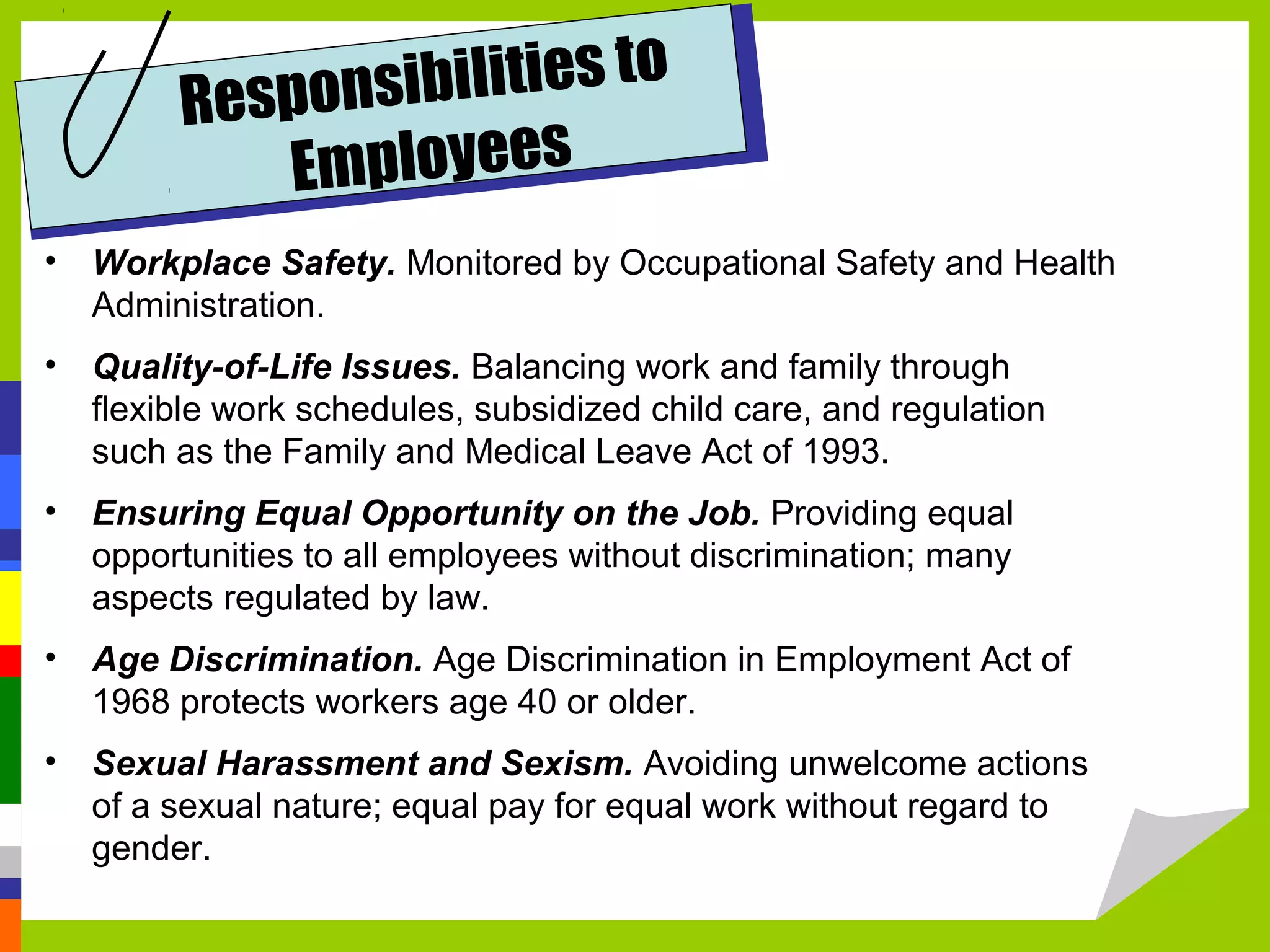
           E mployees
• Workplace Safety. Monitored by Occupational Safety and Health
  Administration.
• Quality-of-Life Issues. Balancing work and family through
  flexible work schedules, subsidized child care, and regulation
  such as the Family and Medical Leave Act of 1993.
• Ensuring Equal Opportunity on the Job. Providing equal
  opportunities to all employees without discrimination; many
  aspects regulated by law.
• Age Discrimination. Age Discrimination in Employment Act of
  1968 protects workers age 40 or older.
• Sexual Harassment and Sexism. Avoiding unwelcome actions
  of a sexual nature; equal pay for equal work without regard to
  gender.
Respons ibilities to
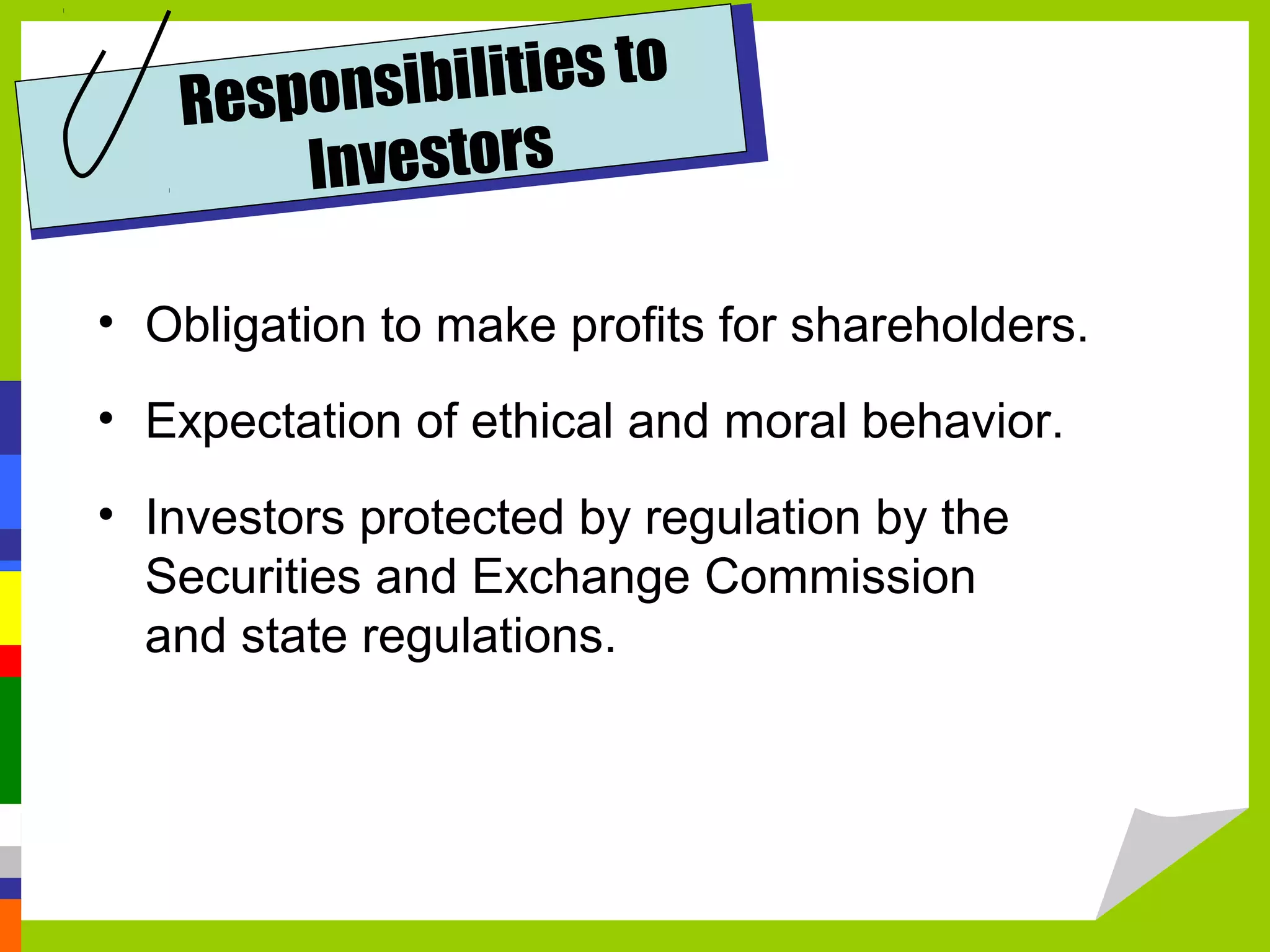
       Investors

• Obligation to make profits for shareholders.
• Expectation of ethical and moral behavior.
• Investors protected by regulation by the
  Securities and Exchange Commission
  and state regulations.
T hank you….

B e & s r

  • 1.
    >>>>>>>> . Business Ethics and Social Responsibility
  • 2.
    Concern for Ethical andSociet al Issues Business Ethics The standards of conduct and moral values governing actions and decisions in the work environment. – Social responsibility. – Balance between what’s right and what’s profitable. – Often no clear-cut choices. – Often shaped by the organization’s ethical climate.
  • 3.
    How Or ganizations ape Ethical Conduct Sh
  • 4.
    Ethical Education Codes of conduct cannot detail a solution for every ethical situation, so corporations provide training in ethical reasoning.
  • 5.
    Eth ical Action Helping employees recognize and reason through ethical problems and turning them into ethical actions.
  • 6.
    Ethical Leadership Executivesmust demonstrate ethical behavior in their actions.
  • 7.
    Acting Res ponsiblyto Satisfy Society Social Responsibility • Management’s consideration of profit, consumer satisfaction, and societal well-being of equal value in evaluating the firm’s performance. • Contributions to the overall economy, job opportunities, and charitable contributions and service. • Organizations measure through social audits.
  • 8.
    reas of Responsibility A
  • 9.
    Respons ibilitiesto the Gen eral Public • Public Health Issues. What to do about inherently dangerous products such as alcohol, tobacco, vaccines, and steroids. • Protecting the Environment. Using resources efficiently, minimizing pollution. • Recycling. Reprocessing used materials for reuse. • Developing the Quality of the Workforce. Enhancing quality of the overall workforce through education and diversity initiatives. • Corporate Philanthropy. Cash contributions, donations of equipment and products, and supporting the volunteer efforts of company employees.
  • 10.
    Respons ibilities to C ustomers • The Right to Be Safe. Safe operation of products, avoiding product liability. • The Right to Be Informed. Avoiding false or misleading advertising and providing effective customer service. • The Right to Choose. Ability of consumers to choose the products and services they want. • The Right to Be Heard. Ability of consumers to express legitimate complaints to the appropriate parties.
  • 11.
    Respons ibilities to E mployees • Workplace Safety. Monitored by Occupational Safety and Health Administration. • Quality-of-Life Issues. Balancing work and family through flexible work schedules, subsidized child care, and regulation such as the Family and Medical Leave Act of 1993. • Ensuring Equal Opportunity on the Job. Providing equal opportunities to all employees without discrimination; many aspects regulated by law. • Age Discrimination. Age Discrimination in Employment Act of 1968 protects workers age 40 or older. • Sexual Harassment and Sexism. Avoiding unwelcome actions of a sexual nature; equal pay for equal work without regard to gender.
  • 12.
    Respons ibilities to Investors • Obligation to make profits for shareholders. • Expectation of ethical and moral behavior. • Investors protected by regulation by the Securities and Exchange Commission and state regulations.
  • 13.