>>>>>>>>

Chapter 2

Business Ethics and
Social Responsibility
ng Goals
Learni
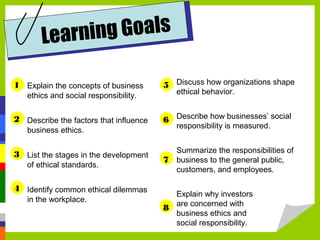
1 Explain the concepts of business
ethics and social responsibility.

2 Describe the factors that influence
business ethics.

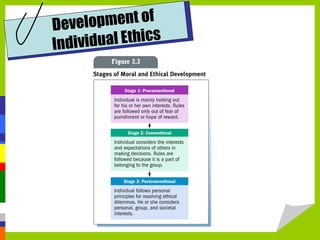
3 List the stages in the development
of ethical standards.

4 Identify common ethical dilemmas
in the workplace.

5 Discuss how organizations shape
ethical behavior.

6 Describe how businesses’ social
responsibility is measured.

Summarize the responsibilities of
7 business to the general public,
customers, and employees.
Explain why investors
8 are concerned with
business ethics and
social responsibility.
for Ethical
Concern
al Issues
and Societ
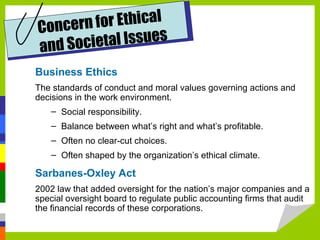
Business Ethics
The standards of conduct and moral values governing actions and
decisions in the work environment.
– Social responsibility.
– Balance between what’s right and what’s profitable.
– Often no clear-cut choices.
– Often shaped by the organization’s ethical climate.

Sarbanes-Oxley Act
2002 law that added oversight for the nation’s major companies and a
special oversight board to regulate public accounting firms that audit
the financial records of these corporations.
temporary
The Con
ironment
Ethical Env
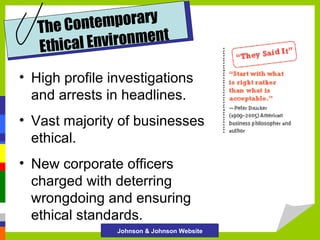
• High profile investigations
and arrests in headlines.
• Vast majority of businesses
ethical.
• New corporate officers
charged with deterring
wrongdoing and ensuring
ethical standards.
Johnson & Johnson Website
duals Make
Indivi
ifference
AD
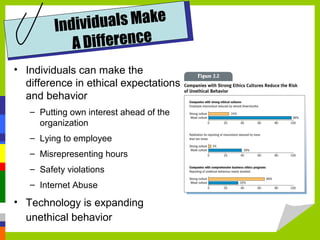
• Individuals can make the
difference in ethical expectations
and behavior
– Putting own interest ahead of the
organization
– Lying to employee
– Misrepresenting hours
– Safety violations
– Internet Abuse

• Technology is expanding
unethical behavior
lopment of
Deve
ual Ethics
Individ
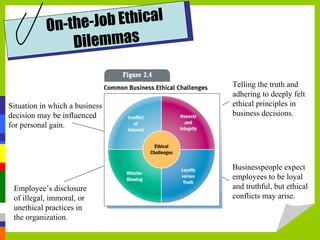
ob Ethical
On-the-J
Dilemmas

Situation in which a business
decision may be influenced
for personal gain.

Employee’s disclosure
of illegal, immoral, or
unethical practices in
the organization.

Telling the truth and
adhering to deeply felt
ethical principles in
business decisions.

Businesspeople expect
employees to be loyal
and truthful, but ethical
conflicts may arise.
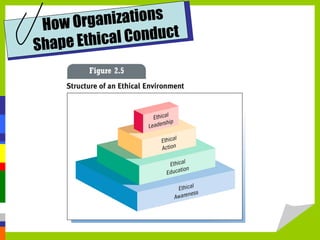
ganizations
How Or
Conduct
ape Ethical
Sh
wareness
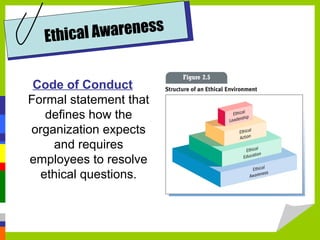
Ethical A
Code of Conduct
Formal statement that
defines how the
organization expects
and requires
employees to resolve
ethical questions.
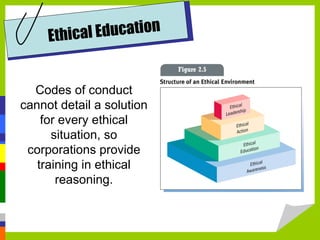
Education
Ethical
Codes of conduct
cannot detail a solution
for every ethical
situation, so
corporations provide
training in ethical
reasoning.
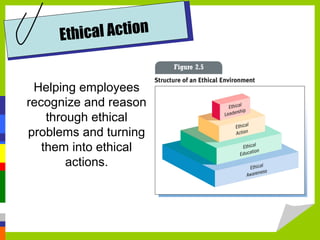
ical Action
Eth
Helping employees
recognize and reason
through ethical
problems and turning
them into ethical
actions.
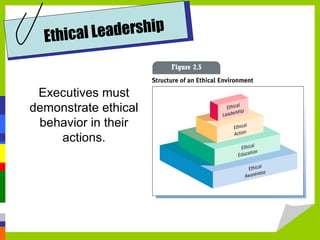
eadership
Ethical L

Executives must
demonstrate ethical
behavior in their
actions.
ponsibly to
Acting Res
tisfy Society
Sa
Social Responsibility
• Management’s consideration of profit,
consumer satisfaction, and societal
well-being of equal value in evaluating
the firm’s performance.
• Contributions to the overall economy,
job opportunities, and charitable
contributions and service.
• Organizations measure through social
audits.
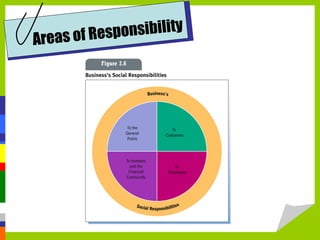
onsibility
reas of Resp
A
ibilities to
Respons
eral Public
the Gen
• Public Health Issues. What to do about inherently dangerous
products such as alcohol, tobacco, and firearms.
• Protecting the Environment. Using resources efficiently,
minimizing pollution.
• Recycling. Reprocessing used materials for reuse.
• Developing the Quality of the Workforce. Enhancing quality of
the overall workforce through education and diversity initiatives.
• Corporate Philanthropy. Cash contributions, donations of
equipment and products, and supporting the volunteer efforts of
company employees.
ibilities to
Respons
ustomers
C
• The Right to Be Safe. Safe operation of products,
avoiding product liability.
• The Right to Be Informed. Avoiding false or misleading
advertising and providing effective customer service.
• The Right to Choose. Ability of consumers to choose
the products and services they want.
• The Right to Be Heard. Ability of consumers to
express legitimate complaints to the appropriate parties.
ibilities to
Respons
mployees
E
• Workplace Safety.
• Quality-of-Life Issues. Balancing work and family through
flexible work schedules, subsidized child care, and regulation.
• Ensuring Equal Opportunity on the Job. Providing equal
opportunities to all employees without discrimination; many
aspects regulated by law.
• Age Discrimination.
• Sexual Harassment and Sexism. Avoiding unwelcome actions
of a sexual nature; equal pay for equal work without regard to
gender.
ibilities to
Respons
Investors
• Obligation to make profits for shareholders.
• Expectation of ethical and moral behavior.
• Investors protected by regulation by the
Securities and Exchange Commission
and state regulations.

Business Ethics

  • 1.
    >>>>>>>> Chapter 2 Business Ethicsand Social Responsibility
  • 2.
    ng Goals Learni 1 Explainthe concepts of business ethics and social responsibility. 2 Describe the factors that influence business ethics. 3 List the stages in the development of ethical standards. 4 Identify common ethical dilemmas in the workplace. 5 Discuss how organizations shape ethical behavior. 6 Describe how businesses’ social responsibility is measured. Summarize the responsibilities of 7 business to the general public, customers, and employees. Explain why investors 8 are concerned with business ethics and social responsibility.
  • 3.
    for Ethical Concern al Issues andSociet Business Ethics The standards of conduct and moral values governing actions and decisions in the work environment. – Social responsibility. – Balance between what’s right and what’s profitable. – Often no clear-cut choices. – Often shaped by the organization’s ethical climate. Sarbanes-Oxley Act 2002 law that added oversight for the nation’s major companies and a special oversight board to regulate public accounting firms that audit the financial records of these corporations.
  • 4.
    temporary The Con ironment Ethical Env •High profile investigations and arrests in headlines. • Vast majority of businesses ethical. • New corporate officers charged with deterring wrongdoing and ensuring ethical standards. Johnson & Johnson Website
  • 5.
    duals Make Indivi ifference AD • Individualscan make the difference in ethical expectations and behavior – Putting own interest ahead of the organization – Lying to employee – Misrepresenting hours – Safety violations – Internet Abuse • Technology is expanding unethical behavior
  • 6.
  • 7.
    ob Ethical On-the-J Dilemmas Situation inwhich a business decision may be influenced for personal gain. Employee’s disclosure of illegal, immoral, or unethical practices in the organization. Telling the truth and adhering to deeply felt ethical principles in business decisions. Businesspeople expect employees to be loyal and truthful, but ethical conflicts may arise.
  • 8.
  • 9.
    wareness Ethical A Code ofConduct Formal statement that defines how the organization expects and requires employees to resolve ethical questions.
  • 10.
    Education Ethical Codes of conduct cannotdetail a solution for every ethical situation, so corporations provide training in ethical reasoning.
  • 11.
    ical Action Eth Helping employees recognizeand reason through ethical problems and turning them into ethical actions.
  • 12.
    eadership Ethical L Executives must demonstrateethical behavior in their actions.
  • 13.
    ponsibly to Acting Res tisfySociety Sa Social Responsibility • Management’s consideration of profit, consumer satisfaction, and societal well-being of equal value in evaluating the firm’s performance. • Contributions to the overall economy, job opportunities, and charitable contributions and service. • Organizations measure through social audits.
  • 14.
  • 15.
    ibilities to Respons eral Public theGen • Public Health Issues. What to do about inherently dangerous products such as alcohol, tobacco, and firearms. • Protecting the Environment. Using resources efficiently, minimizing pollution. • Recycling. Reprocessing used materials for reuse. • Developing the Quality of the Workforce. Enhancing quality of the overall workforce through education and diversity initiatives. • Corporate Philanthropy. Cash contributions, donations of equipment and products, and supporting the volunteer efforts of company employees.
  • 16.
    ibilities to Respons ustomers C • TheRight to Be Safe. Safe operation of products, avoiding product liability. • The Right to Be Informed. Avoiding false or misleading advertising and providing effective customer service. • The Right to Choose. Ability of consumers to choose the products and services they want. • The Right to Be Heard. Ability of consumers to express legitimate complaints to the appropriate parties.
  • 17.
    ibilities to Respons mployees E • WorkplaceSafety. • Quality-of-Life Issues. Balancing work and family through flexible work schedules, subsidized child care, and regulation. • Ensuring Equal Opportunity on the Job. Providing equal opportunities to all employees without discrimination; many aspects regulated by law. • Age Discrimination. • Sexual Harassment and Sexism. Avoiding unwelcome actions of a sexual nature; equal pay for equal work without regard to gender.
  • 18.
    ibilities to Respons Investors • Obligationto make profits for shareholders. • Expectation of ethical and moral behavior. • Investors protected by regulation by the Securities and Exchange Commission and state regulations.