The Internet micro-environment
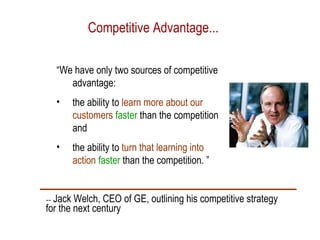
“ We have only two sources of competitive advantage:  the ability to  learn more about our customers   faster  than the competition and the ability to  turn that learning into action   faster  than the competition. ” --  Jack Welch, CEO of GE, outlining his competitive strategy for the next century Competitive Advantage...
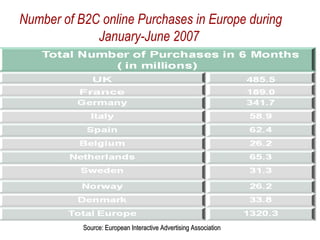
Source: European Interactive Advertising Association Number of B2C online Purchases in Europe during January-June 2007
 
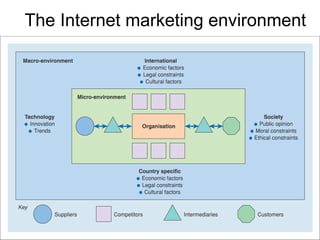
The Internet marketing environment
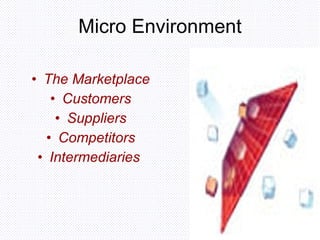
Micro Environment The Marketplace Customers Suppliers Competitors Intermediaries
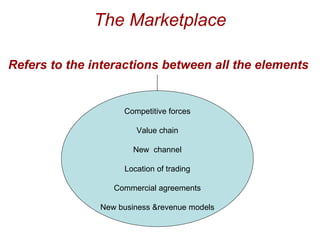
The Marketplace Refers to the interactions between all the elements   Competitive forces Value chain New  channel Location of trading Commercial agreements New business &revenue models
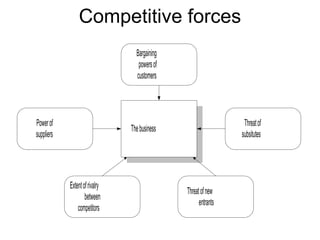
Competitive forces


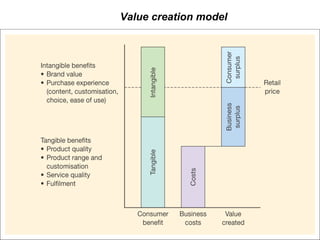
Value creation model
 
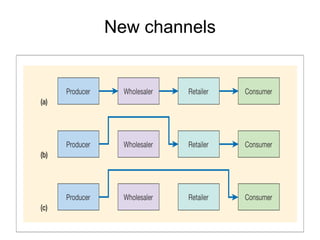
New channels
 
 
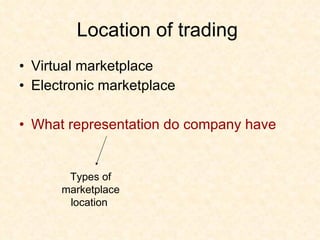
Location of trading  Virtual marketplace Electronic marketplace What representation do company have Types of marketplace location
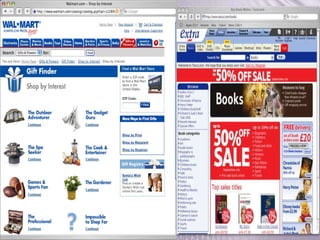
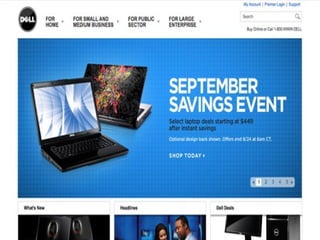
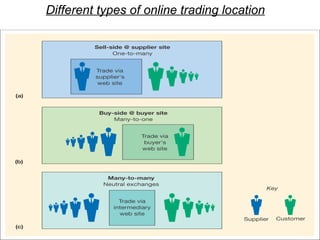
Different types of online trading location
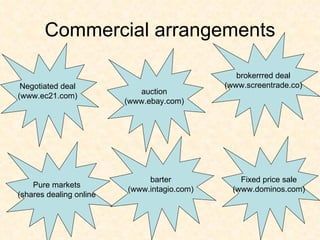
Commercial arrangements Negotiated deal (www.ec21.com) brokerrred deal (www.screentrade.co) auction (www.ebay.com) Fixed price sale (www.dominos.com) barter (www.intagio.com) Pure markets (shares dealing online
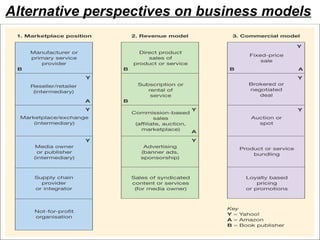
  Alternative perspectives on business models
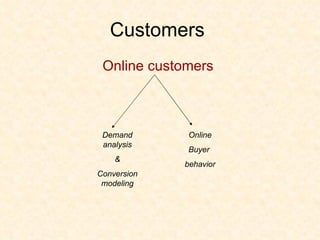
Customers  Online customers  Demand analysis & Conversion modeling Online Buyer  behavior
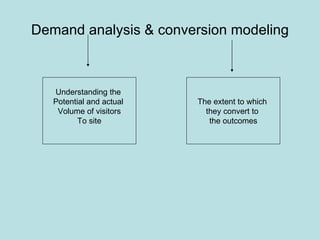
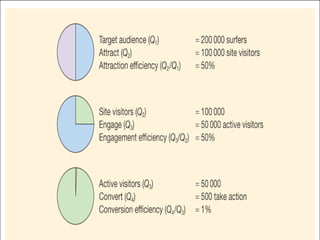
Demand analysis & conversion modeling Understanding the  Potential and actual  Volume of visitors To site The extent to which  they convert to  the outcomes
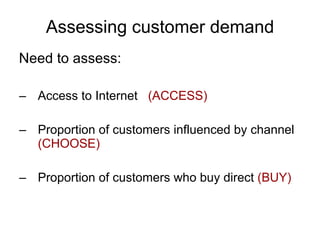
Assessing customer demand Need to assess: Access to Internet  (ACCESS) Proportion of customers influenced by channel  (CHOOSE) Proportion of customers who buy direct  (BUY)
 
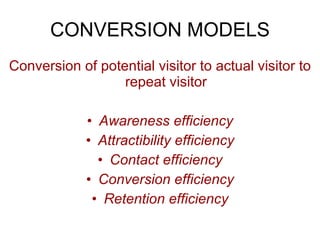
CONVERSION MODELS Conversion of potential visitor to actual visitor to repeat visitor Awareness efficiency Attractibility efficiency Contact efficiency Conversion efficiency Retention efficiency
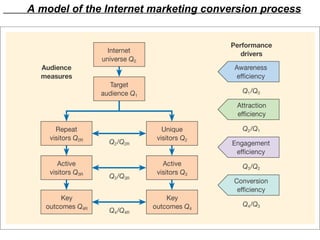
A model of the Internet marketing conversion process
 
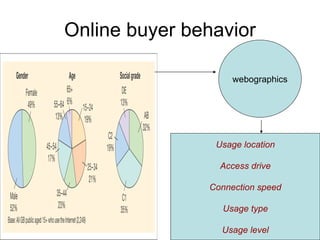
Online buyer behavior webographics Usage location Access drive Connection speed Usage type Usage level
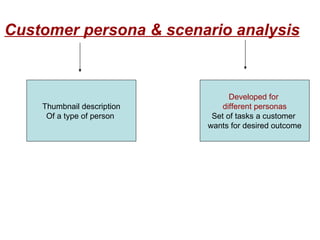
Customer persona & scenario analysis Thumbnail description Of a type of person  Developed for  different personas Set of tasks a customer  wants for desired outcome
Models of online behavior Lewis & Lewis (1997) E-Consultancy (2004) Hierarchy of Response Models
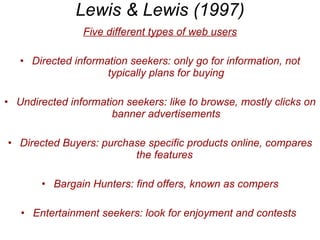
Lewis & Lewis (1997) Five different types of web users Directed information seekers: only go for information, not typically plans for buying Undirected information seekers: like to browse, mostly clicks on banner advertisements Directed Buyers: purchase specific products online, compares the features  Bargain Hunters: find offers, known as compers Entertainment seekers: look for enjoyment and contests
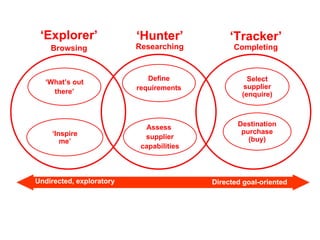
E-Consultancy (2004) On the basis of UK retail sites  Classification on the basis of online shopping behavior
Select supplier (enquire) ‘ Tracker’ Completing ‘ Hunter’ Researching ‘ Explorer’ Browsing Directed goal-oriented Undirected, exploratory Destination purchase (buy) Define requirements Assess  supplier capabilities ‘ Inspire me’ ‘ What’s out there’
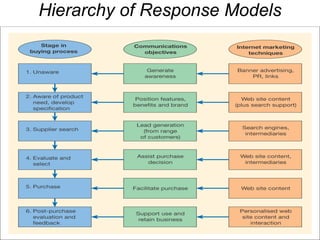
Hierarchy of Response Models
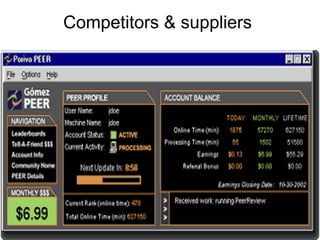
Competitors & suppliers
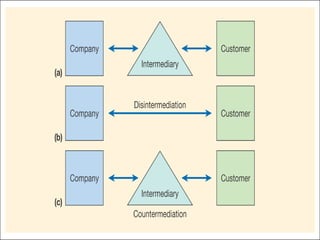
Intermediaries Are the firms that help a company to promote, sell and distribute its products/services. Provides info about the destination sites Can be independent or owned Also known as cybermediaries

Session 3 4

  • 1.
  • 2.
    “ We haveonly two sources of competitive advantage: the ability to learn more about our customers faster than the competition and the ability to turn that learning into action faster than the competition. ” -- Jack Welch, CEO of GE, outlining his competitive strategy for the next century Competitive Advantage...
  • 3.
    Source: European InteractiveAdvertising Association Number of B2C online Purchases in Europe during January-June 2007
  • 4.
  • 5.
  • 6.
    Micro Environment TheMarketplace Customers Suppliers Competitors Intermediaries
  • 7.
    The Marketplace Refersto the interactions between all the elements Competitive forces Value chain New channel Location of trading Commercial agreements New business &revenue models
  • 8.
  • 9.
  • 10.
  • 11.
  • 12.
  • 13.
  • 14.
  • 15.
  • 16.
  • 17.
  • 18.
    Location of trading Virtual marketplace Electronic marketplace What representation do company have Types of marketplace location
  • 19.
    Different types ofonline trading location
  • 20.
    Commercial arrangements Negotiateddeal (www.ec21.com) brokerrred deal (www.screentrade.co) auction (www.ebay.com) Fixed price sale (www.dominos.com) barter (www.intagio.com) Pure markets (shares dealing online
  • 21.
      Alternative perspectiveson business models
  • 22.
    Customers Onlinecustomers Demand analysis & Conversion modeling Online Buyer behavior
  • 23.
    Demand analysis &conversion modeling Understanding the Potential and actual Volume of visitors To site The extent to which they convert to the outcomes
  • 24.
    Assessing customer demandNeed to assess: Access to Internet (ACCESS) Proportion of customers influenced by channel (CHOOSE) Proportion of customers who buy direct (BUY)
  • 25.
  • 26.
    CONVERSION MODELS Conversionof potential visitor to actual visitor to repeat visitor Awareness efficiency Attractibility efficiency Contact efficiency Conversion efficiency Retention efficiency
  • 27.
    A model ofthe Internet marketing conversion process
  • 28.
  • 29.
    Online buyer behaviorwebographics Usage location Access drive Connection speed Usage type Usage level
  • 30.
    Customer persona &scenario analysis Thumbnail description Of a type of person Developed for different personas Set of tasks a customer wants for desired outcome
  • 31.
    Models of onlinebehavior Lewis & Lewis (1997) E-Consultancy (2004) Hierarchy of Response Models
  • 32.
    Lewis & Lewis(1997) Five different types of web users Directed information seekers: only go for information, not typically plans for buying Undirected information seekers: like to browse, mostly clicks on banner advertisements Directed Buyers: purchase specific products online, compares the features Bargain Hunters: find offers, known as compers Entertainment seekers: look for enjoyment and contests
  • 33.
    E-Consultancy (2004) Onthe basis of UK retail sites Classification on the basis of online shopping behavior
  • 34.
    Select supplier (enquire)‘ Tracker’ Completing ‘ Hunter’ Researching ‘ Explorer’ Browsing Directed goal-oriented Undirected, exploratory Destination purchase (buy) Define requirements Assess supplier capabilities ‘ Inspire me’ ‘ What’s out there’
  • 35.
  • 36.
  • 37.
    Intermediaries Are thefirms that help a company to promote, sell and distribute its products/services. Provides info about the destination sites Can be independent or owned Also known as cybermediaries