Section 5
Civil Service
Development of Civil Service
• The Beginnings:
• Washington and Adams appointed men from
their own party (Federalist)
• When Jefferson took office, he found most
federal posts were filled by men that opposed
his political view
• Jefferson then dismissed several hundred
Federalists and replaced them with
Democratic-Republicans
• Spoils system:
• Made famous by Andrew Jackson (but
Jefferson laid the foundation for it)
• Jackson saw this as a way to build and hold
power
• Problem was that many positions were filled
by incompetent and/or corrupt people
• Movement to Reform:
• People pressed for reforms
• Assisted by Civil Service Commission in 1871
• Soon died away because Congress did not
have enough money to support it
• Tragedy brought about most fundamental
changes:
–President Garfield was fatally shot by
Charles Guiteau, a disappointed office
seeker. Garfield rejected the mentally
unstable Guiteau
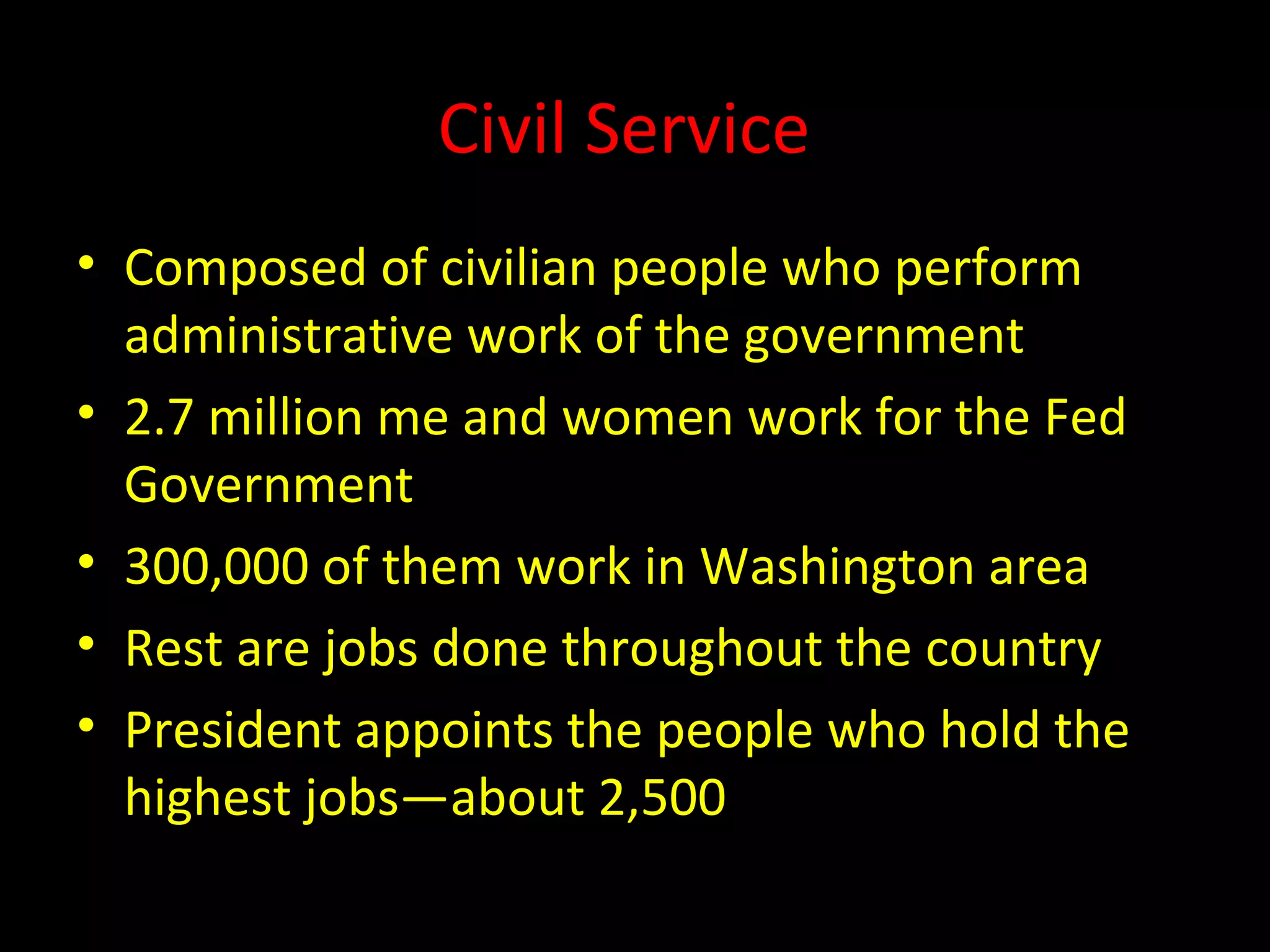
Civil Service
• Composed of civilian people who perform
administrative work of the government
• 2.7 million me and women work for the Fed
Government
• 300,000 of them work in Washington area
• Rest are jobs done throughout the country
• President appoints the people who hold the
highest jobs—about 2,500
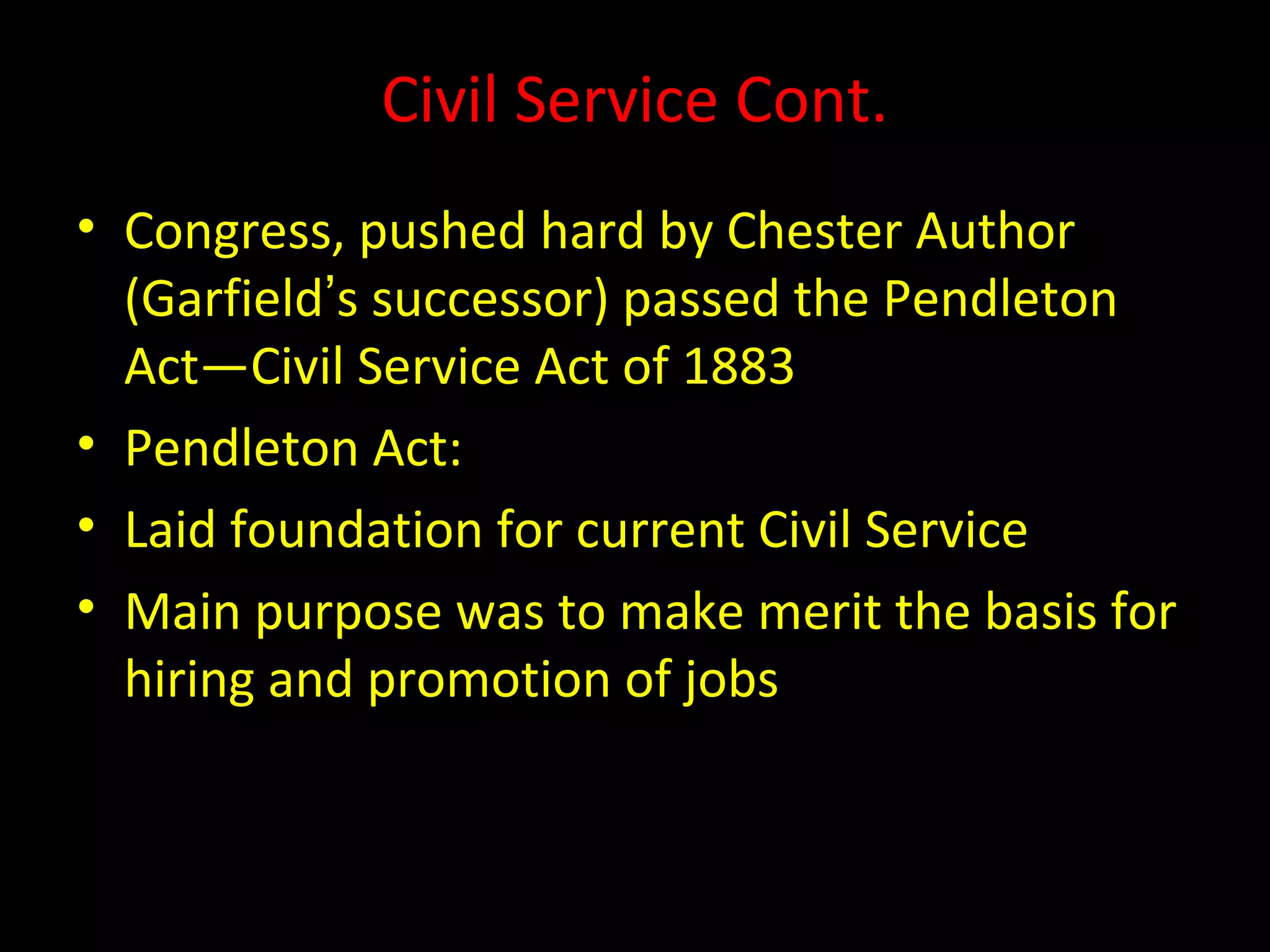
Civil Service Cont.
• Congress, pushed hard by Chester Author
(Garfield’s successor) passed the Pendleton
Act—Civil Service Act of 1883
• Pendleton Act:
• Laid foundation for current Civil Service
• Main purpose was to make merit the basis for
hiring and promotion of jobs
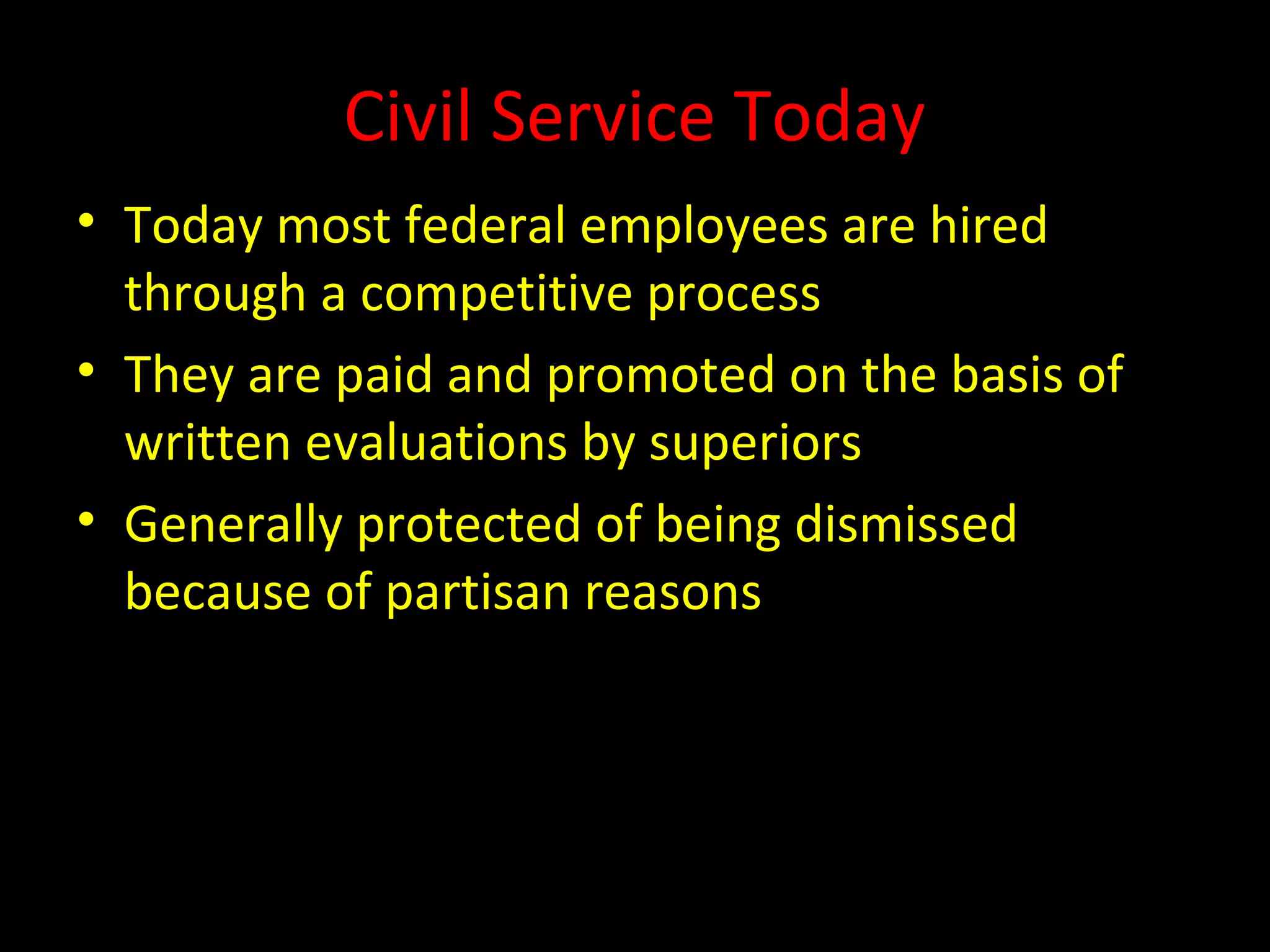
Civil Service Today
• Today most federal employees are hired
through a competitive process
• They are paid and promoted on the basis of
written evaluations by superiors
• Generally protected of being dismissed
because of partisan reasons
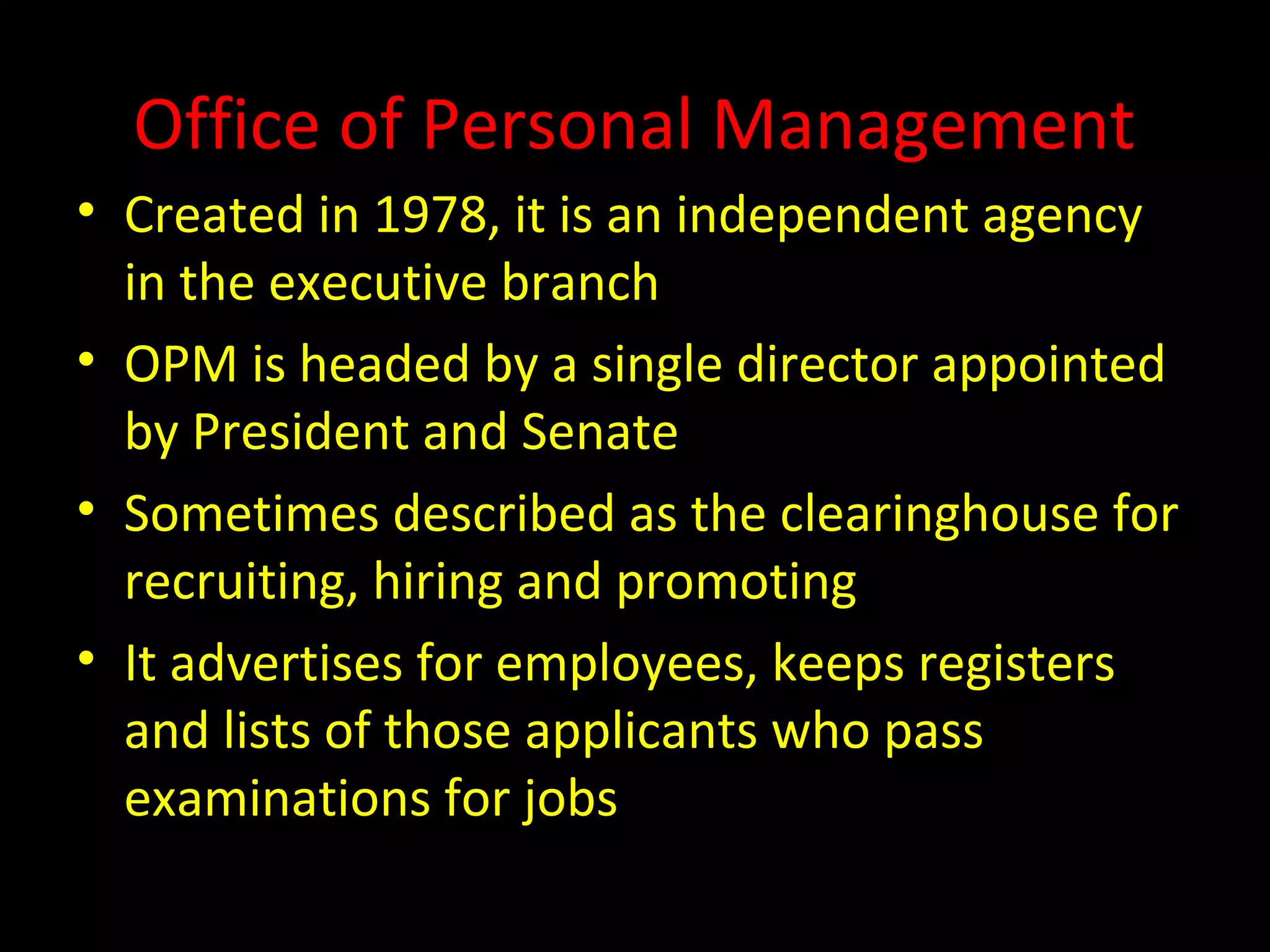
Office of Personal Management
• Created in 1978, it is an independent agency
in the executive branch
• OPM is headed by a single director appointed
by President and Senate
• Sometimes described as the clearinghouse for
recruiting, hiring and promoting
• It advertises for employees, keeps registers
and lists of those applicants who pass
examinations for jobs
Pay and Benefits
• Congress sets pay and other job conditions for
those that work in Federal Govt. except
employees of Postal Service
Political Activities
• Several laws and regulations place restrictions
on political activities of federal civil servants
• Most of these laws/regulations deal with
voting and elections
• Employees of Civil Service can run for
local/regional offices, vote in elections and
contribute money and campaign funds to
candidates of various political backgrounds

Chapter 15 section 5

  • 1.
  • 2.
    Development of CivilService • The Beginnings: • Washington and Adams appointed men from their own party (Federalist) • When Jefferson took office, he found most federal posts were filled by men that opposed his political view • Jefferson then dismissed several hundred Federalists and replaced them with Democratic-Republicans
  • 3.
    • Spoils system: •Made famous by Andrew Jackson (but Jefferson laid the foundation for it) • Jackson saw this as a way to build and hold power • Problem was that many positions were filled by incompetent and/or corrupt people
  • 4.
    • Movement toReform: • People pressed for reforms • Assisted by Civil Service Commission in 1871 • Soon died away because Congress did not have enough money to support it • Tragedy brought about most fundamental changes: –President Garfield was fatally shot by Charles Guiteau, a disappointed office seeker. Garfield rejected the mentally unstable Guiteau
  • 5.
    Civil Service • Composedof civilian people who perform administrative work of the government • 2.7 million me and women work for the Fed Government • 300,000 of them work in Washington area • Rest are jobs done throughout the country • President appoints the people who hold the highest jobs—about 2,500
  • 6.
    Civil Service Cont. •Congress, pushed hard by Chester Author (Garfield’s successor) passed the Pendleton Act—Civil Service Act of 1883 • Pendleton Act: • Laid foundation for current Civil Service • Main purpose was to make merit the basis for hiring and promotion of jobs
  • 7.
    Civil Service Today •Today most federal employees are hired through a competitive process • They are paid and promoted on the basis of written evaluations by superiors • Generally protected of being dismissed because of partisan reasons
  • 8.
    Office of PersonalManagement • Created in 1978, it is an independent agency in the executive branch • OPM is headed by a single director appointed by President and Senate • Sometimes described as the clearinghouse for recruiting, hiring and promoting • It advertises for employees, keeps registers and lists of those applicants who pass examinations for jobs
  • 9.
    Pay and Benefits •Congress sets pay and other job conditions for those that work in Federal Govt. except employees of Postal Service
  • 10.
    Political Activities • Severallaws and regulations place restrictions on political activities of federal civil servants • Most of these laws/regulations deal with voting and elections • Employees of Civil Service can run for local/regional offices, vote in elections and contribute money and campaign funds to candidates of various political backgrounds