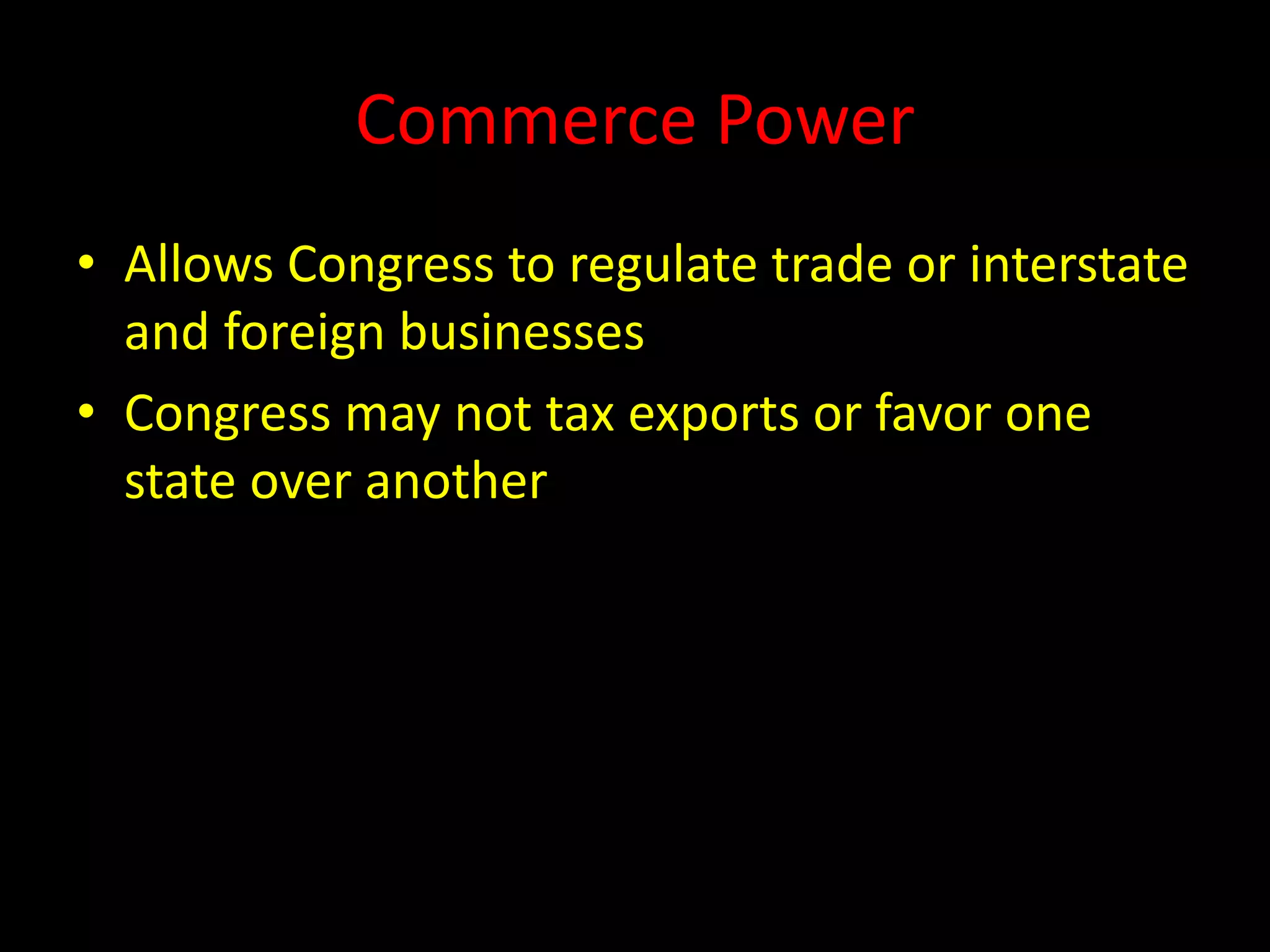
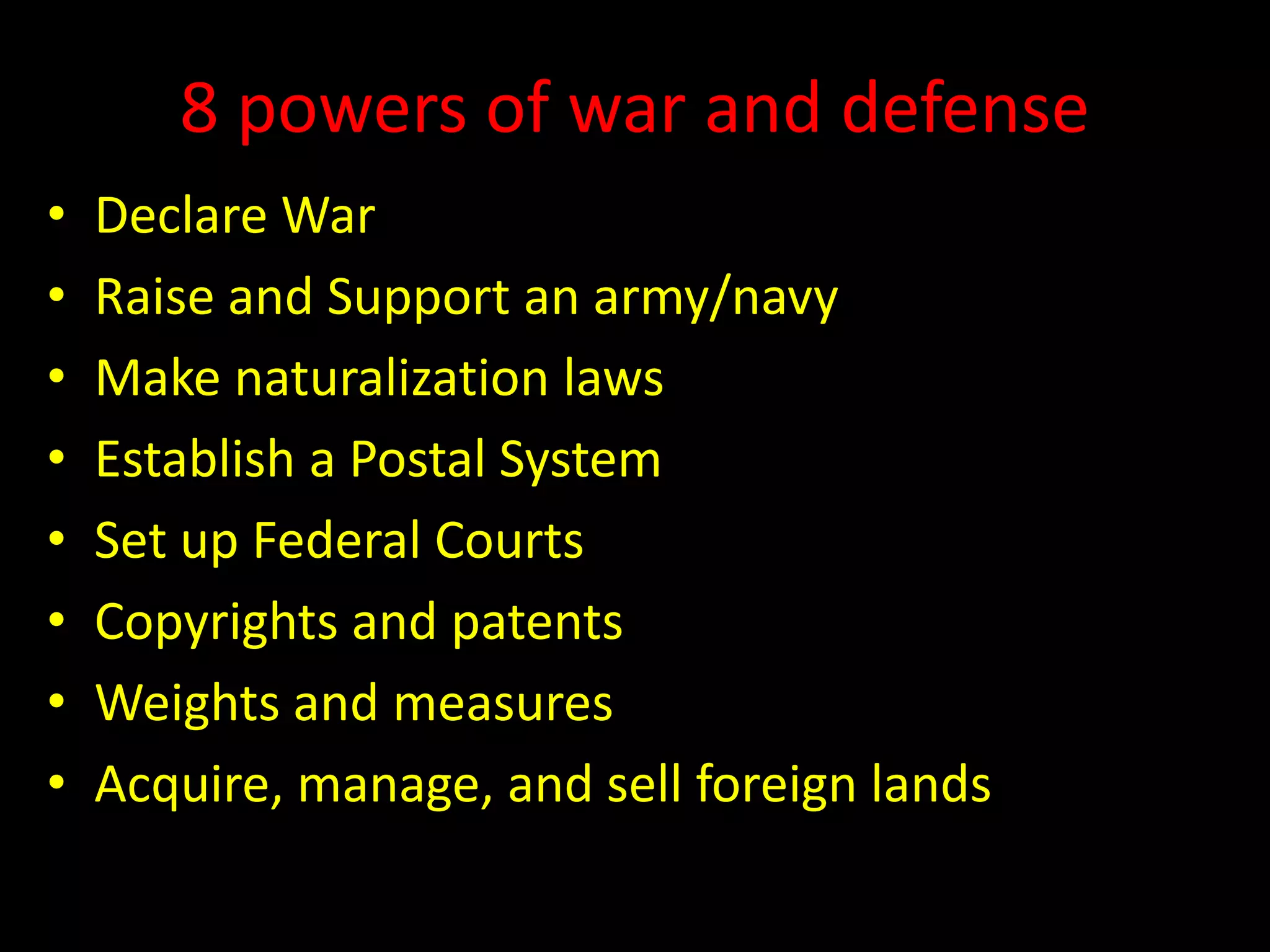
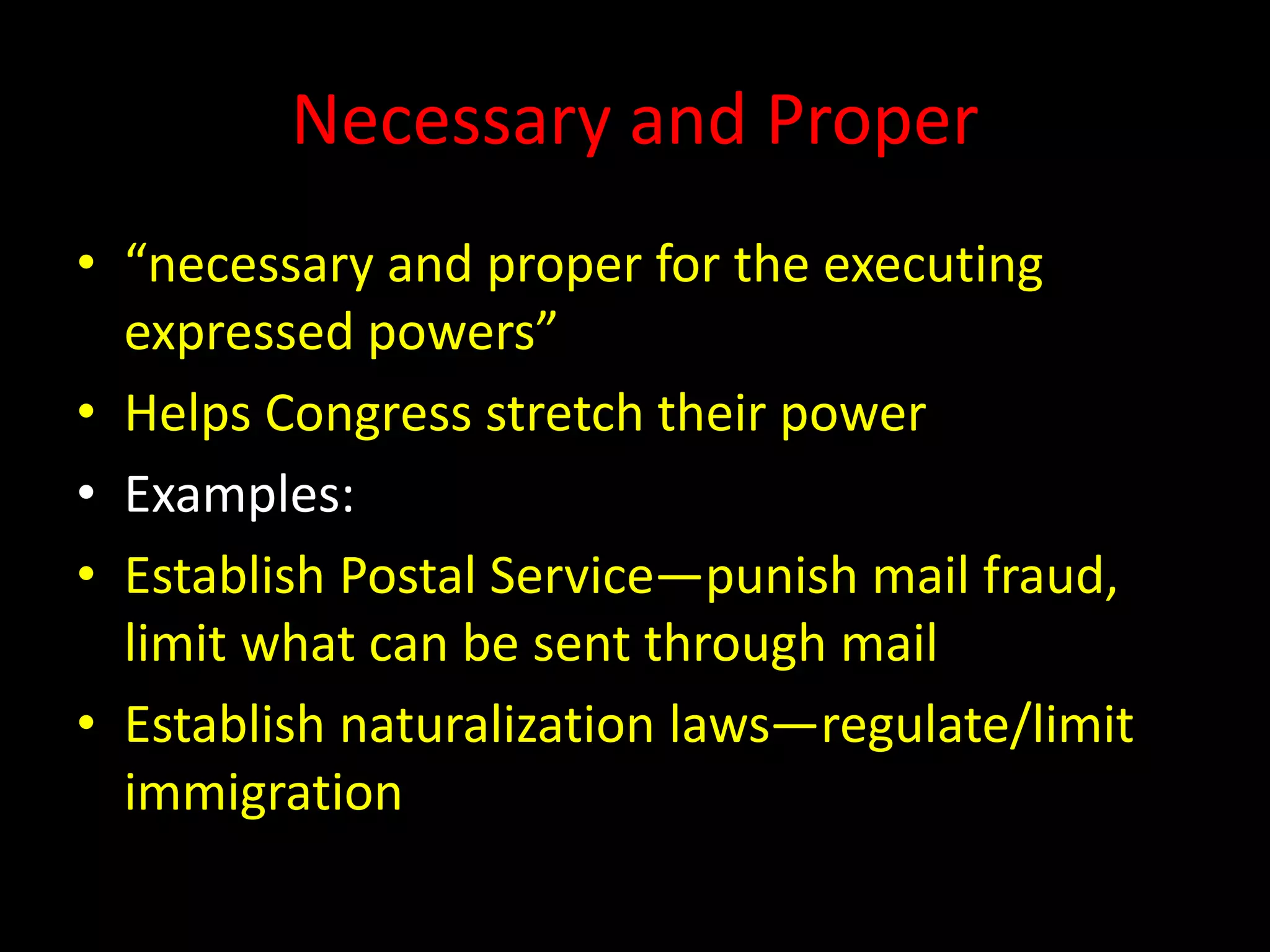
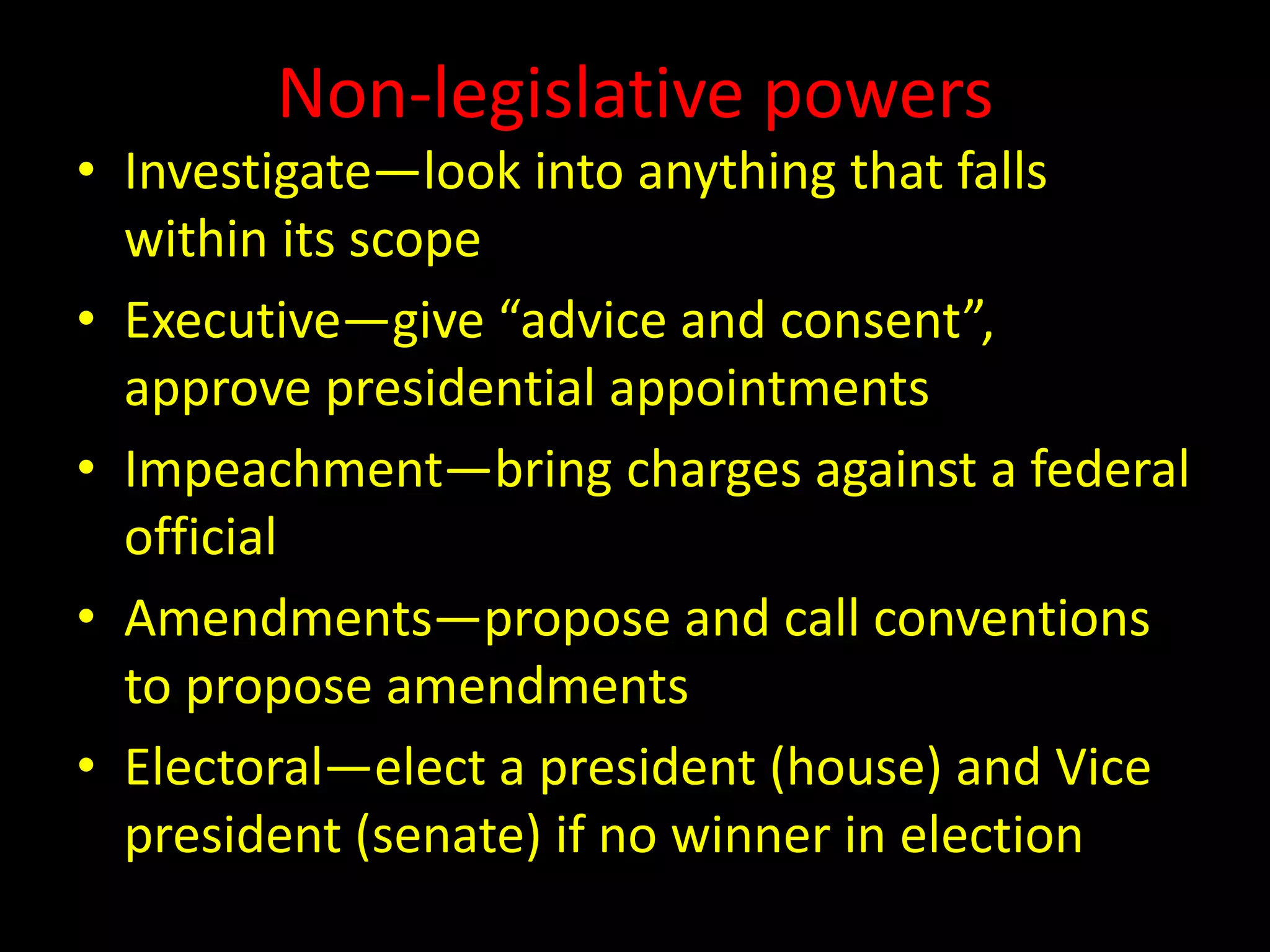
The document outlines the different types of powers granted to Congress. Expressed powers are specifically enumerated in the Constitution, such as the power to tax, borrow money, coin money, regulate commerce, and establish rules of war and defense. Implied powers are not explicitly listed but are necessary and proper to carry out expressed powers, like establishing the postal service and immigration laws. Inherent powers are said to be fundamental aspects of government like controlling borders and acquiring new territories. Congress can interpret its powers both strictly, limiting itself to only what is written, or liberally, taking a broad view of what the Constitution permits. Non-legislative powers include investigating matters, approving appointments, impeachment, and electoral functions.