
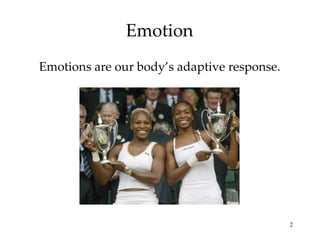



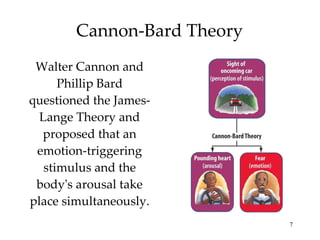
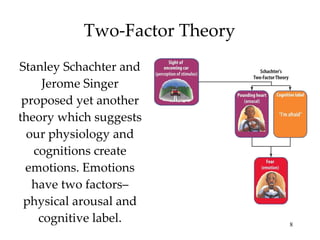


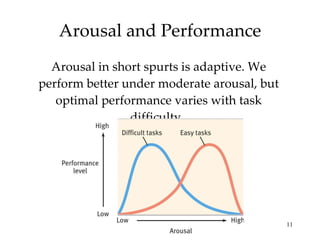
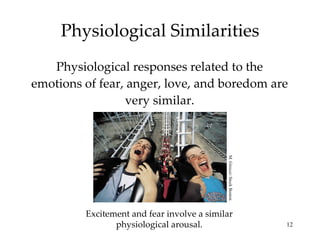
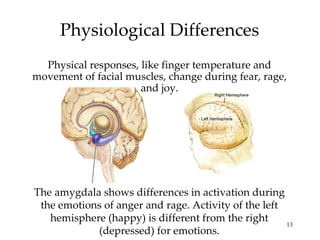


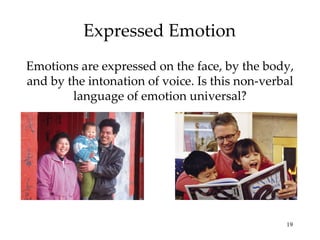


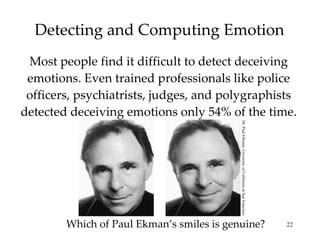

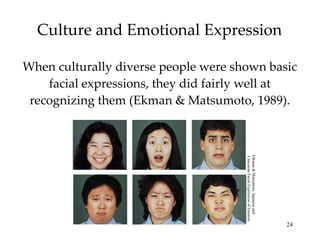
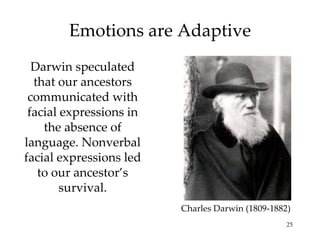
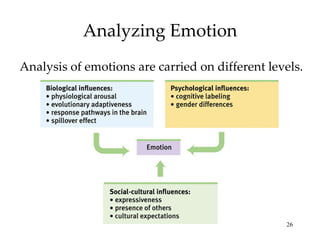
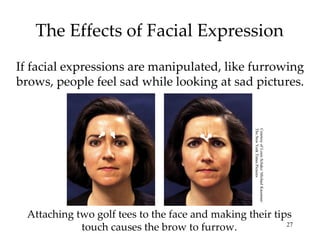

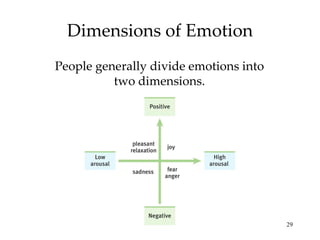





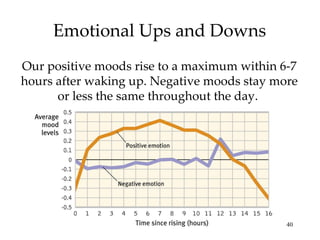
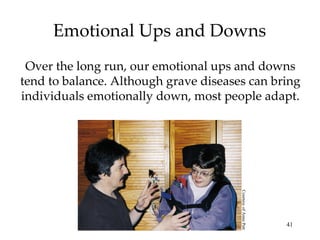
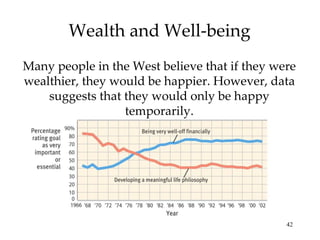
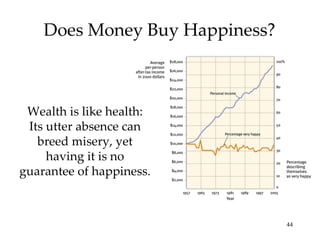

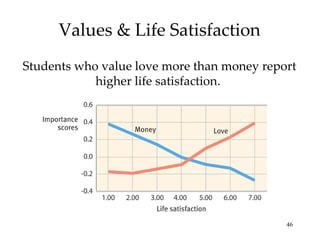

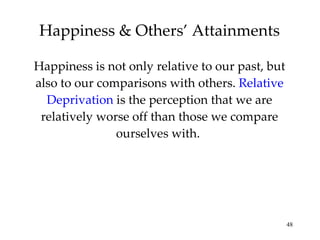
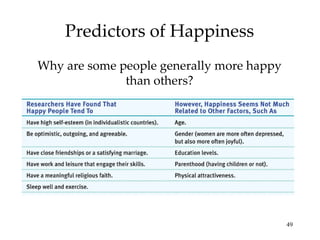

Emotions involve physiological arousal, expressive behaviors, and conscious experience. There are various theories about the relationship between these factors, such as whether physiological changes precede or follow emotional experiences. Cognition, or thinking, also influences emotions in complex ways. For example, appraisal of situations helps define emotions, but emotions can also occur unconsciously through physiological arousal before conscious thought. Nonverbal communication of emotions through facial expressions and body language may be universal to some degree. Factors like wealth, social relationships, values, and life experiences all impact levels of happiness and well-being.


