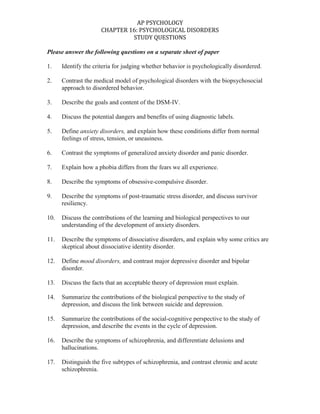
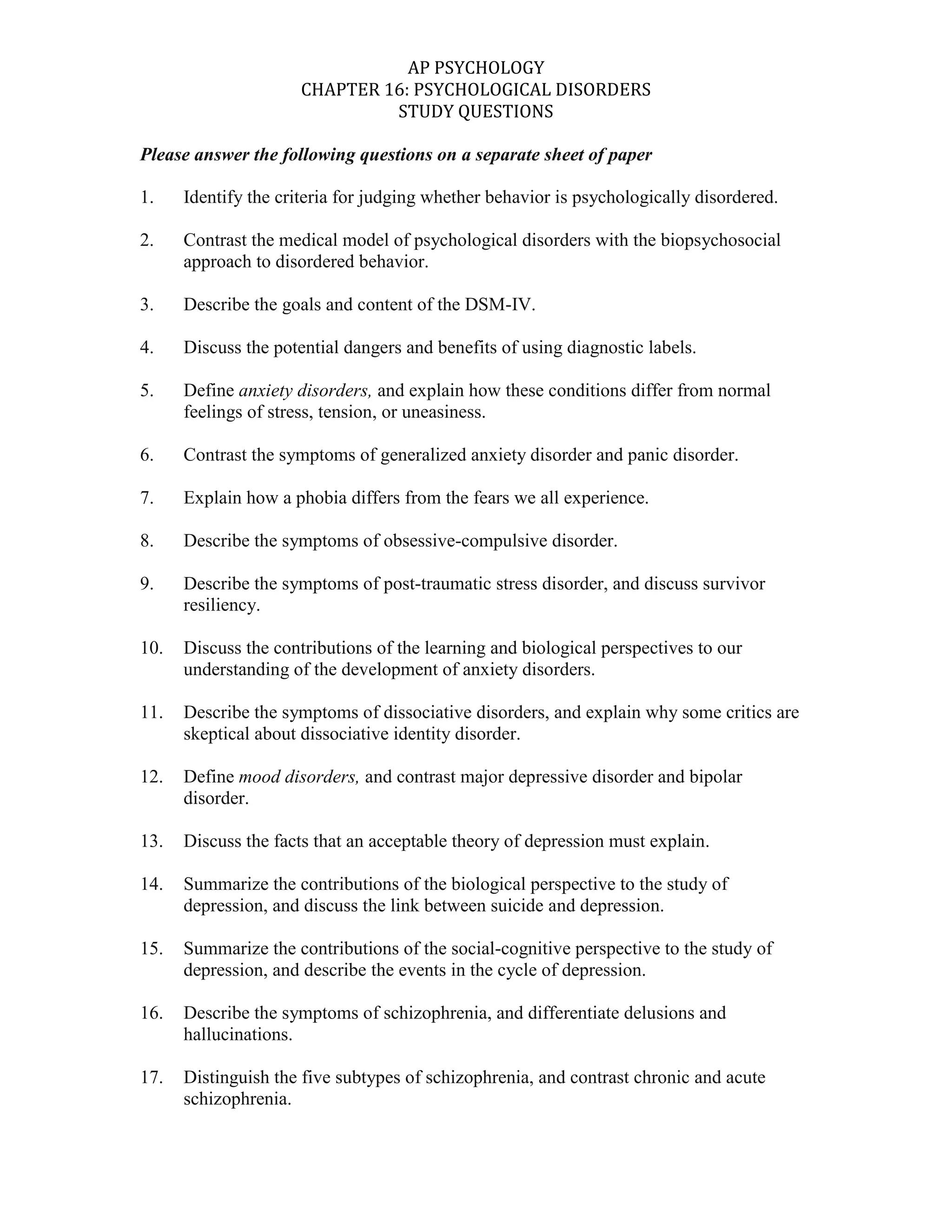
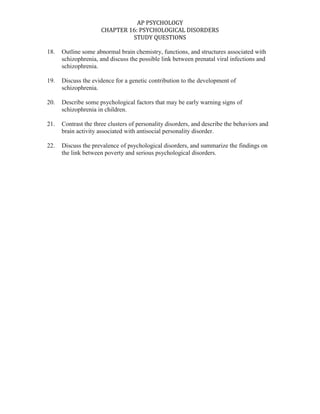
Please answer the following questions on a separate sheet of paper<br />1.Identify the criteria for judging whether behavior is psychologically disordered.<br />2.Contrast the medical model of psychological disorders with the biopsychosocial approach to disordered behavior.<br />3.Describe the goals and content of the DSM-IV.<br />4.Discuss the potential dangers and benefits of using diagnostic labels.<br />5.Define anxiety disorders, and explain how these conditions differ from normal feelings of stress, tension, or uneasiness.<br />6.Contrast the symptoms of generalized anxiety disorder and panic disorder. <br />7.Explain how a phobia differs from the fears we all experience. <br />8.Describe the symptoms of obsessive-compulsive disorder. <br />9.Describe the symptoms of post-traumatic stress disorder, and discuss survivor resiliency.<br />10.Discuss the contributions of the learning and biological perspectives to our understanding of the development of anxiety disorders.<br />11.Describe the symptoms of dissociative disorders, and explain why some critics are skeptical about dissociative identity disorder.<br />12.Define mood disorders, and contrast major depressive disorder and bipolar disorder.<br />13.Discuss the facts that an acceptable theory of depression must explain.<br />14.Summarize the contributions of the biological perspective to the study of depression, and discuss the link between suicide and depression.<br />15.Summarize the contributions of the social-cognitive perspective to the study of depression, and describe the events in the cycle of depression.<br />16.Describe the symptoms of schizophrenia, and differentiate delusions and hallucinations.<br />17.Distinguish the five subtypes of schizophrenia, and contrast chronic and acute schizophrenia.<br />18.Outline some abnormal brain chemistry, functions, and structures associated with schizophrenia, and discuss the possible link between prenatal viral infections and schizophrenia.<br />19.Discuss the evidence for a genetic contribution to the development of schizophrenia. <br />20.Describe some psychological factors that may be early warning signs of schizophrenia in children.<br />21.Contrast the three clusters of personality disorders, and describe the behaviors and brain activity associated with antisocial personality disorder.<br />22.Discuss the prevalence of psychological disorders, and summarize the findings on the link between poverty and serious psychological disorders.<br />
Chapter 16 study questions ap psych

Chapter 16 study questions ap psych

  • 1.
    Please answer thefollowing questions on a separate sheet of paper<br />1.Identify the criteria for judging whether behavior is psychologically disordered.<br />2.Contrast the medical model of psychological disorders with the biopsychosocial approach to disordered behavior.<br />3.Describe the goals and content of the DSM-IV.<br />4.Discuss the potential dangers and benefits of using diagnostic labels.<br />5.Define anxiety disorders, and explain how these conditions differ from normal feelings of stress, tension, or uneasiness.<br />6.Contrast the symptoms of generalized anxiety disorder and panic disorder. <br />7.Explain how a phobia differs from the fears we all experience. <br />8.Describe the symptoms of obsessive-compulsive disorder. <br />9.Describe the symptoms of post-traumatic stress disorder, and discuss survivor resiliency.<br />10.Discuss the contributions of the learning and biological perspectives to our understanding of the development of anxiety disorders.<br />11.Describe the symptoms of dissociative disorders, and explain why some critics are skeptical about dissociative identity disorder.<br />12.Define mood disorders, and contrast major depressive disorder and bipolar disorder.<br />13.Discuss the facts that an acceptable theory of depression must explain.<br />14.Summarize the contributions of the biological perspective to the study of depression, and discuss the link between suicide and depression.<br />15.Summarize the contributions of the social-cognitive perspective to the study of depression, and describe the events in the cycle of depression.<br />16.Describe the symptoms of schizophrenia, and differentiate delusions and hallucinations.<br />17.Distinguish the five subtypes of schizophrenia, and contrast chronic and acute schizophrenia.<br />18.Outline some abnormal brain chemistry, functions, and structures associated with schizophrenia, and discuss the possible link between prenatal viral infections and schizophrenia.<br />19.Discuss the evidence for a genetic contribution to the development of schizophrenia. <br />20.Describe some psychological factors that may be early warning signs of schizophrenia in children.<br />21.Contrast the three clusters of personality disorders, and describe the behaviors and brain activity associated with antisocial personality disorder.<br />22.Discuss the prevalence of psychological disorders, and summarize the findings on the link between poverty and serious psychological disorders.<br />