Carbon based Life
&
The Structure and
Function of
Macromolecules
Chapter 4-5
MacromoleculesChapter 4-5
2
Outline
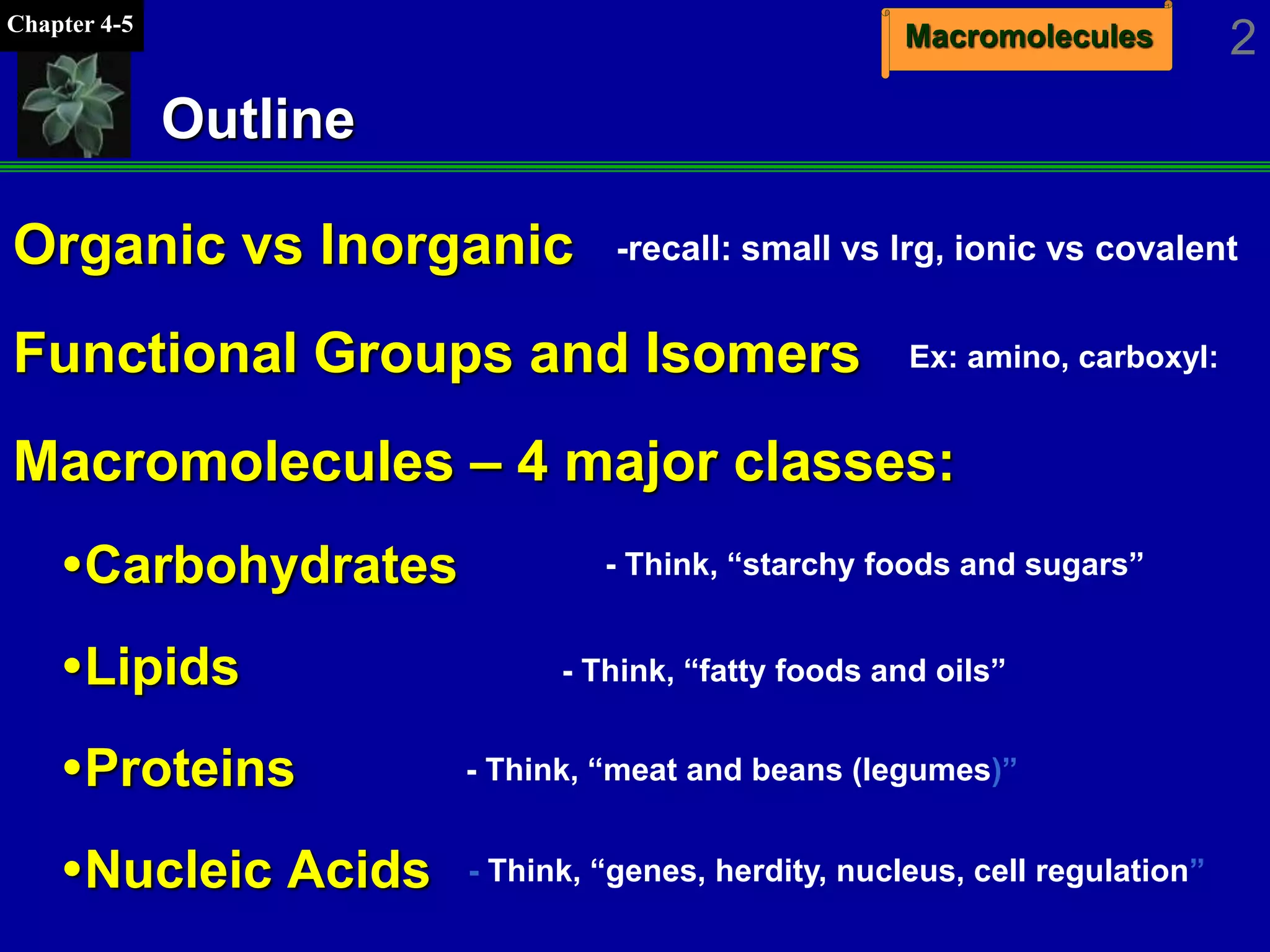
Organic vs Inorganic
Functional Groups and Isomers
Macromolecules – 4 major classes:
Carbohydrates
Lipids
Proteins
Nucleic Acids
-recall: small vs lrg, ionic vs covalent
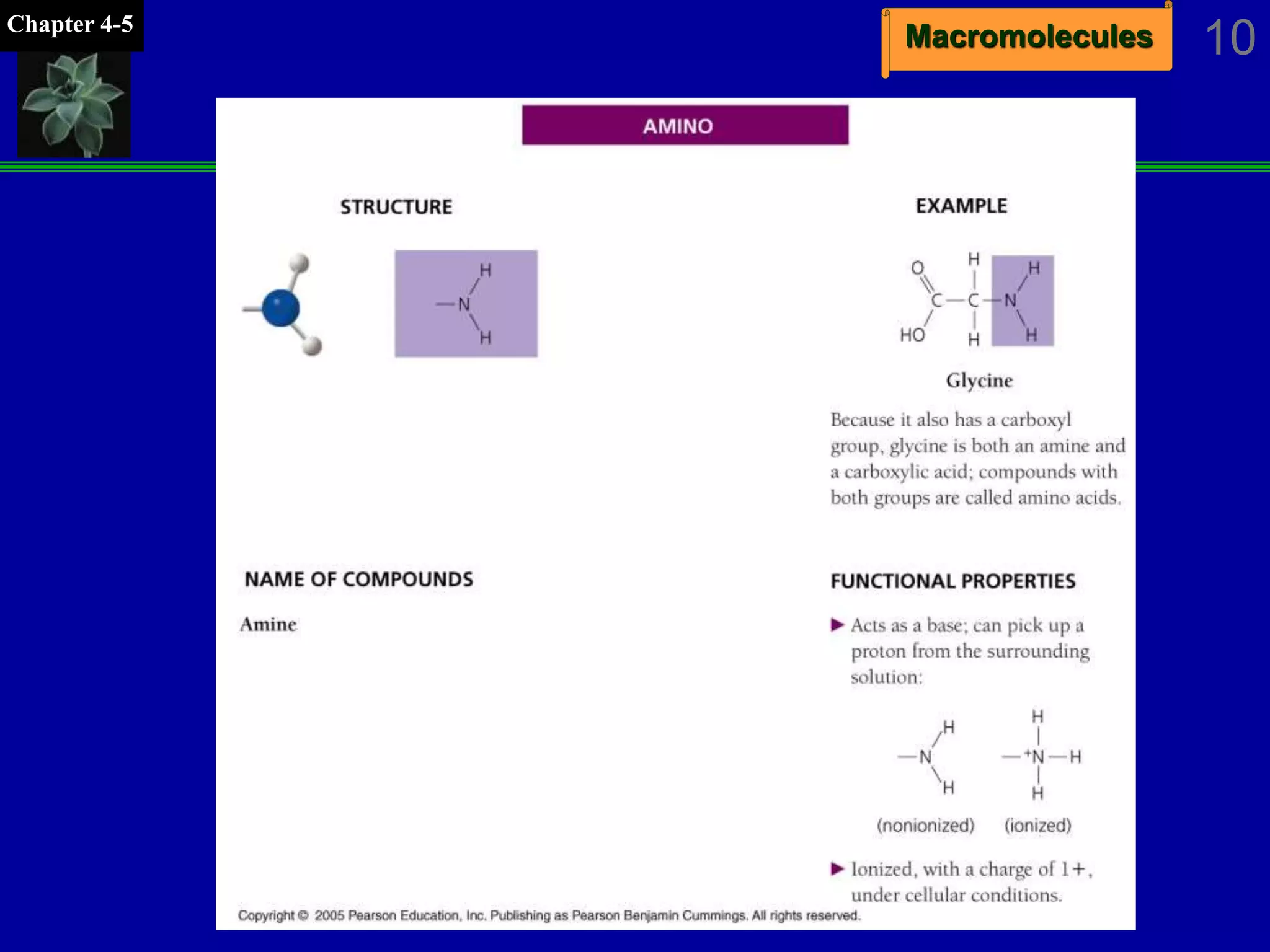
Ex: amino, carboxyl:
- Think, “starchy foods and sugars”
- Think, “fatty foods and oils”
- Think, “meat and beans (legumes)”
- Think, “genes, herdity, nucleus, cell regulation”
MacromoleculesChapter 4-5
3
Organic Molecules
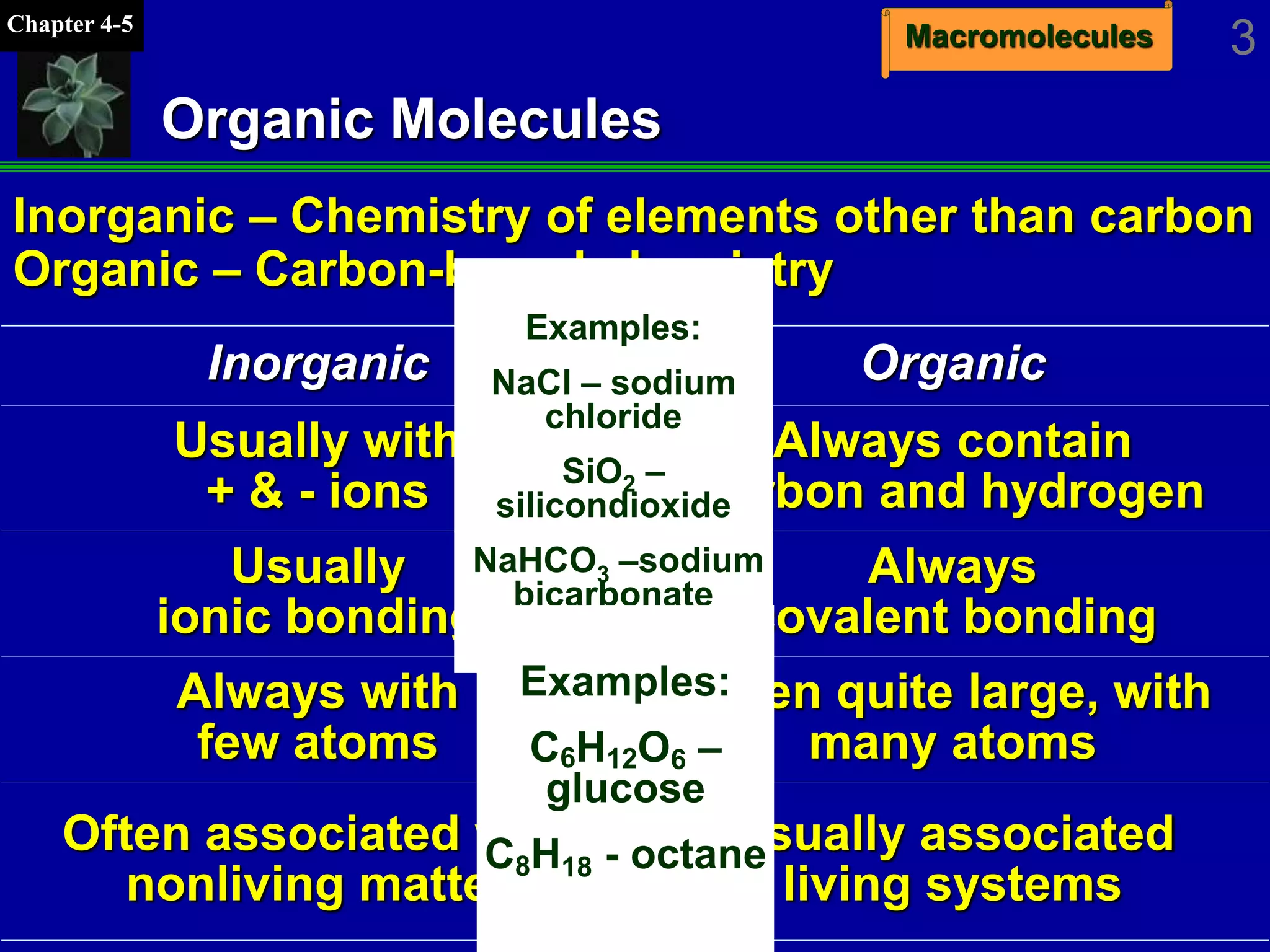
Inorganic – Chemistry of elements other than carbon
Organic – Carbon-based chemistry
Usually associated
living systems
Often associated with
nonliving matter
Often quite large, with
many atoms
Always with
few atoms
Always
covalent bonding
Usually
ionic bonding
Always contain
carbon and hydrogen
Usually with
+ & - ions
OrganicInorganic
Examples:
NaCl – sodium
chloride
SiO2 –
silicondioxide
NaHCO3 –sodium
bicarbonate
Examples:
C6H12O6 –
glucose
C8H18 - octane
MacromoleculesChapter 4-5
4
Carbon Atom
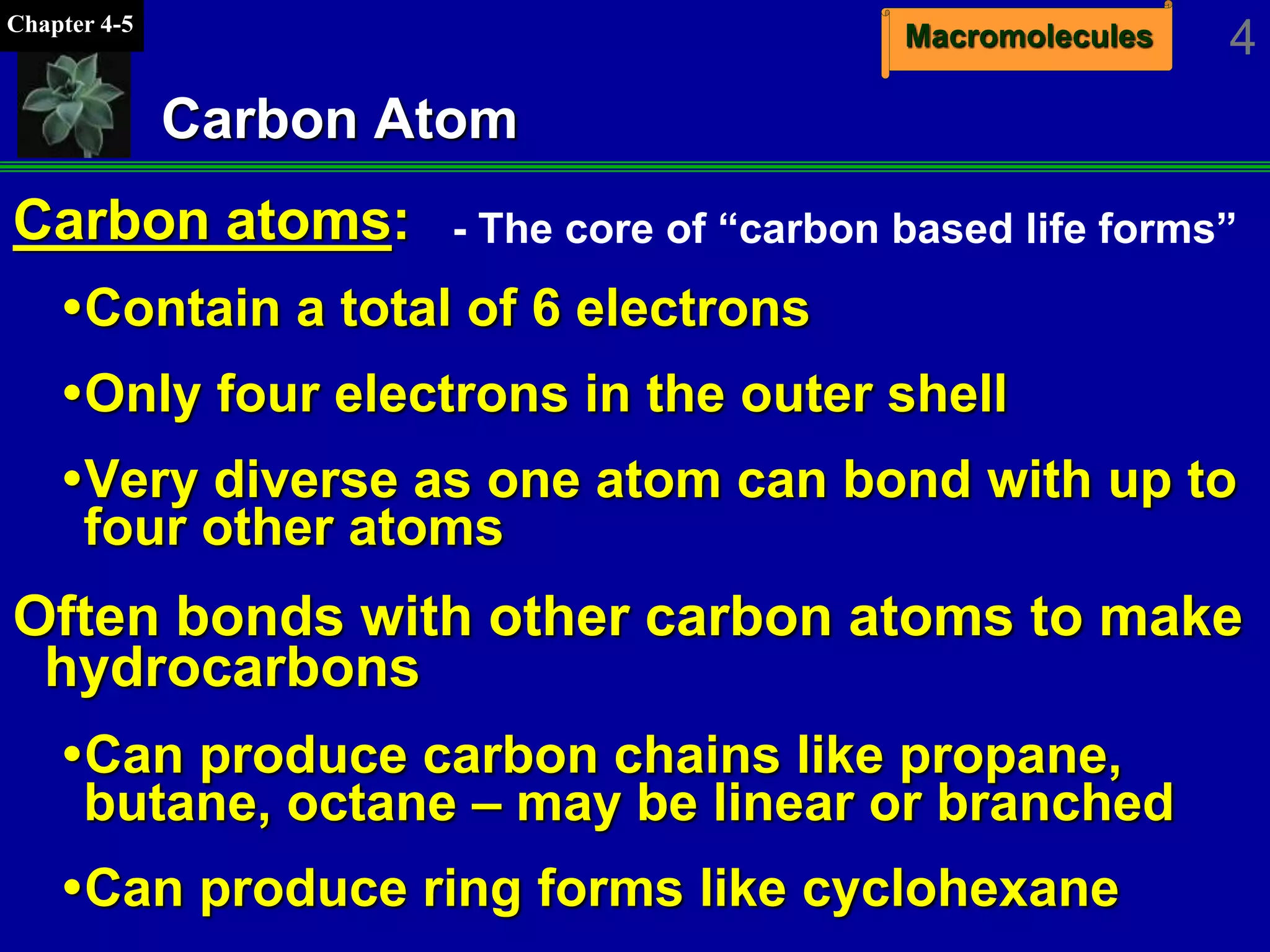
Carbon atoms:
Contain a total of 6 electrons
Only four electrons in the outer shell
Very diverse as one atom can bond with up to
four other atoms
Often bonds with other carbon atoms to make
hydrocarbons
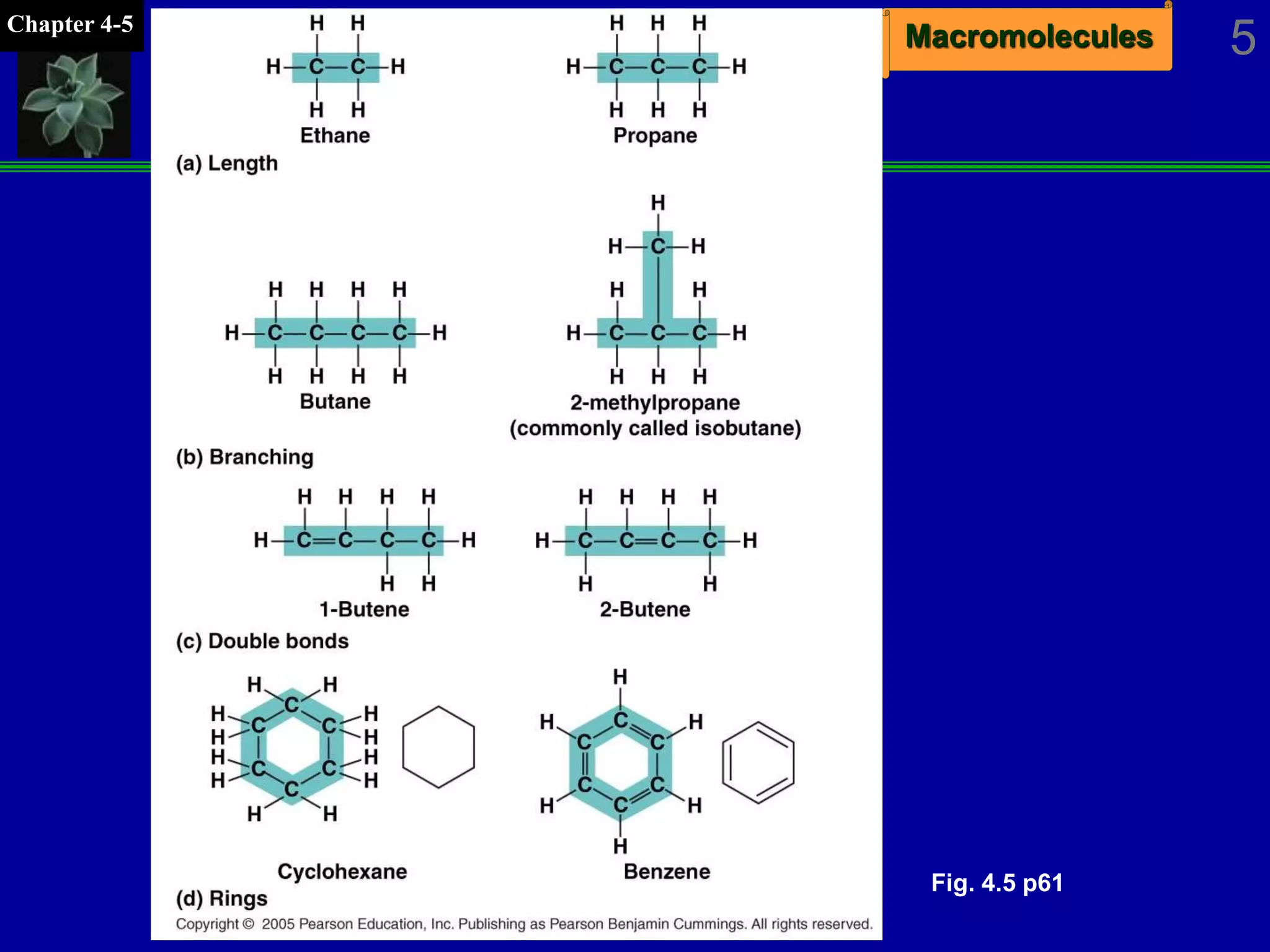
Can produce carbon chains like propane,
butane, octane – may be linear or branched
Can produce ring forms like cyclohexane
- The core of “carbon based life forms”
MacromoleculesChapter 4-5
5
Fig. 4.5 p61
MacromoleculesChapter 4-5
6Isomers
A. Structural Isomers
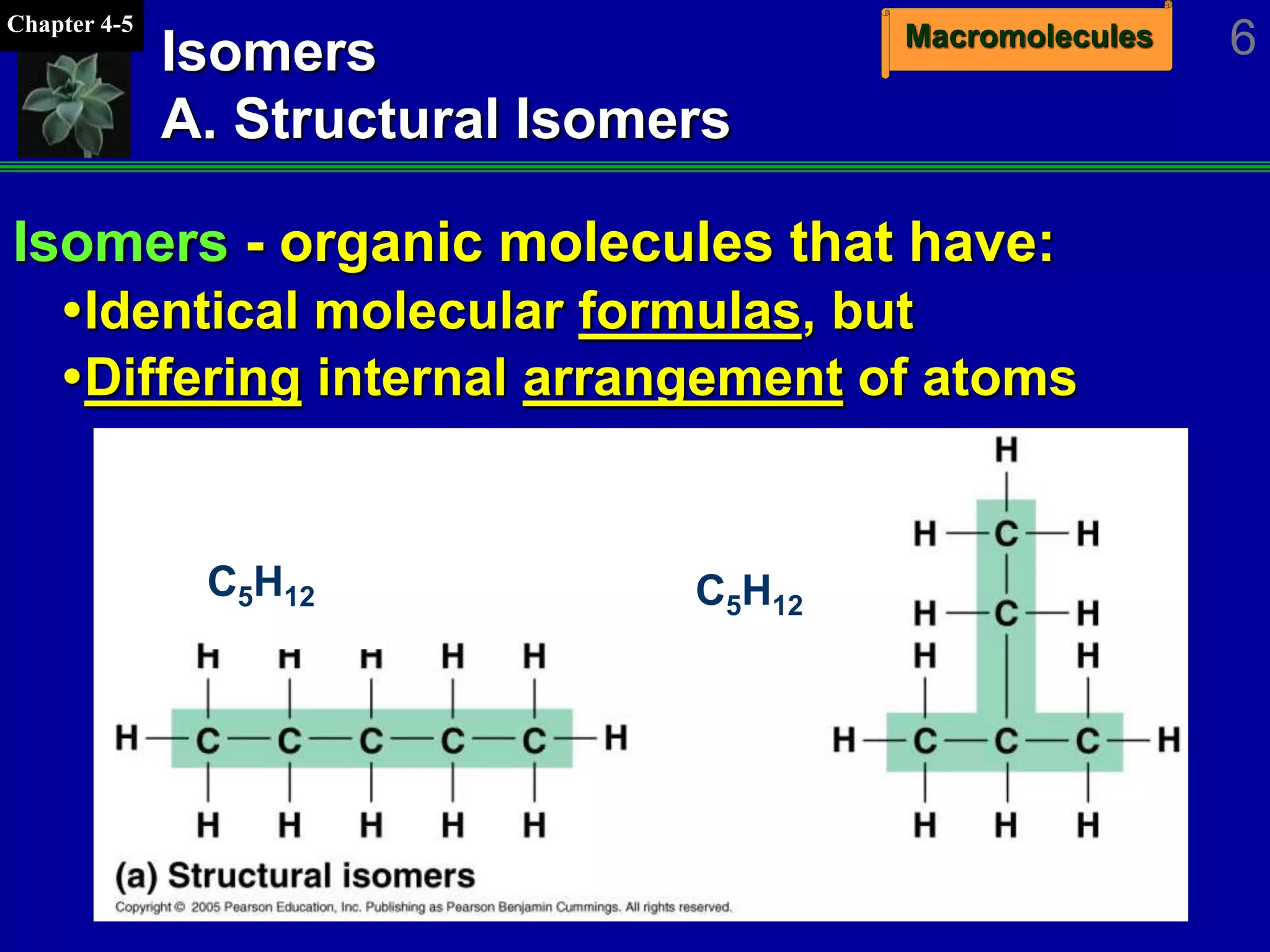
Isomers - organic molecules that have:
Identical molecular formulas, but
Differing internal arrangement of atoms
C5H12 C5H12
MacromoleculesChapter 4-5
7Isomers
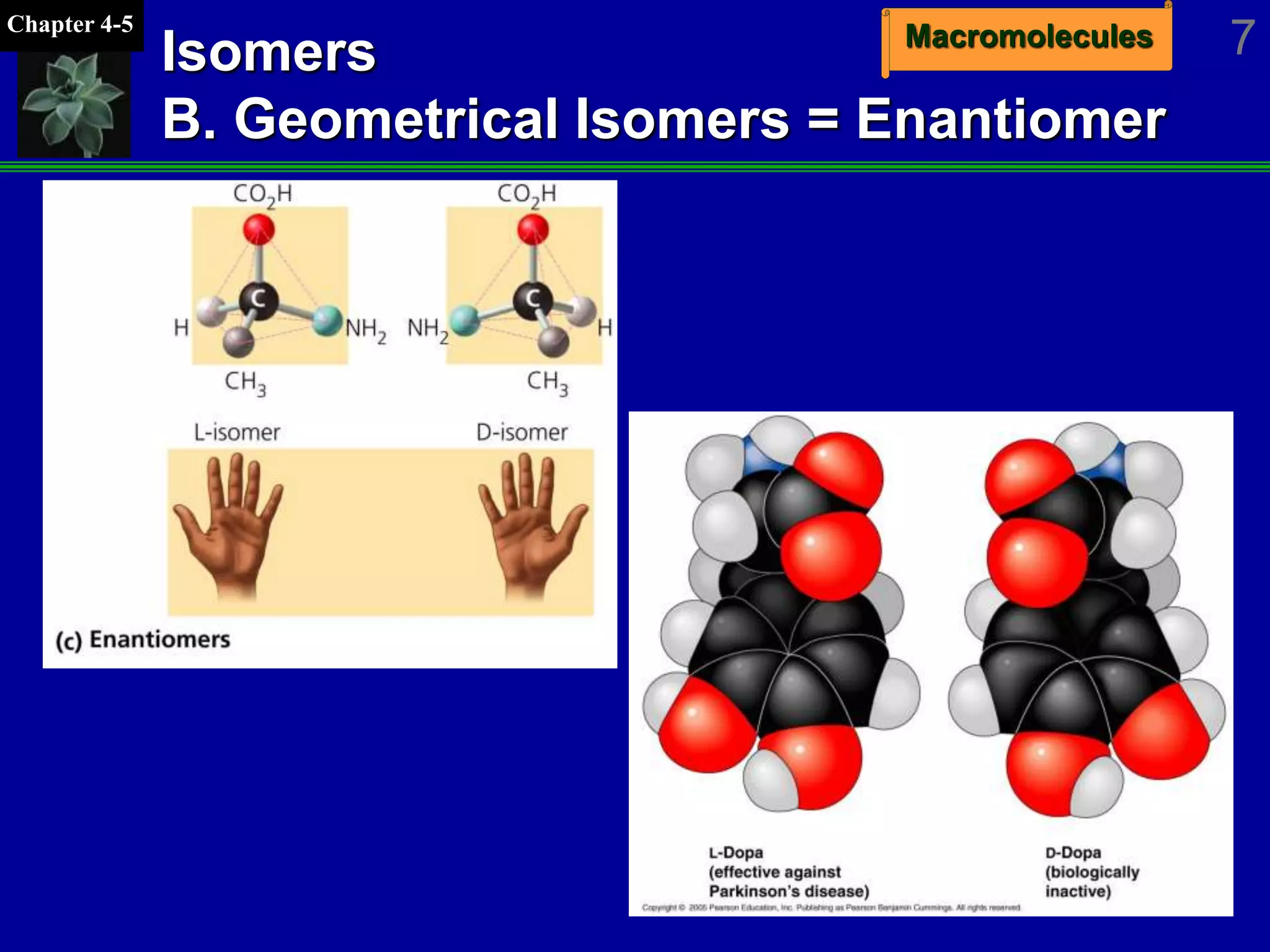
B. Geometrical Isomers = Enantiomer
MacromoleculesChapter 4-5
8
Functional Groups and Isomers
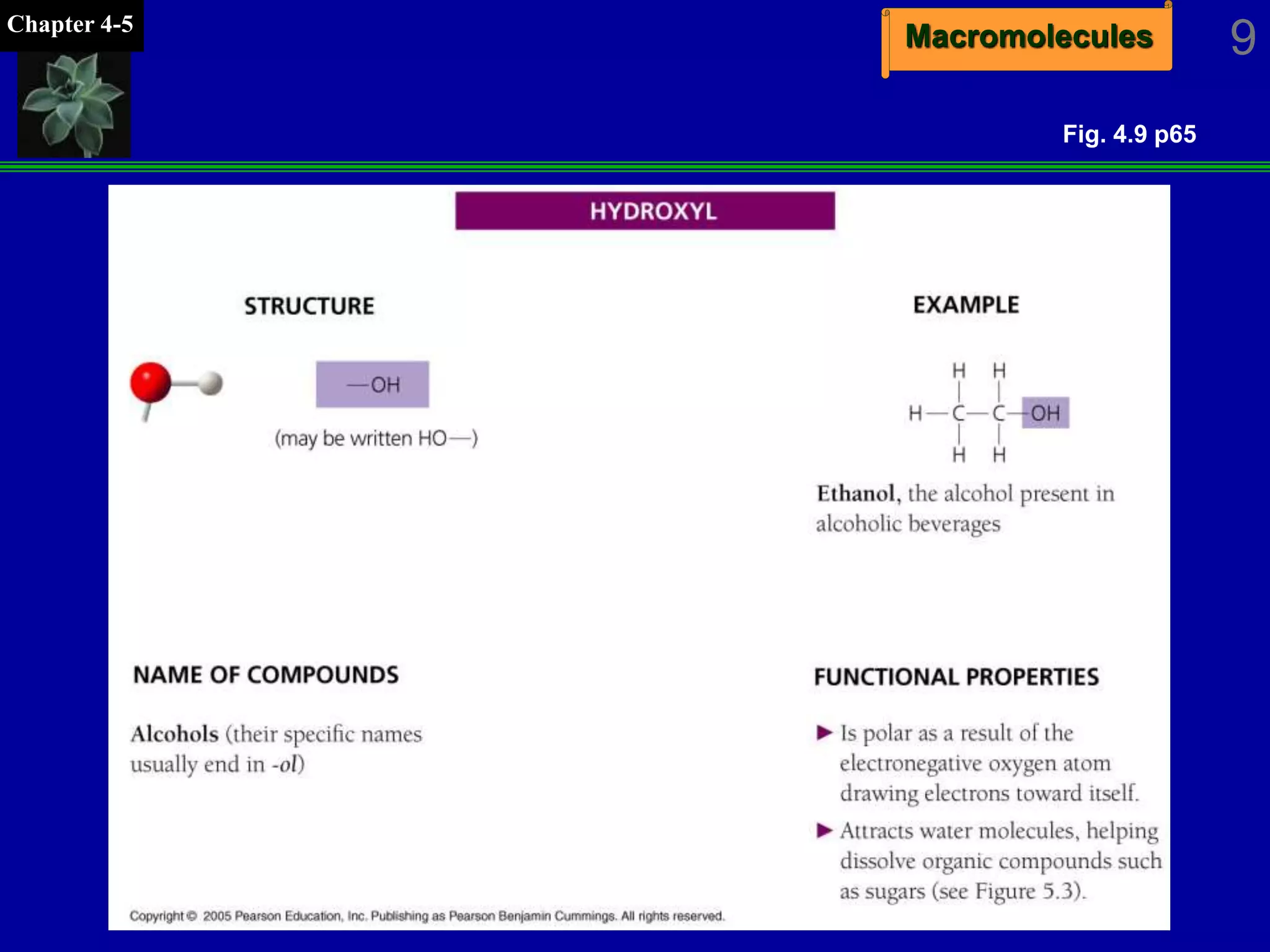
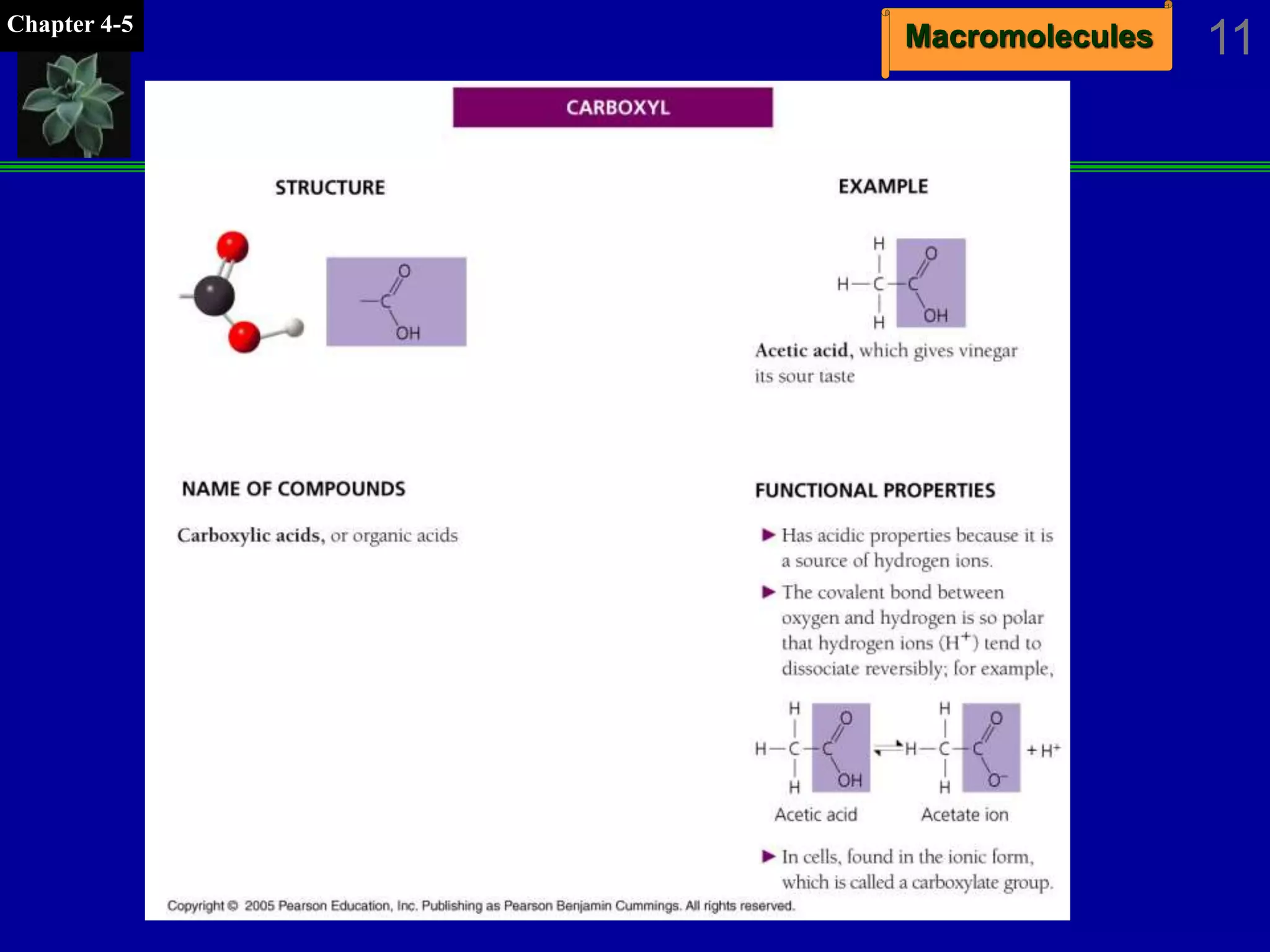
Functional groups:
Specific combinations of bonded atoms
Attached as a group to other molecules
-Always react in the same manner, regardless of
where attached
-Determine activity and polarity of large organic
molecules
Many functional groups, but only a few are of
major biological importance
MacromoleculesChapter 4-5
9
Fig. 4.9 p65
MacromoleculesChapter 4-5
10
MacromoleculesChapter 4-5
11
MacromoleculesChapter 4-5
12
Polar; some sugars
Example: Acetone
Polar, forms H-bonds; some sugars
and amino acids Example: EthanolR OH
R
H
C
O
R RC
O
R
OH
C
O
R
H
N H
R SH
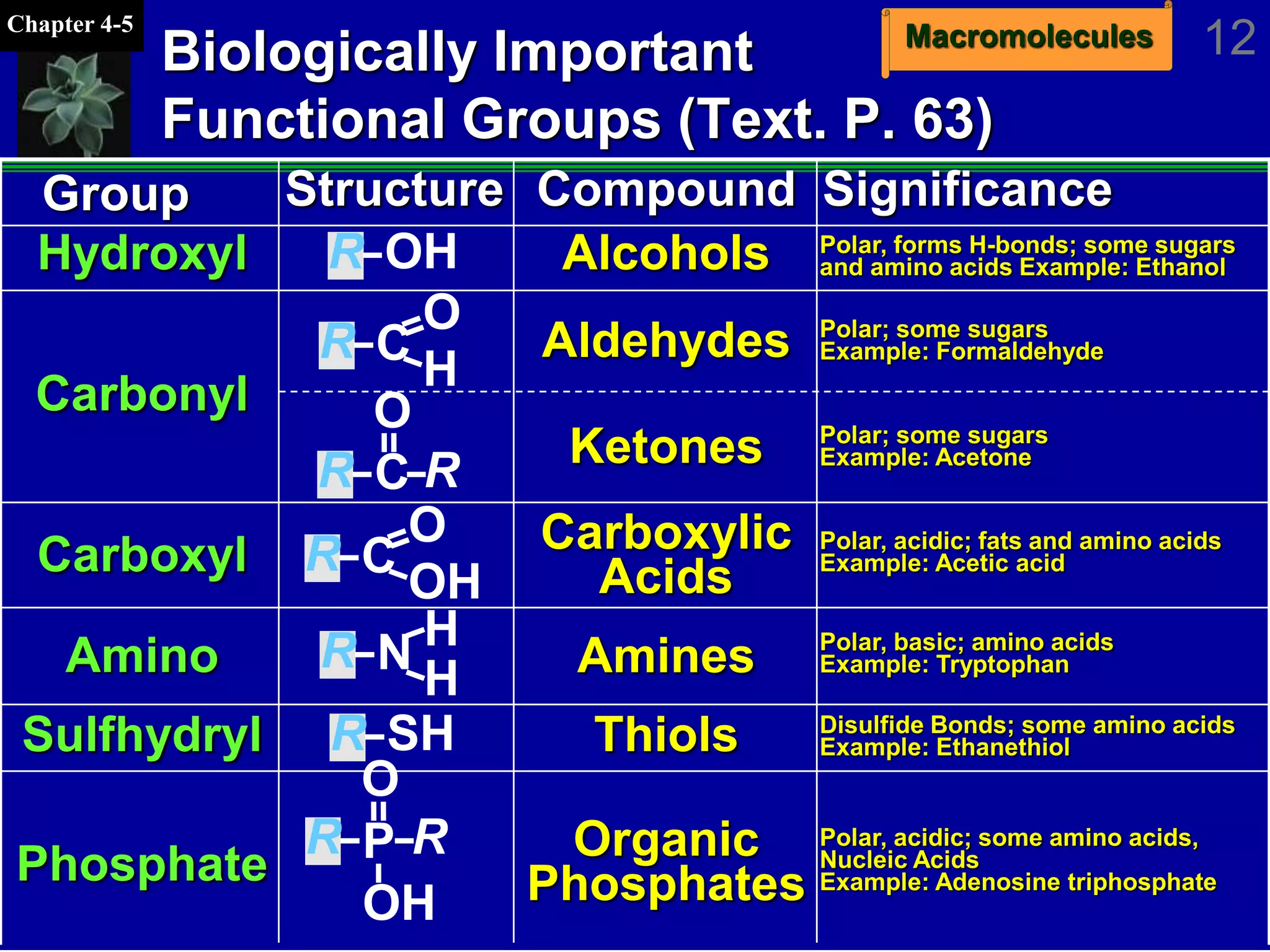
Biologically Important
Functional Groups (Text. P. 63)
Thiols
Phosphate
AminesAmino
Carboxylic
AcidsCarboxyl
Ketones
Aldehydes
Carbonyl
AlcoholsHydroxyl
CompoundStructureGroup
Sulfhydryl
R RP
O
OH
Organic
Phosphates
Significance
Polar; some sugars
Example: Formaldehyde
Polar, acidic; fats and amino acids
Example: Acetic acid
Polar, basic; amino acids
Example: Tryptophan
Disulfide Bonds; some amino acids
Example: Ethanethiol
Polar, acidic; some amino acids,
Nucleic Acids
Example: Adenosine triphosphate

Chapter 04 Carbon Base Life

  • 1.
    Carbon based Life & TheStructure and Function of Macromolecules Chapter 4-5
  • 2.
    MacromoleculesChapter 4-5 2 Outline Organic vsInorganic Functional Groups and Isomers Macromolecules – 4 major classes: Carbohydrates Lipids Proteins Nucleic Acids -recall: small vs lrg, ionic vs covalent Ex: amino, carboxyl: - Think, “starchy foods and sugars” - Think, “fatty foods and oils” - Think, “meat and beans (legumes)” - Think, “genes, herdity, nucleus, cell regulation”
  • 3.
    MacromoleculesChapter 4-5 3 Organic Molecules Inorganic– Chemistry of elements other than carbon Organic – Carbon-based chemistry Usually associated living systems Often associated with nonliving matter Often quite large, with many atoms Always with few atoms Always covalent bonding Usually ionic bonding Always contain carbon and hydrogen Usually with + & - ions OrganicInorganic Examples: NaCl – sodium chloride SiO2 – silicondioxide NaHCO3 –sodium bicarbonate Examples: C6H12O6 – glucose C8H18 - octane
  • 4.
    MacromoleculesChapter 4-5 4 Carbon Atom Carbonatoms: Contain a total of 6 electrons Only four electrons in the outer shell Very diverse as one atom can bond with up to four other atoms Often bonds with other carbon atoms to make hydrocarbons Can produce carbon chains like propane, butane, octane – may be linear or branched Can produce ring forms like cyclohexane - The core of “carbon based life forms”
  • 5.
  • 6.
    MacromoleculesChapter 4-5 6Isomers A. StructuralIsomers Isomers - organic molecules that have: Identical molecular formulas, but Differing internal arrangement of atoms C5H12 C5H12
  • 7.
  • 8.
    MacromoleculesChapter 4-5 8 Functional Groupsand Isomers Functional groups: Specific combinations of bonded atoms Attached as a group to other molecules -Always react in the same manner, regardless of where attached -Determine activity and polarity of large organic molecules Many functional groups, but only a few are of major biological importance
  • 9.
  • 10.
  • 11.
  • 12.
    MacromoleculesChapter 4-5 12 Polar; somesugars Example: Acetone Polar, forms H-bonds; some sugars and amino acids Example: EthanolR OH R H C O R RC O R OH C O R H N H R SH Biologically Important Functional Groups (Text. P. 63) Thiols Phosphate AminesAmino Carboxylic AcidsCarboxyl Ketones Aldehydes Carbonyl AlcoholsHydroxyl CompoundStructureGroup Sulfhydryl R RP O OH Organic Phosphates Significance Polar; some sugars Example: Formaldehyde Polar, acidic; fats and amino acids Example: Acetic acid Polar, basic; amino acids Example: Tryptophan Disulfide Bonds; some amino acids Example: Ethanethiol Polar, acidic; some amino acids, Nucleic Acids Example: Adenosine triphosphate