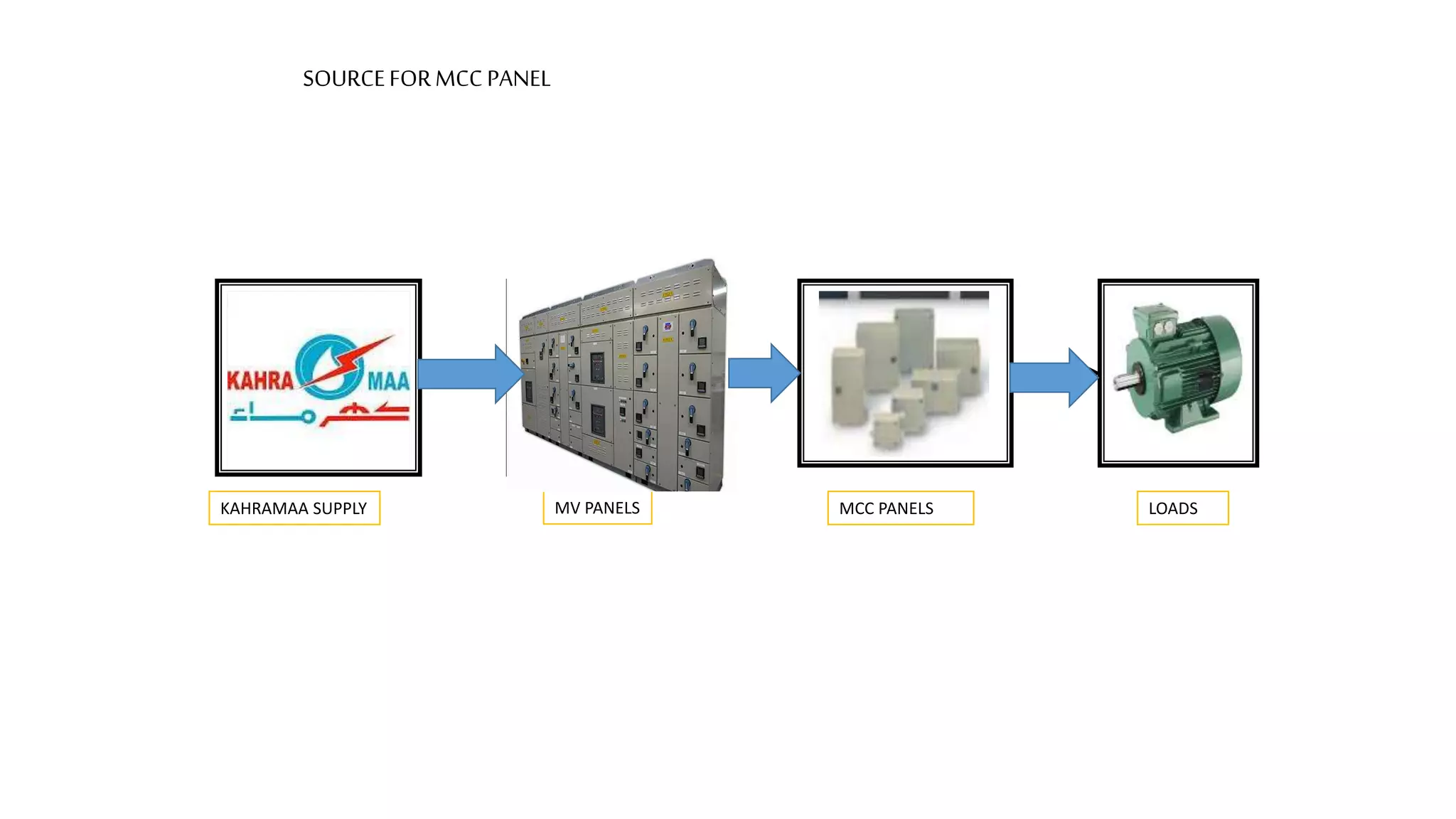
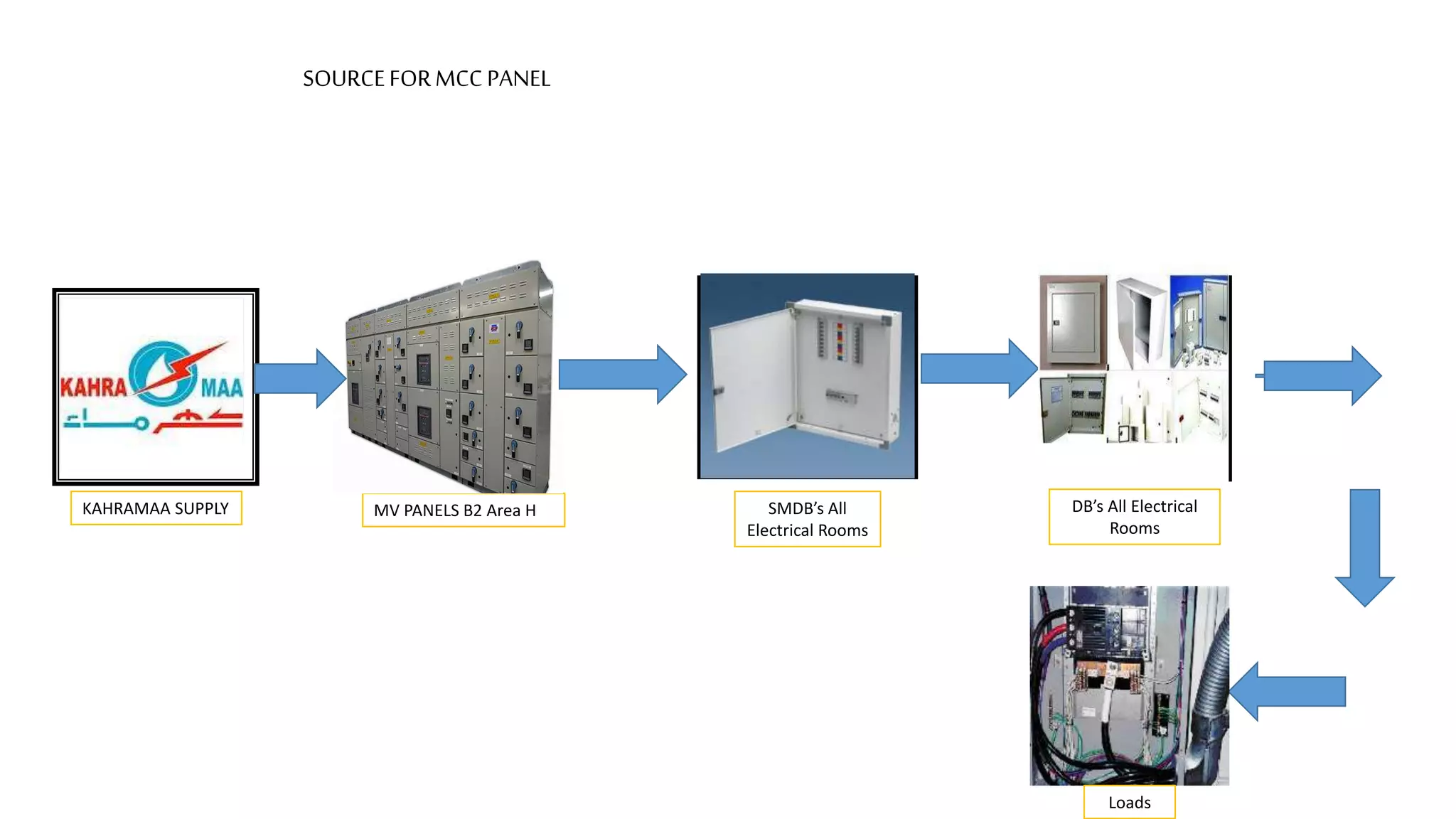
SOURCEFORMCC PANEL
c
KAHRAMAA SUPPLY MV PANELS MCC PANELS LOADS
SOURCEFORMCC PANEL
c
KAHRAMAA SUPPLY MV PANELS B2 Area H SMDB’s All
Electrical Rooms
DB’s All Electrical
Rooms
Loads
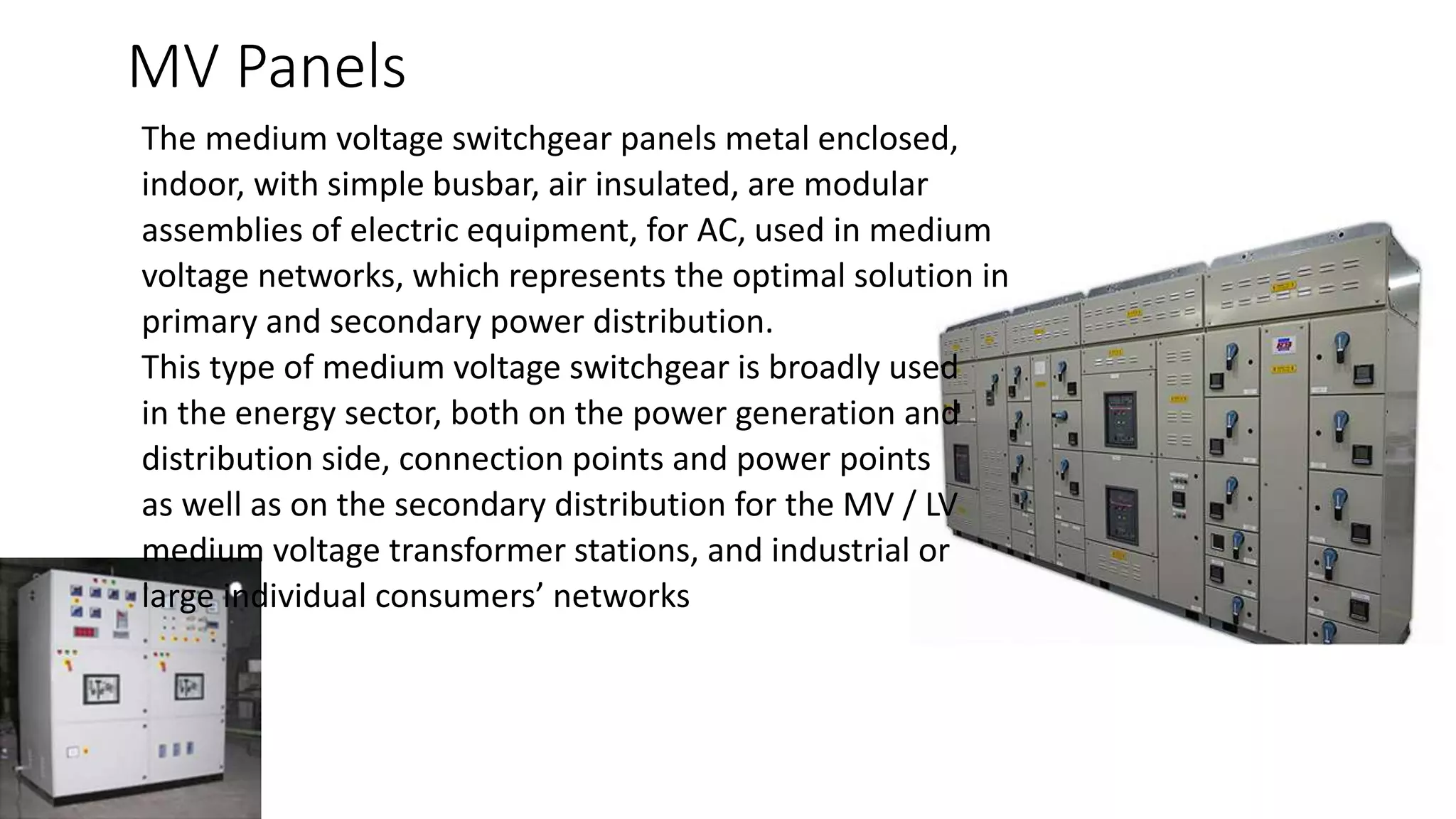
MV Panels
The medium voltage switchgear panels metal enclosed,
indoor, with simple busbar, air insulated, are modular
assemblies of electric equipment, for AC, used in medium
voltage networks, which represents the optimal solution in
primary and secondary power distribution.
This type of medium voltage switchgear is broadly used
in the energy sector, both on the power generation and
distribution side, connection points and power points
as well as on the secondary distribution for the MV / LV
medium voltage transformer stations, and industrial or
large individual consumers’ networks
Tests Conducted on Supplied MV Panels
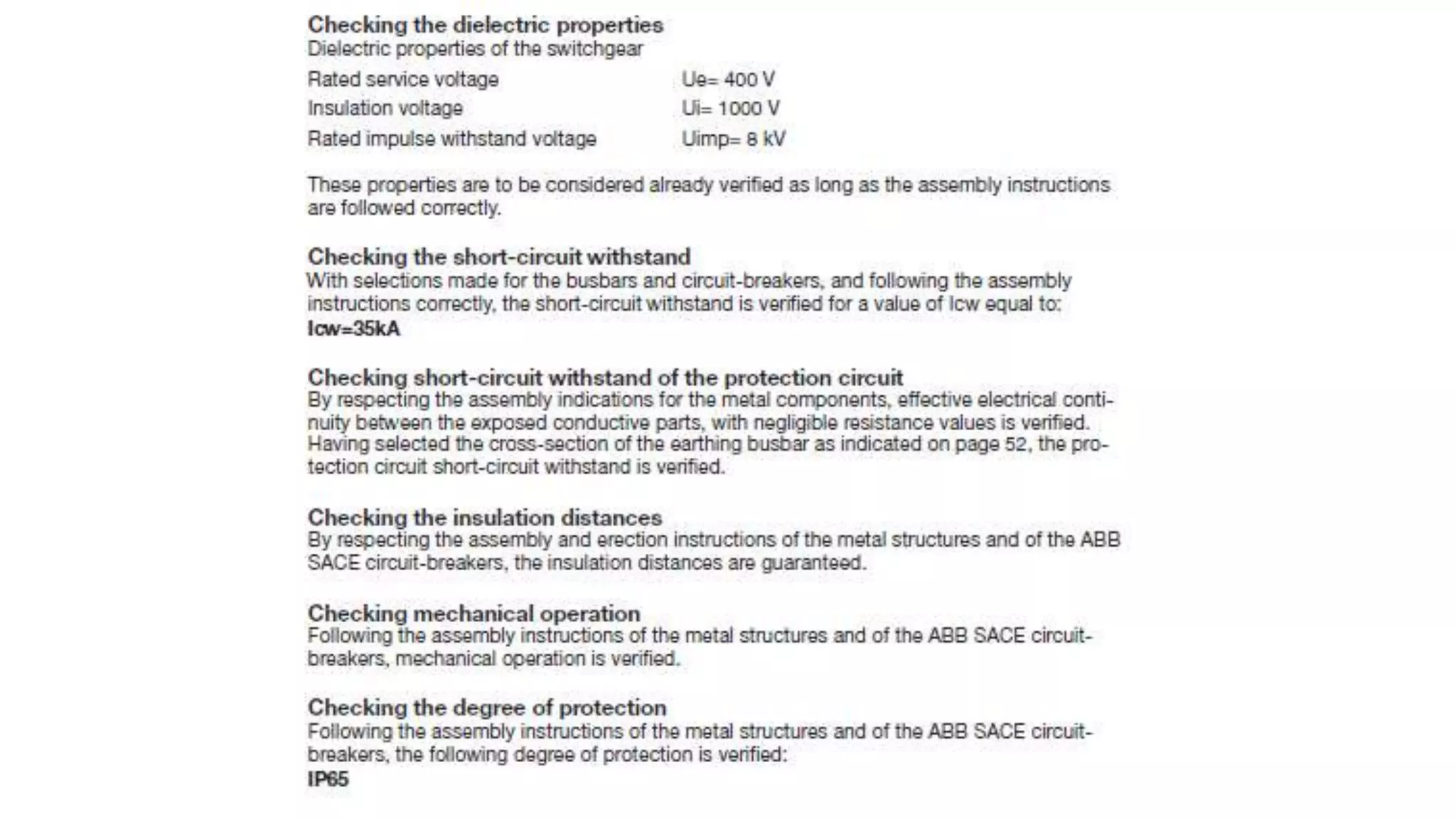
• Type tests
• The Standard foresees the following
type tests:
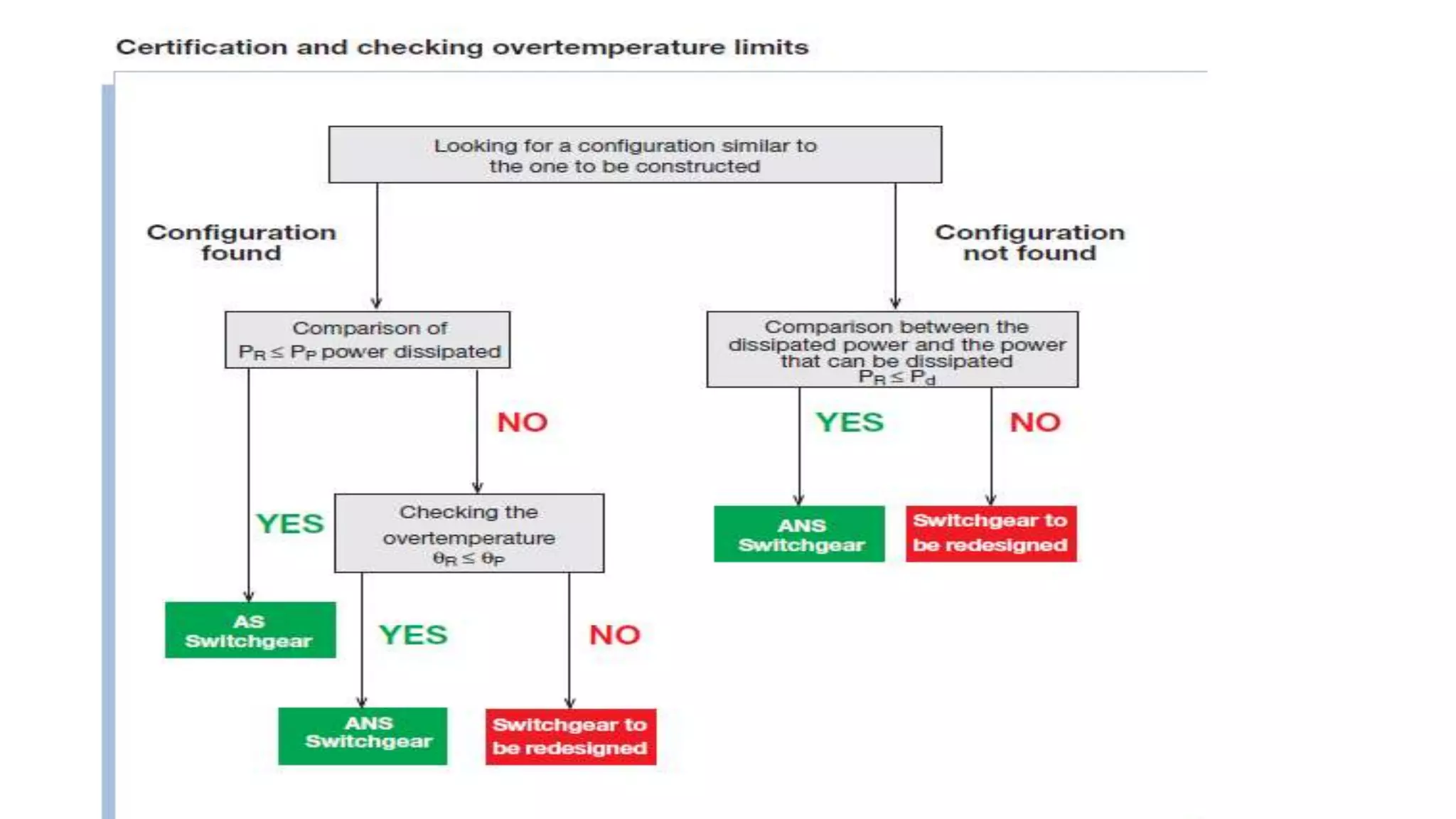
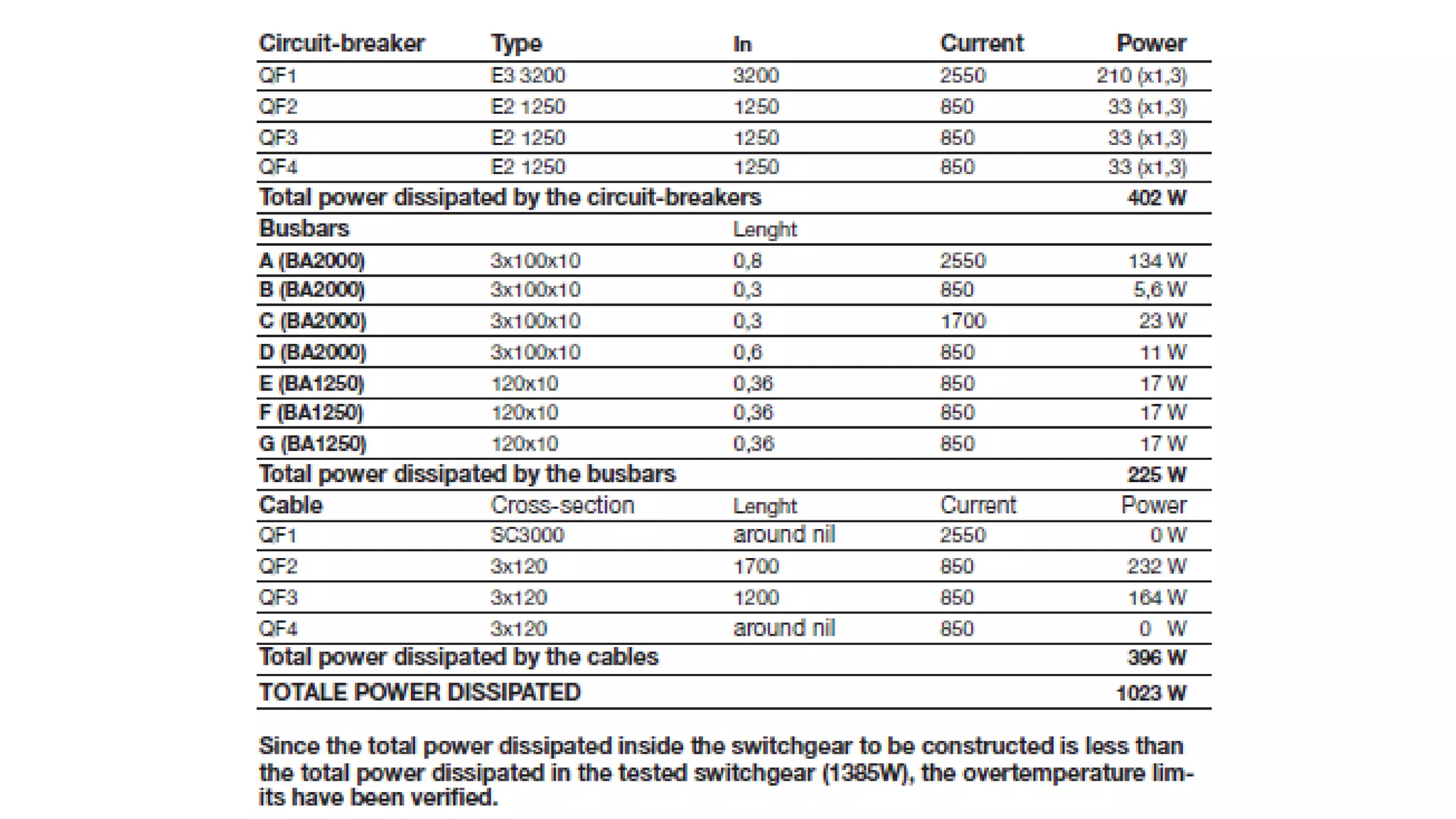
• • overtemperature limits
• • withstanding the applied voltage
• • short-circuit withstand current
• • efficiency of the protection circuit
• • insulation distances
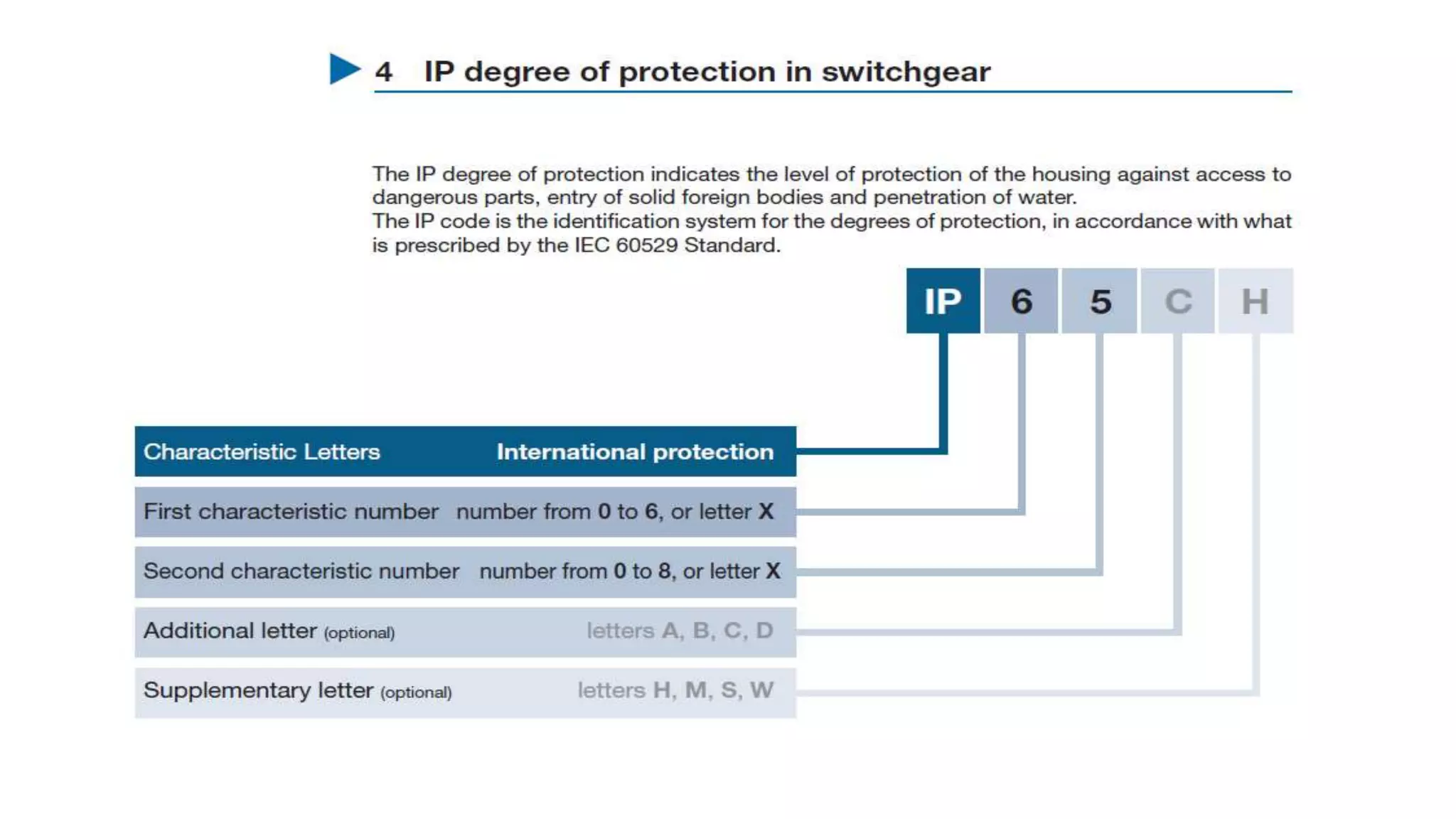
• • degree of protection
• • mechanical operation
Individual tests
The Standard foresees the following
individual tests:
• Visual inspection of the switchgear,
including checking the cabling, and,
if necessary, an electrical operation
test
• A dielectric test
• Checking the means of protection
and
the electrical efficiency of the
protection circuit
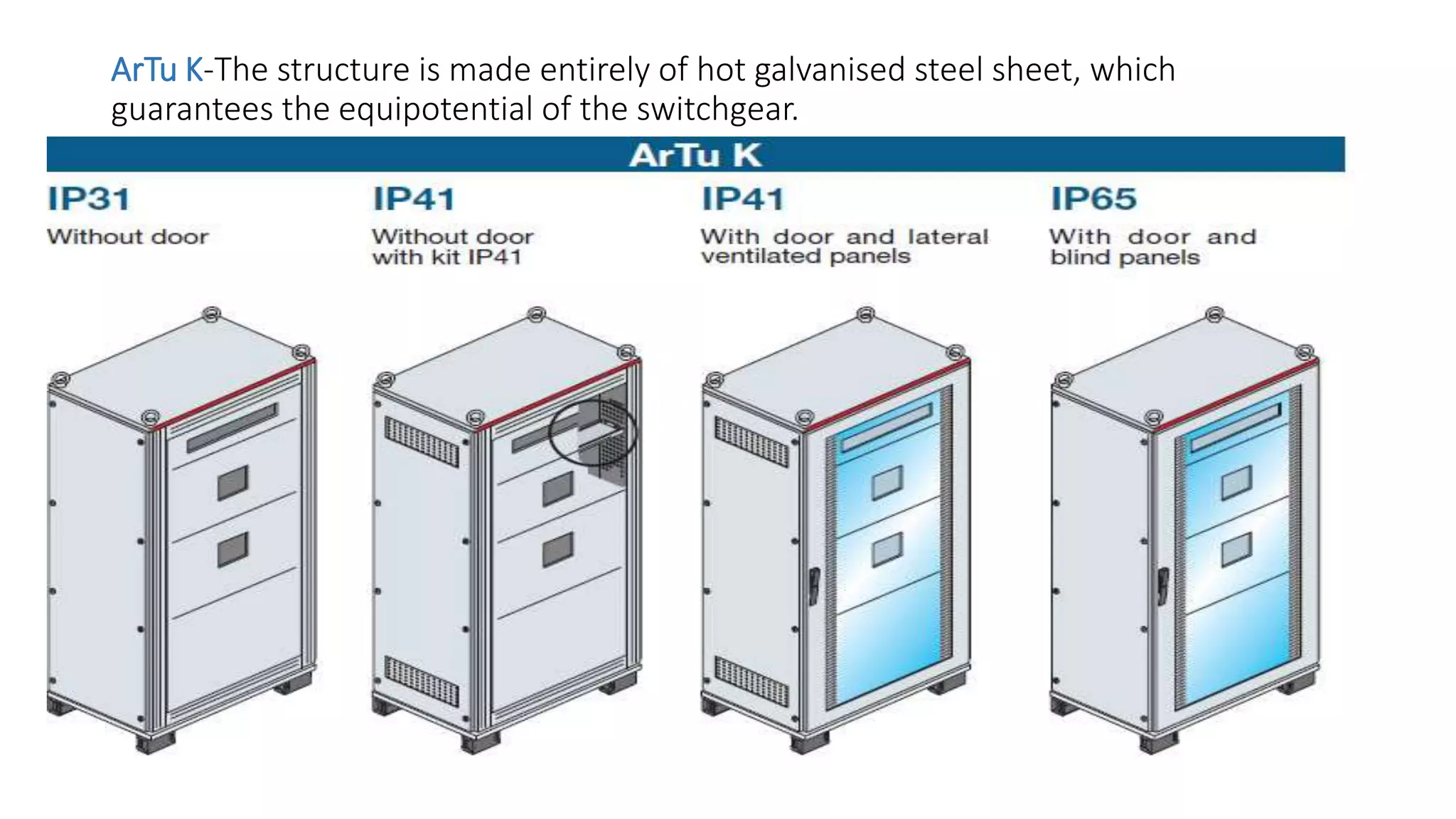
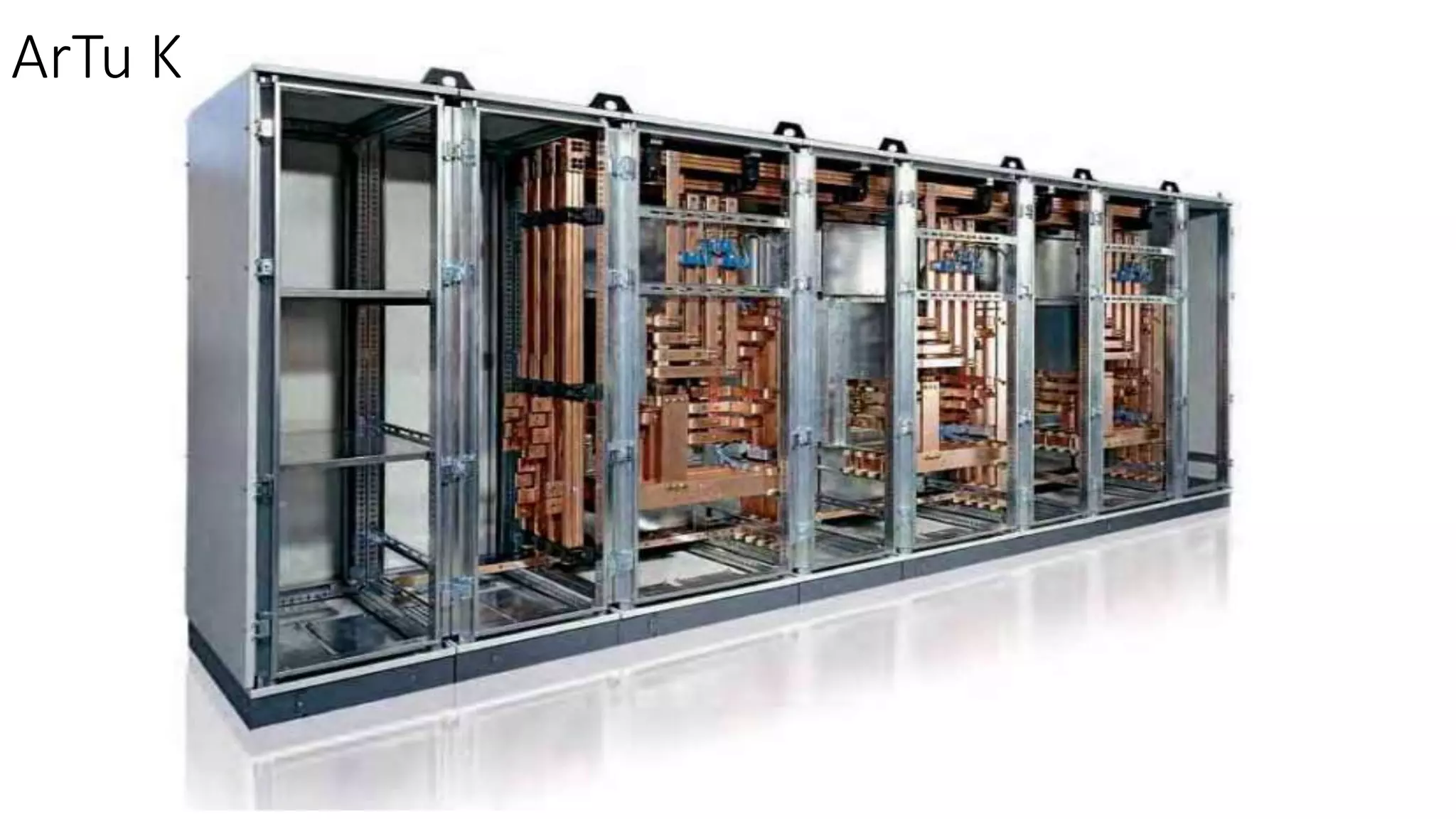
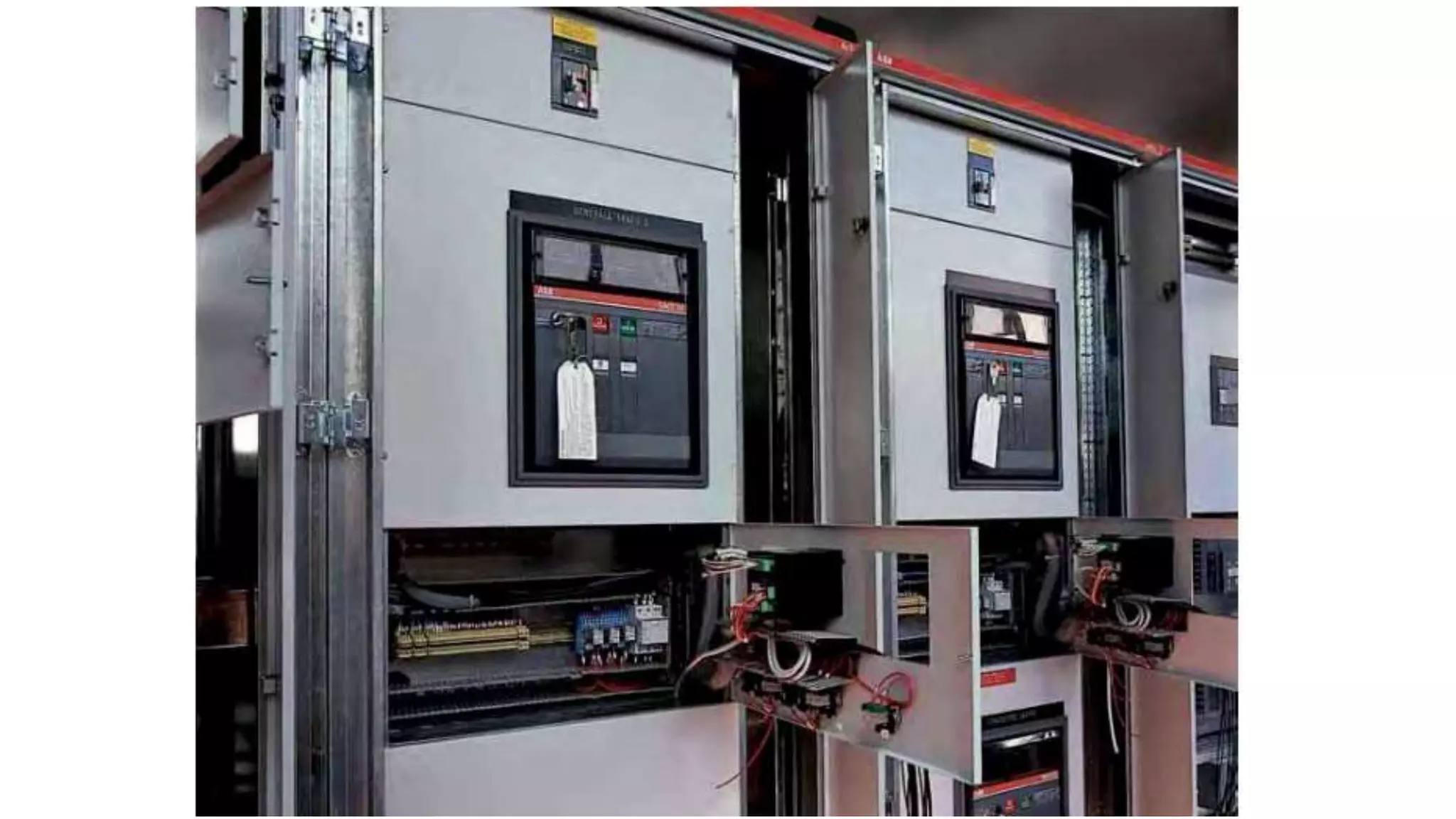
ArTu K-The structure is made entirely of hot galvanised steel sheet, which
guarantees the equipotential of the switchgear.
Forms of Segregation
By form of segregation, the type of division foreseen inside the switchgear is intended. Segregation
by means of barriers or partitions (metal or insulating) can have the purpose of:
- ensuring protection against direct contacts (at least IPXXB), in the case of access to
a part of the switchgear cut off from the power supply, in relation to the rest of the
switchgear which remains supplied with power
- reducing the probability of striking and propagation of an internal arc
- preventing passage of solid bodies between different parts of the switchgear (at least
IP2X degree of protection).
By partition, the separating element between two compartments is intended, whereas the barrier
protects the operator from direct contacts and from the effects of the breaking apparatus arc
in the normal direction of access.
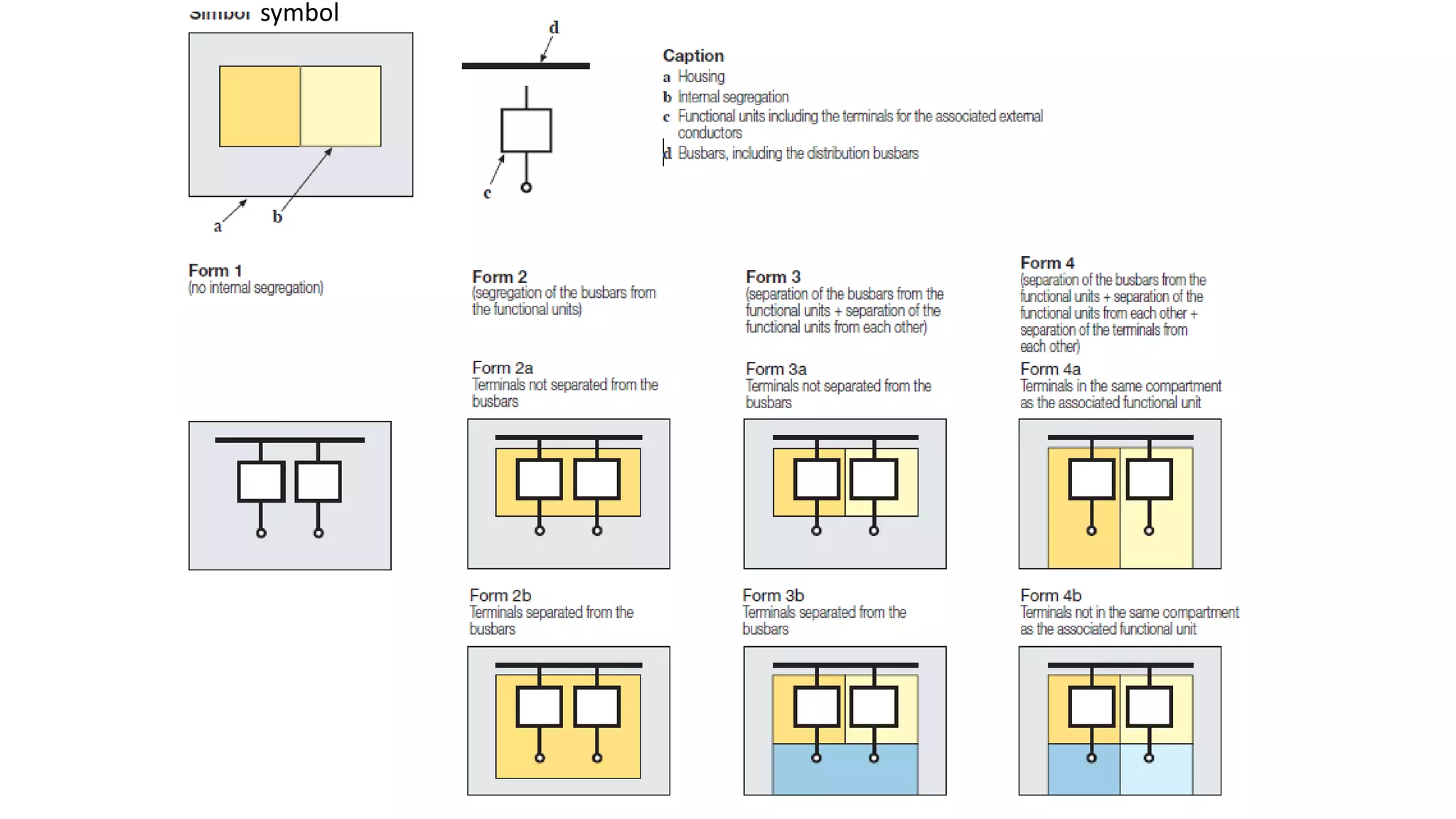
The following table given in the IEC 60439-1 Standard highlights the typical forms of segregation
which can be obtained by using barriers or partitions:
symbol
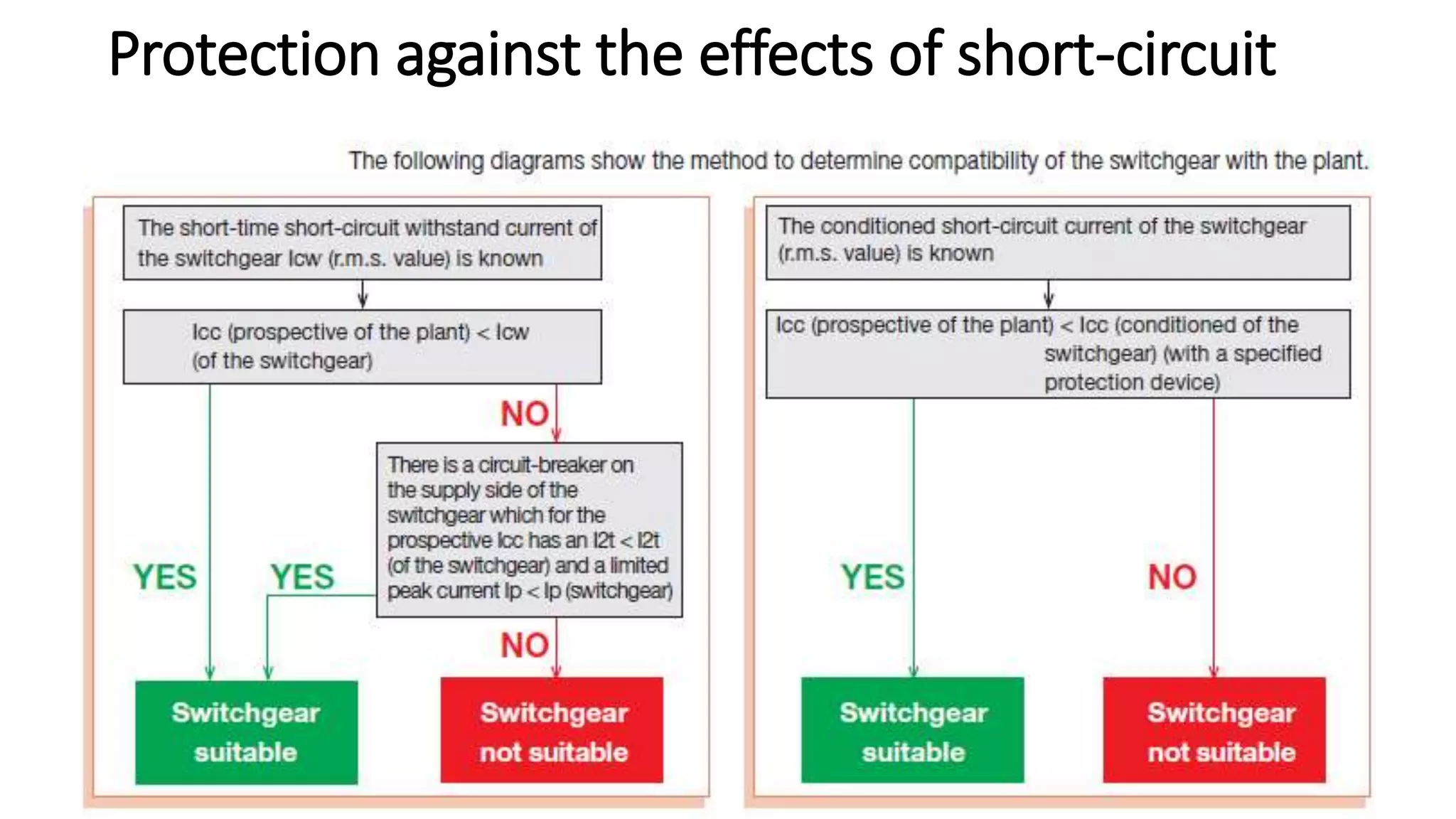
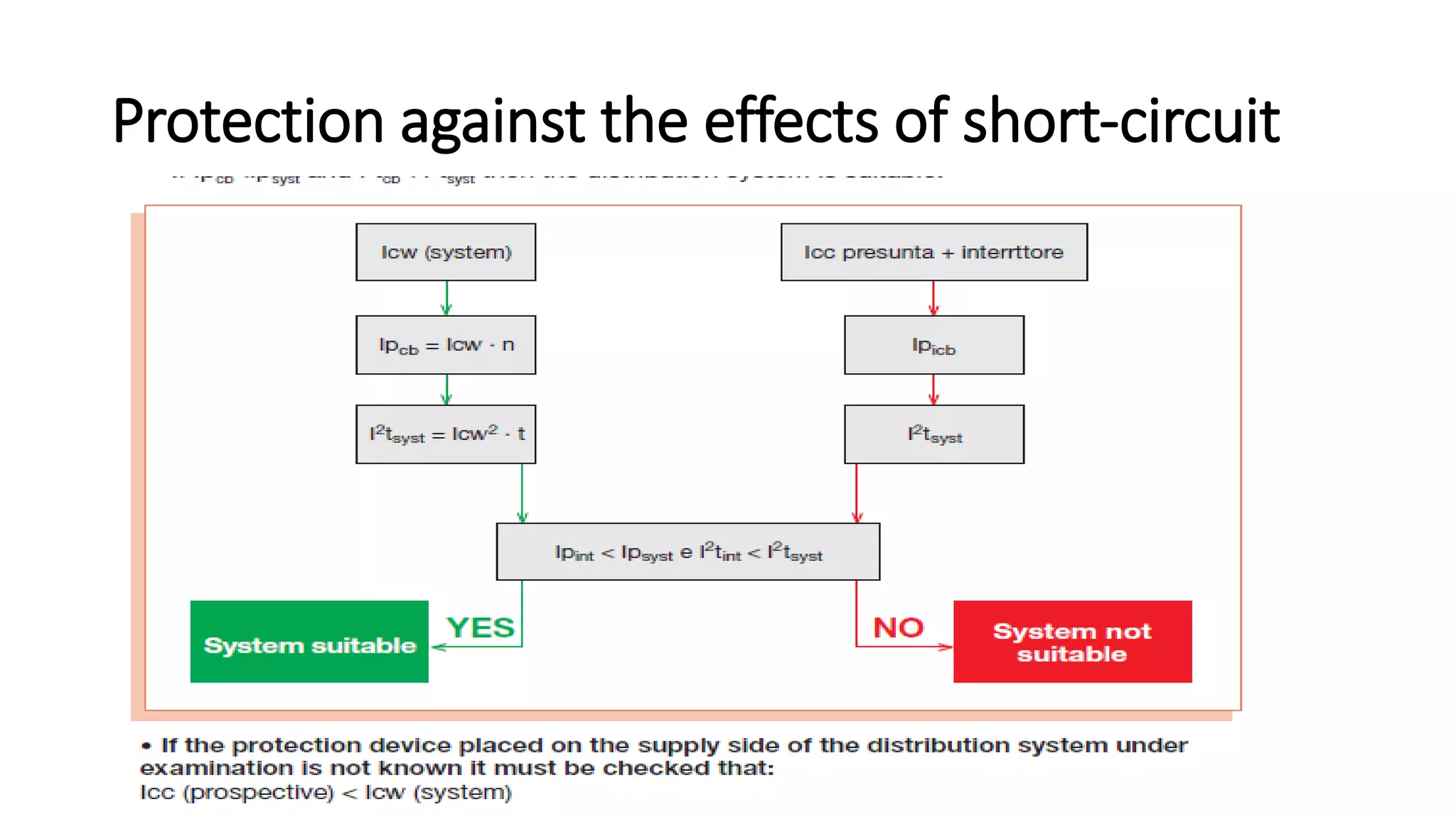
Protection against the effects of short-circuit
Example
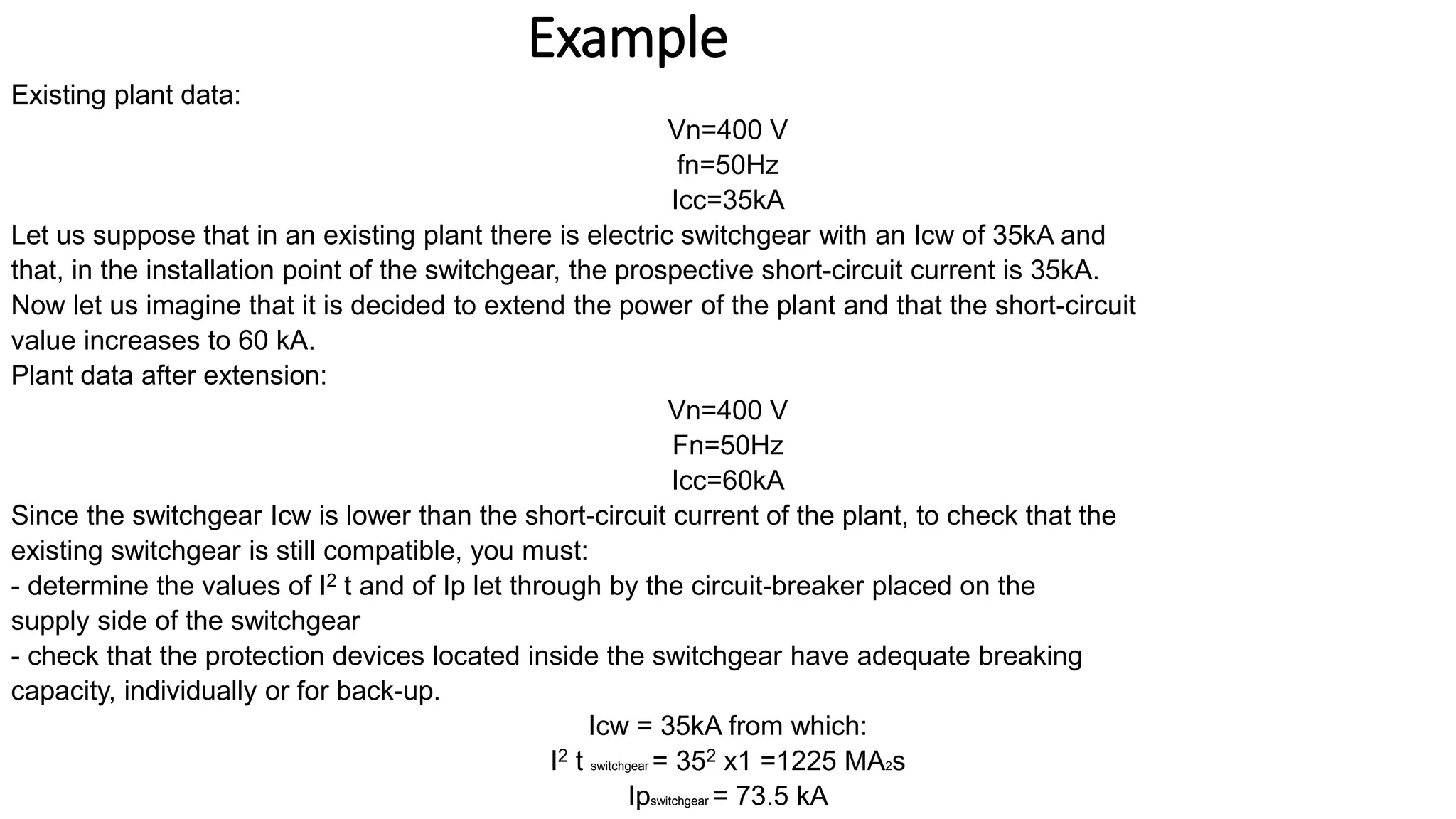
Existing plant data:
Vn=400 V
fn=50Hz
Icc=35kA
Let us suppose that in an existing plant there is electric switchgear with an Icw of 35kA and
that, in the installation point of the switchgear, the prospective short-circuit current is 35kA.
Now let us imagine that it is decided to extend the power of the plant and that the short-circuit
value increases to 60 kA.
Plant data after extension:
Vn=400 V
Fn=50Hz
Icc=60kA
Since the switchgear Icw is lower than the short-circuit current of the plant, to check that the
existing switchgear is still compatible, you must:
- determine the values of I2 t and of Ip let through by the circuit-breaker placed on the
supply side of the switchgear
- check that the protection devices located inside the switchgear have adequate breaking
capacity, individually or for back-up.
Icw = 35kA from which:
I2 t switchgear = 352 x1 =1225 MA2s
Ipswitchgear = 73.5 kA
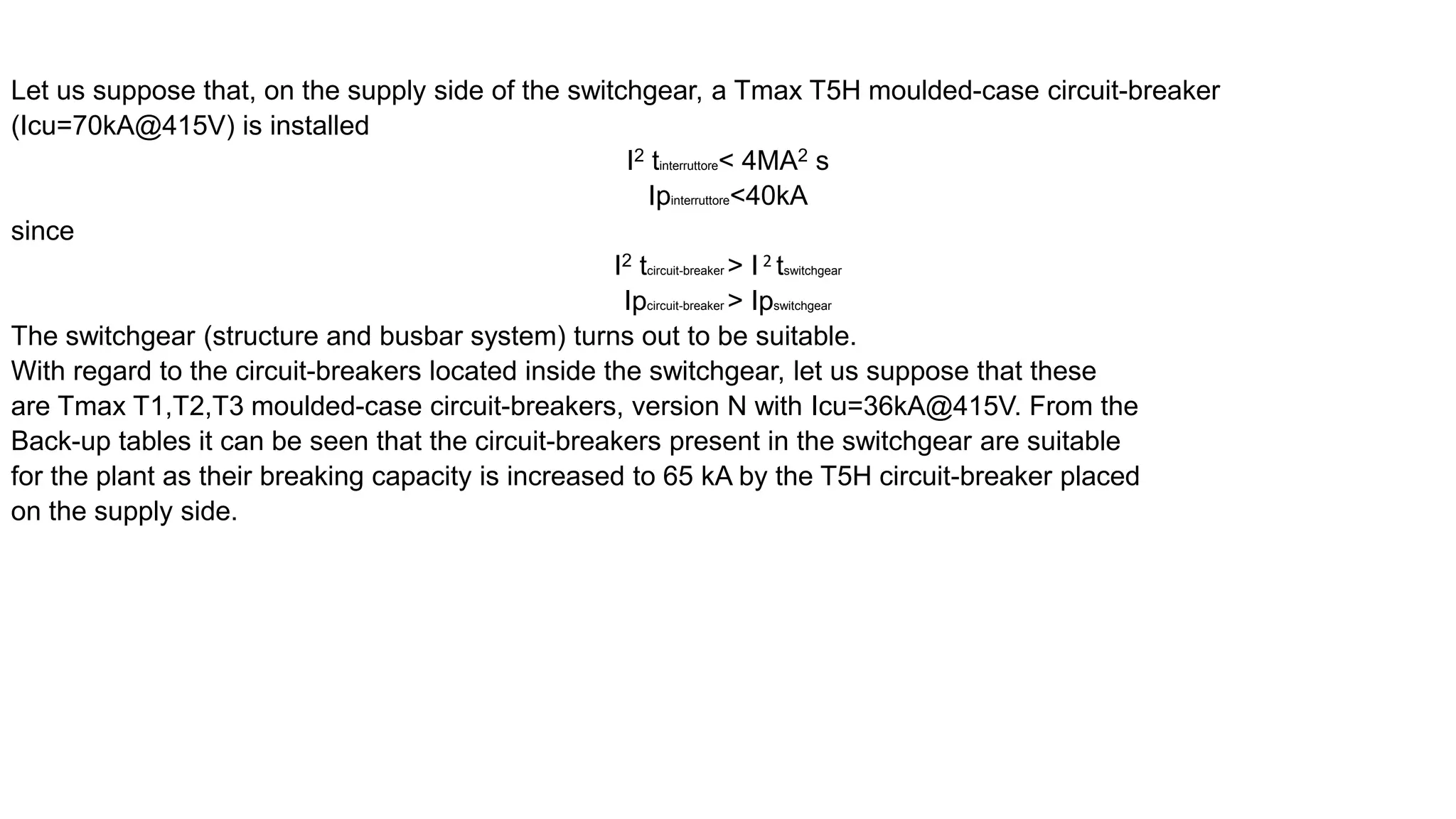
Let us suppose that, on the supply side of the switchgear, a Tmax T5H moulded-case circuit-breaker
(Icu=70kA@415V) is installed
I2 tinterruttore< 4MA2 s
Ipinterruttore<40kA
since
I2 tcircuit-breaker > I 2 tswitchgear
Ipcircuit-breaker > Ipswitchgear
The switchgear (structure and busbar system) turns out to be suitable.
With regard to the circuit-breakers located inside the switchgear, let us suppose that these
are Tmax T1,T2,T3 moulded-case circuit-breakers, version N with Icu=36kA@415V. From the
Back-up tables it can be seen that the circuit-breakers present in the switchgear are suitable
for the plant as their breaking capacity is increased to 65 kA by the T5H circuit-breaker placed
on the supply side.
Protection against the effects of short-circuit
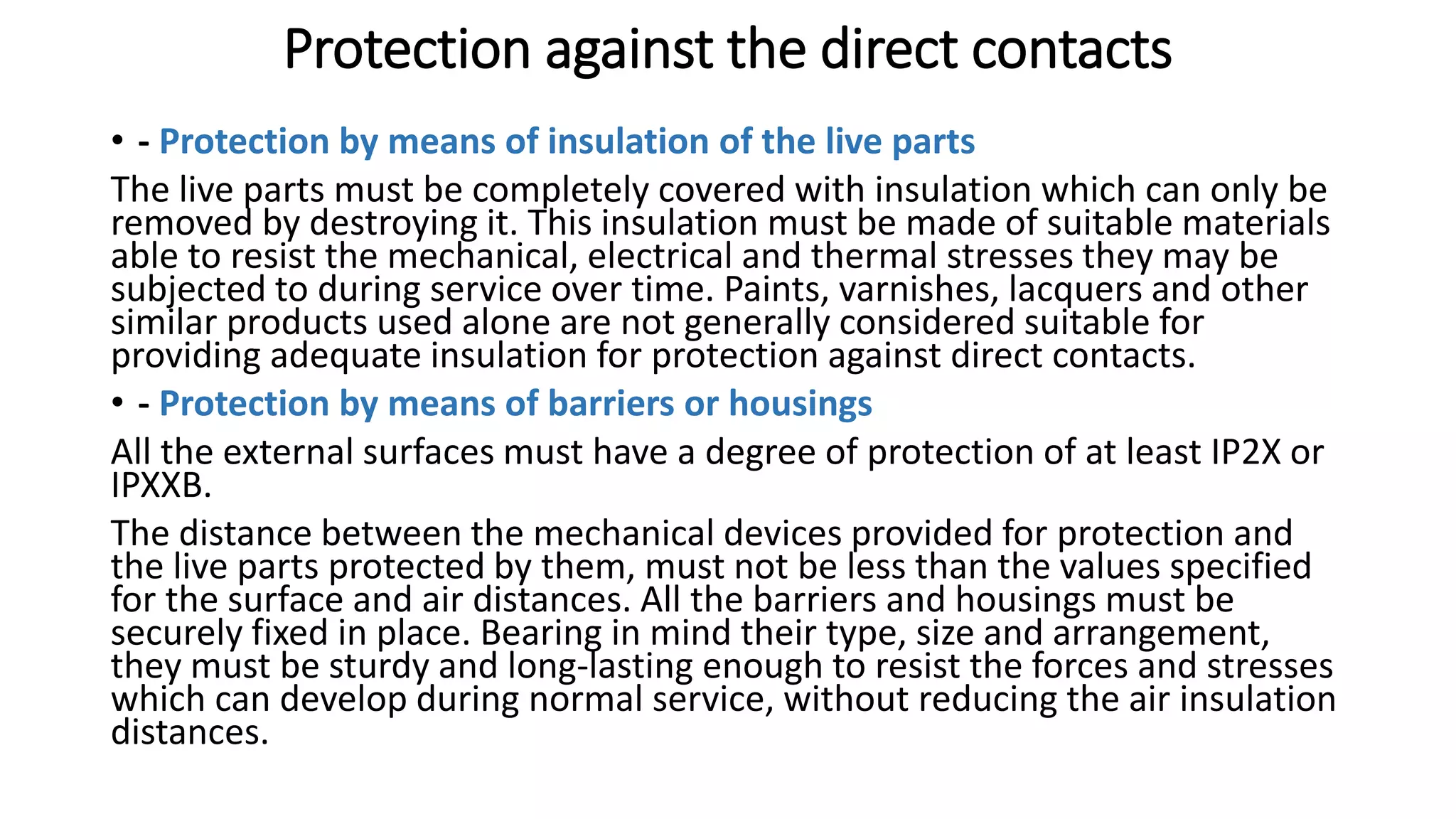
Protection against the direct contacts
• - Protection by means of insulation of the live parts
The live parts must be completely covered with insulation which can only be
removed by destroying it. This insulation must be made of suitable materials
able to resist the mechanical, electrical and thermal stresses they may be
subjected to during service over time. Paints, varnishes, lacquers and other
similar products used alone are not generally considered suitable for
providing adequate insulation for protection against direct contacts.
• - Protection by means of barriers or housings
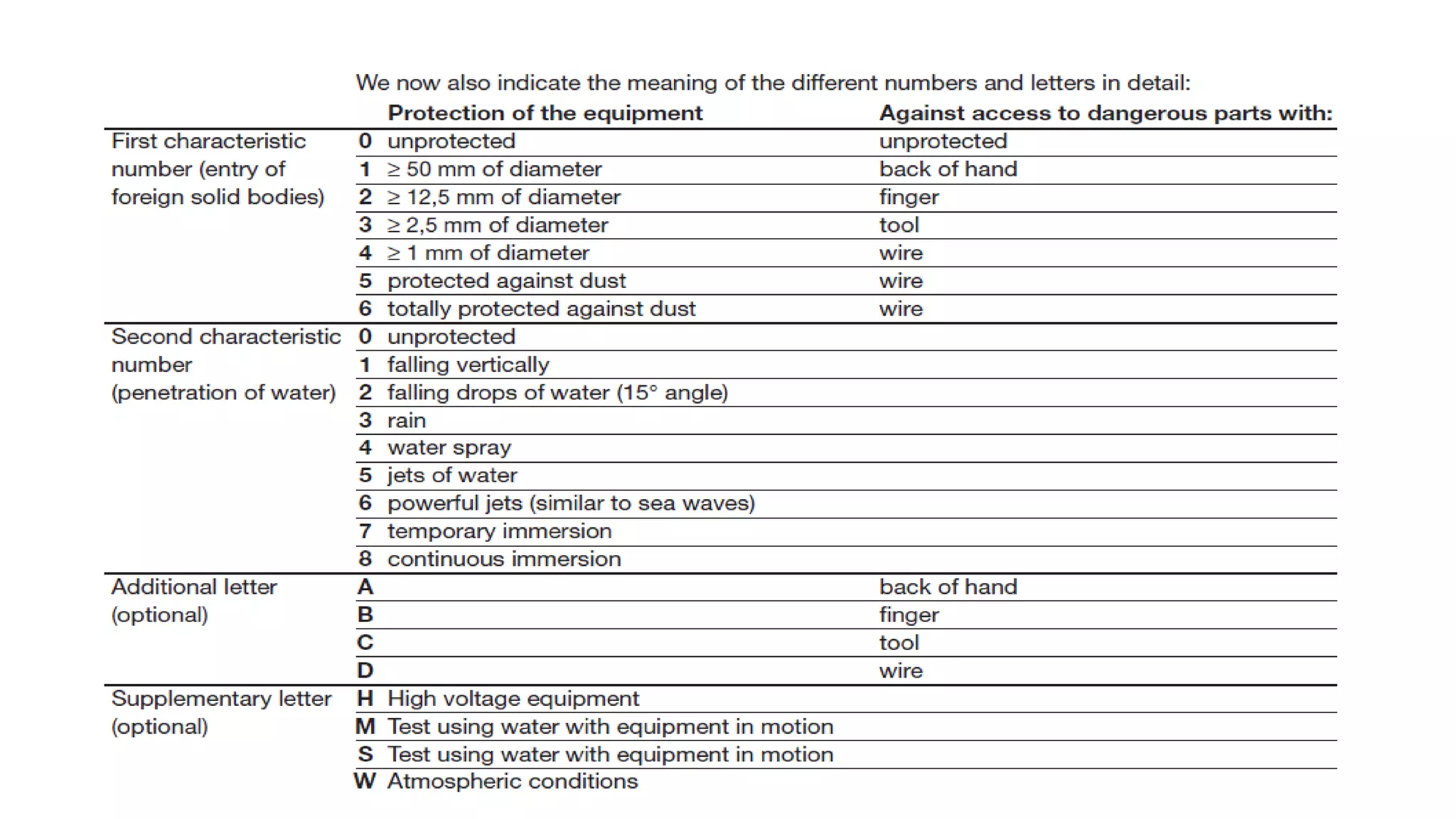
All the external surfaces must have a degree of protection of at least IP2X or
IPXXB.
The distance between the mechanical devices provided for protection and
the live parts protected by them, must not be less than the values specified
for the surface and air distances. All the barriers and housings must be
securely fixed in place. Bearing in mind their type, size and arrangement,
they must be sturdy and long-lasting enough to resist the forces and stresses
which can develop during normal service, without reducing the air insulation
distances.
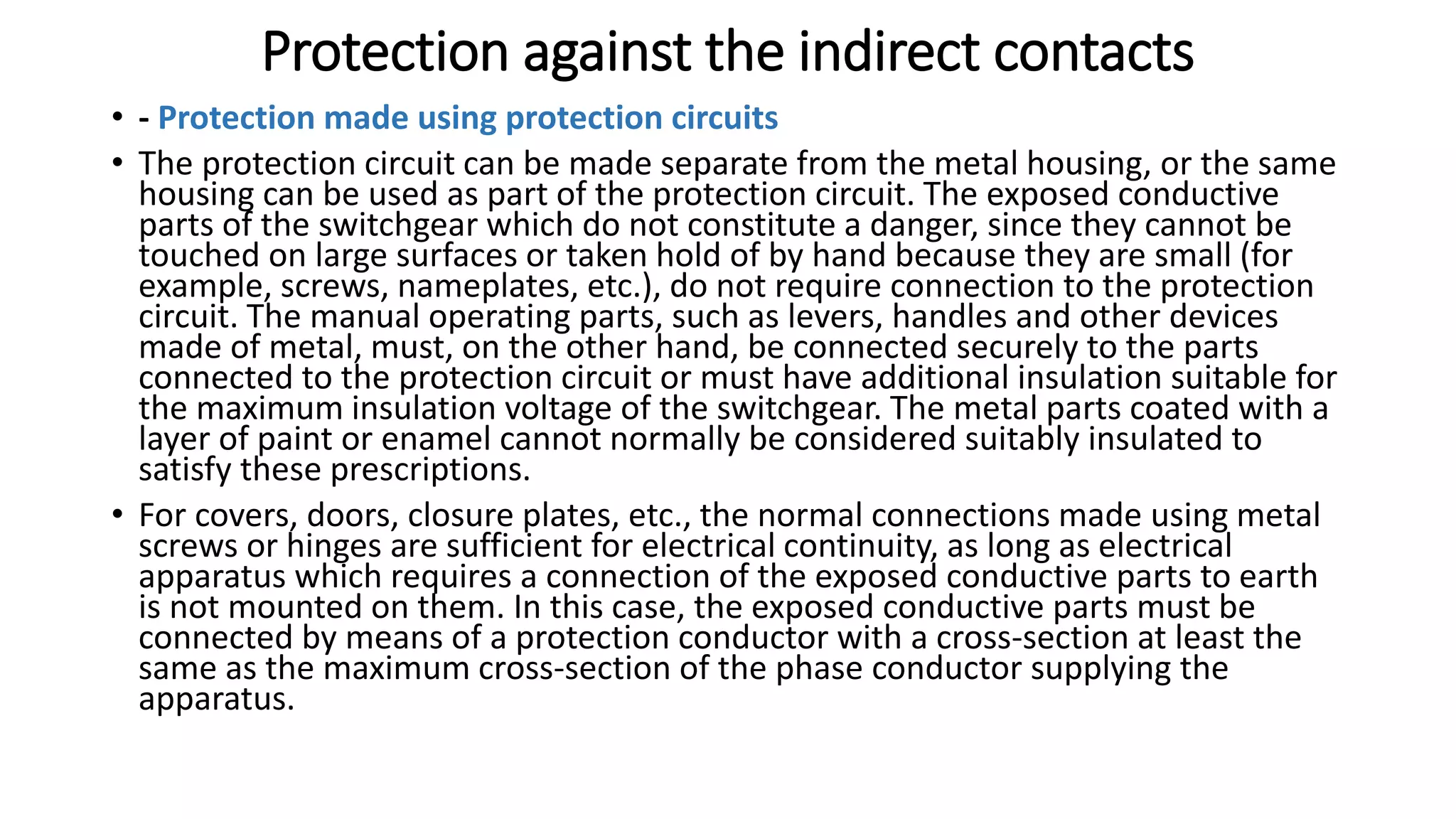
Protection against the indirect contacts
• - Protection made using protection circuits
• The protection circuit can be made separate from the metal housing, or the same
housing can be used as part of the protection circuit. The exposed conductive
parts of the switchgear which do not constitute a danger, since they cannot be
touched on large surfaces or taken hold of by hand because they are small (for
example, screws, nameplates, etc.), do not require connection to the protection
circuit. The manual operating parts, such as levers, handles and other devices
made of metal, must, on the other hand, be connected securely to the parts
connected to the protection circuit or must have additional insulation suitable for
the maximum insulation voltage of the switchgear. The metal parts coated with a
layer of paint or enamel cannot normally be considered suitably insulated to
satisfy these prescriptions.
• For covers, doors, closure plates, etc., the normal connections made using metal
screws or hinges are sufficient for electrical continuity, as long as electrical
apparatus which requires a connection of the exposed conductive parts to earth
is not mounted on them. In this case, the exposed conductive parts must be
connected by means of a protection conductor with a cross-section at least the
same as the maximum cross-section of the phase conductor supplying the
apparatus.
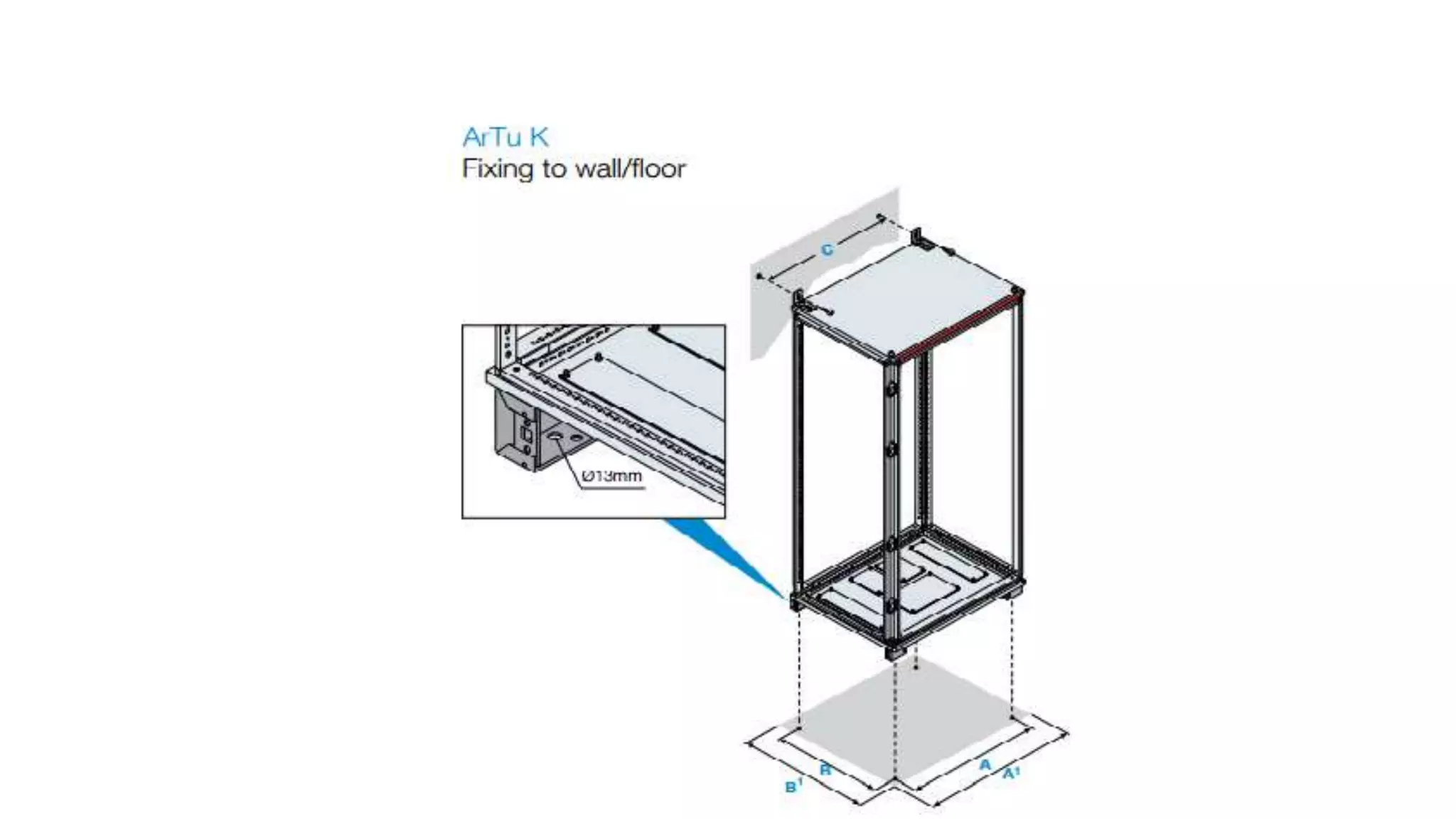
ArTu K
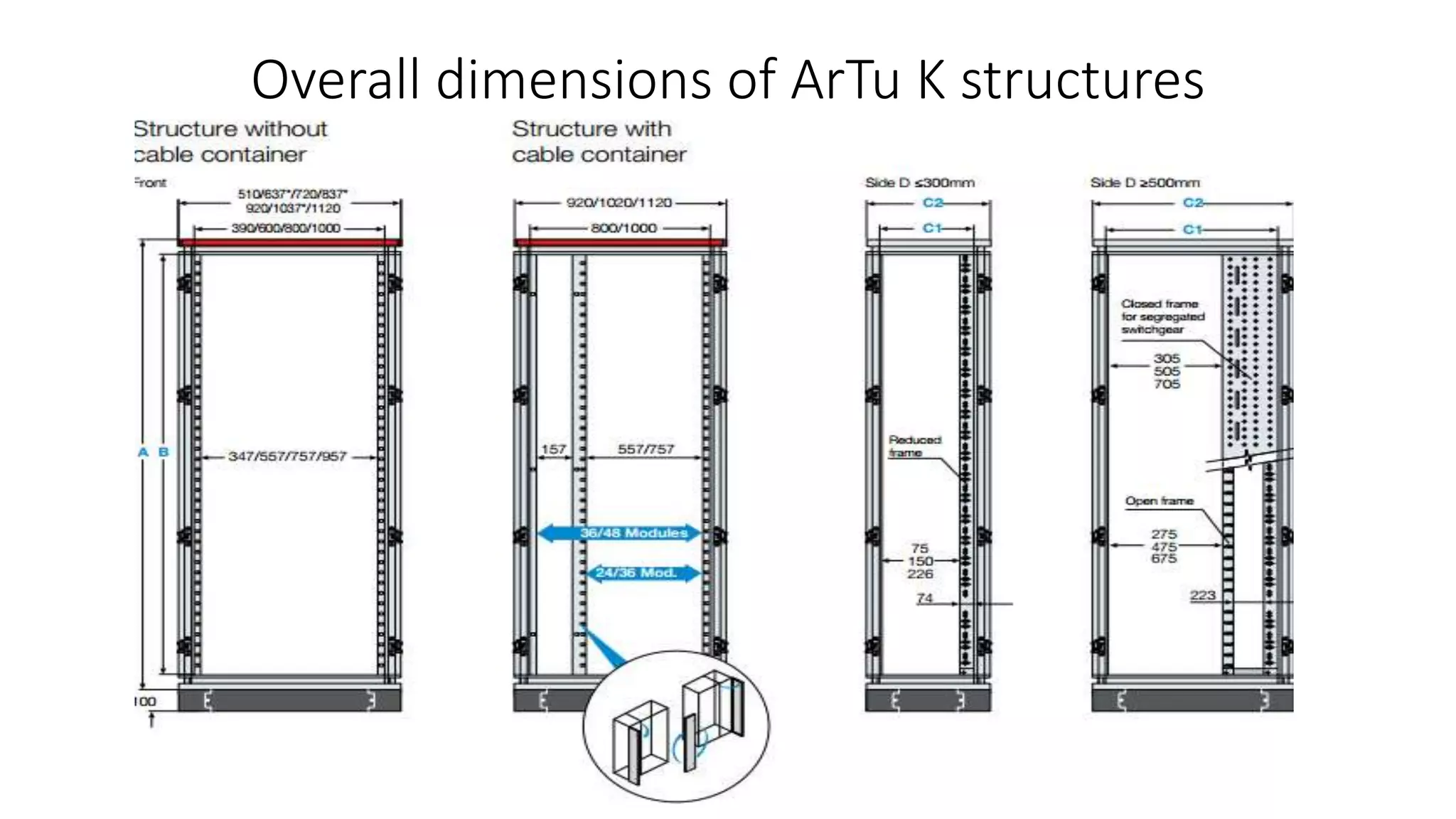
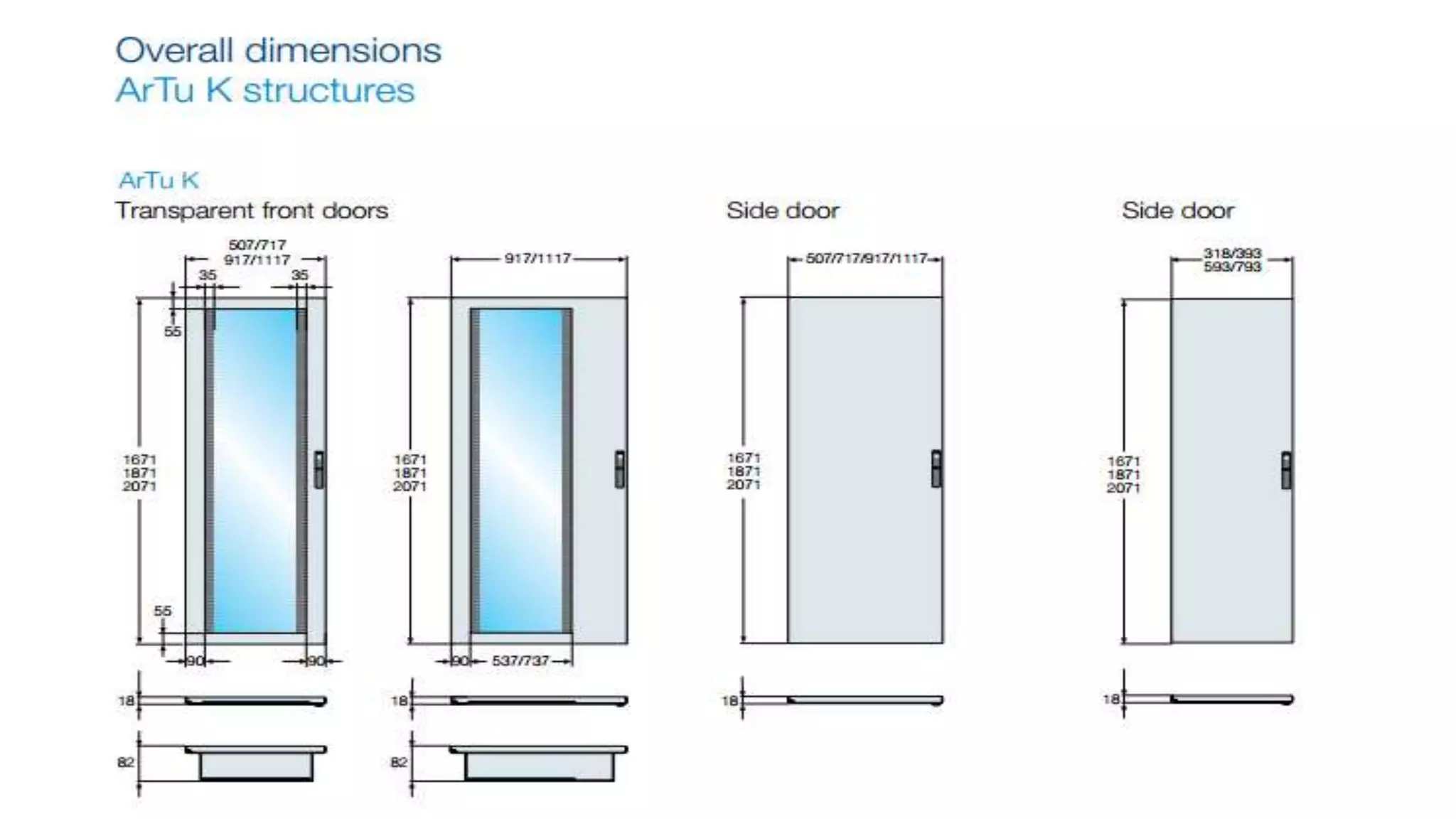
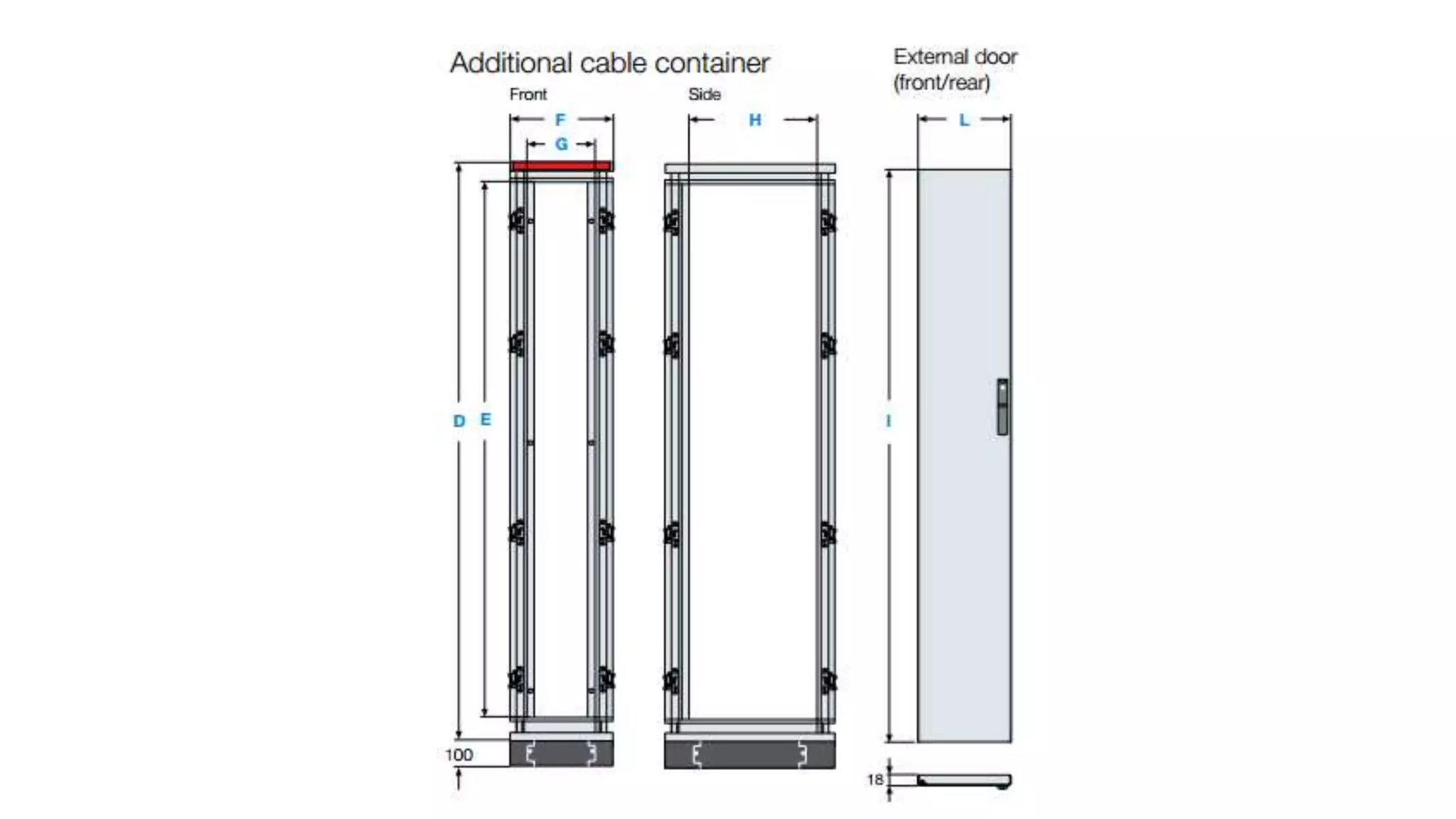
Overall dimensions of ArTu K structures
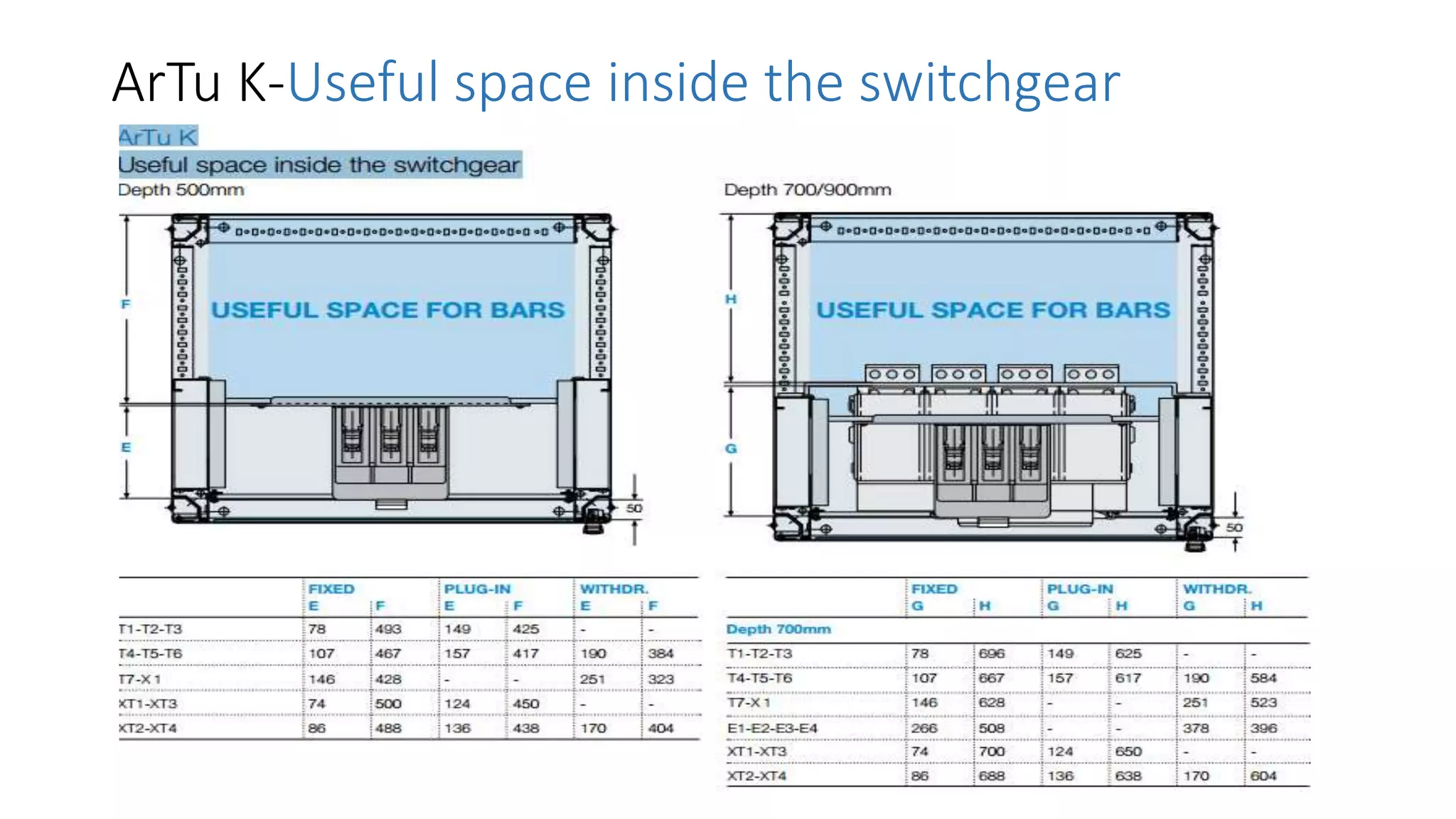
ArTu K-Useful space inside the switchgear
Practical indications for constructing the
switchgear
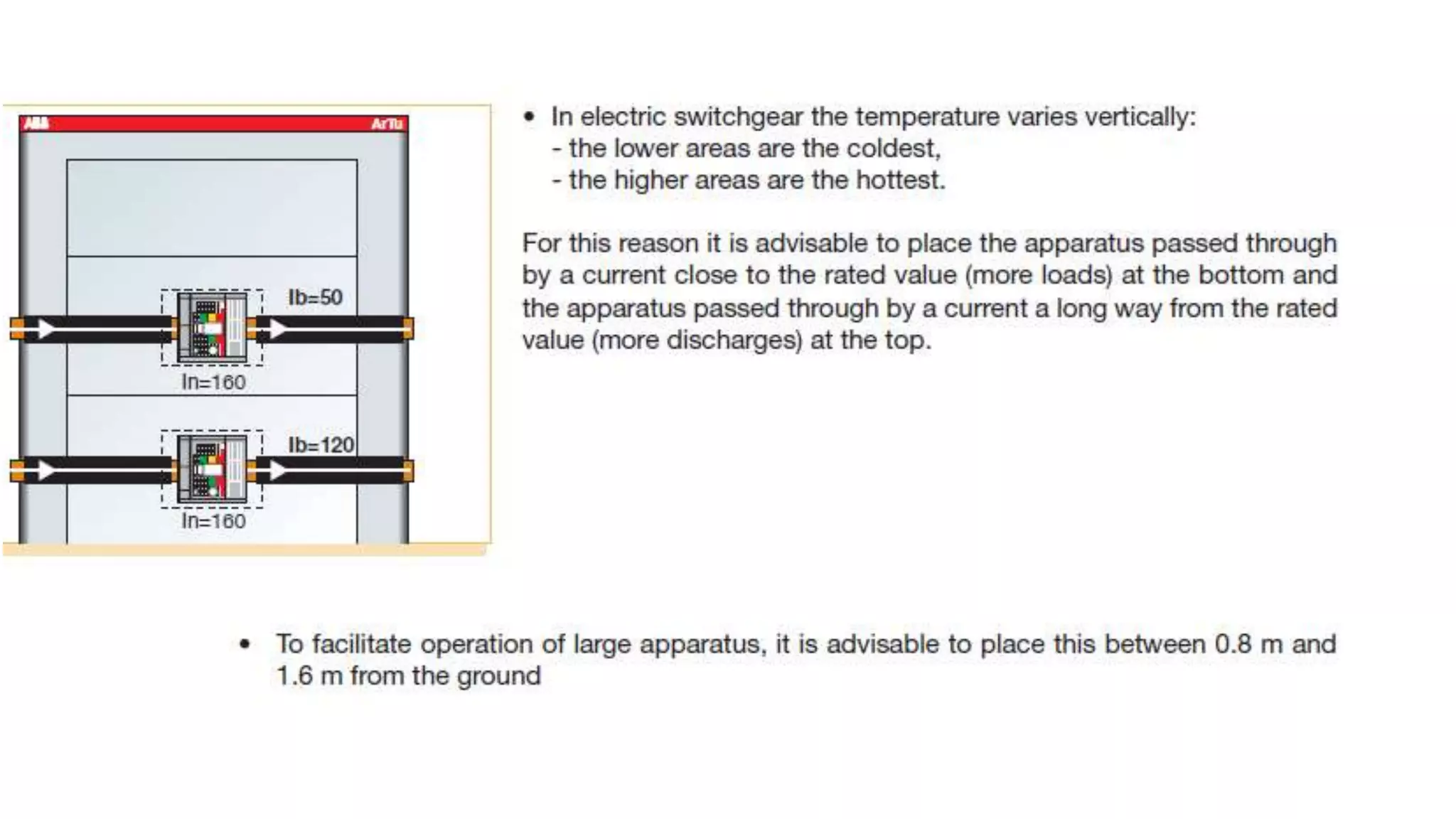
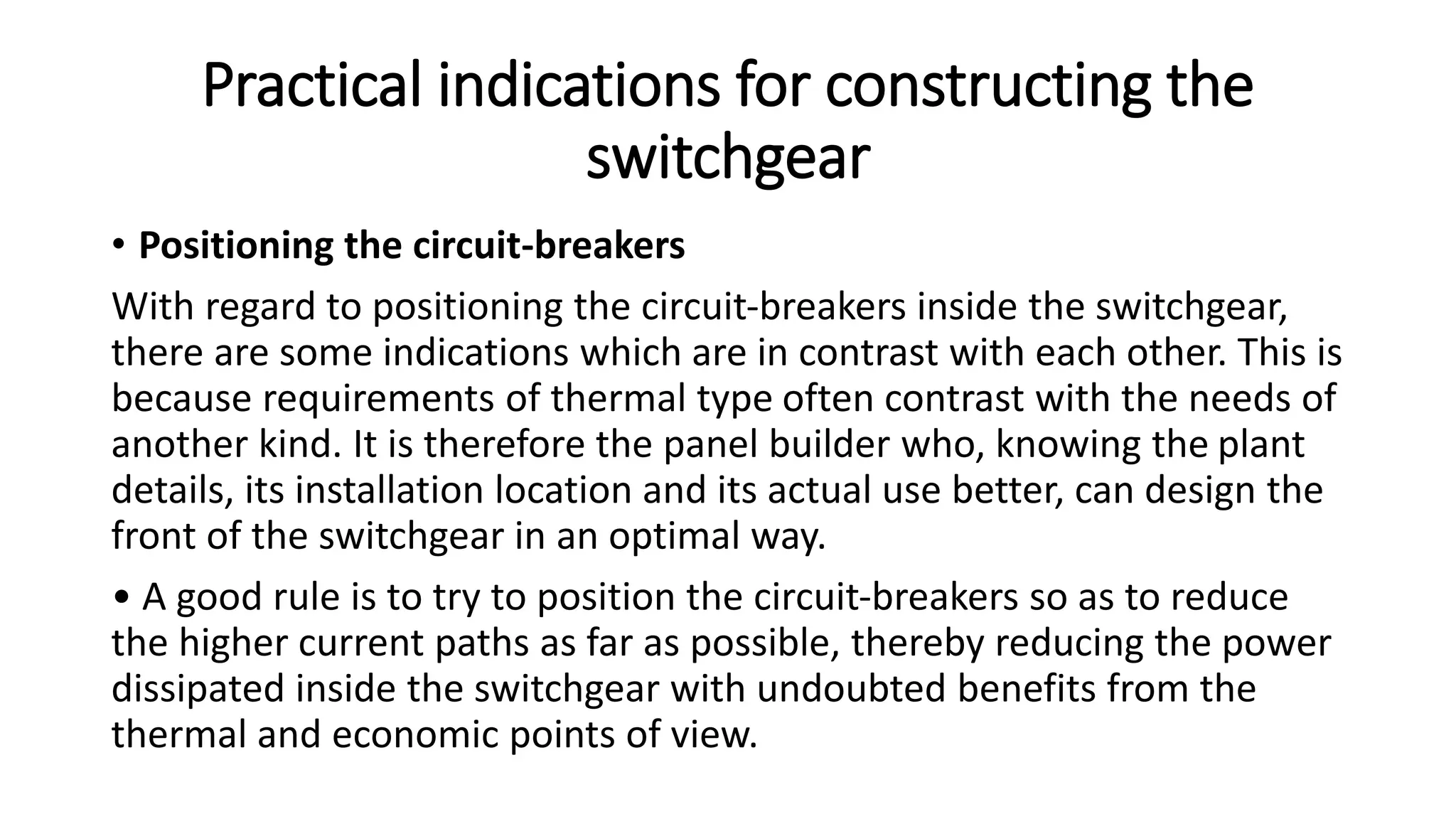
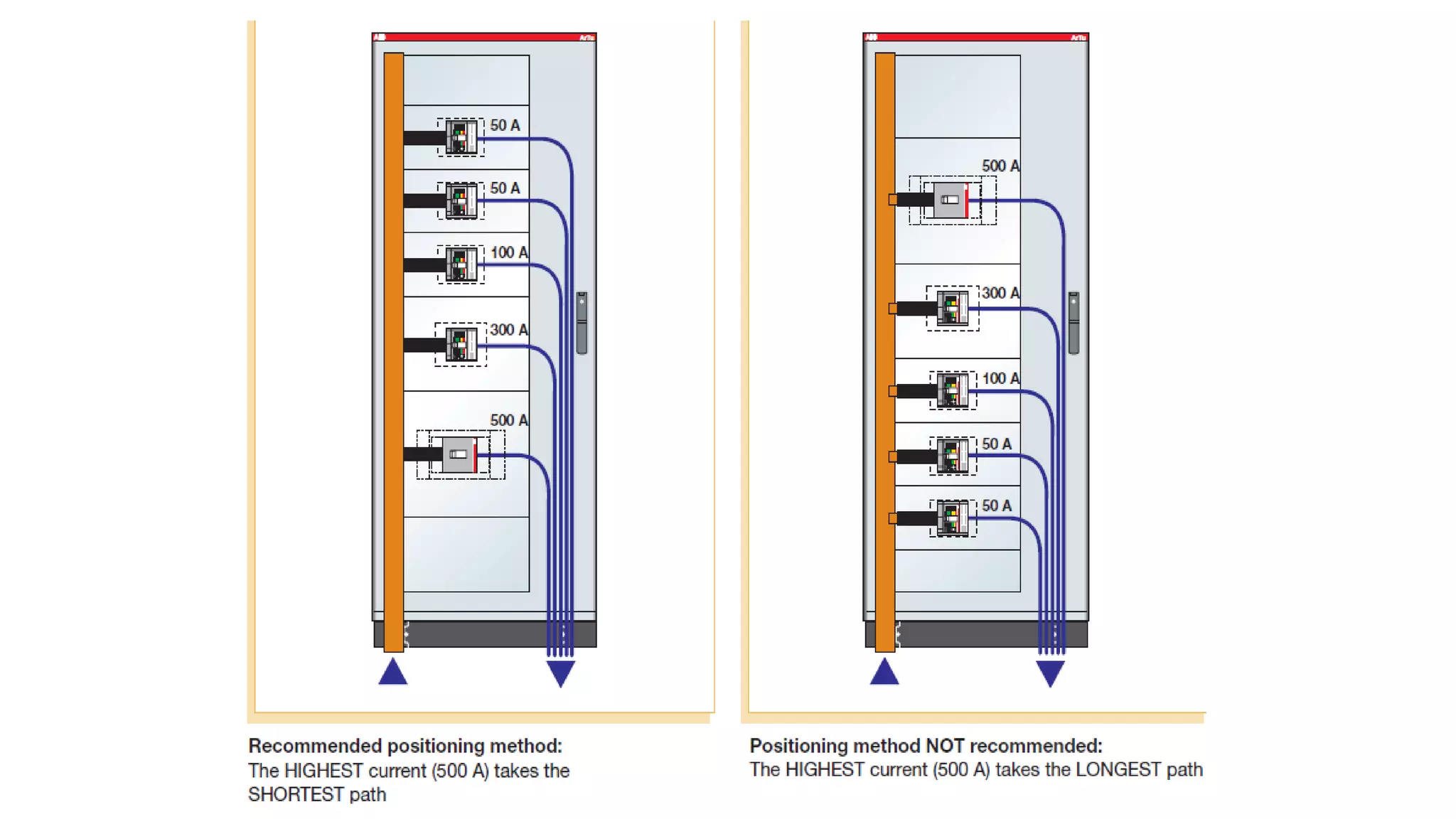
• Positioning the circuit-breakers
With regard to positioning the circuit-breakers inside the switchgear,
there are some indications which are in contrast with each other. This is
because requirements of thermal type often contrast with the needs of
another kind. It is therefore the panel builder who, knowing the plant
details, its installation location and its actual use better, can design the
front of the switchgear in an optimal way.
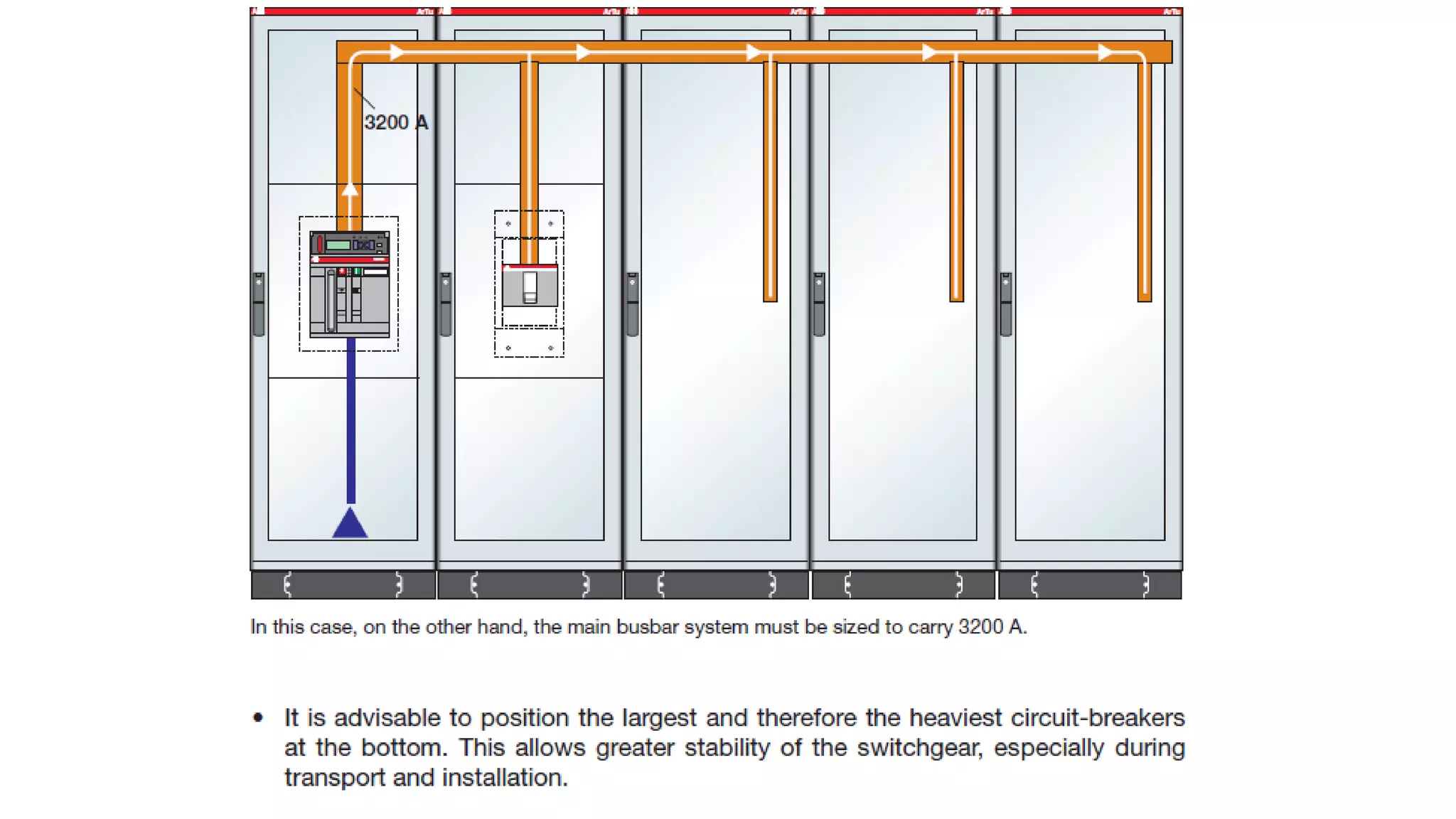
• A good rule is to try to position the circuit-breakers so as to reduce
the higher current paths as far as possible, thereby reducing the power
dissipated inside the switchgear with undoubted benefits from the
thermal and economic points of view.
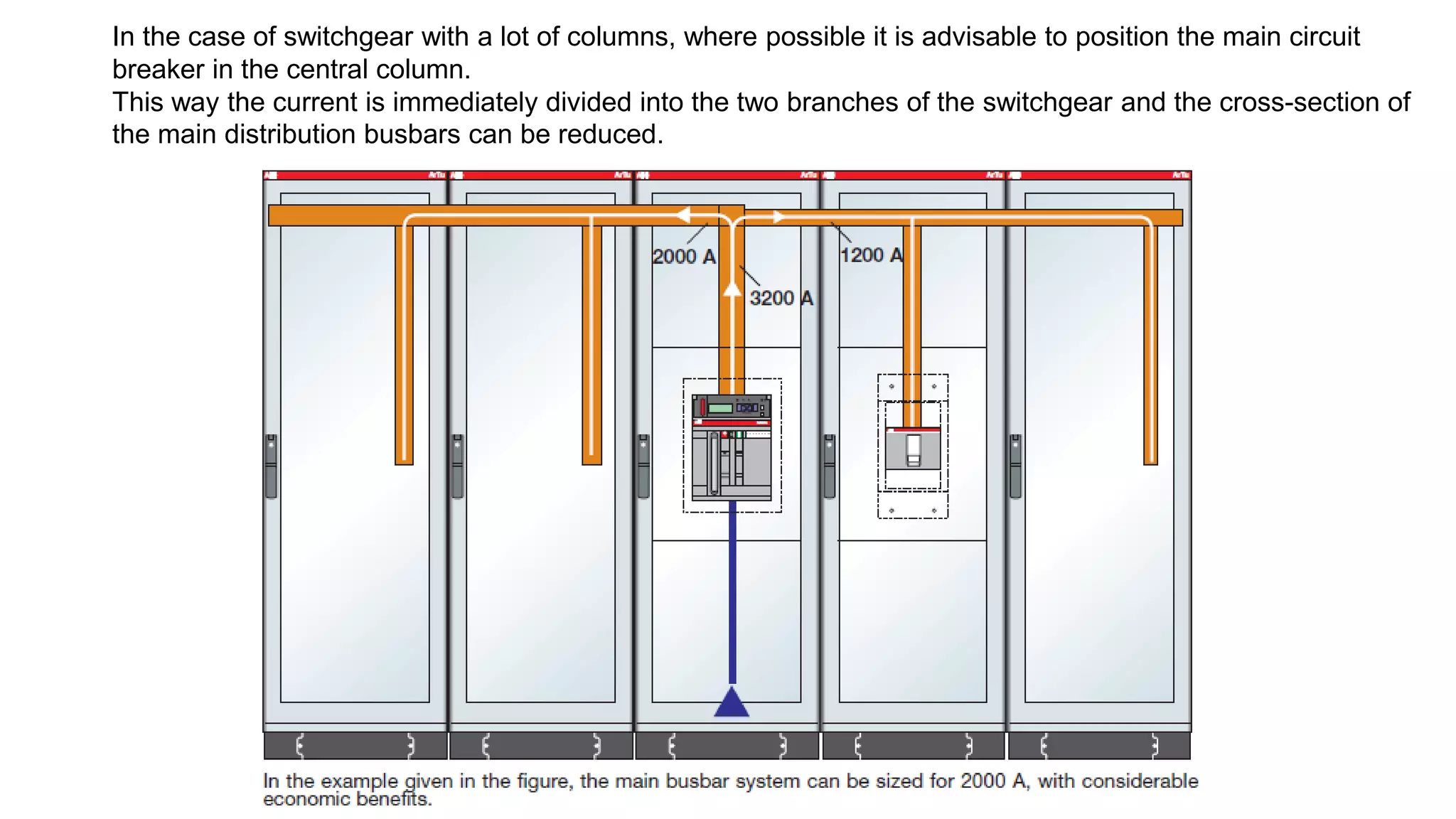
In the case of switchgear with a lot of columns, where possible it is advisable to position the main circuit
breaker in the central column.
This way the current is immediately divided into the two branches of the switchgear and the cross-section of
the main distribution busbars can be reduced.
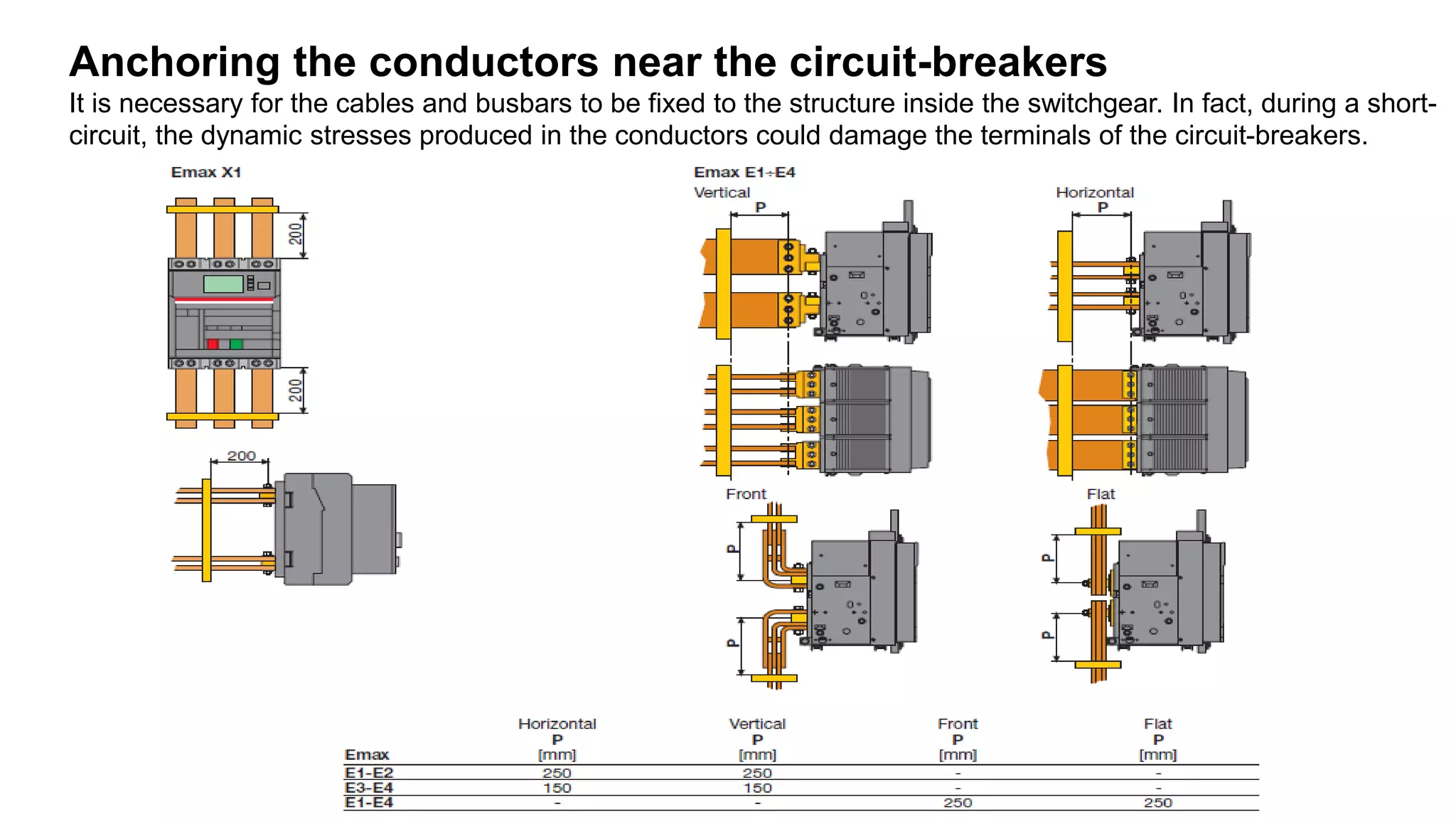
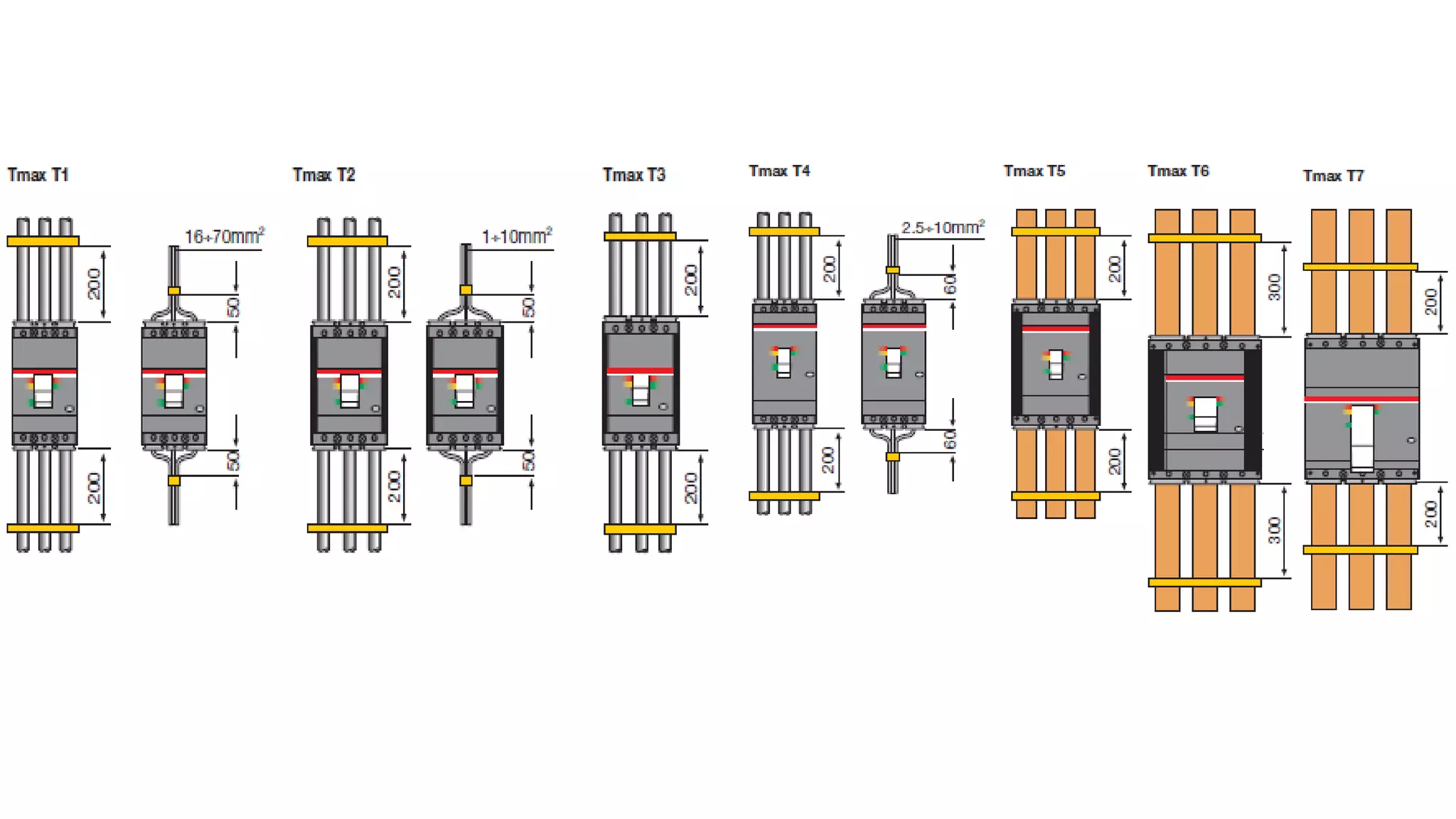
Anchoring the conductors near the circuit-breakers
It is necessary for the cables and busbars to be fixed to the structure inside the switchgear. In fact, during a short-
circuit, the dynamic stresses produced in the conductors could damage the terminals of the circuit-breakers.
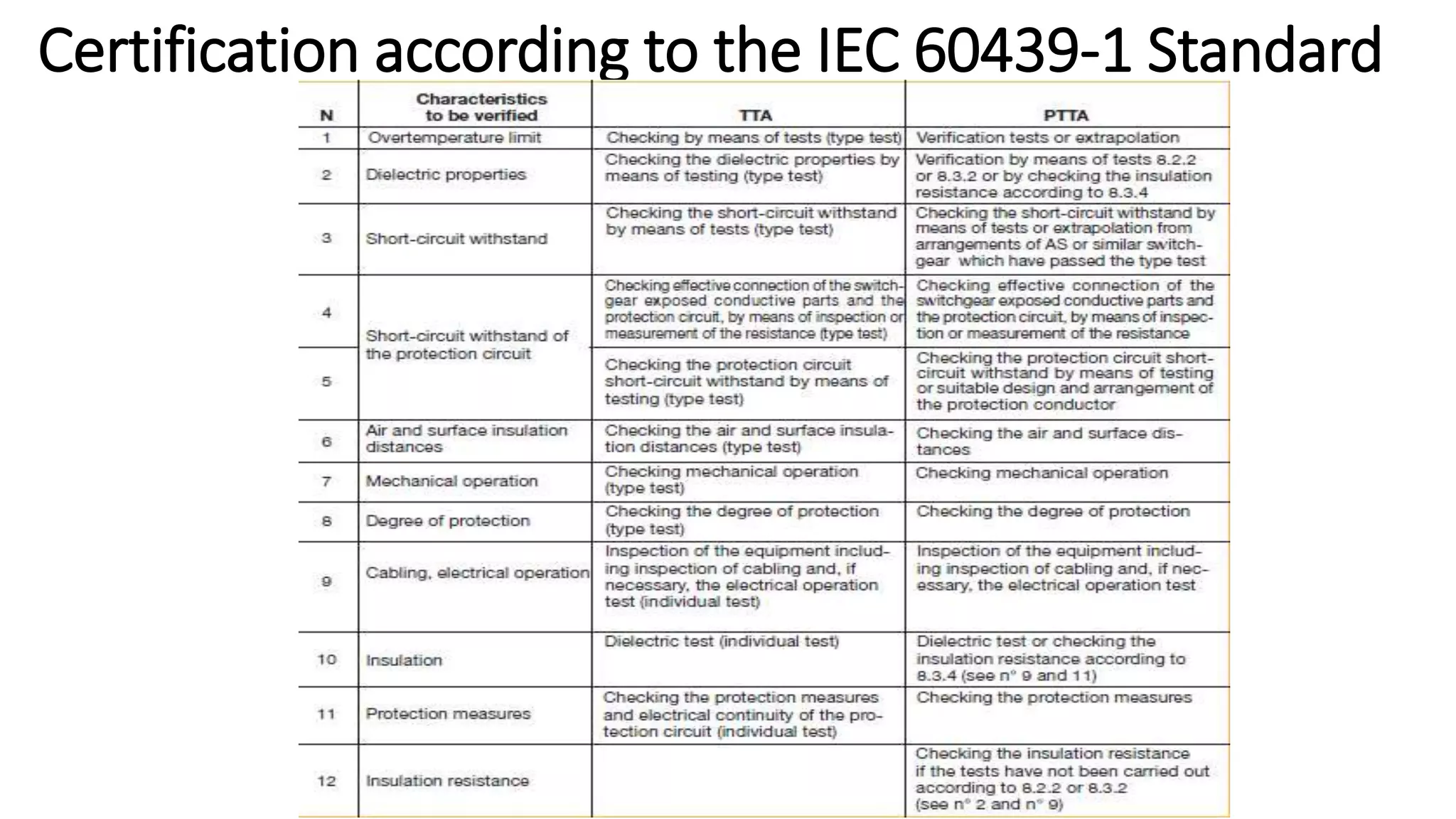
Certification according to the IEC 60439-1 Standard
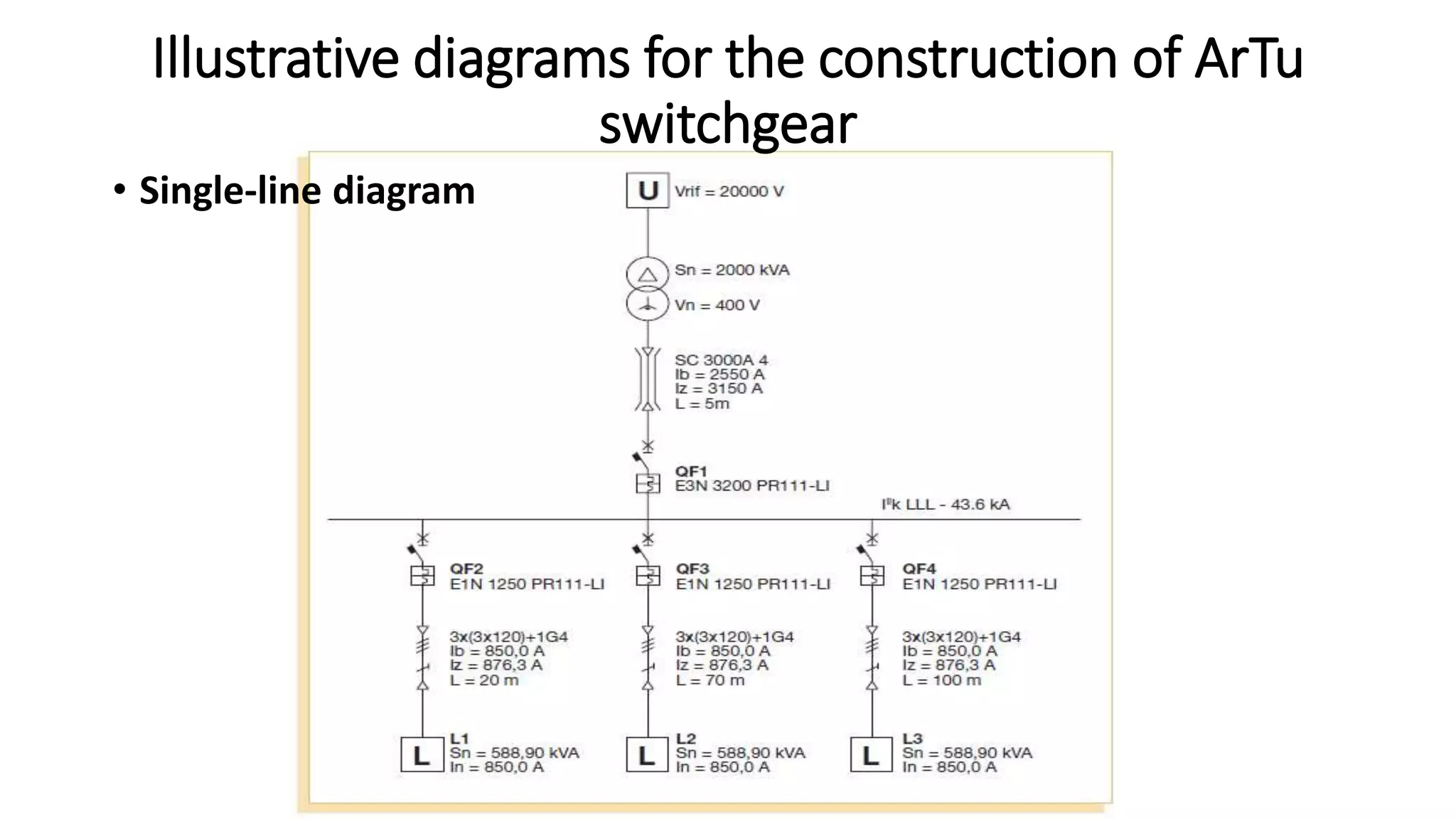
Illustrative diagrams for the construction of ArTu
switchgear
• Single-line diagram
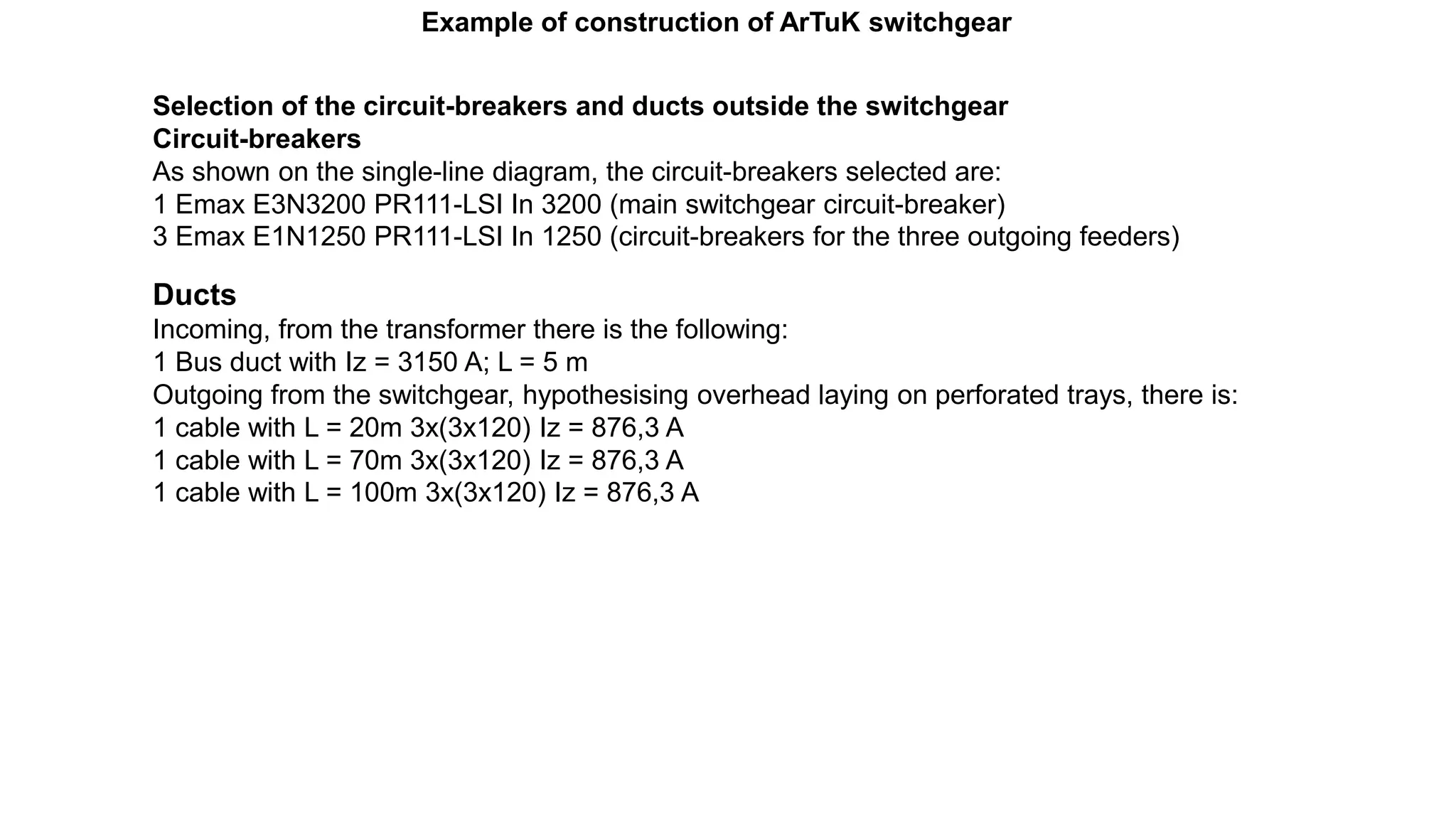
Example of construction of ArTuK switchgear
Selection of the circuit-breakers and ducts outside the switchgear
Circuit-breakers
As shown on the single-line diagram, the circuit-breakers selected are:
1 Emax E3N3200 PR111-LSI In 3200 (main switchgear circuit-breaker)
3 Emax E1N1250 PR111-LSI In 1250 (circuit-breakers for the three outgoing feeders)
Ducts
Incoming, from the transformer there is the following:
1 Bus duct with Iz = 3150 A; L = 5 m
Outgoing from the switchgear, hypothesising overhead laying on perforated trays, there is:
1 cable with L = 20m 3x(3x120) Iz = 876,3 A
1 cable with L = 70m 3x(3x120) Iz = 876,3 A
1 cable with L = 100m 3x(3x120) Iz = 876,3 A
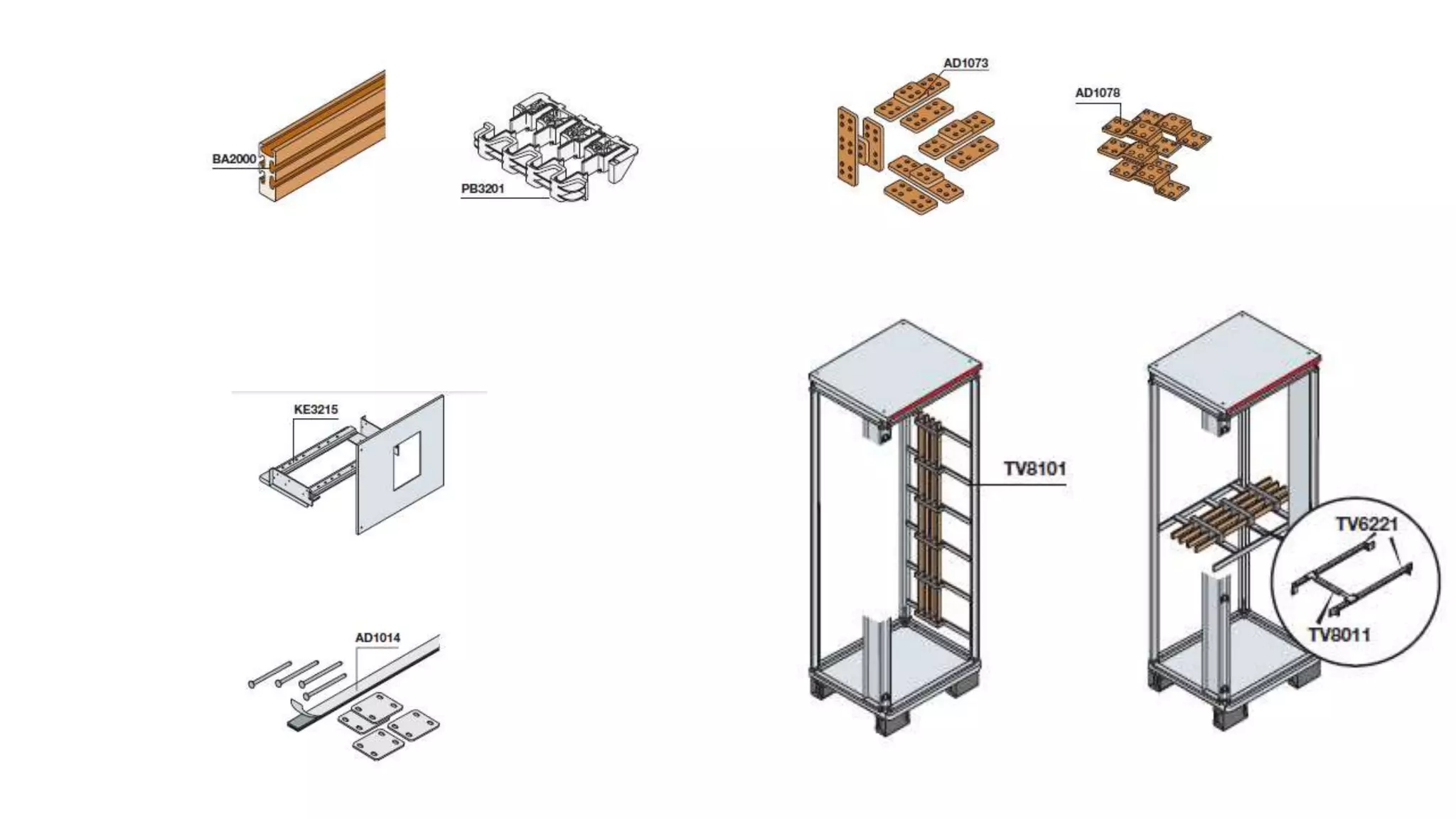
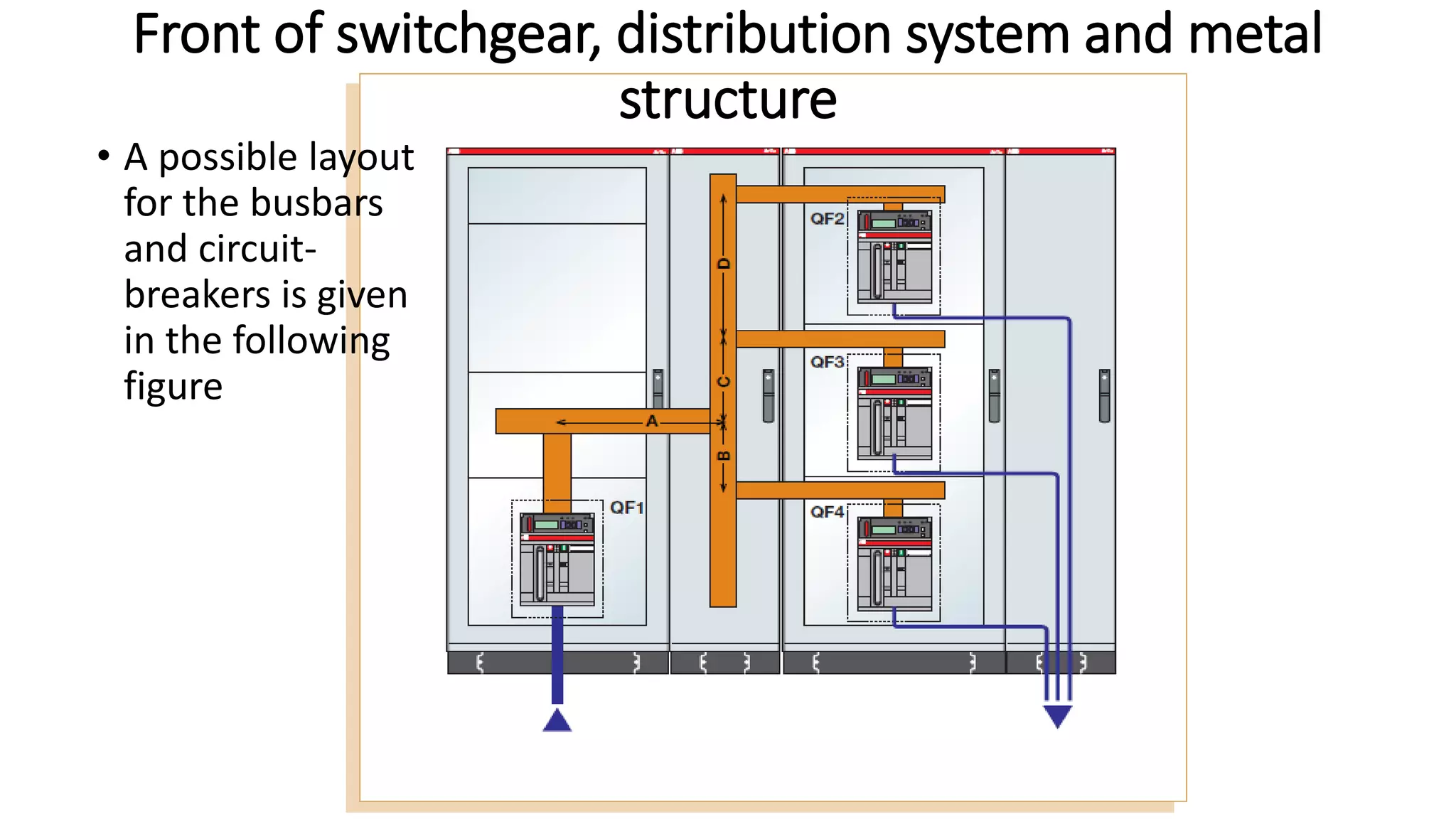
Front of switchgear, distribution system and metal
structure
• A possible layout
for the busbars
and circuit-
breakers is given
in the following
figure
MVP BREAKER DETAILS
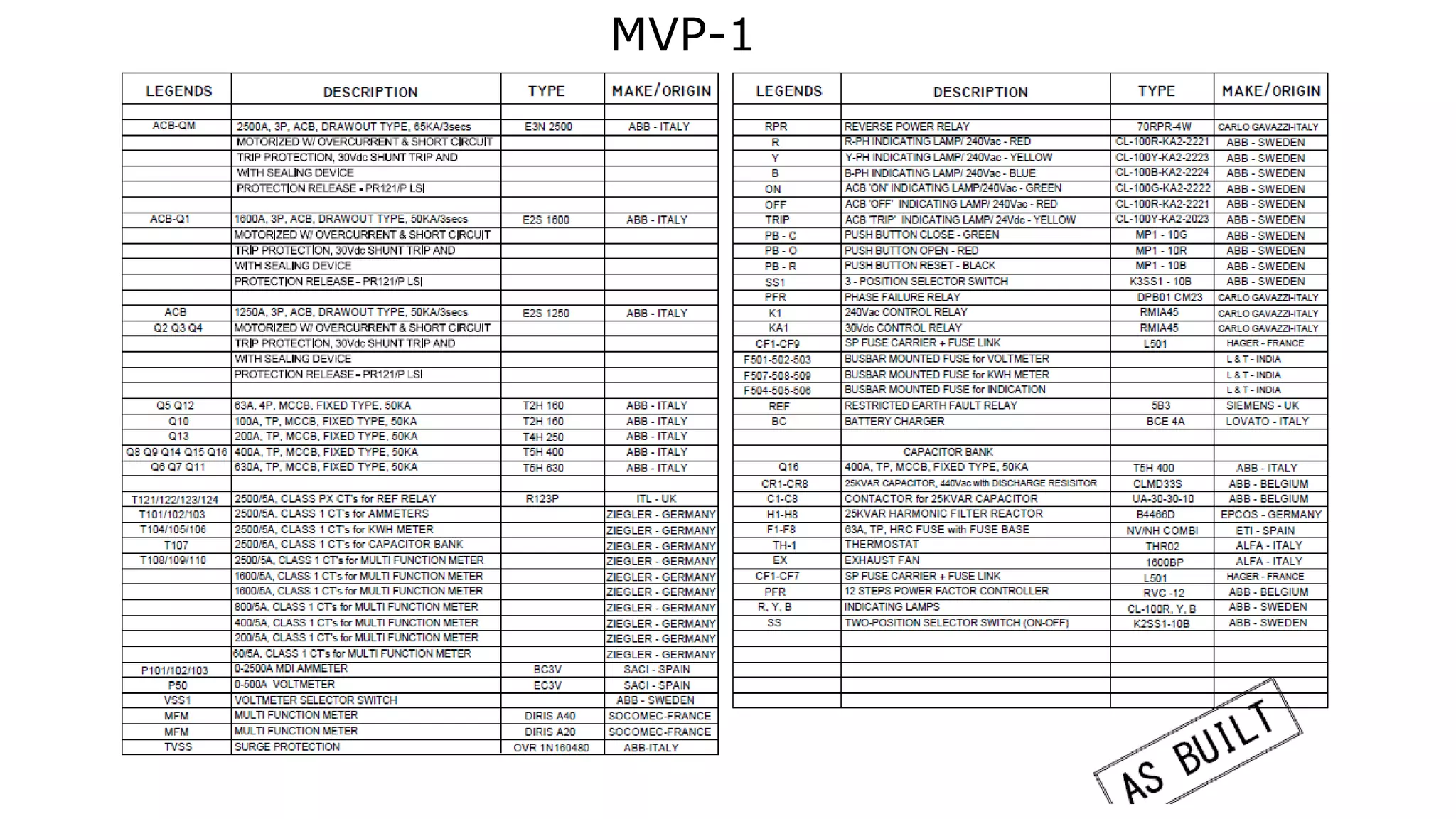
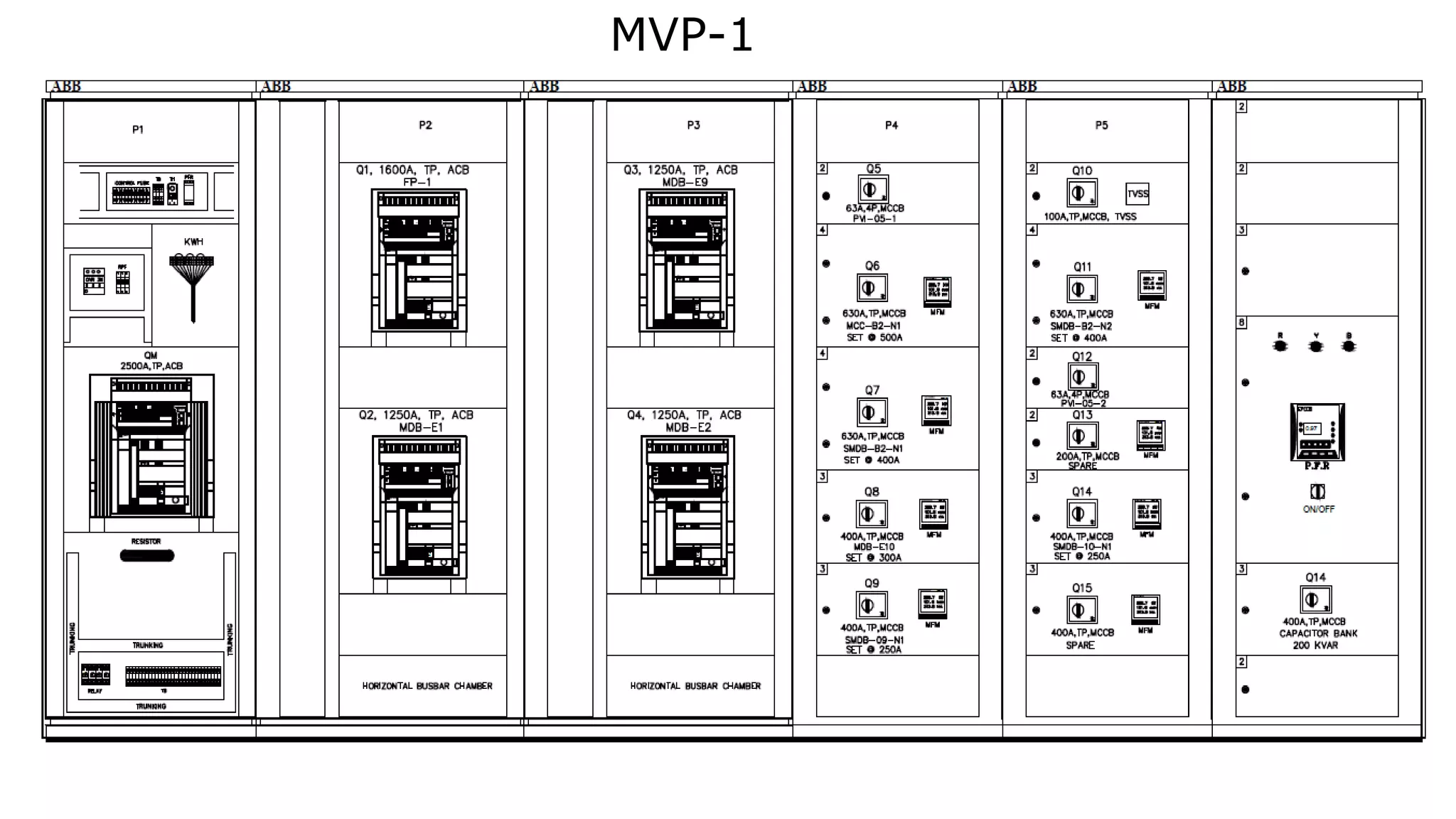
MVP-1
MVP-1
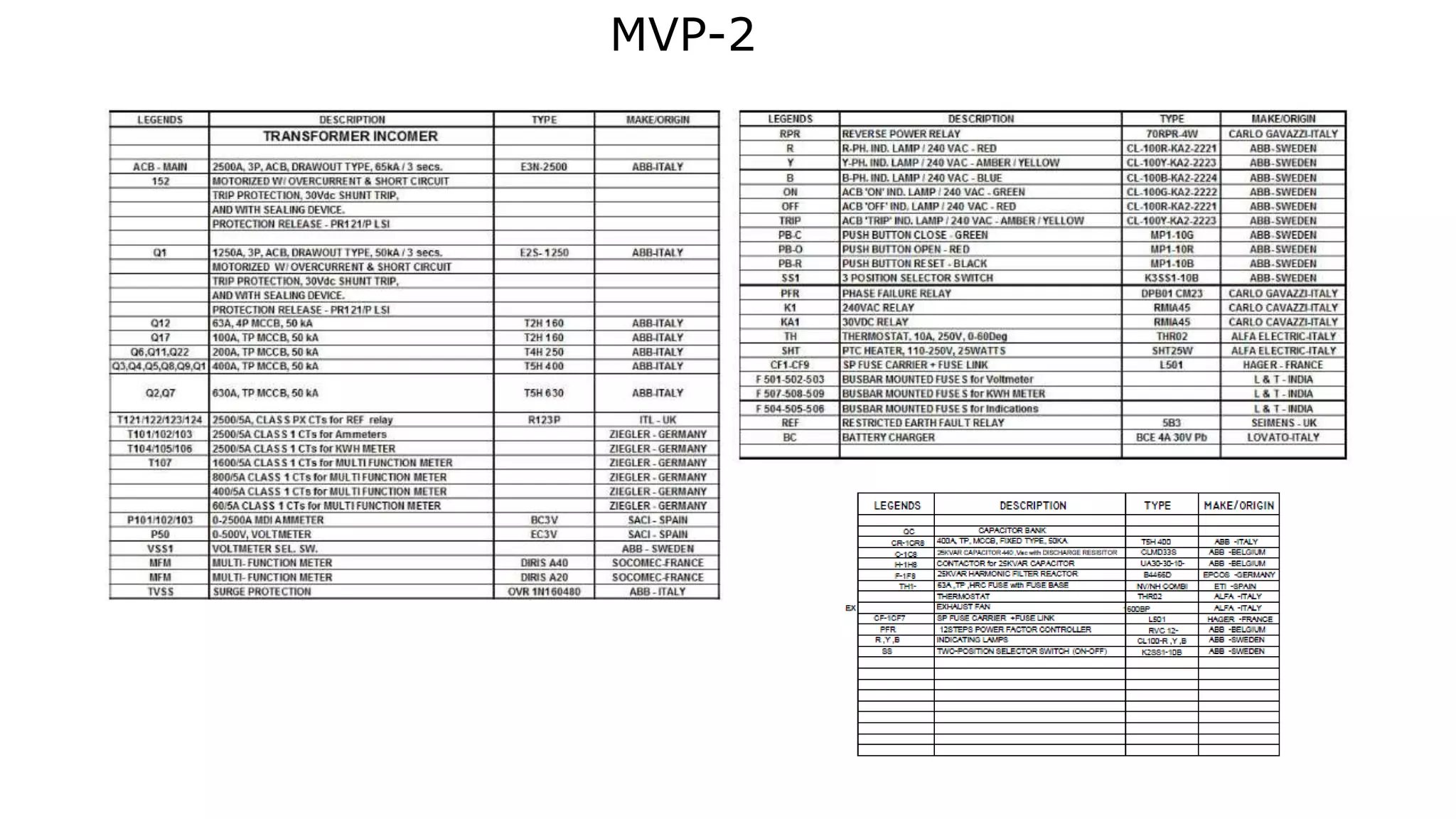
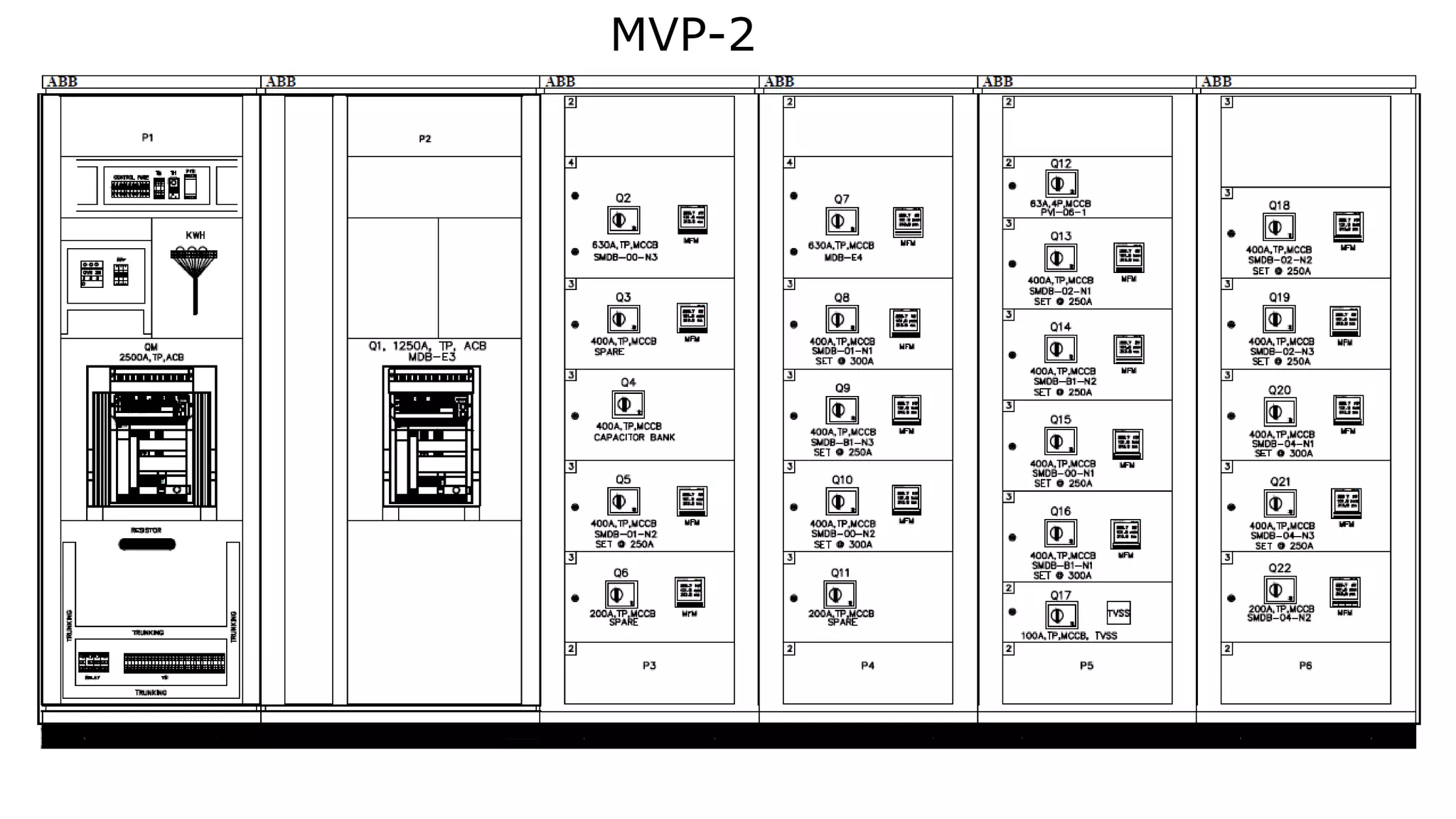
MVP-2
MVP-2
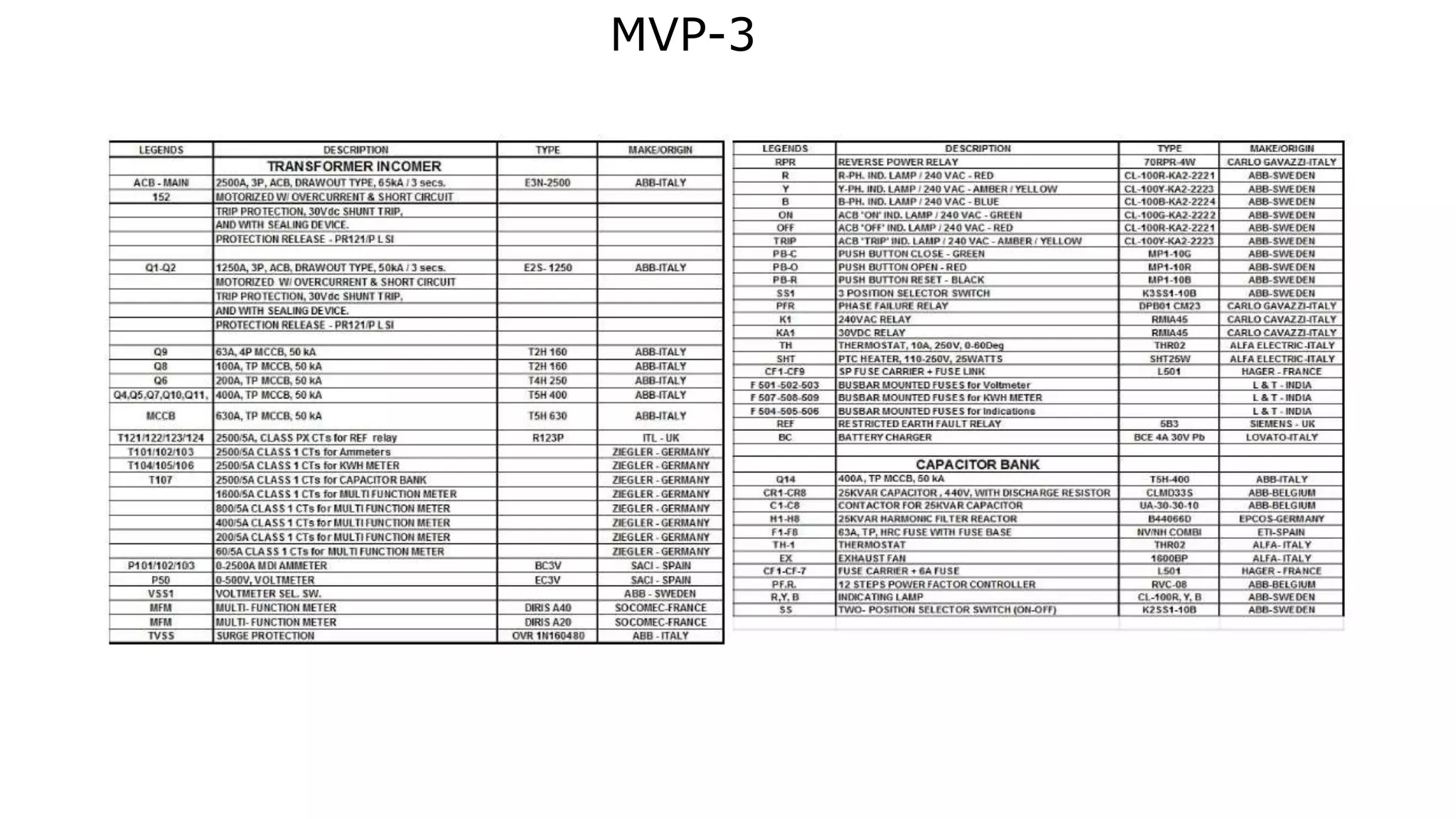
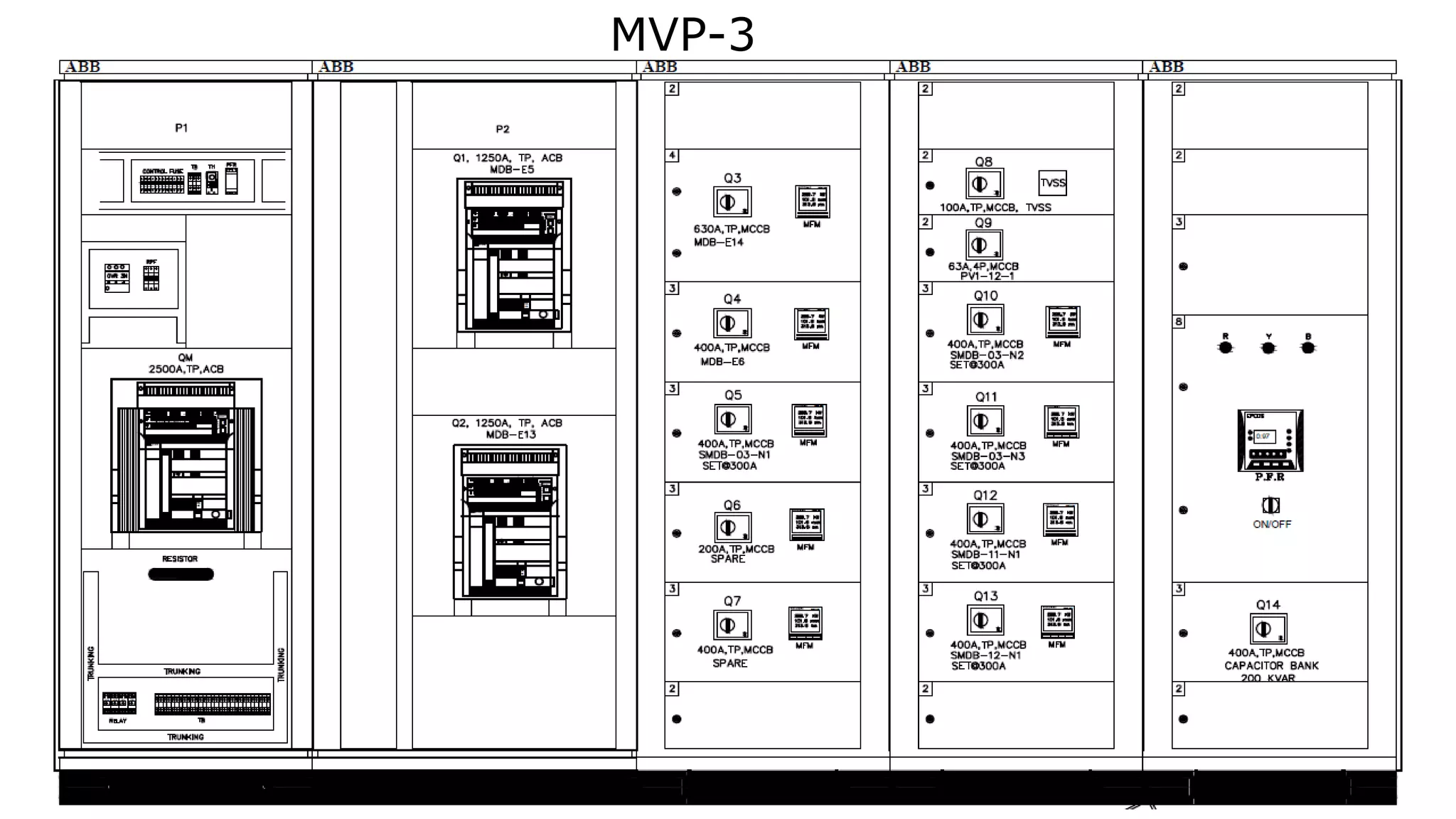
MVP-3
MVP-3
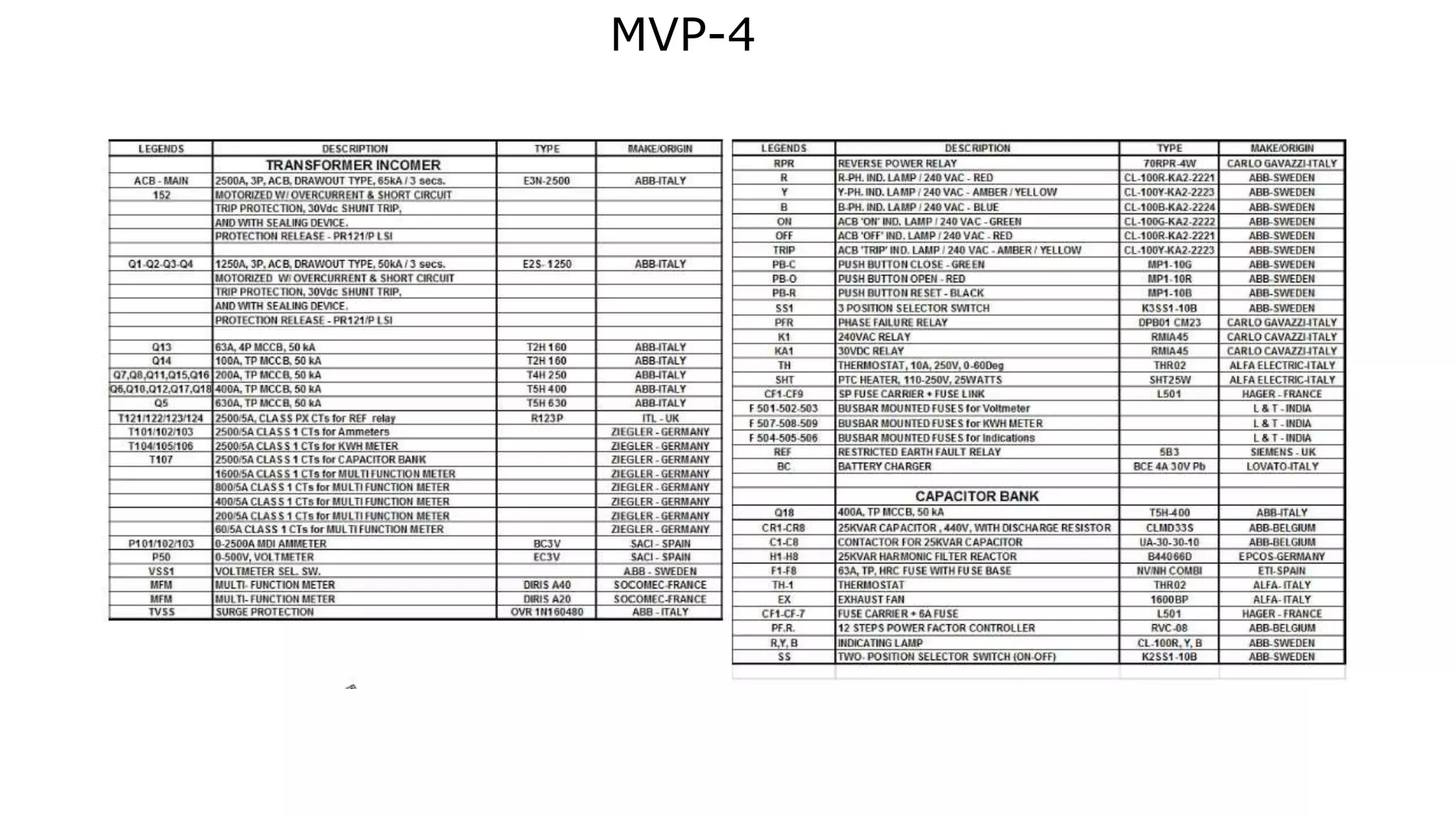
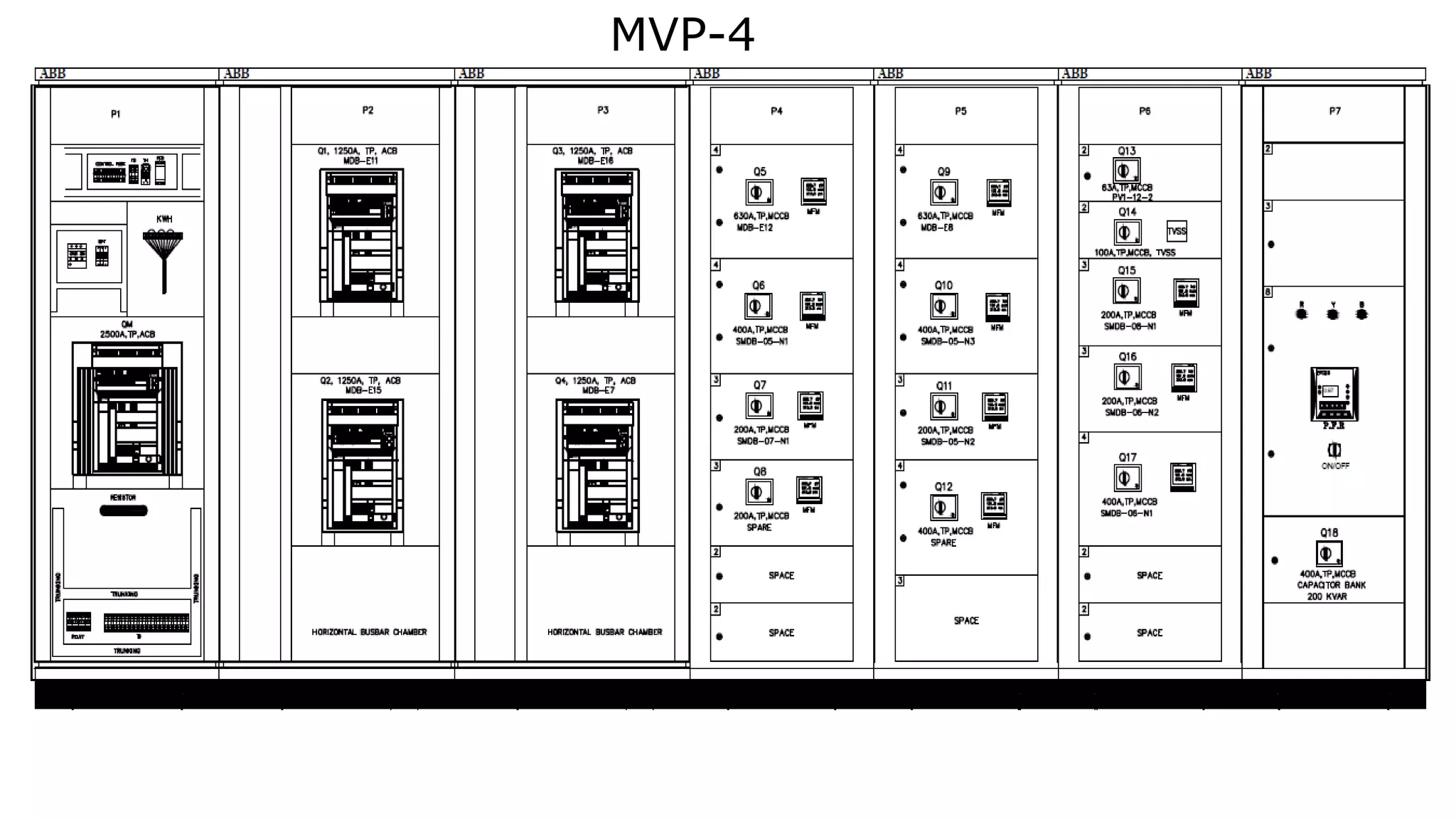
MVP-4
MVP-4
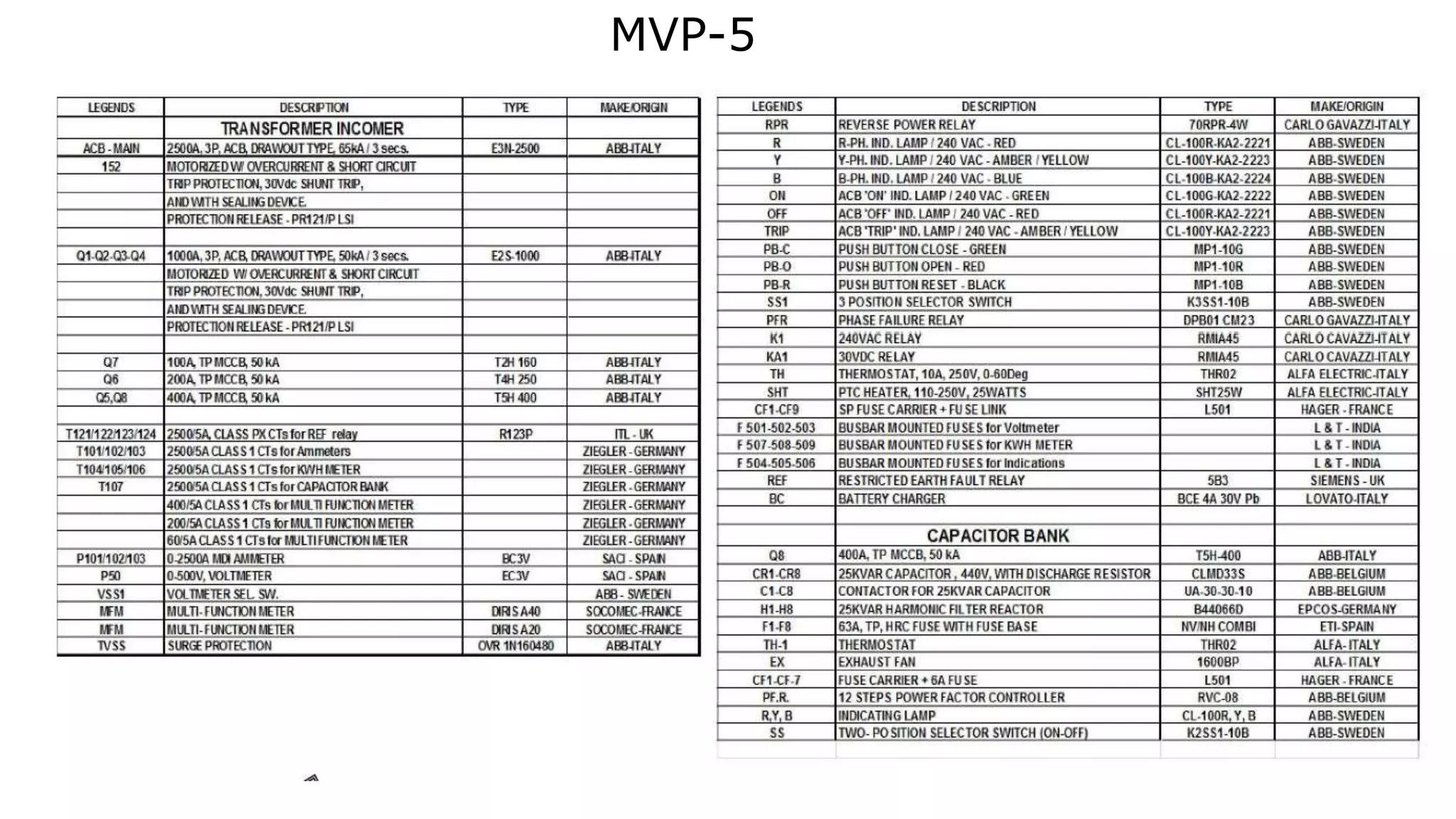
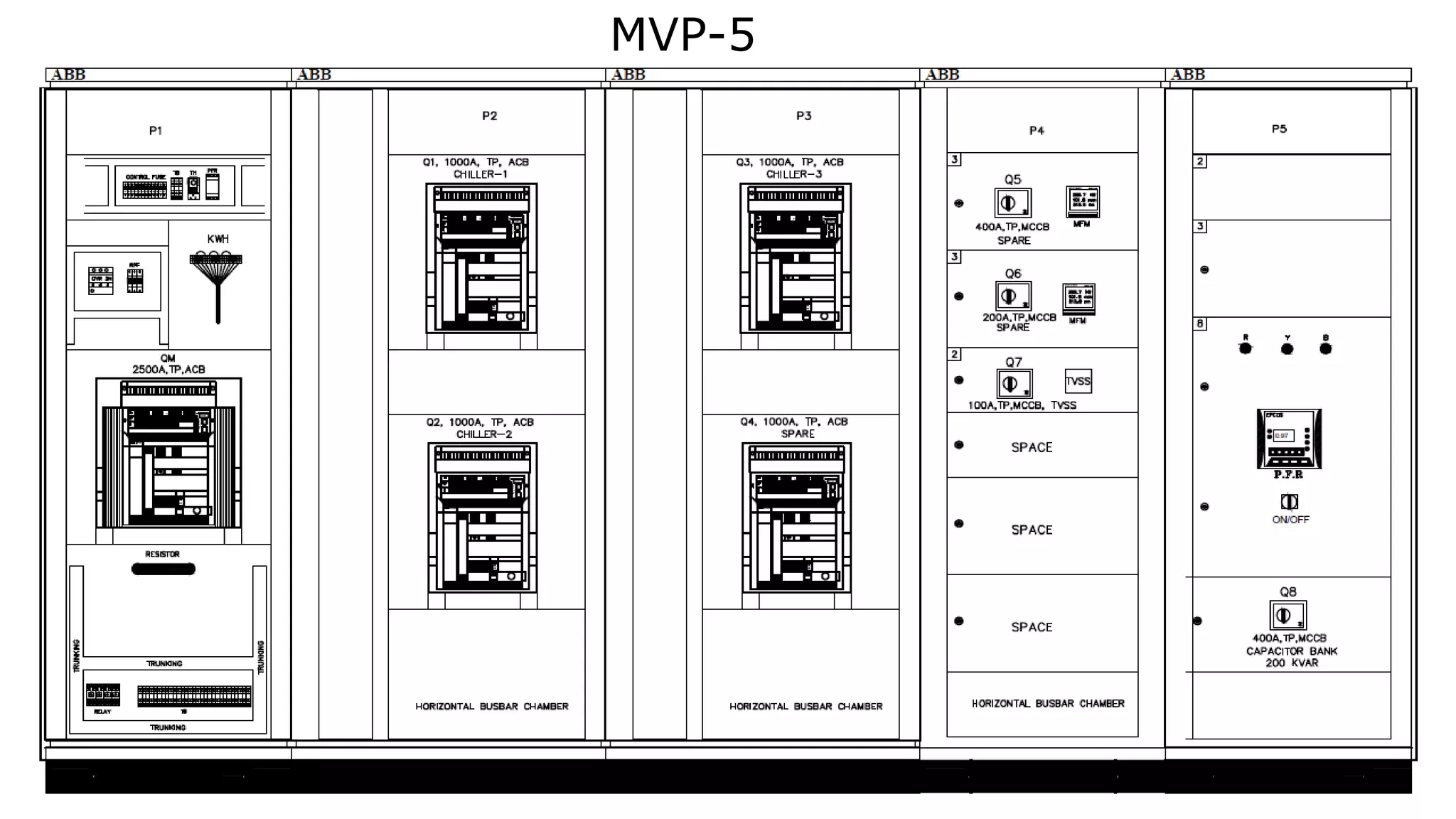
MVP-5
MVP-5
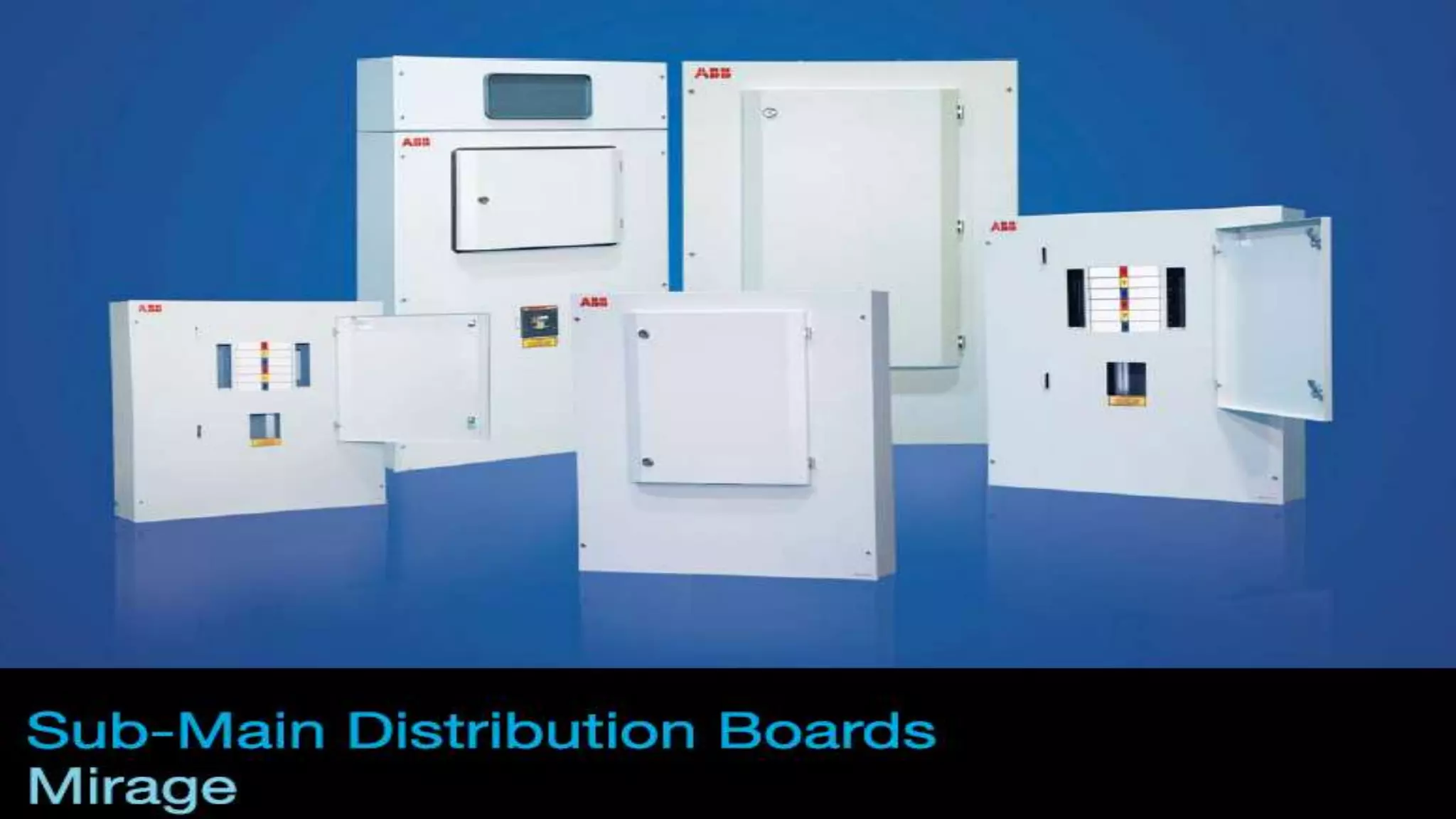
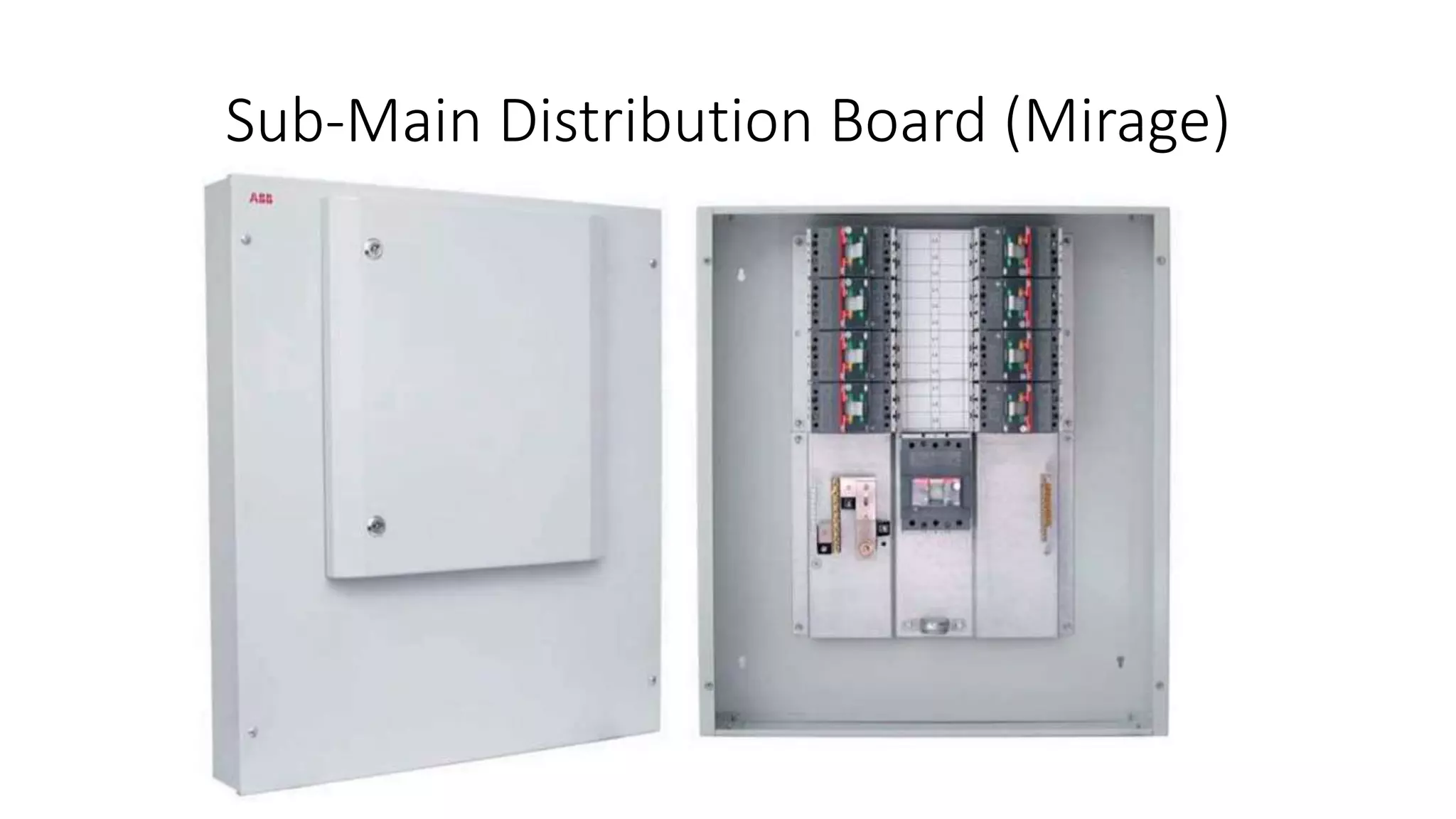
Sub-Main Distribution Board (Mirage)
Types of Breakers Used
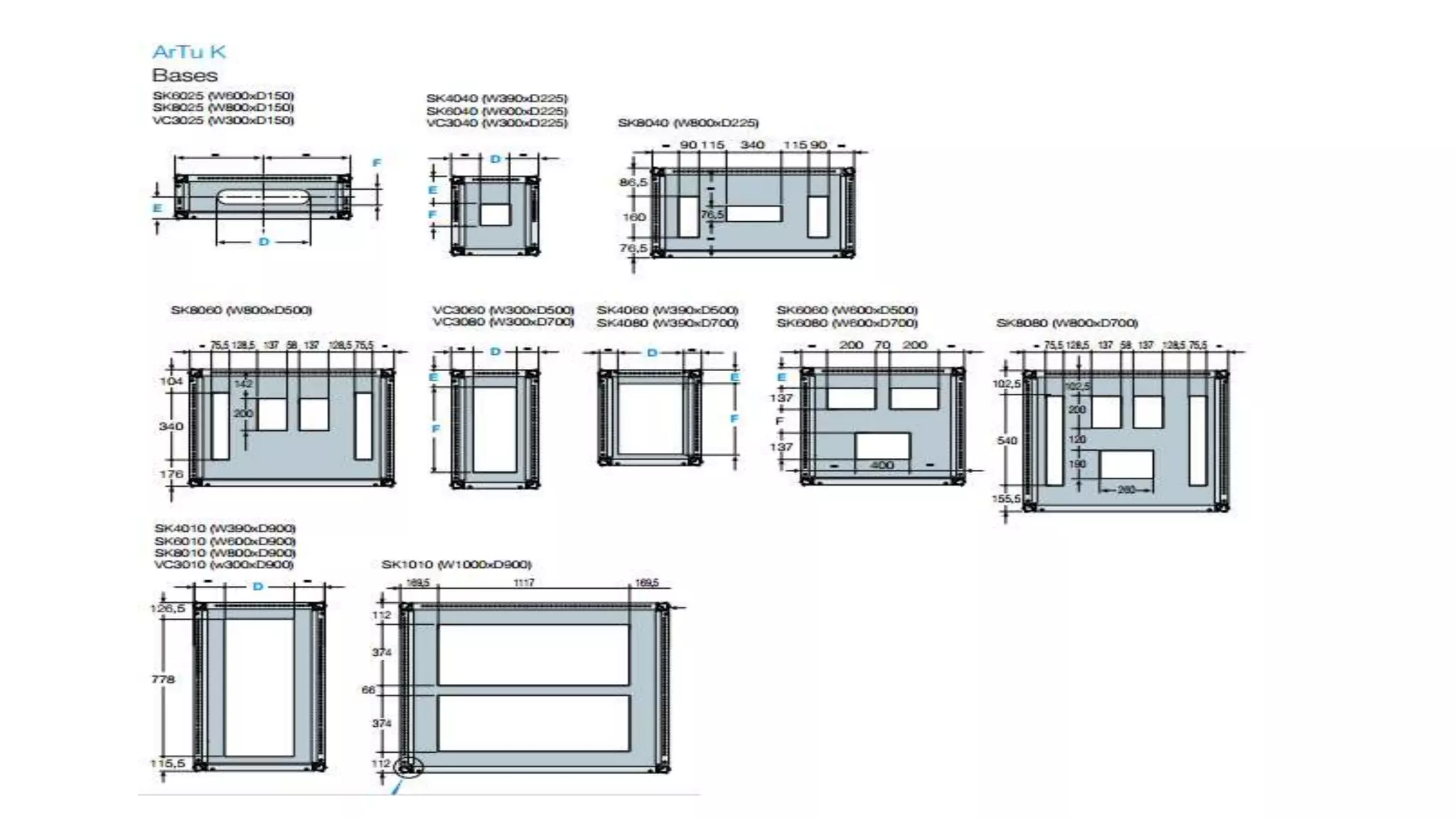
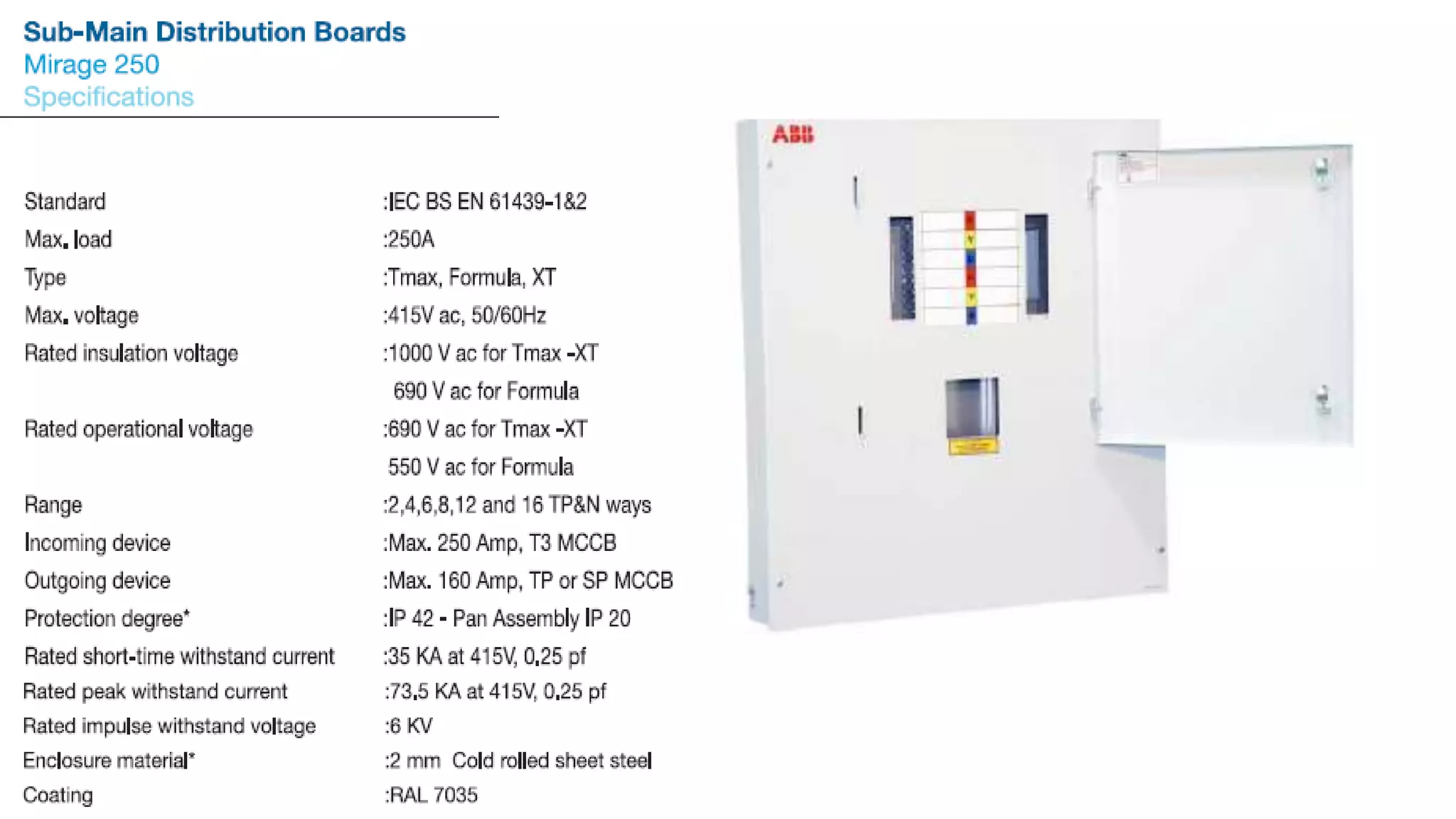
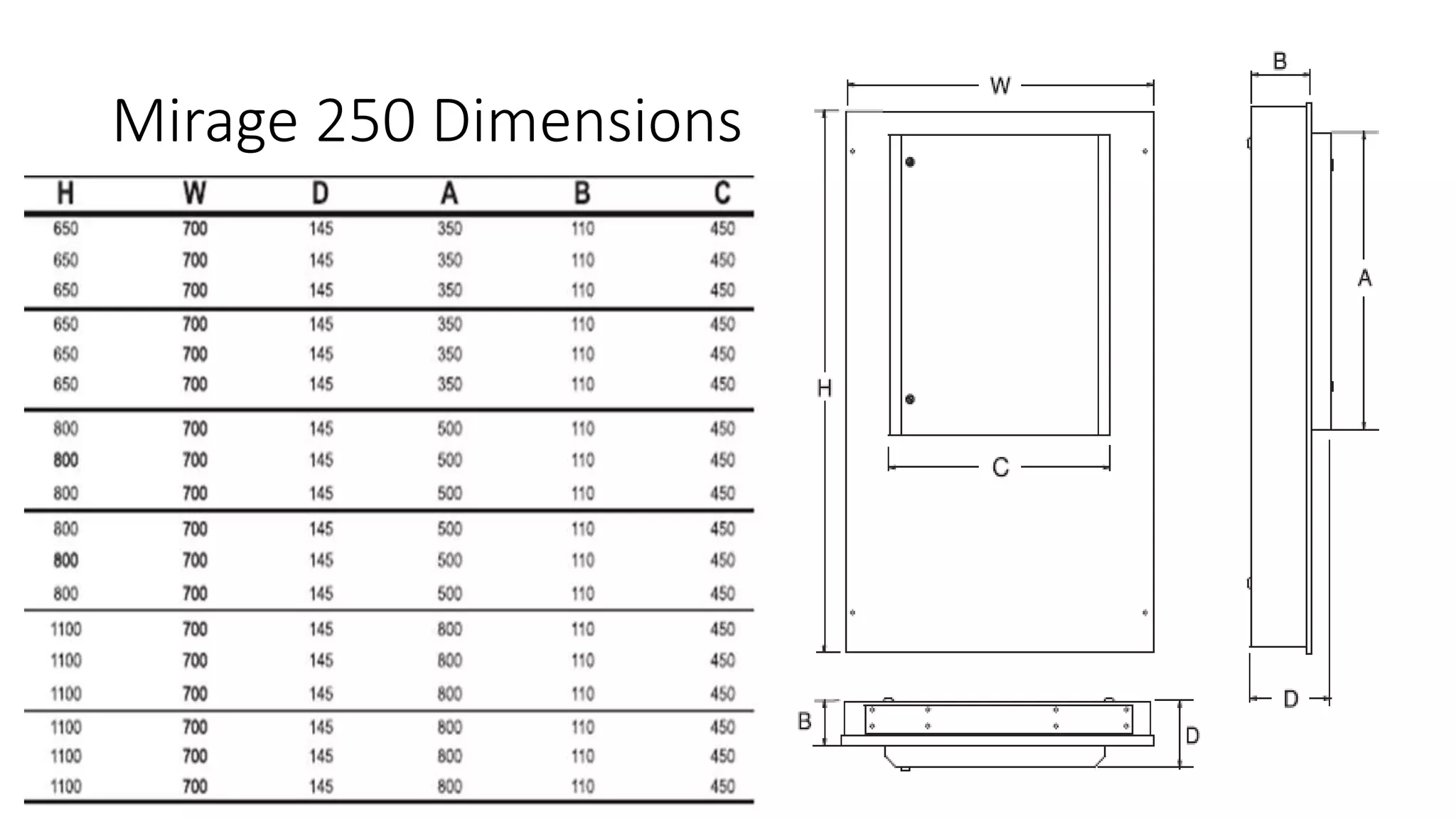
Mirage 250 Dimensions
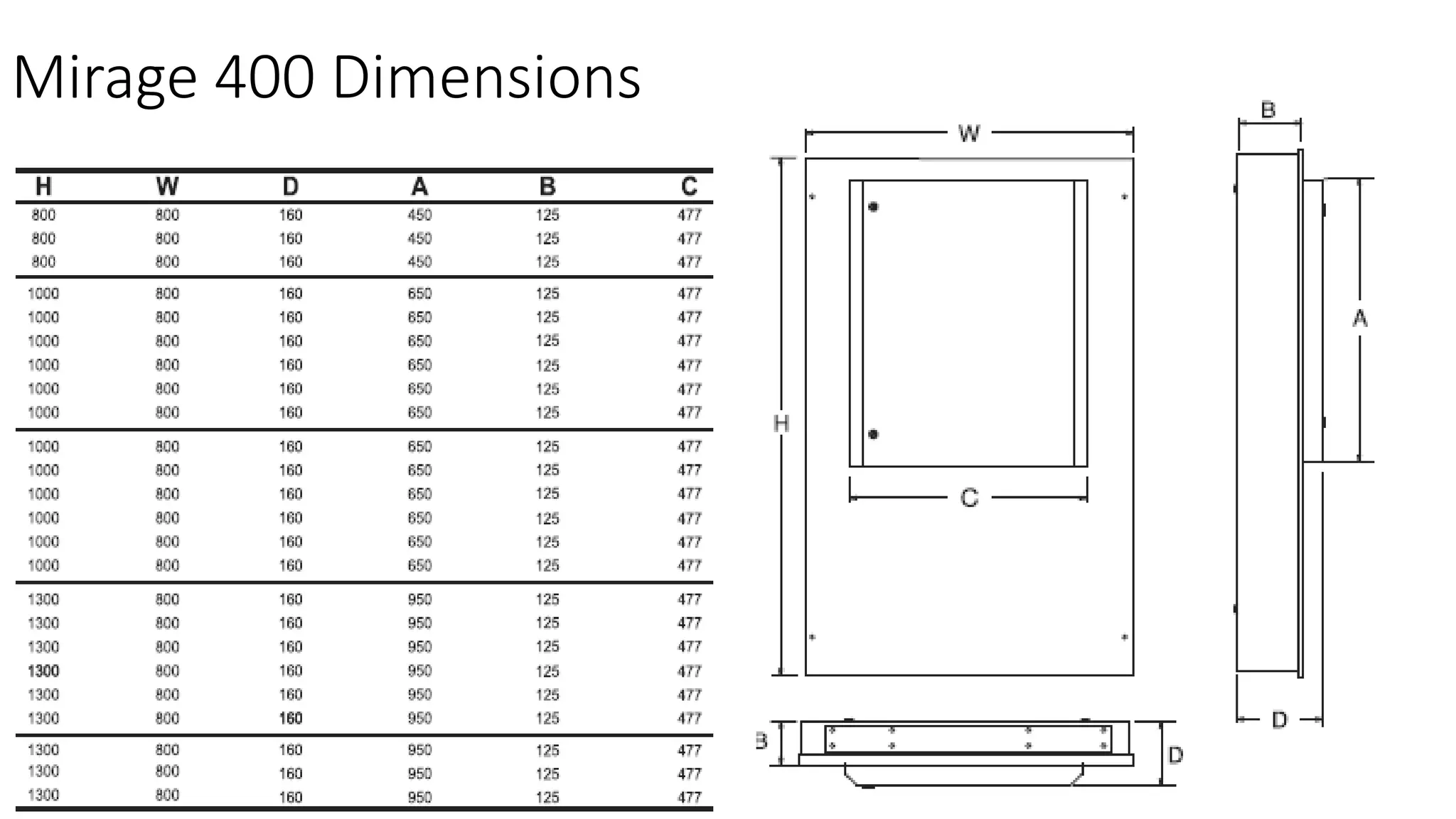
Mirage 400 Dimensions
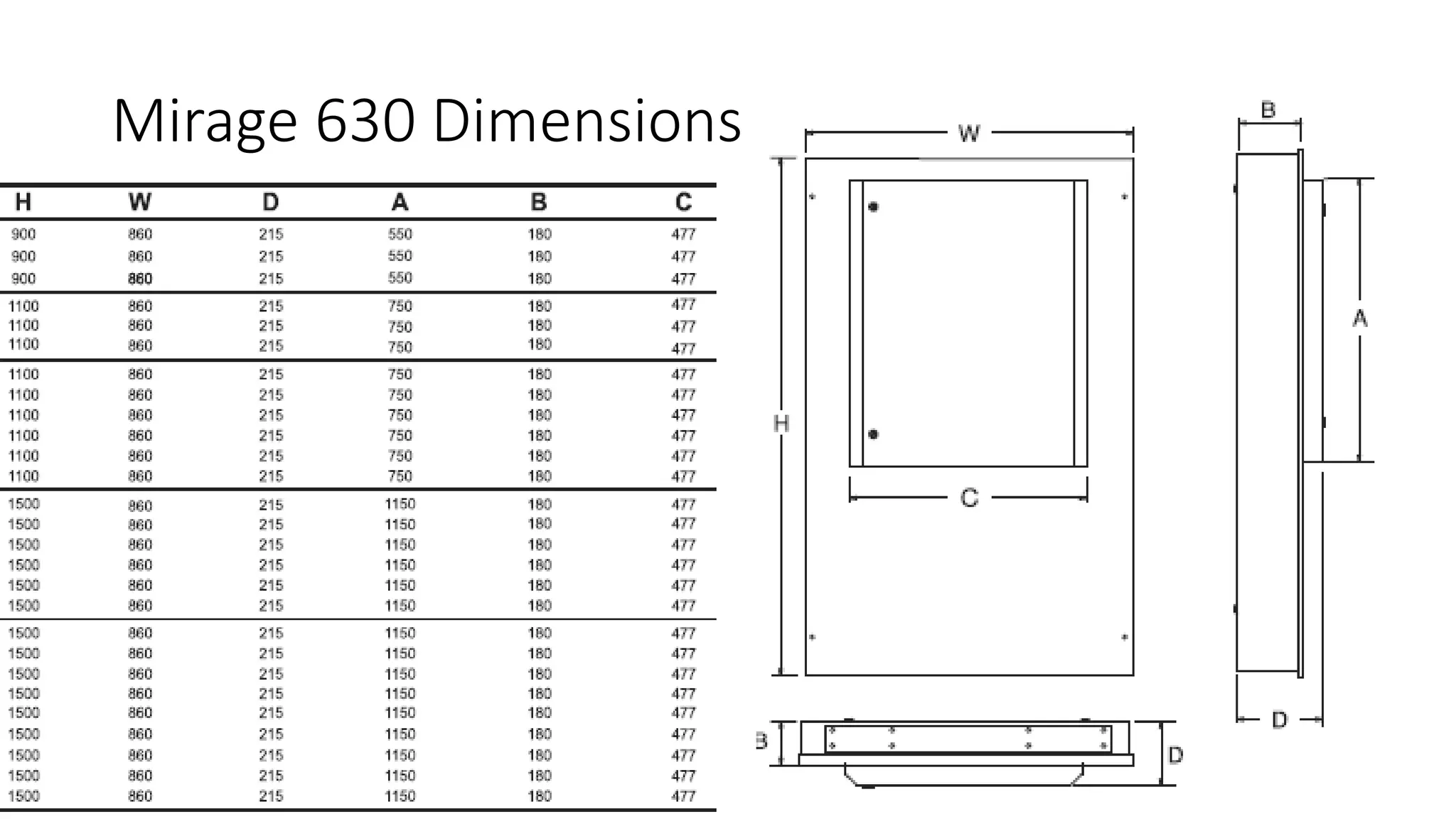
Mirage 630 Dimensions
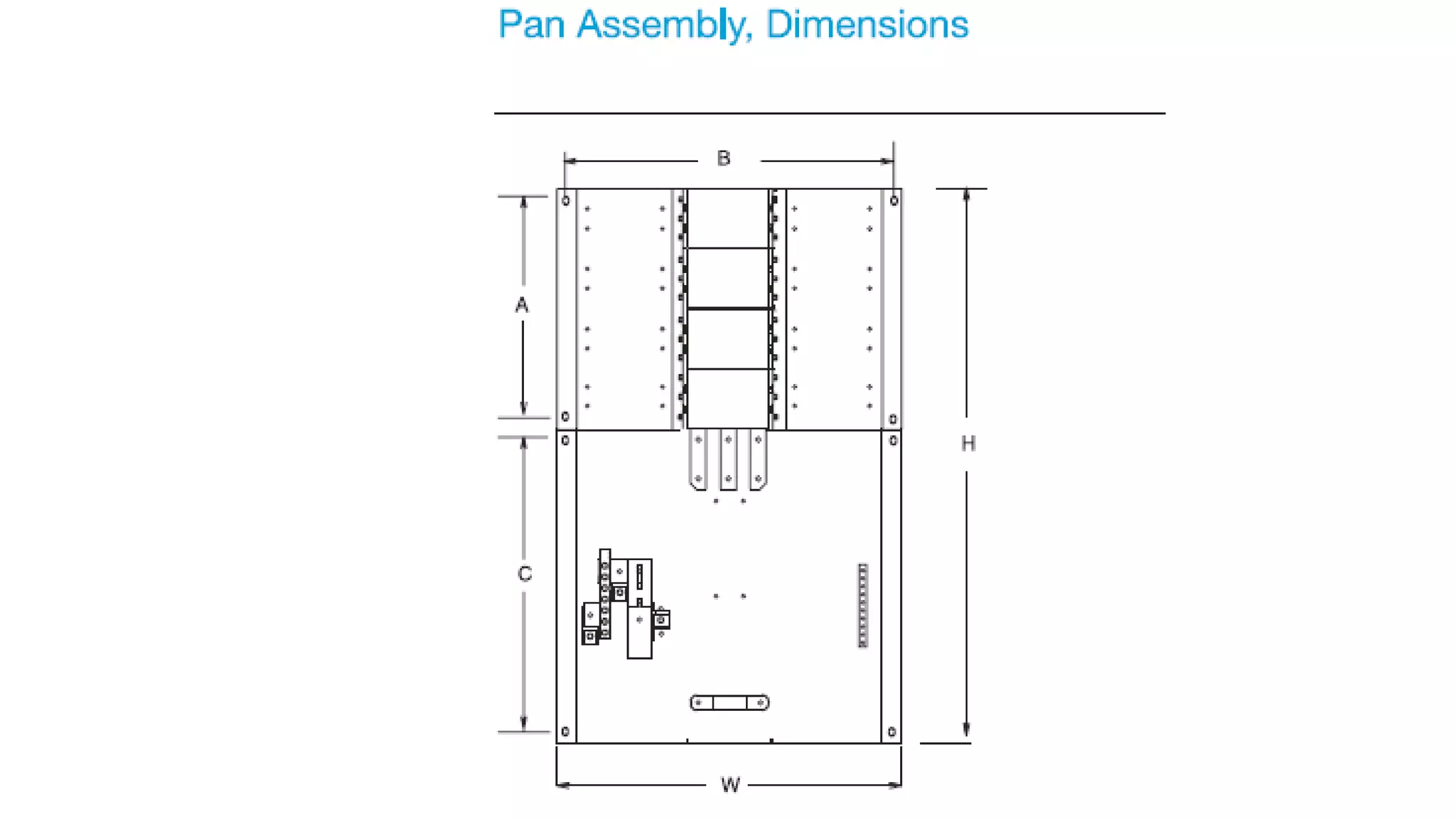
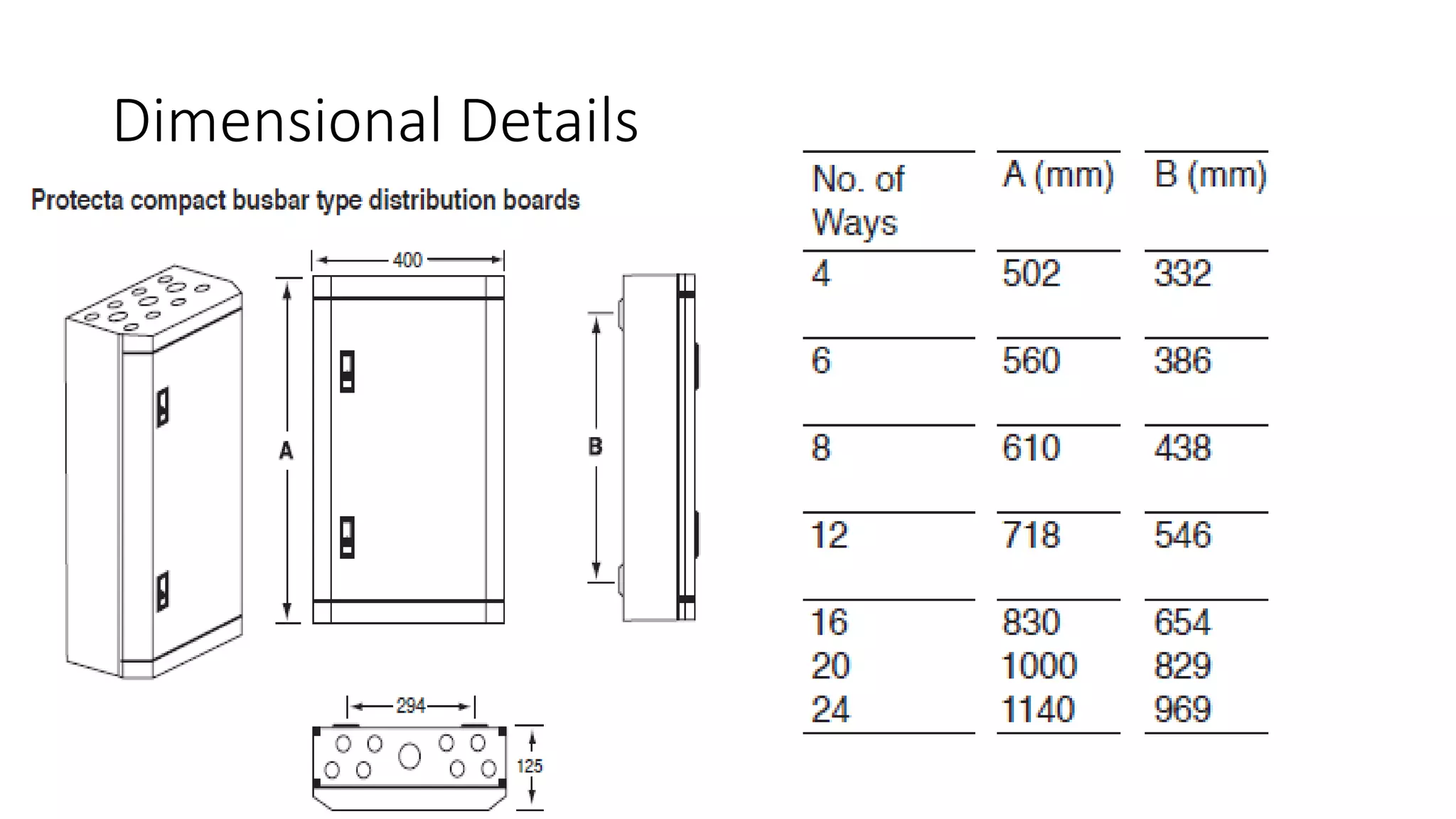
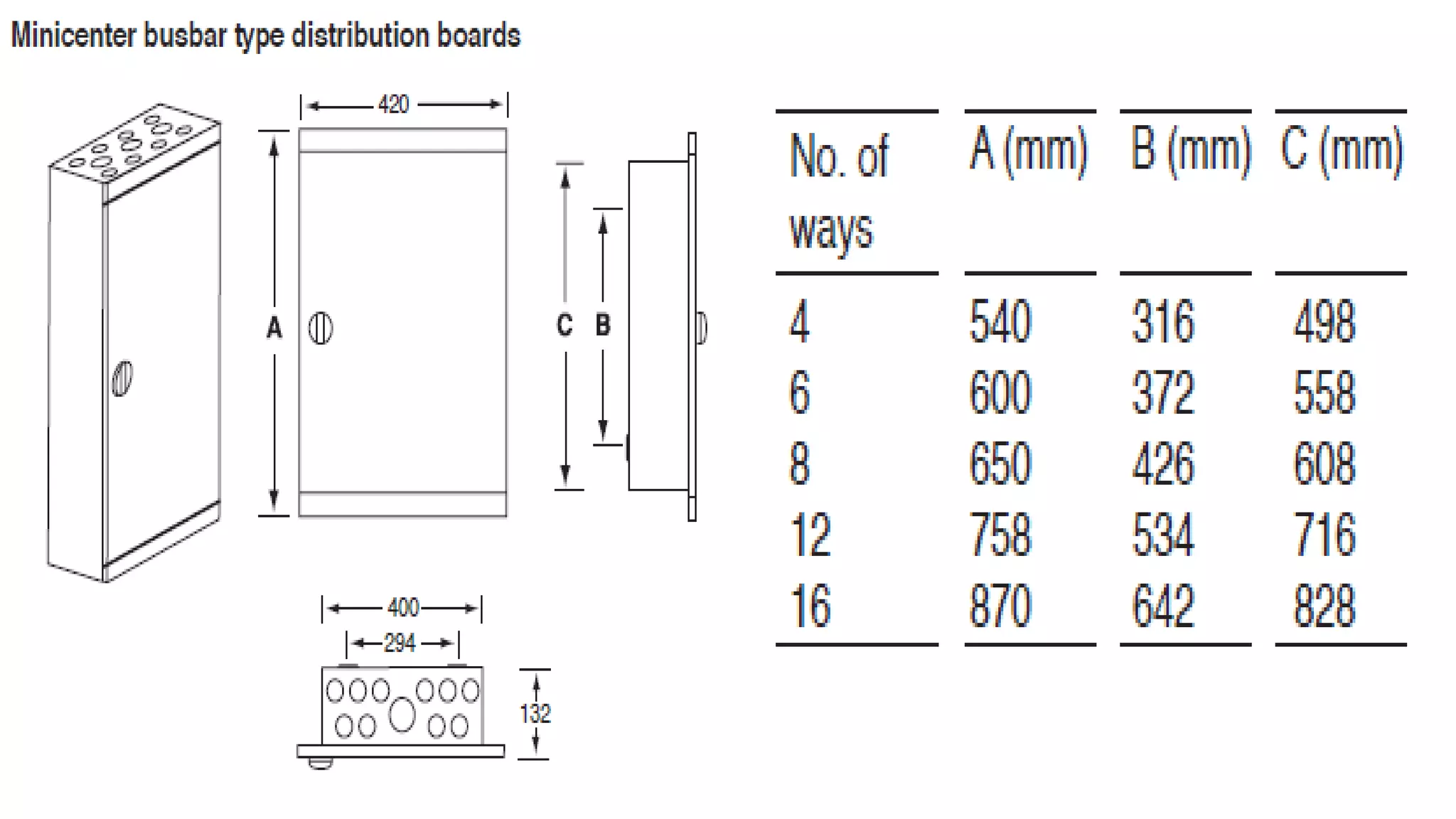
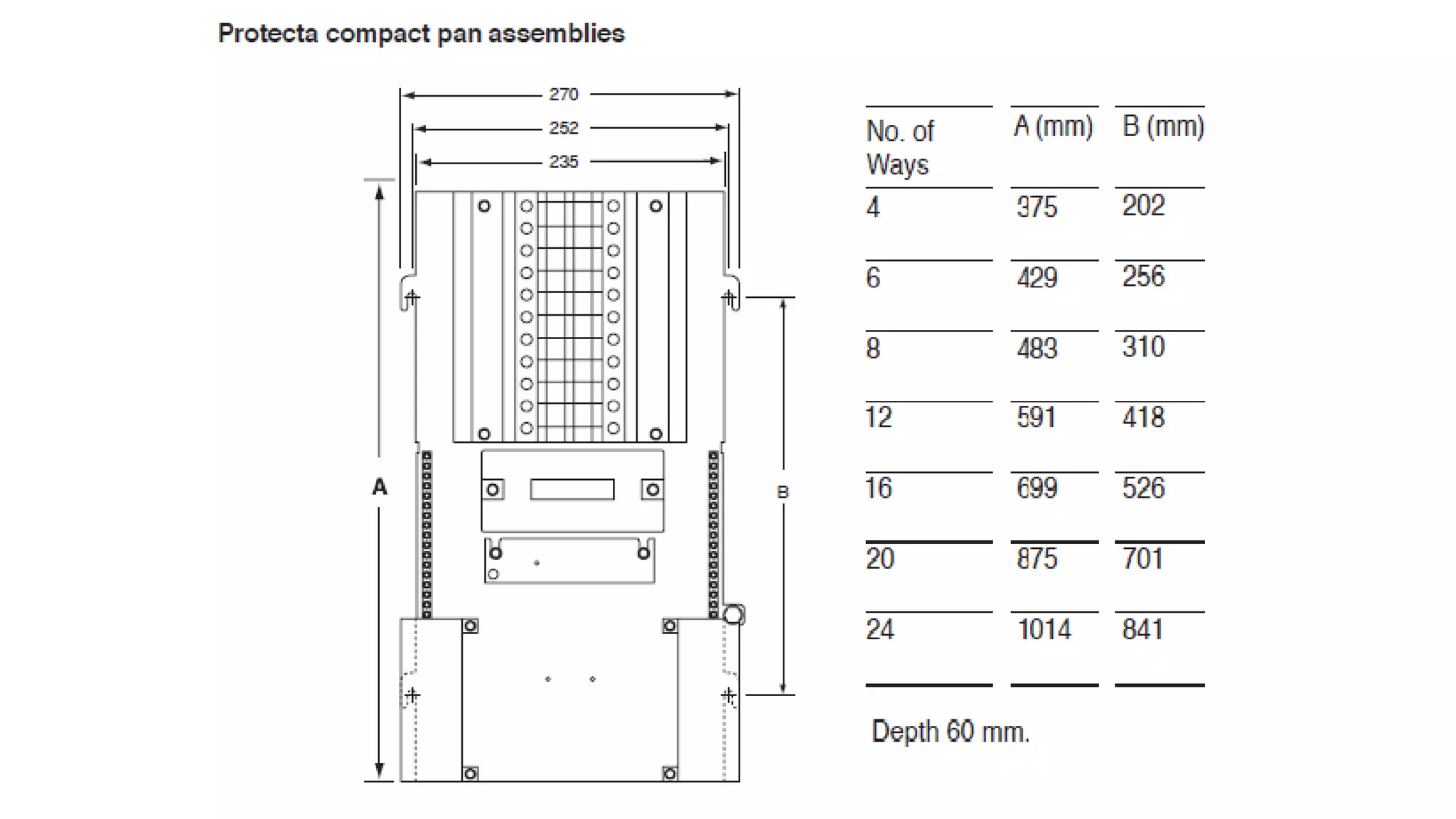
Dimensional Details
THANK YOU
Sheikh Imran
(Sales Engineer)
Qatar Switchgear
MH-Al Muftah Est

changwon MVP, EMDB, SMDB & DB

  • 13.
    SOURCEFORMCC PANEL c KAHRAMAA SUPPLYMV PANELS MCC PANELS LOADS
  • 14.
    SOURCEFORMCC PANEL c KAHRAMAA SUPPLYMV PANELS B2 Area H SMDB’s All Electrical Rooms DB’s All Electrical Rooms Loads
  • 15.
    MV Panels The mediumvoltage switchgear panels metal enclosed, indoor, with simple busbar, air insulated, are modular assemblies of electric equipment, for AC, used in medium voltage networks, which represents the optimal solution in primary and secondary power distribution. This type of medium voltage switchgear is broadly used in the energy sector, both on the power generation and distribution side, connection points and power points as well as on the secondary distribution for the MV / LV medium voltage transformer stations, and industrial or large individual consumers’ networks
  • 16.
    Tests Conducted onSupplied MV Panels • Type tests • The Standard foresees the following type tests: • • overtemperature limits • • withstanding the applied voltage • • short-circuit withstand current • • efficiency of the protection circuit • • insulation distances • • degree of protection • • mechanical operation Individual tests The Standard foresees the following individual tests: • Visual inspection of the switchgear, including checking the cabling, and, if necessary, an electrical operation test • A dielectric test • Checking the means of protection and the electrical efficiency of the protection circuit
  • 19.
    ArTu K-The structureis made entirely of hot galvanised steel sheet, which guarantees the equipotential of the switchgear.
  • 20.
    Forms of Segregation Byform of segregation, the type of division foreseen inside the switchgear is intended. Segregation by means of barriers or partitions (metal or insulating) can have the purpose of: - ensuring protection against direct contacts (at least IPXXB), in the case of access to a part of the switchgear cut off from the power supply, in relation to the rest of the switchgear which remains supplied with power - reducing the probability of striking and propagation of an internal arc - preventing passage of solid bodies between different parts of the switchgear (at least IP2X degree of protection). By partition, the separating element between two compartments is intended, whereas the barrier protects the operator from direct contacts and from the effects of the breaking apparatus arc in the normal direction of access. The following table given in the IEC 60439-1 Standard highlights the typical forms of segregation which can be obtained by using barriers or partitions:
  • 21.
  • 23.
    Protection against theeffects of short-circuit
  • 24.
    Example Existing plant data: Vn=400V fn=50Hz Icc=35kA Let us suppose that in an existing plant there is electric switchgear with an Icw of 35kA and that, in the installation point of the switchgear, the prospective short-circuit current is 35kA. Now let us imagine that it is decided to extend the power of the plant and that the short-circuit value increases to 60 kA. Plant data after extension: Vn=400 V Fn=50Hz Icc=60kA Since the switchgear Icw is lower than the short-circuit current of the plant, to check that the existing switchgear is still compatible, you must: - determine the values of I2 t and of Ip let through by the circuit-breaker placed on the supply side of the switchgear - check that the protection devices located inside the switchgear have adequate breaking capacity, individually or for back-up. Icw = 35kA from which: I2 t switchgear = 352 x1 =1225 MA2s Ipswitchgear = 73.5 kA
  • 25.
    Let us supposethat, on the supply side of the switchgear, a Tmax T5H moulded-case circuit-breaker (Icu=70kA@415V) is installed I2 tinterruttore< 4MA2 s Ipinterruttore<40kA since I2 tcircuit-breaker > I 2 tswitchgear Ipcircuit-breaker > Ipswitchgear The switchgear (structure and busbar system) turns out to be suitable. With regard to the circuit-breakers located inside the switchgear, let us suppose that these are Tmax T1,T2,T3 moulded-case circuit-breakers, version N with Icu=36kA@415V. From the Back-up tables it can be seen that the circuit-breakers present in the switchgear are suitable for the plant as their breaking capacity is increased to 65 kA by the T5H circuit-breaker placed on the supply side.
  • 26.
    Protection against theeffects of short-circuit
  • 27.
    Protection against thedirect contacts • - Protection by means of insulation of the live parts The live parts must be completely covered with insulation which can only be removed by destroying it. This insulation must be made of suitable materials able to resist the mechanical, electrical and thermal stresses they may be subjected to during service over time. Paints, varnishes, lacquers and other similar products used alone are not generally considered suitable for providing adequate insulation for protection against direct contacts. • - Protection by means of barriers or housings All the external surfaces must have a degree of protection of at least IP2X or IPXXB. The distance between the mechanical devices provided for protection and the live parts protected by them, must not be less than the values specified for the surface and air distances. All the barriers and housings must be securely fixed in place. Bearing in mind their type, size and arrangement, they must be sturdy and long-lasting enough to resist the forces and stresses which can develop during normal service, without reducing the air insulation distances.
  • 28.
    Protection against theindirect contacts • - Protection made using protection circuits • The protection circuit can be made separate from the metal housing, or the same housing can be used as part of the protection circuit. The exposed conductive parts of the switchgear which do not constitute a danger, since they cannot be touched on large surfaces or taken hold of by hand because they are small (for example, screws, nameplates, etc.), do not require connection to the protection circuit. The manual operating parts, such as levers, handles and other devices made of metal, must, on the other hand, be connected securely to the parts connected to the protection circuit or must have additional insulation suitable for the maximum insulation voltage of the switchgear. The metal parts coated with a layer of paint or enamel cannot normally be considered suitably insulated to satisfy these prescriptions. • For covers, doors, closure plates, etc., the normal connections made using metal screws or hinges are sufficient for electrical continuity, as long as electrical apparatus which requires a connection of the exposed conductive parts to earth is not mounted on them. In this case, the exposed conductive parts must be connected by means of a protection conductor with a cross-section at least the same as the maximum cross-section of the phase conductor supplying the apparatus.
  • 30.
  • 32.
    Overall dimensions ofArTu K structures
  • 37.
    ArTu K-Useful spaceinside the switchgear
  • 38.
    Practical indications forconstructing the switchgear • Positioning the circuit-breakers With regard to positioning the circuit-breakers inside the switchgear, there are some indications which are in contrast with each other. This is because requirements of thermal type often contrast with the needs of another kind. It is therefore the panel builder who, knowing the plant details, its installation location and its actual use better, can design the front of the switchgear in an optimal way. • A good rule is to try to position the circuit-breakers so as to reduce the higher current paths as far as possible, thereby reducing the power dissipated inside the switchgear with undoubted benefits from the thermal and economic points of view.
  • 40.
    In the caseof switchgear with a lot of columns, where possible it is advisable to position the main circuit breaker in the central column. This way the current is immediately divided into the two branches of the switchgear and the cross-section of the main distribution busbars can be reduced.
  • 43.
    Anchoring the conductorsnear the circuit-breakers It is necessary for the cables and busbars to be fixed to the structure inside the switchgear. In fact, during a short- circuit, the dynamic stresses produced in the conductors could damage the terminals of the circuit-breakers.
  • 45.
    Certification according tothe IEC 60439-1 Standard
  • 46.
    Illustrative diagrams forthe construction of ArTu switchgear • Single-line diagram
  • 47.
    Example of constructionof ArTuK switchgear Selection of the circuit-breakers and ducts outside the switchgear Circuit-breakers As shown on the single-line diagram, the circuit-breakers selected are: 1 Emax E3N3200 PR111-LSI In 3200 (main switchgear circuit-breaker) 3 Emax E1N1250 PR111-LSI In 1250 (circuit-breakers for the three outgoing feeders) Ducts Incoming, from the transformer there is the following: 1 Bus duct with Iz = 3150 A; L = 5 m Outgoing from the switchgear, hypothesising overhead laying on perforated trays, there is: 1 cable with L = 20m 3x(3x120) Iz = 876,3 A 1 cable with L = 70m 3x(3x120) Iz = 876,3 A 1 cable with L = 100m 3x(3x120) Iz = 876,3 A
  • 48.
    Front of switchgear,distribution system and metal structure • A possible layout for the busbars and circuit- breakers is given in the following figure
  • 56.
  • 57.
  • 58.
  • 59.
  • 60.
  • 61.
  • 62.
  • 63.
  • 64.
  • 65.
  • 66.
  • 68.
  • 71.
  • 73.
  • 74.
  • 75.
  • 81.
  • 84.
    THANK YOU Sheikh Imran (SalesEngineer) Qatar Switchgear MH-Al Muftah Est

Editor's Notes