Communities, Biomes and EcosystemsChapter 3
Community EcologySection 1
CommunitiesCommunity – all of the populations that live in the same area at the same timeLimiting Factor – any abiotic or biotic factor that restricts the numbers, reproduction, or distribution of organisms
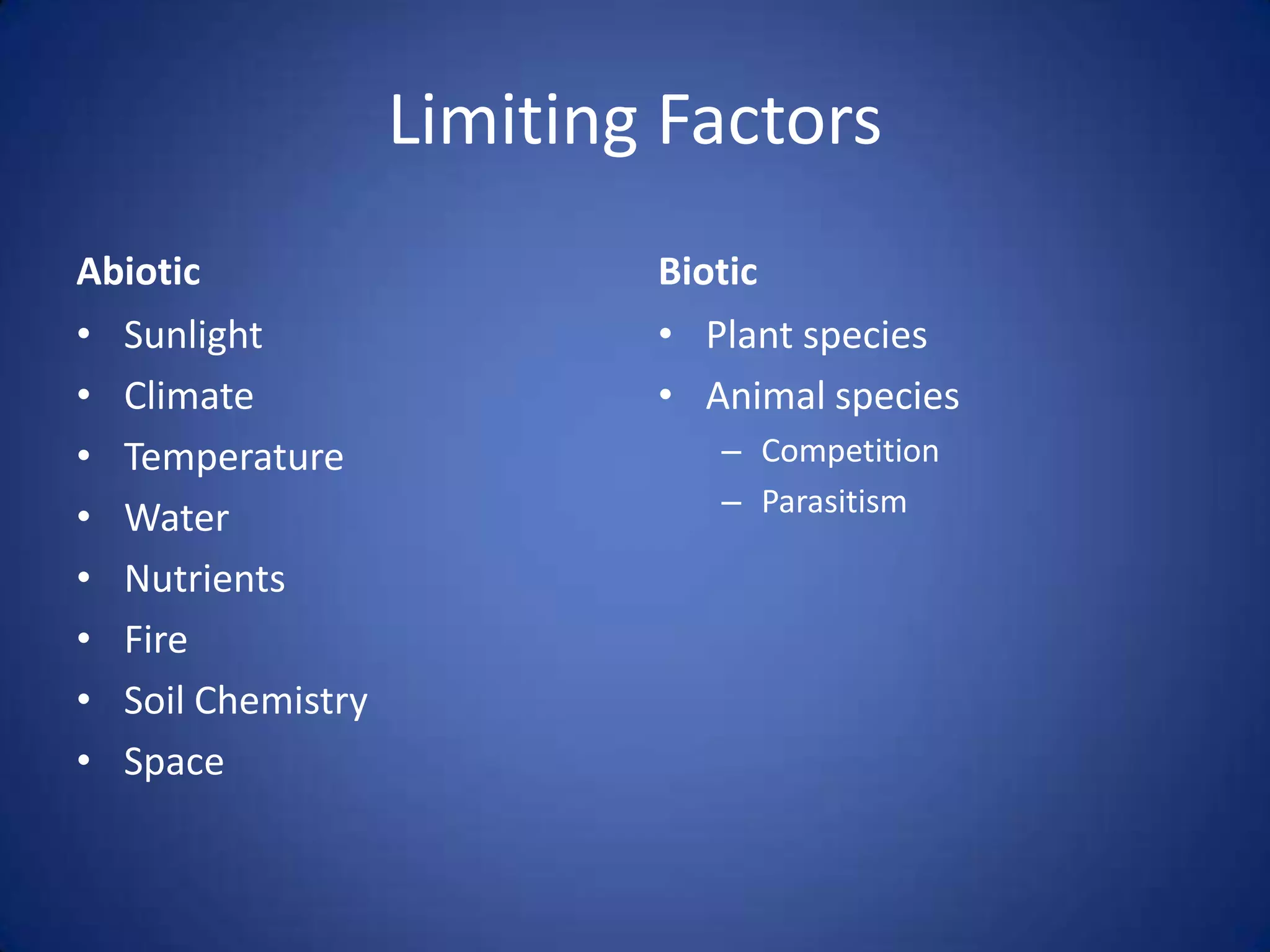
Limiting FactorsAbioticSunlightClimateTemperatureWaterNutrientsFireSoil ChemistrySpaceBioticPlant speciesAnimal speciesCompetitionParasitism
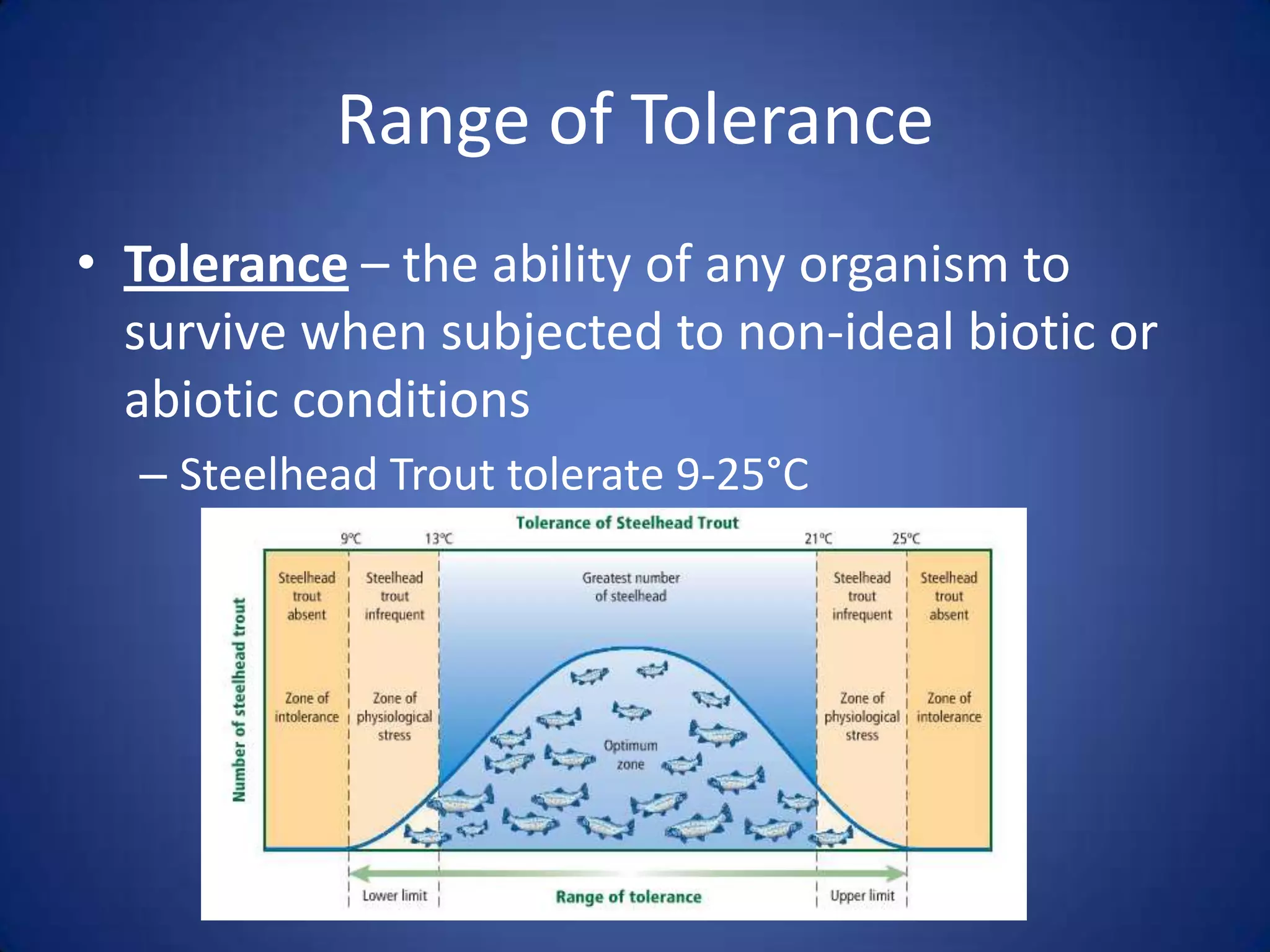
Range of ToleranceTolerance – the ability of any organism to survive when subjected to non-ideal biotic or abiotic conditionsSteelhead Trout tolerate 9-25°C
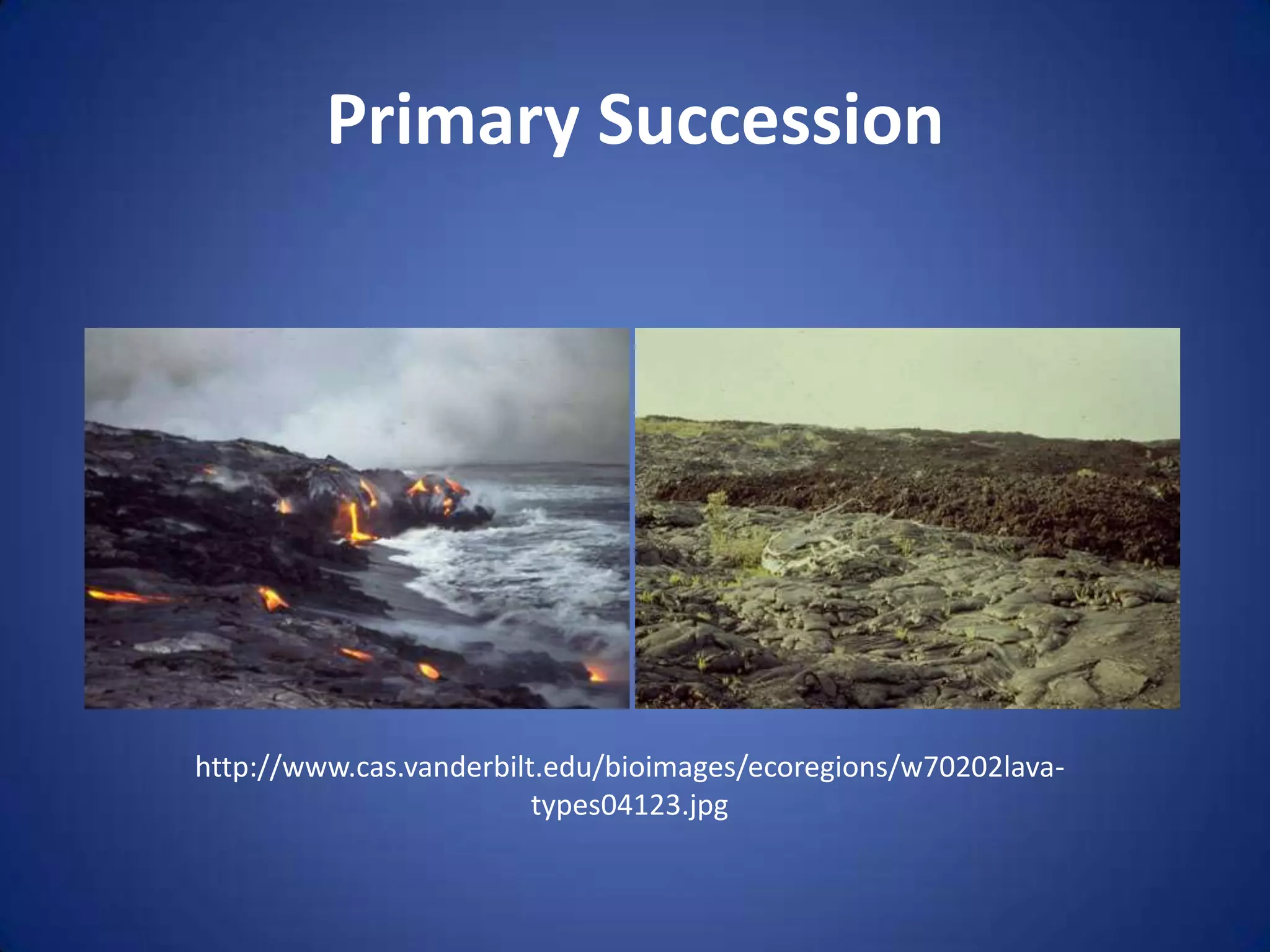
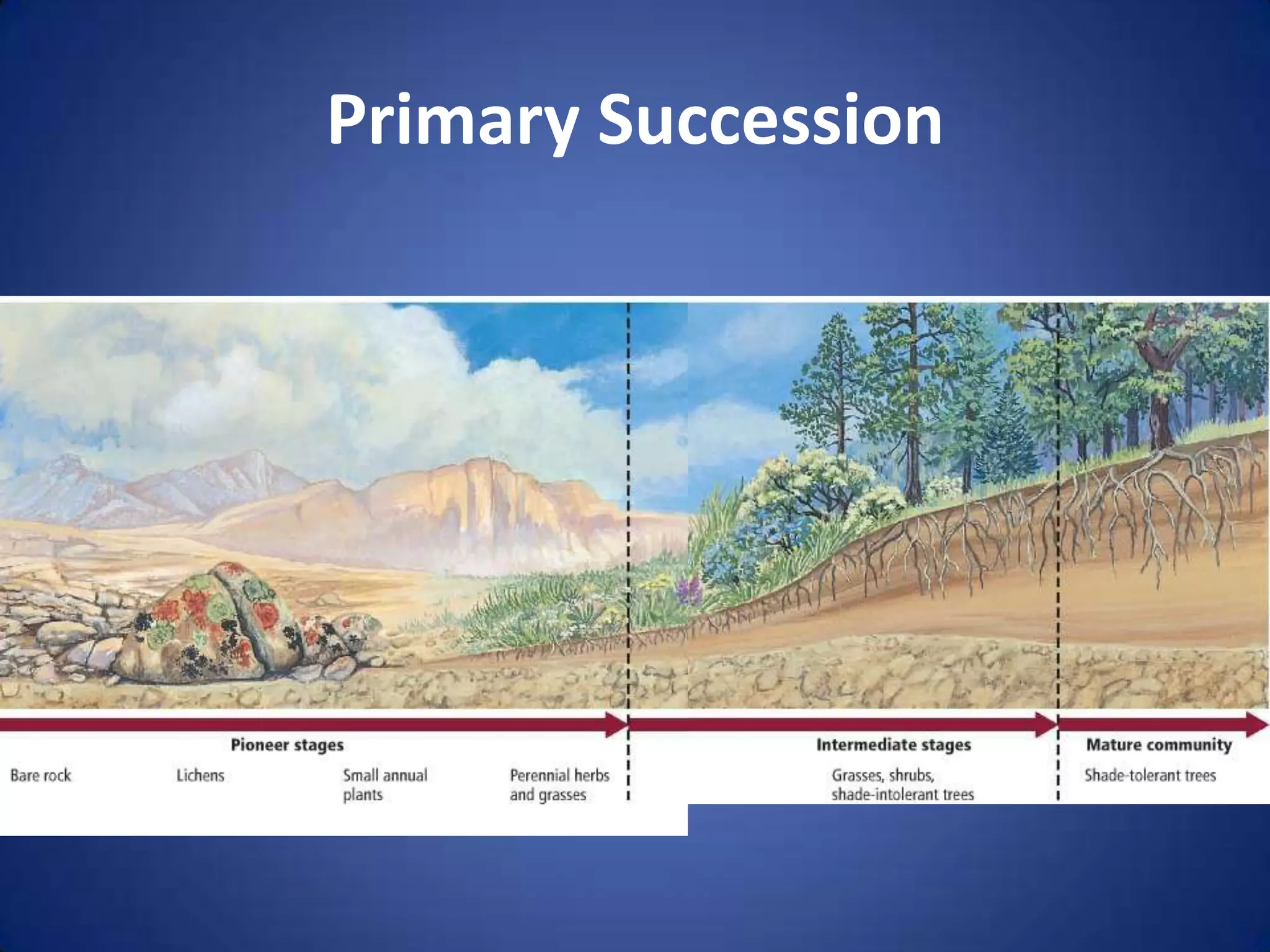
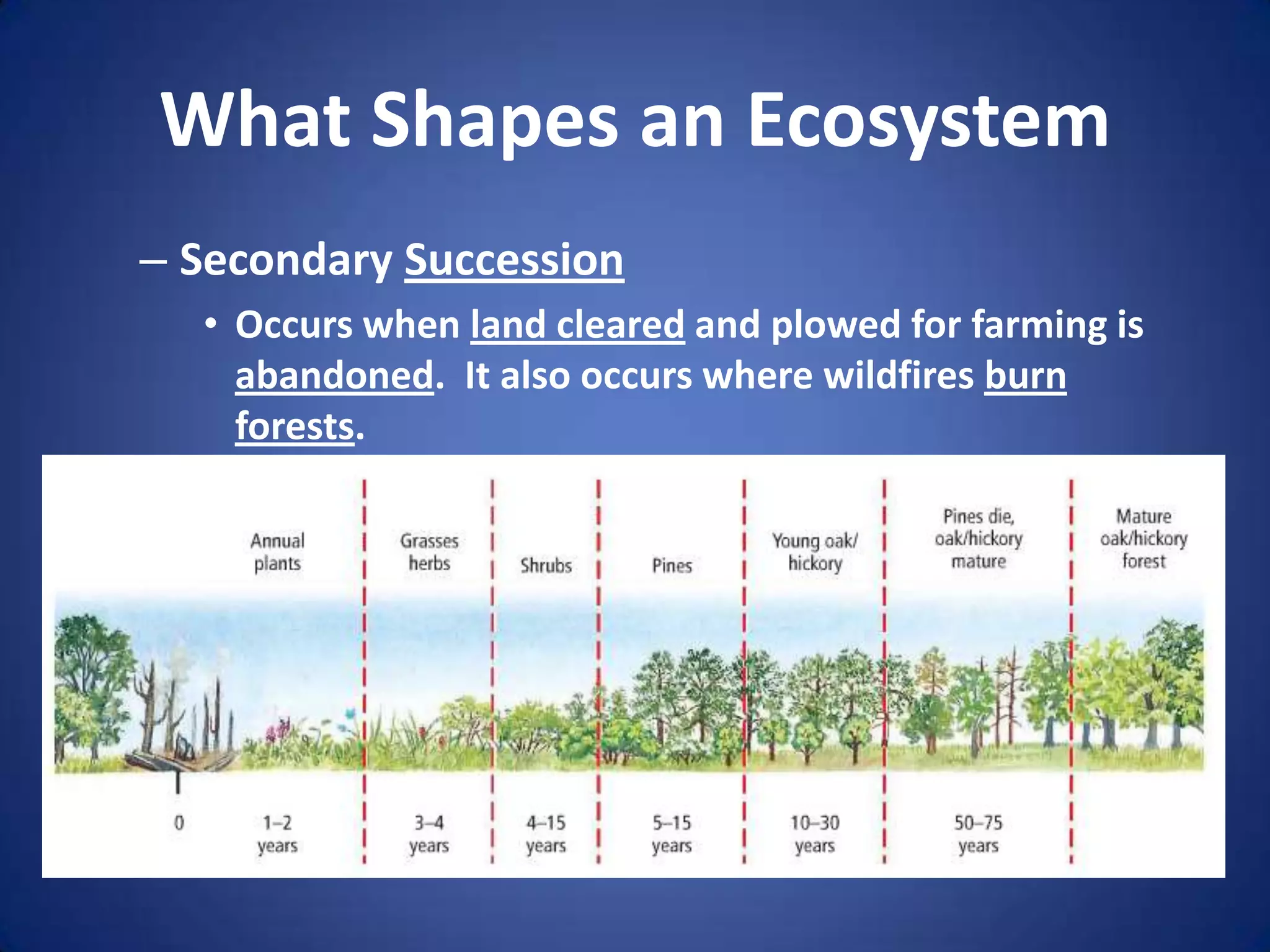
What Shapes an EcosystemEcological SuccessionAs an ecosystem changes, older inhabitants gradually die out and new organisms move in, causing further predictable changes in the community.Primary SuccessionOccurs on surfaces where no soil existsExample: new surface where volcanic eruptions occurred.
Primary Successionhttp://www.cas.vanderbilt.edu/bioimages/ecoregions/w70202lava-types04123.jpg
Primary Succession
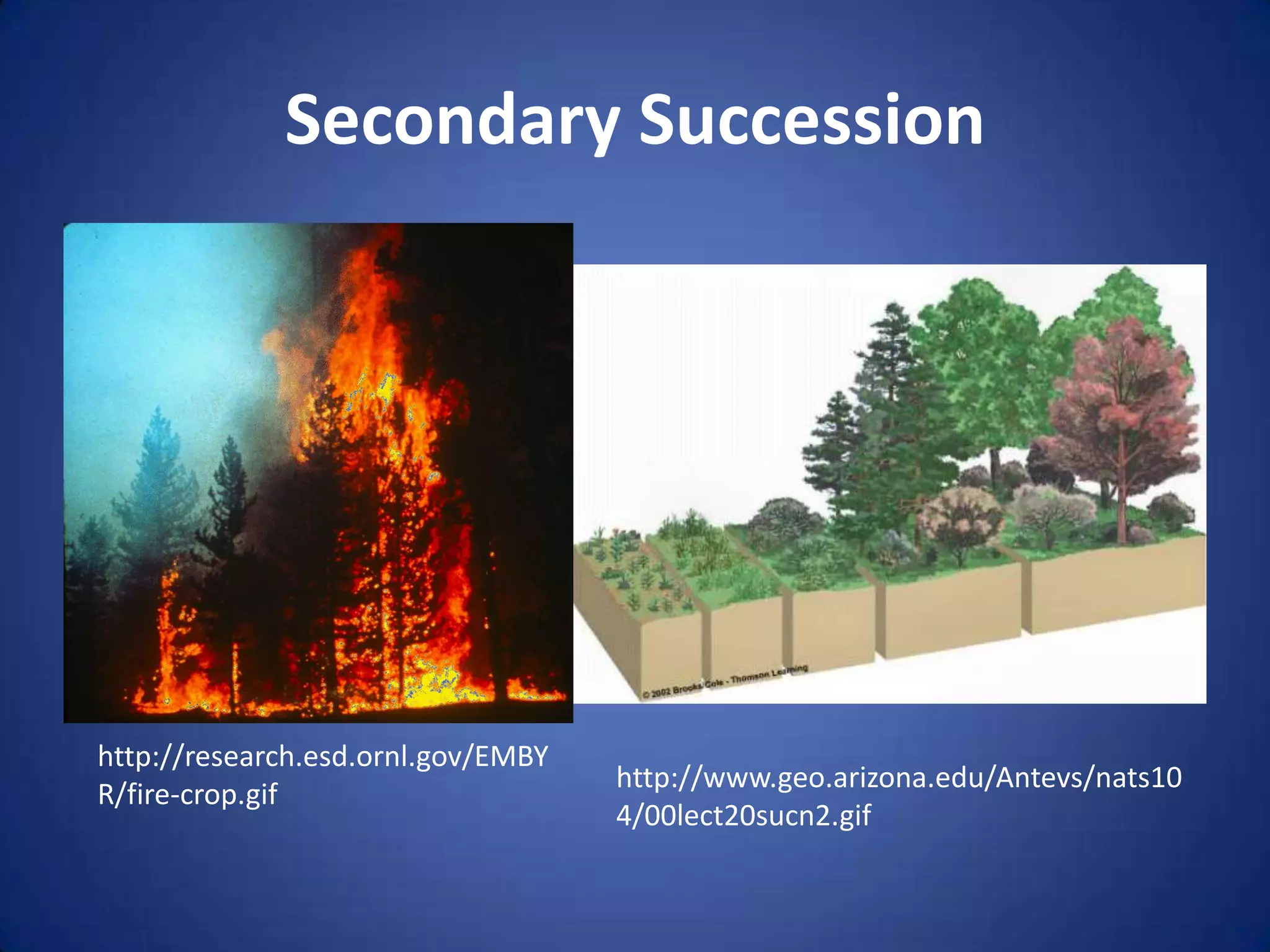
What Shapes an EcosystemSecondary SuccessionOccurs when land cleared and plowed for farming is abandoned.  It also occurs where wildfires burn forests.
Secondary Successionhttp://research.esd.ornl.gov/EMBYR/fire-crop.gifhttp://www.geo.arizona.edu/Antevs/nats104/00lect20sucn2.gif
Terrestrial BiomesSection 2
Effects of Latitude and ClimateWhat is climate?Weather – the day to day conditions of the earth’s atmosphere at a particular time and placeClimate – average conditions of temperature and precipitation in a particular region
Effects of Latitude and ClimateFactors that influence climate:LatitudeWindShape and elevation of land massesOcean Currents
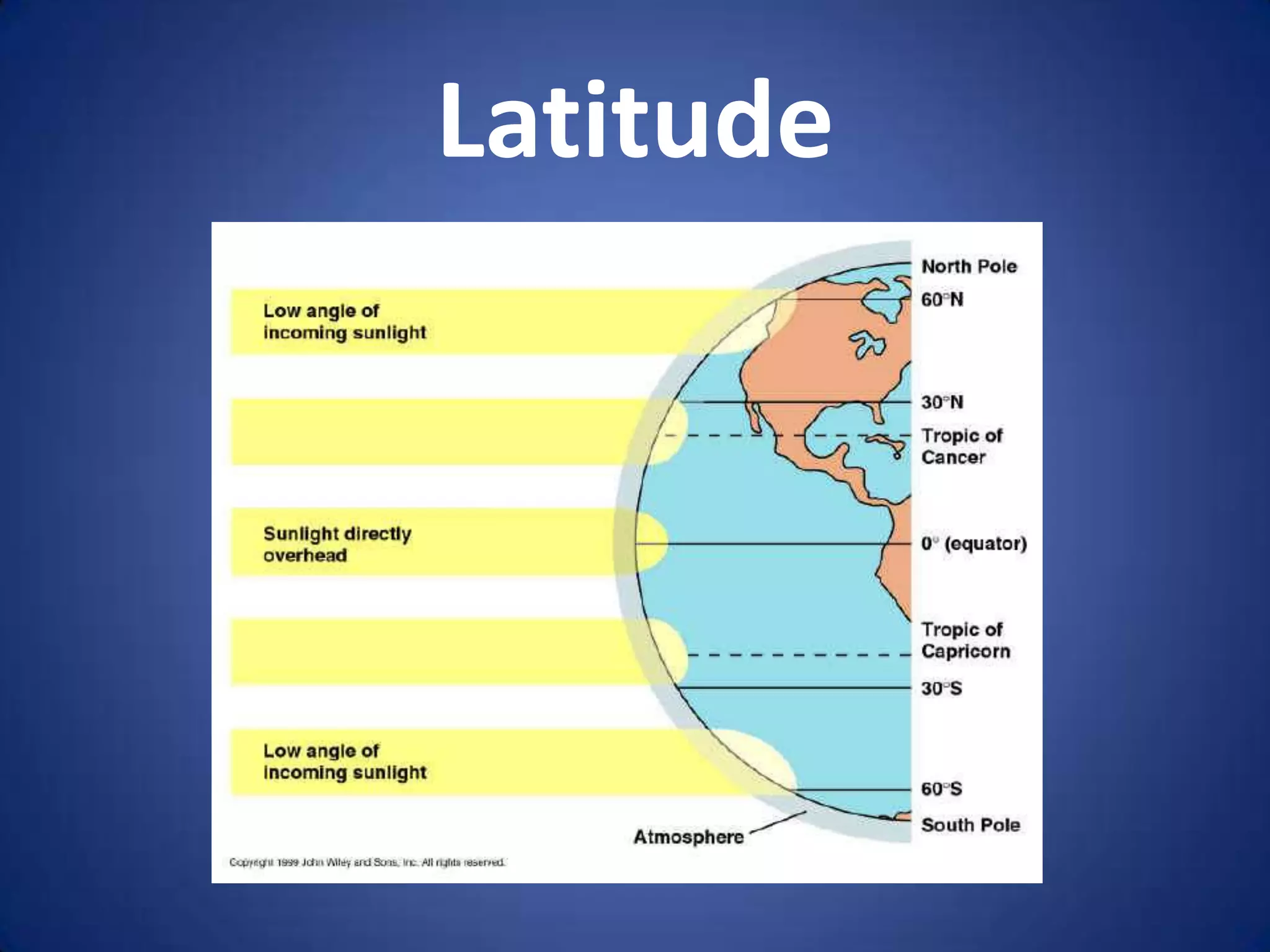
Latitude
Effects of Latitude and ClimateEffect of latitude on climateTropical zone – receives direct sunlight year roundClimate is always warmTemperate zone – angle of sunlight changes, so does the climateClimate will be warm or cold depending on the seasonPolar zone – sunlight strikes the earth at an angleClimate will be cold year round
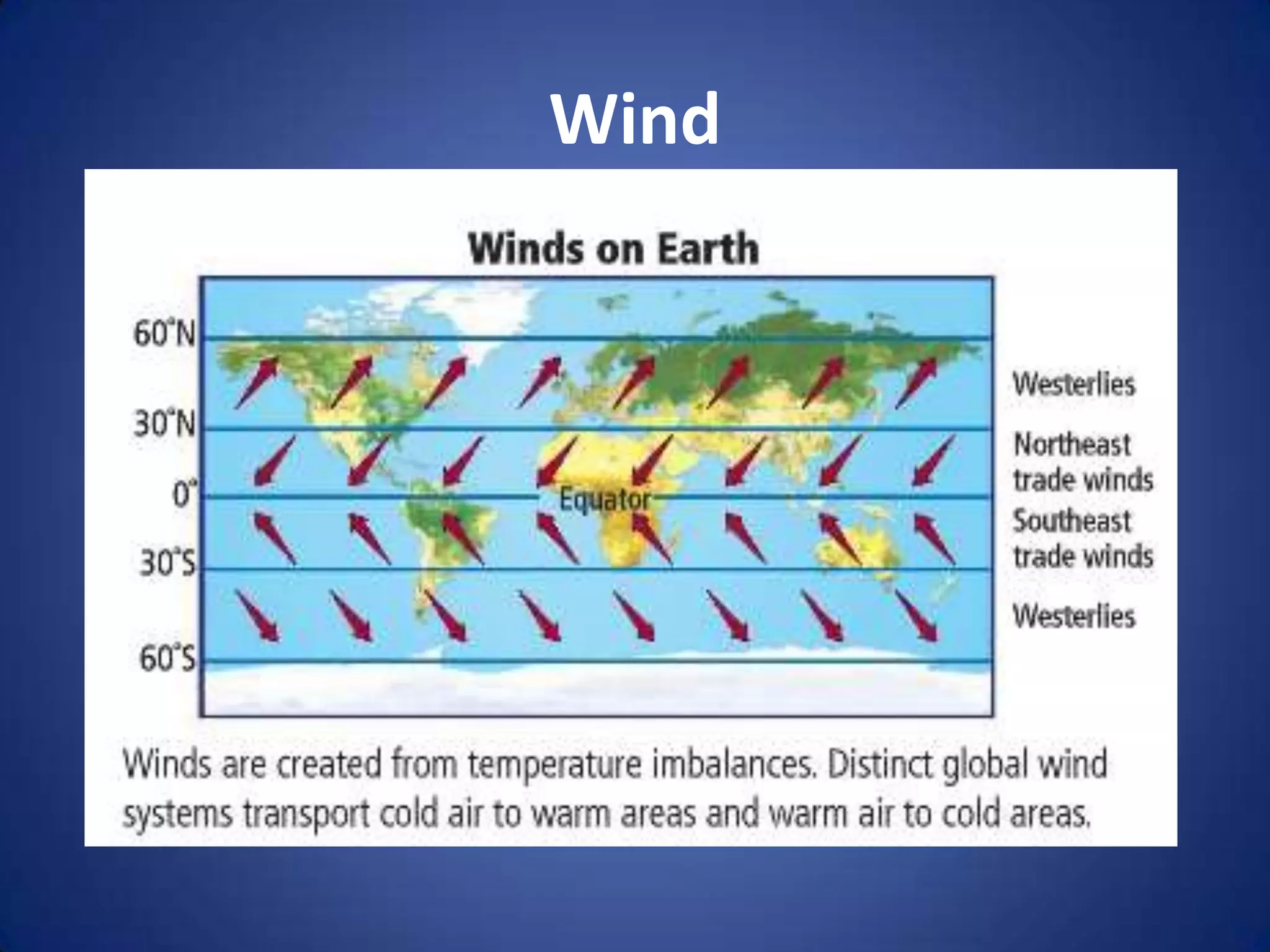
Wind
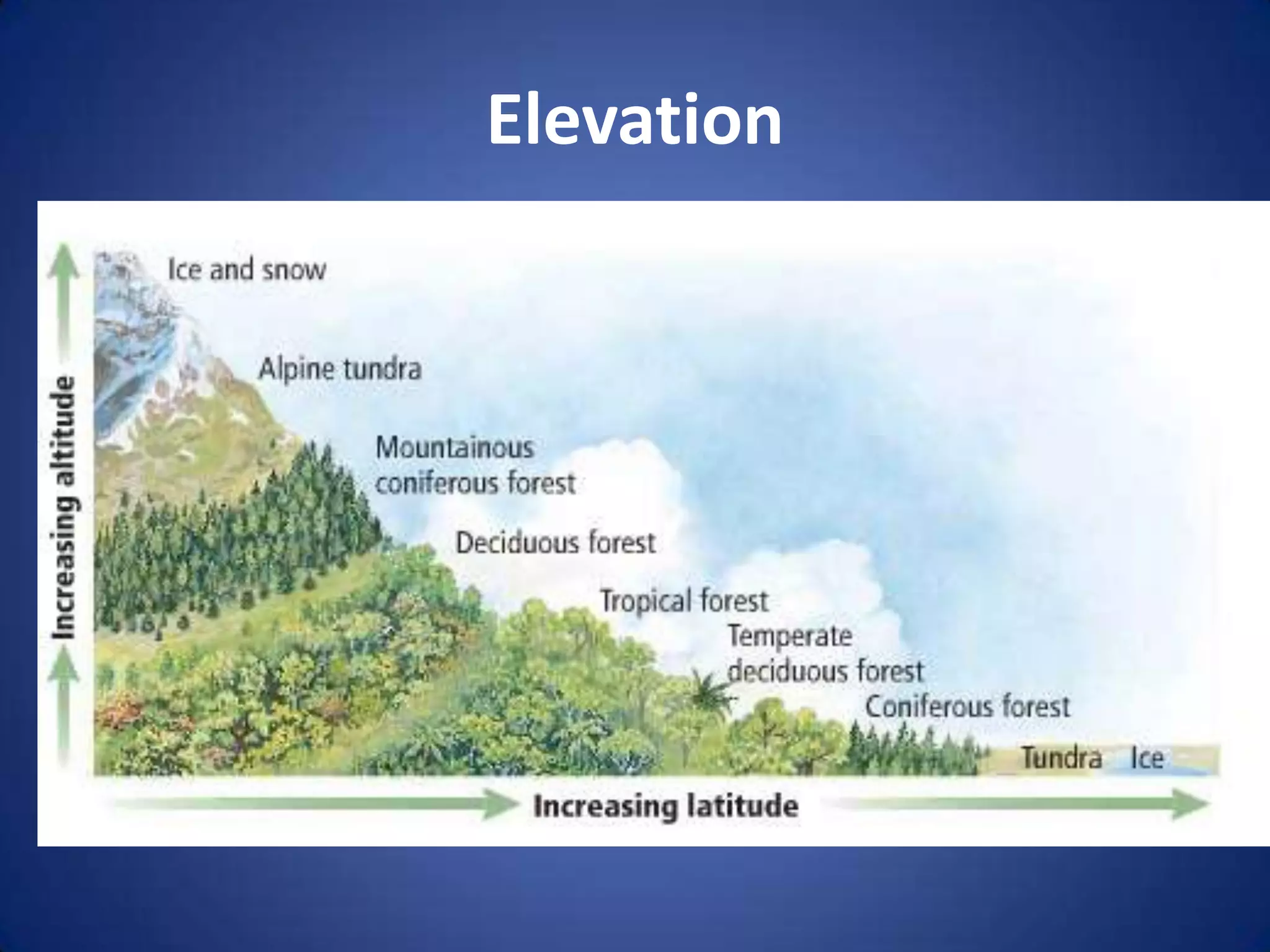
Elevation
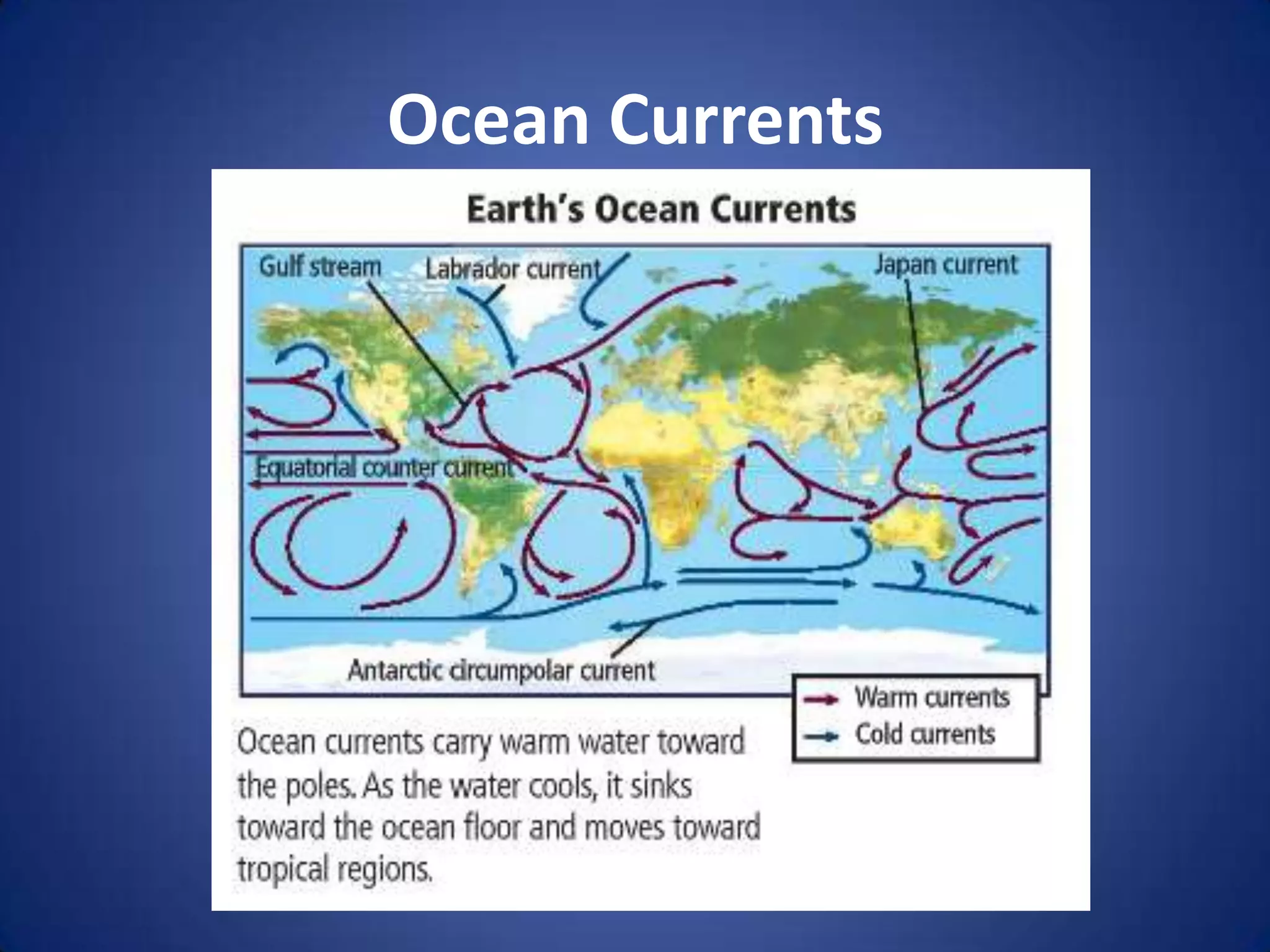
Ocean Currents
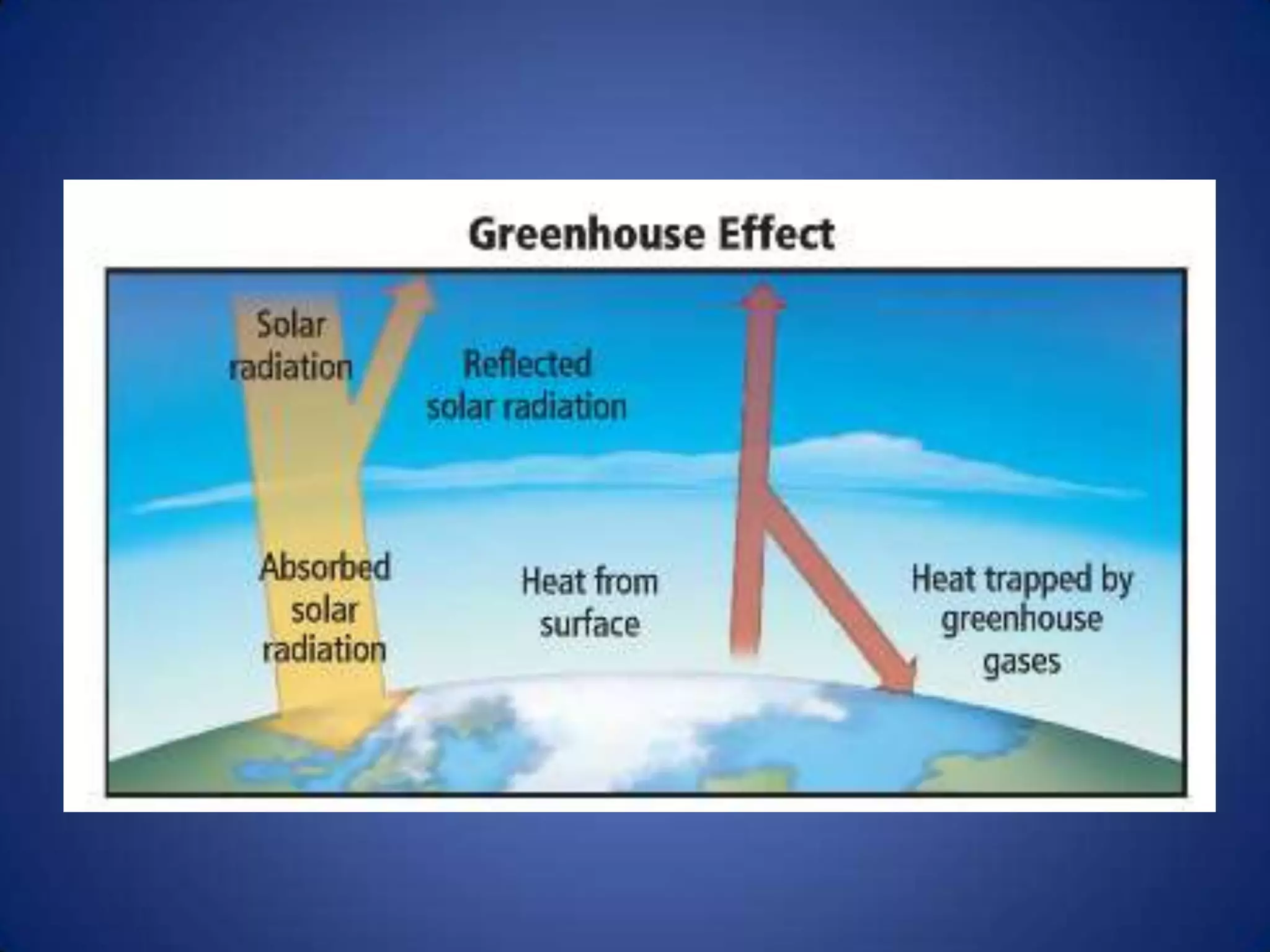
The Greenhouse EffectThe greenhouse effect: a natural phenomenon that maintains the earth’s temperature rangeGasses trap in heat much like the glass of a greenhouseCarbon dioxide, methane, water vapor
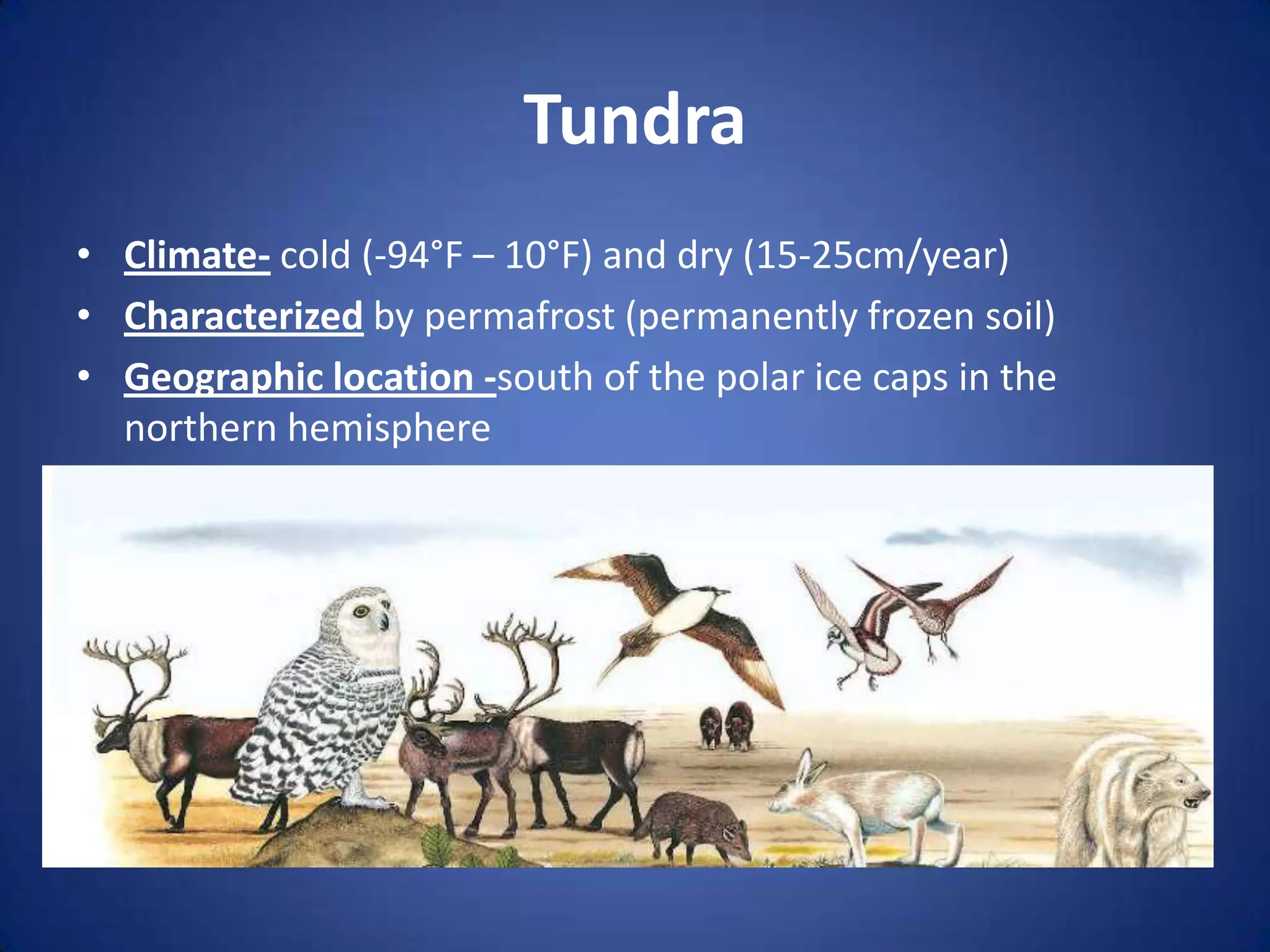
TundraClimate- cold (-94°F – 10°F) and dry (15-25cm/year)Characterized by permafrost (permanently frozen soil)Geographic location -south of the polar ice caps in the northern hemisphere
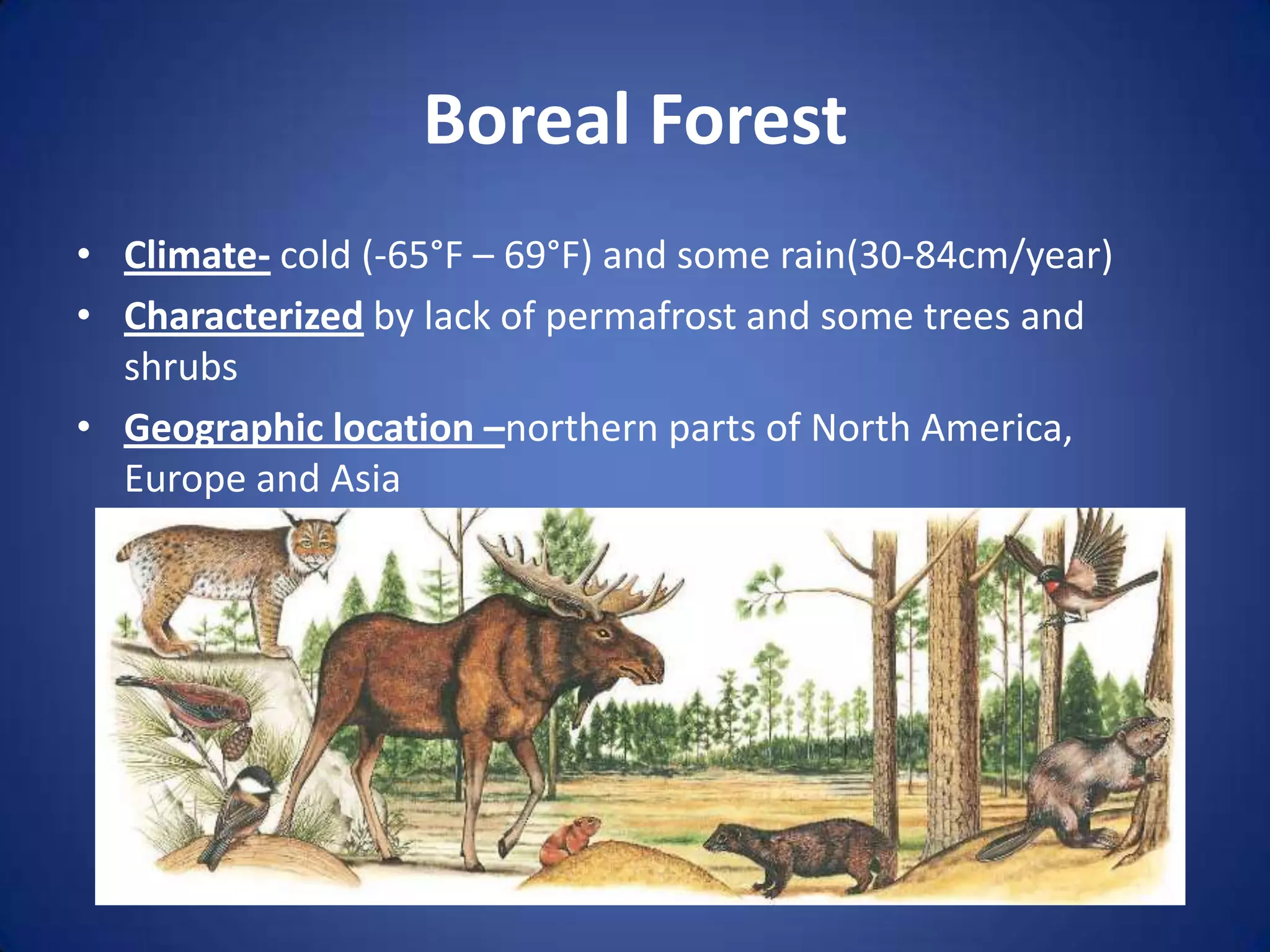
Boreal ForestClimate- cold (-65°F – 69°F) and some rain(30-84cm/year)Characterized by lack of permafrost and some trees and shrubsGeographic location –northern parts of North America, Europe and Asia
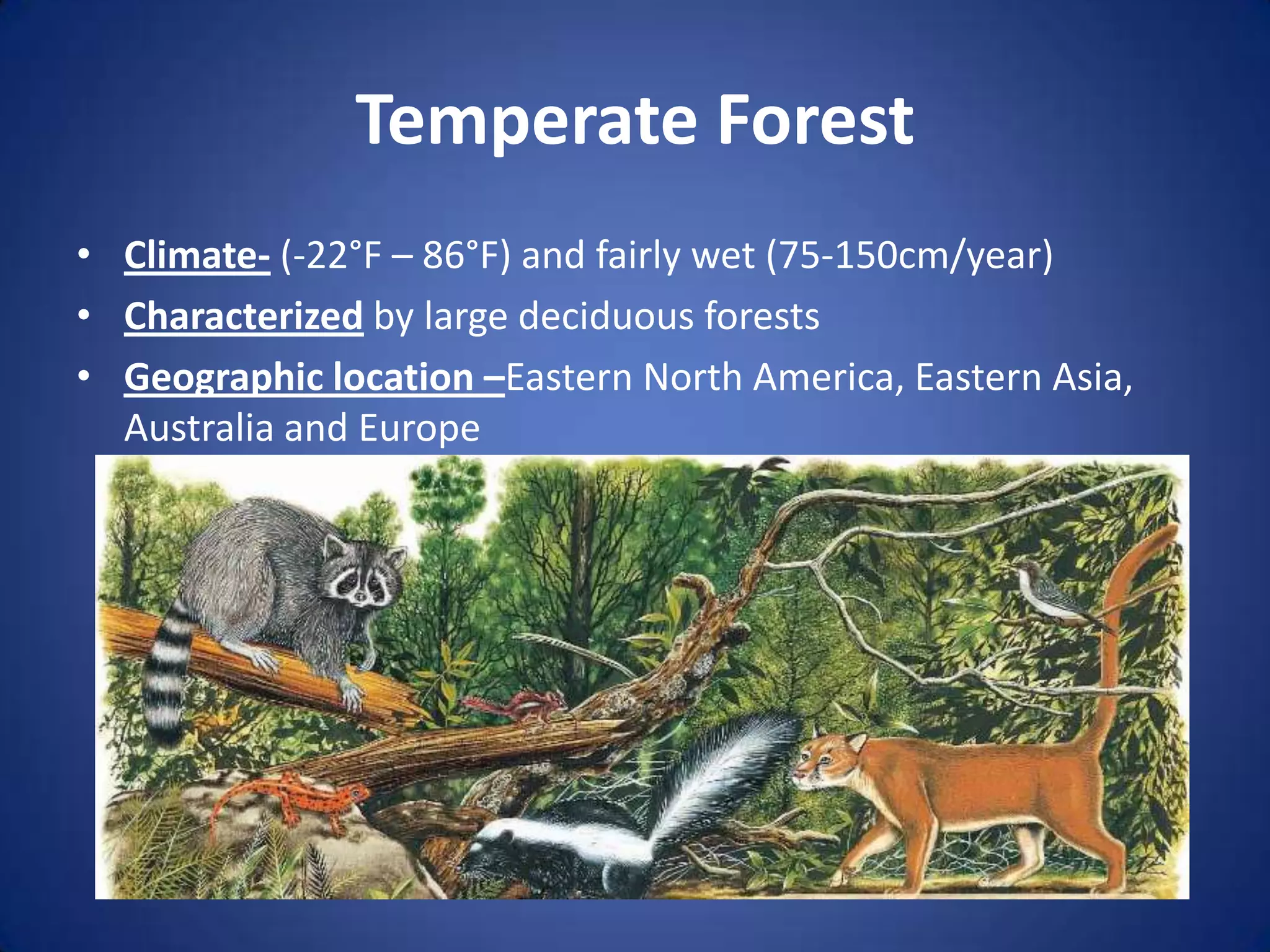
Temperate ForestClimate- (-22°F – 86°F) and fairly wet (75-150cm/year)Characterized by large deciduous forestsGeographic location –Eastern North America, Eastern Asia, Australia and Europe
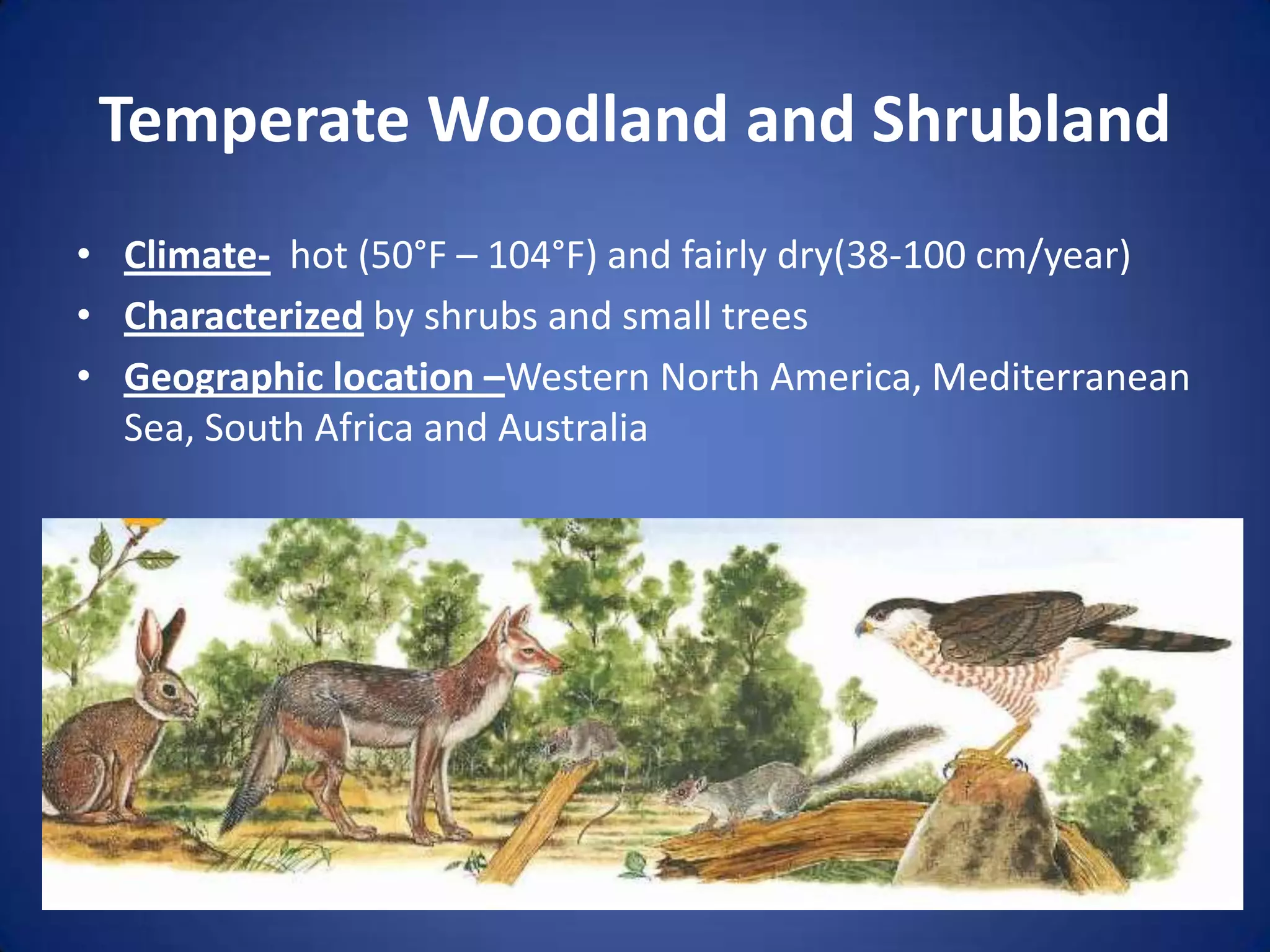
Temperate Woodland and ShrublandClimate-  hot (50°F – 104°F) and fairly dry(38-100 cm/year)Characterized by shrubs and small treesGeographic location –Western North America, Mediterranean Sea, South Africa and Australia
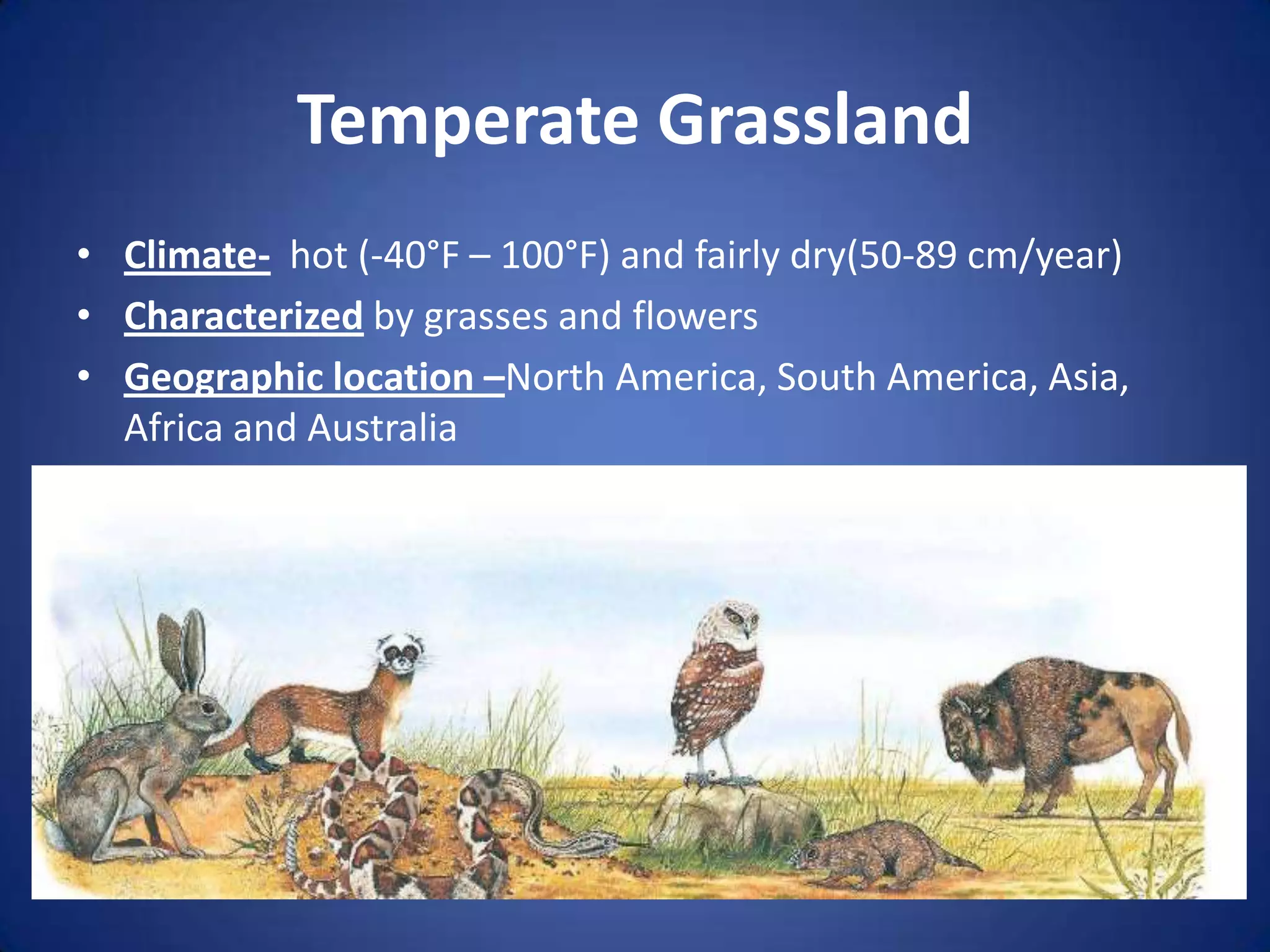
Temperate GrasslandClimate-  hot (-40°F – 100°F) and fairly dry(50-89 cm/year)Characterized by grasses and flowersGeographic location –North America, South America, Asia, Africa and Australia
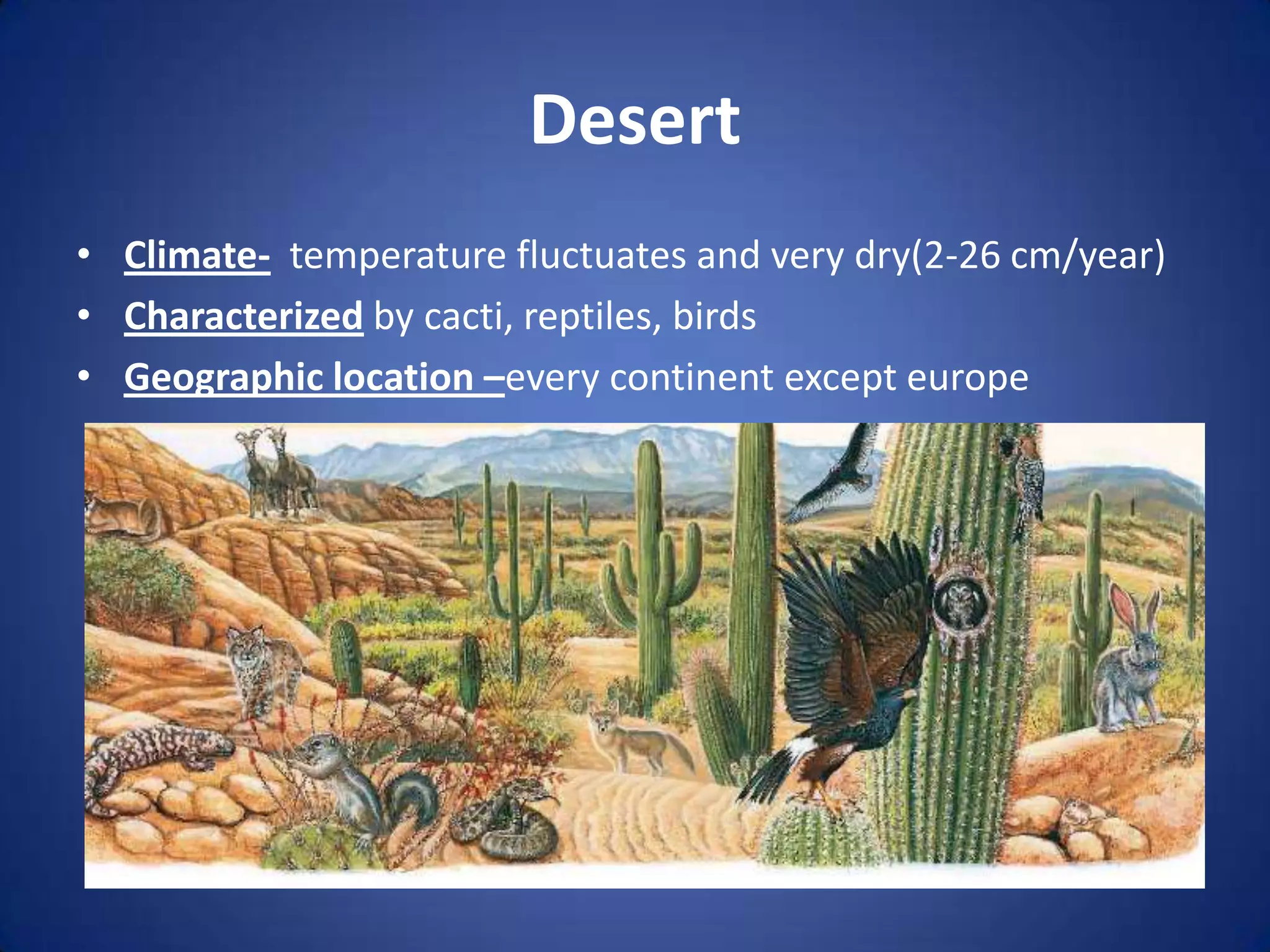
DesertClimate-  temperature fluctuates and very dry(2-26 cm/year)Characterized by cacti, reptiles, birdsGeographic location –every continent except europe
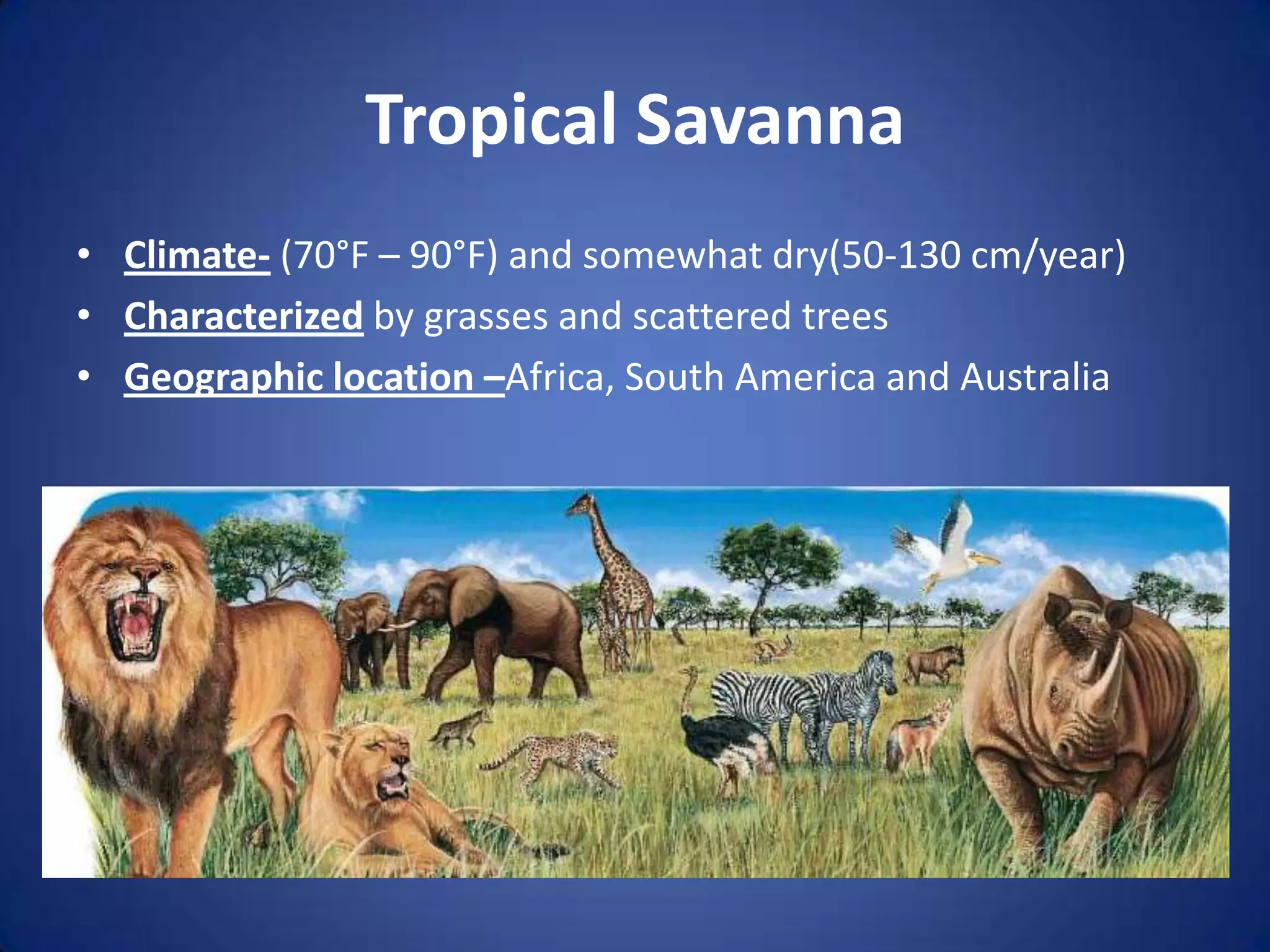
Tropical SavannaClimate- (70°F – 90°F) and somewhat dry(50-130 cm/year)Characterized by grasses and scattered treesGeographic location –Africa, South America and Australia
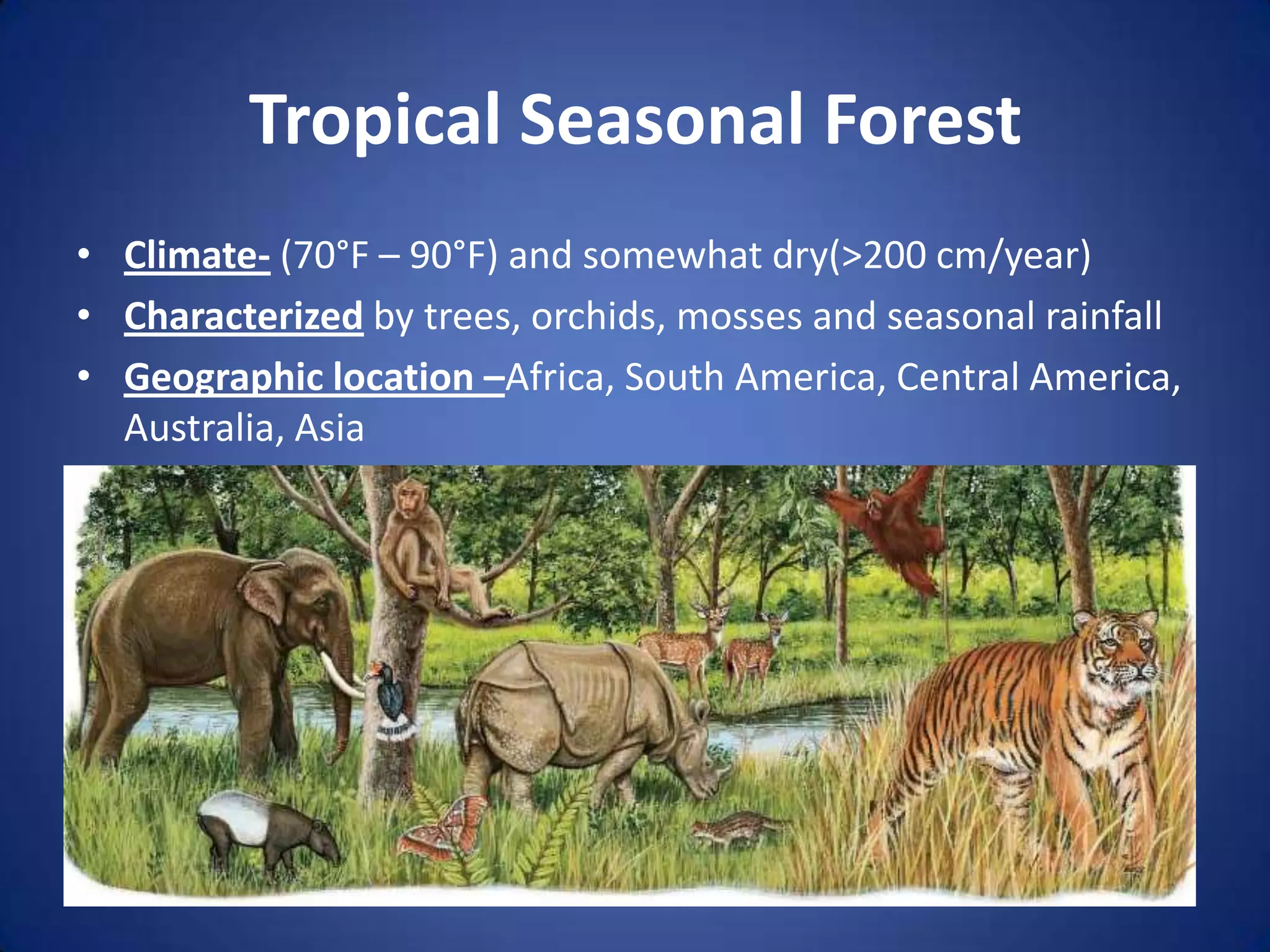
Tropical Seasonal ForestClimate- (70°F – 90°F) and somewhat dry(>200 cm/year)Characterized by trees, orchids, mosses and seasonal rainfallGeographic location –Africa, South America, Central America, Australia, Asia
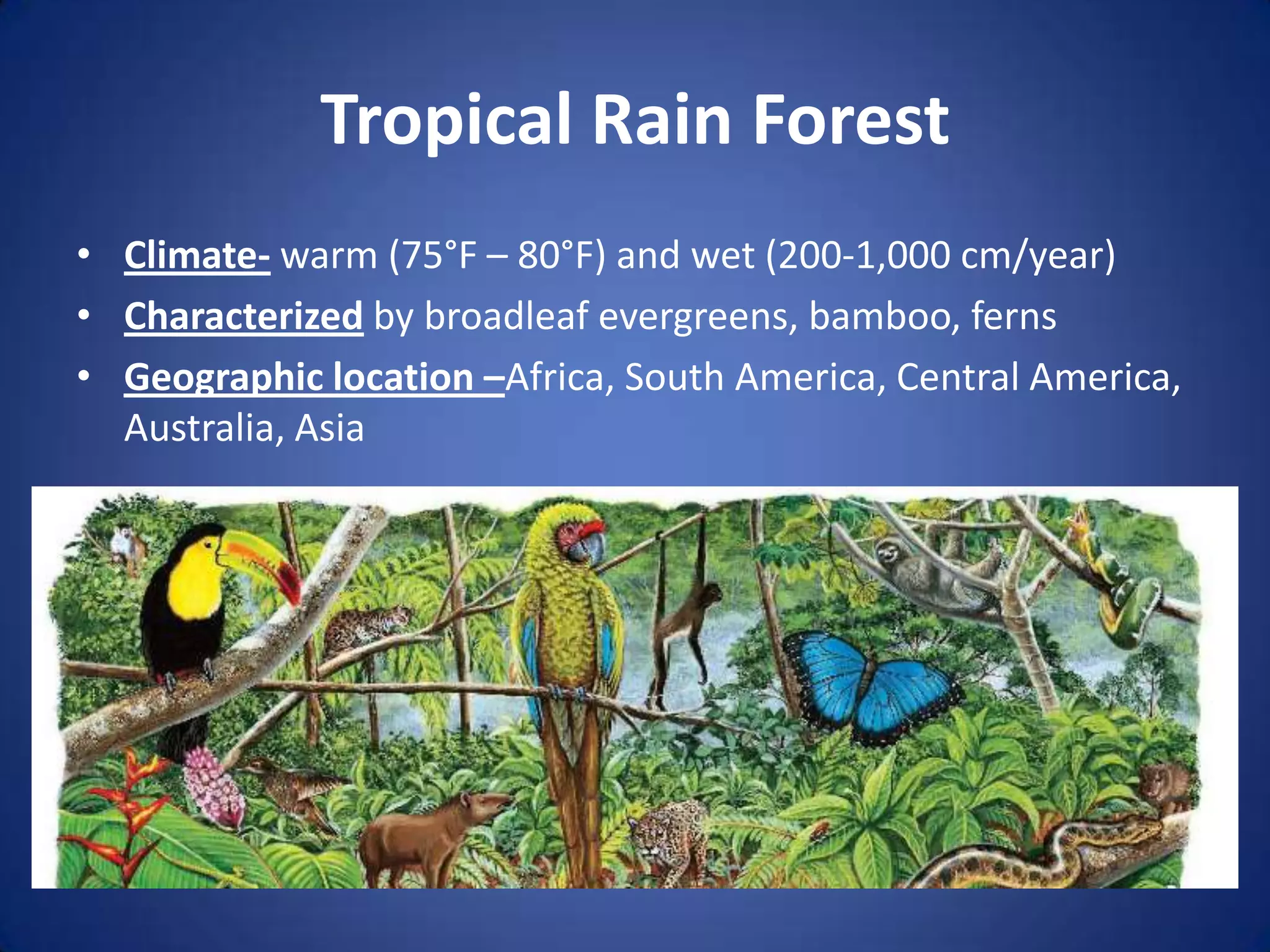
Tropical Rain ForestClimate- warm (75°F – 80°F) and wet (200-1,000 cm/year)Characterized by broadleaf evergreens, bamboo, fernsGeographic location –Africa, South America, Central America, Australia, Asia
Aquatic EcosystemsSection 3.3
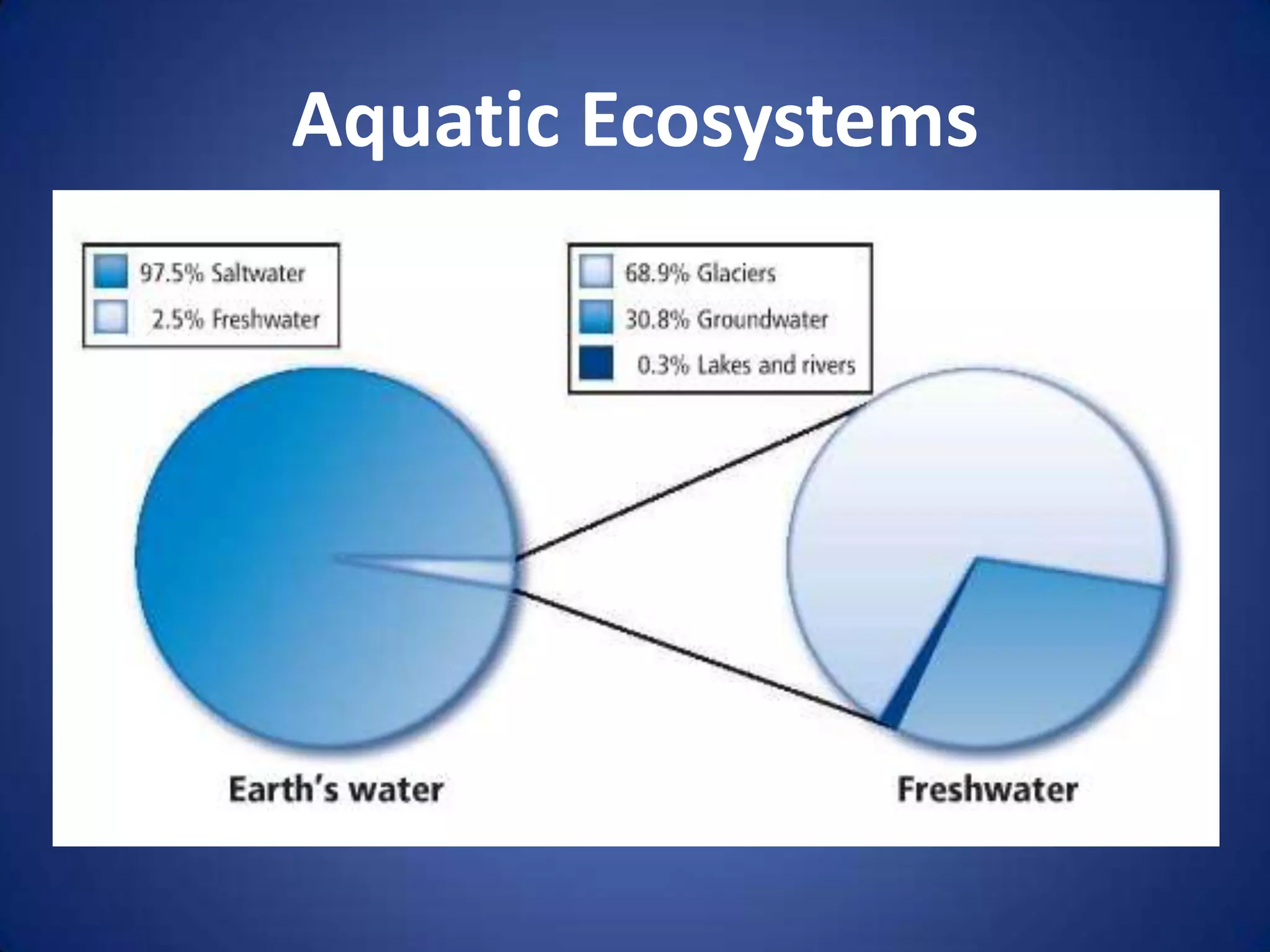
Aquatic EcosystemsDetermined primarily by the depth, flow, temperature, and chemistryChemistry – the amount of dissolved chemicals, especially salts, nutrients, and oxygenTwo main types of aquatic ecosystems:Freshwater EcosystemsMarine Ecosystems (salt water)
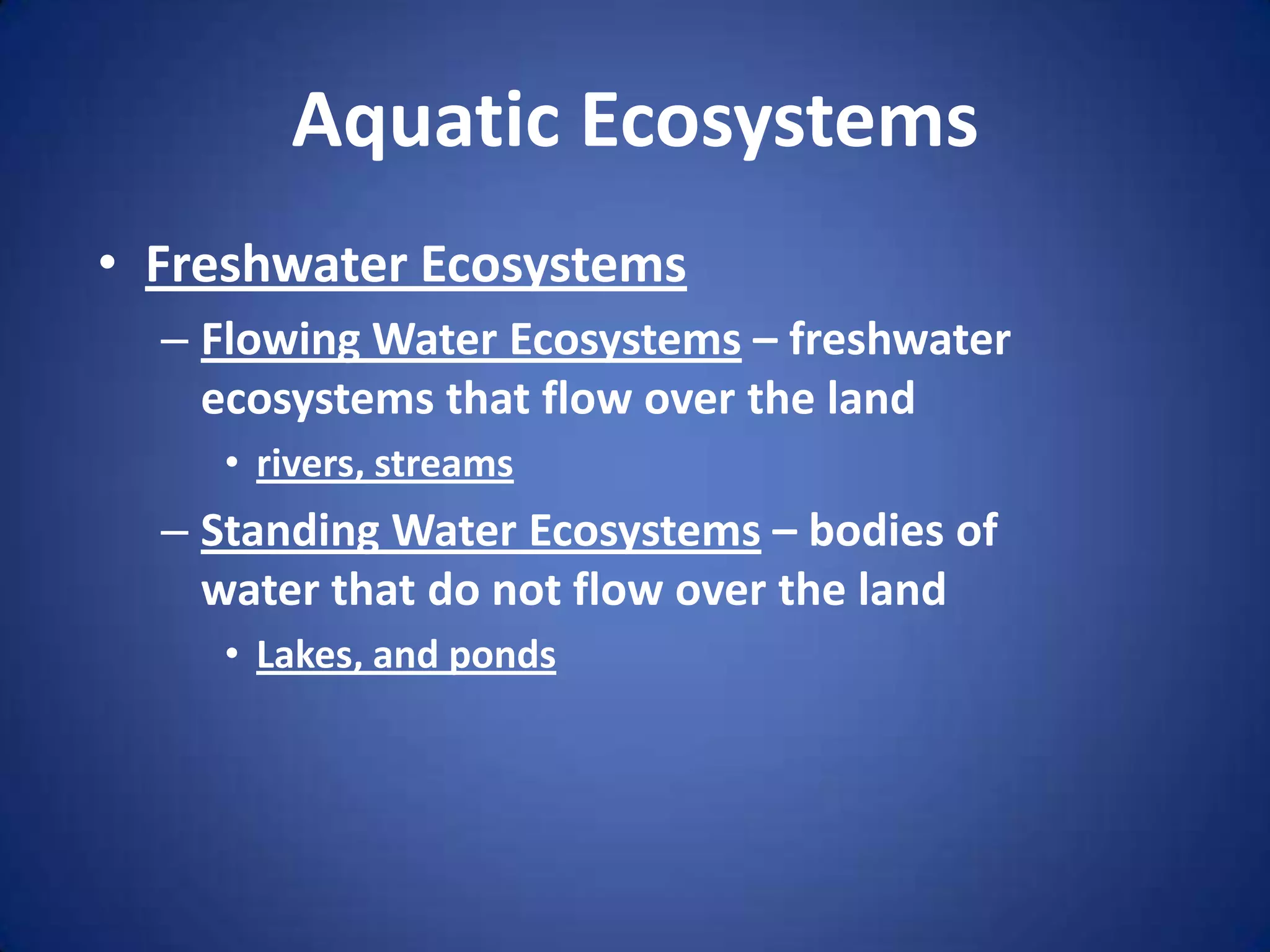
Aquatic EcosystemsFreshwater EcosystemsFlowing Water Ecosystems – freshwater ecosystems that flow over the landrivers, streamsStanding Water Ecosystems – bodies of water that do not flow over the landLakes, and ponds
Aquatic EcosystemsMarine EcosystemsPhotic zone – well lit area of the oceanOnly to a depth of about 200 metersWhere photosynthesis can take placeAphotic zone – permanently dark area of the ocean
Aquatic EcosystemsFreshwater Wetlands – an ecosystem in which water either covers the soil or is present at or near the surface of the soil for at least part of the yearInclude:  bogs, marshes, and swampsThey are important breeding grounds for migratory birds

Chapter 3 notes communities, biomes and ecosystems