Introduction to Missiology

Ch.28 – Strategies for Starting Churches
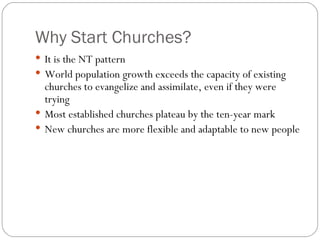
Why Start Churches?
 It is the NT pattern
 World population growth exceeds the capacity of existing
  churches to evangelize and assimilate, even if they were
  trying
 Most established churches plateau by the ten-year mark
 New churches are more flexible and adaptable to new people
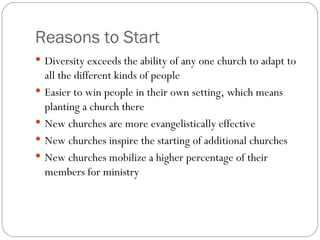
Reasons to Start
 Diversity exceeds the ability of any one church to adapt to
    all the different kinds of people
   Easier to win people in their own setting, which means
    planting a church there
   New churches are more evangelistically effective
   New churches inspire the starting of additional churches
   New churches mobilize a higher percentage of their
    members for ministry
Principles for Planting
 Work through existing local churches
 Do careful study before choosing a target
 Communicate the message with relevance
 As seekers become believers, congregate
 Implement a plan of continual development and growth
Application: How to Involve Churches?


 Mission committees and sponsorship
 Volunteers to become a new core group
 Sacrificial giving for a new congregation
 Introduce church starting as a core value
Involving Churches (Cont)
 Hire a planter to plant a daughter church
 Hive off a significant number of members
 Become a partner with other churches to plant
 Convert the church into multiple congregations
 Develop a satellite congregation of a different style on a
  different day or place
Application: Target audience
 Do a demographic analysis – whether near or far
 Criteria for selection include some or all of
   The group most like the current congregation
   The group most open to the gospel
   The group most unchurched
   The group like the intended planter
Application: Relevant Communication
 How does the gospel address the pressing concerns of the
  target audience?
 What crises have emerged that provide entry points for
  service and a message of hope?
 Obtain answers through prayer-walking, surveys, and
  friendship building
Application: Congregating Believers
 Gather converts into home-based small groups
 Quickly identify and work through potential leaders
 Develop a time of worship and teaching that involves
  converts and seekers and reflects their sensibilities of what
  is proper
 Extend the ministry though convert-led evangelism and
  ministry
 Formalize the new church only after a pattern of
  multiplication of converts, leaders, and groups is
  established

Ch.28 strategies for starting churches

  • 1.
    Introduction to Missiology Ch.28– Strategies for Starting Churches
  • 2.
    Why Start Churches? It is the NT pattern  World population growth exceeds the capacity of existing churches to evangelize and assimilate, even if they were trying  Most established churches plateau by the ten-year mark  New churches are more flexible and adaptable to new people
  • 3.
    Reasons to Start Diversity exceeds the ability of any one church to adapt to all the different kinds of people  Easier to win people in their own setting, which means planting a church there  New churches are more evangelistically effective  New churches inspire the starting of additional churches  New churches mobilize a higher percentage of their members for ministry
  • 4.
    Principles for Planting Work through existing local churches  Do careful study before choosing a target  Communicate the message with relevance  As seekers become believers, congregate  Implement a plan of continual development and growth
  • 5.
    Application: How toInvolve Churches?  Mission committees and sponsorship  Volunteers to become a new core group  Sacrificial giving for a new congregation  Introduce church starting as a core value
  • 6.
    Involving Churches (Cont) Hire a planter to plant a daughter church  Hive off a significant number of members  Become a partner with other churches to plant  Convert the church into multiple congregations  Develop a satellite congregation of a different style on a different day or place
  • 7.
    Application: Target audience Do a demographic analysis – whether near or far  Criteria for selection include some or all of  The group most like the current congregation  The group most open to the gospel  The group most unchurched  The group like the intended planter
  • 8.
    Application: Relevant Communication How does the gospel address the pressing concerns of the target audience?  What crises have emerged that provide entry points for service and a message of hope?  Obtain answers through prayer-walking, surveys, and friendship building
  • 9.
    Application: Congregating Believers Gather converts into home-based small groups  Quickly identify and work through potential leaders  Develop a time of worship and teaching that involves converts and seekers and reflects their sensibilities of what is proper  Extend the ministry though convert-led evangelism and ministry  Formalize the new church only after a pattern of multiplication of converts, leaders, and groups is established