Chapter	1	
Understanding Mass Media
Ms.	Jagri0	Shankar	
Course:	Gender	&	Media	
Department	of	Women’s	Studies	
Goa	University
Objec0ve	
The	objec0ve	of	this	session	is	to	understand	what	is	
mass	media	and	how	it	works
Outline	
•  What	is	Mass	Media	
•  Why	we	consume	media	
•  How	media	works	to	influence	our	opinions
Mass	Media	&	Mass	Communica0on	
v Mass	Media	is	a	diversified	collec0on	
of	media	technologies	that	reaches	a	large	audience	
via	mass	communica0on.	
v Mass	communica-on	is	the	study	of	how	people	and	
en00es	relay	informa0on	through	mass	media	to	large	
segments	of	the	popula0on	at	the	same	0me.	
v 	The	study	of	mass	communica0on	is	chiefly	concerned	
with	how	the	content	of	mass	communica0on	
persuades	the	behavior,	aMtude,	opinion,	
or	emo0on	of	the	person	or	people	receiving	the	
informa0on.	
Source:	Wikipedia
Classifica0on	
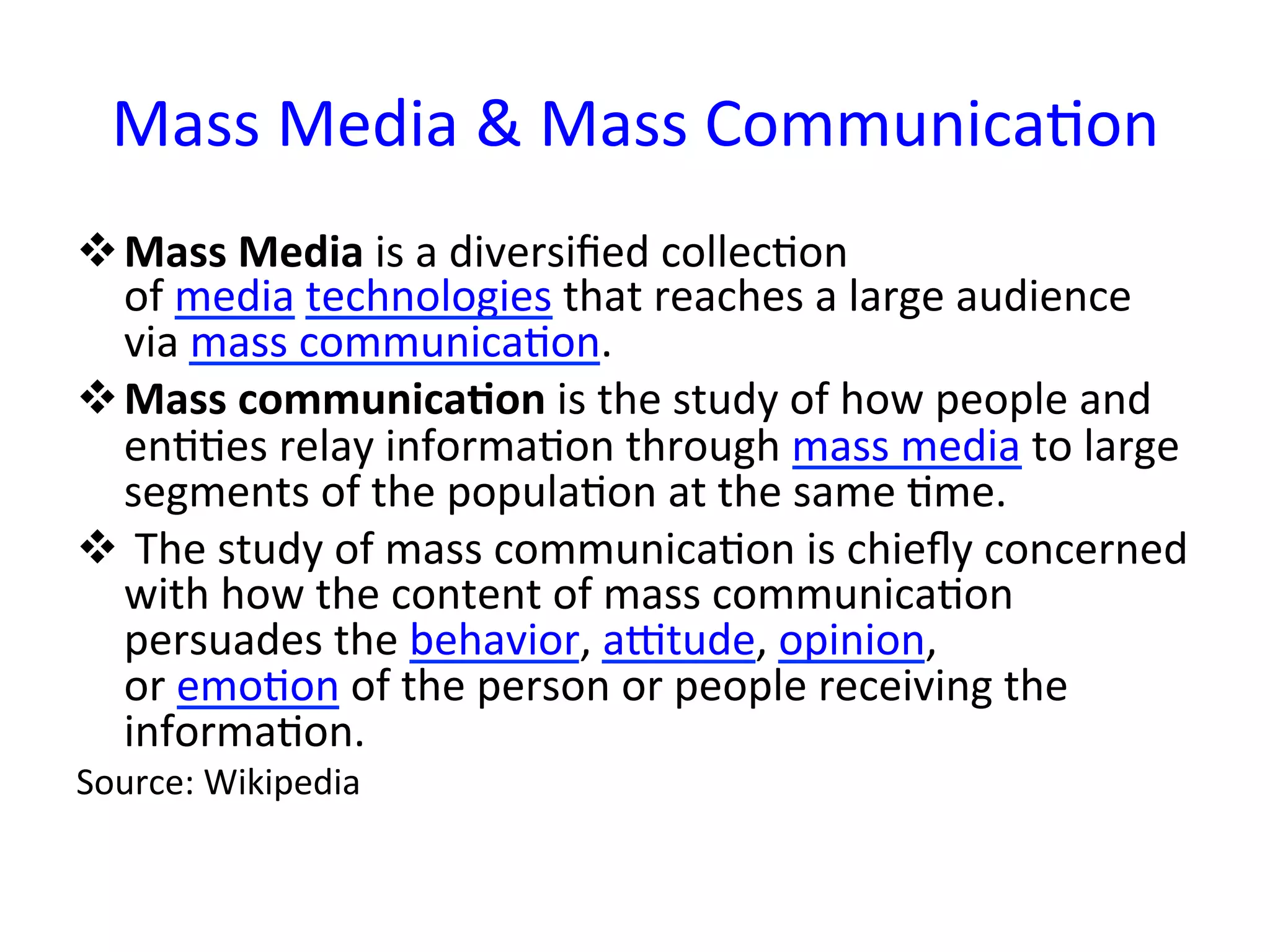
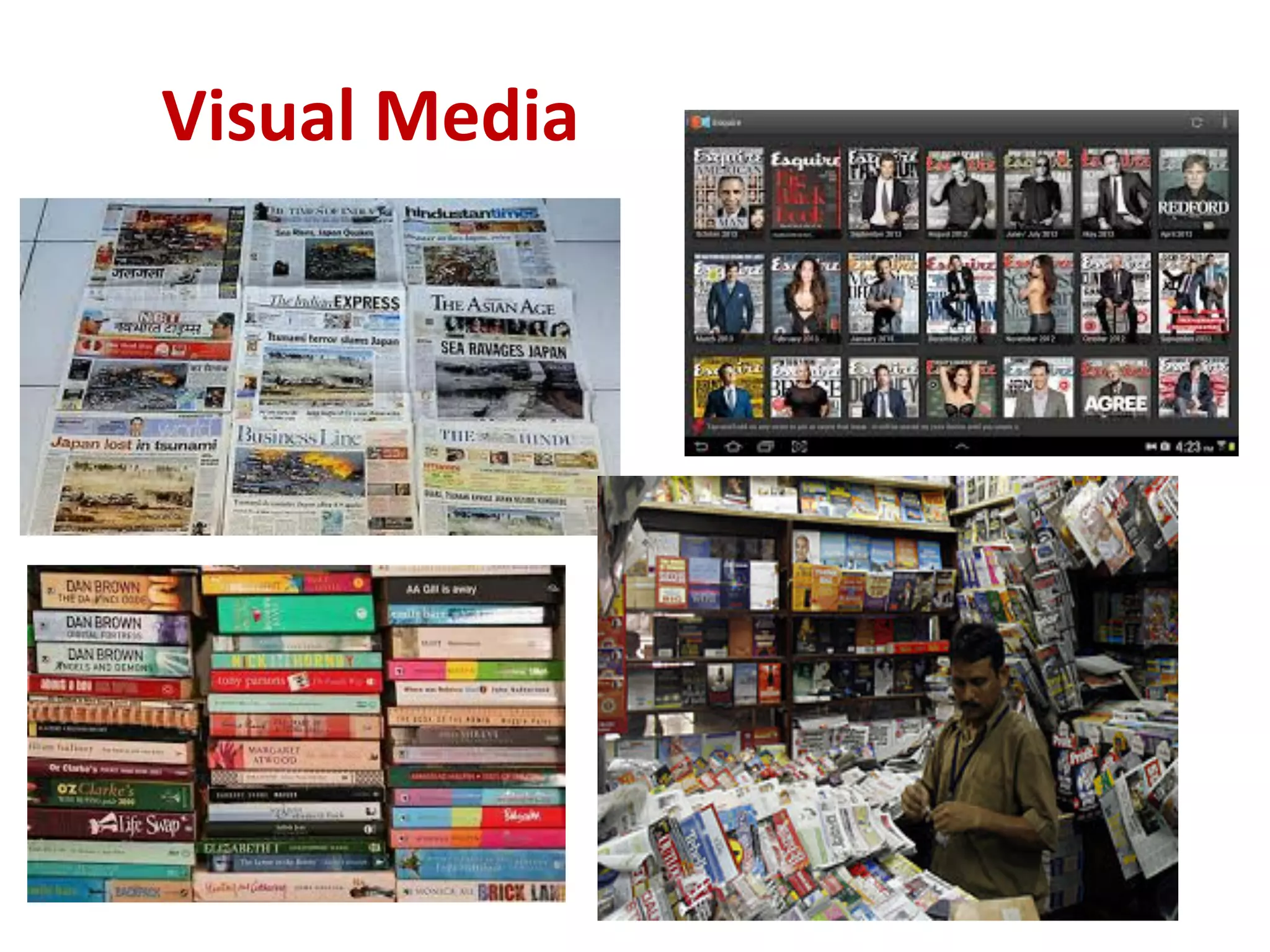
•  Print	(books,	pamphlets,	newspapers,	magazines,	
etc.)	from	the	late	15th	century	
•  Recordings	(gramophone	records,	
magne0c	tapes,	casseTes,	cartridges,	CDs,	
and	DVDs)	from	the	late	19th	century	
•  Cinema	from	about	1900	
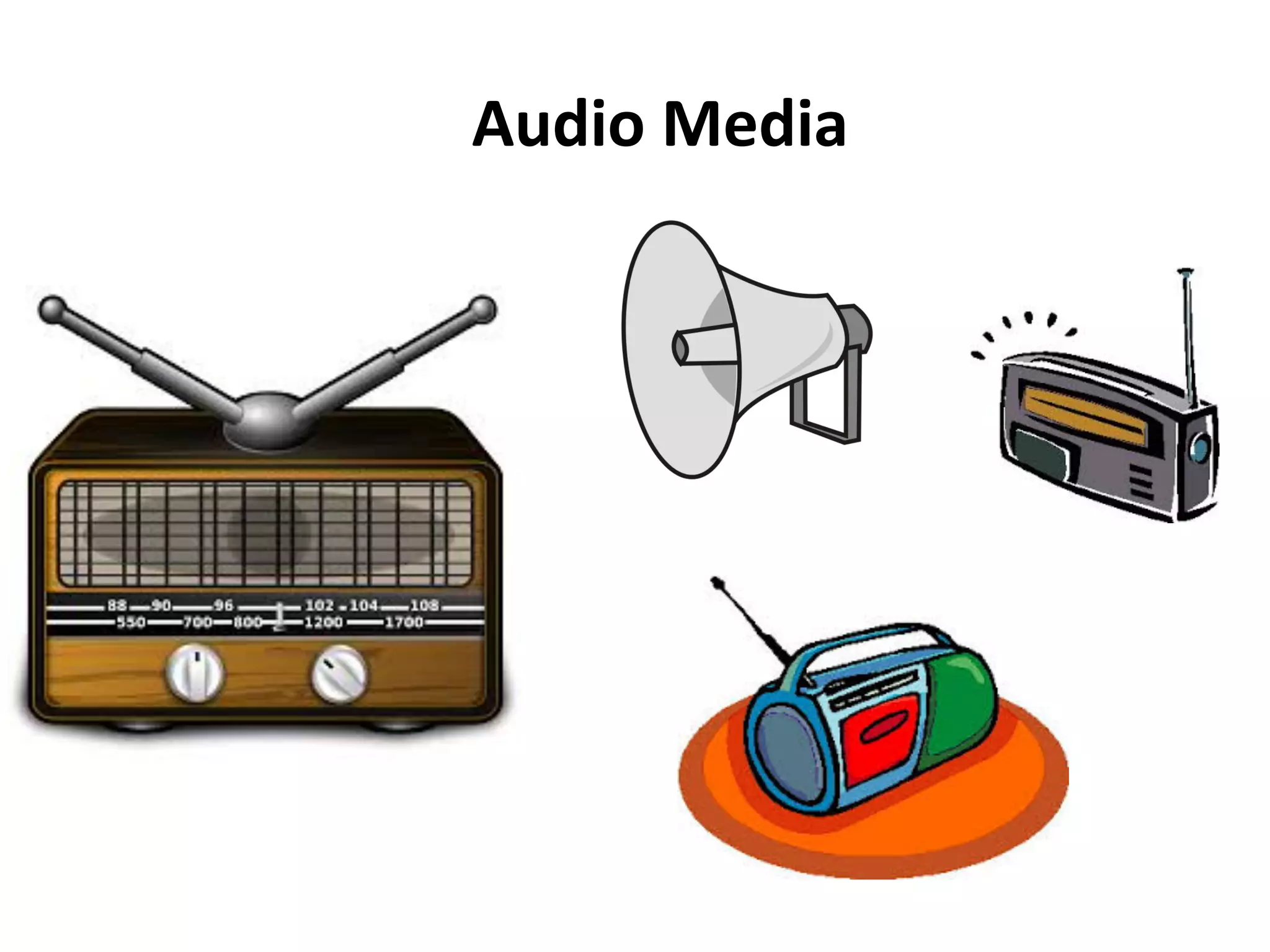
•  Radio	from	about	1910	
•  Television	from	about	1950	
•  Internet	from	about	1990	
•  Mobile	phones	from	about	2000
Audio	Media
Visual	Media
Visual	
Media
Audio-	Visual	
Media
New	Media
Media	is	
everywhere	
We	are	surrounded	by	Media
We	Consume	MEDIA	All	the	Time……	
	
Look	&	See	
	
	
Hear	&	
Listen
It	strengthens	our	exis0ng	beliefs	
Or	
It	creates	new	beliefs	
Or	
It	opposes	our	beliefs	
	
What	happens	when	we	consume	a	
piece	of	Informa-on?
Discussion:	Media	Creates	Norms	
	
“Media	creates	the	world	we	live	in.	It	tells	us	
what	to	eat,	drink,	wear,	&	think.”	
	
Ø  Do	you	agree?		
Ø  To	what	extent	your	decisions	are	influenced	
by	media?	
Ø  Can	u	give	any	examples?
Video	-	1	
Media	Effects	
-by		CommGAP	&	World	Bank	Ins0tute		
hTps://www.youtube.com/watch?
v=qvgURfZMGoQ	
Length	–	3	Min
Communica0on	Theory	
Priming	
Ø Media	sets	the	stage	for	audience	understanding.	
Provides	historical	context,	related	news	of	the	
past,	opinions	of	experts.	
Agenda	SeHng	
Ø Mass	media	are	effec0ve	in	determining	what	
audiences	see	as	newsworthy.	By	the	issues	they	
cover,	media	can	legi0mize	a	story	or	marginalize	
either	the	en0re	story	or	certain	aspects	of	it.
Framing	
Ø Rhetorical	analysis/Repor0ng	of	an	issue.	How	
the	story	should	be	presented.	Audience	is	given	
a	par0cular	point	of	view	or	frame	of	reference	
and	interpreta0on.		
Cul-va-on	Theory	
Ø The	more	television	an	individual	consumes,	the	
more	likely	that	person	is	to	believe	the	real	
world	is	similar	to	what	they	have	seen	on	
television.
Video-2	
But	Wait:	How	DOES	The	Media	Tell	You	What	
To	Think?	
-by	PBS	Channel	
hTps://www.youtube.com/watch?
v=F7SzwMJ3MZQ	
Length-12.34	(0ll	10.30)
Magic	Bullet/Hypodermic	Needle	Model	
Ø It	suggests	that	the	media	injects	its	messages	
straight	into	the	passive	audience.	This	passive	
audience	is	immediately	affected	by	these	
messages		
Two	Step	Model	
Ø Ideas	flow	from	mass	media	to	opinion	
leaders,	and	from	them	to	a	wider	popula0on
Media	Theories	
Uses/Gra-fica-on	Theory	
Ø People	consume	media	because	it	gives	certain	
enjoyment.	Different	people	prefer	different	media.	
Ø People	consume	media	as	it	helps	to	understand	the	
world	around	us.	
Ø The	more	gra0fied	we	are	with	a	certain	media,	we	use	
it	more	than	others	
Mere-Exposure	Effect	
Ø Principle	of	Adver0sing;	By	repeated	exposure,	viewers	
gradually	start	to	like	the	product	without	even	having	
tried	it.
Discussion	and	Ques0ons
Recap	
•  Media	creates	Norms	in	the	society	
•  Media	uses	complex	techniques	to	reinforce	
messages		
•  Media	influences	people’s	behavior,	aMtude,	
opinions	(to	different	degrees)
•  hTp://communica0ontheory.org/agenda-
seMng-theory/	
•  hTp://faculty.buffalostate.edu/smithrd/PR/
Framing.htm	
•  Propaganda	and	Manipula0on:	How	mass	
media	engineers	and	distorts	our	percep0ons	
hTps://www.youtube.com/watch?
v=Pfo5gPG72KM

Ch1_Understanding Mass Media