Peripheral Nervous System
Cranial nerves and spinal nerves:
• Somatic Nervous System: nerves that
connect CNS to skin and skeletal muscles
• Autonomic Nervous System: nerves that
connect CNS to viscera, smooth muscle nad
glands.
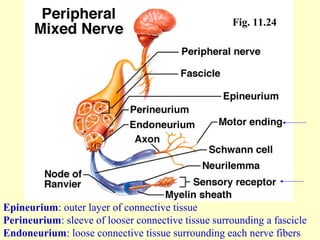
Fig. 11.24
Epineurium: outer layer of connective tissue
Perineurium: sleeve of looser connective tissue surrounding a fascicle
Endoneurium: loose connective tissue surrounding each nerve fibers
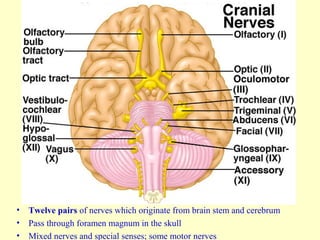
• Twelve pairs of nerves which originate from brain stem and cerebrum
• Pass through foramen magnum in the skull
• Mixed nerves and special senses; some motor nerves
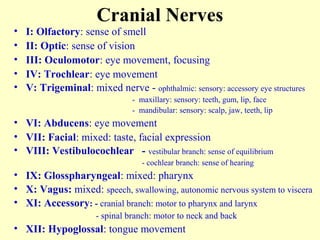
Cranial Nerves
• I: Olfactory: sense of smell
• II: Optic: sense of vision
• III: Oculomotor: eye movement, focusing
• IV: Trochlear: eye movement
• V: Trigeminal: mixed nerve - ophthalmic: sensory: accessory eye structures
- maxillary: sensory: teeth, gum, lip, face
- mandibular: sensory: scalp, jaw, teeth, lip
• VI: Abducens: eye movement
• VII: Facial: mixed: taste, facial expression
• VIII: Vestibulocochlear - vestibular branch: sense of equilibrium
- cochlear branch: sense of hearing
• IX: Glosspharyngeal: mixed: pharynx
• X: Vagus: mixed: speech, swallowing, autonomic nervous system to viscera
• XI: Accessory: - cranial branch: motor to pharynx and larynx
- spinal branch: motor to neck and back
• XII: Hypoglossal: tongue movement
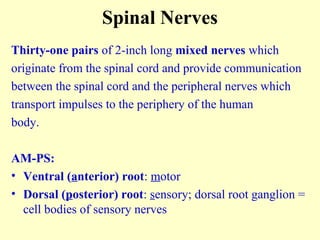
Spinal Nerves
Thirty-one pairs of 2-inch long mixed nerves which
originate from the spinal cord and provide communication
between the spinal cord and the peripheral nerves which
transport impulses to the periphery of the human
body.
AM-PS:
• Ventral (anterior) root: motor
• Dorsal (posterior) root: sensory; dorsal root ganglion =
cell bodies of sensory nerves
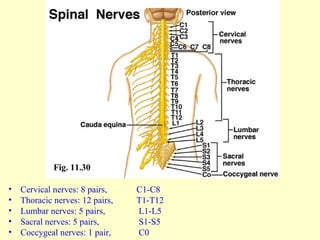
• Cervical nerves: 8 pairs, C1-C8
• Thoracic nerves: 12 pairs, T1-T12
• Lumbar nerves: 5 pairs, L1-L5
• Sacral nerves: 5 pairs, S1-S5
• Coccygeal nerves: 1 pair, C0
Fig. 11.30
PNS - Autonomic Nervous System
• Functions independently, involuntary / subconscious control
• Controls visceral activities by regulating smooth and cardiac
muscles and glands
• Regulates heart rate, blood pressure, breathing, body temperature
and other homeostatic mechanisms
• Responds to stress
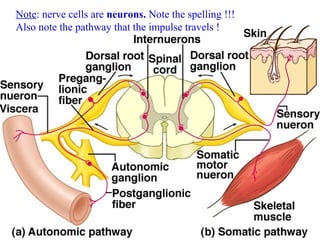
Note: nerve cells are neurons. Note the spelling !!!
Also note the pathway that the impulse travels !
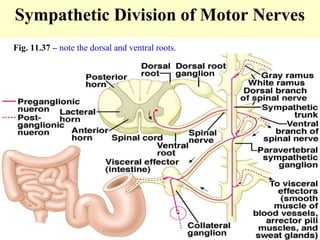
Sympathetic Division of Motor Nerves
Fig. 11.37 – note the dorsal and ventral roots.
Fig. 11.36 – note the meninges, dorsal and ventral roots.
Note that the spinal nerves are mixed function nerves [AM-PS].
Parasympathetic Division of Motor Nerves
• The vagus nerve (X) carries 75% of the
parasympathetic fibers.
• Postganglionic fibers travel to specific muscles
or glands.
Neurotransmitters (Tab. 11.10)
Acetylcholine functions to maintain homeostasis.
Preganglionic fibers are cholinergic and secrete acetylcholine:
• Preganglionic sympathetic fibers of the ANS arise from the thoracic and lumbar
regions of the spinal cord.
• Preganglionic parasympathetic fibers of the ANS arise from the brain and sacral
region of the spinal cord.
Postganglionic parasympathetic and sympathetic fibers of sweat glands are also
cholinergic.
Norepinephrine and epinephrine function to
respond to stress
All other postganglionic sympathetic fibers are adrenergic and secrete norepinephrine
Neurotransmitter Receptors
• Acetylcholine binds to two cholinergic
receptors:
– muscarinic receptors: effector cells at
parasympathetic postganglionic terminals
– nicotinic receptors: synapses between pre- and
postganglionic fibers and at neuromuscular
junctions of skeletal muscles
• Epinephrine and norepinephrine bind to two
adrenergic receptors:
- alpha and beta receptors, which give different
responses at the target organ
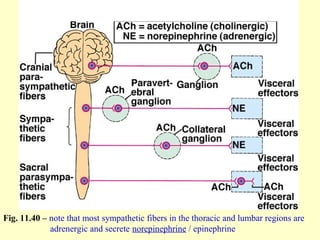
Fig. 11.40 – note that most sympathetic fibers in the thoracic and lumbar regions are
adrenergic and secrete norepinephrine / epinephrine

Ch11 ppt-nervous system 11 d

  • 1.
    Peripheral Nervous System Cranialnerves and spinal nerves: • Somatic Nervous System: nerves that connect CNS to skin and skeletal muscles • Autonomic Nervous System: nerves that connect CNS to viscera, smooth muscle nad glands.
  • 2.
    Fig. 11.24 Epineurium: outerlayer of connective tissue Perineurium: sleeve of looser connective tissue surrounding a fascicle Endoneurium: loose connective tissue surrounding each nerve fibers
  • 3.
    • Twelve pairsof nerves which originate from brain stem and cerebrum • Pass through foramen magnum in the skull • Mixed nerves and special senses; some motor nerves
  • 4.
    Cranial Nerves • I:Olfactory: sense of smell • II: Optic: sense of vision • III: Oculomotor: eye movement, focusing • IV: Trochlear: eye movement • V: Trigeminal: mixed nerve - ophthalmic: sensory: accessory eye structures - maxillary: sensory: teeth, gum, lip, face - mandibular: sensory: scalp, jaw, teeth, lip • VI: Abducens: eye movement • VII: Facial: mixed: taste, facial expression • VIII: Vestibulocochlear - vestibular branch: sense of equilibrium - cochlear branch: sense of hearing • IX: Glosspharyngeal: mixed: pharynx • X: Vagus: mixed: speech, swallowing, autonomic nervous system to viscera • XI: Accessory: - cranial branch: motor to pharynx and larynx - spinal branch: motor to neck and back • XII: Hypoglossal: tongue movement
  • 5.
    Spinal Nerves Thirty-one pairsof 2-inch long mixed nerves which originate from the spinal cord and provide communication between the spinal cord and the peripheral nerves which transport impulses to the periphery of the human body. AM-PS: • Ventral (anterior) root: motor • Dorsal (posterior) root: sensory; dorsal root ganglion = cell bodies of sensory nerves
  • 6.
    • Cervical nerves:8 pairs, C1-C8 • Thoracic nerves: 12 pairs, T1-T12 • Lumbar nerves: 5 pairs, L1-L5 • Sacral nerves: 5 pairs, S1-S5 • Coccygeal nerves: 1 pair, C0 Fig. 11.30
  • 7.
    PNS - AutonomicNervous System • Functions independently, involuntary / subconscious control • Controls visceral activities by regulating smooth and cardiac muscles and glands • Regulates heart rate, blood pressure, breathing, body temperature and other homeostatic mechanisms • Responds to stress
  • 8.
    Note: nerve cellsare neurons. Note the spelling !!! Also note the pathway that the impulse travels !
  • 9.
    Sympathetic Division ofMotor Nerves Fig. 11.37 – note the dorsal and ventral roots.
  • 10.
    Fig. 11.36 –note the meninges, dorsal and ventral roots. Note that the spinal nerves are mixed function nerves [AM-PS].
  • 11.
    Parasympathetic Division ofMotor Nerves • The vagus nerve (X) carries 75% of the parasympathetic fibers. • Postganglionic fibers travel to specific muscles or glands.
  • 12.
    Neurotransmitters (Tab. 11.10) Acetylcholinefunctions to maintain homeostasis. Preganglionic fibers are cholinergic and secrete acetylcholine: • Preganglionic sympathetic fibers of the ANS arise from the thoracic and lumbar regions of the spinal cord. • Preganglionic parasympathetic fibers of the ANS arise from the brain and sacral region of the spinal cord. Postganglionic parasympathetic and sympathetic fibers of sweat glands are also cholinergic. Norepinephrine and epinephrine function to respond to stress All other postganglionic sympathetic fibers are adrenergic and secrete norepinephrine
  • 13.
    Neurotransmitter Receptors • Acetylcholinebinds to two cholinergic receptors: – muscarinic receptors: effector cells at parasympathetic postganglionic terminals – nicotinic receptors: synapses between pre- and postganglionic fibers and at neuromuscular junctions of skeletal muscles • Epinephrine and norepinephrine bind to two adrenergic receptors: - alpha and beta receptors, which give different responses at the target organ
  • 14.
    Fig. 11.40 –note that most sympathetic fibers in the thoracic and lumbar regions are adrenergic and secrete norepinephrine / epinephrine