Anatomy presentation-march,2016
1
Somatic and Visceral nerve
fibers
Leul Biruk
MMC,2016
2
Introduction
• The peripheral nervous system constitutes spinal and cranial
nerves. And these nerves are composed of sensory and motor fibers.
Sensory fibers- are processes of pseudo-unipolar neurons with cell bodies located
outside of the CNS in spinal or cranial sensory ganglia and which carry impulses towards the CNS
away from sensory organs.
Motor fibers- are axons of multipolar neurons that carry impulses away from the CNS
towards effectors.
3
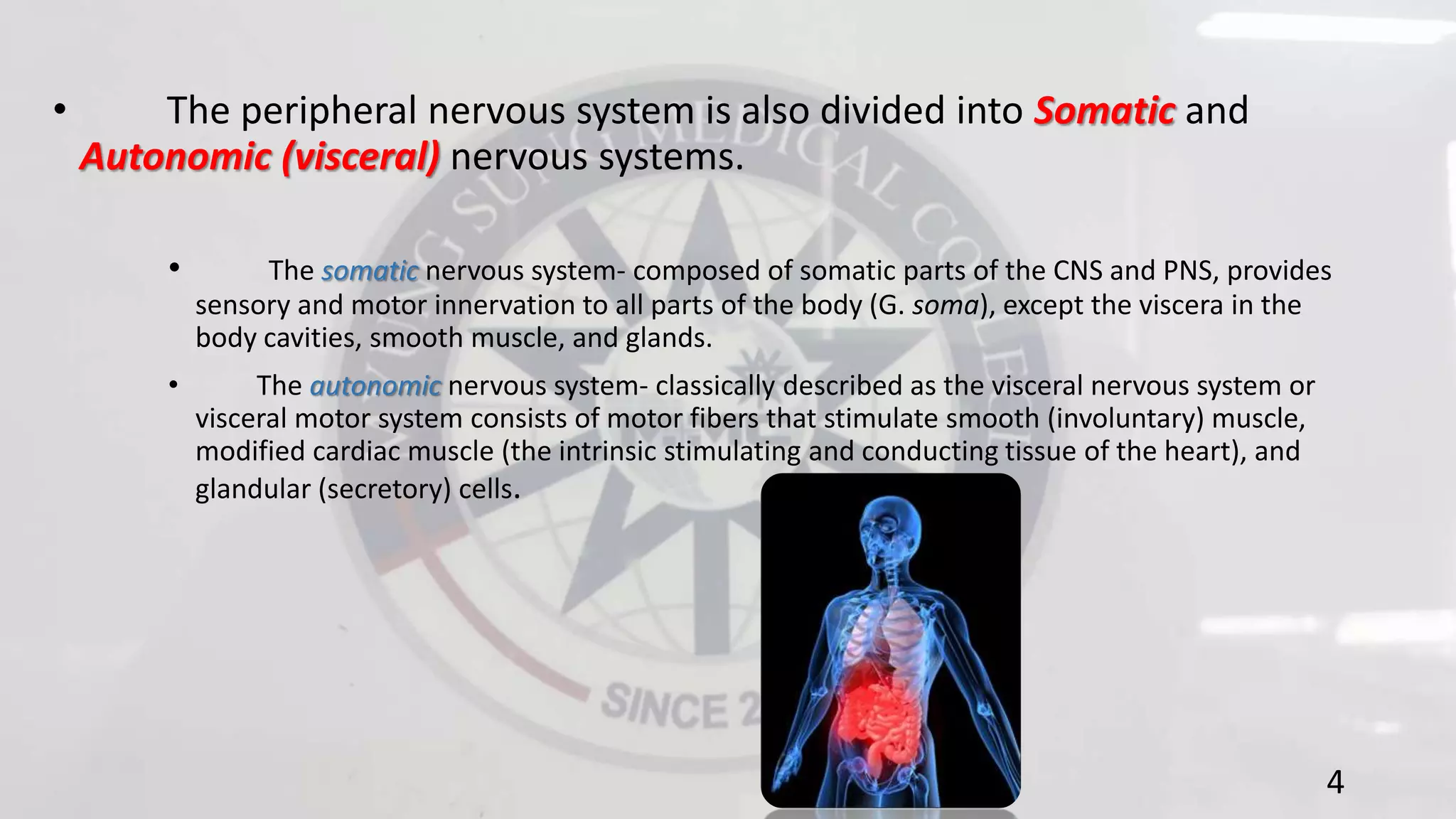
• The peripheral nervous system is also divided into Somatic and
Autonomic (visceral) nervous systems.
• The somatic nervous system- composed of somatic parts of the CNS and PNS, provides
sensory and motor innervation to all parts of the body (G. soma), except the viscera in the
body cavities, smooth muscle, and glands.
• The autonomic nervous system- classically described as the visceral nervous system or
visceral motor system consists of motor fibers that stimulate smooth (involuntary) muscle,
modified cardiac muscle (the intrinsic stimulating and conducting tissue of the heart), and
glandular (secretory) cells.
4
5
Afferent (Sensory) Fibers
• There are four types of afferent fibers:
1- General Somatic Afferent
2- Special Somatic Afferent
3- General Visceral Afferent
4- Special Visceral Afferent
6
General Somatic Afferent
• These nerve fibers may serve as :
(superficial sensation)
(deep sensation)
7
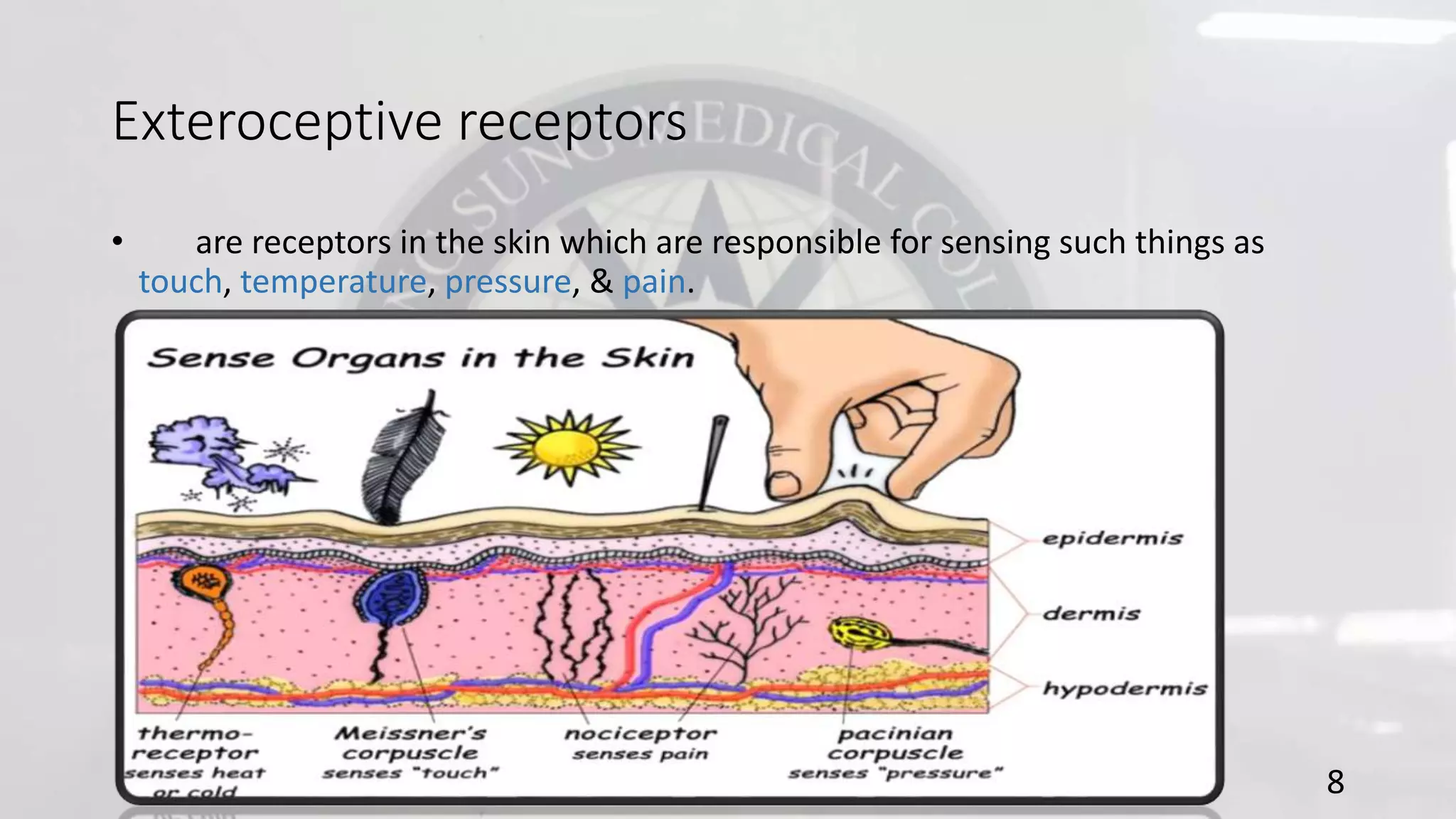
Exteroceptive receptors
• are receptors in the skin which are responsible for sensing such things as
touch, temperature, pressure, & pain.
8
• are receptors in the skeletal muscles, tendons, & joints that provide
information about body position & movement.
9
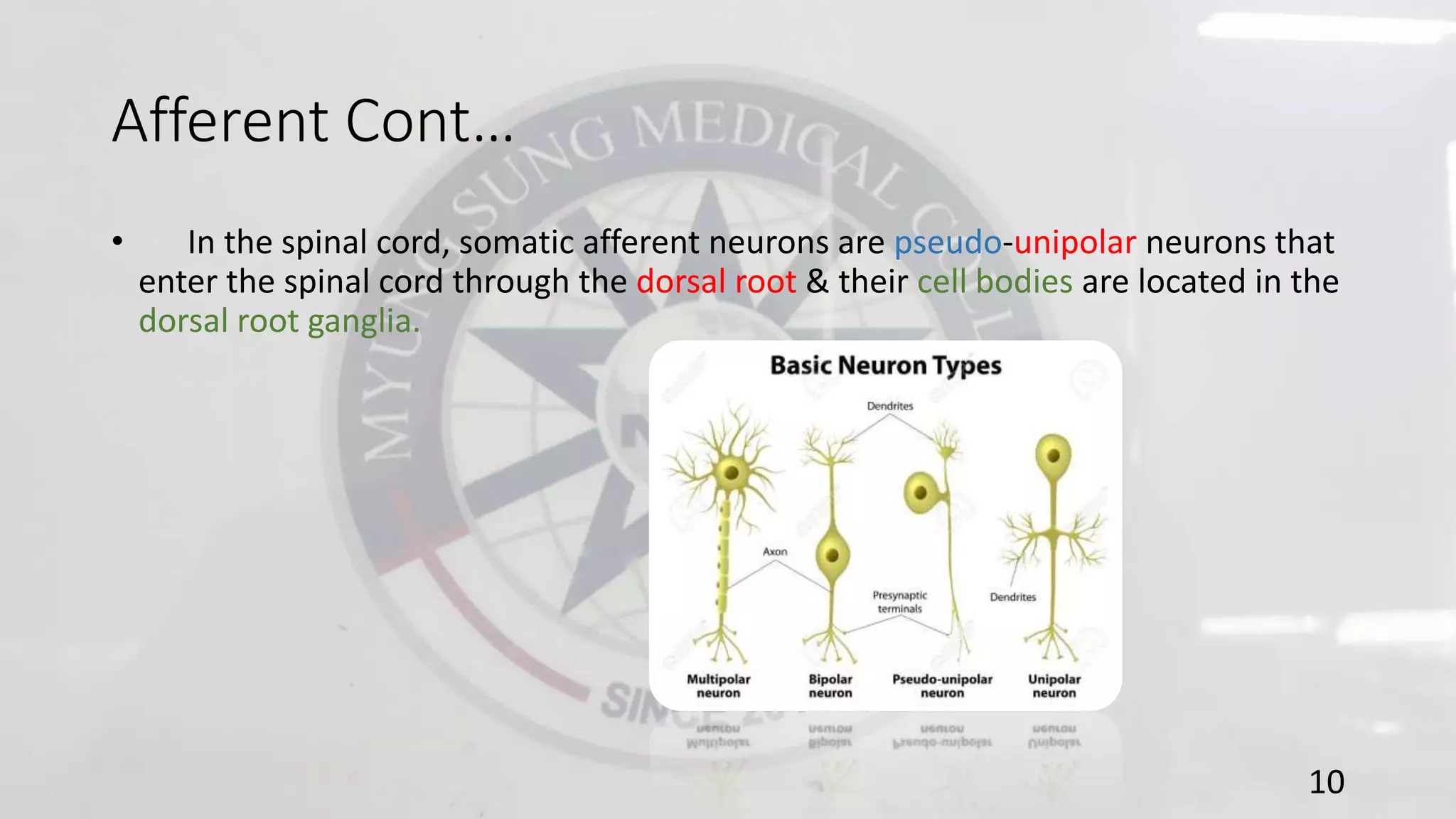
Afferent Cont…
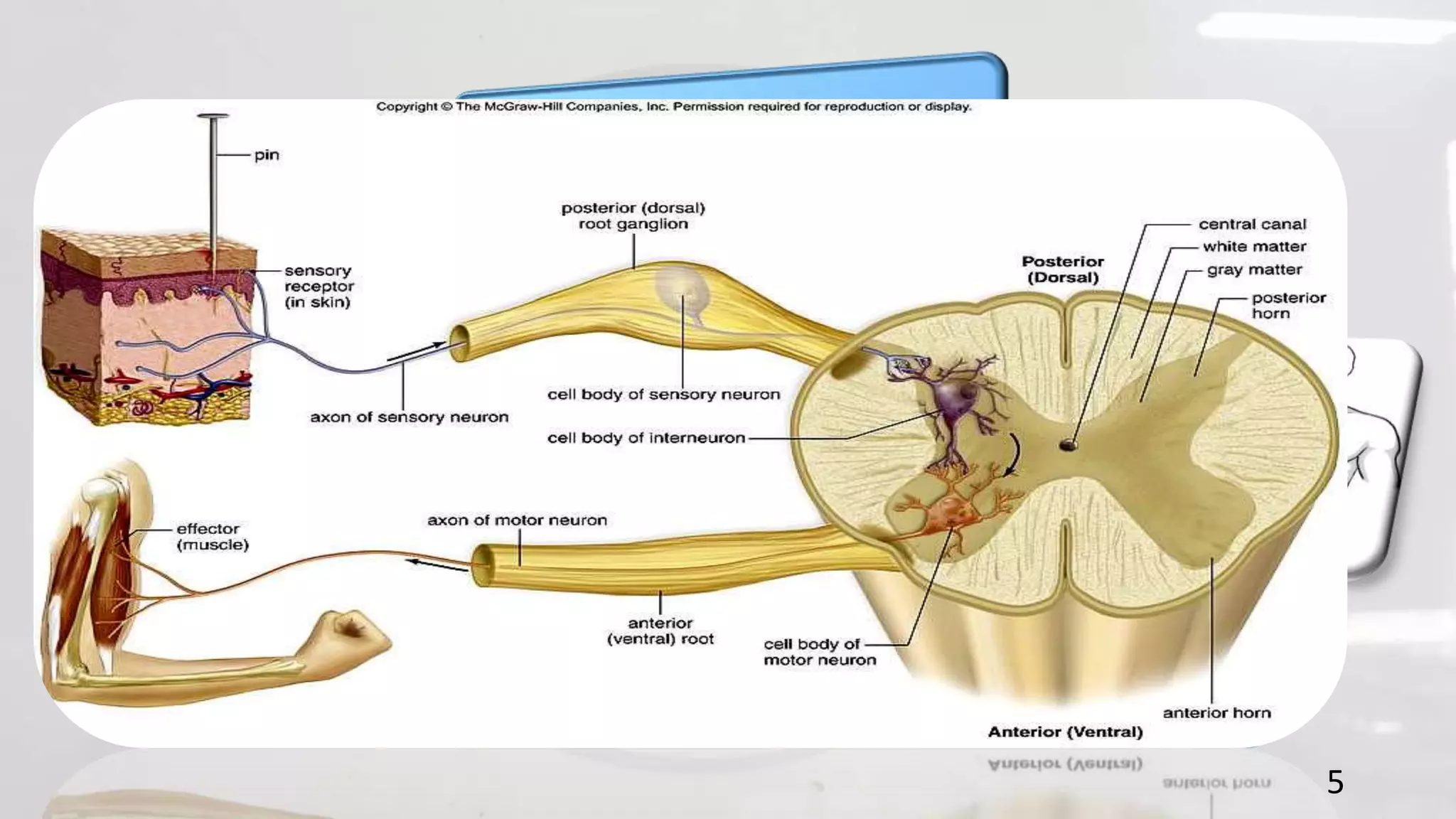
• In the spinal cord, somatic afferent neurons are pseudo-unipolar neurons that
enter the spinal cord through the dorsal root & their cell bodies are located in the
dorsal root ganglia.
10
Special Somatic Afferent
• special senses (sight, hearing ,and balance).
• The optic nerves (cranial nerve II), the
auditory/vestibular systems which are the
vestibulocochlear nerves (cranial nerve VIII).
11
General Visceral Afferent
• These fibers convey pain or subconscious reflex sensations ( such as blood
pressure levels, blood gas and distension) from hollow organs and blood vessels.
• Can be associated with chemoreceptors or baroreceptors.
• Eg: glossopharyngeal nerves (cranial nerve IX) and the vagus nerves
(cranial nerve X)
12
Special Visceral Afferent
• Fibers that convey impulses for smell and taste.
• E.g.: Cranial Nerve I (Olfactory) for smell; Cranial Nerves VII (Facial), IX
(Glossopharyngeal), X (Vagus) for taste.
13
Efferent(motor) fibers
• There are 3 kinds of efferent cranial nerve fibers:
• General Somatic Efferent
• General Visceral Efferent
• Special Visceral Efferent
14
General Somatic Efferent
• These are nerve fibers that conduct impulses from the CNS to skeletal muscles.
• In the spinal cord, these neurons are multipolar neurons, with cell bodies located
in the gray matter of the spinal cord. Somatic efferent neurons leave the spinal
cord through the ventral root of spinal nerves.
15
General Visceral Efferent
• These nerve fibers supply smooth muscle, cardiac muscle and glands.
• Eg: the oculomotor nerve (CN III), the facial nerve (CN VII), the glossopharyngeal
nerve (CN IX) and the vagus nerve (CN X).
16
Special Visceral Efferent
• These fibers are not applied clinically.
• These fibers are occasionally designated as branchial motor, referring to muscle
tissue derived from the pharyngeal arches in the embryo.
• Nerve fibers which conduct impulses from the CNS to skeletal muscles that
control facial expression and position of the jaw, neck, larynx, and pharynx.
• The only nerves containing SVE fibers are cranial nerves: the trigeminal nerve (V),
the facial nerve (VII), the glossopharyngeal nerve (IX), the vagus nerve (X) and the
accessory nerve (XI).
17
18
19
References
• Gray's Anatomy The Anatomical Basis of Clinical Practice 41th edition
• Moore - Clinically Oriented Anatomy 7th edition
• http://people.eku.edu/ritchisong/301notes2b.html
20
21

Somatic and visceral nerve fibers

  • 1.
  • 2.
    Somatic and Visceralnerve fibers Leul Biruk MMC,2016 2
  • 3.
    Introduction • The peripheralnervous system constitutes spinal and cranial nerves. And these nerves are composed of sensory and motor fibers. Sensory fibers- are processes of pseudo-unipolar neurons with cell bodies located outside of the CNS in spinal or cranial sensory ganglia and which carry impulses towards the CNS away from sensory organs. Motor fibers- are axons of multipolar neurons that carry impulses away from the CNS towards effectors. 3
  • 4.
    • The peripheralnervous system is also divided into Somatic and Autonomic (visceral) nervous systems. • The somatic nervous system- composed of somatic parts of the CNS and PNS, provides sensory and motor innervation to all parts of the body (G. soma), except the viscera in the body cavities, smooth muscle, and glands. • The autonomic nervous system- classically described as the visceral nervous system or visceral motor system consists of motor fibers that stimulate smooth (involuntary) muscle, modified cardiac muscle (the intrinsic stimulating and conducting tissue of the heart), and glandular (secretory) cells. 4
  • 5.
  • 6.
    Afferent (Sensory) Fibers •There are four types of afferent fibers: 1- General Somatic Afferent 2- Special Somatic Afferent 3- General Visceral Afferent 4- Special Visceral Afferent 6
  • 7.
    General Somatic Afferent •These nerve fibers may serve as : (superficial sensation) (deep sensation) 7
  • 8.
    Exteroceptive receptors • arereceptors in the skin which are responsible for sensing such things as touch, temperature, pressure, & pain. 8
  • 9.
    • are receptorsin the skeletal muscles, tendons, & joints that provide information about body position & movement. 9
  • 10.
    Afferent Cont… • Inthe spinal cord, somatic afferent neurons are pseudo-unipolar neurons that enter the spinal cord through the dorsal root & their cell bodies are located in the dorsal root ganglia. 10
  • 11.
    Special Somatic Afferent •special senses (sight, hearing ,and balance). • The optic nerves (cranial nerve II), the auditory/vestibular systems which are the vestibulocochlear nerves (cranial nerve VIII). 11
  • 12.
    General Visceral Afferent •These fibers convey pain or subconscious reflex sensations ( such as blood pressure levels, blood gas and distension) from hollow organs and blood vessels. • Can be associated with chemoreceptors or baroreceptors. • Eg: glossopharyngeal nerves (cranial nerve IX) and the vagus nerves (cranial nerve X) 12
  • 13.
    Special Visceral Afferent •Fibers that convey impulses for smell and taste. • E.g.: Cranial Nerve I (Olfactory) for smell; Cranial Nerves VII (Facial), IX (Glossopharyngeal), X (Vagus) for taste. 13
  • 14.
    Efferent(motor) fibers • Thereare 3 kinds of efferent cranial nerve fibers: • General Somatic Efferent • General Visceral Efferent • Special Visceral Efferent 14
  • 15.
    General Somatic Efferent •These are nerve fibers that conduct impulses from the CNS to skeletal muscles. • In the spinal cord, these neurons are multipolar neurons, with cell bodies located in the gray matter of the spinal cord. Somatic efferent neurons leave the spinal cord through the ventral root of spinal nerves. 15
  • 16.
    General Visceral Efferent •These nerve fibers supply smooth muscle, cardiac muscle and glands. • Eg: the oculomotor nerve (CN III), the facial nerve (CN VII), the glossopharyngeal nerve (CN IX) and the vagus nerve (CN X). 16
  • 17.
    Special Visceral Efferent •These fibers are not applied clinically. • These fibers are occasionally designated as branchial motor, referring to muscle tissue derived from the pharyngeal arches in the embryo. • Nerve fibers which conduct impulses from the CNS to skeletal muscles that control facial expression and position of the jaw, neck, larynx, and pharynx. • The only nerves containing SVE fibers are cranial nerves: the trigeminal nerve (V), the facial nerve (VII), the glossopharyngeal nerve (IX), the vagus nerve (X) and the accessory nerve (XI). 17
  • 18.
  • 19.
  • 20.
    References • Gray's AnatomyThe Anatomical Basis of Clinical Practice 41th edition • Moore - Clinically Oriented Anatomy 7th edition • http://people.eku.edu/ritchisong/301notes2b.html 20
  • 21.