Principles of
Government
Ch.1, sec. 1
The State
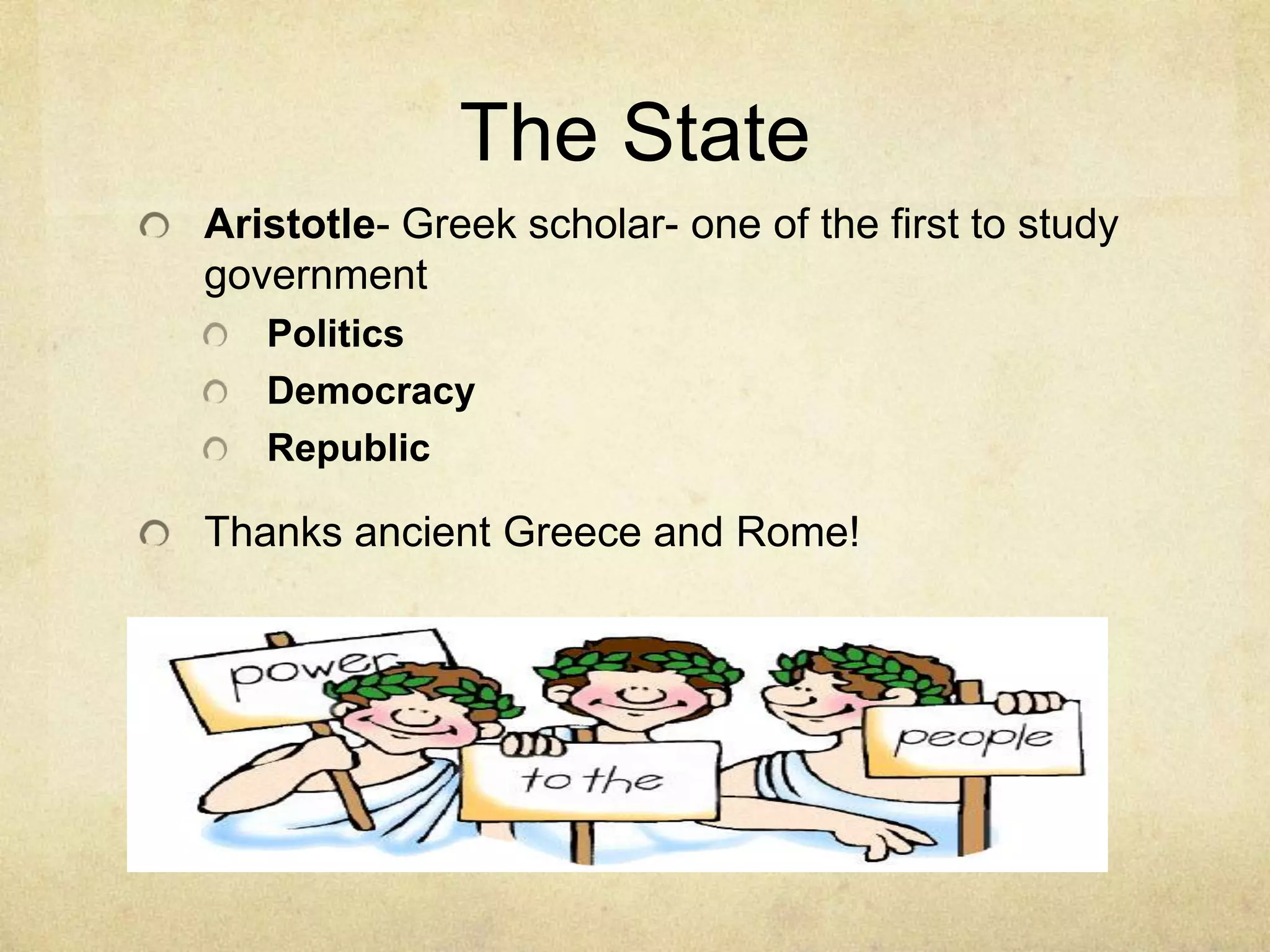
Aristotle- Greek scholar- one of the first to study
government
   Politics
   Democracy
   Republic

Thanks ancient Greece and Rome!
The Nation-State
State- political community that occupies a definite
territory and has organized government with the
power to make and enforce laws without approval
form any higher authority. (Different meaning in U.S.)
Nation- group of people united in common bonds of
race, language, custom, tradition, and sometimes
religion.
Often called a nation-state
basically the same as a country.
Close to 200 countries in the world today.
Gator Nation?
Essential Features of a
         State
Population

Territory

Sovereignty

Government
Population
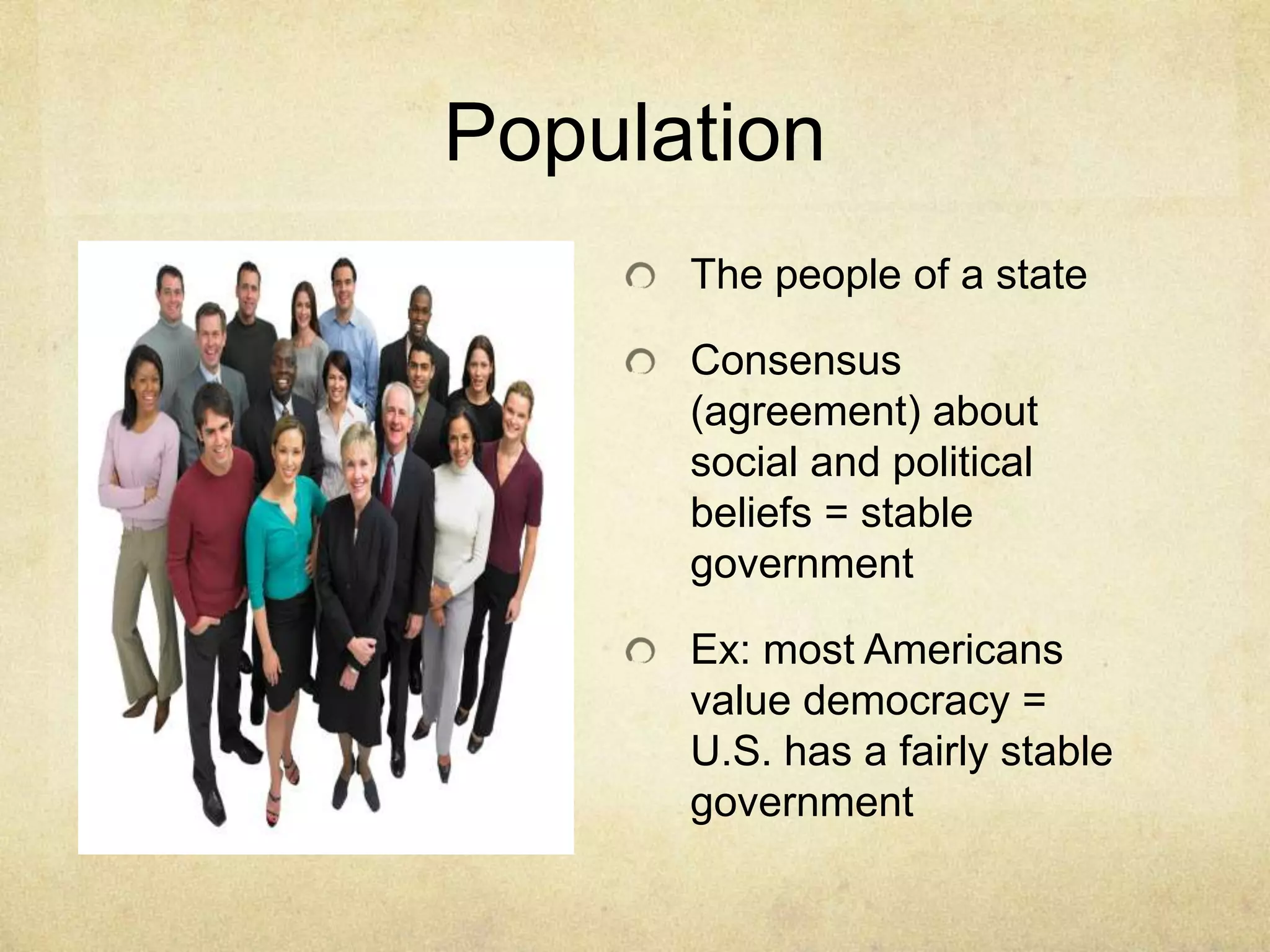
      The people of a state

      Consensus
      (agreement) about
      social and political
      beliefs = stable
      government

      Ex: most Americans
      value democracy =
      U.S. has a fairly stable
      government
Population
Mobility = shifts in power
States with more people get more power.
Top 3 states with the most representatives
in the House:
    1. California
    2. Texas
    3. New York
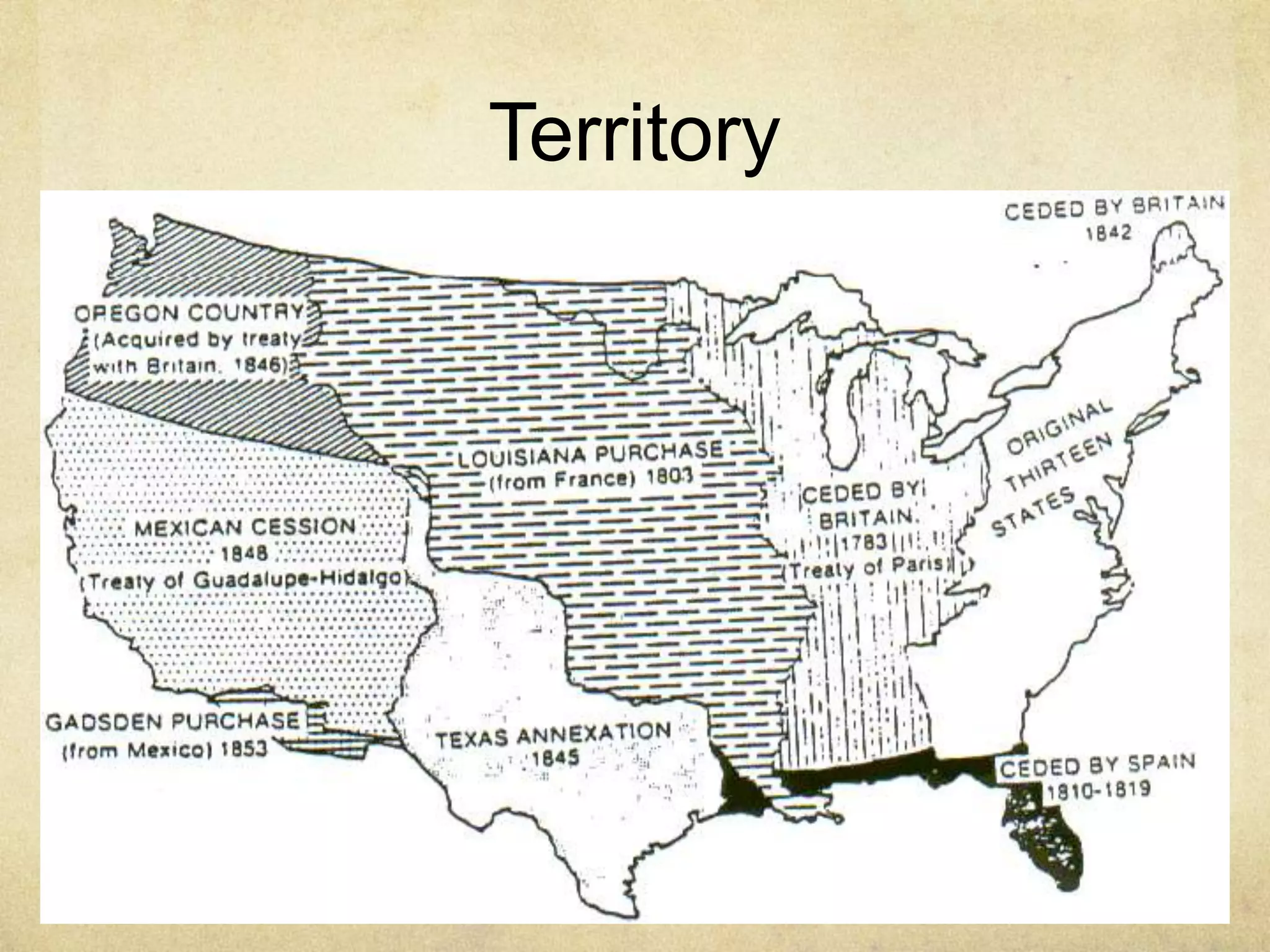
Territory
Established boundaries
Often a source of conflict in some
countries
Boundaries may change due to war,
negotiations or purchase.
U.S. has expanded its boundaries
numerous times (from 13 states to 50!)
Territory
Sovereignty
The state has supreme and
absolute authority within its
boundaries.

In theory, no state has the right
to interfere with the internal
affairs of another state.

In reality, states with more
money and larger militaries
have more power than states
who have less.

Is this fair?
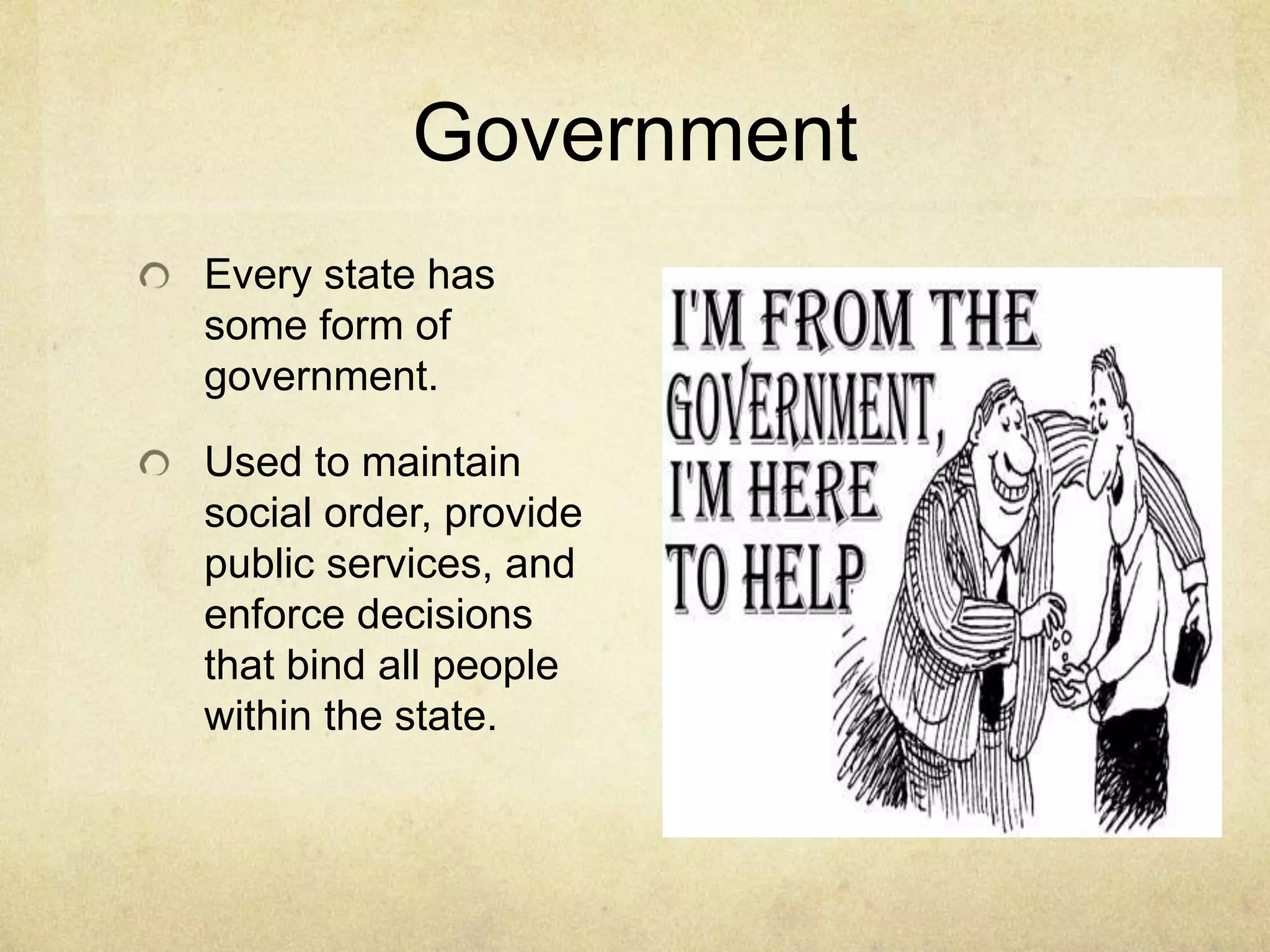
Government
Every state has
some form of
government.

Used to maintain
social order, provide
public services, and
enforce decisions
that bind all people
within the state.
Theories of the Origin of
       the State
How did
government
come to be?
Why did
people create
government?
Evolutionary Theory
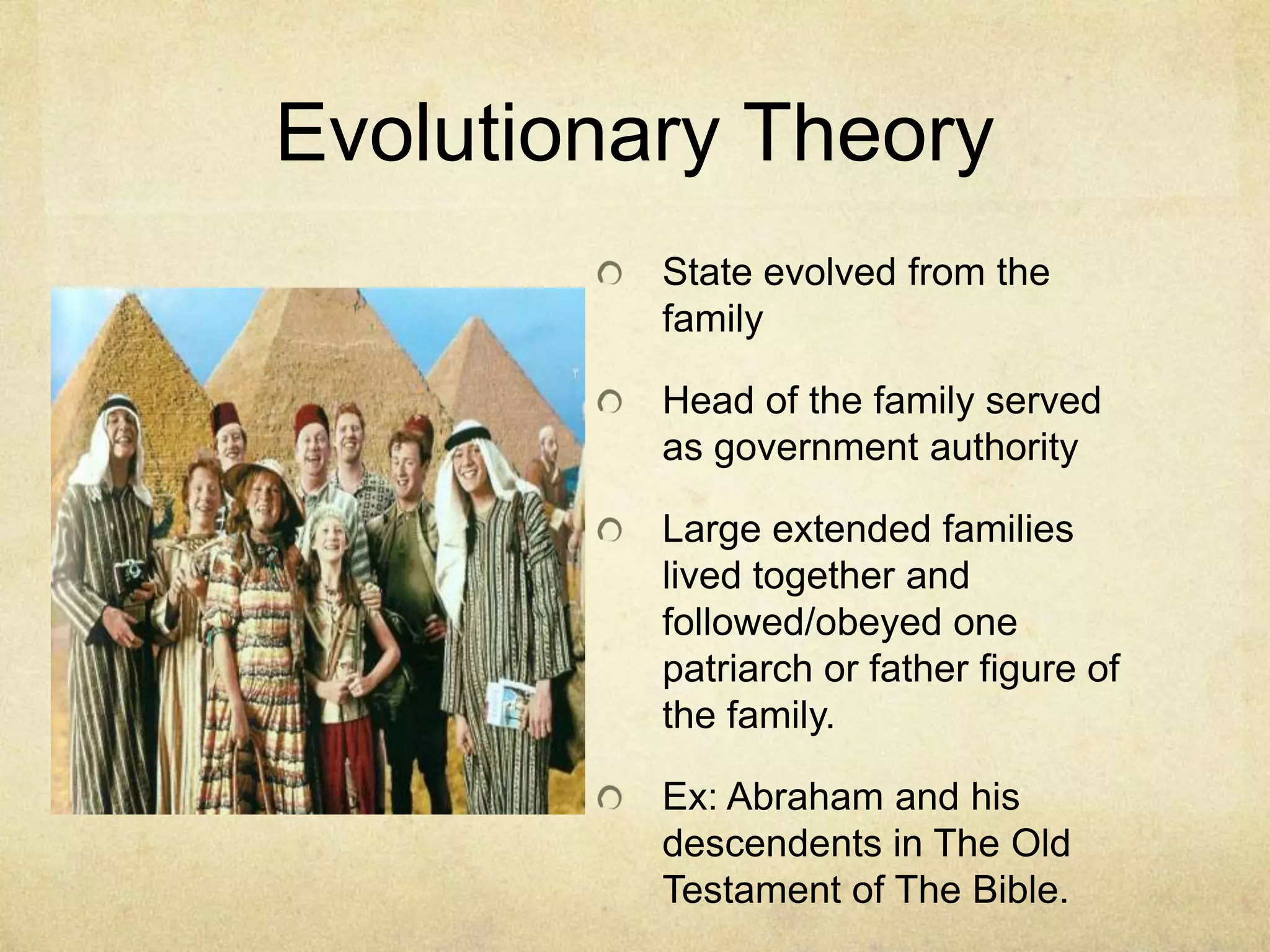
          State evolved from the
          family

          Head of the family served
          as government authority

          Large extended families
          lived together and
          followed/obeyed one
          patriarch or father figure of
          the family.

          Ex: Abraham and his
          descendents in The Old
          Testament of The Bible.
Force Theory
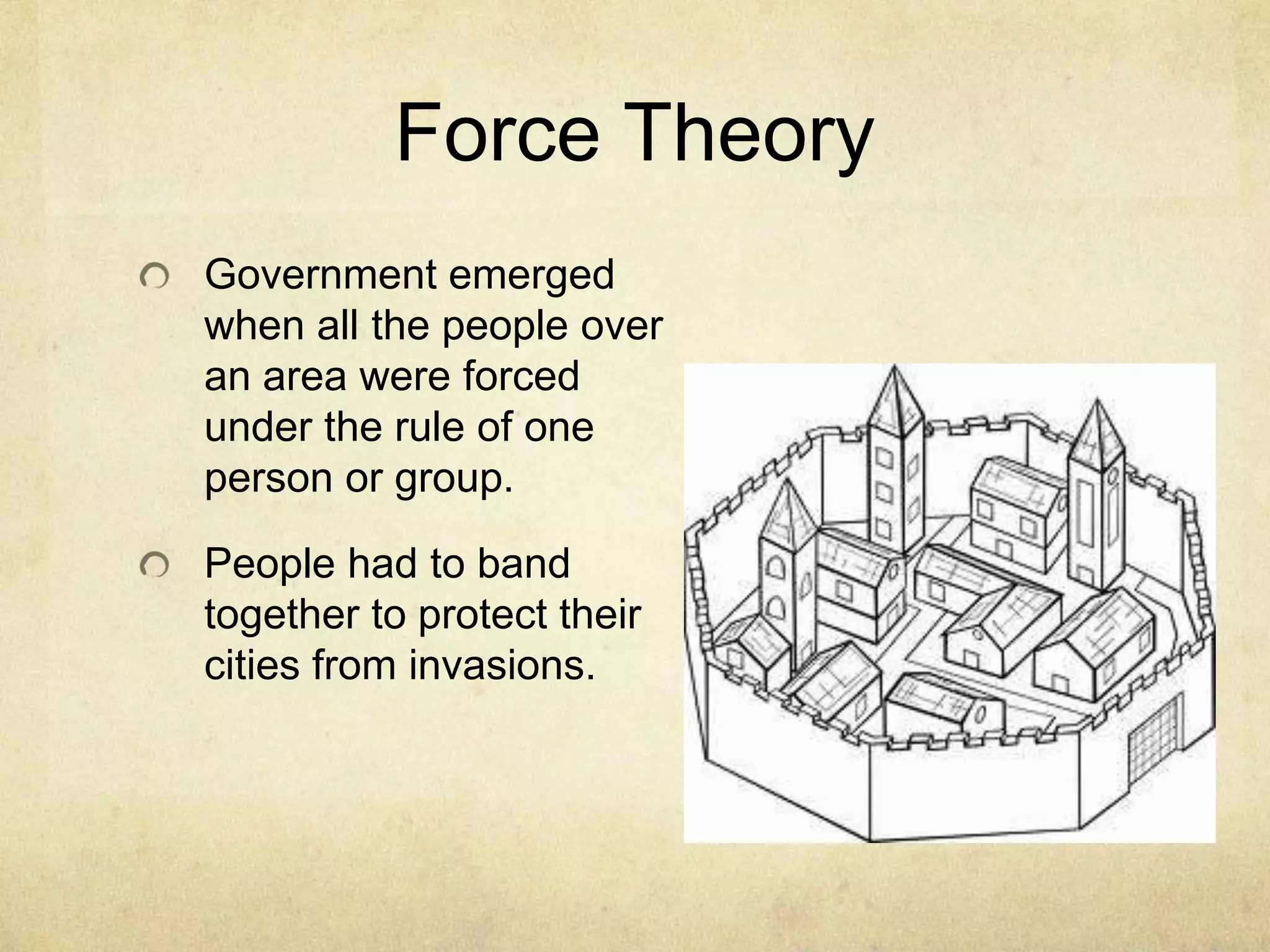
Government emerged
when all the people over
an area were forced
under the rule of one
person or group.

People had to band
together to protect their
cities from invasions.
Divine Right Theory
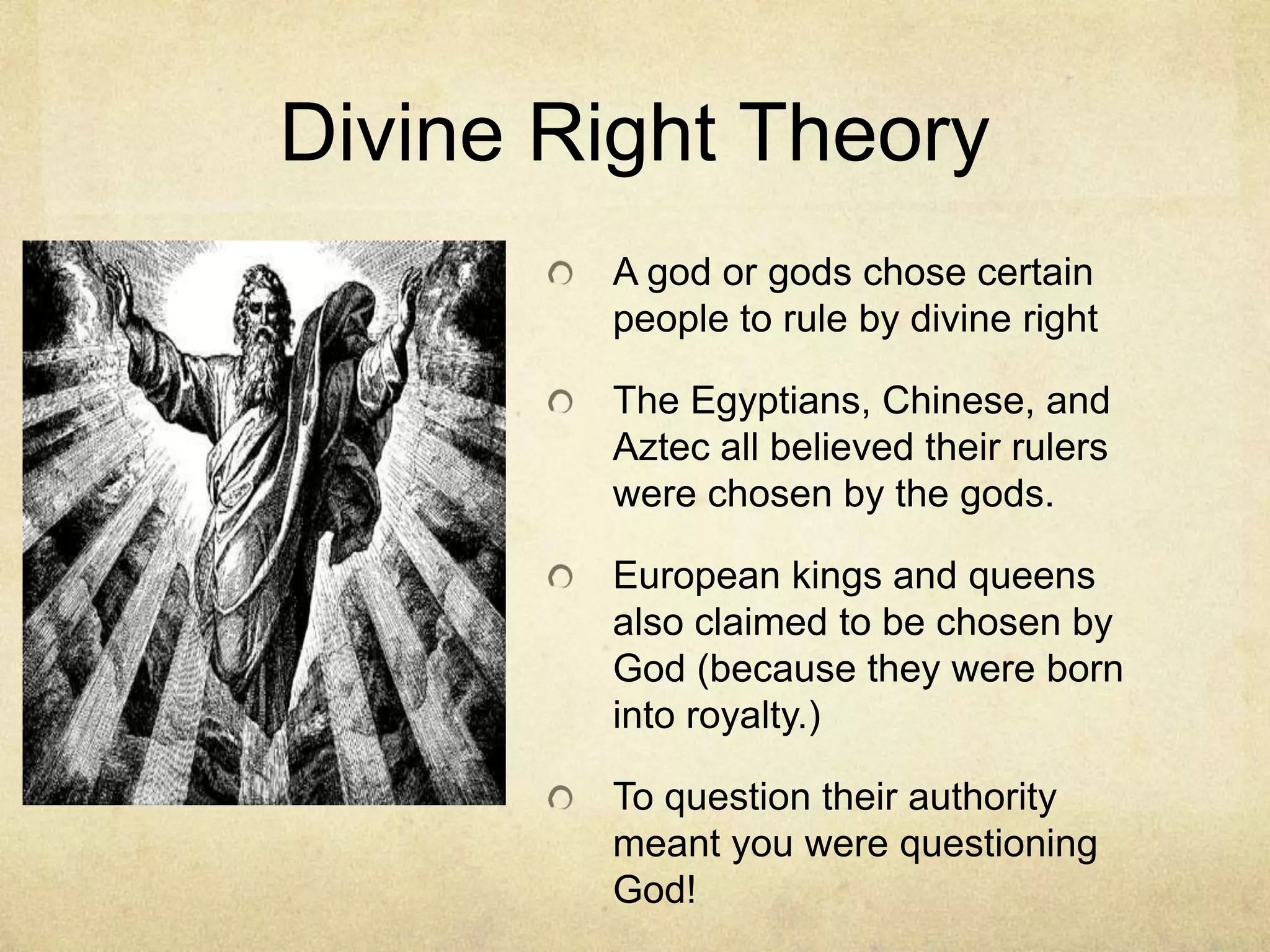
        A god or gods chose certain
        people to rule by divine right

        The Egyptians, Chinese, and
        Aztec all believed their rulers
        were chosen by the gods.

        European kings and queens
        also claimed to be chosen by
        God (because they were born
        into royalty.)

        To question their authority
        meant you were questioning
        God!
Social Contract Theory
Challenges divine right
theory

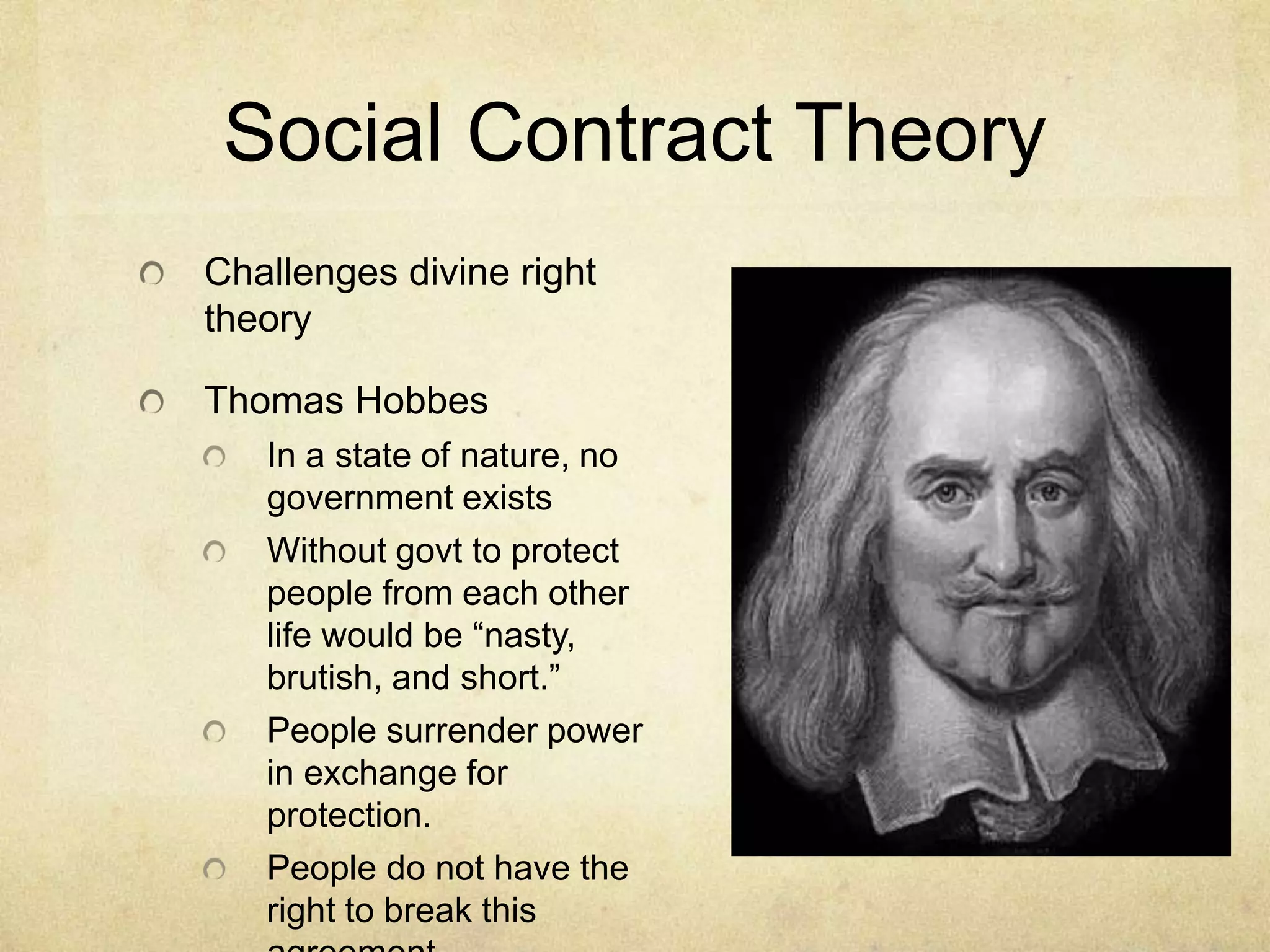
Thomas Hobbes
   In a state of nature, no
   government exists
   Without govt to protect
   people from each other
   life would be “nasty,
   brutish, and short.”
   People surrender power
   in exchange for
   protection.
   People do not have the
   right to break this
Social Contract Theory
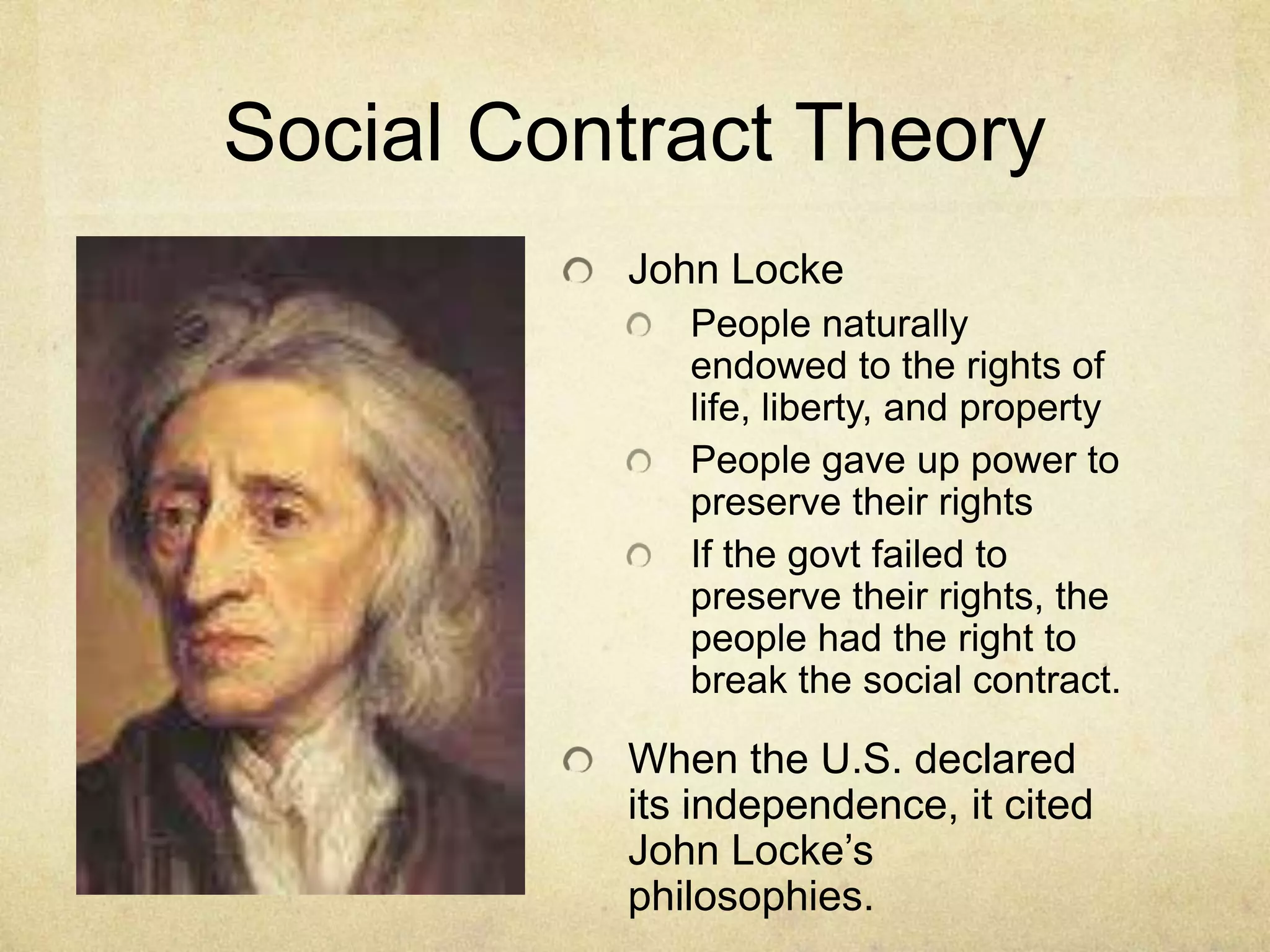
          John Locke
             People naturally
             endowed to the rights of
             life, liberty, and property
             People gave up power to
             preserve their rights
             If the govt failed to
             preserve their rights, the
             people had the right to
             break the social contract.

          When the U.S. declared
          its independence, it cited
          John Locke’s
          philosophies.
Split up into groups of four. You may have less, but no
more than four.

1. List the 4 essential features of a state.

2. List the 4 theories of the Origin of the state.

3. Discuss each origin theory and decide which one your
group agrees with most. Explain why you picked that
theory.

4. Are humans born with certain rights? List some rights
you think all humans are born with.

5. If you were stuck on an island with the people in your
group, how would you ensure that each person’s rights
were protected?

6. Would one person be in charge (who and why?) or
would you all share equal power?

7. How would resources (food, shelter, water) be divided
on the island? Would the person who does the most work
get the most food, or would you all share the food equally?

Ch1 sec1 pt1

  • 1.
  • 2.
    The State Aristotle- Greekscholar- one of the first to study government Politics Democracy Republic Thanks ancient Greece and Rome!
  • 3.
    The Nation-State State- politicalcommunity that occupies a definite territory and has organized government with the power to make and enforce laws without approval form any higher authority. (Different meaning in U.S.) Nation- group of people united in common bonds of race, language, custom, tradition, and sometimes religion. Often called a nation-state basically the same as a country. Close to 200 countries in the world today.
  • 4.
  • 5.
    Essential Features ofa State Population Territory Sovereignty Government
  • 6.
    Population The people of a state Consensus (agreement) about social and political beliefs = stable government Ex: most Americans value democracy = U.S. has a fairly stable government
  • 7.
    Population Mobility = shiftsin power States with more people get more power. Top 3 states with the most representatives in the House: 1. California 2. Texas 3. New York
  • 8.
    Territory Established boundaries Often asource of conflict in some countries Boundaries may change due to war, negotiations or purchase. U.S. has expanded its boundaries numerous times (from 13 states to 50!)
  • 9.
  • 10.
    Sovereignty The state hassupreme and absolute authority within its boundaries. In theory, no state has the right to interfere with the internal affairs of another state. In reality, states with more money and larger militaries have more power than states who have less. Is this fair?
  • 11.
    Government Every state has someform of government. Used to maintain social order, provide public services, and enforce decisions that bind all people within the state.
  • 12.
    Theories of theOrigin of the State How did government come to be? Why did people create government?
  • 13.
    Evolutionary Theory State evolved from the family Head of the family served as government authority Large extended families lived together and followed/obeyed one patriarch or father figure of the family. Ex: Abraham and his descendents in The Old Testament of The Bible.
  • 14.
    Force Theory Government emerged whenall the people over an area were forced under the rule of one person or group. People had to band together to protect their cities from invasions.
  • 15.
    Divine Right Theory A god or gods chose certain people to rule by divine right The Egyptians, Chinese, and Aztec all believed their rulers were chosen by the gods. European kings and queens also claimed to be chosen by God (because they were born into royalty.) To question their authority meant you were questioning God!
  • 16.
    Social Contract Theory Challengesdivine right theory Thomas Hobbes In a state of nature, no government exists Without govt to protect people from each other life would be “nasty, brutish, and short.” People surrender power in exchange for protection. People do not have the right to break this
  • 17.
    Social Contract Theory John Locke People naturally endowed to the rights of life, liberty, and property People gave up power to preserve their rights If the govt failed to preserve their rights, the people had the right to break the social contract. When the U.S. declared its independence, it cited John Locke’s philosophies.
  • 18.
    Split up intogroups of four. You may have less, but no more than four. 1. List the 4 essential features of a state. 2. List the 4 theories of the Origin of the state. 3. Discuss each origin theory and decide which one your group agrees with most. Explain why you picked that theory. 4. Are humans born with certain rights? List some rights you think all humans are born with. 5. If you were stuck on an island with the people in your group, how would you ensure that each person’s rights were protected? 6. Would one person be in charge (who and why?) or would you all share equal power? 7. How would resources (food, shelter, water) be divided on the island? Would the person who does the most work get the most food, or would you all share the food equally?