Radical Revolution and
      Reaction
        Ch. 18, Sec 2
The move to radicalism

• Paris Commune- political group who attacked and
  took over the legislative assembly.

• The called themselves the sans-culottes (“without
  breeches”)

• Leader- Georges Danton

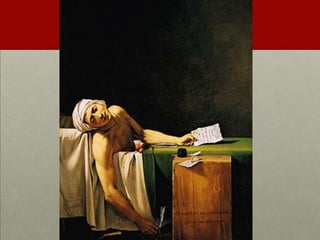
• Jean-Paul Marat- published a journal called Friend
  of the People

• Called a National Convention
The fate of the king
• National Convention agreed to abolish the monarchy
  and establish a republic
• Split into two factions over the fate of the king
  • Girondins- areas outside the cities- wanted to keep the
    king alive
  • Mountain- radicals in the city of Paris- wanted to kill
    the king

• Both members of the Jacobin club- network of
  political groups
• The mountain won and the king was beheaded in
  1793
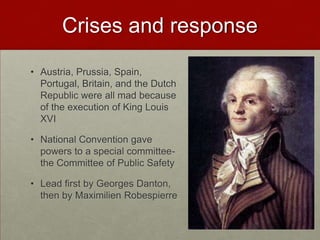
Crises and response
• Austria, Prussia, Spain,
  Portugal, Britain, and the Dutch
  Republic were all mad because
  of the execution of King Louis
  XVI

• National Convention gave
  powers to a special committee-
  the Committee of Public Safety

• Lead first by Georges Danton,
  then by Maximilien Robespierre
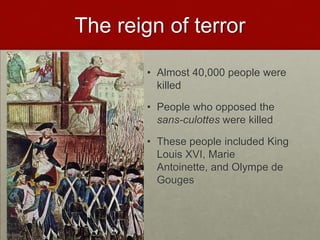
The reign of terror

        • Almost 40,000 people were
          killed

        • People who opposed the
          sans-culottes were killed

        • These people included King
          Louis XVI, Marie
          Antoinette, and Olympe de
          Gouges
Crushing rebellion

• Revolutionary armies brought rebellious cities back
  under control of the National Convention

• Lyon- 1,800 citizens killed

• Nantes- sunk in barges in the river

• People of all classes were killed

• The killing was only seen as temporary. Once the
  war was over, the “Republic of Virtue” would follow.
The republic of virtue
• “Good Citizens”
• Slavery abolished
• Attempted economic controls
• De-christianization
  •   Saint removed from street names
  •   Churches closed
  •   Priests encouraged to marry
  •   Notre Dame re-named “Temple of Reason”
  •   New Calendar
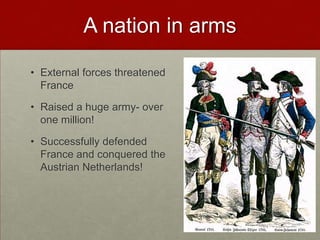
A nation in arms

• External forces threatened
  France

• Raised a huge army- over
  one million!

• Successfully defended
  France and conquered the
  Austrian Netherlands!
End of Terror

• Robespierre became obsessed with ridding France
  of all its enemies

• National Convention voted to condemn him-
  guillotined in 1794

• Jacobins lost power

• More moderate leaders took control

• Reign of Terror came to an end
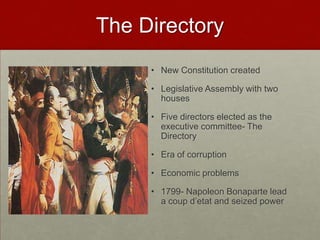
The Directory
     • New Constitution created

     • Legislative Assembly with two
       houses

     • Five directors elected as the
       executive committee- The
       Directory

     • Era of corruption

     • Economic problems

     • 1799- Napoleon Bonaparte lead
       a coup d’etat and seized power

Ch18sec2

  • 1.
    Radical Revolution and Reaction Ch. 18, Sec 2
  • 2.
    The move toradicalism • Paris Commune- political group who attacked and took over the legislative assembly. • The called themselves the sans-culottes (“without breeches”) • Leader- Georges Danton • Jean-Paul Marat- published a journal called Friend of the People • Called a National Convention
  • 4.
    The fate ofthe king • National Convention agreed to abolish the monarchy and establish a republic • Split into two factions over the fate of the king • Girondins- areas outside the cities- wanted to keep the king alive • Mountain- radicals in the city of Paris- wanted to kill the king • Both members of the Jacobin club- network of political groups • The mountain won and the king was beheaded in 1793
  • 5.
    Crises and response •Austria, Prussia, Spain, Portugal, Britain, and the Dutch Republic were all mad because of the execution of King Louis XVI • National Convention gave powers to a special committee- the Committee of Public Safety • Lead first by Georges Danton, then by Maximilien Robespierre
  • 6.
    The reign ofterror • Almost 40,000 people were killed • People who opposed the sans-culottes were killed • These people included King Louis XVI, Marie Antoinette, and Olympe de Gouges
  • 7.
    Crushing rebellion • Revolutionaryarmies brought rebellious cities back under control of the National Convention • Lyon- 1,800 citizens killed • Nantes- sunk in barges in the river • People of all classes were killed • The killing was only seen as temporary. Once the war was over, the “Republic of Virtue” would follow.
  • 8.
    The republic ofvirtue • “Good Citizens” • Slavery abolished • Attempted economic controls • De-christianization • Saint removed from street names • Churches closed • Priests encouraged to marry • Notre Dame re-named “Temple of Reason” • New Calendar
  • 9.
    A nation inarms • External forces threatened France • Raised a huge army- over one million! • Successfully defended France and conquered the Austrian Netherlands!
  • 10.
    End of Terror •Robespierre became obsessed with ridding France of all its enemies • National Convention voted to condemn him- guillotined in 1794 • Jacobins lost power • More moderate leaders took control • Reign of Terror came to an end
  • 11.
    The Directory • New Constitution created • Legislative Assembly with two houses • Five directors elected as the executive committee- The Directory • Era of corruption • Economic problems • 1799- Napoleon Bonaparte lead a coup d’etat and seized power