DESIGNING AN
EFFECTIVE RESPONSE
TO ASSESSED RISKS
 Audit Risk Assessment – during assessment,
an auditor determines the likelihood of audit
risk, defined as the possibility of recording
inappropriate opinion on an audit as a result
of misstatement in the financial documents
examined.
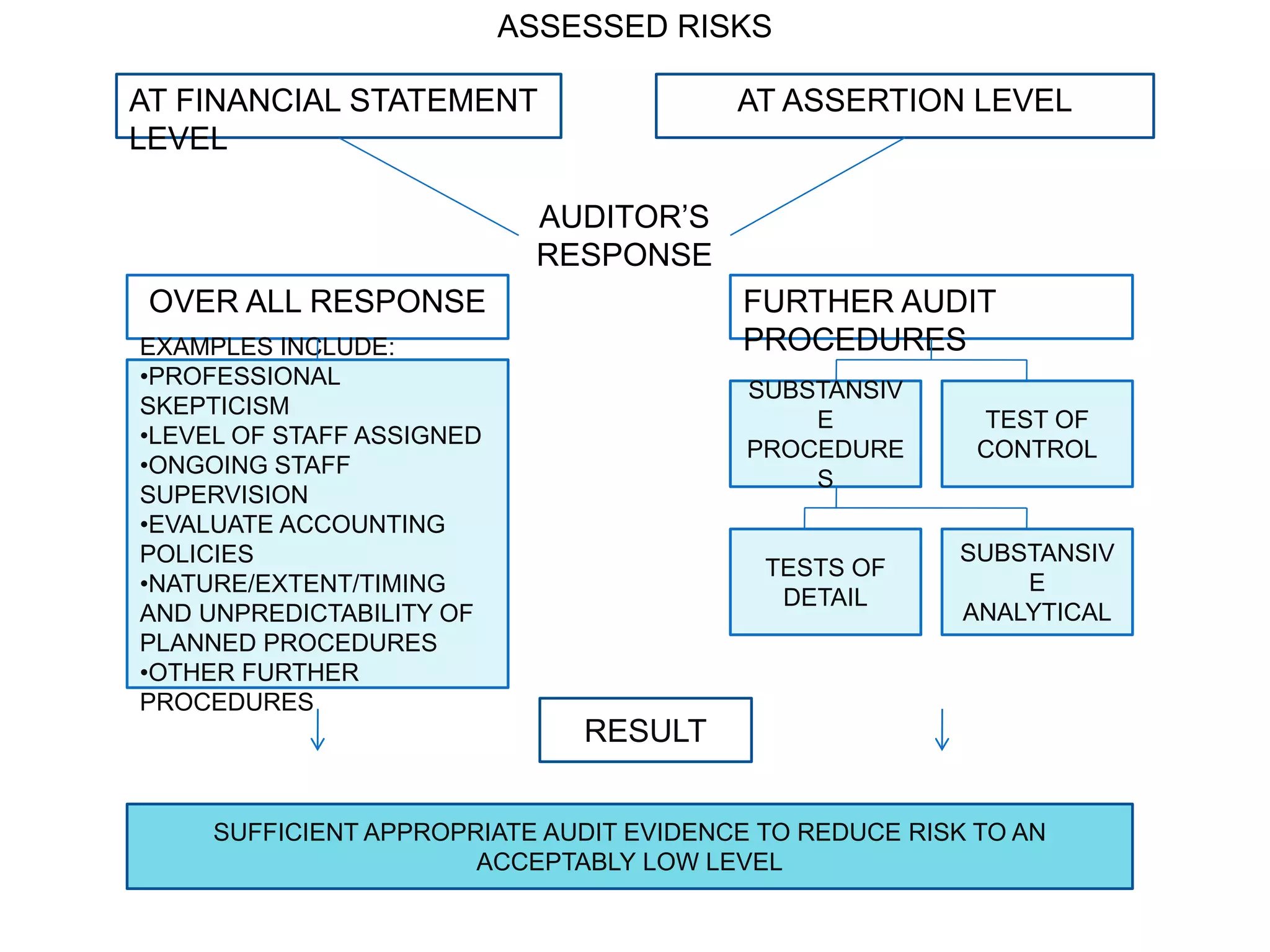
ASSESSED RISKS
AT FINANCIAL STATEMENT
LEVEL
AT ASSERTION LEVEL
AUDITOR’S
RESPONSE
OVER ALL RESPONSE FURTHER AUDIT
PROCEDURESEXAMPLES INCLUDE:
•PROFESSIONAL
SKEPTICISM
•LEVEL OF STAFF ASSIGNED
•ONGOING STAFF
SUPERVISION
•EVALUATE ACCOUNTING
POLICIES
•NATURE/EXTENT/TIMING
AND UNPREDICTABILITY OF
PLANNED PROCEDURES
•OTHER FURTHER
PROCEDURES
SUBSTANSIV
E
PROCEDURE
S
TEST OF
CONTROL
TESTS OF
DETAIL
SUBSTANSIV
E
ANALYTICAL
RESULT
SUFFICIENT APPROPRIATE AUDIT EVIDENCE TO REDUCE RISK TO AN
ACCEPTABLY LOW LEVEL
 AUDIT PROCEDURES – are the methods or
acts that auditors use to gather evidence to
determine the validity of financial statement
assertions.
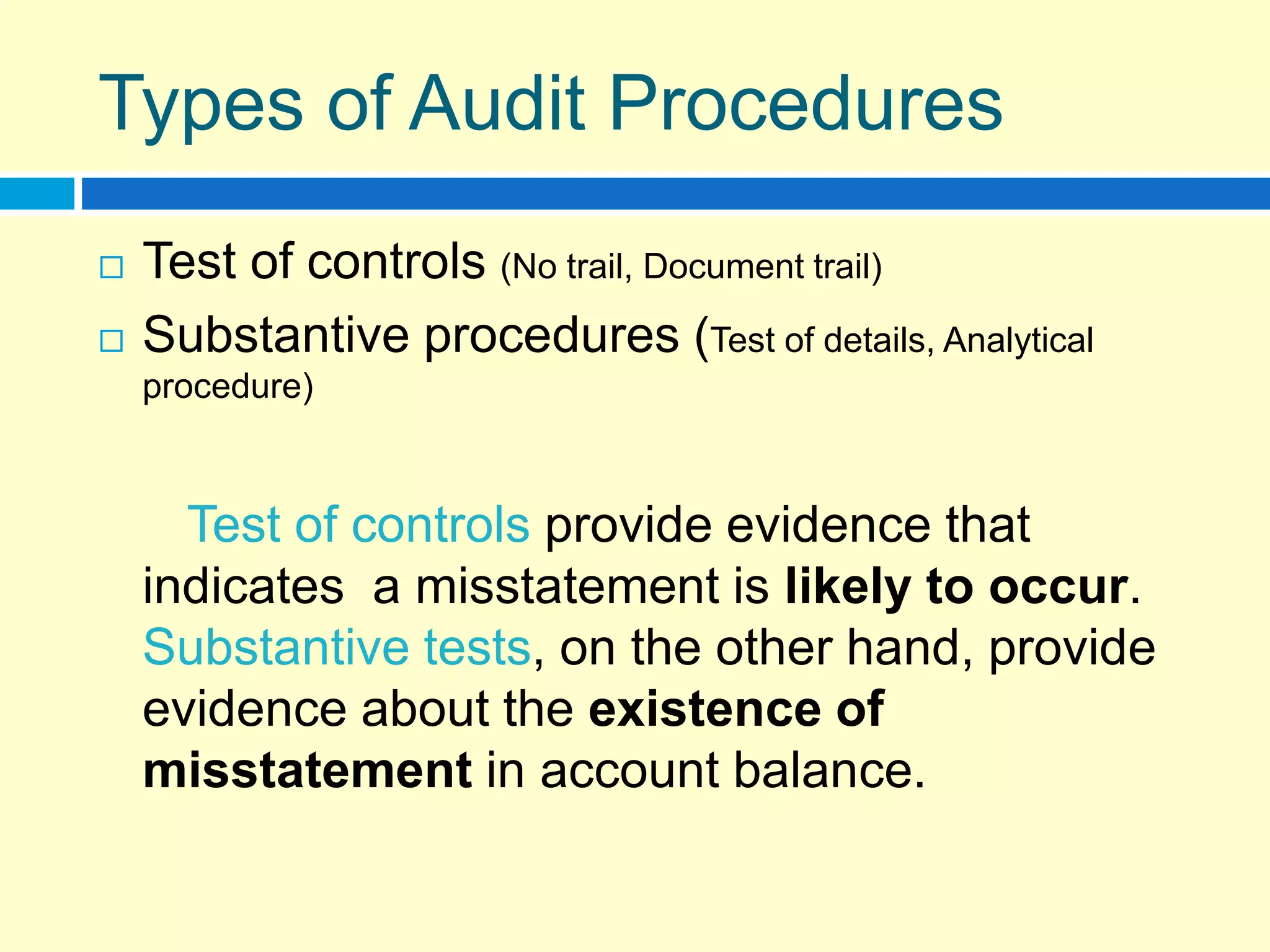
Types of Audit Procedures
 Test of controls (No trail, Document trail)
 Substantive procedures (Test of details, Analytical
procedure)
Test of controls provide evidence that
indicates a misstatement is likely to occur.
Substantive tests, on the other hand, provide
evidence about the existence of
misstatement in account balance.
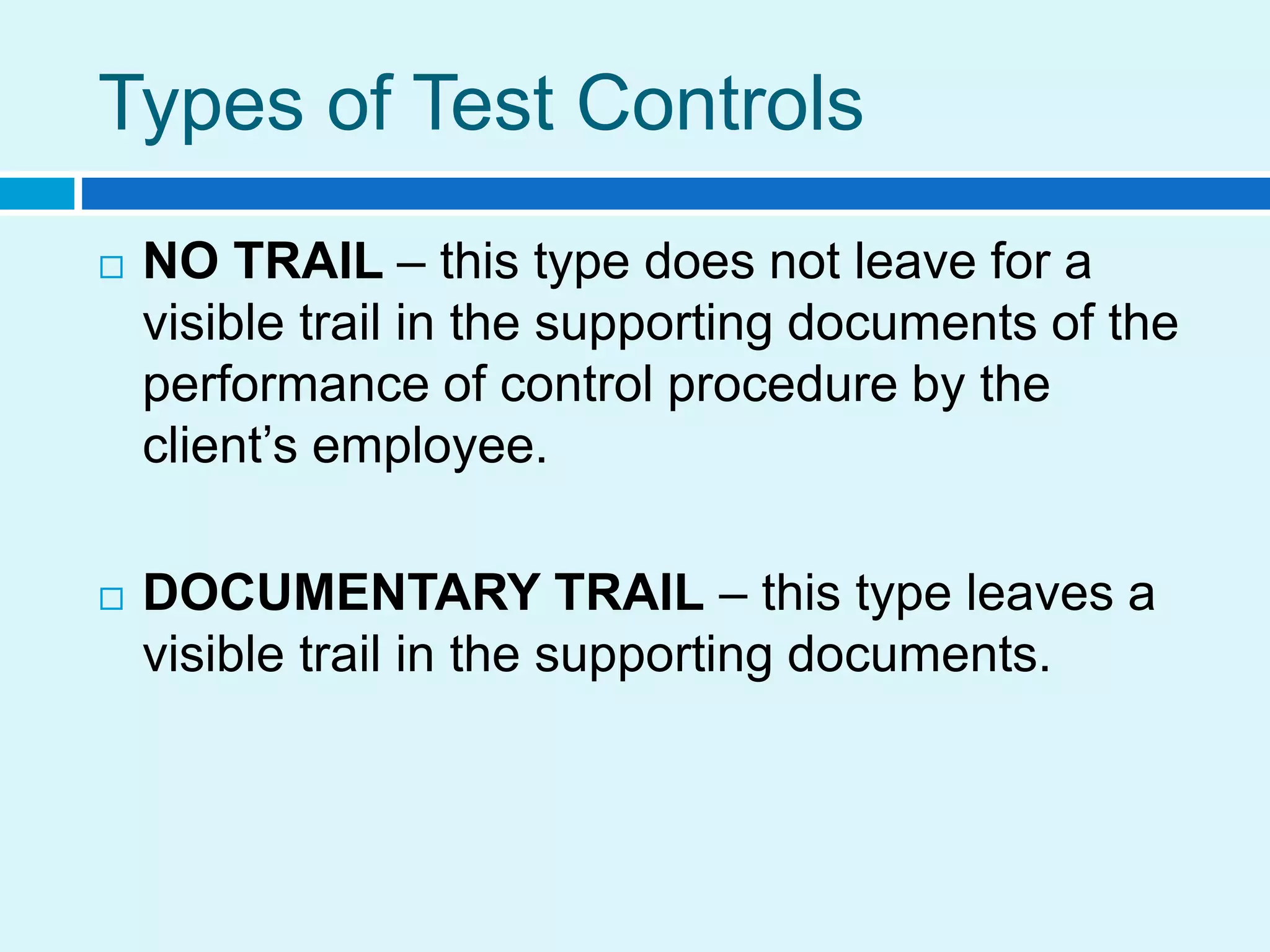
Types of Test Controls
 NO TRAIL – this type does not leave for a
visible trail in the supporting documents of the
performance of control procedure by the
client’s employee.
 DOCUMENTARY TRAIL – this type leaves a
visible trail in the supporting documents.
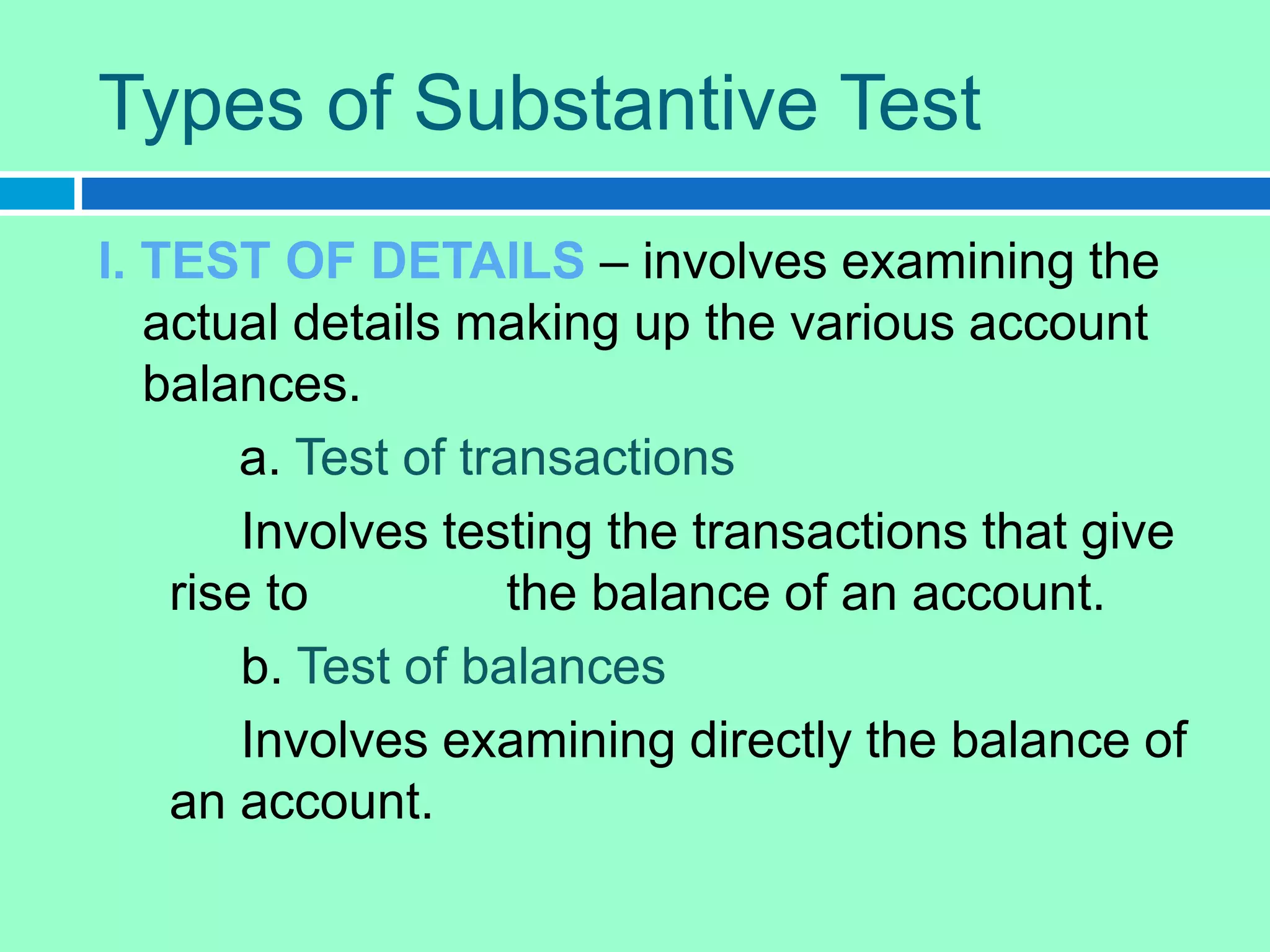
Types of Substantive Test
I. TEST OF DETAILS – involves examining the
actual details making up the various account
balances.
a. Test of transactions
Involves testing the transactions that give
rise to the balance of an account.
b. Test of balances
Involves examining directly the balance of
an account.
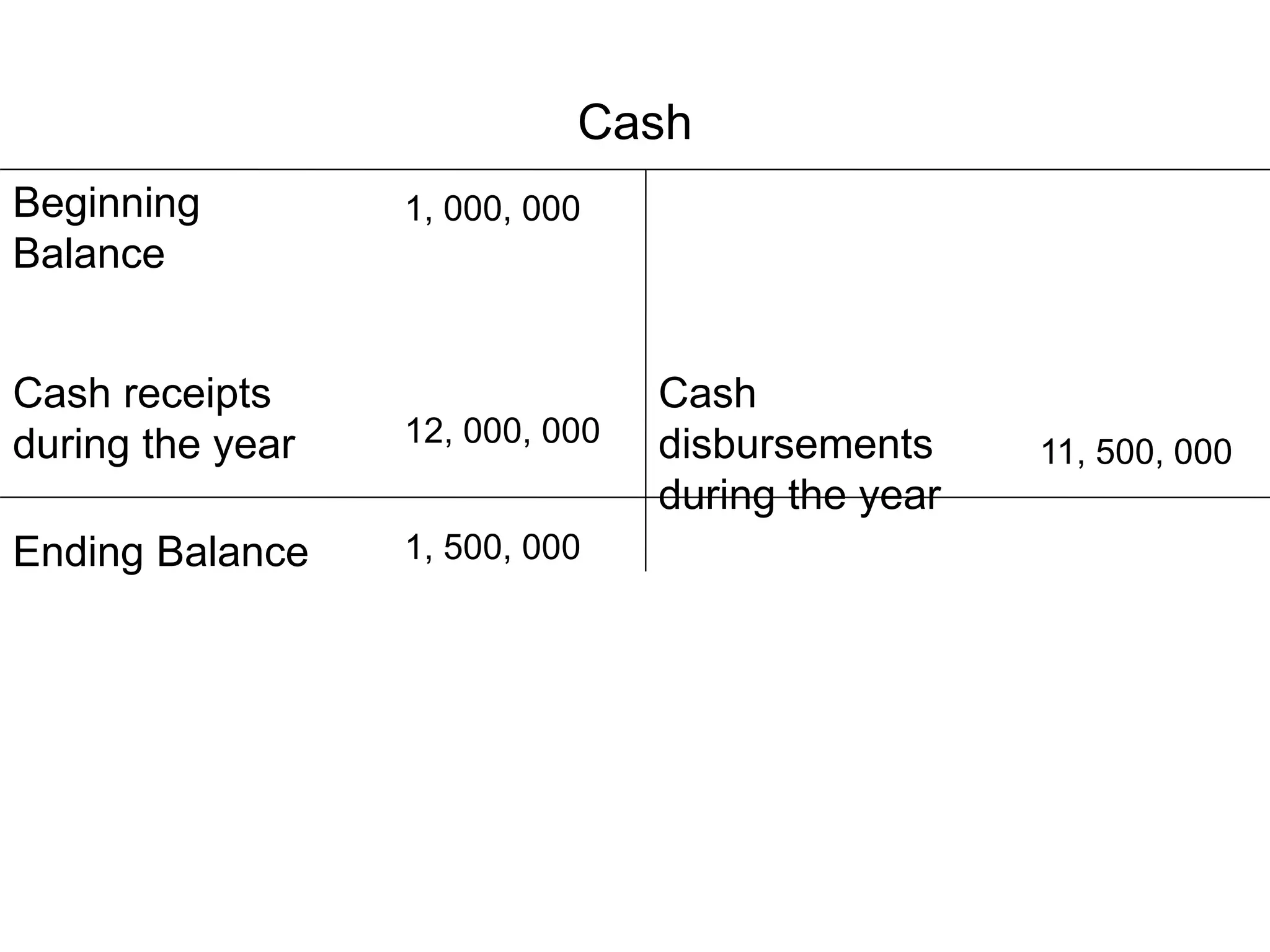
Cash
Beginning
Balance
1, 000, 000
Cash receipts
during the year 12, 000, 000
Cash
disbursements
during the year
11, 500, 000
Ending Balance 1, 500, 000
II. Analytical Review Procedures - involves
comparison of financial information with
auditor’s expectations to evaluate the
reasonableness of an account.
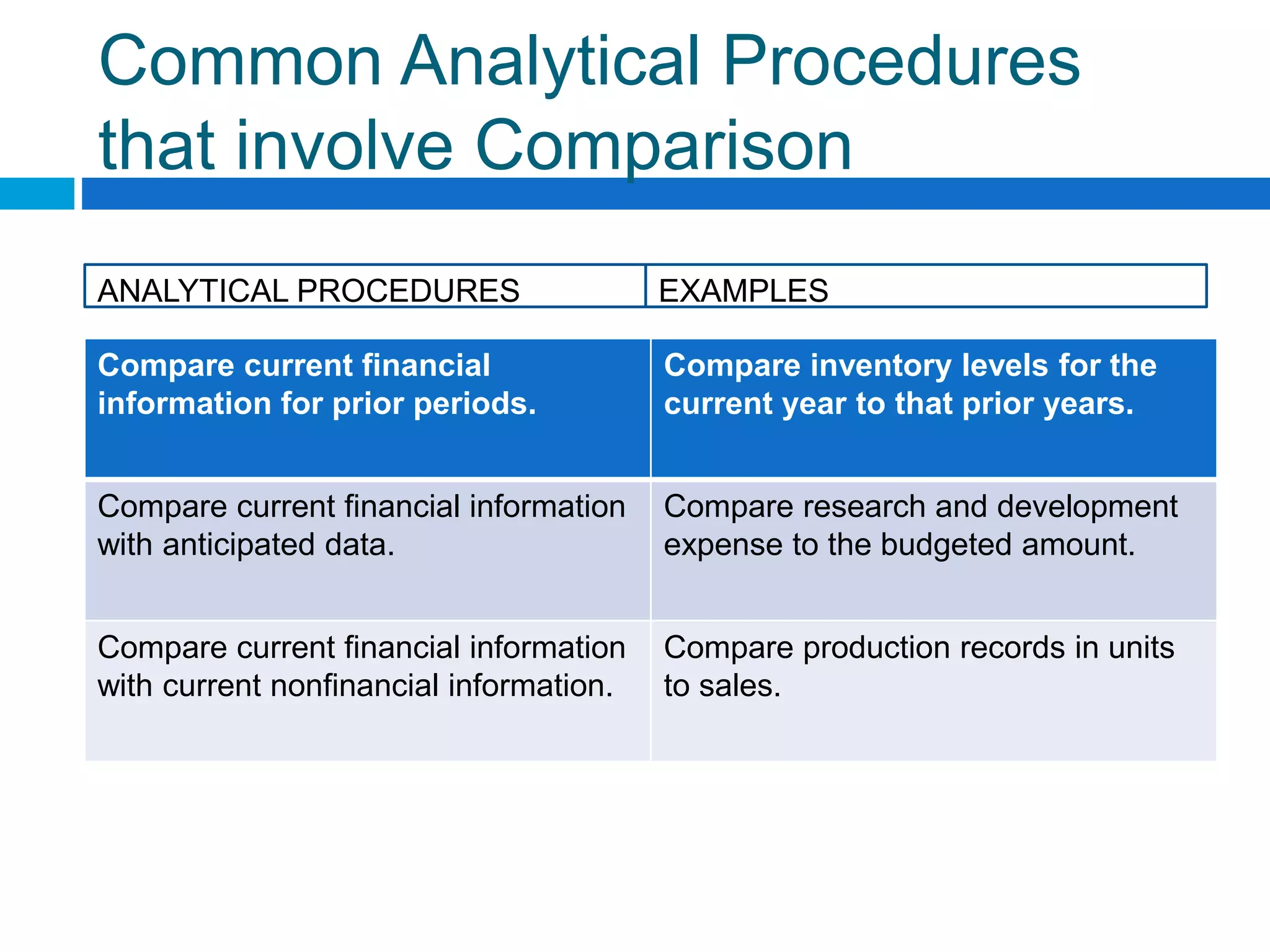
Common Analytical Procedures
that involve Comparison
Compare current financial
information for prior periods.
Compare inventory levels for the
current year to that prior years.
Compare current financial information
with anticipated data.
Compare research and development
expense to the budgeted amount.
Compare current financial information
with current nonfinancial information.
Compare production records in units
to sales.
ANALYTICAL PROCEDURES EXAMPLES

Designing an effective response to assessed risks (Auditing theory)

  • 1.
  • 2.
     Audit RiskAssessment – during assessment, an auditor determines the likelihood of audit risk, defined as the possibility of recording inappropriate opinion on an audit as a result of misstatement in the financial documents examined.
  • 3.
    ASSESSED RISKS AT FINANCIALSTATEMENT LEVEL AT ASSERTION LEVEL AUDITOR’S RESPONSE OVER ALL RESPONSE FURTHER AUDIT PROCEDURESEXAMPLES INCLUDE: •PROFESSIONAL SKEPTICISM •LEVEL OF STAFF ASSIGNED •ONGOING STAFF SUPERVISION •EVALUATE ACCOUNTING POLICIES •NATURE/EXTENT/TIMING AND UNPREDICTABILITY OF PLANNED PROCEDURES •OTHER FURTHER PROCEDURES SUBSTANSIV E PROCEDURE S TEST OF CONTROL TESTS OF DETAIL SUBSTANSIV E ANALYTICAL RESULT SUFFICIENT APPROPRIATE AUDIT EVIDENCE TO REDUCE RISK TO AN ACCEPTABLY LOW LEVEL
  • 4.
     AUDIT PROCEDURES– are the methods or acts that auditors use to gather evidence to determine the validity of financial statement assertions.
  • 5.
    Types of AuditProcedures  Test of controls (No trail, Document trail)  Substantive procedures (Test of details, Analytical procedure) Test of controls provide evidence that indicates a misstatement is likely to occur. Substantive tests, on the other hand, provide evidence about the existence of misstatement in account balance.
  • 6.
    Types of TestControls  NO TRAIL – this type does not leave for a visible trail in the supporting documents of the performance of control procedure by the client’s employee.  DOCUMENTARY TRAIL – this type leaves a visible trail in the supporting documents.
  • 7.
    Types of SubstantiveTest I. TEST OF DETAILS – involves examining the actual details making up the various account balances. a. Test of transactions Involves testing the transactions that give rise to the balance of an account. b. Test of balances Involves examining directly the balance of an account.
  • 8.
    Cash Beginning Balance 1, 000, 000 Cashreceipts during the year 12, 000, 000 Cash disbursements during the year 11, 500, 000 Ending Balance 1, 500, 000
  • 9.
    II. Analytical ReviewProcedures - involves comparison of financial information with auditor’s expectations to evaluate the reasonableness of an account.
  • 10.
    Common Analytical Procedures thatinvolve Comparison Compare current financial information for prior periods. Compare inventory levels for the current year to that prior years. Compare current financial information with anticipated data. Compare research and development expense to the budgeted amount. Compare current financial information with current nonfinancial information. Compare production records in units to sales. ANALYTICAL PROCEDURES EXAMPLES