McGraw-Hill/Irwin Copyright © 2007 by The McGraw-Hill Companies, Inc. All rights reserved.
22
Competitiveness,
Strategy,
and Productivity
2-2
ProductivityProductivity
 Productivity
 A measure of the effective use of resources,
usually expressed as the ratio of output to
input
 Productivity ratios are used for
 Planning workforce requirements
 Scheduling equipment
 Financial analysis
2-3
ProductivityProductivity
 Partial measures
 output/(single input)
 Multi-factor measures
 output/(multiple inputs)
 Total measure
 output/(total inputs)
Productivity =
Outputs
Inputs
2-4
Productivity GrowthProductivity Growth
Current Period Productivity – Previous Period Productivity
Previous Period Productivity
Productivity Growth =
2-5
Measures of ProductivityMeasures of Productivity
Table 2.4
Partial Output Output Output Output
measures Labor Machine Capital Energy
Multifactor Output Output
measures Labor + Machine Labor + Capital + Energy
Total Goods or Services Produced
measure All inputs used to produce them
2-6
Units of output per kilowatt-hour
Dollar value of output per kilowatt-hour
Energy
Productivity
Units of output per dollar input
Dollar value of output per dollar input
Capital
Productivity
Units of output per machine hour
machine hour
Machine
Productivity
Units of output per labor hour
Units of output per shift
Value-added per labor hour
Labor
Productivity
Examples of Partial Productivity MeasuresExamples of Partial Productivity Measures
Table 2.5
2-7
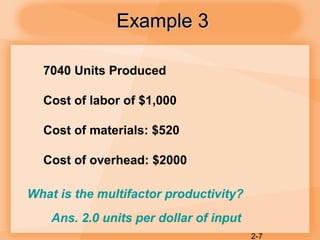
Example 3Example 3
7040 Units Produced
Cost of labor of $1,000
Cost of materials: $520
Cost of overhead: $2000
What is the multifactor productivity?
Ans. 2.0 units per dollar of input
2-8
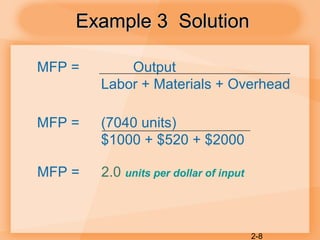
Example 3 SolutionExample 3 Solution
MFP = Output
Labor + Materials + Overhead
MFP = (7040 units)
$1000 + $520 + $2000
MFP = 2.0 units per dollar of input
2-9
Process YieldProcess Yield
 Process yield is the ratio of output of good
product to input
 Defective product is not included in the
output
 Service example:
 Ratio of cars rented to cars available to rent
2-10
Factors Affecting ProductivityFactors Affecting Productivity
Capital Quality
Technology Management
2-11
 Standardization
 Quality
 Use of Internet
 Computer viruses
 Searching for lost or misplaced items
 Scrap rates
 New workers
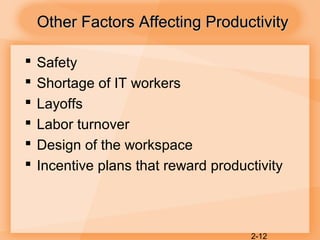
Other Factors Affecting ProductivityOther Factors Affecting Productivity
2-12
 Safety
 Shortage of IT workers
 Layoffs
 Labor turnover
 Design of the workspace
 Incentive plans that reward productivity
Other Factors Affecting ProductivityOther Factors Affecting Productivity
2-13
OutsourcingOutsourcing
 Higher productivity in another company is a
key reason organizations outsource work
 Improving productivity may reduce the need
for outsourcing
2-14
Improving ProductivityImproving Productivity
 Develop productivity measures
 Determine critical (bottleneck)
operations
 Develop methods for productivity
improvements
 Establish reasonable goals
 Get management support
 Measure and publicize improvements
 Don’t confuse productivity with
efficiency

Ch02 p2 ppt

  • 1.
    McGraw-Hill/Irwin Copyright ©2007 by The McGraw-Hill Companies, Inc. All rights reserved. 22 Competitiveness, Strategy, and Productivity
  • 2.
    2-2 ProductivityProductivity  Productivity  Ameasure of the effective use of resources, usually expressed as the ratio of output to input  Productivity ratios are used for  Planning workforce requirements  Scheduling equipment  Financial analysis
  • 3.
    2-3 ProductivityProductivity  Partial measures output/(single input)  Multi-factor measures  output/(multiple inputs)  Total measure  output/(total inputs) Productivity = Outputs Inputs
  • 4.
    2-4 Productivity GrowthProductivity Growth CurrentPeriod Productivity – Previous Period Productivity Previous Period Productivity Productivity Growth =
  • 5.
    2-5 Measures of ProductivityMeasuresof Productivity Table 2.4 Partial Output Output Output Output measures Labor Machine Capital Energy Multifactor Output Output measures Labor + Machine Labor + Capital + Energy Total Goods or Services Produced measure All inputs used to produce them
  • 6.
    2-6 Units of outputper kilowatt-hour Dollar value of output per kilowatt-hour Energy Productivity Units of output per dollar input Dollar value of output per dollar input Capital Productivity Units of output per machine hour machine hour Machine Productivity Units of output per labor hour Units of output per shift Value-added per labor hour Labor Productivity Examples of Partial Productivity MeasuresExamples of Partial Productivity Measures Table 2.5
  • 7.
    2-7 Example 3Example 3 7040Units Produced Cost of labor of $1,000 Cost of materials: $520 Cost of overhead: $2000 What is the multifactor productivity? Ans. 2.0 units per dollar of input
  • 8.
    2-8 Example 3 SolutionExample3 Solution MFP = Output Labor + Materials + Overhead MFP = (7040 units) $1000 + $520 + $2000 MFP = 2.0 units per dollar of input
  • 9.
    2-9 Process YieldProcess Yield Process yield is the ratio of output of good product to input  Defective product is not included in the output  Service example:  Ratio of cars rented to cars available to rent
  • 10.
    2-10 Factors Affecting ProductivityFactorsAffecting Productivity Capital Quality Technology Management
  • 11.
    2-11  Standardization  Quality Use of Internet  Computer viruses  Searching for lost or misplaced items  Scrap rates  New workers Other Factors Affecting ProductivityOther Factors Affecting Productivity
  • 12.
    2-12  Safety  Shortageof IT workers  Layoffs  Labor turnover  Design of the workspace  Incentive plans that reward productivity Other Factors Affecting ProductivityOther Factors Affecting Productivity
  • 13.
    2-13 OutsourcingOutsourcing  Higher productivityin another company is a key reason organizations outsource work  Improving productivity may reduce the need for outsourcing
  • 14.
    2-14 Improving ProductivityImproving Productivity Develop productivity measures  Determine critical (bottleneck) operations  Develop methods for productivity improvements  Establish reasonable goals  Get management support  Measure and publicize improvements  Don’t confuse productivity with efficiency