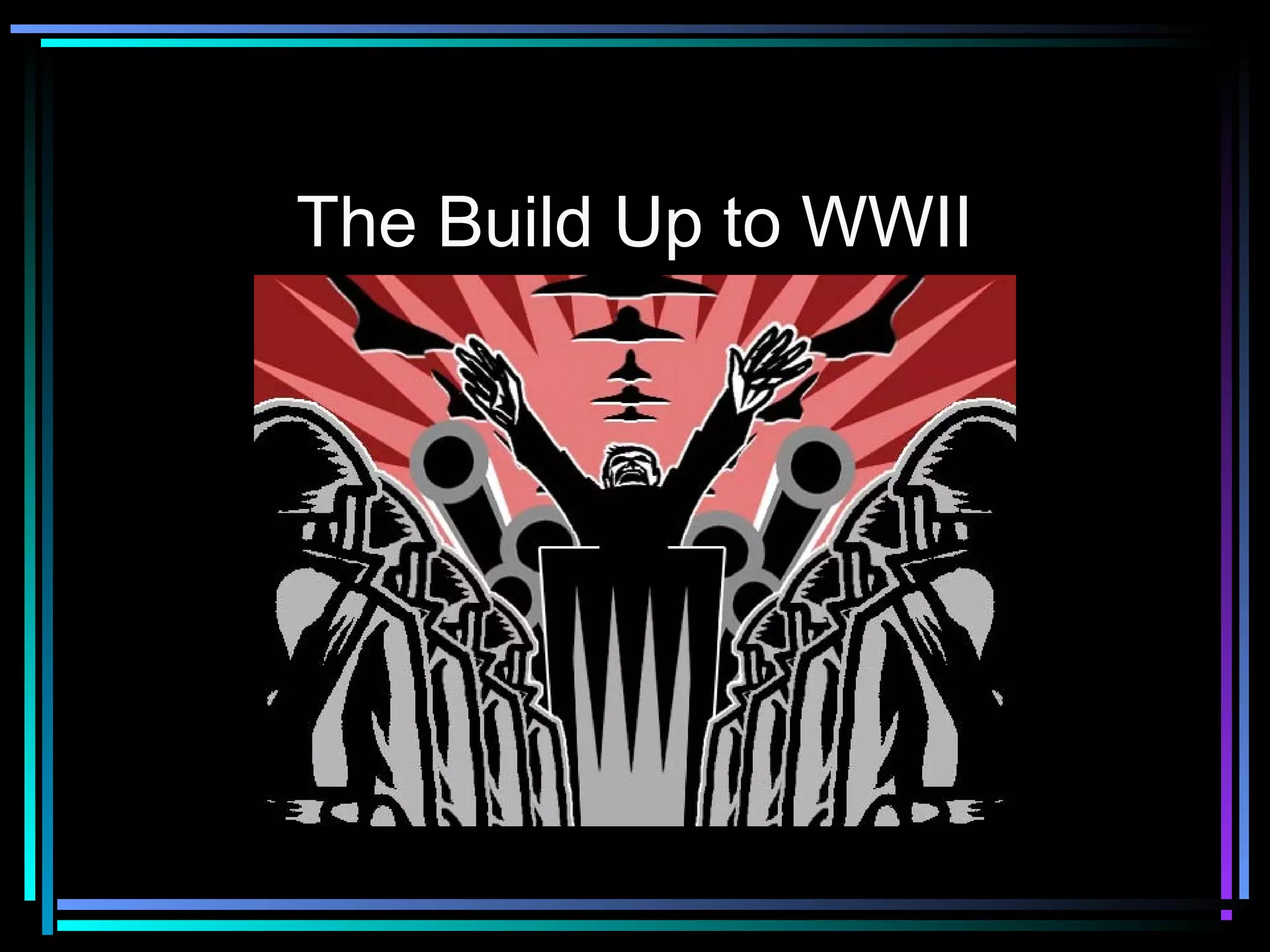
The Build Up to WWII
Who was Hitler? 
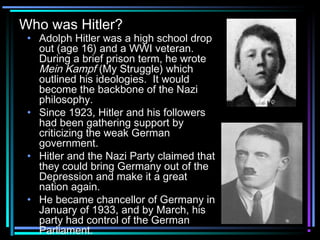
• Adolph Hitler was a high school drop 
out (age 16) and a WWI veteran. 
During a brief prison term, he wrote 
Mein Kampf (My Struggle) which 
outlined his ideologies. It would 
become the backbone of the Nazi 
philosophy. 
• Since 1923, Hitler and his followers 
had been gathering support by 
criticizing the weak German 
government. 
• Hitler and the Nazi Party claimed that 
they could bring Germany out of the 
Depression and make it a great 
nation again. 
• He became chancellor of Germany in 
January of 1933, and by March, his 
party had control of the German 
Parliament.
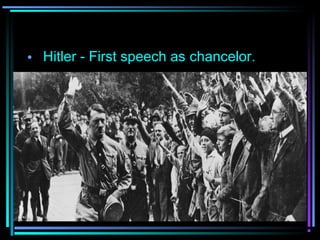
• Hitler - First speech as chancelor.
Germany under Hitler 
• Under Hitler's control, the economy 
improved, and unemployment went 
down. 
• He subsidized farmers to help rebuild 
their farms, and poured money into 
public projects. 
• The Nazis soon removed all other 
political parties, and Hitler was the sole 
ruler of Germany.
• Hitler became known as “der 
Führer,” the leader. 
• He was a ruthless dictator 
who ruled his country 
through intimidation and 
fear. 
• The Nazis were deeply 
racist, and believed that the 
Aryan race was “pure,” and 
non-Aryans were considered 
to be inferior.
Nazi Anti-Semitism 
• Nazi decrees denied Jewish people the 
right to: 
• Hold public office 
• Be employed in the media 
• Work in farming or high schools 
• Citizenship 
• To marry those of “German blood”
Hitler and the Nazis 
• Part of a campaign of terror 
• Passed to strip the Jewish people of their 
civil, political and human rights 
• Encouraged public attacks on Jewish people 
• Nov 9th 1938: Kristallnacht: The Nazis 
attacked synagogues and Jewish people 
http://www.youtube.com/watch?v=JkEotYnaomo&feature=related 
• Eventually, they decided to purge their nation 
altogether of these people (The Holocaust) 
http://www.youtube.com/watch?v=4JXaYqgEWt4&feature=related
Why was the racism against the Jews supported? 
• Anti-Semitism had purveyed the world over, 
resentment to the Jewish race was not isolated to 
Germany, nor to the 1930s. 
• The Jewish people had weathered the Depression 
relatively well and many felt that it was because they 
were “cheap” or dishonest. 
• More importantly, after such a difficult time people 
were looking for someone to blame, scapegoats, 
and Hitler offered up the Jews. 
• Canada was not exempt from this hatred. In 1939 
the ship St Louis, full of 900 Jewish refugees, arrived 
on the eastern shores of Canada. It was refused 
permission to dock, and was sent back to Europe and 
its concentration camps.
The Causes of War: GRAFT 
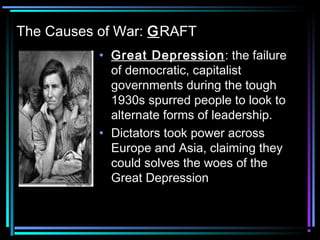
• Great Depression: the failure 
of democratic, capitalist 
governments during the tough 
1930s spurred people to look to 
alternate forms of leadership. 
• Dictators took power across 
Europe and Asia, claiming they 
could solves the woes of the 
Great Depression
GRAFT: Rise of Hitler 
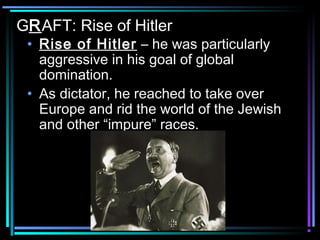
• Rise of Hitler – he was particularly 
aggressive in his goal of global 
domination. 
• As dictator, he reached to take over 
Europe and rid the world of the Jewish 
and other “impure” races.
GRAFT: Appeasement 
• Throughout the 1930’s, Western 
democracies adopted a policy of 
appeasement in response to 
Germany’s aggression. 
• No one wanted to fight another 
war, so leaders were willing to 
make concessions to Hitler to 
maintain peace. For example, 
when he overtook Austria, the 
Western Allies did nothing so as to 
avoid another global conflict. 
• Rather than promoting peace, 
appeasement made Hitler bolder.
Hitler’s War Path & Response to Appeasement: 
• March 1936 – Germany re-occupied the Rhineland 
• March 1938 - Germany took over Austria. 
• September 1938 - Britain and France agreed to 
abandon part of Czechoslovakia to Germany (Hitler 
pledged that this would be his last territorial claim) 
• March 1939 - Germany took over the rest of 
Czechoslovakia. 
• August 1939 – Non-aggression pact with Russia 
(promise not to fight and divide Poland up between 
them) 
• September 1939 – invades Poland
GRAFT: Failure of the League of Nations 
• Dictators across the world were 
becoming aggressive. 
• Japan invaded Manchuria (China) 
and the League of Nations was 
helpless to defend it. 
• Italy attacked Ethiopia and again the 
League was useless. 
• The idea of the League’s collective 
security was moot without any 
military.
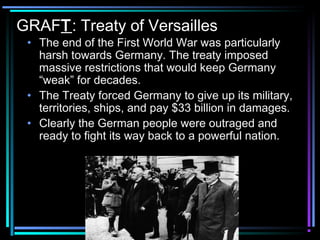
GRAFT: Treaty of Versailles 
• The end of the First World War was particularly 
harsh towards Germany. The treaty imposed 
massive restrictions that would keep Germany 
“weak” for decades. 
• The Treaty forced Germany to give up its military, 
territories, ships, and pay $33 billion in damages. 
• Clearly the German people were outraged and 
ready to fight its way back to a powerful nation.
Assignment: read pages 92-97 and 
create a poster that visually displays the 
causes of the Second World War.

The Build up to War

  • 1.
    The Build Upto WWII
  • 2.
    Who was Hitler? • Adolph Hitler was a high school drop out (age 16) and a WWI veteran. During a brief prison term, he wrote Mein Kampf (My Struggle) which outlined his ideologies. It would become the backbone of the Nazi philosophy. • Since 1923, Hitler and his followers had been gathering support by criticizing the weak German government. • Hitler and the Nazi Party claimed that they could bring Germany out of the Depression and make it a great nation again. • He became chancellor of Germany in January of 1933, and by March, his party had control of the German Parliament.
  • 3.
    • Hitler -First speech as chancelor.
  • 4.
    Germany under Hitler • Under Hitler's control, the economy improved, and unemployment went down. • He subsidized farmers to help rebuild their farms, and poured money into public projects. • The Nazis soon removed all other political parties, and Hitler was the sole ruler of Germany.
  • 5.
    • Hitler becameknown as “der Führer,” the leader. • He was a ruthless dictator who ruled his country through intimidation and fear. • The Nazis were deeply racist, and believed that the Aryan race was “pure,” and non-Aryans were considered to be inferior.
  • 6.
    Nazi Anti-Semitism •Nazi decrees denied Jewish people the right to: • Hold public office • Be employed in the media • Work in farming or high schools • Citizenship • To marry those of “German blood”
  • 7.
    Hitler and theNazis • Part of a campaign of terror • Passed to strip the Jewish people of their civil, political and human rights • Encouraged public attacks on Jewish people • Nov 9th 1938: Kristallnacht: The Nazis attacked synagogues and Jewish people http://www.youtube.com/watch?v=JkEotYnaomo&feature=related • Eventually, they decided to purge their nation altogether of these people (The Holocaust) http://www.youtube.com/watch?v=4JXaYqgEWt4&feature=related
  • 8.
    Why was theracism against the Jews supported? • Anti-Semitism had purveyed the world over, resentment to the Jewish race was not isolated to Germany, nor to the 1930s. • The Jewish people had weathered the Depression relatively well and many felt that it was because they were “cheap” or dishonest. • More importantly, after such a difficult time people were looking for someone to blame, scapegoats, and Hitler offered up the Jews. • Canada was not exempt from this hatred. In 1939 the ship St Louis, full of 900 Jewish refugees, arrived on the eastern shores of Canada. It was refused permission to dock, and was sent back to Europe and its concentration camps.
  • 9.
    The Causes ofWar: GRAFT • Great Depression: the failure of democratic, capitalist governments during the tough 1930s spurred people to look to alternate forms of leadership. • Dictators took power across Europe and Asia, claiming they could solves the woes of the Great Depression
  • 10.
    GRAFT: Rise ofHitler • Rise of Hitler – he was particularly aggressive in his goal of global domination. • As dictator, he reached to take over Europe and rid the world of the Jewish and other “impure” races.
  • 11.
    GRAFT: Appeasement •Throughout the 1930’s, Western democracies adopted a policy of appeasement in response to Germany’s aggression. • No one wanted to fight another war, so leaders were willing to make concessions to Hitler to maintain peace. For example, when he overtook Austria, the Western Allies did nothing so as to avoid another global conflict. • Rather than promoting peace, appeasement made Hitler bolder.
  • 12.
    Hitler’s War Path& Response to Appeasement: • March 1936 – Germany re-occupied the Rhineland • March 1938 - Germany took over Austria. • September 1938 - Britain and France agreed to abandon part of Czechoslovakia to Germany (Hitler pledged that this would be his last territorial claim) • March 1939 - Germany took over the rest of Czechoslovakia. • August 1939 – Non-aggression pact with Russia (promise not to fight and divide Poland up between them) • September 1939 – invades Poland
  • 13.
    GRAFT: Failure ofthe League of Nations • Dictators across the world were becoming aggressive. • Japan invaded Manchuria (China) and the League of Nations was helpless to defend it. • Italy attacked Ethiopia and again the League was useless. • The idea of the League’s collective security was moot without any military.
  • 14.
    GRAFT: Treaty ofVersailles • The end of the First World War was particularly harsh towards Germany. The treaty imposed massive restrictions that would keep Germany “weak” for decades. • The Treaty forced Germany to give up its military, territories, ships, and pay $33 billion in damages. • Clearly the German people were outraged and ready to fight its way back to a powerful nation.
  • 15.
    Assignment: read pages92-97 and create a poster that visually displays the causes of the Second World War.