Software Engineering
College of Arts, Media and Technology ,CMU.

Kittitouch S.
1.1-1-11-11




The uniqueness of software quality
assurance.
The environments for which SQA. methods
are developed.
Main Characteristics of Environments.



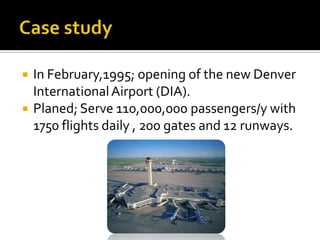
In February,1995; opening of the new Denver
International Airport (DIA).
Planed; Serve 110,000,000 passengers/y with
1750 flights daily , 200 gates and 12 runways.
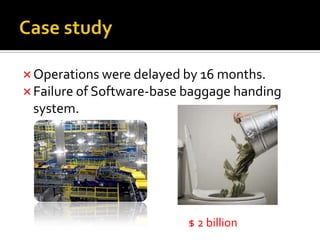
 Operations were delayed by 16 months.
 Failure of Software-base baggage handing

system.

$ 2 billion
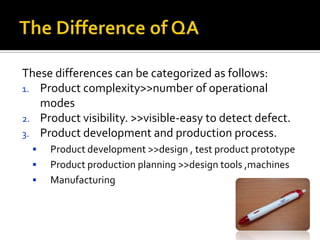
These differences can be categorized as follows:
1. Product complexity>>number of operational
modes
2. Product visibility. >>visible-easy to detect defect.
3. Product development and production process.




Product development >>design , test product prototype
Product production planning >>design tools ,machines
Manufacturing
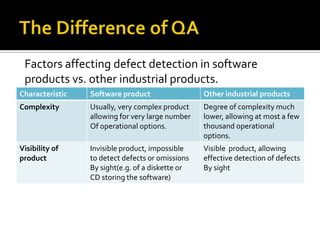
Factors affecting defect detection in software
products vs. other industrial products.
Characteristic

Software product

Other industrial products

Complexity

Usually, very complex product
allowing for very large number
Of operational options.

Degree of complexity much
lower, allowing at most a few
thousand operational
options.

Visibility of
product

Invisible product, impossible
to detect defects or omissions
By sight(e.g. of a diskette or
CD storing the software)

Visible product, allowing
effective detection of defects
By sight
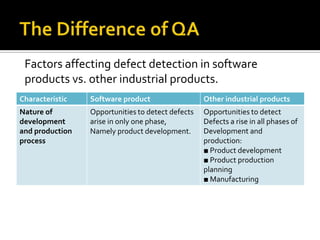
Factors affecting defect detection in software
products vs. other industrial products.
Characteristic

Software product

Other industrial products

Nature of
development
and production
process

Opportunities to detect defects
arise in only one phase,
Namely product development.

Opportunities to detect
Defects a rise in all phases of
Development and
production:
■ Product development
■ Product production
planning
■ Manufacturing




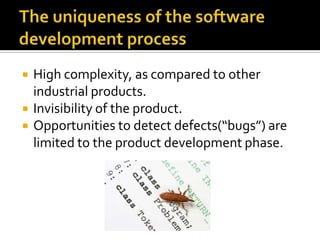
High complexity, as compared to other
industrial products.
Invisibility of the product.
Opportunities to detect defects(“bugs”) are
limited to the product development phase.


Assignment 1-1: Read the message of
“LIMITED WARRANTY ”.


students develop software as part of their education.



Software amateurs develop software as a hobby.



Professionals in engineering, economics, management and other
fields develop software to assist them in their work, to perform
calculations , summarize research and survey activities, and so
forth.



Software development professionals (systems analysts and
programmers)develop software products or firmware as a
professional career objective while in the employment of software
houses or by software development and maintenance units
(teams, departments, etc.) of large and small industrial, financial
and other organizations.
Contractual conditions.

1.





2.

A defined list of functional requirements .
The project budget.
The project timetable.

Subjection to customer–supplier
relationship.
Required teamwork

3.




Timetable requirements.
The need for a variety of specializations in order
to carry out the project.
The wish to benefit from professional mutual
support and review for the enhancement of
project quality.
4.

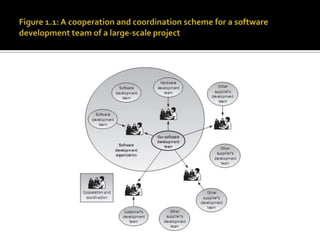
Cooperation and coordination with other
software teams.

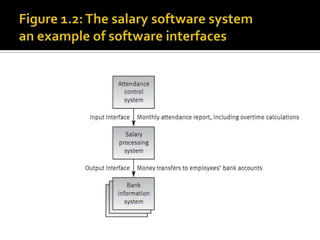
5.

Interfaces with other software systems.
6.

The need to continue carrying out a project
despite team member changes.

7.

The need to continue carrying out software
maintenance for an extended period.
1.Being contracted
2. Subjection to customer–supplier relationship
3. Requirement for teamwork

4. Need for cooperation and coordination with other development
teams
5. Need for interfaces with other software systems
6. Need to continue carrying out a project while the team changes
7. Need to continue maintaining the software system for years
Assignment 1-2
 Work as a team(5 students).
 Discuss in team for “Topic discussion 1.3”
 Write the conclusion of each topic(1-5) in
given paper.

Ch 1 the software quality assurance challange

  • 1.
    Software Engineering College ofArts, Media and Technology ,CMU. Kittitouch S. 1.1-1-11-11
  • 2.
       The uniqueness ofsoftware quality assurance. The environments for which SQA. methods are developed. Main Characteristics of Environments.
  • 3.
      In February,1995; openingof the new Denver International Airport (DIA). Planed; Serve 110,000,000 passengers/y with 1750 flights daily , 200 gates and 12 runways.
  • 4.
     Operations weredelayed by 16 months.  Failure of Software-base baggage handing system. $ 2 billion
  • 5.
    These differences canbe categorized as follows: 1. Product complexity>>number of operational modes 2. Product visibility. >>visible-easy to detect defect. 3. Product development and production process.    Product development >>design , test product prototype Product production planning >>design tools ,machines Manufacturing
  • 6.
    Factors affecting defectdetection in software products vs. other industrial products. Characteristic Software product Other industrial products Complexity Usually, very complex product allowing for very large number Of operational options. Degree of complexity much lower, allowing at most a few thousand operational options. Visibility of product Invisible product, impossible to detect defects or omissions By sight(e.g. of a diskette or CD storing the software) Visible product, allowing effective detection of defects By sight
  • 7.
    Factors affecting defectdetection in software products vs. other industrial products. Characteristic Software product Other industrial products Nature of development and production process Opportunities to detect defects arise in only one phase, Namely product development. Opportunities to detect Defects a rise in all phases of Development and production: ■ Product development ■ Product production planning ■ Manufacturing
  • 8.
       High complexity, ascompared to other industrial products. Invisibility of the product. Opportunities to detect defects(“bugs”) are limited to the product development phase.
  • 9.
     Assignment 1-1: Readthe message of “LIMITED WARRANTY ”.
  • 10.
     students develop softwareas part of their education.  Software amateurs develop software as a hobby.  Professionals in engineering, economics, management and other fields develop software to assist them in their work, to perform calculations , summarize research and survey activities, and so forth.  Software development professionals (systems analysts and programmers)develop software products or firmware as a professional career objective while in the employment of software houses or by software development and maintenance units (teams, departments, etc.) of large and small industrial, financial and other organizations.
  • 11.
    Contractual conditions. 1.    2. A definedlist of functional requirements . The project budget. The project timetable. Subjection to customer–supplier relationship.
  • 12.
    Required teamwork 3.    Timetable requirements. Theneed for a variety of specializations in order to carry out the project. The wish to benefit from professional mutual support and review for the enhancement of project quality.
  • 13.
    4. Cooperation and coordinationwith other software teams. 5. Interfaces with other software systems.
  • 16.
    6. The need tocontinue carrying out a project despite team member changes. 7. The need to continue carrying out software maintenance for an extended period.
  • 17.
    1.Being contracted 2. Subjectionto customer–supplier relationship 3. Requirement for teamwork 4. Need for cooperation and coordination with other development teams 5. Need for interfaces with other software systems 6. Need to continue carrying out a project while the team changes 7. Need to continue maintaining the software system for years
  • 18.
    Assignment 1-2  Workas a team(5 students).  Discuss in team for “Topic discussion 1.3”  Write the conclusion of each topic(1-5) in given paper.