Incremental
PROCESS MODEL
INCREMENTAL MODEL
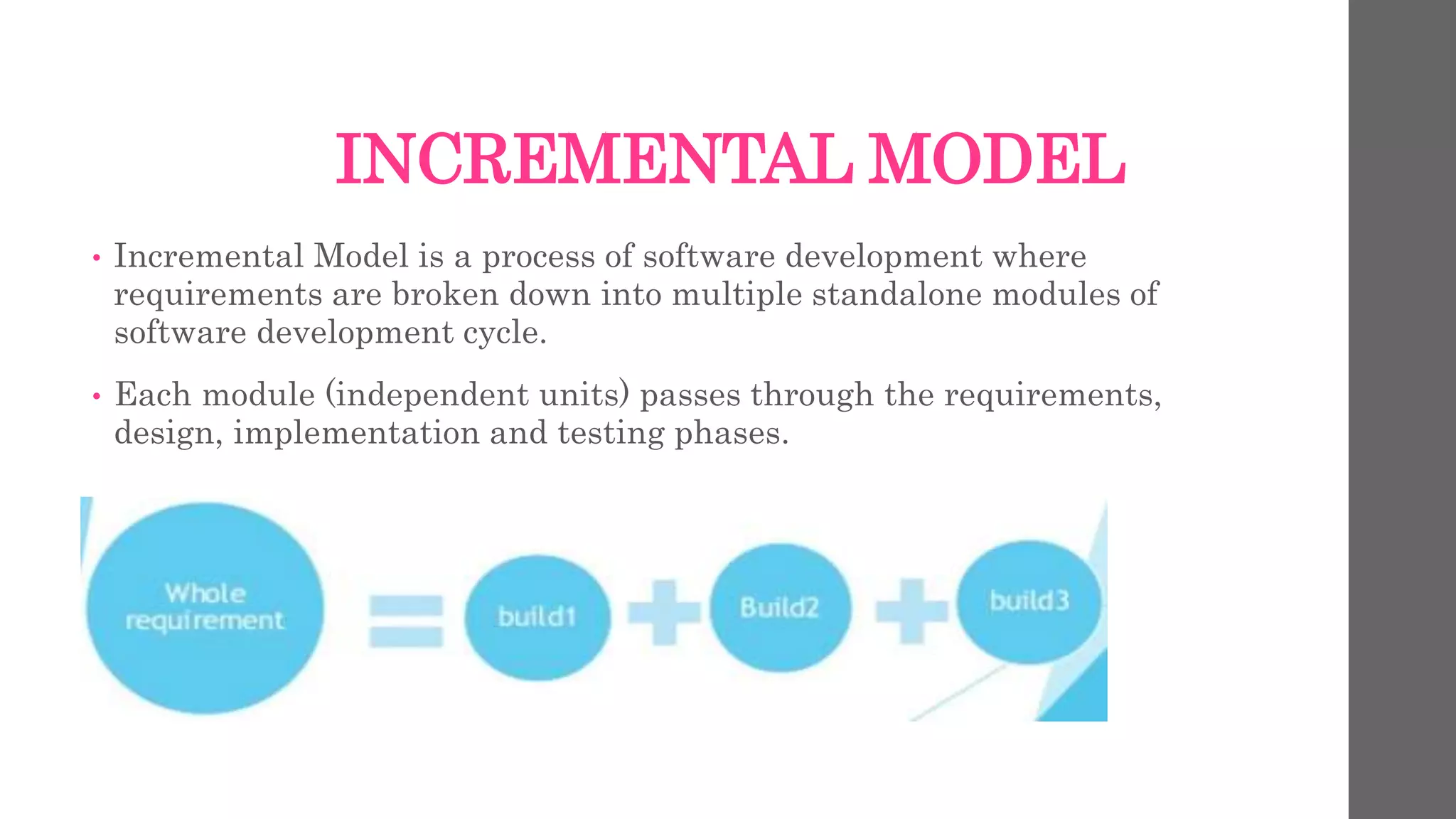
• Incremental Model is a process of software development where
requirements are broken down into multiple standalone modules of
software development cycle.
• Each module (independent units) passes through the requirements,
design, implementation and testing phases.
INCREMENTAL MODEL
• Each subsequent release of the module adds function to the
pervious release.
• The process continues till the complete system is achieved
EXAMPLE
• When we work incrementally we are adding piece by piece but
expect that each piece is fully finished
• Thus keep on adding the pieces until it’s complete
ADVANTAGES
• Easier to test and debug
• Customer feedback is received after the delivery of
each component
• more flexible
• Risk of requirement changes is reduce
DISADVANTAGES
• Need good planning to integrate the components
• Need proper design to integrate the components
• Each iteration phase is rigid and does not overlap each other
• Rectifying a problem in one unit requires correction in all the
units and consumes a lot of time
• More expensive
WHEN TO USE THIS MODEL
• Mostly such model is used in web applications and
product based companies.
• This model can be used when the requirements of the
complete system are clearly defined and understood
• Major requirement must be defined; however, some
details can evolve with time
• There is a need to get a product to the market early.
Thank You!

Incremental model

  • 1.
  • 2.
    INCREMENTAL MODEL • IncrementalModel is a process of software development where requirements are broken down into multiple standalone modules of software development cycle. • Each module (independent units) passes through the requirements, design, implementation and testing phases.
  • 3.
    INCREMENTAL MODEL • Eachsubsequent release of the module adds function to the pervious release. • The process continues till the complete system is achieved
  • 4.
    EXAMPLE • When wework incrementally we are adding piece by piece but expect that each piece is fully finished • Thus keep on adding the pieces until it’s complete
  • 5.
    ADVANTAGES • Easier totest and debug • Customer feedback is received after the delivery of each component • more flexible • Risk of requirement changes is reduce
  • 6.
    DISADVANTAGES • Need goodplanning to integrate the components • Need proper design to integrate the components • Each iteration phase is rigid and does not overlap each other • Rectifying a problem in one unit requires correction in all the units and consumes a lot of time • More expensive
  • 7.
    WHEN TO USETHIS MODEL • Mostly such model is used in web applications and product based companies. • This model can be used when the requirements of the complete system are clearly defined and understood • Major requirement must be defined; however, some details can evolve with time • There is a need to get a product to the market early.
  • 8.