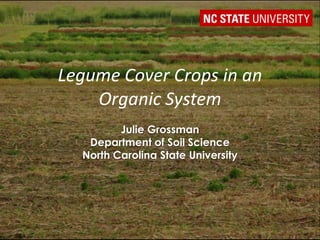
Legume cover crops can provide a significant source of nitrogen (N) in organic farming systems. They fix atmospheric N through symbiotic bacteria, and the legume residue decomposes to release N for subsequent crops. The amount of N contributed depends on the legume species, biomass production, and time of termination. Farmers must determine biomass levels through clipping samples and calculate N content based on tissue testing or estimated percentages. Only about half the total legume N will typically be available to crops in the first year, with the remainder mineralizing in subsequent seasons. Proper species selection and termination timing are important to maximize N benefits while minimizing legume competition with cash crops.