Profitable
Ranching
Starts with the Soil
By Ian Mitchell-Innes
3
• Financial Planning
• Grazing Planning
• Land Planning
• Biological Monitoring
Holistic Management
Planning Procedures
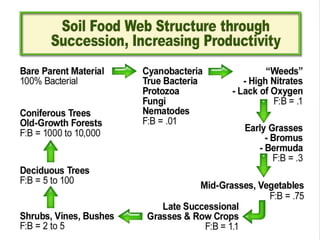
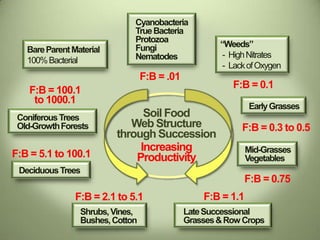
Soil Food
Web Structure
through Succession
Increasing
Productivity
F:B = .01
F:B = 0.1
F:B = 0.3 to 0.5
F:B = 0.75
F:B = 1.1F:B = 2.1 to 5.1
F:B = 5.1 to 100.1
F:B = 100.1
to 1000.1
BareParentMaterial
100%Bacterial
Cyanobacteria
TrueBacteria
Protozoa
Fungi
Nematodes
“Weeds”
- HighNitrates
- LackofOxygen
EarlyGrasses
Mid-Grasses
Vegetables
LateSuccessional
Grasses&RowCrops
Shrubs,Vines,
Bushes,Cotton
DeciduousTrees
ConiferousTrees
Old-GrowthForests
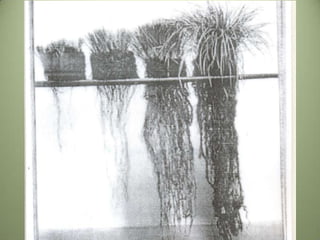
• Prairie Grass Species
• Used Grasshoppers instead of Cattle
• Obtained results of overgrazing
• And short duration grazing
Wayne Burleson’s Experiment
Copyright © Community Dynamics, South Africa 15
The Tools in Detail
Grazing
• Overgrazing occurs when a plant is re-grazed
while it is still growing on stored energy.
• Holistic Management® Planned Grazing
involves the careful planning of animal moves
to achieve healthy plants, maintain high
animal performance and to enhance the
physical break down of dead plant matter for
optimal carbon cycling.
16
Rest
• Rest is the absence or partial absence of
disturbance to soils and plants by animals
or technology.
Copyright © Community Dynamics, South Africa
17
Technology
• This category includes all human artefacts
used to influence aspects of the
environment.
• It is usually the first tool that people turn to.
The use of technology will not lead to the
cycling of carbon, if used on it’s own.
Copyright © Community Dynamics, South Africa
18
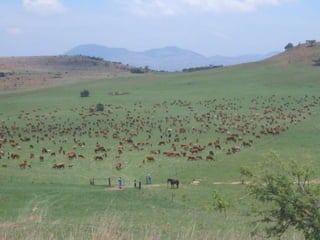
Animal Impact
• The trampling, dunging urinating etc effects
of bunched animals on the soil surface.
Copyright © Community Dynamics, South Africa
19
Animal Impact
Animal impact can be achieved through:
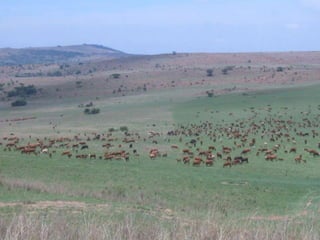
• HERD EFFECT: bunched animals behaving
as under the threat of predators or so tightly
bunched that they are not looking where they
put their feet.
and / or
• STOCK DENSITY: the number of animals on
a unit of land at a moment in time.
Copyright © Community Dynamics, South Africa
21
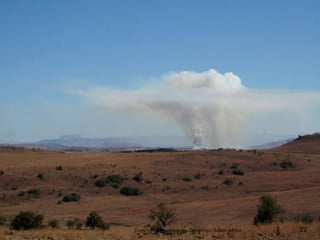
Fire
• The burning off of organic waste and
residual plant material.
Copyright © Community Dynamics, South Africa
Copyright © Community Dynamics, South Africa 22
23
Living Organisms
• Adding a living organism will totally change
the dynamics of a community, and usually
result in additional organisms moving in to
further develop the community.
• The loss of any organism from a community
will change the dynamics of the community to
such an extent that there is likely to be a
resultant loss of a mass of other species that
relied on the presence of that species.
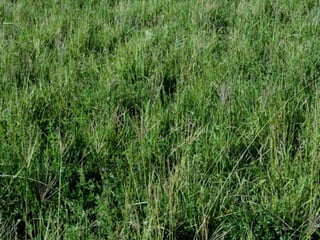
Copyright © Community Dynamics, South Africa
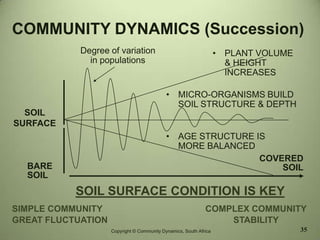
COMMUNITY DYNAMICS (Succession)
35
SIMPLE COMMUNITY
GREAT FLUCTUATION
BARE
SOIL
SOIL
SURFACE
COMPLEX COMMUNITY
STABILITY
Degree of variation
in populations
SOIL SURFACE CONDITION IS KEY
COVERED
SOIL
• PLANT VOLUME
& HEIGHT
INCREASES
• MICRO-ORGANISMS BUILD
SOIL STRUCTURE & DEPTH
• AGE STRUCTURE IS
MORE BALANCED
Copyright © Community Dynamics, South Africa
The Soil Ian Mitchell-Inness

The Soil Ian Mitchell-Inness

  • 1.
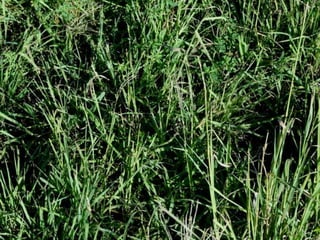
    Profitable Ranching Starts with theSoil By Ian Mitchell-Innes
  • 3.
  • 4.
    • Financial Planning •Grazing Planning • Land Planning • Biological Monitoring Holistic Management Planning Procedures
  • 6.
    Soil Food Web Structure throughSuccession Increasing Productivity F:B = .01 F:B = 0.1 F:B = 0.3 to 0.5 F:B = 0.75 F:B = 1.1F:B = 2.1 to 5.1 F:B = 5.1 to 100.1 F:B = 100.1 to 1000.1 BareParentMaterial 100%Bacterial Cyanobacteria TrueBacteria Protozoa Fungi Nematodes “Weeds” - HighNitrates - LackofOxygen EarlyGrasses Mid-Grasses Vegetables LateSuccessional Grasses&RowCrops Shrubs,Vines, Bushes,Cotton DeciduousTrees ConiferousTrees Old-GrowthForests
  • 12.
    • Prairie GrassSpecies • Used Grasshoppers instead of Cattle • Obtained results of overgrazing • And short duration grazing Wayne Burleson’s Experiment
  • 15.
    Copyright © CommunityDynamics, South Africa 15 The Tools in Detail Grazing • Overgrazing occurs when a plant is re-grazed while it is still growing on stored energy. • Holistic Management® Planned Grazing involves the careful planning of animal moves to achieve healthy plants, maintain high animal performance and to enhance the physical break down of dead plant matter for optimal carbon cycling.
  • 16.
    16 Rest • Rest isthe absence or partial absence of disturbance to soils and plants by animals or technology. Copyright © Community Dynamics, South Africa
  • 17.
    17 Technology • This categoryincludes all human artefacts used to influence aspects of the environment. • It is usually the first tool that people turn to. The use of technology will not lead to the cycling of carbon, if used on it’s own. Copyright © Community Dynamics, South Africa
  • 18.
    18 Animal Impact • Thetrampling, dunging urinating etc effects of bunched animals on the soil surface. Copyright © Community Dynamics, South Africa
  • 19.
    19 Animal Impact Animal impactcan be achieved through: • HERD EFFECT: bunched animals behaving as under the threat of predators or so tightly bunched that they are not looking where they put their feet. and / or • STOCK DENSITY: the number of animals on a unit of land at a moment in time. Copyright © Community Dynamics, South Africa
  • 21.
    21 Fire • The burningoff of organic waste and residual plant material. Copyright © Community Dynamics, South Africa
  • 22.
    Copyright © CommunityDynamics, South Africa 22
  • 23.
    23 Living Organisms • Addinga living organism will totally change the dynamics of a community, and usually result in additional organisms moving in to further develop the community. • The loss of any organism from a community will change the dynamics of the community to such an extent that there is likely to be a resultant loss of a mass of other species that relied on the presence of that species. Copyright © Community Dynamics, South Africa
  • 35.
    COMMUNITY DYNAMICS (Succession) 35 SIMPLECOMMUNITY GREAT FLUCTUATION BARE SOIL SOIL SURFACE COMPLEX COMMUNITY STABILITY Degree of variation in populations SOIL SURFACE CONDITION IS KEY COVERED SOIL • PLANT VOLUME & HEIGHT INCREASES • MICRO-ORGANISMS BUILD SOIL STRUCTURE & DEPTH • AGE STRUCTURE IS MORE BALANCED Copyright © Community Dynamics, South Africa