Downloaded 10 times
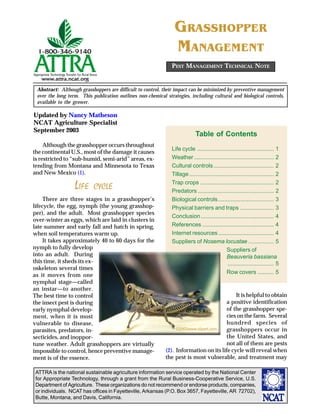
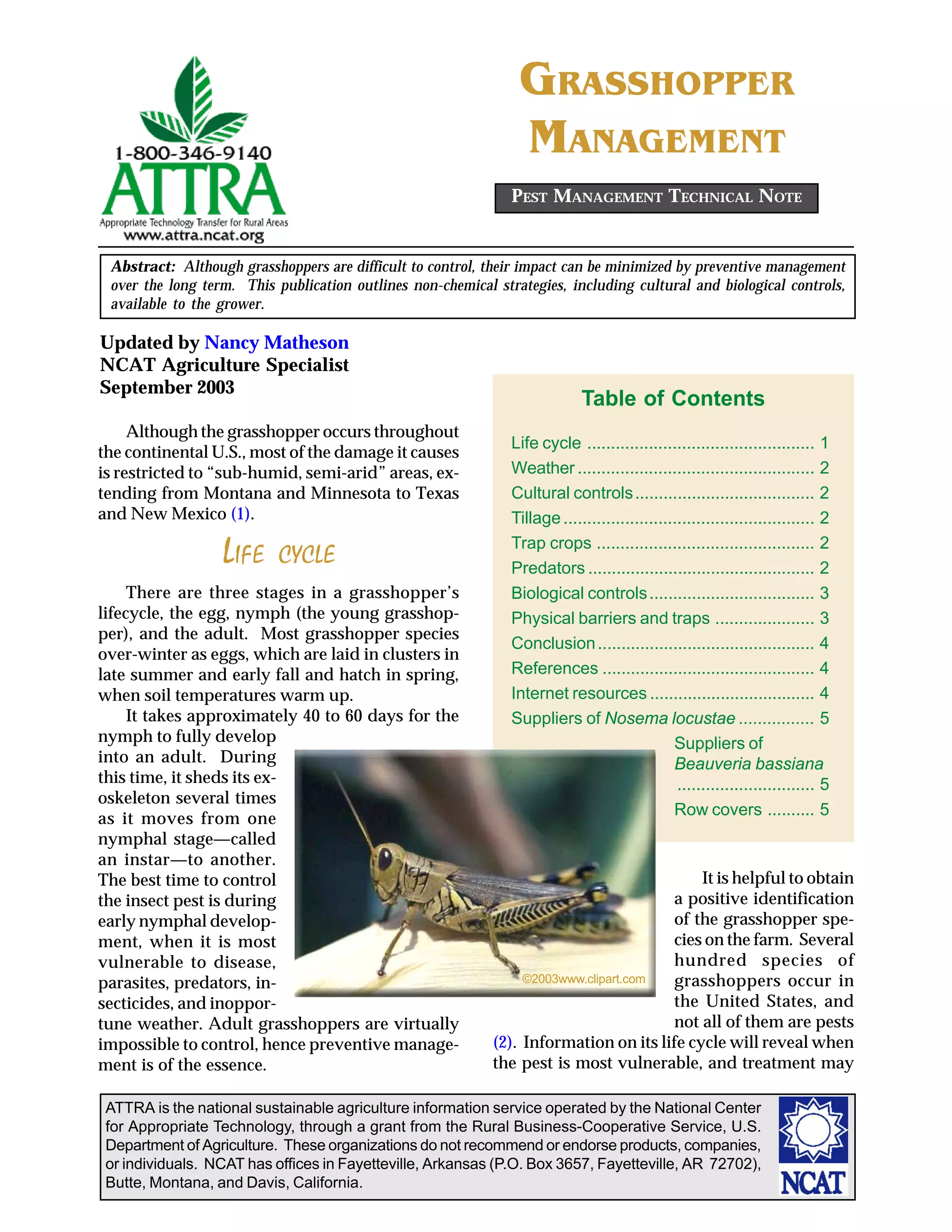

Grasshoppers are difficult to control but their impact can be minimized through preventative management over the long term using non-chemical strategies. These include cultural controls like fall tillage to destroy eggs, trap cropping to concentrate grasshoppers, and encouraging natural predators. Biological controls such as the protozoan Nosema locustae and fungus Beauveria bassiana can be used against nymphs and adults. Physical barriers and traps can also help reduce grasshopper populations. Maintaining farm biodiversity is key to preventing major outbreaks.


