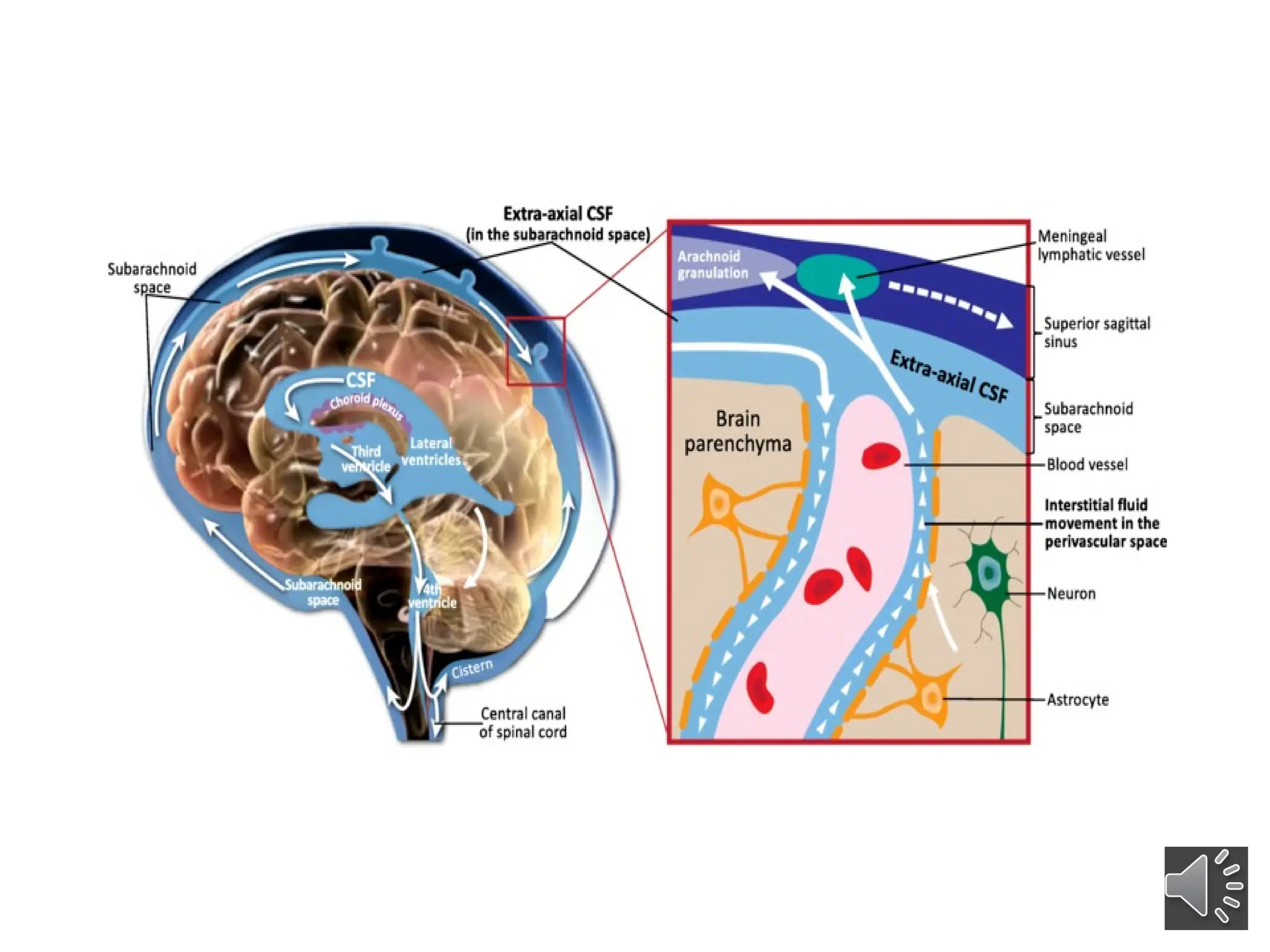
• Cerebrospinal fluid(CSF) is a clear, colorless fluid that occupies the
subarachnoid space and the ventricular system around and inside the
brain and spinal cord.
• CSF is produced by modified ependymal cells in the choroid plexus, and
the remainder is formed around blood vessels and along ventricular walls.
3.
• CSF formsat a rate of about 0.3–0.5 mL/min; translating to 18-25 mL/hour and
430–530 mL/day.
• CSF is formed by choroid plexus (which is a vascular invagination of the piamater
into ventricles forming a rich network of pial vessels) by combination of active
secretion and filtration.
• Carbonic anhydrase involved in production of CSF and it’s inhibitor- acetazolamide
inhibits CSF production.
4.
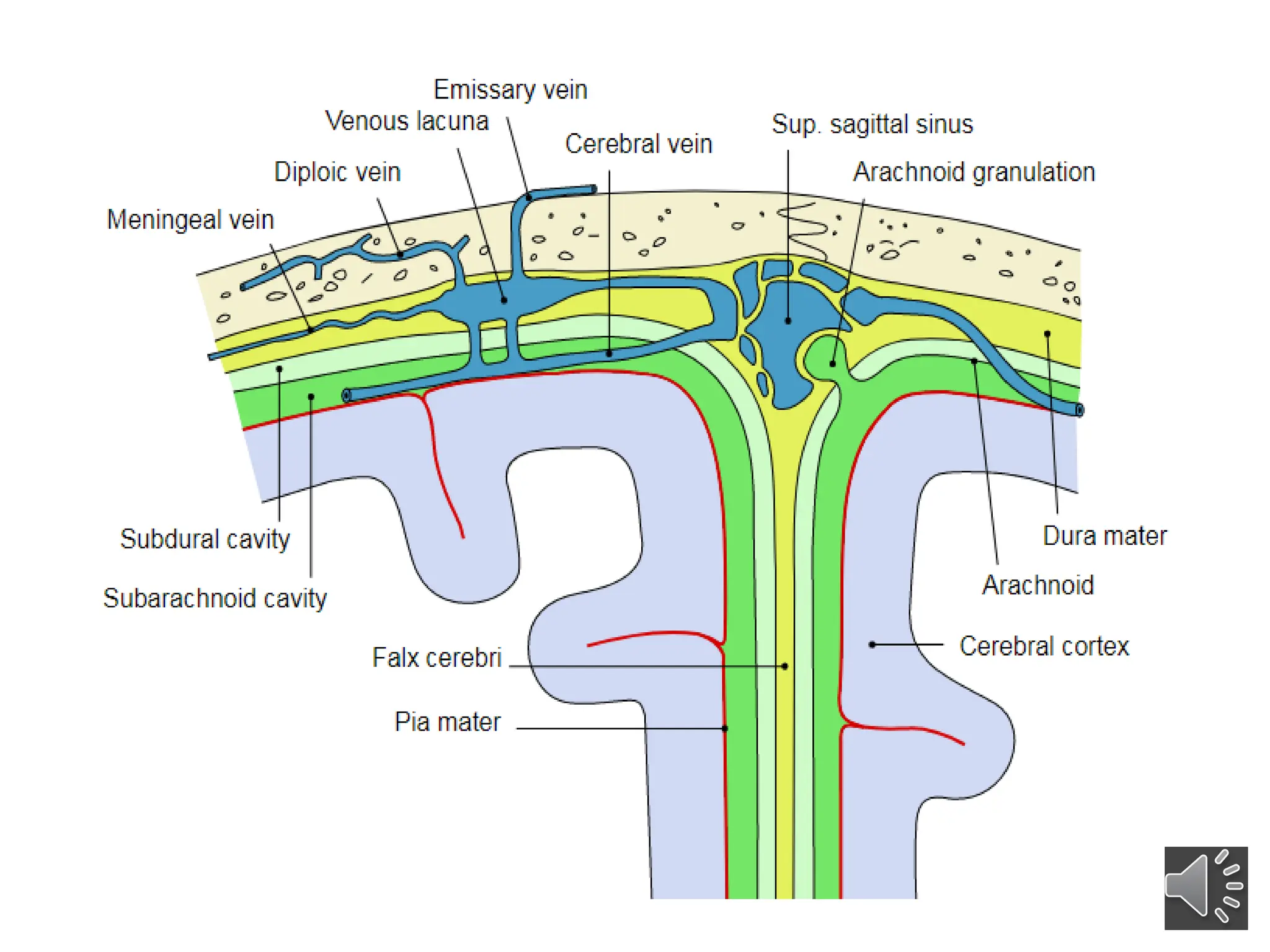
• CSF isproduced at a rate of 500 ml/day. Since the subarachnoid space
around the brain and spinal cord can contain only 135 to 150 ml, large
amounts are drained into the blood through arachnoid granulations in the
superior sagittal sinus.
• The CSF contains approximately 0.3% plasma proteins, or approximately
15 to 40 mg/dL, depending on the sampling site.
7.
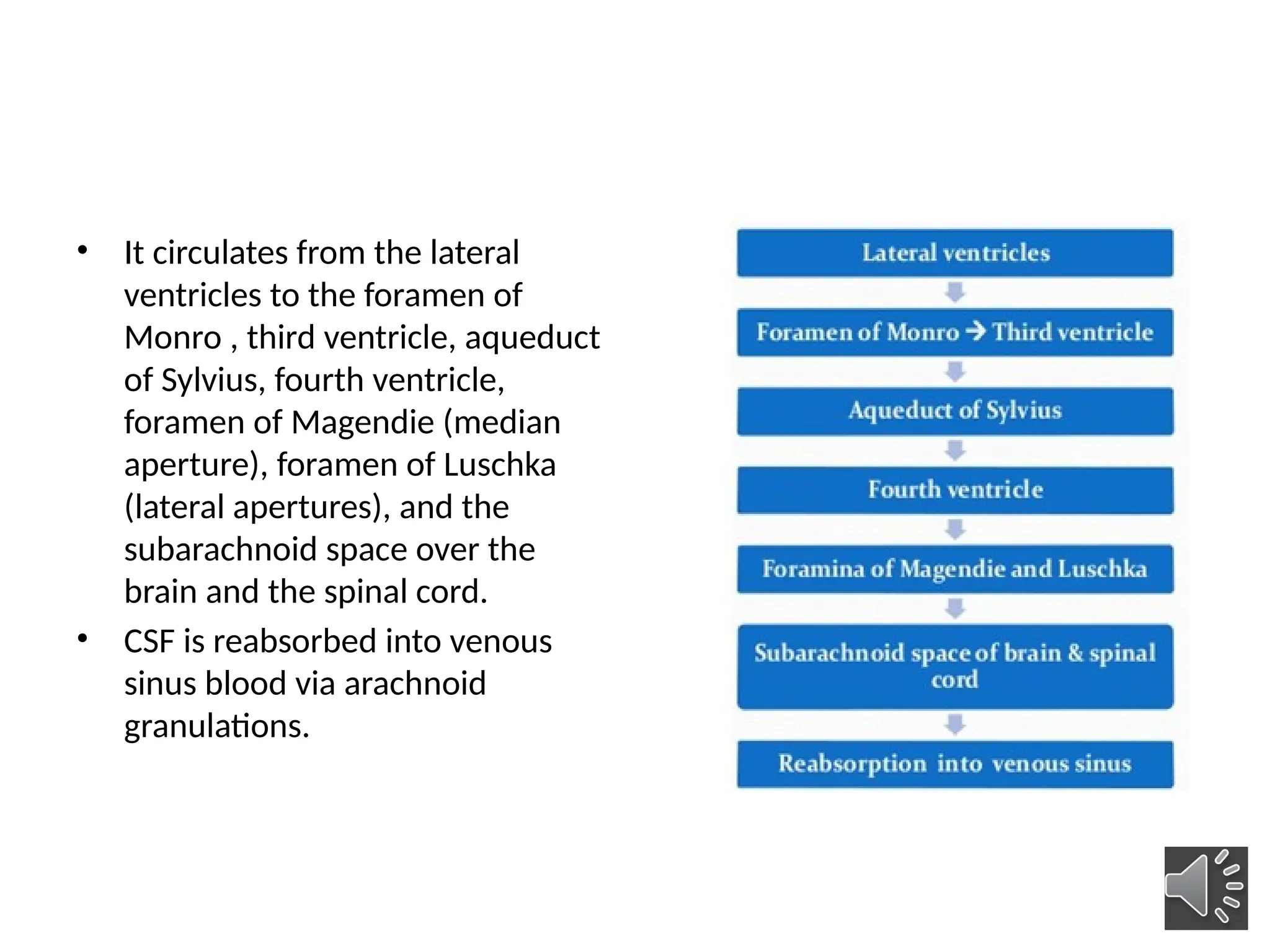
• It circulatesfrom the lateral
ventricles to the foramen of
Monro , third ventricle, aqueduct
of Sylvius, fourth ventricle,
foramen of Magendie (median
aperture), foramen of Luschka
(lateral apertures), and the
subarachnoid space over the
brain and the spinal cord.
• CSF is reabsorbed into venous
sinus blood via arachnoid
granulations.
9.
Functions of CSF
•Protection: CSF acts to cushion a blow to the head and lessen the impact.
• Buoyancy: because the brain is immersed in fluid, the net weight of the brain is
reduced from about 1,400 gm to about 50 gm. Therefore, pressure at the base
of the brain is reduced.
• Excretion of waste products: the one-way flow from the CSF to the blood takes
potentially harmful metabolites, drugs and other substances away from the
brain.
• Endocrine medium for the brain: the CSF serves to transport hormones to
other areas of the brain. Hormones released into the CSF can be carried to
remote sites of the brain where they may act.
10.
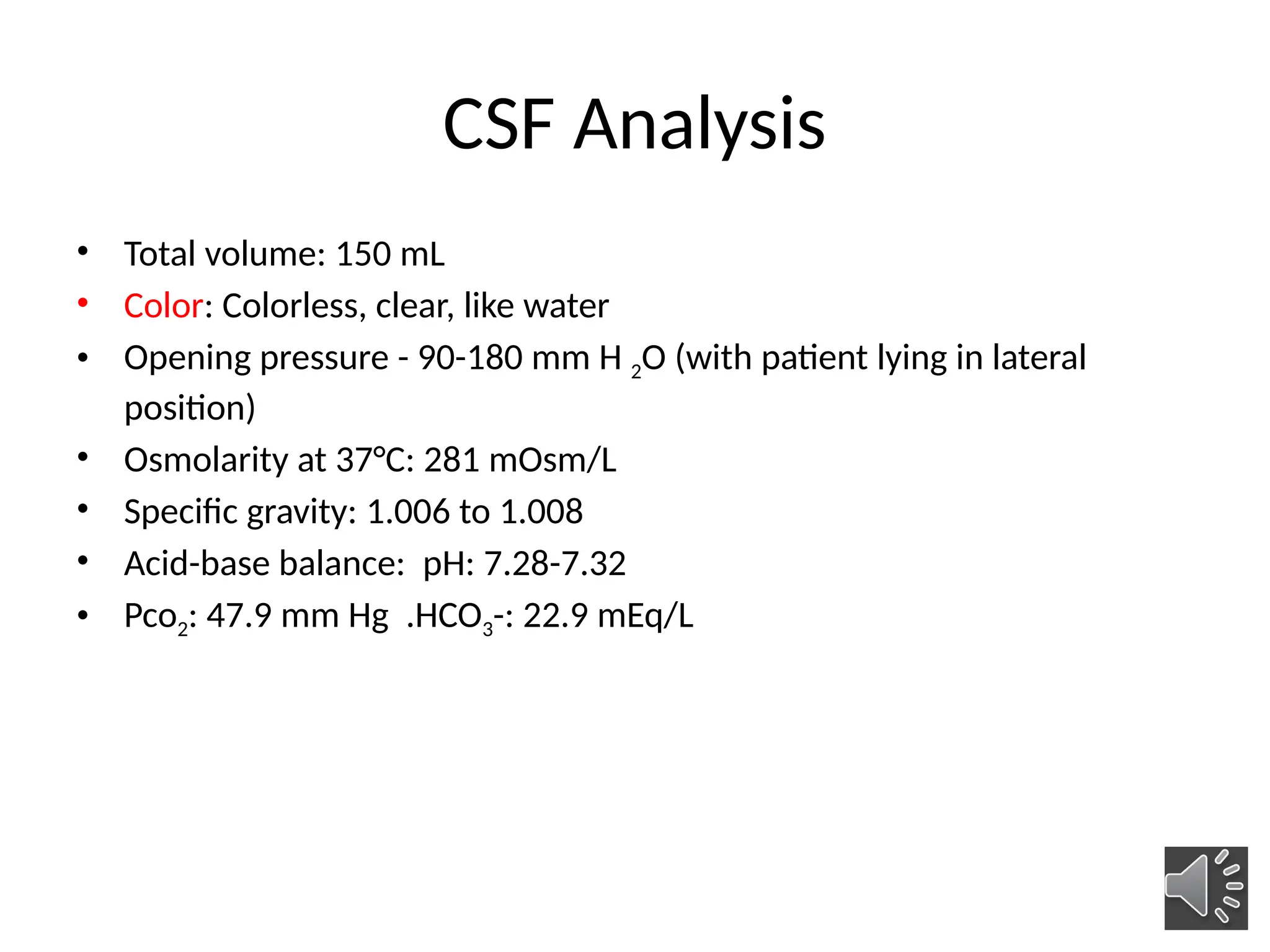
CSF Analysis
• Totalvolume: 150 mL
• Color: Colorless, clear, like water
• Opening pressure - 90-180 mm H 2O (with patient lying in lateral
position)
• Osmolarity at 37°C: 281 mOsm/L
• Specific gravity: 1.006 to 1.008
• Acid-base balance: pH: 7.28-7.32
• Pco2: 47.9 mm Hg .HCO3-: 22.9 mEq/L
11.
• Glucose: 45-80mg/dL
• Proteins: 20-40 mg/dL At different levels of spinal tap:
– Lumbar: 20-40 mg/dL
– Cisternal: 15-25 mg/dL
– Ventricular: 15-45 mg/dL
12.
• Electrophoretic separationof spinal fluid proteins (% of total protein
concentrations)
Prealbumin: 2-7%
Albumin: 56-76%
a1-Globulin: 2-7%
a2-Globulin: 3.5-12%
b-and g-globulin: 8-18%.