CEREBRAL PALSY:
BASIC INFORMATION
~Lalit Kishore
Main Cause
CP happens
due to damage
to that portion of the brain
which controls
body movements.
 It is a neurological problem
Cerebral Palsy
Muscular control disorder
Causing difficulty in
- Positioning
-Coordination
-Movement
of body
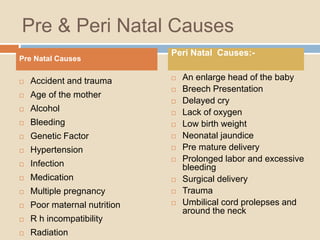
Pre & Peri Natal Causes
1.
 Accident and trauma
 Age of the mother
 Alcohol
 Bleeding
 Genetic Factor
 Hypertension
 Infection
 Medication
 Multiple pregnancy
 Poor maternal nutrition
 R h incompatibility
 Radiation
 An enlarge head of the baby
 Breech Presentation
 Delayed cry
 Lack of oxygen
 Low birth weight
 Neonatal jaundice
 Pre mature delivery
 Prolonged labor and excessive
bleeding
 Surgical delivery
 Trauma
 Umbilical cord prolepses and
around the neck
Pre Natal Causes
Peri Natal Causes:-
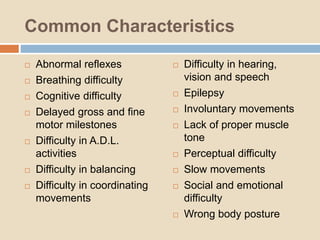
Common Characteristics
 Abnormal reflexes
 Breathing difficulty
 Cognitive difficulty
 Delayed gross and fine
motor milestones
 Difficulty in A.D.L.
activities
 Difficulty in balancing
 Difficulty in coordinating
movements
 Difficulty in hearing,
vision and speech
 Epilepsy
 Involuntary movements
 Lack of proper muscle
tone
 Perceptual difficulty
 Slow movements
 Social and emotional
difficulty
 Wrong body posture
Other associated problems leadinf
to multple disabilities
 Bladder and bowel
problems
 Digestive problems
 Skeletal deformities
 Dental problems
 Mental retardation
 Learning disabilities
 Epilepsy
 Bladder and bowel
problems
 Digestive problems
 Skeletal deformities
 Dental problems
 Mental retardation
 Learning disabilities
 Epilepsy
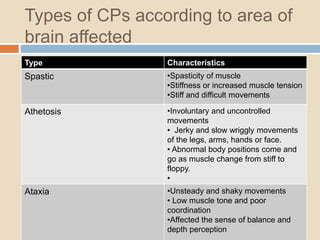
Types of CPs according to area of
brain affected
Type Characteristics
Spastic •Spasticity of muscle
•Stiffness or increased muscle tension
•Stiff and difficult movements
Athetosis •Involuntary and uncontrolled
movements
• Jerky and slow wriggly movements
of the legs, arms, hands or face.
• Abnormal body positions come and
go as muscle change from stiff to
floppy.
•
Ataxia •Unsteady and shaky movements
• Low muscle tone and poor
coordination
•Affected the sense of balance and
depth perception
Impact on CP child’s life: Slow
pace of development
 Motor development
 Physical growth
 Cognitive development
 Communication skills
 Social and emotional development
 Daily living skills
Conventional Treatment and
Management of cerebral Palsy
Individualized intervention plan for the child.
1. Therapies
 Physical or movement therapy
 Occupational Therapy
 Speech Therapy
 Educational Therapy
2. Medication
3. Surgery
4. Ergonomic inputs
Designed Alternative Therapies
 Aquatic Therapy
 Dance Therapy
 Music Therapy
 Equine Therapy
 Yoga Therapy
Education therapy
 Early Intervention
 Individualized education plan
 Child reach-out and door-step
interventions
 Home management and support
 Mother-and-child training
programmes

Cerebral Palsy.pptx

  • 1.
  • 2.
    Main Cause CP happens dueto damage to that portion of the brain which controls body movements.  It is a neurological problem
  • 3.
    Cerebral Palsy Muscular controldisorder Causing difficulty in - Positioning -Coordination -Movement of body
  • 4.
    Pre & PeriNatal Causes 1.  Accident and trauma  Age of the mother  Alcohol  Bleeding  Genetic Factor  Hypertension  Infection  Medication  Multiple pregnancy  Poor maternal nutrition  R h incompatibility  Radiation  An enlarge head of the baby  Breech Presentation  Delayed cry  Lack of oxygen  Low birth weight  Neonatal jaundice  Pre mature delivery  Prolonged labor and excessive bleeding  Surgical delivery  Trauma  Umbilical cord prolepses and around the neck Pre Natal Causes Peri Natal Causes:-
  • 5.
    Common Characteristics  Abnormalreflexes  Breathing difficulty  Cognitive difficulty  Delayed gross and fine motor milestones  Difficulty in A.D.L. activities  Difficulty in balancing  Difficulty in coordinating movements  Difficulty in hearing, vision and speech  Epilepsy  Involuntary movements  Lack of proper muscle tone  Perceptual difficulty  Slow movements  Social and emotional difficulty  Wrong body posture
  • 6.
    Other associated problemsleadinf to multple disabilities  Bladder and bowel problems  Digestive problems  Skeletal deformities  Dental problems  Mental retardation  Learning disabilities  Epilepsy  Bladder and bowel problems  Digestive problems  Skeletal deformities  Dental problems  Mental retardation  Learning disabilities  Epilepsy
  • 7.
    Types of CPsaccording to area of brain affected Type Characteristics Spastic •Spasticity of muscle •Stiffness or increased muscle tension •Stiff and difficult movements Athetosis •Involuntary and uncontrolled movements • Jerky and slow wriggly movements of the legs, arms, hands or face. • Abnormal body positions come and go as muscle change from stiff to floppy. • Ataxia •Unsteady and shaky movements • Low muscle tone and poor coordination •Affected the sense of balance and depth perception
  • 8.
    Impact on CPchild’s life: Slow pace of development  Motor development  Physical growth  Cognitive development  Communication skills  Social and emotional development  Daily living skills
  • 9.
    Conventional Treatment and Managementof cerebral Palsy Individualized intervention plan for the child. 1. Therapies  Physical or movement therapy  Occupational Therapy  Speech Therapy  Educational Therapy 2. Medication 3. Surgery 4. Ergonomic inputs
  • 10.
    Designed Alternative Therapies Aquatic Therapy  Dance Therapy  Music Therapy  Equine Therapy  Yoga Therapy
  • 11.
    Education therapy  EarlyIntervention  Individualized education plan  Child reach-out and door-step interventions  Home management and support  Mother-and-child training programmes