Census Data Boot Camp
   WVAGP Annual Meeting
      June 14, 2011
        Laura Waggoner
         Katy Rossiter
        Drew Stanislaw

       US. Census Bureau
Census Data Boot Camp
            Outline
• 2010 Census Overview
• Geographic Products and Mapping
  Census Data
• Geographic Concepts and Programs
• The Geographic Support System (GSS)
  Initiative
• AFF Demo/ Digital BAS Demo
The 2010 Census

• Required by the U.S. Constitution
   – Article 1, Section 2
   – Decennial Census every 10 years
• On April 1, 2010, the decennial census will
  count all residents living in the U.S.
• Largest peacetime activity undertaken by the
  federal government


                                                 3
2010 Census Data
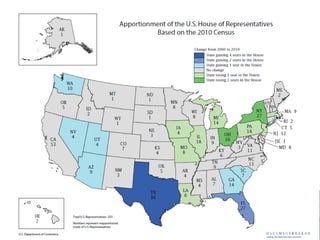
• Determines apportionment of the U.S. House
  of Representatives
• Used for congressional and legislative
  redistricting
• Affects the allocation of more than $400
  BILLION in federal funding per year to local,
  state and tribal governments


                                                  4
The Infrastructure – How We Get
             It Done
• Headquarters
• 12 Regional Census Centers
• 494 Local Census Offices
  – 7 offices in Puerto Rico
• Recruit 3.8 million applicants to hire 1.4
  million temporary employees for all 2010
  operations


                                               5
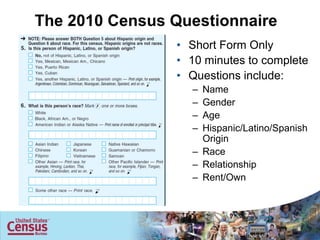
The 2010 Census Questionnaire
                • Short Form Only
                • 10 minutes to complete
                • Questions include:
                  – Name
                  – Gender
                  – Age
                  – Hispanic/Latino/Spanish
                    Origin
                  – Race
                  – Relationship
                  – Rent/Own


                                        6
Ensuring the Confidentiality
of Your Information
• By law, the Census Bureau does not share
  personal information with ANYONE

• Not even with other federal or law enforcement
  agencies
• The Census Bureau strips all identifying
  information and publishes only summary data


                                                       7

                                                   7
Completing the 2010 Census Cycle

• Census Day was April 1, 2010
• Count everyone in less than 6 months
• Apportionment count was delivered to the
  President by December 31, 2010
• Redistricting Data was delivered to the States by
  April 1, 2011


                                                  8
2010 Census
     Redistricting Data Program
• Public Law 94-171
   – Mandates the provision of small area data required
     for legislative redistricting no later than 1 year
     following Census Day
   – Requires the Census Bureau to work with the states
     to identify those small areas
   – Examples: voting districts, census blocks


                                                          9
The Five Phases
• Phase 1 – State Legislative District Project
• Phase 2 – Voting District/Block Boundary Suggestion
  Project
• Phase 3 – 2010 Census Data Delivery
• Phase 4 – Collection of post-2010 Census Redistricting
  Plans
• Phase 5 – Evaluation and Recommendations


                                                           10
Phase 1 – State Legislative District Project

• 2005 – 2007
• 100% participation
• Collected state legislative district boundaries in effect
  during ’06 elections
• Tabulated 2000 Census data to those boundaries
• Released data on DVD and AFF in January 2007
• Updates will be collected during Phase 2
• Geographic areas will be used to tabulate 2010
  Census data


                                                              11
Phase 2 – Voting District/Block Boundary
            Suggestion Project
• 2008 – 2010
• Collecting voting district boundaries and tabulation block
  boundary suggestions
• Geographic areas will be used to tabulate 2010 Census
  data


                                                           12
Phase 3 – 2010 Census Data Delivery

• Delivery of the P.L. 94-171 Redistricting Data and
  Geographic Products
• Geographic products delivered first, data products
  follow
• No later than April 1, 2011
• Data includes:
   – Race for the Total Population and Population 18 and Over
   – Hispanic or Latino, and Not Hispanic or Latino by Race for
     the Total Population and Population 18 and Over
   – Total Housing Units (occupied and vacant)


                                                                  13
Phase 4 - Collection of post-2010 Census
             Redistricting Plans
• 2012-2013
• Collection of newly drawn congressional and legislative
  district boundaries
• Tabulation of 2010 Census data to those new districts
• Release of data via DVD and AFF


                                                            14
Phase 5 – Evaluation and
     Recommendations for 2020 Census


• The “View From the States” will appear in a final
  publication and will be used to formulate the 2020
  Census Redistricting Data Program
• See publication


                                                       15
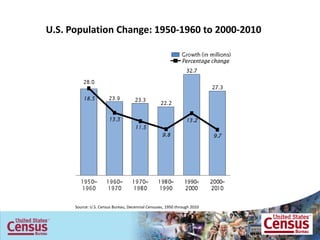
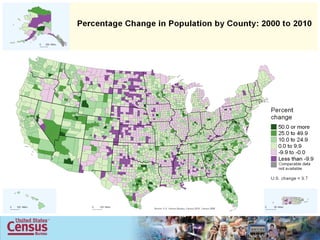
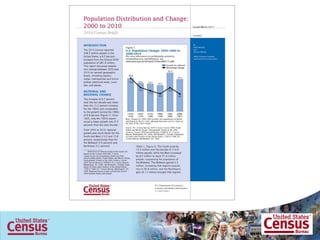
U.S. Population Change: 1950-1960 to 2000-2010


      Source: U.S. Census Bureau, Decennial Censuses, 1950 through 2010
Metropolitan Statistical Areas

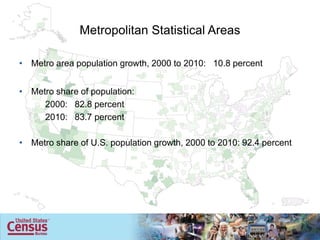
• Metro area population growth, 2000 to 2010: 10.8 percent


• Metro share of population:
     2000: 82.8 percent
     2010: 83.7 percent

• Metro share of U.S. population growth, 2000 to 2010: 92.4 percent
27
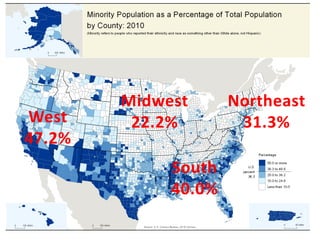
Midwest      Northeast
 West     22.2%        31.3%
 47.2%
              South
              40.0%

28
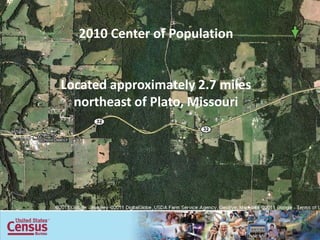
2010 Center of Population


Located approximately 2.7 miles
  northeast of Plato, Missouri
Census Data Boot Camp (epan 2011)

Census Data Boot Camp (epan 2011)

  • 1.
    Census Data BootCamp WVAGP Annual Meeting June 14, 2011 Laura Waggoner Katy Rossiter Drew Stanislaw US. Census Bureau
  • 2.
    Census Data BootCamp Outline • 2010 Census Overview • Geographic Products and Mapping Census Data • Geographic Concepts and Programs • The Geographic Support System (GSS) Initiative • AFF Demo/ Digital BAS Demo
  • 3.
    The 2010 Census •Required by the U.S. Constitution – Article 1, Section 2 – Decennial Census every 10 years • On April 1, 2010, the decennial census will count all residents living in the U.S. • Largest peacetime activity undertaken by the federal government 3
  • 4.
    2010 Census Data •Determines apportionment of the U.S. House of Representatives • Used for congressional and legislative redistricting • Affects the allocation of more than $400 BILLION in federal funding per year to local, state and tribal governments 4
  • 5.
    The Infrastructure –How We Get It Done • Headquarters • 12 Regional Census Centers • 494 Local Census Offices – 7 offices in Puerto Rico • Recruit 3.8 million applicants to hire 1.4 million temporary employees for all 2010 operations 5
  • 6.
    The 2010 CensusQuestionnaire • Short Form Only • 10 minutes to complete • Questions include: – Name – Gender – Age – Hispanic/Latino/Spanish Origin – Race – Relationship – Rent/Own 6
  • 7.
    Ensuring the Confidentiality ofYour Information • By law, the Census Bureau does not share personal information with ANYONE • Not even with other federal or law enforcement agencies • The Census Bureau strips all identifying information and publishes only summary data 7 7
  • 8.
    Completing the 2010Census Cycle • Census Day was April 1, 2010 • Count everyone in less than 6 months • Apportionment count was delivered to the President by December 31, 2010 • Redistricting Data was delivered to the States by April 1, 2011 8
  • 9.
    2010 Census Redistricting Data Program • Public Law 94-171 – Mandates the provision of small area data required for legislative redistricting no later than 1 year following Census Day – Requires the Census Bureau to work with the states to identify those small areas – Examples: voting districts, census blocks 9
  • 10.
    The Five Phases •Phase 1 – State Legislative District Project • Phase 2 – Voting District/Block Boundary Suggestion Project • Phase 3 – 2010 Census Data Delivery • Phase 4 – Collection of post-2010 Census Redistricting Plans • Phase 5 – Evaluation and Recommendations 10
  • 11.
    Phase 1 –State Legislative District Project • 2005 – 2007 • 100% participation • Collected state legislative district boundaries in effect during ’06 elections • Tabulated 2000 Census data to those boundaries • Released data on DVD and AFF in January 2007 • Updates will be collected during Phase 2 • Geographic areas will be used to tabulate 2010 Census data 11
  • 12.
    Phase 2 –Voting District/Block Boundary Suggestion Project • 2008 – 2010 • Collecting voting district boundaries and tabulation block boundary suggestions • Geographic areas will be used to tabulate 2010 Census data 12
  • 13.
    Phase 3 –2010 Census Data Delivery • Delivery of the P.L. 94-171 Redistricting Data and Geographic Products • Geographic products delivered first, data products follow • No later than April 1, 2011 • Data includes: – Race for the Total Population and Population 18 and Over – Hispanic or Latino, and Not Hispanic or Latino by Race for the Total Population and Population 18 and Over – Total Housing Units (occupied and vacant) 13
  • 14.
    Phase 4 -Collection of post-2010 Census Redistricting Plans • 2012-2013 • Collection of newly drawn congressional and legislative district boundaries • Tabulation of 2010 Census data to those new districts • Release of data via DVD and AFF 14
  • 15.
    Phase 5 –Evaluation and Recommendations for 2020 Census • The “View From the States” will appear in a final publication and will be used to formulate the 2020 Census Redistricting Data Program • See publication 15
  • 19.
    U.S. Population Change:1950-1960 to 2000-2010 Source: U.S. Census Bureau, Decennial Censuses, 1950 through 2010
  • 23.
    Metropolitan Statistical Areas •Metro area population growth, 2000 to 2010: 10.8 percent • Metro share of population: 2000: 82.8 percent 2010: 83.7 percent • Metro share of U.S. population growth, 2000 to 2010: 92.4 percent
  • 27.
  • 28.
    Midwest Northeast West 22.2% 31.3% 47.2% South 40.0% 28
  • 31.
    2010 Center ofPopulation Located approximately 2.7 miles northeast of Plato, Missouri