Objectives:
At the end of our lesson, you should be able to:
1. Describe the major features and chemical events in
respiration;
2. Differentiate aerobic from anaerobic respiration;
3. Distinguish major features of glycolysis, Krebs Cycle,
ETS, and chemiosmosis;
4. Explain the pros and cons of fermentation and aerobic
respiration.
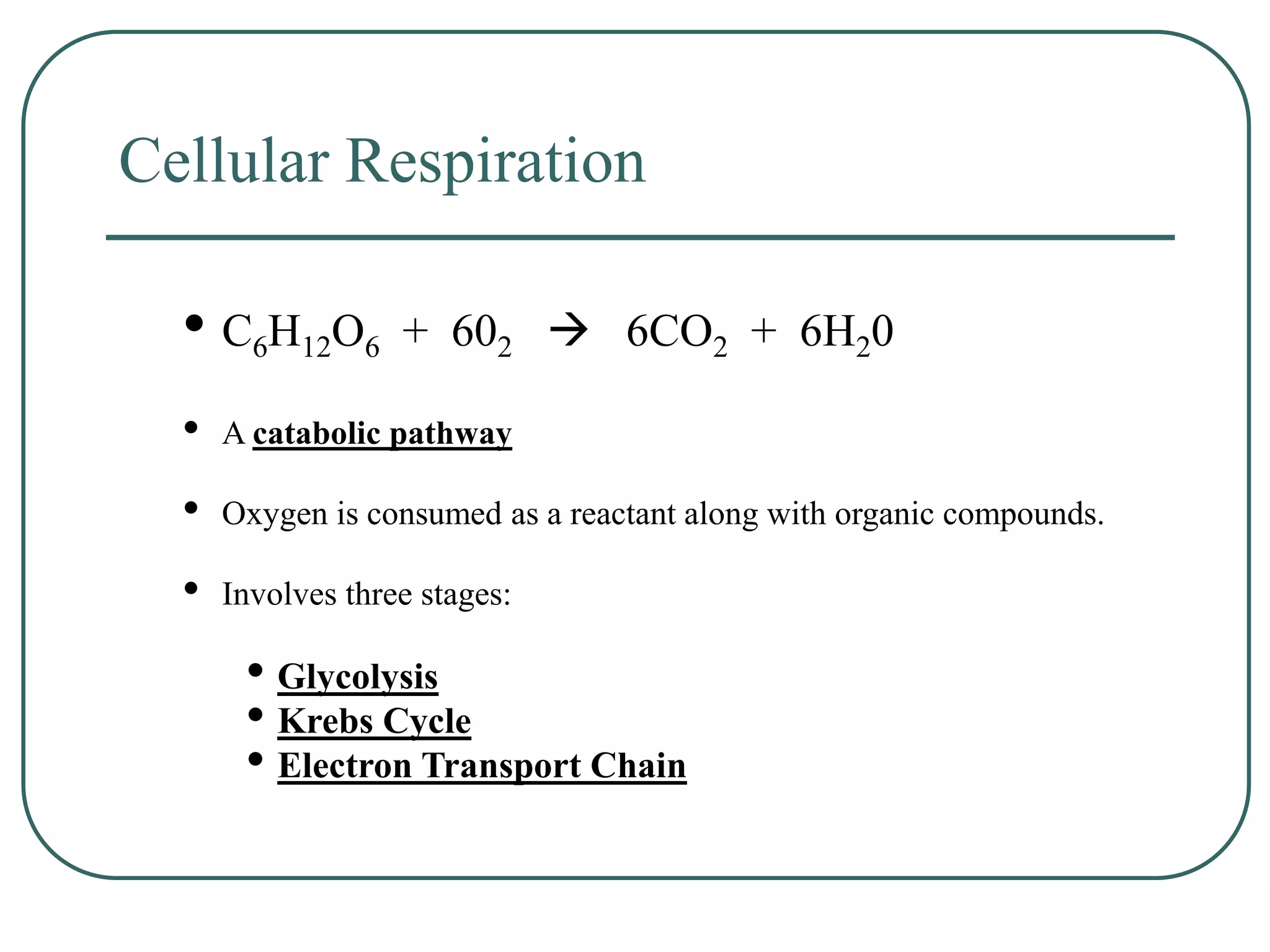
Cellular Respiration
• C6H12O6 + 602  6CO2 + 6H20
• A catabolic pathway
• Oxygen is consumed as a reactant along with organic compounds.
• Involves three stages:
• Glycolysis
• Krebs Cycle
• Electron Transport Chain
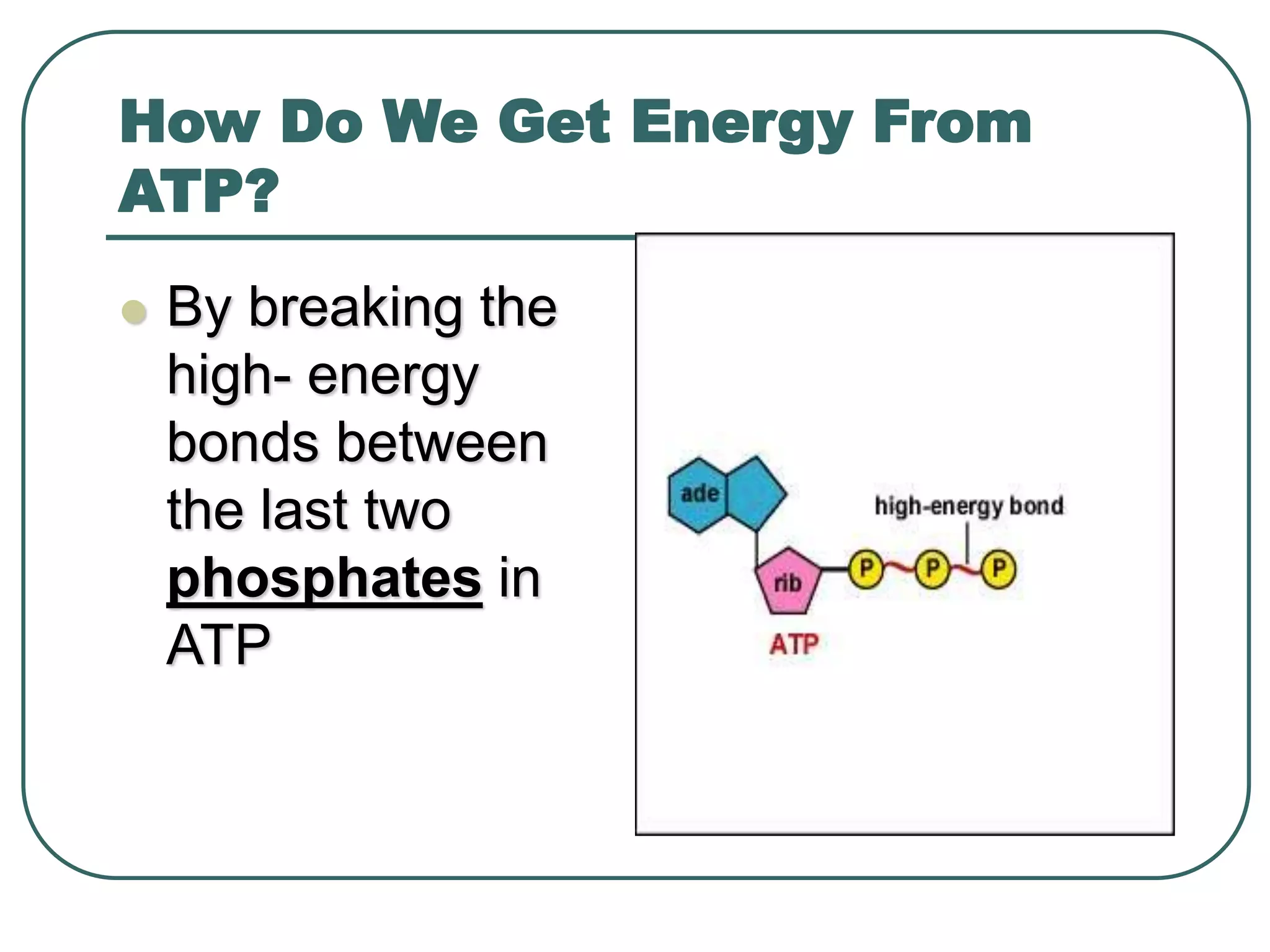
What Is ATP?
• Adenosine Triphosphate
• Energy used by all Cells
• Organic molecule containing high-energy Phosphate bonds
Chemical Structure of ATP
What Does ATP Do for You?
 It supplies YOU with ENERGY!
How Do We Get Energy From
ATP?
 By breaking the
high- energy
bonds between
the last two
phosphates in
ATP
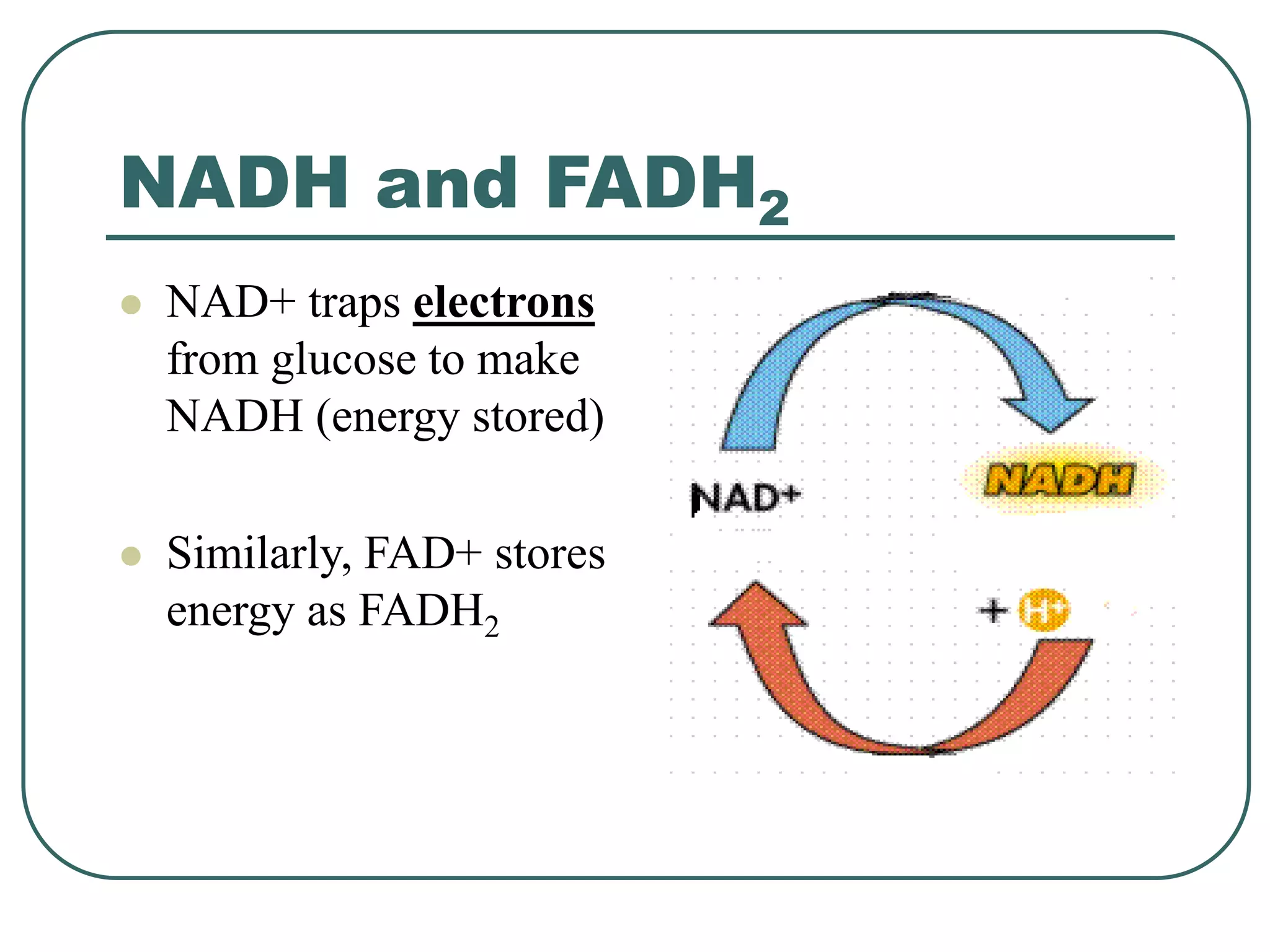
NADH and FADH2
 NAD+ traps electrons
from glucose to make
NADH (energy stored)
 Similarly, FAD+ stores
energy as FADH2
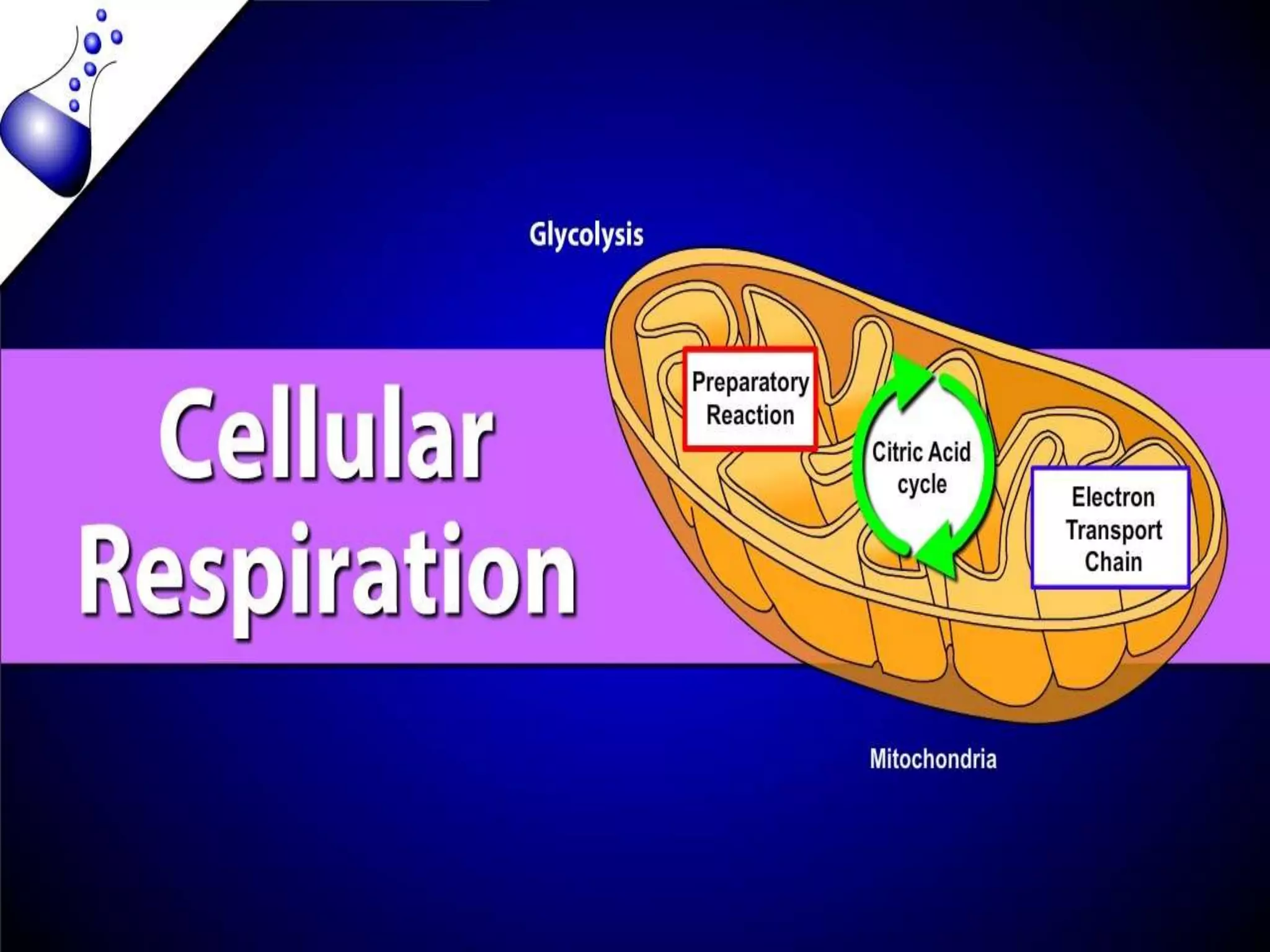
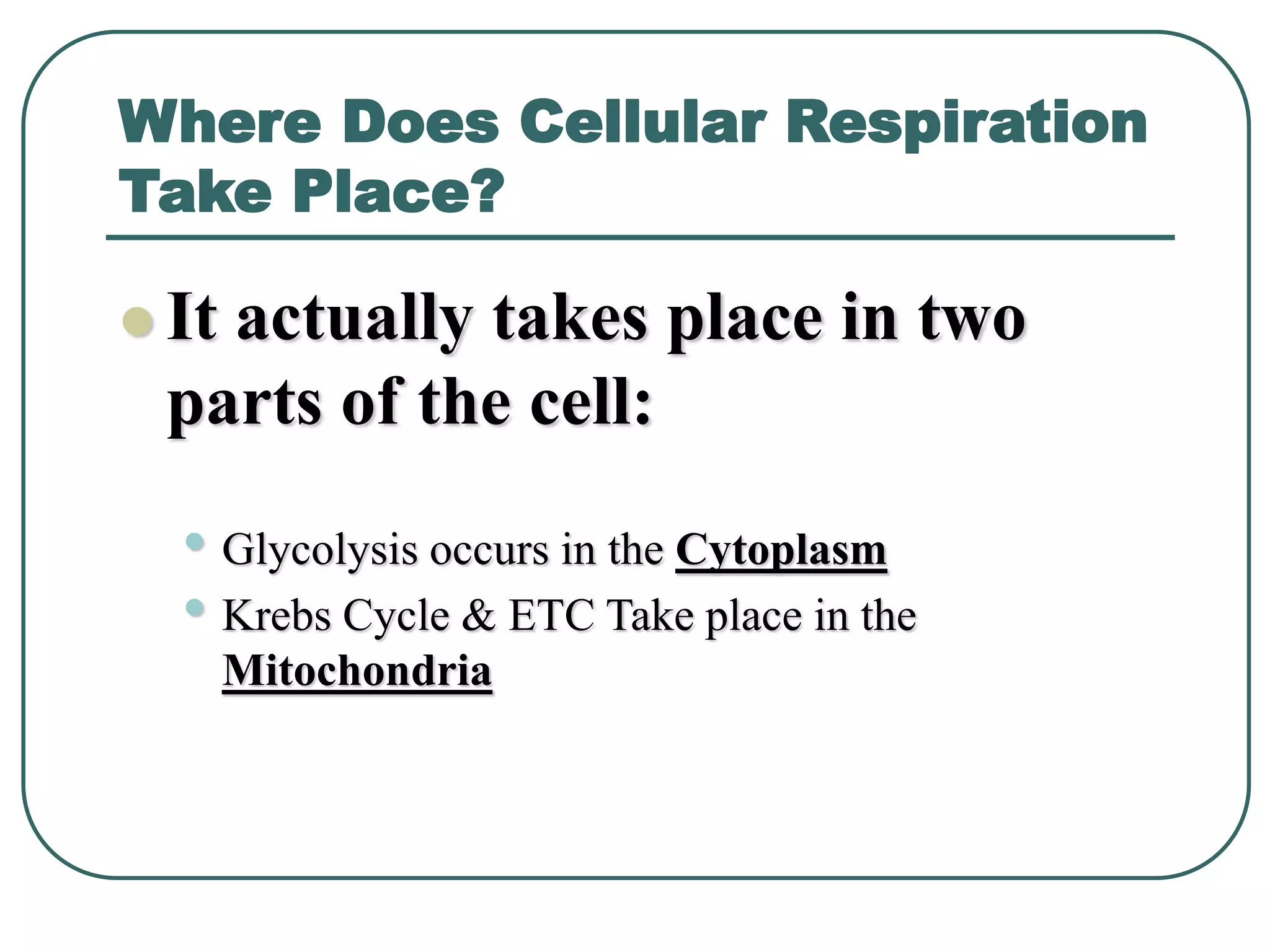
Where Does Cellular Respiration
Take Place?
 It actually takes place in two
parts of the cell:
• Glycolysis occurs in the Cytoplasm
• Krebs Cycle & ETC Take place in the
Mitochondria
Review of Mitochondria
Structure
 Smooth outer
Membrane
 Folded inner
membrane
 Folds called
Cristae
 Space inside
cristae called the
Matrix
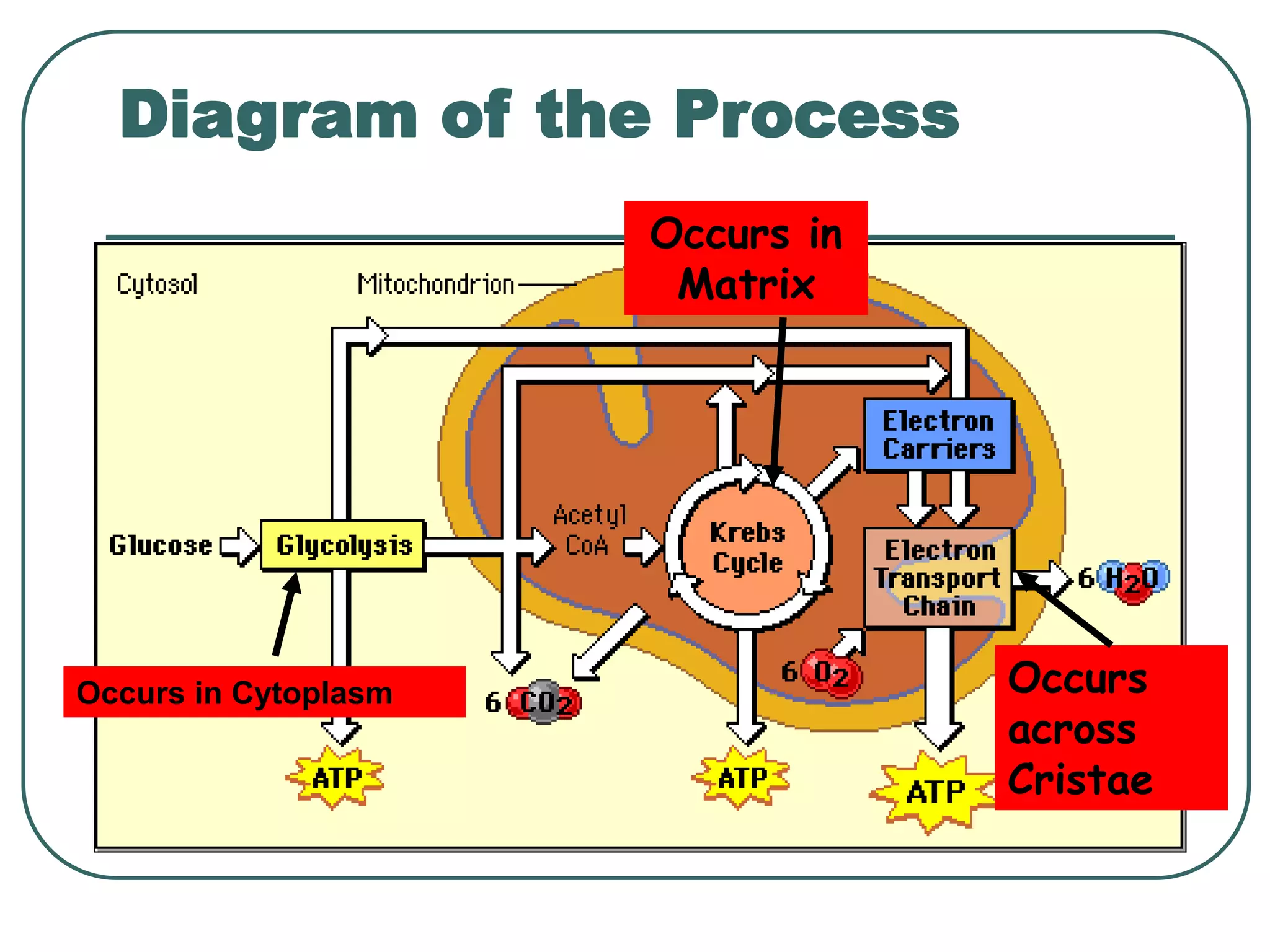
Diagram of the Process
Occurs in Cytoplasm
Occurs in
Matrix
Occurs
across
Cristae
Glycolysis
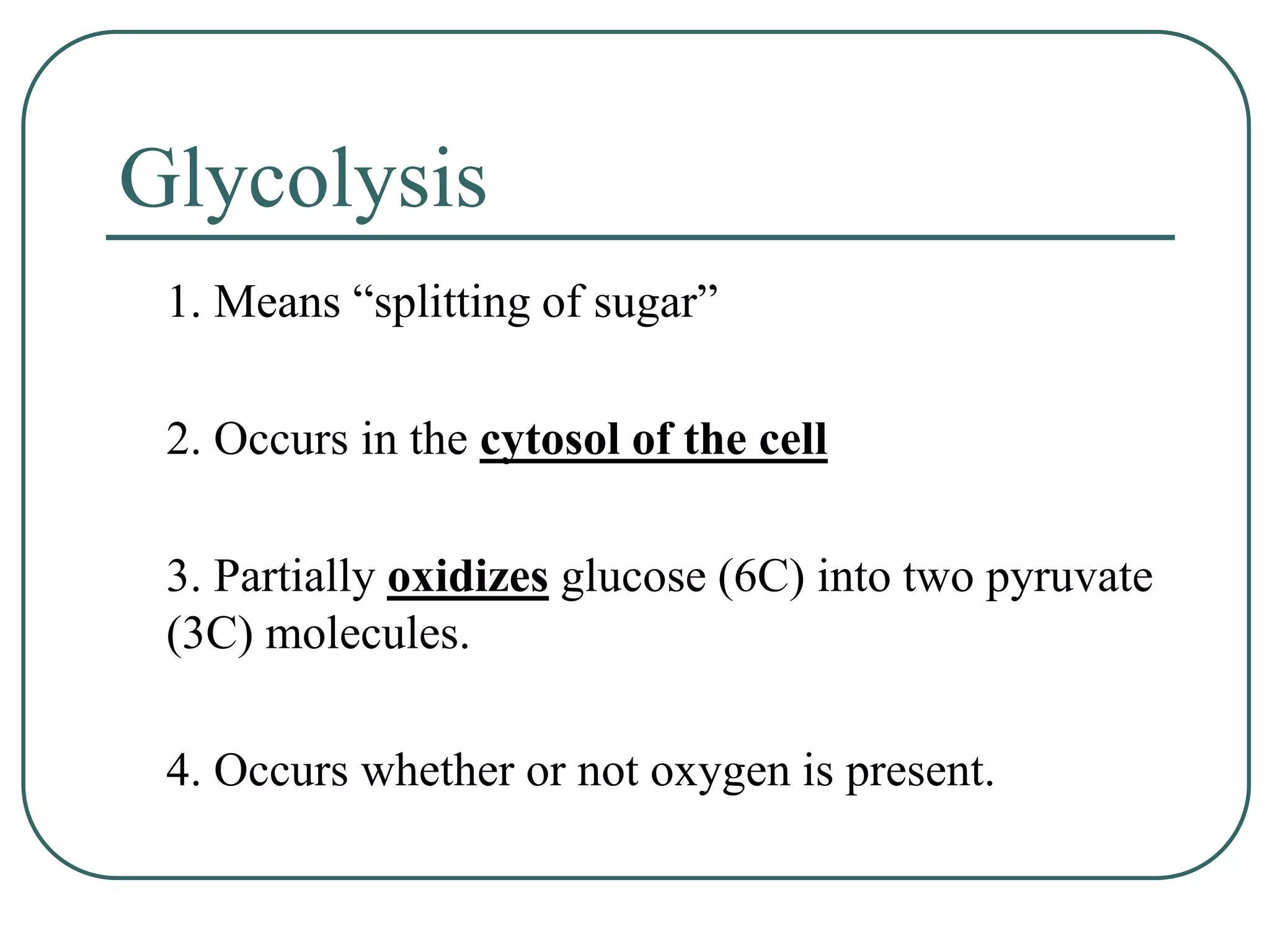
1. Means “splitting of sugar”
2. Occurs in the cytosol of the cell
3. Partially oxidizes glucose (6C) into two pyruvate
(3C) molecules.
4. Occurs whether or not oxygen is present.
5. An exergonic process, (meaning energy is released)
most of the energy harnessed is conserved in the high-
energy electrons of NADH and in the phosphate bonds of
ATP
Glycolysis Summary
• Takes place in the Cytoplasm
• Anaerobic (Doesn’t Use Oxygen)
• Requires input of 2 ATP
• Glucose split into two molecules of Pyruvate
• Also produces 2 NADH and 4 ATP
Formation of Acetyl CoA
1. Junction between glycolysis and Krebs cycle
2. Oxidation of pyruvate to acetyl CoA
3. Pyruvate molecules are translocated from the cytosol into
the mitochondrion by a carrier protein in the mitochondrial
membrane.
4. A CO2 is removed from pyruvate – making a 2C compound.
5. Coenzyme A is attached to the acetyl group.
Formation of Acetyl CoA
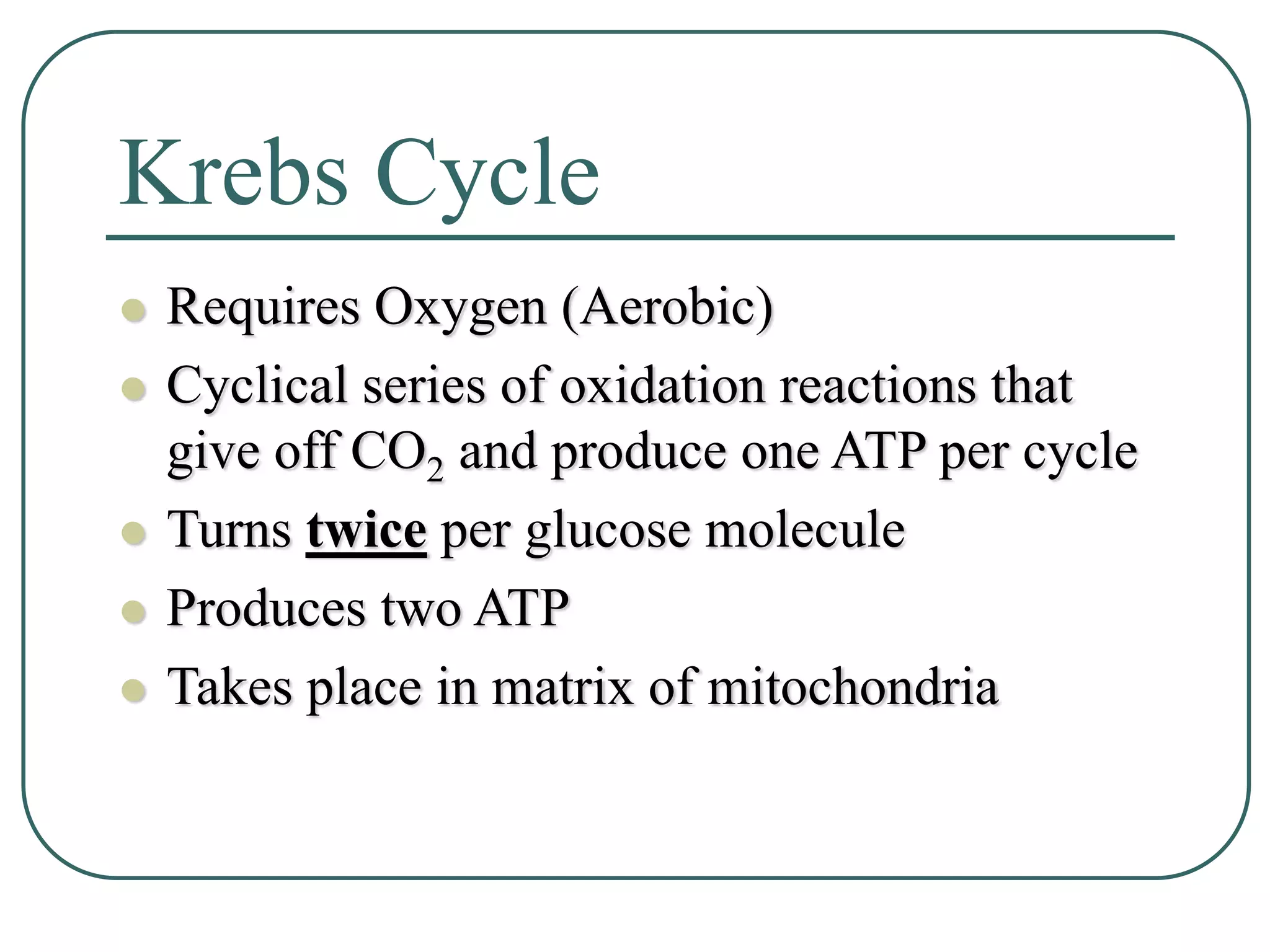
Krebs Cycle
 Requires Oxygen (Aerobic)
 Cyclical series of oxidation reactions that
give off CO2 and produce one ATP per cycle
 Turns twice per glucose molecule
 Produces two ATP
 Takes place in matrix of mitochondria
Krebs Cycle Summary
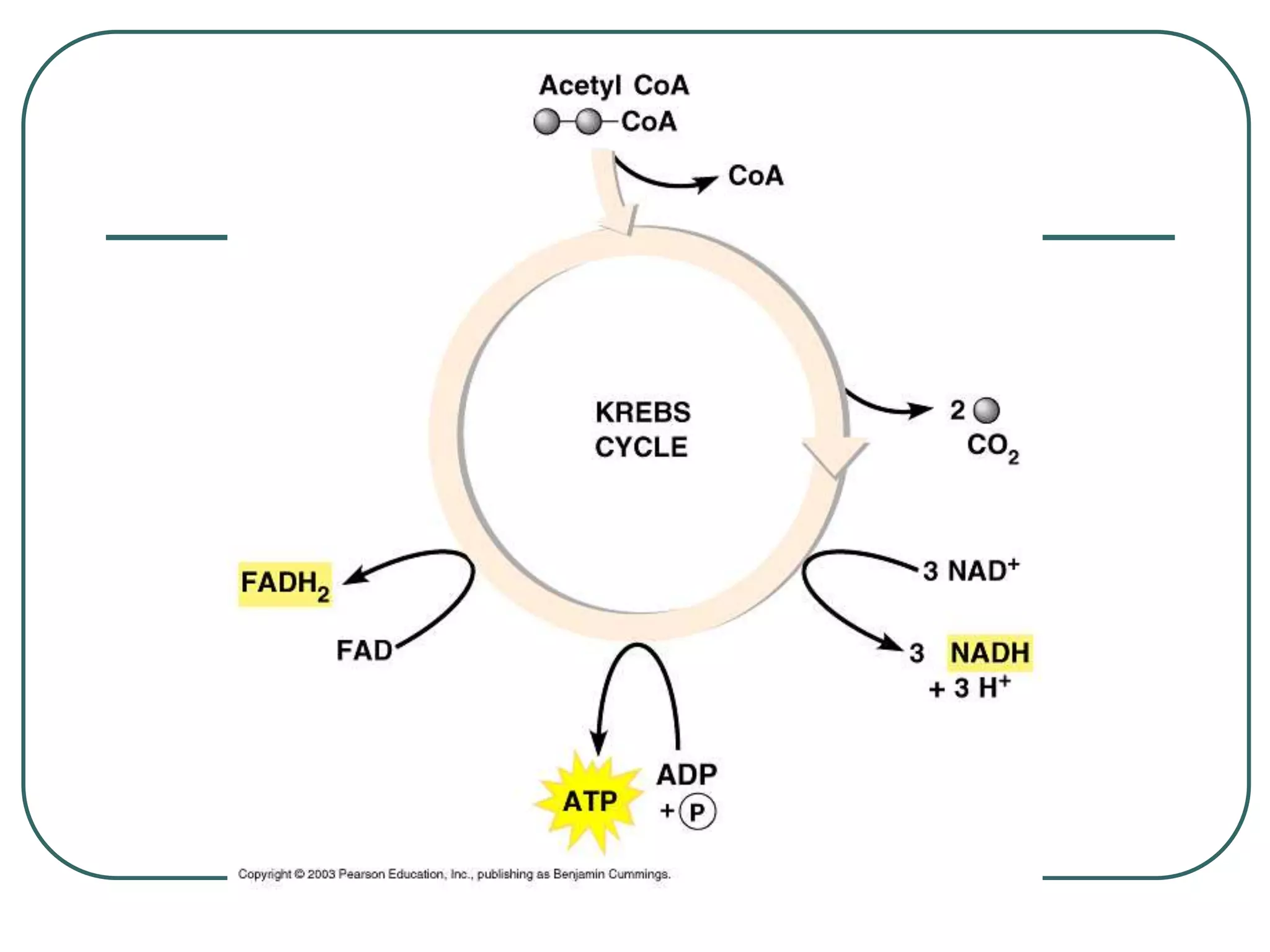
 Each turn of the Krebs Cycle also produces
3NADH, 1FADH2, and 2CO2
 Therefore, For each Glucose molecule, the
Krebs Cycle produces 6NADH, 2FADH2,
4CO2, and 2ATP
Electron Transport Chain
1. Located in the inner membrane of the
mitochondria.
2. Oxygen pulls the electrons from NADH and
FADH2 down the electron transport chain to a
lower energy state
.
3. Process produces 34 ATP or 90% of the ATP in
the body.
Electron Transport Chain
4. Requires oxygen, the final electron acceptor.
5. For every FADH2 molecule – 2 ATP’s are produced.
6. For every NADH molecule – 3 ATP’s are produced.
7. Chemiosmosis – the production of ATP using the
energy of H+ gradients across membranes to
phosphorylate ADP.
ATP Synthase
 A protein in the inner membrane in the mitochondria.
 Uses energy of the ion gradient to power ATP synthesis.
 For every H+ ion that flows through ATP synthase, one ATP
can be formed from ADP
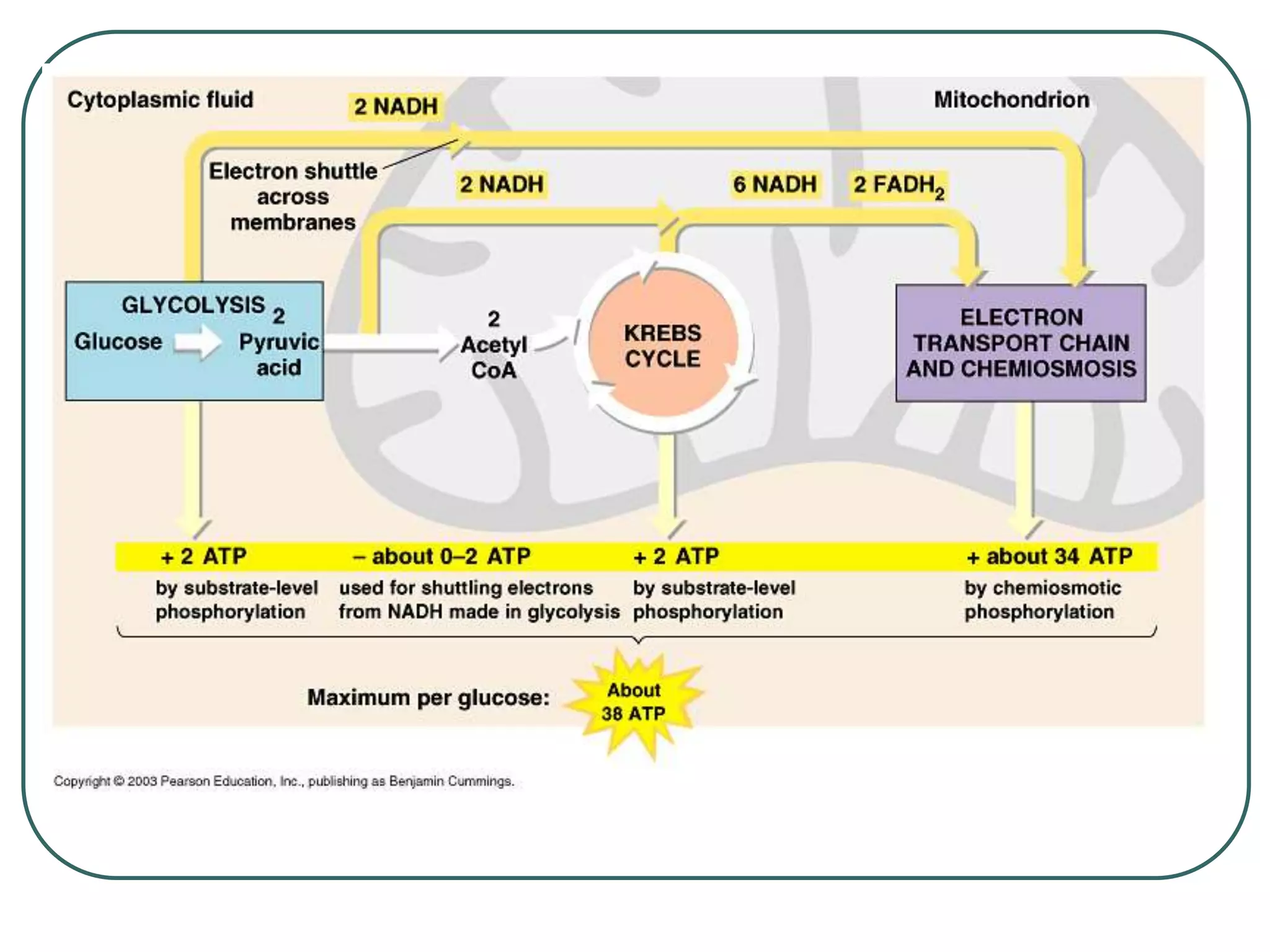
Cellular Respiration in Summary
Glycolysis
• 2 ATP
• 2 NADH  4-6 ATP (Depends on how this NADH
molecule gets to the ETC. To make things simple we
will say that these two NADH’s make 4 ATP )
Formation of Acetyl CoA
• 2 NADH  6 ATP
Cellular Respiration in Summary
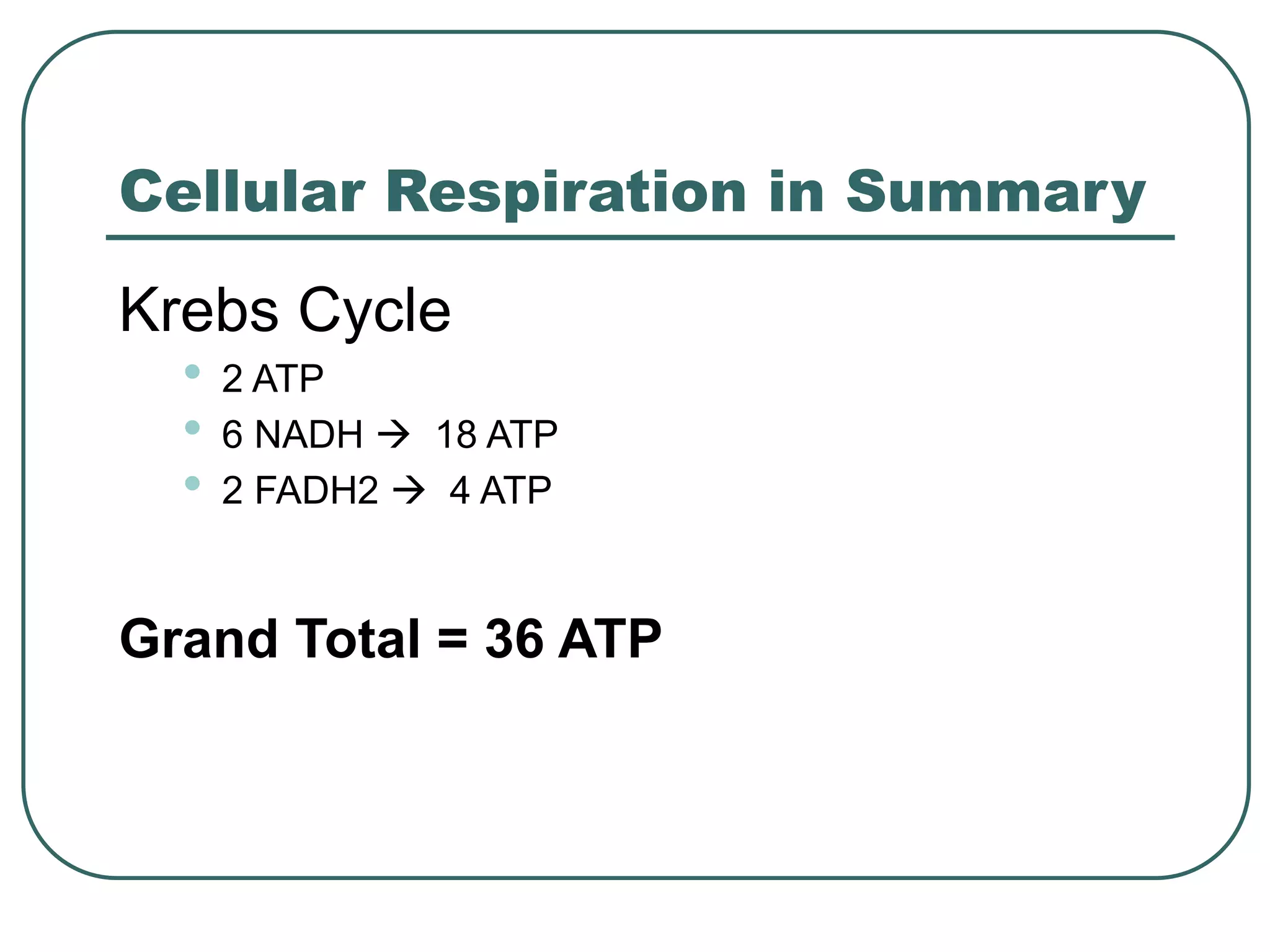
Krebs Cycle
• 2 ATP
• 6 NADH  18 ATP
• 2 FADH2  4 ATP
Grand Total = 36 ATP
Fermentation
 Occurs when O2 NOT present (anaerobic)
 Called Lactic Acid fermentation in muscle
cells (makes muscles tired)
 Called Alcoholic fermentation in yeast
(produces ethanol)
 Nets only 2 ATP
Cellular Respiration.ppt

Cellular Respiration.ppt

  • 2.
    Objectives: At the endof our lesson, you should be able to: 1. Describe the major features and chemical events in respiration; 2. Differentiate aerobic from anaerobic respiration; 3. Distinguish major features of glycolysis, Krebs Cycle, ETS, and chemiosmosis; 4. Explain the pros and cons of fermentation and aerobic respiration.
  • 3.
    Cellular Respiration • C6H12O6+ 602  6CO2 + 6H20 • A catabolic pathway • Oxygen is consumed as a reactant along with organic compounds. • Involves three stages: • Glycolysis • Krebs Cycle • Electron Transport Chain
  • 5.
    What Is ATP? •Adenosine Triphosphate • Energy used by all Cells • Organic molecule containing high-energy Phosphate bonds
  • 6.
  • 7.
    What Does ATPDo for You?  It supplies YOU with ENERGY!
  • 8.
    How Do WeGet Energy From ATP?  By breaking the high- energy bonds between the last two phosphates in ATP
  • 9.
    NADH and FADH2 NAD+ traps electrons from glucose to make NADH (energy stored)  Similarly, FAD+ stores energy as FADH2
  • 10.
    Where Does CellularRespiration Take Place?  It actually takes place in two parts of the cell: • Glycolysis occurs in the Cytoplasm • Krebs Cycle & ETC Take place in the Mitochondria
  • 11.
    Review of Mitochondria Structure Smooth outer Membrane  Folded inner membrane  Folds called Cristae  Space inside cristae called the Matrix
  • 12.
    Diagram of theProcess Occurs in Cytoplasm Occurs in Matrix Occurs across Cristae
  • 13.
    Glycolysis 1. Means “splittingof sugar” 2. Occurs in the cytosol of the cell 3. Partially oxidizes glucose (6C) into two pyruvate (3C) molecules. 4. Occurs whether or not oxygen is present.
  • 14.
    5. An exergonicprocess, (meaning energy is released) most of the energy harnessed is conserved in the high- energy electrons of NADH and in the phosphate bonds of ATP
  • 16.
    Glycolysis Summary • Takesplace in the Cytoplasm • Anaerobic (Doesn’t Use Oxygen) • Requires input of 2 ATP • Glucose split into two molecules of Pyruvate • Also produces 2 NADH and 4 ATP
  • 17.
    Formation of AcetylCoA 1. Junction between glycolysis and Krebs cycle 2. Oxidation of pyruvate to acetyl CoA 3. Pyruvate molecules are translocated from the cytosol into the mitochondrion by a carrier protein in the mitochondrial membrane. 4. A CO2 is removed from pyruvate – making a 2C compound. 5. Coenzyme A is attached to the acetyl group.
  • 18.
  • 19.
  • 20.
    Krebs Cycle  RequiresOxygen (Aerobic)  Cyclical series of oxidation reactions that give off CO2 and produce one ATP per cycle  Turns twice per glucose molecule  Produces two ATP  Takes place in matrix of mitochondria
  • 23.
    Krebs Cycle Summary Each turn of the Krebs Cycle also produces 3NADH, 1FADH2, and 2CO2  Therefore, For each Glucose molecule, the Krebs Cycle produces 6NADH, 2FADH2, 4CO2, and 2ATP
  • 25.
    Electron Transport Chain 1.Located in the inner membrane of the mitochondria. 2. Oxygen pulls the electrons from NADH and FADH2 down the electron transport chain to a lower energy state . 3. Process produces 34 ATP or 90% of the ATP in the body.
  • 26.
    Electron Transport Chain 4.Requires oxygen, the final electron acceptor. 5. For every FADH2 molecule – 2 ATP’s are produced. 6. For every NADH molecule – 3 ATP’s are produced. 7. Chemiosmosis – the production of ATP using the energy of H+ gradients across membranes to phosphorylate ADP.
  • 27.
    ATP Synthase  Aprotein in the inner membrane in the mitochondria.  Uses energy of the ion gradient to power ATP synthesis.  For every H+ ion that flows through ATP synthase, one ATP can be formed from ADP
  • 30.
    Cellular Respiration inSummary Glycolysis • 2 ATP • 2 NADH  4-6 ATP (Depends on how this NADH molecule gets to the ETC. To make things simple we will say that these two NADH’s make 4 ATP ) Formation of Acetyl CoA • 2 NADH  6 ATP
  • 31.
    Cellular Respiration inSummary Krebs Cycle • 2 ATP • 6 NADH  18 ATP • 2 FADH2  4 ATP Grand Total = 36 ATP
  • 32.
    Fermentation  Occurs whenO2 NOT present (anaerobic)  Called Lactic Acid fermentation in muscle cells (makes muscles tired)  Called Alcoholic fermentation in yeast (produces ethanol)  Nets only 2 ATP

Editor's Notes

  • #2 Cellular Respiration – organisms taking in energy from the environment and convert it into a form that their cells can use. It pertains to a series of metabolic pathways that extract energy from the bonds in glucose and converts it into a form that all living organisms can use.
  • #4 Catabolic pathways involve the degradation (or breakdown) of complex molecules into simpler ones. Molecular energy stored in the bonds of complex molecules is released in catabolic pathways and harvested in such a way that it can be used to produce ATP. Other energy-storing molecules, such as fats, are also broken down through similar catabolic reactions to release energy and make ATP
  • #10 NAD+ - oxidized nicotinamide adenine dinucleotide FADH – Flavin Adenine Dinucleotide
  • #21 Hans Krebs - discoverer