Cells
The basic structural and functional
units of all organisms. They may
exist and function alone or in
groups. The two cell types are
somatic and germ. See mitosis.
Kind of cells
• Prokaryotic: those cells are smaller and simpler than a
eukaryote, they have a similar form but the nucleos and
organelles are simpler. There are two kind of prokaryotic:
1. Bacteria
2. Archea
• Eukaryotic: there are four kind of eukaryotic
1. Protist
2. Fungi
3.Plants
4. Animals
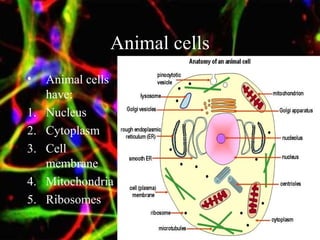
Animal cells
• Animal cells
have:
1. Nucleus
2. Cytoplasm
3. Cell
membrane
4. Mitochondria
5. Ribosomes
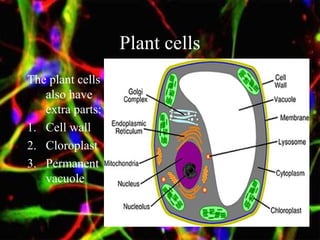
Plant cells
The plant cells
also have
extra parts:
1. Cell wall
2. Cloroplast
3. Permanent
vacuole
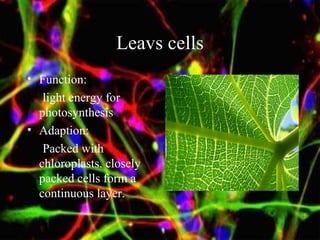
Leavs cells
• Function:
light energy for
photosynthesis
• Adaption:
Packed with
chloroplasts. closely
packed cells form a
continuous layer.
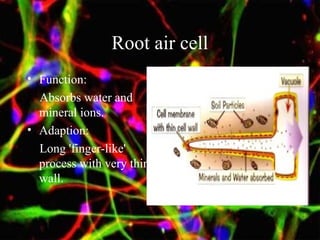
Root air cell
• Function:
Absorbs water and
mineral ions.
• Adaption:
Long 'finger-like'
process with very thin
wall.
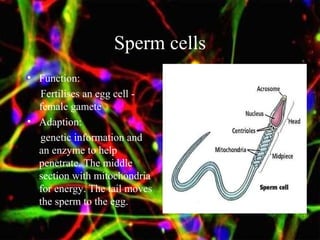
Sperm cells
• Function:
Fertilises an egg cell -
female gamete
• Adaption:
genetic information and
an enzyme to help
penetrate. The middle
section with mitochondria
for energy. The tail moves
the sperm to the egg.
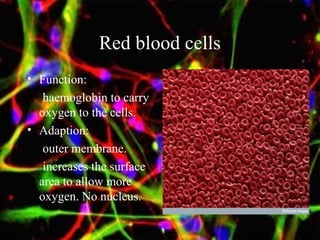
Red blood cells
• Function:
haemoglobin to carry
oxygen to the cells.
• Adaption:
outer membrane.
increases the surface
area to allow more
oxygen. No nucleus.
Diffusion
• From high concentration to a region where they
are in low concentration
• to move from a high to a low concentration while
there is a concentration gradient.
• For exemple the oxigen in the blood.
Osmosi
• For osmosis to happen you need:
1. Two solutio with different concentration
2. A partially permeable membrane to separate
them
• Moviment of wather from a less concentration
solution to a more concentration solution through
a membrane
• Very important for plants

Cells[1]

  • 1.
    Cells The basic structuraland functional units of all organisms. They may exist and function alone or in groups. The two cell types are somatic and germ. See mitosis.
  • 2.
    Kind of cells •Prokaryotic: those cells are smaller and simpler than a eukaryote, they have a similar form but the nucleos and organelles are simpler. There are two kind of prokaryotic: 1. Bacteria 2. Archea • Eukaryotic: there are four kind of eukaryotic 1. Protist 2. Fungi 3.Plants 4. Animals
  • 3.
    Animal cells • Animalcells have: 1. Nucleus 2. Cytoplasm 3. Cell membrane 4. Mitochondria 5. Ribosomes
  • 4.
    Plant cells The plantcells also have extra parts: 1. Cell wall 2. Cloroplast 3. Permanent vacuole
  • 5.
    Leavs cells • Function: lightenergy for photosynthesis • Adaption: Packed with chloroplasts. closely packed cells form a continuous layer.
  • 6.
    Root air cell •Function: Absorbs water and mineral ions. • Adaption: Long 'finger-like' process with very thin wall.
  • 7.
    Sperm cells • Function: Fertilisesan egg cell - female gamete • Adaption: genetic information and an enzyme to help penetrate. The middle section with mitochondria for energy. The tail moves the sperm to the egg.
  • 8.
    Red blood cells •Function: haemoglobin to carry oxygen to the cells. • Adaption: outer membrane. increases the surface area to allow more oxygen. No nucleus.
  • 9.
    Diffusion • From highconcentration to a region where they are in low concentration • to move from a high to a low concentration while there is a concentration gradient. • For exemple the oxigen in the blood.
  • 10.
    Osmosi • For osmosisto happen you need: 1. Two solutio with different concentration 2. A partially permeable membrane to separate them • Moviment of wather from a less concentration solution to a more concentration solution through a membrane • Very important for plants