Thammasat Model of Community-based Learning
                  Curriculum Description and Lessons Learned
                        from the Undergraduate Dental Program


                               Sutee Suksudej & Matana Kettratad
                            Faculty of Dentistry, Thammasat University


Saturday, February 16, 13
Framework
                            • Prepare both knowledge & skills
                            • Expose students to diverse activities
                              and in a safe environment


Saturday, February 16, 13
Diversity of activities
                                    VDO clip


Saturday, February 16, 13
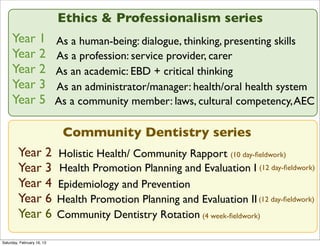
Ethics & Professionalism series
     Year 1                 As a human-being: dialogue, thinking, presenting skills
     Year 2                 As a profession: service provider, carer
     Year 2                 As an academic: EBD + critical thinking
     Year 3                 As an administrator/manager: health/oral health system
     Year 5                 As a community member: laws, cultural competency, AEC

                             Community Dentistry series
         Year 2             Holistic Health/ Community Rapport (10 day-fieldwork)
         Year 3             Health Promotion Planning and Evaluation I (12 day-fieldwork)
         Year 4             Epidemiology and Prevention
         Year 6             Health Promotion Planning and Evaluation II (12 day-fieldwork)
         Year 6             Community Dentistry Rotation (4 week-fieldwork)

Saturday, February 16, 13
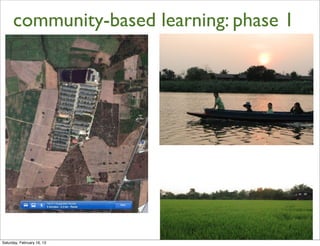
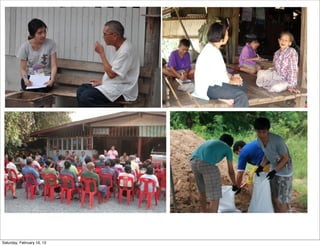
community-based learning: phase 1


Saturday, February 16, 13
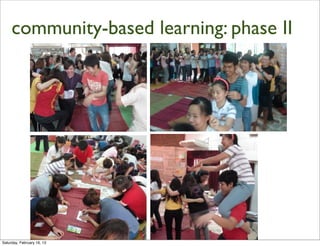
community-based learning: phase II


Saturday, February 16, 13
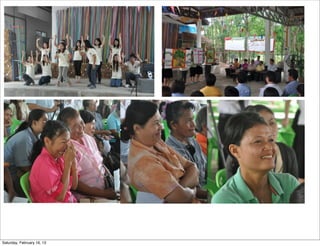
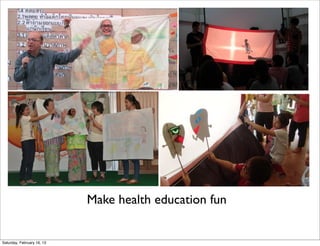
Make health education fun


Saturday, February 16, 13
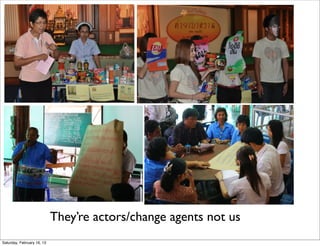
They’re actors/change agents not us
Saturday, February 16, 13
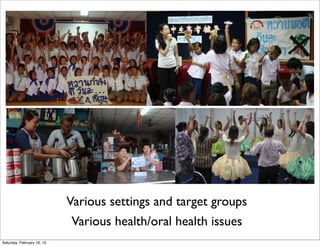
Various settings and target groups
                            Various health/oral health issues
Saturday, February 16, 13
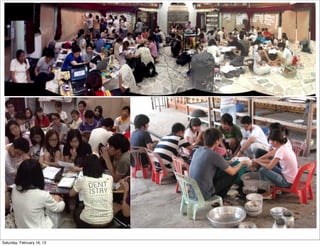
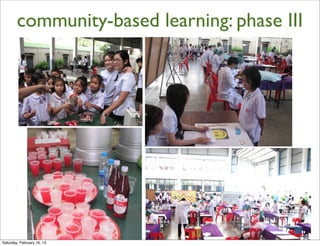
community-based learning: phase III


Saturday, February 16, 13
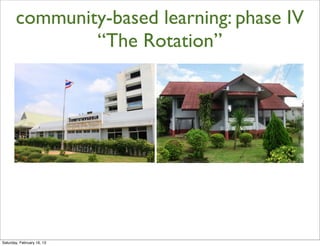
community-based learning: phase IV
               “The Rotation”


Saturday, February 16, 13
Lessons Learned
                     • Positive feedback from the communities
                     • Projects based on participatory and
                            partnership/networking approach
                     • Comprehensiveness guided by Ottawa
                            Charter


Saturday, February 16, 13
Lessons Learned
                              Feedbacks from the students

                            - tired, fatigue, and stress
                            - incidences required medical care
                            (e.g. insects bites, allergies, cuts and bruises)
                            - inconvenience/ not comfortable
                            - overall great experience + eye opener
                            VDO clip


Saturday, February 16, 13
Lessons Learned
                            feedback from the faculty members
                - students saw the interconnectedness and
                complexity of oral health related issues
                - tremendous unexpected gains
                e.g. meeting skill, time management skill, etc.
                - let both students and communities
                 show their fullest capacities and
                 great things happened.


Saturday, February 16, 13
Lessons Learned
                            feedback from the faculty members

                - students learned by doing but no guarantee of
                repeated success in other context.
                - no standardized learning processes.
                - a trade off when working as a class project.
                - not everybody get to practice every roles.
                - so how to assure that individual students
                achieve the minimal requirement?


Saturday, February 16, 13
Lessons Learned
                            feedback from the faculty members

                - evaluation through action and reflection takes
                a lot of effort and time consuming.
                - “individual” affective and psychomotor
                assessment could not be measured.

                - the most problematic is using theory-based
                practice in Phase IV.
                - reality of top-down management hits.


Saturday, February 16, 13

Chaam2013

  • 1.
    Thammasat Model ofCommunity-based Learning Curriculum Description and Lessons Learned from the Undergraduate Dental Program Sutee Suksudej & Matana Kettratad Faculty of Dentistry, Thammasat University Saturday, February 16, 13
  • 2.
    Framework • Prepare both knowledge & skills • Expose students to diverse activities and in a safe environment Saturday, February 16, 13
  • 3.
    Diversity of activities VDO clip Saturday, February 16, 13
  • 4.
    Ethics & Professionalismseries Year 1 As a human-being: dialogue, thinking, presenting skills Year 2 As a profession: service provider, carer Year 2 As an academic: EBD + critical thinking Year 3 As an administrator/manager: health/oral health system Year 5 As a community member: laws, cultural competency, AEC Community Dentistry series Year 2 Holistic Health/ Community Rapport (10 day-fieldwork) Year 3 Health Promotion Planning and Evaluation I (12 day-fieldwork) Year 4 Epidemiology and Prevention Year 6 Health Promotion Planning and Evaluation II (12 day-fieldwork) Year 6 Community Dentistry Rotation (4 week-fieldwork) Saturday, February 16, 13
  • 5.
    community-based learning: phase1 Saturday, February 16, 13
  • 6.
  • 7.
  • 8.
    community-based learning: phaseII Saturday, February 16, 13
  • 9.
    Make health educationfun Saturday, February 16, 13
  • 10.
    They’re actors/change agentsnot us Saturday, February 16, 13
  • 11.
    Various settings andtarget groups Various health/oral health issues Saturday, February 16, 13
  • 12.
  • 13.
    community-based learning: phaseIII Saturday, February 16, 13
  • 14.
    community-based learning: phaseIV “The Rotation” Saturday, February 16, 13
  • 15.
  • 16.
    Lessons Learned • Positive feedback from the communities • Projects based on participatory and partnership/networking approach • Comprehensiveness guided by Ottawa Charter Saturday, February 16, 13
  • 17.
    Lessons Learned Feedbacks from the students - tired, fatigue, and stress - incidences required medical care (e.g. insects bites, allergies, cuts and bruises) - inconvenience/ not comfortable - overall great experience + eye opener VDO clip Saturday, February 16, 13
  • 18.
    Lessons Learned feedback from the faculty members - students saw the interconnectedness and complexity of oral health related issues - tremendous unexpected gains e.g. meeting skill, time management skill, etc. - let both students and communities show their fullest capacities and great things happened. Saturday, February 16, 13
  • 19.
    Lessons Learned feedback from the faculty members - students learned by doing but no guarantee of repeated success in other context. - no standardized learning processes. - a trade off when working as a class project. - not everybody get to practice every roles. - so how to assure that individual students achieve the minimal requirement? Saturday, February 16, 13
  • 20.
    Lessons Learned feedback from the faculty members - evaluation through action and reflection takes a lot of effort and time consuming. - “individual” affective and psychomotor assessment could not be measured. - the most problematic is using theory-based practice in Phase IV. - reality of top-down management hits. Saturday, February 16, 13