The Similarities and Differences of
Animal and Plant Cells
Created by
C. Rhein
Hazelwood Central
Teacher’s Page
Forward
Cells
• Cells are the basic units of function in all
living things.
• Cells in animals and plants have unique
forms that allow each to take part in
processes that are necessary for the cell and
or/living thing to survive.
Let’s take a closer look at the
similarities and differences between
animal and plant cells.
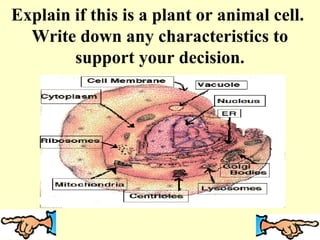
Explain if this is a plant or animal cell.
Write down any characteristics to
support your decision.
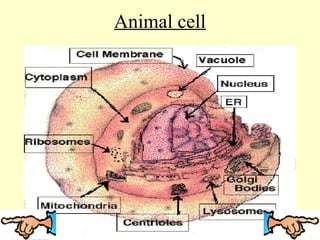
Explain if this a plant or animal cell.
Write down any characteristics to
support your decision.
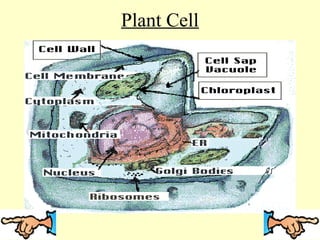
Plant Cell
Animal cell
Now that you have seen pictures of the
cells, exactly what are the organelles.
• What is an organelle?
• Organelles are to cells what organs are to
the body.
• They carry out the individual tasks of
gaining and working with energy, as well
as directing the overall behavior of the
cells.
• Let’s familiarize yourself with the
organelles of the animal and plant cell.
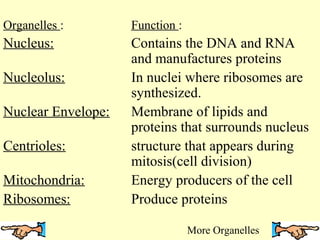
Organelles :

Function :

Nucleus:

Contains the DNA and RNA
and manufactures proteins
In nuclei where ribosomes are
synthesized.
Membrane of lipids and
proteins that surrounds nucleus
structure that appears during
mitosis(cell division)
Energy producers of the cell
Produce proteins

Nucleolus:
Nuclear Envelope:
Centrioles:
Mitochondria:
Ribosomes:

More Organelles
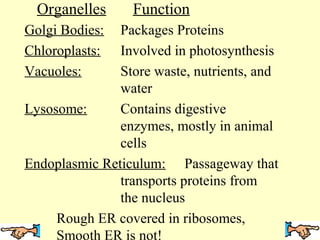
Organelles
Golgi Bodies:
Chloroplasts:
Vacuoles:

Function

Packages Proteins
Involved in photosynthesis
Store waste, nutrients, and
water
Lysosome:
Contains digestive
enzymes, mostly in animal
cells
Endoplasmic Reticulum: Passageway that
transports proteins from
the nucleus
Rough ER covered in ribosomes,
Smooth ER is not!
While not exactly organelles, the
following are important parts of
the cells:

• Cell membrane:
• Cell Wall:

• Cytoplasm:

Semi-permeable lining
that surrounds the cell
Is a stiff non-living
wall that surrounds the
cell membrane made of
cellulose
Jelly-like material
surrounding the
organelles
There are a few important
processes in which the plant and
animal cell engages:
• Diffusion:

How food, air, and
water gets in and out
of the cell.
• Cellular Respiration: How an animal cell
gets energy.
• Photosynthesis:
How a plant cell gets
energy.
Animal and Plant cells have many
similarities. Can you write the
organelles and cell parts they both
have in common.
Similarities
• Both contain:
• Nucleus, Nuclear Envelope, Chromosomeswhich carry the genes or the DNA.
• Cytoplasm
• Mitochondria
• Cell membranes
• Any others?
Animal and plant cells are also
different. Can you explain four
reasons as to how plant cells are
different from animal cells?
Differences
• Plant cells have non-living rigid cell walls.
• Plant cells contain chloroplasts which
contain chlorophyll, a green chemical
needed for photosynthesis.
• Plant cells contain a large vacuole; animal
cells never contain large vacuoles.
• Plant cells are regular in shape; animal cells
are irregular in shape.
Back to
Home Page

Animal plantcells

  • 1.
    The Similarities andDifferences of Animal and Plant Cells Created by C. Rhein Hazelwood Central Teacher’s Page Forward
  • 2.
    Cells • Cells arethe basic units of function in all living things. • Cells in animals and plants have unique forms that allow each to take part in processes that are necessary for the cell and or/living thing to survive. Let’s take a closer look at the similarities and differences between animal and plant cells.
  • 3.
    Explain if thisis a plant or animal cell. Write down any characteristics to support your decision.
  • 4.
    Explain if thisa plant or animal cell. Write down any characteristics to support your decision.
  • 5.
  • 6.
  • 7.
    Now that youhave seen pictures of the cells, exactly what are the organelles. • What is an organelle? • Organelles are to cells what organs are to the body. • They carry out the individual tasks of gaining and working with energy, as well as directing the overall behavior of the cells. • Let’s familiarize yourself with the organelles of the animal and plant cell.
  • 8.
    Organelles : Function : Nucleus: Containsthe DNA and RNA and manufactures proteins In nuclei where ribosomes are synthesized. Membrane of lipids and proteins that surrounds nucleus structure that appears during mitosis(cell division) Energy producers of the cell Produce proteins Nucleolus: Nuclear Envelope: Centrioles: Mitochondria: Ribosomes: More Organelles
  • 9.
    Organelles Golgi Bodies: Chloroplasts: Vacuoles: Function Packages Proteins Involvedin photosynthesis Store waste, nutrients, and water Lysosome: Contains digestive enzymes, mostly in animal cells Endoplasmic Reticulum: Passageway that transports proteins from the nucleus Rough ER covered in ribosomes, Smooth ER is not!
  • 10.
    While not exactlyorganelles, the following are important parts of the cells: • Cell membrane: • Cell Wall: • Cytoplasm: Semi-permeable lining that surrounds the cell Is a stiff non-living wall that surrounds the cell membrane made of cellulose Jelly-like material surrounding the organelles
  • 11.
    There are afew important processes in which the plant and animal cell engages: • Diffusion: How food, air, and water gets in and out of the cell. • Cellular Respiration: How an animal cell gets energy. • Photosynthesis: How a plant cell gets energy.
  • 12.
    Animal and Plantcells have many similarities. Can you write the organelles and cell parts they both have in common.
  • 13.
    Similarities • Both contain: •Nucleus, Nuclear Envelope, Chromosomeswhich carry the genes or the DNA. • Cytoplasm • Mitochondria • Cell membranes • Any others?
  • 14.
    Animal and plantcells are also different. Can you explain four reasons as to how plant cells are different from animal cells?
  • 15.
    Differences • Plant cellshave non-living rigid cell walls. • Plant cells contain chloroplasts which contain chlorophyll, a green chemical needed for photosynthesis. • Plant cells contain a large vacuole; animal cells never contain large vacuoles. • Plant cells are regular in shape; animal cells are irregular in shape. Back to Home Page

Editor's Notes