Cell Organelles
October 30, 2006
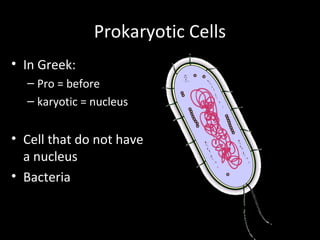
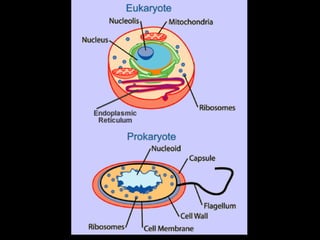
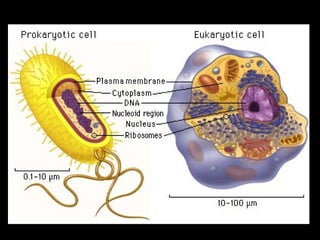
Prokaryotic Cells
• In Greek:
– Pro = before
– karyotic = nucleus
• Cell that do not have
a nucleus
• Bacteria
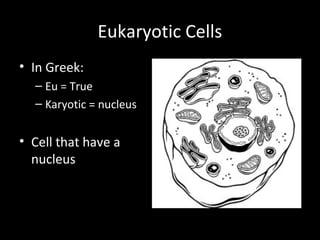
Eukaryotic Cells
• In Greek:
– Eu = True
– Karyotic = nucleus
• Cell that have a
nucleus
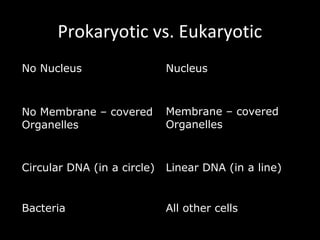
Prokaryotic vs. Eukaryotic
No Nucleus Nucleus
No Membrane – covered
Organelles
Membrane – covered
Organelles
Circular DNA (in a circle) Linear DNA (in a line)
Bacteria All other cells
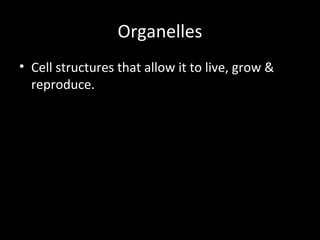
Organelles
• Cell structures that allow it to live, grow &
reproduce.
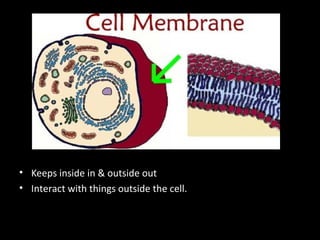
• Keeps inside in & outside out
• Interact with things outside the cell.
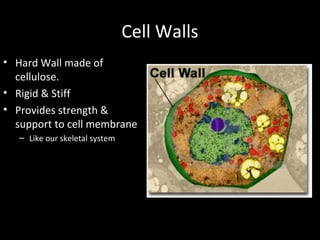
Cell Walls
• Hard Wall made of
cellulose.
• Rigid & Stiff
• Provides strength &
support to cell membrane
– Like our skeletal system
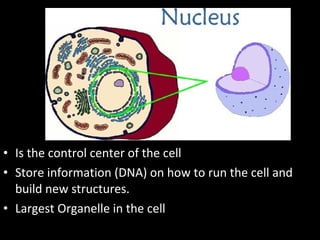
• Is the control center of the cell
• Store information (DNA) on how to run the cell and
build new structures.
• Largest Organelle in the cell
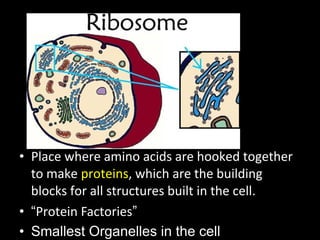
• Place where amino acids are hooked together
to make proteins, which are the building
blocks for all structures built in the cell.
• “Protein Factories”
• Smallest Organelles in the cell
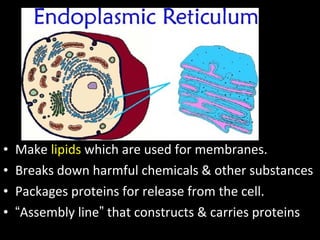
• Make lipids which are used for membranes.
• Breaks down harmful chemicals & other substances
• Packages proteins for release from the cell.
• “Assembly line” that constructs & carries proteins
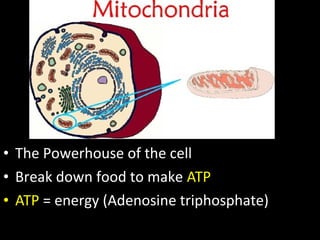
• The Powerhouse of the cell
• Break down food to make ATP
• ATP = energy (Adenosine triphosphate)
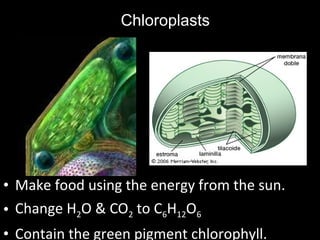
• Make food using the energy from the sun.
• Change H2O & CO2 to C6H12O6
• Contain the green pigment chlorophyll.
Chloroplasts
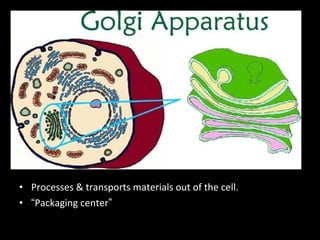
• Processes & transports materials out of the cell.
• “Packaging center”
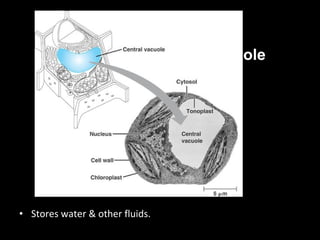
• Stores water & other fluids.
Vacuole
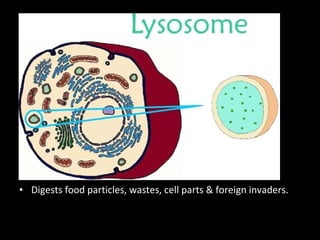
• Digests food particles, wastes, cell parts & foreign invaders.
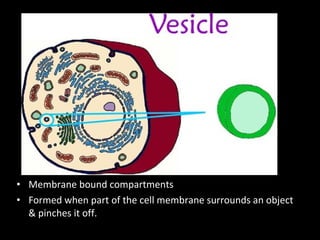
• Membrane bound compartments
• Formed when part of the cell membrane surrounds an object
& pinches it off.
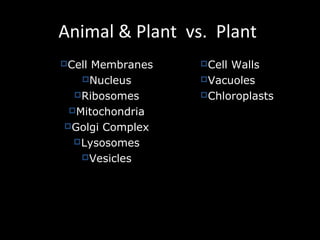
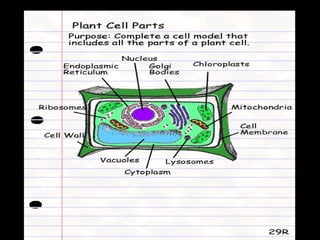
Animal & Plant vs. Plant
Cell Membranes
Nucleus
Ribosomes
Mitochondria
Golgi Complex
Lysosomes
Vesicles
Cell Walls
Vacuoles
Chloroplasts
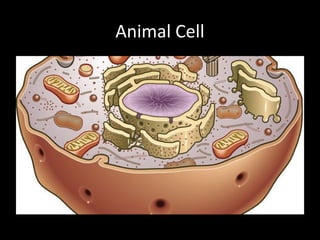
Animal Cell
Cells

Cells

  • 1.
  • 2.
    Prokaryotic Cells • InGreek: – Pro = before – karyotic = nucleus • Cell that do not have a nucleus • Bacteria
  • 3.
    Eukaryotic Cells • InGreek: – Eu = True – Karyotic = nucleus • Cell that have a nucleus
  • 4.
    Prokaryotic vs. Eukaryotic NoNucleus Nucleus No Membrane – covered Organelles Membrane – covered Organelles Circular DNA (in a circle) Linear DNA (in a line) Bacteria All other cells
  • 7.
    Organelles • Cell structuresthat allow it to live, grow & reproduce.
  • 8.
    • Keeps insidein & outside out • Interact with things outside the cell.
  • 9.
    Cell Walls • HardWall made of cellulose. • Rigid & Stiff • Provides strength & support to cell membrane – Like our skeletal system
  • 10.
    • Is thecontrol center of the cell • Store information (DNA) on how to run the cell and build new structures. • Largest Organelle in the cell
  • 11.
    • Place whereamino acids are hooked together to make proteins, which are the building blocks for all structures built in the cell. • “Protein Factories” • Smallest Organelles in the cell
  • 12.
    • Make lipidswhich are used for membranes. • Breaks down harmful chemicals & other substances • Packages proteins for release from the cell. • “Assembly line” that constructs & carries proteins
  • 13.
    • The Powerhouseof the cell • Break down food to make ATP • ATP = energy (Adenosine triphosphate)
  • 14.
    • Make foodusing the energy from the sun. • Change H2O & CO2 to C6H12O6 • Contain the green pigment chlorophyll. Chloroplasts
  • 15.
    • Processes &transports materials out of the cell. • “Packaging center”
  • 16.
    • Stores water& other fluids. Vacuole
  • 17.
    • Digests foodparticles, wastes, cell parts & foreign invaders.
  • 18.
    • Membrane boundcompartments • Formed when part of the cell membrane surrounds an object & pinches it off.
  • 19.
    Animal & Plantvs. Plant Cell Membranes Nucleus Ribosomes Mitochondria Golgi Complex Lysosomes Vesicles Cell Walls Vacuoles Chloroplasts
  • 20.